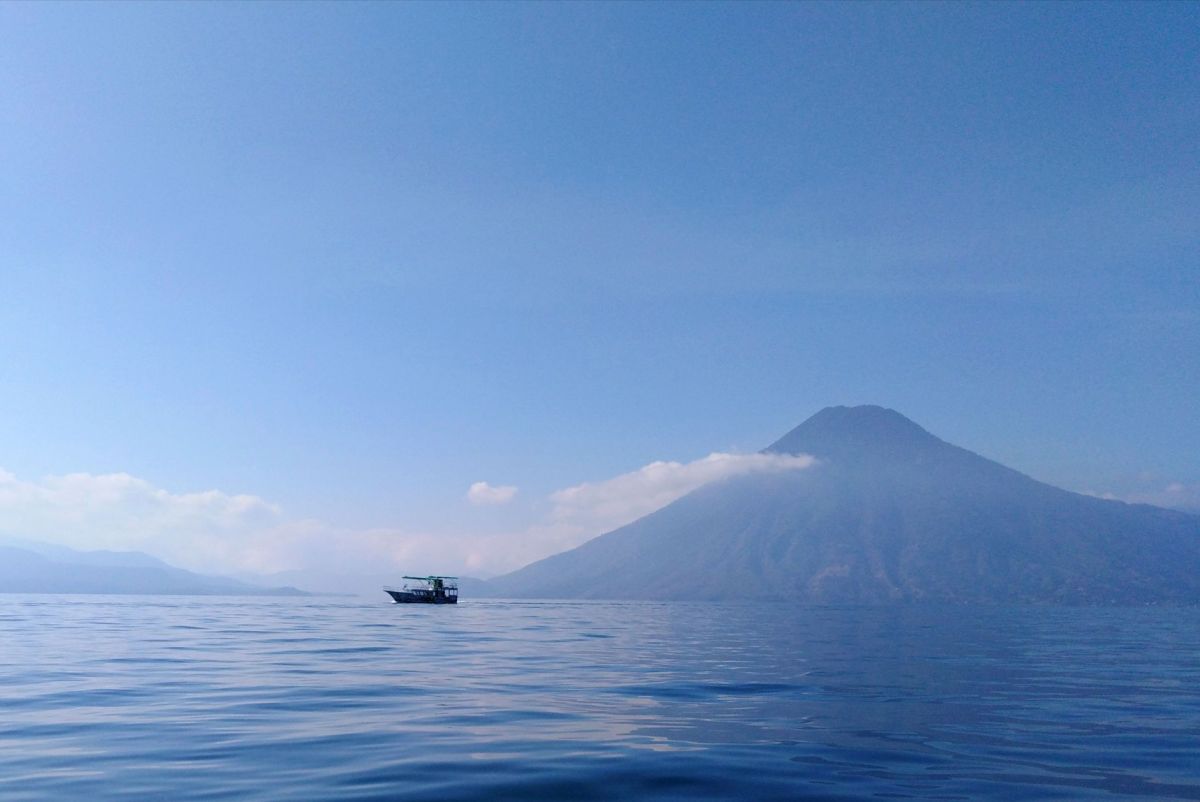
Sedimentary: A Sermon

I preached this sermon on Sunday, August 23, 2026 at St. Anne Episcopal Church, West Chester, OH. The lectionary text cited is Matthew 16:13-20, the confession of St. Peter.

My best friend, Laura, whom I met at college, was a double major in two very disparate fields: theater and geology. That’s a combination that I have never encountered in someone neither before nor since. 

We met through the theater side of things, and I’ll admit, whenever geology would come up in conversation my brain would just sort of power down. I am sure it’s a fascinating discipline, but the sciences were never my strength. As Paul says in Romans today, we are each given different gifts and callings in this world, and geology was definitely not mine.

Nevertheless, one thing that I do happen to recall about geology is that there are three different types of rock on this planet—each one shaped by different natural forces and with different characteristics. There are metamorphic rocks like marble and there are igneous rocks like lava rock and then, finally, there is sedimentary rock, which is the type of rock that’s on my mind this week. This is the only time I can recall rock types having been on my mind, but God is full of surprises. So stick with me on this.

Sedimentary rock, as best I can summarize, is the type of rock that’s made up of various pieces of things—smaller bits of other rocks and sand and minerals and even bones—that, over time, get pressurized and cemented into one big slab. Limestone is like this, as is sandstone. You’ll find fossils in this type of rock, and sometimes those stratified bands of color that tell the story of the accumulation of the aeons, like in the Grand Canyon.

And there is this sort of fascinating paradox about sedimentary rock. It can be the stuff of mountains and show up in these incredibly large and strong formations, but among the three types of rock, it is the most easily broken. It erodes and it wears down and it can be carved and formed by the elements or, sometimes, by human hands.

If you have ever seem images of the ancient stone city of Petra in Jordan, you can see how a whole world was delicately carved into sedimentary sandstone cliff faces. Beautiful and strong and yet breakable. Hold onto that for a minute. 

Because in today’s Gospel passage, we also hear about a rock—the rock that is Simon, Son of Jonah. He confesses his understanding of Jesus as the Messiah and the Son of God. And in so doing, Simon is renamed by Jesus to be known at Peter, Petros in Greek, which means ‘rock.’ Upon this rock, Jesus says, upon you and the faith you embody, Jesus says, I will build my ekklesia, my community, my church. 

But what sort of rock is Peter? What sort of foundation is Jesus building upon here? Is it the cold and immovable force of metamorphic marble? Is it the the igneous crust of jagged, hardened lava rock? Some branches of Christianity might have you believe that it is—that our church is built to be something forceful and unblemished and immovable and unchanging. I suppose that can feel comforting in an uncertain world. 

But Peter—and we know this from the arc of his whole story—is not that kind of rock. Under pressure, he crumbles, he doubts and denies Jesus, he sinks in the raging waters, he is worn down by uncertainty and fear. 

Does his heart reach toward the heavens like a mountain peak striving toward the sun? Absolutely. But he is a complicated man, with layers of motivations and questions and cares comprising the sum total of his discipleship. His rock, if anything, is sedimentary. Beautiful and strong…and yet breakable. 

It just so happens, too, that in the scene we witness today, Jesus and the disciples are walking near Caesarea Philippi, an area characterized by high limestone cliffs, into which are carved ancient grottoes and niches once used for cultic worship. And so when Jesus says to Peter, you are Petros, you are rock, and upon this rock I will build my new movement of love and flesh and spirit and death and life—he is literally saying this in the shadow of sedimentary rock, a breakable rock, a beautiful and eternal and yet distinctly changeable rock. 

And yes, all of us who follow Jesus, all of us, too, will change and break; we too will be hollowed out by time and loss. We, too, will feel the sun break upon our brow and we, too, will know the deep darkness of the canyonlands. And all of this—all that we are and all that we will be and all that we can never be—all of this is exactly the type of rock that God chooses to build upon. 

I do not share any of this with you, friends, just to explore Jesus’ metaphors. I tell you this because I think it’s deeply reassuring good news that ours is a church, a community, a way of life built upon this type of rock. 

Because how many times have you and I broken apart? How many times, like Peter, have we crumbled, despite our best intentions? How many times have we set out to get truly right with God and neighbor only to fall back into the same old traps of complacency or resentment or fear? How many times have I been reminded that no matter how hard I try, we are all bound to erode and wear down and become something other than what we imagined we’d become?

And whenever that happens, I usually lament that I am not carved from marble, that I am not unblemished and cool and collected and unbreakable. I lament that little pebbles of regret fall from my broken edges. I am embarrassed that tears and time have carved gullies on my face. 

But then, in this gospel story, I see Jesus looking at poor, hapless Peter and at poor, hapless you and me, with all our layers and deep cracks, and I hear Jesus say:

On you I will build my church. I choose no other. I choose you precisely because you can break and change. I choose you because I am going to take all those broken pieces and create a different thing. I do not desire cold perfection, I desire the ongoing process of your creation. I desire the kind of faith that can fall apart and find a way to reshape itself. I desire to carve into you with my Spirit and create a whole new world within you. 

So stop wishing that you were perfect. Let go of perfect. Stop thinking that you have to have God all figured out. Let go of figuring it all out. Peter certainly didn’t have it figured out. He confessed his faith on fumbling lips and he tried and he failed and he just kept going, with love in his heart and Jesus in his sights. And that was more than enough. That was enough to build a church upon. It still is.

I am so glad that, in a place like St. Anne, following Jesus looks more like that and less like stone-cold-certainty. I am grateful for the sort of church into which we can carve out space enough for all sorts of people, all sorts of questions and discoveries, all sorts of mistakes and reconciliations. I can’t speak for other folks, but that is the sort of rock I want to help Jesus build upon. That is the sort of church I want to live in.

I suspect that none of this was on Laura’s geology exams. But knowledge has a funny way of coming back around and helping us out. So thanks, Laura, if you hear this. 

And thank you, Jesus, for choosing imperfect Peter as your type of rock, and for choosing all of us who have come after him. Thank you for choosing to love this whole, beautiful, strong, breakable world. 

Lord, we are still becoming whatever comes from the melding of time and broken pieces and bones and tears and love and loss and memory and hope and grace. We are still becoming that. 

And our confession, and our prayer, through the accumulation of the aeons is ever the same: 

You are the Messiah. The Son of the Living God. 

Make of us what you will. 
The God of Holy Interruptions: A Sermon

I preached this sermon on Sunday, August 17, 2026 at St. Anne Episcopal Church, West Chester, OH. The lectionary text cited is Matthew 15:21-28, Jesus’ encounter with the Canaanite woman.

You know that saying, “life is what happens when you’re busy making other plans”? I’ve also found it to be true that encountering God is what happens when you’re busy making other plans. 

One day in Fort Wayne, Indiana, not long after I was ordained as a priest, it was lunchtime and I wanted one thing and one thing only: Arby’s. Now, I don’t really go to Arby’s very often, but on this particular day I was seized with a powerful craving for curly fries and one of those huge roast beef sandwiches with horsey sauce. I am not ashamed to admit this!

Now, Arby’s wasn’t too far from that church, so I decided I’d just walk over there. I remember, though, that I was in a bit of a hurry—I had some meetings that afternoon. But in any event, as I walked into the parking lot, heading toward the front door, dreaming of that roast beef sandwich, I ran into a man who we’ll call “Jim.” Jim was standing there in the middle of the  Arby’s parking lot, rail thin and his clothing worn and dirty, with a big grin on his face. 

“Hello Father!” he said. “Boy, am I glad to see you!” Now, I had never met Jim before, but he seemed to know me—maybe the collar made me a familiar figure in his eyes. In any event, I stopped to talk to him, though I will confess to you that I had to force myself to slow down and pivot from my single-minded pursuit of lunch. Because Jim clearly wanted to talk.

And boy did he talk. In the span of more than a few minutes, I learned more than I could have ever imagined about Jim’s life and his background and what had led him to sleep in a tent in a park not too far from downtown, as he was doing in those days. 

He was not in a good way—his health was poor and he couldn’t find regular shelter and he said there were mean people out on the streets sometimes—but he was nonetheless an enthusiastic and smiling sort of guy. He asked me to pray with him, which I did, and he asked if I could help him buy some lunch, which I did, and then he went on his way. And it’s funny, I’m sure I eventually ate that roast beef sandwich, but I don’t really remember it clearly. Jim was the reason I had walked to Arby’s that day.

This was not the last time that I saw him—not by a long shot. Over the course of my four years in Fort Wayne, I got to know him very, very well. He came to Sunday services pretty regularly, both to ask for a little help and to receive Communion at the altar rail. We cheered him on when he got a job and a place to stay and I listened and prayed with him when he lost that job because of various personal struggles. 

One Sunday we baptized Jim, and I was one of his sponsors. Oh, how he smiled that day. He was a complicated person: simultaneously happy, frustrating, determined, sweet-natured, unpredictable, and always, always showing up at church right when I was trying to work on something else. But I am so glad he found me that day in the Arby’s parking lot and kept showing up.

Because the thing is—and this is as true for those of us who wear collars as anyone else—we can too easily miss God when God shows up. Because so many of us are taught what sacred things are supposed to look and feel like: beautiful, grand, whole, full, safe, pleasant. The Kingdom we dream of is one populated by healthy people and uncomplicated pleasures. 

And yet, the utter strangeness of the way of Jesus is that God comes to us very differently. God comes to us, yes, God is all around us, but more often than not it is in an Arby’s parking lot on a Tuesday afternoon when we were not looking for him. Our God is a God of holy interruptions more than of best laid plans. And the sooner we realize this, the sooner we become attentive to this, the more our lives will be changed. 

Today’s story from Matthew, which builds on the ones we’ve heard over the past couple of weeks, is a perfect example. Because this God of Holy Interruptions even comes to Jesus, who is already God, who already knows a lot about interrupting the assumptions of others. 

Jesus did so when he fed the 5,000 with just a little bit of food and he did so when he met the disciples, walking in the middle of the stormy lake. And yet, today, it is Jesus who is interrupted. It is Jesus to whom the surprising nature of Divine truth is revealed. And this time, this God of Holy Interruptions show up in the form of a Canaanite woman. 

I don’t mean she is an angel in disguise, exactly. I just mean God showed up in her. We don’t hear much about her backstory, but somehow I imagine her a bit like Jim—standing in the middle of the city, thin and threadbare, desperate for help, and yet strangely bright and ebullient. Hello Lord! Boy, am I glad to see you!

Now, presumably Jesus had his mind on something more important than Arby’s, but nonetheless, he seems reluctant to slow down for this interruption. He has a clear vision of what his mission is—to first help Israel; to call his people back to the heart of God. It’s a good mission.

But this Canaanite woman, outside the fold of Israel, has other ideas in mind. She needs help now, not on some far off day. And she is willing to go toe to toe with Jesus, willing to risk ridicule or rejection for the sake of her daughter, willing to risk it because when you love that deeply you become bold. You become brave. 

And Jesus—who has already been preaching and teaching about the boldness and the bravery of a life made urgent by the hunger for love and mercy—well, he suddenly sees his own teaching staring back at him. Just not, perhaps, in the way he expected. 

When I think of this Canaanite woman, I can’t help but think of a different passage we didn’t hear today—that of Lady Wisdom in the Book of Proverbs. She is another embodiment of God, crying out in the marketplace of the city. She says,

To you, O people, I call, and my cry is to all who live…Hear, for I will speak noble things, and from my lips will come what is right, for my mouth will utter truth. 

I may be going out on a limb, but I think that Jesus met Lady Wisdom in the city that day. I think he saw divine truth shining from the face of a determined mother willing to savor even just the crumbs of heaven. I think she reminded him that Blessed are those who hunger and thirst for righteousness, for they shall be satisfied.

And I think she comes to all of us, this Lady Wisdom, often as a holy interruption, to rouse us from our daily sleepwalking, to attune us to the opportunities right in front of us to step within the gates of the real kingdom of God. It is not just far off somewhere else, somewhere pretty. It is very near—as near as an Arby’s parking lot, or wherever someone calls you back to the task of loving whoever or whatever is in front of you. 

Have you ever been interrupted, friends? Have you ever found your carefully laid plans thrown off course? It can be hard, and even heartbreaking. But if it happens, when it happens, still try and look for the God of Holy Interruptions. Look for her crying out in the marketplace. Look for him grinning at you with a strange light in his eyes. And if the plans you made were not to be, then so be it. Perhaps the interruption will be your new beginning instead.

Since moving away a few years ago, I don’t know what has become of Jim. I pray that, wherever he is, he remembers that he is loved, that he was baptized as a beloved child of God, and that Jesus walks with him always. 

And although I can’t necessarily tell him face to face, I hope he knows that his holy interruptions were, for me, an encounter with grace. That they fed me in a way that no roast beef sandwich ever could. And that he taught me to open my eyes a bit wider, to walk a bit slower, and to be ready for Wisdom when she appears, even while I am busy making other plans. 

And when she does appear, now I’ll know exactly what to say:

Hello, God! Boy, am I glad to see you.

Here, Here: A Sermon

I preached this sermon on Sunday, August 9 at St. Anne Episcopal Church, West Chester, OH. The lectionary text cited is Matthew 14:22-33.

About halfway across the lake, I knew we should never have gotten into the boat. 

It was late December, and my mom and I were traveling through the mountain highlands of Guatemala, where she was living at the time, teaching in an international school in the capital city. Just after Christmas, we’d made the popular trip up to Lake Atitlán, one of the most beautiful lakes in the world. Its deep waters are flanked by precipitously high volcanic mountainsides, and there are small villages sprinkled along the shore, and one afternoon we found ourselves needing to cross over to the other side. 

And so we got into the boat. 

It was a lancha, a small motorboat used regularly as a water taxi across the lake since the mountain roads are narrow and dangerous in that area. And at first, the trip was lovely—the broad blue water, the high clouds and the breeze and the green slopes arcing upward into the vault of the sky.

But somewhere about halfway across, far too late to turn back, the choppy waves started to turn into swells, and the boat was tossed around and water started coming over the low sides, and I realized three things at once. 

First, we were the only two passengers on this boat, when usually they should be packed with people. Second, I saw no lifejackets. And third, as I looked around us across the wide, turbulent waters, there were no other boats making the crossing. We were alone. And the landscape that had looked beautiful and exciting just a few minutes prior was suddenly wild and terrible and we were very, very small upon it. 

If you’ve ever had a moment where you had to stare your own mortality in the face, perhaps you can imagine the hollow-in-your-belly, eyes-wide-open feeling that hits you when there is no illusion of safety left to hide behind, and there is only you and this moment and the terrible, fearsome power of being alive and wanting to stay that way.

And if you can imagine this, then you can also imagine what the disciples are going through this morning in our Gospel reading. 

Because they are in their own little lancha, crossing to the other side of a stormy lake. We focus a lot on Peter’s part, but we shouldn’t skip past that initial, understandable feeling of terror as the waves tossed them around in the boat. We might even wonder whether they felt a little betrayed—didn’t Jesus tell them to make this crossing? Why would he send them out and leave them alone in this dangerous place?

It is the perplexity that comes when we realize a godly life is no guarantee of a comfortable life. 

Because ultimately, friends—and you probably don’t need me to tell you this—we can all be very good little boys and girls, we can follow all the Lord’s commandments, and yet we will all end up in the lancha at some point in our lives—we all find ourselves in a moment when the waves are high and the sides of the boat are low and we forgot our lifejacket somewhere and it is far too late to turn back. 

It may come in the form of a death or a divorce or a diagnosis or simply a sense of lostness, loneliness or regret. But we all end up there eventually. As do communities and countries, in their own cycles of flourishing and floundering. We cannot evade the storm forever. We pray to God, lead us not into temptation, but oh, the tempests still come of their own accord. 

And when they do come…this is where a lot of popular takes on Christian theology sort of fall apart for me. 

Have you ever been in the middle of a really hard moment or season of your life and heard it said: don’t worry! Just have more faith! Just pray a little harder! God won’t give you more than you can take! And they might even cite Gospel stories like today’s. You of little faith, why did you doubt?

It’s the spiritual equivalent of someone giving you a pat on the head and saying “there, there.” There, there, you’re overreacting. There, there, everything works out for the best. There, there, don’t rock the boat. Don’t disturb the peace for the rest of us, those of us who are trying really hard to pretend the storms only come for somebody else. There, there. 

I don’t have much use for that type of Christian comfort. 

Because our story today indicates something far more profound than a pat on the head. In stories like this, God does not say, there, there. No, to the disciples, Jesus says, here, here. He says I am here, here with you, in the midst of the worst. I am here, here, precisely where you didn’t want to end up. I am here, when the waves are too high and your heart is breaking and you have nothing left to hide behind. I am here, here, right here, and I am asking you to be here with me, too. 

As we mature, we come to see that entering the storm is not an impediment to following Jesus. It is a requirement of following Jesus.

Because faith is about looking hard at life and choosing to revere its often frightening beauty. It’s about holding onto each other through the rise and fall of the times. Faith is about facing the darkness and speaking peace into it. It is about standing in the storms we prayed would never come and still whispering words of trust on our trembling lips. 

And when we do…here, here, God says. Life and death and heaven and earth are here, here, now. Come out and stand here with me.

Why? What does it do for us?

Well, for one, it makes us vividly grateful. Some of the times I have felt closest to God and neighbor were not the good times, but the tough ones. Facing the storm also makes us, hopefully, less petty and critical of one another, a bit gentler with them and with ourselves, too, because we realize that we are all just in this little lancha together, making our way through the waves. 

And hopefully that helps us get clear on the things that matter most and choosing them, day by day. The things that Jesus constantly shows us: Mercy. Compassion. Ethical clarity. Charity of heart and generosity of spirit. Careful discernment and bold conviction that love is the only truly saving power there is. These are virtues born of the storms of life, not the avoidance of them. Here, here, where it is indeed possible to sink beneath the waves, is the only place you can learn them. 

You might wonder why I haven’t dwelt much on the fact that Jesus walks on water. That’s usually the headline of this story. But it can be a stumbling block, too, because I think we tend to equate walking on water with somehow transcending the problems and the limitations of this life and thinking that’s what Christian life is about—that having “enough” faith will allow us to escape the waves, to never sink.

But if you hear nothing else today, I need you to hear this. I need you to remember something important about Jesus. Something radical and transformational in my understanding of him. Something that is the opposite of a pat on the head and a “there, there” and a blithe dismissal of the storm.

It is this: Jesus does sink beneath the waves. Not here, but soon, he sinks. On the Cross, amid the tempest of our brokenness and rage, he willingly sinks. 

He surrenders to the storm. He gives himself over to the chaos and descends down, down, into the deepest places of fear and sorrow. He goes down, down, down…all so that he can say to you, here, here

Oh yes, even here, I am here. There is nowhere I will not go for you, to be with you, to find you, to bring you back, even from the very bottom. 

Walking on water is a wonder. But you of little faith, why did you doubt that even if you do sink, I will be there. Wherever you go, I am already with you.

As for my Guatemala story, you can guess the ending—we made it to the other side. The lancha managed to ride the swells and we got off, seasick and teary-eyed, weak-kneed and deliriously grateful. The meal we ate that night was, perhaps, the most joyful meal I ever experienced, because it tasted like life. 

And that, when you think on it, is the journey for us on this Jesus-shaped path. 

We face death, and we taste life. 

We huddle together among the waves and we stumble, wide-eyed, onto the shore. 

We are passengers on the ship of grace, you and I, and some days we have enough faith and many days we have not nearly enough, but somehow, somehow, God keeps showing up anyway. 

And he says, always, the same thing. The one true thing that can always be said of God and by God, no matter how high the waves get:

Here, here. I am here.