
I preached this sermon on Sunday, August 23, 2026 at St. Anne Episcopal Church, West Chester, OH. The lectionary text cited is Matthew 16:13-20, the confession of St. Peter.
My best friend, Laura, whom I met at college, was a double major in two very disparate fields: theater and geology. That’s a combination that I have never encountered in someone neither before nor since.
We met through the theater side of things, and I’ll admit, whenever geology would come up in conversation my brain would just sort of power down. I am sure it’s a fascinating discipline, but the sciences were never my strength. As Paul says in Romans today, we are each given different gifts and callings in this world, and geology was definitely not mine.
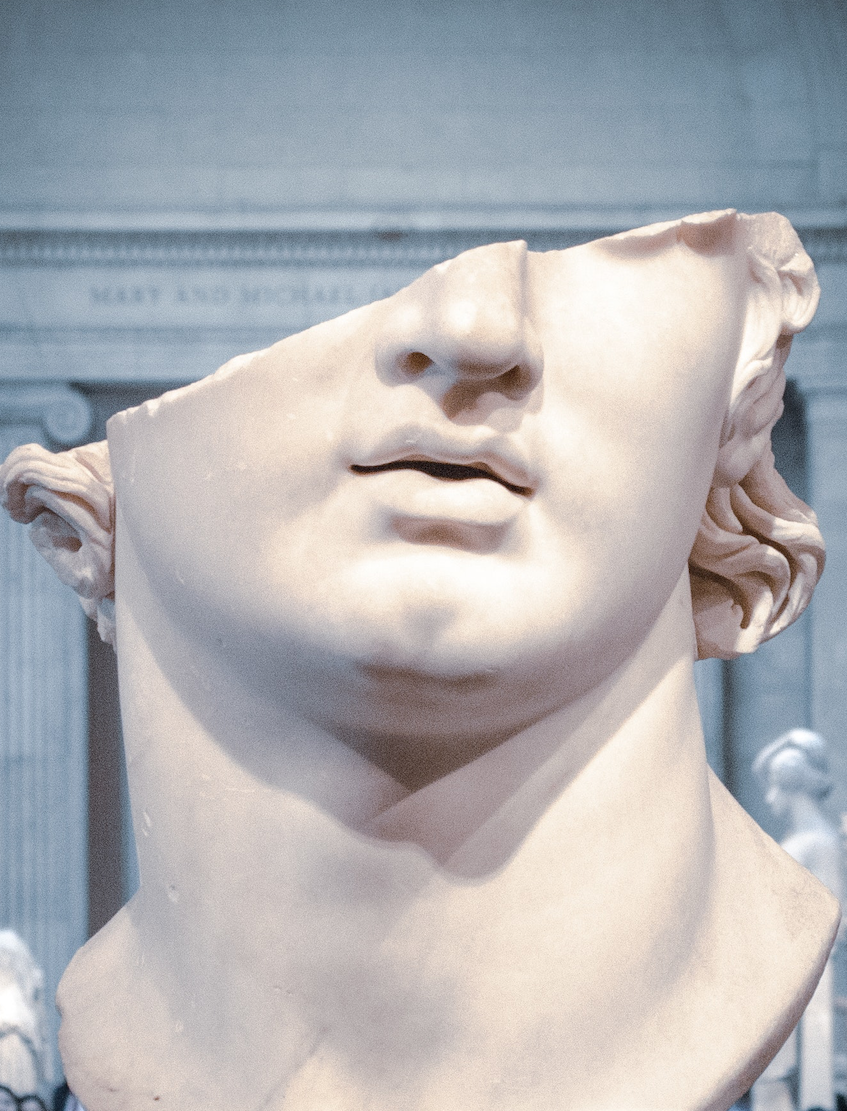
Nevertheless, one thing that I do happen to recall about geology is that there are three different types of rock on this planet—each one shaped by different natural forces and with different characteristics. There are metamorphic rocks like marble and there are igneous rocks like lava rock and then, finally, there is sedimentary rock, which is the type of rock that’s on my mind this week. This is the only time I can recall rock types having been on my mind, but God is full of surprises. So stick with me on this.
Sedimentary rock, as best I can summarize, is the type of rock that’s made up of various pieces of things—smaller bits of other rocks and sand and minerals and even bones—that, over time, get pressurized and cemented into one big slab. Limestone is like this, as is sandstone. You’ll find fossils in this type of rock, and sometimes those stratified bands of color that tell the story of the accumulation of the aeons, like in the Grand Canyon.
And there is this sort of fascinating paradox about sedimentary rock. It can be the stuff of mountains and show up in these incredibly large and strong formations, but among the three types of rock, it is the most easily broken. It erodes and it wears down and it can be carved and formed by the elements or, sometimes, by human hands.
If you have ever seem images of the ancient stone city of Petra in Jordan, you can see how a whole world was delicately carved into sedimentary sandstone cliff faces. Beautiful and strong and yet breakable. Hold onto that for a minute.
Because in today’s Gospel passage, we also hear about a rock—the rock that is Simon, Son of Jonah. He confesses his understanding of Jesus as the Messiah and the Son of God. And in so doing, Simon is renamed by Jesus to be known at Peter, Petros in Greek, which means ‘rock.’ Upon this rock, Jesus says, upon you and the faith you embody, Jesus says, I will build my ekklesia, my community, my church.
But what sort of rock is Peter? What sort of foundation is Jesus building upon here? Is it the cold and immovable force of metamorphic marble? Is it the the igneous crust of jagged, hardened lava rock? Some branches of Christianity might have you believe that it is—that our church is built to be something forceful and unblemished and immovable and unchanging. I suppose that can feel comforting in an uncertain world.
But Peter—and we know this from the arc of his whole story—is not that kind of rock. Under pressure, he crumbles, he doubts and denies Jesus, he sinks in the raging waters, he is worn down by uncertainty and fear.
Does his heart reach toward the heavens like a mountain peak striving toward the sun? Absolutely. But he is a complicated man, with layers of motivations and questions and cares comprising the sum total of his discipleship. His rock, if anything, is sedimentary. Beautiful and strong…and yet breakable.
It just so happens, too, that in the scene we witness today, Jesus and the disciples are walking near Caesarea Philippi, an area characterized by high limestone cliffs, into which are carved ancient grottoes and niches once used for cultic worship. And so when Jesus says to Peter, you are Petros, you are rock, and upon this rock I will build my new movement of love and flesh and spirit and death and life—he is literally saying this in the shadow of sedimentary rock, a breakable rock, a beautiful and eternal and yet distinctly changeable rock.
And yes, all of us who follow Jesus, all of us, too, will change and break; we too will be hollowed out by time and loss. We, too, will feel the sun break upon our brow and we, too, will know the deep darkness of the canyonlands. And all of this—all that we are and all that we will be and all that we can never be—all of this is exactly the type of rock that God chooses to build upon.
I do not share any of this with you, friends, just to explore Jesus’ metaphors. I tell you this because I think it’s deeply reassuring good news that ours is a church, a community, a way of life built upon this type of rock.
Because how many times have you and I broken apart? How many times, like Peter, have we crumbled, despite our best intentions? How many times have we set out to get truly right with God and neighbor only to fall back into the same old traps of complacency or resentment or fear? How many times have I been reminded that no matter how hard I try, we are all bound to erode and wear down and become something other than what we imagined we’d become?
And whenever that happens, I usually lament that I am not carved from marble, that I am not unblemished and cool and collected and unbreakable. I lament that little pebbles of regret fall from my broken edges. I am embarrassed that tears and time have carved gullies on my face.
But then, in this gospel story, I see Jesus looking at poor, hapless Peter and at poor, hapless you and me, with all our layers and deep cracks, and I hear Jesus say:
On you I will build my church. I choose no other. I choose you precisely because you can break and change. I choose you because I am going to take all those broken pieces and create a different thing. I do not desire cold perfection, I desire the ongoing process of your creation. I desire the kind of faith that can fall apart and find a way to reshape itself. I desire to carve into you with my Spirit and create a whole new world within you.
So stop wishing that you were perfect. Let go of perfect. Stop thinking that you have to have God all figured out. Let go of figuring it all out. Peter certainly didn’t have it figured out. He confessed his faith on fumbling lips and he tried and he failed and he just kept going, with love in his heart and Jesus in his sights. And that was more than enough. That was enough to build a church upon. It still is.
I am so glad that, in a place like St. Anne, following Jesus looks more like that and less like stone-cold-certainty. I am grateful for the sort of church into which we can carve out space enough for all sorts of people, all sorts of questions and discoveries, all sorts of mistakes and reconciliations. I can’t speak for other folks, but that is the sort of rock I want to help Jesus build upon. That is the sort of church I want to live in.
I suspect that none of this was on Laura’s geology exams. But knowledge has a funny way of coming back around and helping us out. So thanks, Laura, if you hear this.
And thank you, Jesus, for choosing imperfect Peter as your type of rock, and for choosing all of us who have come after him. Thank you for choosing to love this whole, beautiful, strong, breakable world.
Lord, we are still becoming whatever comes from the melding of time and broken pieces and bones and tears and love and loss and memory and hope and grace. We are still becoming that.
And our confession, and our prayer, through the accumulation of the aeons is ever the same:
You are the Messiah. The Son of the Living God.
Make of us what you will.