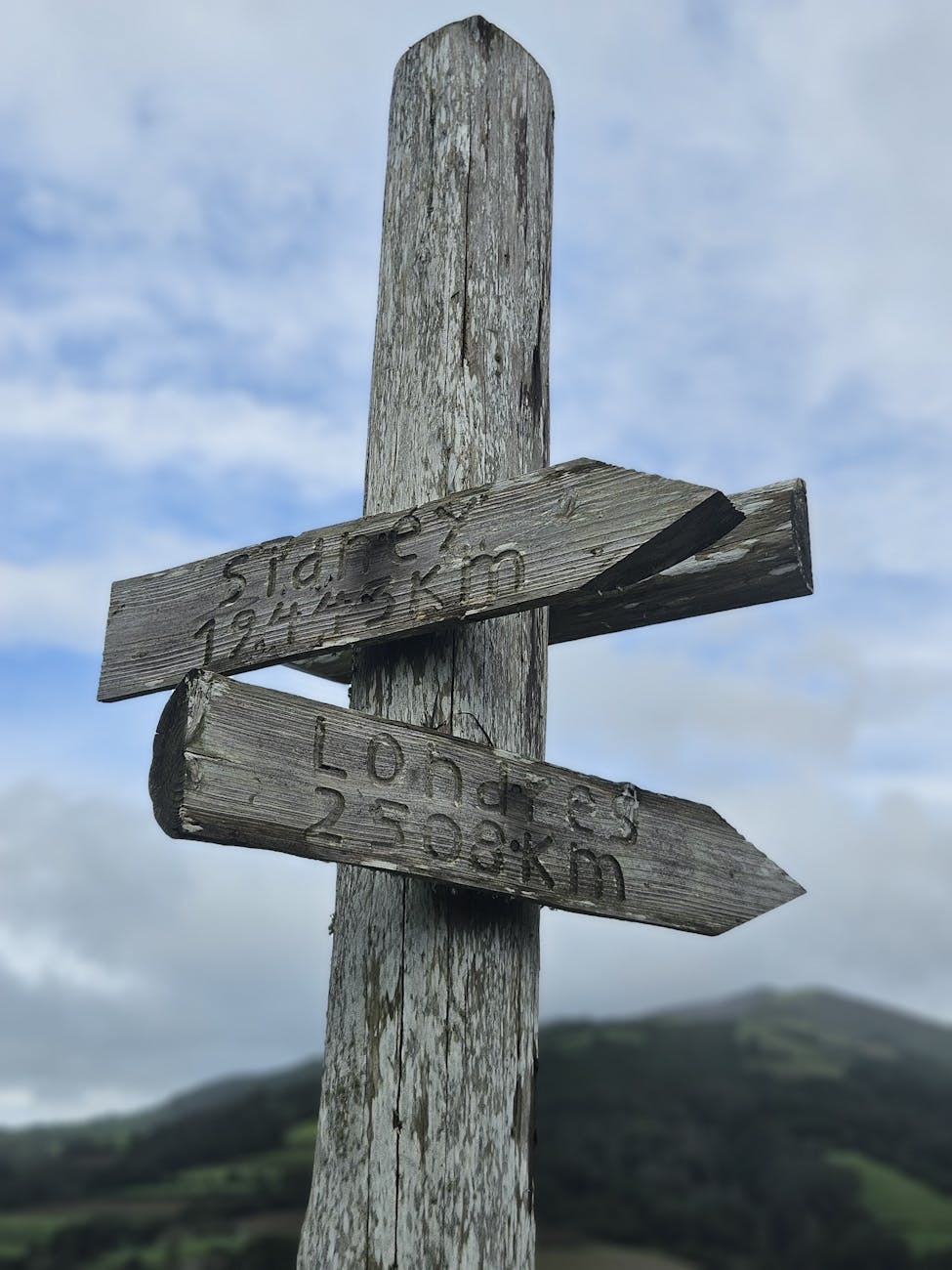

(Asc)ending: A Sermon

I preached this sermon on Sunday, May 17, 2026 at St. Anne Episcopal Church, West Chester, OH. The lectionary text cited is Acts 1:6-14, an account of the Ascension of Jesus.

I don’t think that this is a particularly unique or exceptional thing, but I don’t like endings all that much. When I come across something good, I don’t ever want it to end. As a kid I used to stay up late into the night covertly reading books long past bedtime—just one more chapter!—and then I’d get to the end of the book and feel that distinct pang of sadness when the page goes blank. 

I didn’t ever want to finish the story. I just wanted it to go on and on and on. 

But stories are good training for us, I suppose, because life is the same way. All of us, on one level or another, have had some endings that leave us a bit achy inside—the end of a relationship; or of a season in one place; or, of course, the big endings that death brings into our lives.

We learn to live, somehow, with these finalities, but we never really get over them. There tends to be an empty space within us where that thing or place or person used to be. And the question, as we go, is not so much how to prevent having any of that empty space. No, the necessary question is: how to keep growing around this emptiness? How do we bless the blank page at the end of the story? How do we carry on, carrying all these endings in the hollow spaces carved out within us?

You would think that, in Christian life, we would be really good at talking about this sort of thing. That maybe we would’ve come up with a way to make it all easier, less painful. No such luck. We struggle with endings in church just like all people do. 

Think about it: our favorite church celebrations and feasts all tend to emphasize hellos, not goodbyes. We love to celebrate arrivals and appearances and manifestations—Advent and Christmas and Easter Day and, next week, Pentecost, when the Holy Spirit will rush in with all her fiery gifts.

Departures and farewells—not so much. Those are mostly for funerals, for Good Friday, and for one more feast…one that doesn’t get much traction in the Church these days. Do you know what that feast might be? It just happened this past Thursday: the Feast of the Ascension. 

This is, in our time, probably among the most overlooked of the Church’s principal feast days. Now, the fact that it’s always on a Thursday, exactly 40 days after Easter, is probably part of that. But I also think it’s because of what the Ascension commemorates: the ending of Jesus’ physical presence in this world. It’s not Good Friday-tragic, but it’s still an ending. It is a feast dedicated to saying goodbye.  And we don’t much care for goodbyes.

And maybe our lectionary editors knew we’d try to skip over it on Thursday, so they snuck the story back into our first reading this morning, too. All right, then—we’ll take it on. Let’s see what this particular goodbye has to teach us. 

According to Acts, Jesus appears this last time among his disciples, and he gives them some parting instructions and promises, and then just like that, as the author describes, “he was lifted up, and a cloud took him out of their sight.” 

These disciples will not see Jesus in the flesh ever again. Imagine the very last time you saw the person you loved most in the world. Perhaps that is something of what they felt this Ascension day and why they remembered it.

Jesus leaves a space behind that they are not yet sure what to do with. And as they stand there, staring up at the clouds, perhaps feeling like they have arrived at the end of the very best story they’ve ever known, with that blank-page pang and that hollowness in the pit of their stomachs. The question is, now what? How will they carry on with this Jesus-shaped empty space in their lives? Who are they now that he is gone from their sight?

But what is so beautiful, so worthy of celebration in this story is what the disciples do NOT do next. Unlike after the crucifixion, they do not scatter. They do not each retreat into their own private, bitter grief. And they do not try to fill up that empty space with distractions or anger or denial or dissipation. They don’t even splinter off into factions competing with each other for influence—which, knowing some of the other stories of these guys, you might have thought they would! 

But no—they go back to Jerusalem, and they gather with the women, and they pray. They pray into this ending. They pray into the blank page of this new, unwritten part of the story. They stick together in community and they begin to form a new life around the shape of Jesus’ absence. They somehow accept the goodbye and the empty space, and they trust that God will provide whatever they need to carry on. 

And next week, at Pentecost, we will discover exactly what God does provide to them. And it will be something!

The point for today, though, my friends, is that we—the ones who continue to gather in the wake of Jesus’ departure—are still in the process of forming that new life. We are still learning how to pray into our endings, how to build a community that can bless what we cannot hold onto and love the things that leave. We are still learning how to tend to the empty spaces within ourselves wrought by all our goodbyes, rather than trying to fill them up with easy answers and petty idols. 

This is not happy-go-lucky spiritual platitude stuff. This is sacred soul work. This is the feast-days-we’d-rather-skip-over stuff. It is also, I would offer, the difference between a faith that merely placates and a faith that liberates.

Because as much as we are afraid of endings, it’s also true that sometimes we need them. Sometimes we need to let go. And it’s definitely the case that the wider world needs some endings, and it needs a people—a Church—that is unafraid of letting things go. A people who can speak of all that ought to pass from our midst so that God can do something new in us and in this world. The Church, in every age, is called to pray into those endings with clarity and courage. 

For example, maybe we need to pray into an ending for the poisonous nostalgia for some imagined past that was never as pure or perfect as some people think it was.

And maybe we need to pray into an ending for tired old structures that prop up all those powers antithetical to God’s kingdom. 

And maybe we need pray into an ending for small imaginations and big egos and conditional compassion and hesitant mercy.

Maybe we need to pray into an ending for judgment masquerading as moral clarity and into an ending for violence masquerading as justice and into an ending for hard-heartedness masquerading as tough love. 

Maybe we need to pray into the ending of all those things.

Because THAT is what the disciples did after the Ascension—they learned how to embrace the power and the necessity of goodbye. They took the absence of Jesus’ body as the call to BE his body now—to stand where he stood—to face down the powers of death and despair as he once did, and to say: he may be up there, but we are still here! And we are just getting started!

This is the lesson of the Ascension: blessed, blessed are the ones who can pray into life’s endings and say to the blank page and the hollow heart and the uncertain future: Thy Kingdom Come, Lord, Thy Spirit Come, Thy Truth and Goodness Come and goodbye to everything else!!

Easier said than done, perhaps. That’s why we need one other here, in community, just like those first disciples did.

But I think—I know—I believe–that if we can keep at it together; if we can pray into all our endings together; if we can keep up what began on that first Ascension Day rather than skip past it; we will continue to discover all that we were meant to become once Jesus disappeared from view: loss-carriers, hope-seekers, truth-tellers, care-givers, prayer-offerers, peace-makers, song-singers, dance-dancers, Lord-proclaimers, Son-followers, Spirit-bearers, ever beloved children of our Father in heaven. 

In other words, the Church.

In other words, a people who no longer stare up at the clouds but who get to work, here and now, to be the visible presence of our invisible God. To take up the blank page at the end of Jesus’ earthly story and continue the next chapter ourselves. Just one more chapter!

For that is what the Ascension calls to be: the ones who can see beyond the last page. The ones who will see the story through all the way to our ultimate end: abiding forever in God. 

And although I tend to hate an ending, I have to say: I love the sound of that one. 

Snapshots: A Sermon

I preached this sermon on Sunday, May 10, 2026 at St. Anne Episcopal Church, West Chester, OH. The lectionary text cited is Acts 17:22-31.

Have you ever wished you could go back and tell an old version of yourself something that they might need to know?

This weekend I’ve seen lots of old versions of myself—I started pulling out boxes of old photos and sifting through them in preparation for the wedding in June—Matt and I are putting together a little table with pictures and  mementos for the reception. 

So I’ve been looking at some way-back-when pictures from childhood, and high school, and young adulthood. And frankly I’d like to have a word with those earlier versions of myself. 

I’d like to tell that little boy with an awkward smile on his face: don’t worry. There is indeed a place for you in this world. 

I’d like to tell my high school self: Phil, that look was not fashionable even then. What were you thinking?!

And I’d like to tell my younger adult self: cherish your loved ones; you don’t know how long you will have them. 

But, of course, we cannot access our old selves in that way. Each snapshot simply captures the best we knew at the time. So perhaps the best we can do now with those images of our old selves is to bless them, love them, and to forgive ourselves for all that we were, and all that we were not. Same goes for the photos of our mothers…and our fathers and friends and lost loves. Bless, love, forgive.

We have to do that, I think, if we ever hope to make peace with this life. 

I also think that God looks upon us in the same way, from the wide perspective of time and with the deepest sense of peace. Because God knows our past and our future all at once; God can see where our lives fit together, and God can see where they’re broken, too. And whether we ever figure it all out for ourselves or not, God loves our lives anyway. 

So I like to imagine God sitting somewhere in heaven, thumbing through the infinite snapshots of us, patiently and with great compassion, wanting to say, “just wait! It will often be better than you fear. And sometimes it will be harder than you think. But you can do it. You’ll see.”

I’m thinking about this not only because of my photo box, but because of our reading from Acts today, a passage I really love. Paul’s interaction with the Athenians gets to the heart of all our knowing and not knowing in this life, and it reveals what God wants to do about it. 

The Athenians, you see, were very adept at knowing things. Though Athens was part of the Roman Empire in the apostles’ time, this ancient Greek city was the cradle of western art, philosophy, and politics. The Athenians KNEW many, many things and were proud of that knowledge.

And yet even they suspected that there were things that had escaped them along the way. They didn’t have embarrassing old photographs to remind them this was the case, but perhaps it was just a sneaking suspicion that for all their philosophical wisdom, they were still just barely brushing up against the great mystery of existence.

So Paul sees an altar in the city inscribed with the dedication “to an unknown God.” 

Some scholars think this was a “blanket insurance policy” altar; that the people were ensuring no Roman deity was accidentally overlooked and therefore dishonored—sort of like our understanding of the “tomb of the unknown soldier” today.

Others think it was more abstract: an altar dedicated to that divine truth that is simply beyond all knowledge. But in either case, the Athenians knew that there was something that they did not know, and they wanted to honor it.

And then here comes Paul. We can think of his remarkable speech to them in a variety of ways—an early Christian sermon; a challenge to the Roman social order; a pastoral message—but I think it’s also something even more remarkable than any of that. I think it is like a message from some future version of ourselves. Let me explain what I mean.

Paul, when he had that Damascus road experience, did not just have a nice cozy little chat with the Risen Christ. They didn’t just sit down to tea. No, Paul was drawn into a direct encounter with Resurrection life—he saw, he felt, he was immersed in, the destiny of all of us—the very thing Jesus promises in today’s Gospel: how someday there will be no space between us anymore, no space between us and God, and all creation will be able to love and feel itself new and whole and fully alive. 

That’s what Paul saw, and it blinded him for a bit, and it saved him, too, and he was driven and haunted by the vision of this great glory til his dying day. Understand that, and you will understand his whole ministry better.

And so he has come back from this encounter—as a sort of time traveler into God’s ultimate plan for us—to tell anyone and everyone what he has seen. In the same way that we wish we could go back and tell an older version of ourselves what to hope for, what to cherish, what to let go of—well, that’s what Paul is doing in all his speeches and letters—telling us what will ultimately come to pass, so that we might know what to bless, what to love, and what to forgive in the meantime. 

What therefore you worship as unknown, this I proclaim to you.

Let me tell you about the bigger picture of yourself, Paul says. Let me tell you of the God who made you and loved you from the start. The God who came to be with you, and die for you, and who destroyed death for you. The God who, even now, holds your entire life in loving hands, all those snapshots that make up who you are becoming. 

Let me introduce this God to you, Paul says. His name is Jesus.

I tell you all of this, friends, because every day I hear big, important questions being asked. I ask them, too. What will happen to the economy? What will the next election hold? How will we bridge our divides and care for our parents and raise our children and heal the earth and survive our grief? And how can we possibly do these things when the future looms like a great specter over us? 

These are important questions that require us to work toward faithful answers. 

But here’s the funny thing about Christian life: we work towards those answers while already knowing the ultimate Answer. We live our lives already having received the Truth about life. We pray for our daily bread having been fed with Living Bread. We know where it’s heading. We do not worship an unknown God anymore. 

And if you forgot that, as it is so easy to do, let me introduce him to you. His name is Jesus. And he wants to share his Spirit of love and life and peace with you.

It’s true, we cannot reach those past versions of ourselves, but God can reach us here and now to tell us what will become of us. And in Jesus, that is exactly what God does.

In Jesus, we are given a message from that glorious future God has prepared for all the world, where justice rules and where love is the last word and where all those sweet, sad, awkward, partial snapshots of our lives have been gathered together into one big story, one Big Life, one diverse Kingdom. 

So whenever you are feeling overwhelmed by the future; when you don’t quite know what to do next; when there are questions which seem to have no answers—first, lean on the people around you in this place. That is what we’re here for. 

And second, think back to all those previous versions of yourself. Pull out a few old photos if it helps. And remember that you—that all of us—are still becoming all that God would have us be. 

So try to bless this present version of yourself, and love it, and forgive it, just as God has always done.

(Except for some of those fashion choices of mine. Maybe some of those were unforgivable.) But all the rest of it, absolutely. 

So I think the Athenians were half-right. We are always brushing up against the great mystery of existence.

But the good news is this: ours is not an altar to an unknown God. Because God is known. He has come, and lived, and died, and risen, so that we can finally know him. 

And in case it’s been a while, let me introduce him to you.

His name is Jesus. 

Way, Truth, Life: A Sermon

I preached this sermono on Sunday, May 3, 2026 at St. Anne Episcopal Church, West Chester, OH. The lectionary text cited is John 14:1-14, which includes the following: “Jesus said to him, ‘I am the way, and the truth, and the life. No one comes to the Father except through me.'”

I am of two minds with this Gospel passage—I find it both comforting and troubling at the same time. Comforting because I think of all the times I have preached on it at the funerals of people I love, with that beautiful image of God’s house with many dwelling places, the doors flung open wide, welcoming us home after the long journey through this life. 

But then…there’s that line that so often sounds like a closed door, not an open one: no one comes to the Father except through me. This part lands hard on the ears, especially for those of us who have known rejection, or who have come from other church backgrounds where exclusivity was emphasized and sharp lines were drawn between the saved and the condemned. 

We supposedly proclaim a God of unconditional love for all creation, and yet this verse can read like Jesus is a bouncer at a nightclub, and some folks’ names just aren’t going to be on the list. 

But I confess that I struggle to imagine the Jesus I know, the Jesus I love, shaking his head and putting up the velvet rope to keep anyone out of God’s enduring celebration. Something just doesn’t sit well with my soul there.

And I suppose I could just shrug my shoulders and say “who knows, I guess God will figure it all out later on,” but that feels like an easy out of a very fundamental question. I think we can try a little harder than that. And in a complex and diverse and often judgmental world, I think we owe it to ourselves and our neighbors to try a little harder than that. So that’s what we’re going to do today. 

You know, last fall we welcomed a large group of our neighbors from the Islamic Center of Greater Cincinnati here to St. Anne and we broke bread with them and learned from one other and even invited them to observe a service of Holy Eucharist. I’ve mentioned before that it was one of the most powerful nights I’ve ever experienced in ministry—that the Spirit of God was truly alive and present in these walls. 

And it was not because of some secret agenda to show our neighbors the “right” way to live and believe. No, it was because it was communion in the truest and simplest sense—people coming together from different backgrounds, with integrity and humility, to share their stories, to speak of what they know to be true, and to be bound together by a love that is ultimately hard to quantify or categorize. 

And you know what, in that space without agendas, where everyone was a little bit uncomfortable and a little bit open to the things we do not understand…in that space I felt the love of Jesus more powerfully than ever. I felt like he was saying to us here, “see, now you’re starting to get it! Now you’re on your way! Loving me doesn’t mean fearing everyone else!”

So when it comes to passages like the one we have today, I wonder if maybe we can try on a new pair of glasses, as Mtr. Alane suggested last week. Maybe we as the Church have been reading this passage the wrong way for a very long time, assuming it was about who gets into the nightclub when instead it was trying to show us the vastness of the night sky.

It wouldn’t be surprising if that were so. We’ve been formed within the long, long shadow of history to think of faith in institutional terms: insiders and outsiders; winners and losers in some vast cultural and cosmic landscape. As if following Jesus were like joining one team pitted against all the others. 

But what if I told you—or reminded you, really—that this is not at all what Jesus wanted us to understand about God? What if I reminded you that Jesus’ whole mission was about making us aware of the boundlessness of God’s love and mercy, and of the truth that there is only one team—all of us, together, the whole creation—and that being Christian is fundamentally about recognizing this and living like this? How might that help us hear this passage (and maybe every passage) with new ears?

“I am the way and the truth and the life; no one comes to the Father except through me.”

Let’s work through this carefully. Stick with me.

If we accept that Jesus is the human face of God—which is one of the foundational premises of our Christian life—then the first part of this statement (I am the way the truth and the life) is not that difficult to accept. 

Because Jesus does indeed show us what ‘the way, the truth, and the life’ are. He shows us in word, in action, and in his very being—in his “I AM”ness, if you will. And it is love. The way, the truth, and the life are a fully embodied love like his. A persistent, humble, purposeful love for God and for every one of our neighbors. We know this. We have seen the Lord, and we know this.

And if we know that love is what Jesus is all about, that love is his very being, then the second part of his statement follows from the first. No one comes to the Father except through me. 

‘The Father’ is, of course, Jesus’ name for this God who is love, and Jesus is the embodiment of this God who is love, so this second line could just as easily and faithfully be read: 

No one comes to this Love except through…love.

I hear that, and it feels like an open door. So let’s step out from behind the velvet ropes and stare up at the stars and hear that line one more time, anew: 

Love is the way and the truth and the life. And no one comes to this great Love except through love itself.

I don’t know about you, but that does sit well with my soul. That message is truly good news. And it tracks with the Jesus I know, the one who died and rose again for love’s sake. It tracks with the Jesus who never gave up on me even after all the times I have given up on him. It tracks with the Jesus who keeps giving himself to us, over and over again, in bread and wine and Spirit, embracing sinners and saints and everyone in between, with no exceptions. It tracks.

And it speaks somehow, too, into all that love I hold for people of every background and creed—our friends who have lost their faith and the ones who never found it; and for our Jewish siblings and our Hindu friends and our Islamic neighbors, and everyone else. Just like that night last fall, the very real love of Jesus should draw us closer to one other, not further apart.

Because although I don’t claim to understand exactly how or why, I know, God, I know that somehow there is room enough for all of us in this life and in this world…and even in the vast eternity beyond the stars, in that house of many dwelling places. Love makes room for everyone. And if I’m wrong, I’m wrong; but I’d rather be a fool for love than a sage for certainty. 

And so, I don’t know about you, but that foolish love is the thing I am going to believe in, and live by, and die trusting in, because, as best I can tell, that is what Jesus came to show us and to give us. 

I hope you’ll hold onto that, especially for those days when things feel heavy and faith feels narrow and you need to remember what this is all about. 

Though I warn you, it remains a passage both comforting and troubling. Because even if it’s all about love, God knows I am still figuring out how to love like Jesus does, day by day, and that’s not always easy. I just happen to believe that such a love is the one thing in this life worth figuring out. 

You might even say that it is the way, the truth, and the life. 

You might even say that this love is the only way. 

I tend to think that Jesus would agree.