

The Second Story: A Sermon

I preached this sermon on Sunday, October 18, 2026 at St. Anne Episcopal Church, West Chester, OH. The lectionary text cited is Matthew 22:15-22.

There is this thing that happens in life. For some of us it happens at an early age, for some it creeps up on us later,. But whoever we are, it’s guaranteed to happen. I am talking about those moments when you thought your life was going to unfold in one way, and then you realize it is not. That the narrative you’d been working with is not true anymore, or maybe it never was.

I remember, for example, when I was diagnosed with Type 1 diabetes during my freshman year of college. It upended a lot of my expectations about the way life was going to be. I had harbored some dreams of joining the Peace Corps and living abroad with a backpack like my mom had done, and suddenly that was no longer possible. Now, I still managed to have a great college experience, but nonetheless, the story I’d been planning around was no longer going to work. I had to find a new story to live into.

I wonder when this has happened to you. I am quite sure that it has, maybe more than once. Maybe it was when you lost a family member or a spouse. Maybe a divorce or an illness, or just a dream that didn’t come together in the way you’d hoped. Or maybe it’s just reading the news these days and feeling like the world around us has entirely lost the plot about being kind, being just, being human.

Whatever it is, I think a lot of us are living with the grief and heaviness of stories we’d rather not carry, even if we’ve learned how to get by.

But what if there was a second story? What if there was an alternative story; a better story that we could tell and live into? What if the narratives that weigh us down are not the only way to understand our lives?

I’m not just talking about a positive reframing of bad situations. There are some things that are just categorically terrible. If I could undo my chronic illness or your deep grief; if I could stop the bullets that kill innocent children; or undo the hatred that divides families, I absolutely would.

But my hope, tenuous as it may feel sometimes, lies in the fact that there is something more than just disappointment and degradation at work in our lives and in the world around us. Because there is a second story unfolding, coursing along beneath us like an underground river, only occasionally breaking forth to reveal itself, but always there, always also real alongside our pain.

And it is this second story that Jesus came to tell, and live, and die by. It is for this second story that Jesus rose again. And the title of this story is “good news;” it is “love will win;” it is “get behind me, satan, because you can kill our bodies, but you cannot kill our collective hope.”

But whatever we call it, in today’s passage from Matthew, we see how Jesus is able to draw even his enemies into the possibilities of this second story.

You see, the Pharisees and the Herodians, like most of us, are caught up in the first story—the one embodied by Caesar, the one that is most evident all around us. The story that tells us it is foolish to dream of justice or to believe in love when injustice and cruelty persist generation after generation. Through the lens of this first story, Jesus is a problem—he is a threat to the terrible yet relatively familiar order of things.

And so they try to trap him with their question, forcing him to either align himself with or against the emperor. Surely, they think, no matter how he answers, they’ve got him cornered. And if we were living only in the story of Caesar, they’d be right.

But what the Pharisees and the Herodians did not count on is that Jesus does not play by the rules of the first story, nor is he bound by the limitations of its craven imaginings.

When he says “give to the emperor the things that are the emperor’s, and to God the things that are God’s” he is not just saying pay your taxes and go along to get along. No! He is saying: you may not realize it, but you are part of two stories, even now, every one of you. The story of Caesar, and the story of God. And the day of your liberation is the day when you realize they are not the same thing.

Because yes, that first story is of empires and the taxes rendered upon us—the taxes, not just of money, but of scarcity and time and illness and disappointment. Life will demand its payments from us, and we will weep, because this is not the story that we hoped for when we started out. But if we follow Jesus all the way to the Cross, we already know that this is a story we must live out.

But then there is the second story. The story of God, and God’s refusal to abandon us, even when we have become so very lost. The story of God’s triumph over death and of lives that might be lived in something other than fear or desperation.

And this second story, this hidden spring of living water, this invitation to give back to God the things of God within us—faith, and hope, and love, and humility, and mercy, and justice, and forgiveness, and truth-telling, and dignity, and peace, and wonder—this story, though it might seem secondary, is, in fact, the one we must never stop telling. For it is the story that will save us.

Friends, I’ll be honest. I am not immune to the deep grief of our times any more than you are. I rage at the injustice and the suffering, and I feel helpless some days, and bitter on some other ones. I make no peace with wanton cruelty. I believe our culture has been degraded by a whole host of influences, technological, economic, and reactionary. And I do not think that it is the role of the church to retreat from these struggles. Jesus’ invitation to follow him means that we are meant to, as the poet Dylan Thomas says, “rage, rage against the dying of the light.”

But day by day, I am reminded that I cannot do that apart from the second story’s claim upon my soul. I must give to God the things that are God’s, even as we grapple with the world of Caesar. And that means my rage, however righteous, must be grounded in love, peacemaking, and nonviolence. This loving rage is the paradox that Jesus lived out and flipped tables with, and it is what Jesus demands of us, too.

Our question, which has always been the fundamental question for the church, is not whether we do this, but how. How do we live in the tension of these two stories, caught between taxes and transcendence? How do we engage the profane with holy music still on our lips?

The short answer is: we become more like Jesus. Because thus far, he is the only one who has ever done this fully. And we trust in his second story, and we live and die by it, and we encourage one another along the way.

We use the liturgy as our teacher, and our community as a living laboratory of grace in action. We encourage one another when times are very bleak, and we rejoice when that living water erupts in our midst.

And we keep doing this, year by year, season by season, through the rise and fall of things, until such time—a time known only to our Lord—when the first and second stories merge into one, and all we have paid will be redeemed, and all we have lost will be returned, and all of Caesars coins will scatter into the river of God, and we will stand at the edge of some entirely new story altogether.

And even if all the other stories we told were never quite true, this one will be.

This one will be.
On Judgment, And Strawberries: A Sermon

I preached this sermon on Sunday, July 19, 2026 at St. Anne Episcopal Church, West Chester, OH. The lectionary text cited is Matthew 13:24-30, 36-43.

This morning I am going to offer you a disclaimer right up front: this is a sermon about God’s judgment.

Judgment is not a word we enjoy hearing very much, and many of us, perhaps, came to a church like St. Anne because we were exhausted by hearing about it too much in other faith communities. Believe me, I get that. But before you run for the exits, stick with me for a minute. Because today I am hoping we can reengage the idea of judgment rather than run from it. 

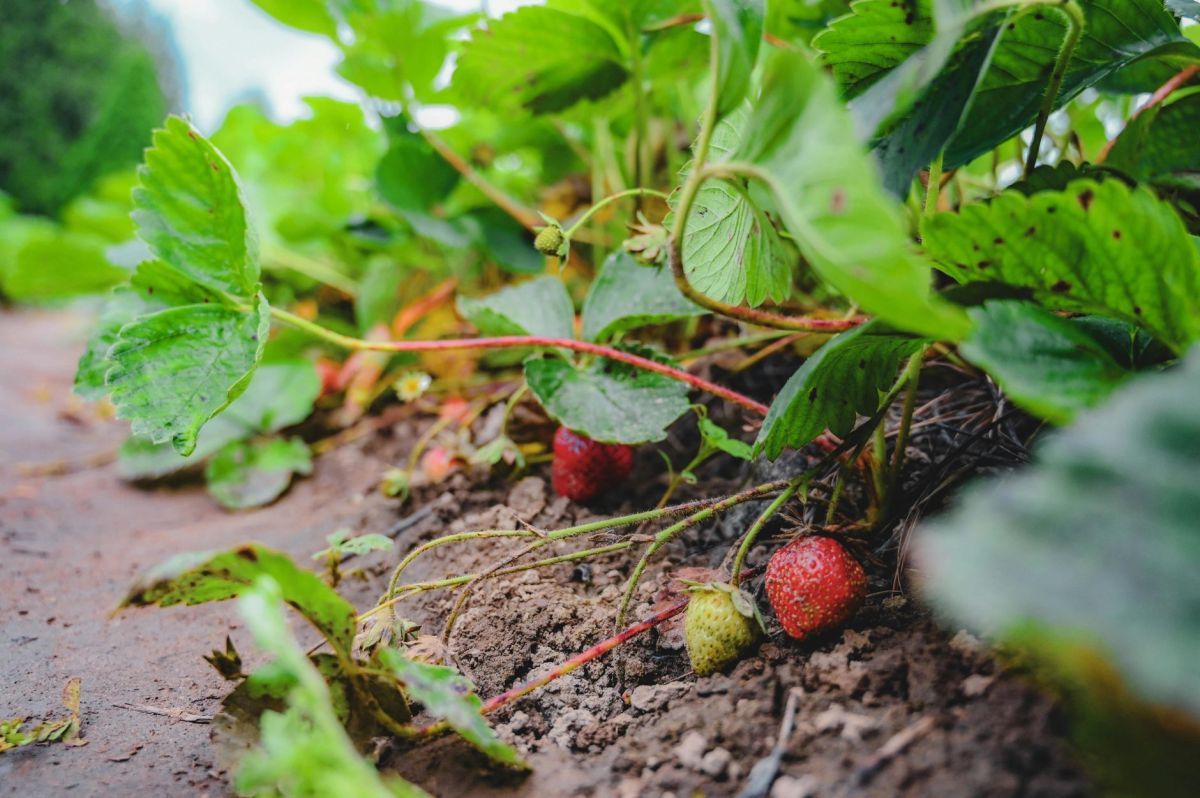
And in order to do that, first I need to tell you about picking strawberries. 

Just like the 4th of July rituals I described a couple weeks ago, another certainty of summer in rural Michigan is strawberry picking. Every year, on some particular July morning, my grandpa would announce it was time to go out to get our annual haul of berries for the many pies and jams and strawberry shortcakes that would soon fill the kitchen.

And so a bunch of us, young and old, would load into the pickup truck with visions of strawberry pie in our heads and travel way out past town, down an old country road to Kudwa’s strawberry farm. It was an old family farm with thousands of ripe berries beckoning from the low-growing plants just waiting to be plucked up into our buckets.

Now I was a city kid and didn’t really know much about how things grow, but I find you don’t have to be an expert to recognize a good strawberry. The big, fat red ones—into the bucket! The small, green ones, or the mushy overripe ones, you leave behind for some future berry picker or for the deer. And did a few especially perfect looking strawberries get popped in my mouth on the sly? Absolutely!

The point is that, when you’re strawberry picking, you must judge between which ones are worth it and which are not. And that type of judgement is a useful, necessary thing. It’s how we sort through all kinds of matters in this life. 

And so, when it comes to talk of God’s judgment in Scripture, rather than avoid it, I want you to hold onto that image of the strawberry patch, where “judgment” is not indiscriminate condemnation but careful discernment. Judgment is God saying, this over here is good and necessary and life-giving. And this other thing over here is not. 

I think we make a great error in the church if we forego any discussion of God’s judgment in our well-meant attempt to be welcoming and loving people. I think we miss out on the particular type of ethical clarity that God is asking us to speak and to practice as followers of Jesus. We say love God and love our neighbor, always, yes, and we push back against the ways judgment is misused to demonize whole groups of people, but it remains that there are things in this world that are good and sweet and nourishing, and those that are best left behind. And in following Jesus we are expected to get clear about which is which. 

So which is which? That is the question. Unlike strawberry picking, it gets tricky.

I bring all of this to your attention this morning because of our Gospel passage from Matthew, where Jesus regales us with yet another agricultural parable. This time it’s about wheat and weeds and how they spring up together in the same field. Somewhat surprisingly, the owner of the wheat fields says, just let the weeds grow and someday it will all be sorted out at the harvest. 

Now there is a lot that can be taken from this, but in its simplest terms, this parable is about God’s capacity for judgment. Because at any given time there is both good and evil in the world and a judgment—a choice—between them must be made. In nearly every situation we’ll ever experience, if we wish to live fully and well, we have to discern between what is life-giving and what is not. 

The problem is that often we mere mortals can get confused by these choices, and overwhelmed by having to constantly navigate the thicket of wheat and weeds growing up all around us.

People get all mixed up and think that we should judge according to our biases and cultural norms or our personal points of view or our political allegiances.  That type of judgment rarely ends well. We end up standing lost amid the fields, amid the ruins of our former certainties, crying out for clarity.

But thankfully God is not lost. God does not get confused. And God is not overwhelmed. God has always been crystal clear about what leads to abundant life and what does not. 

God has been clear about this since that first fruit was picked from the tree in Eden, and God is clear about it in the words of the prophets, and God is clear about it, above all, in Jesus, the “first fruits” of the resurrection, as Paul calls him. 

And this is why we need God—we have always needed God—to come and help us see, and to follow, and to persist in the truth of his capacity for judgment, not ours. In the “Te Deum,” one of the most ancient Christian hymns, we sing to Christ:

We believe that you will come and be our judge.
    Come then, Lord, and help your people.
   

And yet you might still be wondering, how do we tell which is which? What is the ultimate criteria of Jesus’ judgment—that ancient and eternal clarity of God which can tell the good from the bad, the right from the wrong, the sweet fruit from the bitter? What does he see as the one true measure of things that we struggle to see?

Friends, I suspect you actually already know the answer. It is love. Love is the fundamental criteria of God’s judgment—of his sorting between what will last and what is best let go.

And no matter the choice you must make in any particular situation in your life, if you claim to follow Jesus, if you claim Jesus as your judge, then love is the side you must be on. 

Love—by which I mean a self-giving, goodwill-seeking, justice-building, peace-making, reconciliation-building, fault-admitting, circle-widening, inclusion-orienting, humility-accepting, mercy-sharing, good-humor-celebrating, creation-honoring, reverence-offering, sweet-summer-berry-picking kind of love—this love, God says, time and again, is the only choice worth making. 

And if that’s what we’re talking about when we talk about God’s judgment—and make no mistake, in this place we are—then I am going against the Episcopal grain, I suppose, friends, because I WELCOME God’s judgment. I welcome God’s enduring ability to tell me what is worthwhile in those moments when I am afraid or have forgotten. 

In this world where the weeds are grown so high, I cry out for that good judgment, because I believe in the goodness of God, the love of God, the generosity and the beauty of God, and I WANT the world to be held accountable to generosity and beauty and love and goodness. 

In fact I refuse to settle for a world in which nobody can separate what is life-giving from life-degrading and where anything is ok simply because someone can get away with it. That’s not any kind of good news at all, and I am hungry for Good News. Hungrier for it, even, than strawberry pie, and that’s saying something!

So if we are anything at all, let us be a community where we are not afraid to speak of God’s judgment—God’s clear judgment between love and its many impostors, God’s wise judgment between those who build up and those who tear down, God’s saving judgment between the sweet and the bitter fruits of this life. 

Let us be an Episcopal church who is unafraid to say that anything less than a spacious and generous and inclusive love is, in fact, unacceptable in the kingdom of God. Let us be a people who, in word and action, demonstrate that we do indeed know the difference between truth and a lie, and we are choosing, Lord help us, we are choosing love’s truth.

Because, as former Presiding Bishop Michael Curry often says, “if it’s not about love it’s not about God.” And that’s the sort of judgment call I am glad to hear proclaimed. 

As far as I know, that strawberry farm in Michigan is long gone. But oh, that summer harvest taught me some lasting things, and on a July morning like this I think we who gather here are still picking berries in our own sort of way —all of us down on our knees, working as one, reaching out for those sweet, perfect gifts. No confusion or fear, just clarity…and a hunger for the feast to come. 

And while I don’t claim to know the mind of God, as best I can judge…if that’s what we’re up to, it sounds pretty much like heaven.