
On October 1, 2026, I had the joy of offering a retreat talk for the Prayer Intercessor ministry team of Christ Church, Glendale, OH. The text of that talk, centered on Genesis 32:22-32 (Jacob’s wrestling with God) is offered below.
What is prayer? What does it mean to pray?
You would think these are straightforward questions, and yet they are not. Of all the things that we Christians do, I think that prayer—especially the kind outside of the words spoken at Sunday morning services—is one of the most difficult things for people to figure out.
So many times in ministry I have heard some version of: I don’t know how to pray. I don’t know what to say. I don’t think I am doing it right. People are self-conscious about prayer, hesitant to do it, even if they are people of deep faith.
Perhaps you, too, in your ministry, have struggled at times to speak a prayer, whether by yourself or with other people. I know I have. It is sadly not the case that putting on a clergy collar suddenly imbues you with all the right words to say to God in any given moment.
As intercessors, we can come up with some words, and sometimes they seem to meet the moment, and other times they are muddled and fall flat. But in either instance, I have the sense that the words are not really “the thing itself” in prayer—they are just the life raft that we hang onto as we float amid the great, silent undulations of the sea that is our life in God.
And so I have begun to wonder if we have the wrong starting idea about prayer. Often we hear “prayer” and we automatically think that means “saying nice words to God.”
And since God is, well, God, we assume we’d better have some really extra nice words to say. Some really wise, appropriate, eloquent, creative, clever, unique, transcendent words. Maybe we think that if we can get the words right, then God will really hear us this time. And as a starting premise, this can freeze us up before we even get started with prayer.
Part of what inspires me in the Psalms, and why I had us read through a few together earlier this morning, is because they push bask against the idea that prayer needs to be polished. The Psalms are all over the place emotionally and linguistically, sometimes within just a few phrases.
One gets the impression in most Psalms that the person speaking has stopped caring about being eloquent or spiritual and is just pouring out the mess of themselves—the anger, the fear, the love, the delight, the confusion, and they are trusting that God will know what to do with it.
This is a clue for us that, whatever prayer is, it is both simpler and more elemental, more of the guts and the body and the soul than we might care to admit. Especially we Episcopalians who love heady thoughts and pretty words and ordered approaches to things.
And so today I want to invite us to think about prayer in a different way, from a different starting premise—not primarily as “saying nice words to God.” Not as impressing God with eloquence or well-constructed sentences.
No, I want us to think of prayer first and foremost as a posture, as a presence, as a way of positioning our body, our heart, and our mind to engage with God all the time, even if we never say a word.
When Paul commends us to pray without ceasing, I think this is what he’s getting at.
So let’s explore this a bit more.
If you are comfortable doing so, close your eyes for a moment. If you had to imagine the posture of your body in the presence of God, what is it? Are your arms open, or hugged closely against you? Hands wide or clasped? Body wide and tall, or crouched low? Eyes open, or shut?
There is no wrong answer to this. Do not just imagine the posture that you think a prayerful person should assume. Give yourself the gift of being honest with yourself and with God, who already sees you and already knows.
Now open your eyes.
There is a story in Scripture that, I think, requires us to reconsider prayer, and what it looks like and what it is meant for, and what posture it requires of us. It is the story of Jacob as he wrestles through the long night with a figure referred to simply and ambiguously as “a man.”
But first a bit of context, just to refresh our memories and give this story some of its shape.
Jacob is a cunning man. He is a trickster and, we might even say, a cheat. He is used to doing things that will get him his way. You may recall the story of how he tricked his elder brother, Esau, out of his birthright by tempting him with a pot of stew. Now, Esau’s own failings aside, this is still not the most honorable or straightforward way of dealing with a brother. But this is Jacob—someone for whom all of life, including his prayers, are primarily about being clever. His words have won him many things.
But now, on a particular journey through the wilderness, Jacob is about to face his brother Esau again after many years. And he is terrified, because he hears that Esau has a large group of men coming with him. Jacob assumes Esau might still be pretty mad about that whole incident with the stew and the birthright.
And so he does his Jacob thing—he goes into “crafty” mode, coming up with various plots and plans to appease his brother and maybe escape his wrath if need be. And then he prays a very eloquent, clever prayer, which I will read to you in its entirety:
O God of my father Abraham and God of my father Isaac, O Lord who said to me, “Return to your country and to your kindred, and I will do you good”, I am not worthy of the least of all the steadfast love and all the faithfulness that you have shown to your servant, for with only my staff I crossed this Jordan; and now I have become two companies. Deliver me, please, from the hand of my brother, from the hand of Esau, for I am afraid of him; he may come and kill us all, the mothers with the children. Yet you have said, “I will surely do you good, and make your offspring as the sand of the sea, which cannot be counted because of their number.”’
If you read this closely, you will see that Jacob is negotiating with God, even baiting God a little bit—reminding God of the promises made and asking God to keep up God’s end of the deal. He throws in a bit of “I’m not worthy” language for good effect. As far as spoken prayers go, it’s a good one. Very well constructed and thought out, and meant to get what he wants.
Jacob indeed has all the right words to say.
But this is where it gets interesting—and this is the part we need to notice, we who fear that we don’t always have the right words to say.
In the night, by the river bank, without any explanation or reason given, Jacob is given over to wrestling with a mysterious man. The text is evocative and spare: “Jacob was left alone; and a man wrestled with him until daybreak.”
This man, who is never directly identified, strikes Jacob’s hip and leaves him with a limp. But Jacob holds fast to him as the sun begins to rise, and he demands two things: to receive a blessing and to know the man’s name. He receives the blessing, but the man will not tell him his name. Instead, the man gives Jacob a new name: Israel, which means “one who strives with God.”
And in the predawn illumination we begin to realize that Jacob has been wrestling with God, and that this is how God has chosen to respond to him.
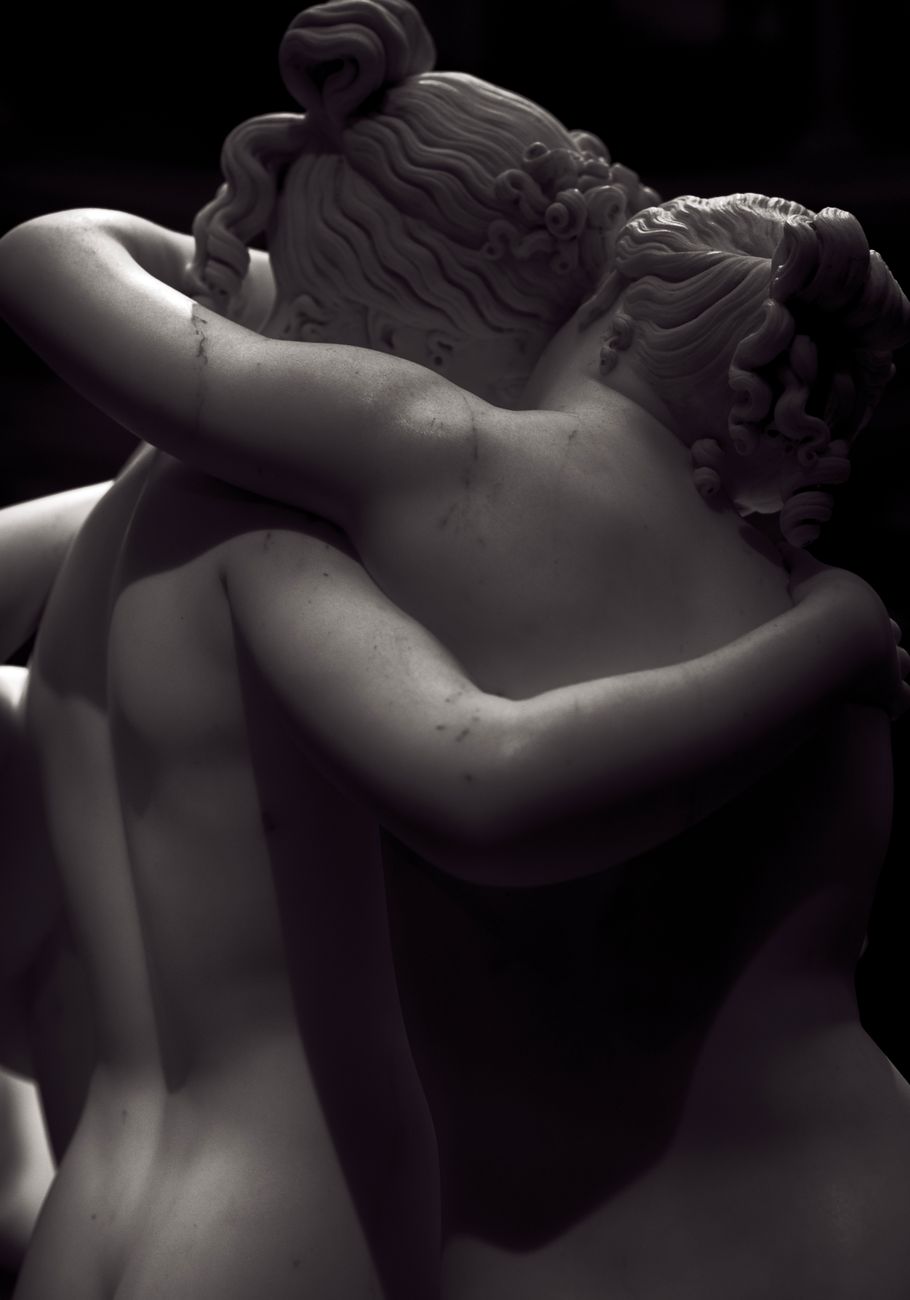
Jacob has been forced to lay down all his clever words and pious posturing and has discovered that God wants something more fundamental than pretty prayers—God wants to be entangled with us, pressed up against the flesh of us, limbs intertwined, hearts raging and heaving, blood and blessings poured out in something that is all at once a fight, and dance, and a consummation, and a surrender to one another.
That is prayer. A whole-body, whole-life entanglement with God. It is letting go of the life raft and sinking into the great sea. Words are incidental in this thing that is true prayer.
For it is striving, wrestling, tangling, holding fast to God. Claiming our blessings from amid the wreckage of our expectations and coming away with a limp and a holy light in our eyes.
This does not mean we can’t talk to God. Surely we can, just as the Psalmist does and as Jesus speaks to his Father and shows us how to pray. But until we realize that God doesn’t care as much about the words as God does about the one who speaks them, we will continue to hold ourselves back from God and each other, and we will let the temptations toward cleverness and eloquence be our stumbling blocks, and we will come to the end of our days realizing we have talked about God without ever truly meeting God. We will have talked to each other without ever truly meeting each other.
Please let yourself meet God, and each other, with your whole self. With your whole heart. That is your ministry.
The ironic, lovely epilogue to this story of Jacob-now-Israel is that the next day, he does meet his brother Esau on the road with that large group of men. And Esau comes running at him, but not to do battle. No, he comes to embrace his brother, to hold him, to weep with him. And we are meant to see that this wordless embrace between two brothers, too, is a meeting with God, and it is a sort of prayer. It is, maybe, the truest kind of prayer—the kind that you only know how to pray once you have lost your pretty words and been tangled up in God and learned to walk with a limp.
What all of this means, friends, is that if your ministry is prayer, your ministry is primarily one of wrestling with God yourself, honestly and vulnerably, and compassionately accompanying others as they do the same. Yours is a ministry that involves words but does not depend on them. If someone comes to you with their deep grief or their questions or their fears, your job is to hold the space in which they pour out these things and to listen, and to help them name those things clearly, and to tangle with God about them together. You don’t have to come up with an answer.
No, you just have to help them feel seen and known.
Because more than anything else, most people simply need to know that they are not alone as they wrestle. If all you ever did in your ministry was lay hands on someone and say “you are not alone, you are not alone, you are not alone in this sometimes hard and lonely life” you would probably have 90% of the words you ever needed.
I don’t know about you, but I have been prayed for many times in my life and I cannot say I remember most of the words that were said. What I do remember is the presence of the the one praying for me—the way they showed up, the way they laid their hands upon my head, the way they were attentive to me, and breathed with me, and for just a moment let their own heart become entangled with my own.
That is what I remember. That is what made the difference.
And, as Jacob discovered in his long night of wrestling with God, maybe that is essentially what prayer needs to be.