
Division: A Sermon

I preached this sermon on Sunday, August 17, 2025 at St. Anne Episcopal Church, West Chester, OH. The lectionary text cited is Luke 12:49-56, which includes the following:

Jesus said, “I came to bring fire to the earth, and how I wish it were already kindled! I have a baptism with which to be baptized, and what stress I am under until it is completed! Do you think that I have come to bring peace to the earth? No, I tell you, but rather division! 

Jesus has something to say today, doesn’t he? All this fiery language and talk of division. If you were looking for a feel-good Gospel passage today, my apologies, but I want us to really look at this notion of division rather than scuttle past it.  Because I’ll tell you something, I love Scary Jesus. Really, I do!

Not because I take what he says lightly, but because Scary Jesus—or perhaps more accurately, Prophetic Jesus, No-Nonsense Jesus—is willing to say and do the hard things that love and truth require. He is willing to take a stand for what is good and willing to name what is not. 

This is the sort of division that he brings—it’s not about enmity, but clarity. The clarity of telling the sheep from the goats and the wheat from the chaff in our hearts and in our world. Jesus is here to give us clarity about what is worth holding onto through the long onslaught of the years. And what must be let go of. 

When I think of this sort of division, I am reminded of a certain legendary incident in my family. 

My grandparents, you see, had very different philosophies about how many old items in the house should be held onto. My grandma believed strongly that she might need to look at that stack of TV guides from the 1970s and, as you know from prior sermons, she had an epic collection of empty Cool Whip containers just in case. My grandpa, on the other hand, was a fitful organizer. He was occasionally seized with passionate zeal for empty countertops and cleared-out corners. And on one such occasion, he went nuclear. 

Their attic was a place where no person dared tread; the detritus of decades was accumulated there—old photo albums, broken toys, enough boxes of papers to rival the Library of Congress. And one day, my grandpa must have been seized by a vision of cleanliness, and he just snapped. He had that baptism of fire burning him up inside. So he stole up the ladder to that attic and before we knew it, he had pried open the little window and was tossing bags of old clothes and God knows what else down onto the front lawn for all the neighbors to see!

You want to talk about households divided. Hell hath no fury like Verna Hooper on that day; she was up that ladder fast as a squirrel and a whole lot louder than one. Even Scary Jesus would have been scared. I won’t bore you with the gory details, but let’s just say every single item went back up into the attic and my grandfather learned afresh the meaning of marital penitence. 

I would venture to say, though, that neither of them was fully in the right. I get my grandpa’s point: when we are frustrated by the weight and mess of the world, it is indeed tempting to think we should just toss it all out and start over. Send in the cleansing flood, or break down the walls of the spoiled vineyard, as Isaiah puts it today. Just let it all go. 

But my grandma had a point too—there are things worth saving, even in the messiness. There are things that should be preserved, and there has to be someone willing to stand up for their value. 

As is usually the case, the path of wisdom falls somewhere in the middle of these two postures. We have to figure out what to hold onto and what to let go of, and how to tell the difference. That’s the kind of division that Jesus is talking about. He is not interesting in starting fights among families for no good reason. But he does need the human family—all of us, together—to really get clear about what matters and what doesn’t. Have we figured it out yet? Maybe we’re still working on that. I hope we are.

Because that work of division, friends, that laborious and slow discernment between heirloom and junk, that is what the church is asked to do in each age. Informed by study, shaped by community, emboldened by love, empowered by the Spirit, we have to decide as best we can what stays and what goes. What is the substance of God’s mission and what is just clutter. And we do that, hopefully, for ourselves and one another here, and then we step out into the public square and declare the truth there, too. 

And it’s funny, you know—I think The Episcopal Church is accused sometimes of being like my grandpa; that we, seized by some vision of inclusivity and love and social justice, have tossed out all of the fundamentals of the faith. This is absurd to me. As if, somehow, love and inclusivity  and justice were not themselves the exact fundamentals that God is always interested in. I’ve read the Bible, thank you very much, and God does indeed care about those things deeply. Come to think of it, maybe we are the fundamentalists after all!

In truth we have not been seized by misguided zeal; but nor are we like my grandma that day, digging in our heels, holding onto the past. Instead we have been doing the long, careful, imperfect labor of figuring out what stays and what goes in the unfolding emergence of God’s kingdom. We are still doing it. We will always be doing it. Debating Scripture and structure. Cherishing our hymns and collects like Cool whip containers that are  enduringly useful. And letting go of some of those old prejudices and fears, like TV guides that have nothing helpful to show us. 

We do all of this, by the way, not because we are “getting political” but because we are faithful to the God who is still speaking into the present moment. We hear the message of the Lord and we take it seriously. We hear Jesus, who says I have not come to bring mere peace—I have not come to bring a passive acceptance of the deadening forces of this world. No, I have come to bring an ever-renewed capacity for division between right and wrong, I have come to bring clarity and awareness. I have come to empower a choice between what is true and what is a lie. So follow me, he says, follow me with love as our guide, and find out which is which, and let’s learn to speak it out loud.

How urgently we need to follow him now, this truth-telling, fundamentally loving and unafraid Jesus. How urgently we need to tell the world who he actually is, and not what he has been made out to be by the transactional exigencies of partisanship, culture, and power.

Because Scary Jesus, Prophetic Jesus, No Nonsense Jesus, the Jesus that I fear and love and follow, has never changed his message. He has never submitted to the lies of any age. And he never will. 

Today we hear his rejection of a cheap comfort at the expense of truth. We hear his dedication to separating out what is worthy and good from what is destructive to the human spirit, and we see his willingness to die and rise again for the sake of this gentle and hospitable Kingdom. A Kingdom where all are welcomed at the table. That is what Jesus is about. That is who Jesus is. 

And if that is somehow offensive to the prevailing and popular order of things—GOOD. If that is divisive—GOOD. I would rather stand in the divisiveness of an unequivocal love for all people; I would rather pay the price for that divisiveness; I would rather pursue its invitation to the edge of comfort and respectability, just like Jesus did, than live in uneasy peace with the world as it is. 

I would rather the institutional church die singing songs of love than live for something other than the real Jesus. I would rather be mocked and misunderstood for doing the long, hard, foolish, communal work of sifting through the brokenness and the beauty of life and crafting a future out of it, together. Us and God, together. It’s not easy or efficient, but that’s the only kind of church I want to be.

So what kind of church are we going to be, my friends?

Maybe, with God’s help, the kind that is able to do some division.

And wouldn’t you know, as it happens, that is  also exactly what occurred eventually with my grandparent’s house, long after the attic incident. 

Once they were both gone, my family members carefully went through every room determining what to let go and what to hold onto. It was hard, and it was grief, and it was love, and it was the resurgence of a million precious memories. I think the clothes and the TV guides did go away; sorry Grandma. But not everything. Some things, like that old organ in my office, and like the Cool Whip containers that show up in my sermons, some things endure, undaunted by the years. 

And that was, in the end, the necessary division—the healthy, holy division—which made what really matters so very clear to us. 

That is the work we must all do eventually. And it is the work of the church, too. 

So, if we are feeling brave, let’s go up to the attic, and sit down amid all the boxes of memory, and regret, and fear, and hope. Let’s speak of what is true, and admit what never was.

Let’s hold it all up to the light—and sort through—and do the work the Lord has given us to do. 

Coming Out: A Sermon on the Transfiguration

I preached this sermon on Sunday, March 2, 2025 at St. Anne Episcopal Church, West Chester, OH. The lectionary text cited is Luke 9:28-43, an account of Jesus’ transfiguration on the mountaintop.

I came out when I was eighteen. And although I came from a pretty open-minded family, it was still a struggle, as it often is for people. But there came a point about halfway through my first year of college when I was just weary of hiding—hiding from others, hiding from myself, hiding from that fundamental desire to be loved and to love someone back. I was willing to do anything, to give up anything, if it meant that I could stop being half-invisible. To live authentically and experience fullness of life. Or at least have the chance to try, and mess up, and keep trying like anybody else. 

And so, I came out. And it’s been mostly wonderful, and sometimes difficult, but it was never really optional, because it was simply the truth of me. Ultimately life requires us to acknowledge what is true, even if folks don’t get it or don’t want to get it. 

Because what is true is that most of us fundamentally want very similar things: to understand and to be understood; to be able to feel things; to experience life without fear or scarcity; to know and share love; and to leave behind something meaningful when we’re gone. These desires are pretty much universal, whether we are gay or straight; black or white; whether we are in Cincinnati or Kiev; whether we are rich or poor; or any of the other myriad ways people inhabit this world. 

It’s just that for some such people, because of their characteristics or their location or their status, they find themselves having to convince other, more powerful people they actually deserve those fundamental things, too. That they aren’t half-invisible. 

And while the powerful don’t usually like it very much, many such people, in their own ways, eventually have to muster the courage to come out—not specifically as I did, but to come out into the world in the fullness of their own humanity and say, this is who I am, and I dare to be seen. I dare to inhabit the dignity of myself. And I offer myself—all of myself—for I am no longer constrained by the fear of being misunderstood or maligned. Because I would rather perish in the light than wither in the shadows.

Every liberating impulse of the human heart, guided by the Spirit and made manifest in everything from the crossing of the Red Sea to the Stonewall riots to the sit-ins of the Civil Rights movement to the demands of peacemaking of our own time—all of it is a form of coming out. Coming out of Egypt, coming out of Jim Crow, coming out of the closet, coming out from behind the structures of prejudice and fear and choosing to see each other as we are, as the beautifully diverse children of God. 

Churches could learn a lot from all of this coming out, I think. Especially, God love us, those polite, well-meaning churches that have, for too long perhaps, been hiding our own light within our walls, wondering why the world is looking elsewhere. I wonder what such a church might learn from the people who’ve had to come out in their own lives. 

And I wonder, too, what we might learn from today’s Gospel account of the Transfiguration, when Jesus came out as…God. 

Make no mistake, that’s what this story is: a coming out story. Not as any of the categories of identity we usually associate with that term, but a coming out nonetheless. A bold revelation of selfhood to a world not quite ready for it.

On this particular mountaintop, just before his journey to Jerusalem and the suffering that awaits him there, Jesus decides he is tired of being half-invisible, too. He is, perhaps, weary of hiding the truth of himself: that he is the Son of God; the indwelling of the divine light; the Creator aching with love for creation—and he cannot hide it anymore. And for this moment, at least, in the company of his most trusted friends, before he surrenders himself to the culmination of his difficult work, he decides to come out. 

And so he does. And so we behold him.

This is Jesus, in blazing brilliance, in that white light which is formed by every color of the rainbow. This is Jesus, at last inhabiting the dignity of himself. This is Jesus, God, who also fundamentally wants the same things: to understand and be understood by us, to know and share love with us, and to leave us something meaningful of himself when he’s gone. This is Jesus, willing to pay the price for being himself, willing even to be rejected, because he knows that the truth is not optional, because the truth of him is love in its many forms, and it always has been and it always will be. 

This is Jesus, the God who has always called his children to come out from whatever harmed them or held them back from fullness of life, now doing it himself. 

The point of this, my friends, is that if Jesus can come out as God in a world that did not welcome him….and if our vulnerable siblings can come out as human beings seeking dignity  in a world that does not welcome them…then perhaps we as the church should realize that our own future also depends on our willingness to come out of the shadows and into the light. To come out and say, we are Christians, and this is what we stand for. And that we will no longer let others hijack the narrative of our faith or the nature of the Gospel for craven, fear-based, or politically expedient ends. 

We who seek to do good and proclaim love as the Way, perhaps we need to come out and say that we do so not simply because we are well-educated or well-mannered people, but because we are passionate followers of Jesus, and that is what followers of Jesus actually do: they love without exclusion, they surrender their lives to compassion, and they are not cowed by the forces of evil and mistruth. 

Perhaps we who often find it easier to practice a private, respectable faith need to align ourselves more closely with those of our neighbors whose very humanity is a matter of public debate. Our neighbors of other ethnicities and creeds and identities whose very decision to step outside the house and exist each day is an act of courage. Perhaps by seeking them out and knowing them better, we could find some of the courage we need ourselves as Christians. The courage to name Jesus as Lord. The courage to reject, in the name of Jesus, those forces which diminish or demonize any category of people. The courage to not be half-invisible ourselves any longer. To wear God’s heart on our sleeve. 

Because we are living in a time that demands an accounting of our values, of our commitments to one another, and of the depth of our souls. We are not the first to live in such a time, nor will we be the last.

And for those of us who have already had to come out and be ourselves in one way or another…well, some of us are rather accustomed to this sense of high stakes in the basic activities of living. We’ve got some tips to share. There is much that we can learn from one another to navigate the road head. To encourage each other. To stand with each other.

I hope and pray we will continue to do that work here. Whether through the building up of people participating in outreach services, or in the expansion of our advocacy and justice ministries, or in deepening our study of Scripture or in the practice of prayer and contemplation, I hope our parish will find and reveal the fullness of itself in this time. I hope that, right here in West Chester, we will help guide the broader church out into the possibilities of the present moment, despite the perils of stepping into the light. We have too much good news to share here to let it hide behind the doors or wither in the shadows.

If that sounds a little daunting, I get it. But as God likes to say, don’t be afraid. Pretty much anyone who’s had to risk simply being themselves in one way or another can tell you: it’s mostly wonderful. Sometimes difficult, yes: even Jesus, after the transfiguration, still had to keep on casting out demons and dealing with people who couldn’t or didn’t want to understand him.

But mostly, the peace of being wholly oneself with other people, without fear, is a wondrous gift. A gift from God. It is the thing that has saved some of us. Maybe it will help save all of us, together.

All we have to do, beloved church, is hold fast to the love that is the truth of us.

And then…come out.

Widow: A Sermon

I preached this sermon on Sunday, November 10, 2024 at St. Anne Episcopal Church, West Chester, OH. The lectionary text cited is Mark 12:38-44, Jesus observing a widow giving her last coins to the temple.

I don’t have any stories of my own to tell this morning. I must begin by speaking plainly and naming something we all know: it’s been a complex week. And for many people (many of you, I know) a very difficult week. A lot of people are feeling a lot of intense things. That said, I know that we are not all feeling the same things, and that’s ok. That’s a normal part of human life in community. It’s complicated…and it’s ok.

But before I reflect on the story found in our Scriptures, I want to invite us to abide, together as a parish, for a moment, in that distinctive space where we have always been called to dwell as the Church–the place where humility and hope coexist. A place where each of us acknowledges the limits of our own understanding; where we affirm our desire to love one another as best we can; and where we commit to a generosity of spirit towards those who are experiencing this time differently from us. I want to encourage you to care for and look out for each other now and in the days to come. As I said at our prayer service on Wednesday evening, in times of anxiety and division, we must not lose sight of each other, or of ourselves, or of God.

The challenge, with God, is that sometimes we aren’t sure where to look for him, or even exactly what we are looking for. In stressful times, especially, his exact location and nature can feel elusive. We might look to the sky and say, where are you, God, where have you gone? Why don’t you come down here and do what we want you to do? Why have you left us to our own devices?

But perhaps part of the problem is that we are looking in the wrong places for signs of God’s presence and action. We think he’s in one place but really he’s in another place entirely. Those who were expecting Jesus to be a purely political messiah when he turned out to be a cosmic one is an example of this.

So it can be good, sometimes, to practice reframing the stories we tell.

I find it helpful, sometimes, in a retreat setting or a Bible study, to look at a particular passage in Scripture and to wonder where people might fit into the narrative. Where am I in this story, and where is my neighbor, and where is God? Sometimes it’s surprising what this exercise can reveal to us. 

Take, for example, this morning’s Gospel, where Jesus is observing and commenting on the wealthy scribes and the poor widow and their respective gifts to the temple treasury. He wants his disciples to see something important, and he wants us to see something too—the question is, what exactly are we supposed to be looking at? Who are we meant to be in this story, and where is God at work in this story? 

A cursory reading, and an interpretation I’ve heard many times, might suggest that we, the followers of Jesus, are meant to be like the widow. We are meant to give all we have to God, in whatever way we must. Dig deep and hand it over– your coins, your heart, your body and soul. You have nothing left to offer? That’s ok, give your very life itself.

And if the powers that be want to exploit you? Well, we all have our cross to bear. You’ll get rewarded in heaven.

That’s one version of the story.

And I don’t know, maybe its just because I am a little run down this week, but that story just sounds like a bunch of junk. That is not Good News. It does not sound like love or hope or fullness of life to be bled dry by an insatiable God who is counting up our coins on his throne, untroubled by our scarcity, unmoved by our poverty of spirit. That image has nothing to do with the Jesus we know in Scripture: the one who promises rest for the weary and freedom for the oppressed. 

And that’s the problem with this interpretation—this assumption that we are to be the widow in this story. It mislocates God. It suggests that God is somehow bound up in those corrupted temple authorities. That God is an ally of those scribes who devour widow’s houses and drape themselves in the profits. It suggests that God is found in the gleam of gold and marble and the imperviousness of unjust systems. It suggests that holiness just means paying the current price of admission to privileged spaces, scrounging for whatever we have to hand over and prove our worth.

But the problem, which some of us know all too well, is that we can pay and pay and pay and yet those earthly authorities will still tell us we are not *quite* deserving of entering their holy of holies. 

St. Anne, that is not a story I am interested in retelling. Too many of us have spent too much of our lives wondering whether we are worthy of love, figuring out how to give just a little more of ourselves to get into the club. The Jesus I know says we’re done playing that game. We’re done groveling for grace. It is free. 

So what do we do instead, my friends? Where is God today, here, in this story and in this world where wealth and power still seem to dazzle and deceive at every turn? How do we find hope and strength when it’s hard to know where to look?

The answer to that question is the same today as it was yesterday and will be tomorrow: God is found in the small and simple places, usually the ones where we didn’t think to look. God tends to show up in the ways that nobody expects from the Creator of the universe.

So if you are wondering where God is in this particular story that Jesus is showing us today…I would tell you that God is the widow.

God is the widow. 

Because God has come into our midst with all he has—his love, his heart, his hope, and he has said to us: here, take it. Have it all. I am not holding anything back from you. I have never held anything back from you. My very life is yours, now. My Spirit is yours, always. It is all I can give you. It is the one thing I must give you, because it is the one thing that can’t be taken away.

Like that widow, God, in the flesh of Christ, is all in with us. He has cast his lot in with ours and he is standing here at the threshold of the temple of our hearts, waiting, hoping, wondering when we will look down and look within and see who he really is and find him where he actually tends to show up.

Which is in the faces of our neighbors. In the acts of kindness and care and generosity we can offer each other. And in the voices and the stories of those who are different from us, who are overlooked, or easily dismissed by the prevailing order. 

Those are the places where we need to be looking for God right now. Because I think many people are living through a moment where certain narratives or expectations no longer seem to fit or make sense. And in such moments, one of the most important things we can do is to stay open to the new things that God might be trying to show us rather than retreating or hardening our hearts or turning our faces away from one another because the story didn’t go the way we thought it would.

If you are struggling to make sense of the world right now, that’s ok. It may take some time. And some things in this life never make much sense. But this much I know: God is still present in all of it, and we still have a part to play, too. We just have to decide what that part will be. 

For us at St. Anne, I believe that part will look something like this: 

We will be a community that continues to foster inclusivity and welcome for all people, no matter who they are, what they look like, who they love, how they vote, how much money they have, what language they speak, or where they were born. 

We will be a community that speaks the truth in love–to one another and to those in power, whether in the church or in the public square. 

We will be a community that takes seriously Jesus’ call to serve the least of these, because it is in such figures—the widows and the orphans and the neglected and the forgotten—where God will reveal himself to us most consistently. 

We will be a community that is undaunted by the changes and chances of this world because we have each other, and we proclaim the victory of a love which favors no nationality or race or tongue or party. 

We will be, in this Gospel story today, we ourselves will be the temple of God’s Spirit, doors ever open to receive him. He who comes not as a conquering king, but as a widow with two coins. And when she comes, this God of infinite generosity and care, we will say, oh, of course—there you are. We see you now. This is who you are. Come in. Come in. Come into your dwelling place, Holy One. Help us receive all that you want to give us.

And when we do…on that day the story we tell will be very good news. 

Do-Over: A Sermon

I preached this sermon on Sunday, August 20, 2023 at St. Anne Episcopal Church, West Chester, OH. The lectionary text cited is Matthew 15:21-28, Jesus’ interaction with a Canaanite woman.

Have you ever looked back at some moment in your life and wished you could have a do-over?  I know that it’s popular to say things like “no regrets” and “everything happens for a reason,” but if I’m perfectly honest, there are plenty of things I would change if I could. Some of them are a bit trivial, like my questionable fashion choices in high school (though some of these, as I approach 40, already seem to be coming back around).

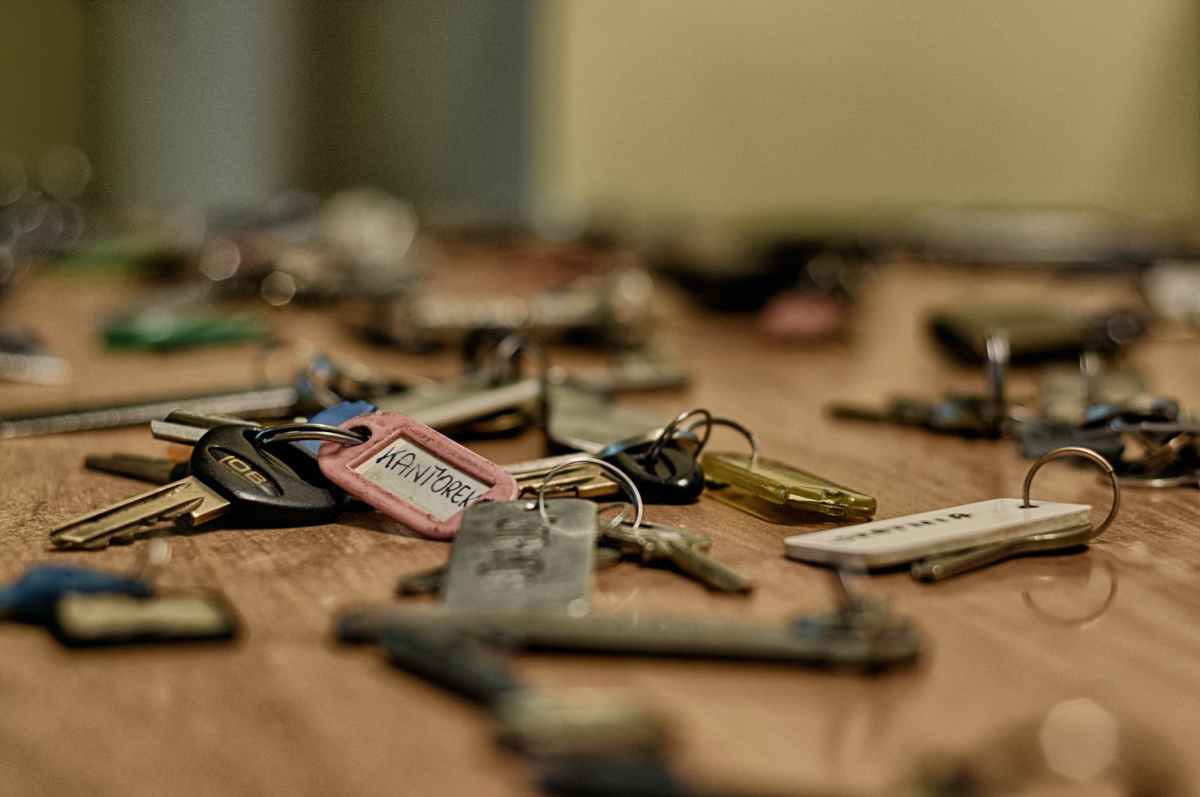
But some of the regrettable things are a bit harder and heavier: the things in my life done and left undone, the things said and left unsaid. They jangle around in my memory like a set of keys—keys for doorways that can no longer be opened—tarnished and jagged and yet hard to throw away. 

Truth be told, though, I am mostly ok with that. While I don’t think it’s helpful to myself or anyone else to wallow in regret, I do think there is value in remembering what has not gone well, what has been broken within us and broken by us, because it informs how we can make different choices in the present and on into the future. 

This is true not just for individuals, but for communities and nations, too, all of whom must reckon with the more painful aspects of their histories if they ever hope to unlock the shackles that bind their greatest ideals, to liberate their deepest and most beautiful dreams. 

We don’t get a do-over, exactly, but we get an infinite number of opportunities, as long as we live, to do better, to discern and to grow in wisdom, informed by our past but never imprisoned by it.

And this not just a sort of humanistic self-improvement philosophy, but the fundamental arc of Scripture, a story of promise and regret and repentance and redemption, a story which is itself filled with the messy choices of people and of nations wrestling with a Divine presence and power only partially understood, and yet who are drawn, always, always, into a new revelation of the breadth and the depth of God’s infinite power and unfailing ability to redeem our complicated histories.

I’ve been pondering all of this about do overs and doing better because, I think, it will help us wrestle with our challenging Gospel text this morning. Not solve it, but wrestle with it. 

Let’s just name the hard thing up front: Jesus is, to say the least, not kind to the Canaanite woman; he associates her and her people with dogs, and seems uninterested, at first, in healing her daughter. And we could, as many have, spend a lot of time wondering whether he was having his own regrettable moment or whether he was, in some opaque Divine way, testing the woman’s faith. Given who Jesus is, neither of these two choices is particularly easy or comfortable. 

But it is also good for us to step back and consider that for the disciples, and even for the original hearers of Matthew’s gospel, the truly remarkable thing in the narrative is not Jesus’ commitment to the children of Israel, nor his verbal sparring with the woman, but the fact that, ultimately, she is a Canaanite who receives God’s blessing. 

For if Israel’s troubled collective memory is a set of old keys, their relationship with the Canaanites is a particularly heavy and sharp one—the Canaanites are the people who originally inhabited the Promised Land, they were the ones displaced and slaughtered by Joshua’s armies, they were among the ones subjugated by the Kingdom of Israel and even now, in Jesus’ time, under Roman rule, the Canaanites are still a people whose name evokes that strange mixture of pride and fear when we encounter those whom we have othered past the point of recognition.

And all of this, all of this spilled blood and rage and this faded ghost of empire is heaped upon the Canaanite woman—this woman who has surely knelt at her child’s bedside, eyes brimming with tears, praying for her to make it; this woman who shouts in the street; who cries out for help; who boldly kneels before Jesus and seeks her daughters survival. She is a woman of unquestionable courage, but as a Canaanite she is also a symbol of all that Israel has wrought, and all that they have lost. No wonder they want to silence here and send her away. We often try to ignore those who remind us of our own wounds.

But there’s something we have to understand about Jesus, something which both explains and underscores the significance of what happens next, the fact that he doesn’t send her away. 

From the very beginning, when he was born as the Son of David in Bethlehem, Jesus has carried both the burden and the promise of Israel within his flesh—their chosenness and their chastening. We might even say that throughout his life, Jesus has embodied and recapitulated the original story of Israel.

And thus, Jesus, like Israel, is exiled into Egypt and then brought back; and like Israel he is sent into the desert to be tested and formed; and like Israel he bears out the weighty tradition of the prophets in his teaching and his miracles. And in all of these instances, he gathers up the glory and the pain and the belovedness of his people to bring it into an ever deepening level of Divine intimacy, knitting Israel’s story of liberation into the very fabric of creation, that it might become everyone’s story, in every time, in every nation.

Which makes his encounter, today, with the Canaanite woman, all the more significant, because we cannot forget that Israel’s history, its journey, is political and territorial, not just theological. And so now Jesus stands here, as Israel once did when they crossed with their armies to the other side of the Jordan, he stands here once again holding the life of a Canaanite in his hands, bearing the ancient grudges and the ancient fears of his people on his shoulders, and….he lays them down. 

He lets this mother’s love, and her faith, and her fierce determination change the story. O Woman, he says, great is your faith, and while the past cannot be erased, somewhere a new has opened, and suddenly the Kingdom of Heaven is bigger than Israel alone, bigger than any one nation. And while the children of the ones who spilled each other’s blood cannot get a do-over, they can do better. They can tell a new story, a story in which the daughter of a Canaanite is as beloved and valued as anyone else, and in which the only conquering power is mercy, and where the only Promised Land is the one big enough for everyone. 

Can we tell that story, too? Can we show the world what it looks like to do better, even if we can’t get a do-over on the most painful parts of our own history? Can we lay down our own ancient enmities and fears and misplaced nostalgia so that the best of who we have been might inform who we yet might become? These are deeply personal questions as well as collective ones for our church and for our world. 

But the good news of the gospel is that the answer is always YES. Yes, there is something on the other side of regret. Yes, there is something on the other side of failure and fear. Yes, there is a place where we won’t need all those old keys jangling in our pockets after all, because in that place all the doors will be flung wide open, and no one will be shut out, and everything that has been lost will be found and made whole.

Call that place what you will: call it the Kingdom, call it the new Creation, or call it Canaan; by any name and by God’s grace we’re heading to that land of promise together, and when we arrive, I suspect it will feel like this: waking up to a mother’s face, brimming with joyful tears, saying, my child, all is well. I am here. You made it.

This Peaceful Body: A Sermon

I preached this sermon on April 18, 2021 at Trinity Episcopal Church, Fort Wayne, IN. The lectionary text cited is Luke 24:36-48.

Jesus himself stood among the disciples and said to them, “Peace be with you.” They were startled and terrified, and thought that they were seeing a ghost. He said to them, “Why are you frightened, and why do doubts arise in your hearts? Look at my hands and my feet; see that it is I myself.

I’ve been thinking a lot about bodies this week—about how inseparable our bodies are from our own particular identity and story. I’ve been thinking about bodies that grow and move through the world, gathering experience and wisdom, and other bodies that are broken, bruised and scarred. Bodies that connect, and bodies that retreat from companionship. Bodies that stand tall and hopeful, and bodies that lie low upon the earth, down where the blood cries out from the ground. Bodies that live. And bodies that die and are laid to rest.

And I’ve been thinking about one body in particular, the body of Jesus, who, in today’s Gospel passage, appears in his body and stands in our midst in the strange light of Eastertide saying, “peace be with you.” 

A risen body. An offering of peace. Somehow, it seems, these are connected—two notes of the same song. 

The disciples’ bodies trembled, though, when he appeared to them and gave them this greeting; they were “startled and terrified” and “disbelieving.” I can’t say I blame them, for how can our limited imaginations possibly begin to picture deathless life? And what do we know of true, embodied peace? How could we begin to recognize it or comprehend it if it appeared in front of us?

Because the peace of God is a beautiful thought, yes, but I will admit that this week, like too many before it, I’ve been distracted and dismayed and far from peaceful, thinking about those bodies that know no peace, bodies to whom no peace is offered—black and brown bodies beaten and gunned down in the streets. Bodies ravaged and silenced by COVID, by cancer, by injury or addiction. The bodies that sleep under bridges and the ones that go to bed hungry.

And all of them are so present, their suffering so urgent and persistent, that I sometimes do not know what to do with this invitation to peacefulness, which can ring a bit hollow when I hear it, as if ‘peace’ is just a polite way of saying that those broken bodies are someone else’s problem, that the world’s violence ought not disturb the tranquility of our spiritual endeavors. 

But no, this can’t be what Jesus means when he says “peace be with you,” although, if we are honest, it is what we are used to—a world that seems to foment only our capacity for rage or apathy.

And so perhaps it is not so shocking that the disciples, in encountering the risen, peace-bearing Christ, are confused, even in their joy. Because they, like us, could not quite understand what it is that he proclaims or represents. Because they, like us, were accustomed to the expendability of fragile bodies caught up in imperial systems; they, like us, were intimately acquainted with the prevalence of death, whether from disease, disaster, or violence. They, like us, were conditioned to accept the machinations of a society that favors the powerful, that privileges forcefulness, and that mischaracterizes “peace” as acquiescence, passivity or disengagement. 

And so against all of that, what could this moment–this resurrection encounter–possibly mean, strange not only because their Lord has reclaimed life after a cruel and senseless death, but also because he does so as one proclaiming peace, rather than retribution? 

What is the significance of this resurrected body of his, which has conquered death and yet still bears the marks of torture? This body challenges us, for how can any of us look upon the violence and the degradation imprinted upon his flesh—upon all flesh—and yet proclaim, with hope and without irony, “peace be with you?”

I think we still struggle to resolve these questions. And yet it is fundamentally important that we try to do so, because without joining the disciples and facing the uncomfortable paradox of Jesus’ wounded, resurrected body, we will not ever truly know him, nor the type of peace that he offers; a peace that is unlike anything the world can give us.

“Look at my hands and my feet; see that it is I myself,” Jesus tells the group, and much like Thomas in last week’s Gospel passage, we observe that it is in examining the marks upon his body, in touching the scars and the bruised places, that the Lord invites the disciples to recognize him, to know him for who he is. And it is only once they have done so that they can even begin to imagine the possibility of what he represents—not just their Lord and teacher returned to them, but a new life, a new type of peacefulness, the kind that does not come about by vanquishing enemies but by loving so fiercely, so fully, that the idea of enmity itself is nullified. A peace that is deep enough, and true enough, to stand in solidarity with the woundedness of the world, rather than evade it.

Because that is what Jesus is doing in this wounded, resurrected body of his—he is standing in solidarity with the disciples, and with you and me and everyone who has ever been wounded or broken or beaten down, and he is saying: 

I see you, I understand you, and whatever it is that you have faced, and whatever new horror the world tries to inflict upon the vulnerable among you, it will not prevail, not truly. Because I have taken these wounds and grafted them onto my own, undying, Spirit-infused, eternal body. And it is THIS frail and magnificent body, so much like your own, still bearing the marks of human sorrow, it is THIS body which is ascending to the Father—wounds and scars and bruises and all. I am taking this pain—your pain and my own and all the pain of the world—and I am going up, up to glory, up to the right hand of God—and I am binding the world to myself, I am binding you to myself, so that nothing can separate us ever again. 

This is good news, to say the least, because it means that our sanctity and our salvation have nothing to do with pretending we are whole or perfect or pure. We do not have to be unblemished, unwounded to be beloved, to enter the Kingdom of God, because the Wounded Holy One has already gone there to prepare a place for us. 

Jesus shows us that the Christian life–the life of true and lasting peace–is not about glossing over or refusing to acknowledge the painful parts of life, or bravely pretending for one another that everything is fine. It is about truth. It is about facing and naming the things that are hard and ugly even as we celebrate the things that are beautiful.

It is about cultivating reverence for the wounded, resurrected body of our Lord upon this altar so that we might carry that same reverence into our encounters with our neighbors, that we might tend to their bodies and their wounds with the same care that we offer his.

His risen body shows us that the life he offers is about entering into the fray, into the heaving heart of the world and saying: Peace be with you.

True and courageous peace be with you.

The peace of the wounded, resurrected Jesus be with you.

The peace of love’s tender and deathless power be with you.

The peace that is the inheritance and the destiny of every beloved, broken body be with you. 

God’s peace be with you. 

Alleluia.

“And”: A Sermon

I preached this sermon on Sunday, October 18, 2020 at Trinity Episcopal Church, Fort Wayne, IN. The lectionary text cited is Matthew 22:15-22:

The Pharisees went and plotted to entrap Jesus in what he said. So they sent their disciples to him, along with the Herodians, saying, “Teacher, we know that you are sincere, and teach the way of God in accordance with truth, and show deference to no one; for you do not regard people with partiality. Tell us, then, what you think. Is it lawful to pay taxes to the emperor, or not?” But Jesus, aware of their malice, said, “Why are you putting me to the test, you hypocrites? Show me the coin used for the tax.” And they brought him a denarius. Then he said to them, “Whose head is this, and whose title?” They answered, “The emperor’s.” Then he said to them, “Give therefore to the emperor the things that are the emperor’s, and to God the things that are God’s.” When they heard this, they were amazed; and they left him and went away.

“Tell us whose side you’re on,” the Pharisees and the Herodians are asking Jesus today. “Tell us who has the ultimate power: the God of Israel, or this Emperor to whom we owe our taxes?”

They are trying to trip Jesus up with this question, of course, because taking a side in this particular dispute will either undermine the Roman authorities (bad idea) or disappoint Jesus’ Judean followers. A perfect conundrum, his inquisitors assume. 

But do you remember that moment, early in his ministry, when the people of Nazareth get really angry at Jesus’s preaching and try to drive him off of a cliff, and then somehow, inexplicably, he simply “passed through the midst of them and went on his way”?

Yeah, he pretty much does the same thing here. Jesus is really good at transcending these no-win situations. His answer, as simple as it is, stuns the questioners—“Give therefore to the emperor the things that are the Emperor’s, and to God the things that are God’s.” It’s the first century equivalent of a mic drop–and so they just sort of shut up and go away. 

But I don’t think our takeway is simply that Jesus is really good at giving clever answers or getting himself out of a bind. No, what we see here is that Jesus brings an entirely different mindset to the world than that of his challengers. Unlike them, he does not see things as a choice between binaries—this world OR the next one, insiders OR outsiders, attentiveness to the realm of God OR Caesar. 

Instead, Jesus is someone who almost always operates in terms of “both/and.” He demonstrates, time and again, that a meaningful response to the complexities of the human condition require us to live in the tension of opposites, making space for both THIS thing and THAT thing, THIS person, and THAT person. We don’t get to opt out of loving God or our neighbor just because things are complicated and nuanced.

I had a professor in seminary, Caroline McCall, who taught us to drop the word “but” from our vocabulary when we were engaging in dialogue with one another—ie. I like what you said, BUT, I think my idea is better.  That is important, BUT this is more important.

Instead, she encouraged us to say “AND.” That is important. AND, this is also important.

I came to understand from Caroline’s teaching that this wasn’t just a strategy for civil discussion; it was a social and theological lens that allows for the coexistence of diverse values and perspectives. It is a way of communicating that invites more ideas into the circle, even paradoxical ideas, even ideas we might not agree with, and in doing so our hearts and our minds become just a bit more open, charitable, Christlike. I might disagree with you AND I am still committed to loving you.

And this is, in effect, what Jesus does to answer the Pharisees and the Herodians today. He is saying: take seriously the demands of the present social order AND love God and your neighbor with all your heart and soul and mind. Engage as a participant in this world, as imperfect and broken as it might be, AND never forget that God is breaking in, forging a new world all around you.  Do both. Be both.

Those who are committed to binaries, to zero-sum games, to seeing the world as winners and losers, are likely to be challenged by this. Still, as followers of the way of Jesus, we need to embody non-binary thinking now more than ever.

When we are confronted in our own lives by people who always try to force us into picking sides, into seeing the world as nothing more than a never ending power struggle in which we must vanquish our perceived enemies, we need to pause, and take a breath, and pass through their midst. Not out of fear or apathy, but because the answer to every question lies on the other side of our enmity.

And I know how tempting it is in these polarized times to pick a team, to pick a side, to think of everyone as either an ally or an enemy, but I am telling you this: if the church doesn’t lead the way in opting out of this binary way of thinking and categorizing the world, if people of faith and good conscience don’t do it, then it will not happen, and we will continue to grow more suspicious of one another and farther and farther apart, long past any particular election season or pandemic. And if we are suspicious and apart, we will never flourish, not one of us.  

The change has to begin here, now, among us and within us, because first and foremost we are citizens of God’s Kingdom, and that is a place fundamentally shaped by the word “AND”: a place that is just AND compassionate, free AND interdependent, abundant AND equitable. Rooted in history AND looking towards the future.

And you know what is so fantastic, so beautiful? It is that we are already doing this; we are already living in this spirit right here at Trinity. We demonstrate this every week by coming together with people—people similar to us and people very different from us—to turn our hearts towards God and one another and by saying YES: yes, life is hard, yes, the world can be angry and cruel, yes, I am exhausted and scared and money is tight and my relationship is on the rocks and my dog is sick and I am so tired of political ads on TV–

AND…

AND life is a gift, and God’s blessings are everywhere, and Christ is in the face of the person next to me, and how amazing it is to be alive today, to breathe the crisp fall air, and how good it is to strive for justice and mercy in this land, and how perfectly imperfect is this very moment, here in the presence of Jesus who is passing, lovingly passing through our midst, passing through our fears, passing through our binaries, guiding us out into the True Answer to every question.

How gut-wrenching it is to love him, to follow him where he goes AND how necessary, how grace-filled, how complete.

We will only glimpse God’s fullness, brothers and sisters and sibilings, when “AND” becomes the vocabulary of our hearts. When we live as though there is space enough for everyone, and mercy enough for everyone, and peace enough for everyone, and food and shelter and justice enough for everyone. There can be. There will be. Because no matter how many blustering emperors come and go from this earth, we worship a God who is ultimately on everyone’s side–a God who will not rest until the day we are all resting together. 

That day feels a long way off sometimes. A long way off.

And:

We will get there.