
Answer: A Sermon

I preached this sermon on Sunday, December 14, 2025 at St. Anne Episcopal Church, West Chester, OH. The lectionary text cited is Matthew 11:2-11. A version of this sermon was also published by The Episcopal Church for its Sermons that Work project.

Yesterday as I watched the snow billowing down, interrupting more than a few well-laid plans we’d had for this weekend, I was reminded that as much as we try to prepare and plan ahead, uncertainty and ambiguity still find us sometimes. They descend upon us, soft and muted like winter, blurring the sharp edges of our assumptions. And we tend not to like this very much. 

Because we want answers, most days. We crave them; we seek them; sometimes we demand them. We peer at stars and read between lines and survey the vast, muddied landscape of our experiences hoping to catch sight of something clear and telling. 

Often they are quite matter-of-fact, the questions we ask and the answers we seek: is church go to happen tomorrow or not? what should I make for dinner? Where should I go next weekend? How long til Christmas? 

And yet at other times they are more subtle and lingering: is the church going to endure? what should I make of my life? Where should I go to feel like I am not alone? How long til Christ makes all things new?

But whether our questions are practical or existential, it is still the case that decisive answers are usually what we’re after. And especially because we are formed and guided by words, we often imagine an answer as a thing that coheres nicely into a single phrase or insight. Surely, we think, whatever it is that we want to know is waiting out there just beyond the tip of our own tongues.

Unfortunately, though—perhaps more often than we’d care to admit—answers are not so easily translated into simple turns of phrase. The more important the question, the more likely that this is so. Despite our human fascination with fortunes told and secrets disclosed, the truth is that answers to our most profound questions are more often discerned slowly, in broad shapes and patterns of meaning, than they are discovered in revelatory, obvious flashes. 

This is important for those of us who follow Jesus on the Christian path, and it is especially important in this Advent season as we engage the sense of heightened anticipation that God will, somehow, come and make an answer to all of our enduring sorrows and longings. What is the Word we await? What sort of answer are we expecting to receive from on high? A crisp, clear phrase with which to flatten our enemies; to unlock the mysteries of the ages; to solve the conundrums of ourselves? 

What if that is not what’s coming?

In today’s Gospel, John the Baptist has a question, too, and it’s quite clear that he wants a “yes or no” sort of answer. Are you the one who is to come, or are we to wait for another?

So much—everything, really—depends on the answer, and we can’t blame John for wanting to know plainly. He has given his whole life over to this question. He has been made wild and holy by the yearning of this question. He has become stricken by the weight of this question. And ultimately he will die for the implications of this question.

Because to ask whether Jesus is “the one who is to come” is to assert that nothing and no one else in this world can be. No emperor or king, no treasure, no philosopher or fortune-teller can contend with the one who is to come, because this One will be the answer to every question and the remedy to every wrong. And so of course, as his own days dwindle down in captivity, John desperately wishes to know if his waiting has been in vain.

He, too, maybe like you and I, he is blanketed in the soft white drifts of uncertainty and he is asking, what have I made of my life? Am I alone? How long til God makes all things new?

And yet Jesus, as is so often the case, does not answer the question directly. 

Just as when he teaches in parables, in this moment Jesus replies to John with images and with an invitation to look closely at them. Go and tell John what you hear and see: the blind receive their sight, the lame walk, the lepers are cleansed, the deaf hear, the dead are raised, and the poor have good news brought to them.

In other words, John, the answer is all around you. It is in the shapes and patterns of healing and life and justice that come forth wherever love reigns. It is not found in simplistic assertions of identity or authority. 

Anyone can claim to be a messiah or a king—and goodness knows many have done so. But only God can bring forth the fruits of the Kingdom within us and among us. Only God can transform our wildernesses into a sanctuary. Only God can show us, as I said a couple weeks ago, how to be the answer rather than just wait for one. 

This is the essential paradox of the Messiah we are given in Jesus—he is the Expected One who will not conform to our expectations. He is the One who has come, and yet he points away from himself the moment he arrives. 

He does not respond directly because he refuses to succumb to the idolatry of easy answers. And it is perhaps in this, in Jesus’ rejection of the deceptive simplicities of our lesser gods, certainty and control, that we begin to know that he is the Son of God. For only Truth would be content to let the results speaks for themselves. 

So what does this mean for us—we, like John, who are still captive to the world’s many ambiguities and are still hungering for a clear and piercing response to our questions?

It means, quite simply, that we must reorient our search for answers. The things we are seeking to understand as followers of Jesus are not insights locked away somewhere, reserved for the especially wise or powerful or pious. 

The answers, instead, will always be found in the living enactment of the good news—the practice of love and righteousness in our churches and communities and homes. The real answers are to be found in doing the same things that Jesus did: listening, healing, reconciling, liberating, giving thanks, and letting go. And if we do these things, then we will look back one day and say, oh, yes, I see: there it was. There was my answer. There were all of the answers to every question.

It means, too, that we should be wary of any institution or figure, political, religious, or otherwise, who claims that they alone have the answer or, even worse, that they are the answer. 

In the face of such assertions, we must resist and remember that even Christ himself was loathe to claim his Messiahship. He was most concerned with helping others find their own inherent dignity, not with worshipping his. Let that be a benchmark for the ones whom we entrust with authority. 

And finally, hopefully, joyfully, it means that perhaps we can rest a bit in the midst of all our Advent anticipation. Instead of waiting with bated breath like John, with our whole lives dependent upon a single word of response from God, perhaps we can look around at how the answers to our deepest questions are already springing up around us—how they are already being given. 

This is the gift and the power of a sacramental life: how you will catch a glimpse of God in the gleam of a candle or in the phrase of a protest song; in a bag of groceries left on a doorstep or a hand reached out to you in forgiveness. It may come to you in liturgy on a Sunday, or in the broader liturgy of your life. 

The point is: God’s answers are here, in the words you already knew how to speak. They have come, John, oh yes, they have already come. But they have come softly, like falling snow, like promises kept, like all those small mercies piling up around us—the ones we overlook while searching the skies for grander resolutions. They have come to us, John, these answers that contain the Answer, in a way that must be lived to be believed, not just seen or heard. 

The question that Jesus asks of us is this: will you live it? Will you dare the joy of living it?

Maybe, just maybe, in this Advent, God is waiting for our answer, too. 

Let it be yes

The Fire That Never Came: A Sermon

I preached this sermon on Sunday, January 12, 2025, the Feast of the Baptism of Our Lord, at St. Anne Episcopal Church, West Chester, OH. The lectionary text cited is Luke 3:15-17, 21-22.

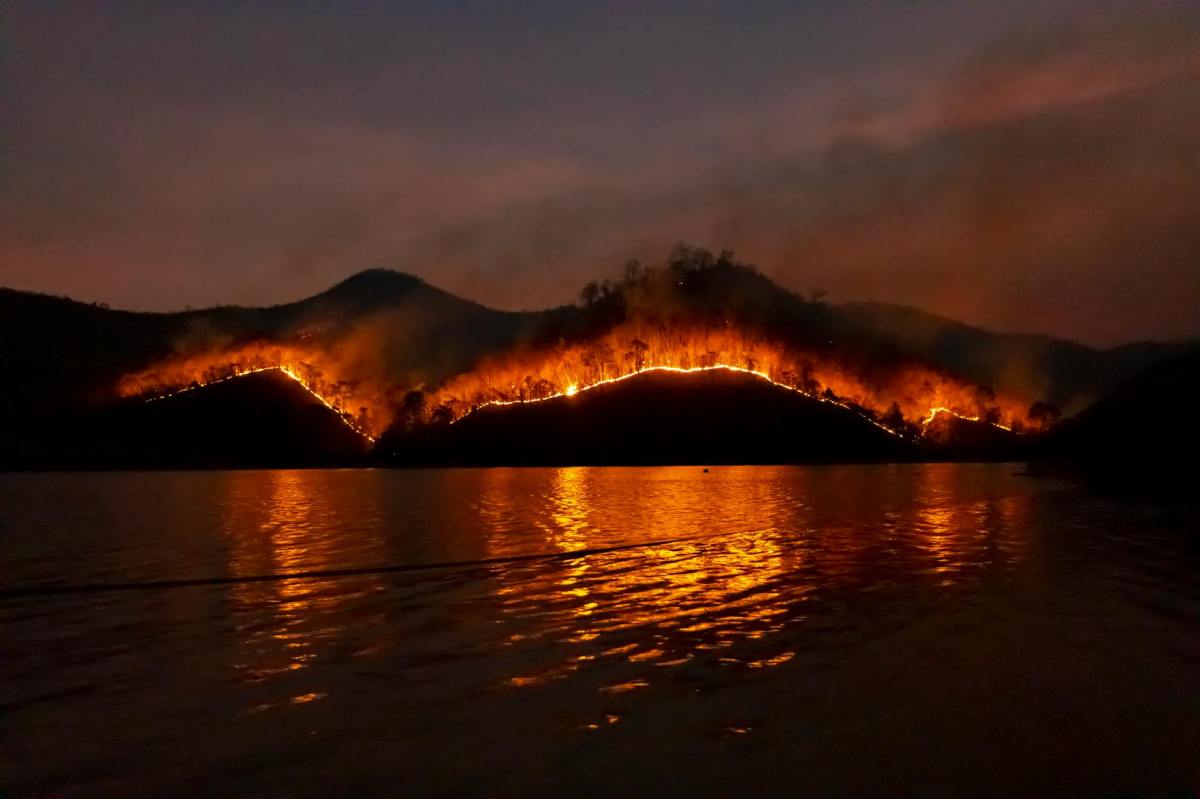
I’ve shared with you in the past how, when you live in California, you become acquainted with the risk of wildfire. You make an uneasy peace with it. Much of the year it’s in the back of your mind and then, when the risk level is high, you look nervously towards the hills, wondering if and when something might spark. 

But because you never really know, most days you go about your business and go to work and do the dishes and pay the bills, carving out a sense of normalcy and telling yourself that, if it does happen, if the fire does come, somehow you will manage. Or maybe, in your less noble moments, you just figure it will happen to somebody else.

But the fires do come, in their own cruel time and manner, and it is hard to be prepared when they do. As we’ve seen this week in Los Angeles—as some of you know intimately well through the impact on friends and family members—the fires come without much warning, and they blaze and they creep up upon the homes and lives of people without much regard for their wealth or background or virtues or vulnerabilities. 

They come, these fires, and they do what fires do—they consume. We know already this week of Episcopal churches and whole communities consumed by this most recent set of wildfires. We also know that we are living in a time when human-impacted climate conditions will only continue to increase the likelihood and intensity of such events. The unquenchable fires have come. 

And maybe it’s just me, maybe when you grow up with this threat of flame and smoke, it has a formative effect..but I have to say that, as evocative as it is, I find little that’s romantic or alluring about most of the fire imagery in Scripture. I’m circumspect about declarations, like the one that John the Baptist makes in this morning’s text, about how God will come and burn and consume things for some divine purpose. There is nothing pretty or transcendent about that. Not when you have seen or known what fire can actually do, what it can take.

And yet that imagery is there for us to contend with. John, admonishing the crowds before Jesus’ appearance, warns of a Messiah who will come bearing unquenchable fire to burn up all that is wicked and unworthy. And I get it, he is angered by injustice and wants the people to look a bit nervously toward the hillsides, wondering when their reckoning will come. As prophets often do, he wants them to experience an uneasy peace with the world as they know it. He assumes that God will save the world through a display of vengeance and power, in billows of smoke and flame. 

He is not alone in that, even today. I found a number of news articles this week in which people described the Los Angeles wildfires as “biblical” and “apocalyptic” and as being like a scene from “the battle of Armageddon.” Still, still, even if we don’t want to, we imagine and speak of God working through destructive forces, raining down judgment upon us like ashes, threatening at any moment to take away all that we know, or, in our less noble moments, to come and take from somebody else. 

I wish we could loosen our grip on that fiery imagery somehow. Because I will tell you that so much of why I am Christian, why I was able to give my life over to the way of Jesus, is because of what actually happens in today’s Gospel after John’s dire predictions. 

And it is this: that Jesus, the Son of God, appears in Galilee, the Incarnate Deity appears at last, coming over the hills…but the fire never comes. Not in the way that anyone expected anyway (and Pentecost is a story for another day). 

No, on this day Jesus appears and it is not as a vengeful blaze cresting the ridge, but as a man ready to get down into the water like everyone else. A man ready to come alongside all of us in the uneasy peace we have negotiated with this life. A man who wants us hope for something more than mere escape and to believe in something more than just survival.

And truly, thank God for that. Because I will tell you, my friends, I am tired of fires, and of people who blithely traffic in the language of fire when talking about God and our common life. I am sick of “burn it down” and “let it burn” and of fire & brimstone theologies that devour human dignity in the name of purgation. I am sick of destruction—of bodies and landscapes and souls—and how they are cast as part of God’s saving mission. 

I don’t want to settle for an uneasy peace anymore. I want the peace that the world cannot give, the peace born of water and Spirit. And today we see where it comes from—from the God who stands in solidarity with us in the River Jordan, whose only fire is the one burning in his heart with love. 

Because John, for all his Spirit-inspired wisdom, got this part wrong, and it’s important that we don’t just read past his mistake. There’s a reason, in other versions of the story, that he is actually somewhat dismayed Jesus wants to be baptized with water. There is a reason, later from prison, John asks, are you the one we have been waiting for

Because John himself is also discovering, as we must, that the true Messiah, the Christ, is not an inferno coming to gobble up everything we’ve tried to build; God is the one strengthening us and helping us to carry those buckets of water– all that blessed baptismal water–to put out all the fires we ourselves have started on this earth. 

And yes, God will help us separate the wheat from the chaff within ourselves and in our world, but God will do so not through devastation but by the devastating power of his mercy and kindness.

And the thing is, we already know this. We already know, if we stop to reflect on it, where and how God shows up in the world. We know that God is not the one burning the hillsides of Los Angeles or blessing the gunfire in war zones. We know that God is instead with the firefighters and the first responders and the widows and the orphans and the volunteers and the communities of people who are sheltering each other and guiding each other into safety. 

We know that Christ asks us to do the same for each other no matter what landscape we live in or what disasters befall us. We know this, because it is what Jesus demonstrated and proved the value of in his life, death, and resurrection. And we can’t let anyone distort this truth.

No matter what we must navigate in our time and in times to come, no matter how many times the fire looms at the edge of the horizon, we are still, and will always be, the people who proclaim the good news of the one fire that never came—that so-called fiery, angry God who instead appeared in the water, like a falling dove, like a gentle Word, stooping down from the misty heavens to scoop up our fears in his hands and bless them and say,

Peace. I am here. You don’t have to be afraid anymore, you who have been uneasy for so long. Step down into the water with me, where the flames cannot reach.

Drench yourself in love, and let us begin again. 

The Way of Peace: A Sermon for Troubled Times

I preached this sermon on Sunday, July 14, 2024 at St. Anne Episcopal Church, West Chester, OH. The lectionary text cited is Mark 6:14-29, the beheading of John the Baptist.

I sometimes wonder what John the Baptist thought about, just before the end of his life.

They say that sometimes the past comes back to us in our final moments, in visions and in fragments–that we can see people long dead, and that we can hear the music of songs long finished. And so I wonder what faces and melodies danced in the darkness of John’s prison cell.

Maybe it was the face of his mother, Elizabeth, who in her old age thought she’d never be a mother, looking upon him once more with a gaze of tenderness and wonder. Maybe he heard the song of his father, Zechariah, the song sung the day of John’s birth, the one even we might remember: and you, my child, will be called the prophet of the Most High, for you will go before the Lord to prepare his ways.

And so he did, all the way up to this moment in our Gospel text.And while I imagine he might have wept for that all that seemed lost, all that felt like it had been wasted, my hope is that all of God’s promises came back to John in the end, carried on a wind that smelled of wilderness and wild honey. A glimpse of heaven, even as he commended himself to the unseeing darkness. 

I hope so. I hope he knew that his efforts were not in vain, that he had done his part, that his voice had indeed cried out and been carried on the wind where it needed to go. That the paths had been made straight. 

I hope so because his actual death, and the circumstances that led up to it, are, like all political violence, so unbearably shortsighted and pointless and small. John, the prophet of the Most High, the one who bathed Jesus in the waters of baptism, the one who, his whole life, burned with the fire of the Holy Spirit, is here, today, snuffed out over a bit of palace intrigue, by the machinations of another petty empire. 

No dignified sacrifice, no farewell discourse—just a debauched party and an idle grudge and a series of terrible decisions and a swift, pitiful ending. Even the writer of Mark’s Gospel seems at a loss for words, unwilling or unable to describe anyone’s reaction to the senselessness of what has taken place. 

Because, as is always the case, what can you really say when rage and violence emerge, yet again, into our midst? Thoughts and prayers for your family, John. This is not who we are, John. We promise we’ll be nicer to each other in the future, John, so that your death meant something. 

And we keep on saying it, hoping next time it will be true.

Yesterday, another act of political violence struck at the heart of our civic life in what should be a peaceful political process in this country. The shooting at former President Trump’s rally in Pennsylvania, which resulted in the death of one bystander and which will likely have historic repercussions we cannot yet understand, is a stark and frightening reminder that we are all still subject to the same destructive tendencies that plagued our forebears. 

We pray for all victims of political violence, including those harmed yesterday. And we are reminded, yet again, how cultures and rhetorics of violence are self-perpetuating—that all the words and wounds we choose to inflict upon one another play out in predictable, terrible ways. I hate to say it, but this is who we are. At least, it’s who we choose to be, too much of the time. 

These forces of division, enmity, and the desire to eradicate those we deem as other are active and at work in our politics, in the broader world and, as hard as it is to admit, to some extent within each of us. We resist them, and build around them, and sometimes even seem to rise above them, but they are there. 

And from time to time, in seasons like the one we are living through now in this country, we are called to account for the persistence of violence. We are called to reckon with the warring impulses of the human heart, called to ask if another way is possible, if indeed our feet might actually be guided somehow into the way of peace. John certainly believed it could be so, but his life demonstrated that calling people prophetically into the way of peace is rarely a safe endeavor.

And so I wonder, as John sat in the darkness, waiting for the end, I wonder whether he finally understood that we need something more than just thoughts and prayers and the invitation to do better next time. That for whatever reason, at least on our own strength, we cannot be much better than we already are. 

I wonder, in those flashes of memory and music, in the fragmentary sum of his long and mysterious journey, if John could sense that Jesus, the One for whom he had waited and prepared the way, was not simply a new political leader strong enough or charismatic enough to enforce peace, but was, in fact, the Holy One who came to show us a truth both very new and eternal: that strength and force and violence will never achieve a redemptive end or guide us to a place of rest. That only love and peace and an embarrassing level of gentleness will do that. 

Because that is what Jesus is. He is the one who embarrasses the Herods of the world by his gentleness; the one who stops the dance of death in its tracks; the one who reveals not just violence’s depravity, but its futility, its weakness. He does this because although he was also killed senselessly, for pointless political ends, he comes to us as the Risen One, the Wounded One who stands in the midst of our fear and our cynicism and our despair and says, peace. 

He says, peace.

He does not say revenge or rage or retribution, but peace. And this is something altogether different from what we have been given to expect of this life or this world, or even of ourselves. Something different, even, than John expected–John who had once spoken of the Lord’s winnowing fork and fire.

And so I hope, somehow, before the end, he saw the truth in the darkness and smiled and said, yes, this, yes, peace, yes, we have warred and wept and wandered in the wilderness, and we may continue to do so for many more generations, but yes, another way is possible and it is here, now, insistently alive even in the face of all this senseless death, and its name is love, and its name is God and its name is Jesus. 

I hope we see this, too, every day, but especially on days like today, when those forces of violence and fear seem so strong, so palpable, and when forcefulness seems to be the only way forward. I hope we will see that there is something deeper and stronger than anger that animates our common life and our work and our faith, even after all that has been done and left undone.

Long before our own endings, long before we must gaze into the darkness, I hope we will glimpse that vision, fragmented though it might be…the one that is revealed in the faces of the ones we have loved and in the songs of peace we have sung and in the ways we have tried to practice tenderness and gentleness with each other in this place.

And then I hope we will go out and proclaim that vision in the world, costly as its might be to do so. Not to win a political or cultural battle, not to earn a spot in heaven, but simply because it is true. It is the only true thing there is to hold onto—that love and justice and peace and forgiveness are the only things which will endure in the end, long after our seemingly endless capacity for violence has consumed itself. 

Because this is the Gospel: that on that day, when everything is finished, when every game is played and ever last war is waged, God will still be there standing on the wreckage of our best intentions and worst impulses and God will still be saying, Peace, peace I give to you. My love I give to you. My life I give to you. Let the dawn from on high break upon you, my children. Let us begin again. 

We don’t have to wait til the end to begin, though. We can start right now. Because no matter what happens in the next several months in this country, or the next several years of our lives, or in the next several generations on this planet, I can tell you this: the things worth doing, the things that will survive and flourish long after we are gone, are the same things that John glimpsed in the dark: the face of love and the song of peace, and the courage to trust in something other than the hurt we’ve known.

God be with our country as we try to remember this.

God be with us as we try to live it. 

Joy: A Sermon

I preached this sermon on the Third Sunday of Advent, December 17, 2023 at St. Anne Episcopal Church, West Chester, OH. The lectionary texts cited are Isaiah 61:1-4, 8-11, Psalm 126, and John 1:6-8, 19-28.

One of the great privileges of my vocation as a priest is when I am invited to spend time with people who are near the end of their life. For reasons that are both self-evident and yet hard to put into words, the dying and those who love them often find deep meaning and comfort in the simple rituals of familiar old prayers offered at the bedside, of oil traced in the shape of the cross on the brow, of meaningful silences and gentle hand-holding. 

And every time I am welcomed into such a space, to bear reminders of God’s love and to bear witness to it among families and friends, I think to myself: this is what it’s all about, when everything else is stripped away. This is what it’s all about.

This is the moment when the worries and the wondering and the pretensions and the half-kept promises and the striving and the stumbling that preoccupy so much of our days all give way to the spare essentials, and this is when we finally encounter what has always been true: that we have lived, that we will die, that we are loved in ways that surpass both living and dying. 

There is nothing more beautiful to me than the unadorned, earnest intimacy of such moments; few places that feel holier than when people see each other clearly and say what they mean to one other without hesitation or embarrassment.

Would that we experienced such vulnerability and gentleness and openness with each other throughout our lives, and not just near the end of them.

But we tend to lead cluttered, fragmented lives—disappointments jangling in our pockets like loose coins, stacks of should-have-beens and ought-to-dos crowding our peripheral vision, making it difficult to see the path in front of us, difficult to discern how to navigate the shattered landscapes of an equally fragmented world. 

The ruined cities of which the prophet Isaiah speaks, and the devastations of many generations—they are still with us and they are within us, and still we go out weeping, carrying the seed, and so it’s no surprise that we are terrified of tenderness, unable to embody it, unsure whether it is safe to do so. 

Because the truth is, it is not safe. Love never is. That’s probably why our tenderness towards each other too often shows up at the end, when at last there is nothing left to hide from, when there is no value left in posturing or pretending, when we have nothing to lose but time and when we can finally give voice to the hidden depths within us. When we can say, “I love you,” without a hint or irony or self-preservation, and hold the hand of the one we love and notice the miracle of how our fingers intertwine, like stitches in the fabric of the universe. 

What those moments at deathbeds have taught me is that good lives, true lives depend precisely upon a pervasive tenderness, a certain surrender to our need for one another, a relinquishment of the titles and the labels and the boundaries we so often construct in our haste to make sense of things or to protect ourselves. 

None of those things will matter much in the end, none of them will console us as we approach the hiddenness of eternity, and none of them will transform our relationships with one another. Only love will do that.

And other than Christ himself, no one in Scripture understands this better than John the Baptist. Nobody, more so than John, understood the liberating necessity of relinquishment, the power of naked vulnerability, the abandonment to the wild and honest tenderness of God. 

Given his stature in the tradition of the Church, greatest among the prophets, we might tend to think of John through the lens of strength and influence and force, but if we pay close attention to who he is and how he lives and what he says, what we actually discover is a man who has given away everything—including his own capacity to wield power—in order to be filled with the vast, meaningful emptiness of God’s Spirit. He is one whose whole life is lived in the borderland between heaven and earth, the same borderland we usually only glimpse towards the end.

Who are you? ask the priests and the Levites.  I am not the Messiah, he says. 

What then? Are you Elijah? 

I am not. 

Are you the prophet?

No.

Then who are you? What do you say about yourself?

I am the voice of one crying out in the wilderness, ‘Make straight the way of the Lord.’

I am the one who knows that titles do not convey true significance. 

I am the one who has stripped away all my defenses, who is brave enough to love foolishly. 

I am the one who is not lured by disappointments or distractions. 

I am the one who wears my burning heart on my sleeve.

I am the ruined city that is being rebuilt.

I am the other side of devastation.

John is the one who stands on the banks of the river, inviting us to be reborn, inviting the whole earth into that which we will discover on our deathbed: that the only kingdom that will last is the kingdom of love, and that this kingdom is coming and is now here, ready to conquer every human heart willing to be undone by tenderness, willing to be made new by vulnerability. 

John is us, if we dare to be him. He is the truest part of us, after everything else is stripped away. He is the reminder that beneath all of the things that scare us, all of the things that tempt us, all of the things that confuse us and confound us, there is something durable, something undaunted, something unafraid and alive within us that will assert itself if we let it, if we release the clutter and the fear and give ourselves over to its fierce and magnanimous possibilities. What is that something? Well, on the Third Sunday of Advent, we call it joy

But even more fundamentally, it is the image of God, yearning to reveal itself in us, waiting for us to say yes, waiting for us to say, let the light come into the world, and into me, and let me testify to it, let me be baptized in the fire of love and let me reach out to you, my brother, my sister, my sibling, my love, and let me clasp your hand even though we are dying and let that simple embrace be all of the truth that there ever was in this short life, let eternity erupt in the space between our palms, let heaven whisper in the silences that cannot be filled with words. 

And although we are afraid, and although yes, we go out weeping, remember that joy is our enduring harvest,  and so if we are courageous enough, if we are tender enough, may all of life look like its ending: spare and clear and urgent and gentle, love’s unstoppable advent, a deathbed and a birthing, a promise and a fulfillment, all at once, always. 

We do not have to wait til the end of our lives or til the end of time to experience these things. They are available to each of us, here and now, if we, like John, are ready to trust in that Kingdom we already know is coming, to give voice and shape to it wherever we find ourselves. And the cities may continue to smolder, and the devastations will continue to knock upon the door of each generation, but for those who follow in the footsteps of the Baptist, for those who know that a heart broken open is the most powerful thing on earth, for people such as this—for people such as us, we pray—there is another world, there is another way worth seeking, worth speaking, worth dying for, and worth living for, too.

That world, that way, that joy is almost here. Can you feel it?

The Hard Stuff: A Sermon

I preached this sermon on July 11, 2021 at Trinity Episcopal Church, Fort Wayne, IN. The lectionary texts cited are Amos 7:7-15 and Mark 6:14-29, the execution of John the Baptist.

Have you ever brought someone to church, maybe someone who maybe isn’t a regular church-goer, hoping to show them how beautiful and life-giving it can be to worship here, to take part in the liturgy? And maybe it’s going really well at first: a beautiful, inspiring opening hymn; the lovely vestments and the stained glass windows; and then you get to the readings and you’re hoping for a real crowd pleaser, John 3:16 or Moses parting the Red Sea. But instead…you get something like this week’s texts. The grim and heavy stuff. Thanks very much, lectionary editors. You’re not making it an easy sell here. 

These are hard texts, but we don’t get to skip over them. We don’t get to focus only on the passages of Scripture that comfort us or reinforce our worldview.

And as much as we might like to evade the thorny images and themes that come up in the lectionary, sometimes that is just not possible, because part of our gathering together is facing the hard things that need to be heard, that need to be pondered. So it is this week.

First there is the prophet Amos, a guy from the country, no professional slick talking seer, just a simple man consumed by a message, refusing to back down or be silent as he calls out the king and the ruling classes of Israel for their decadence and their empty piety.

He is prophesying at a time of relative wealth and strength for the kingdom, but he is telling them the things they don’t want to know about themselves, the grime hiding under the gold leaf, warning them, as all true prophets must, saying something like:

Don’t be too satisfied with yourselves, you who imagine yourselves powerful, you who have taken much and given back all too little to the land and the common people who have sustained you—you might be living lavishly now, but a time is coming soon when you will have to pay the price for the inequality and the injustice necessitated by your indulgence. You imagine yourselves just, but you cannot claim a just society when you feast while others starve. You cannot claim pureness of heart when that heart is bloated with its own desires. Empty yourself of your selfishness, drain the festering wound of your pride and greed. Lose your current way of life in order to save the life that God desires for you. 

Not surprisingly, the powers that be weren’t too keen on listening to what Amos had to say. It’s a hard thing to hear. 

Then, if that wasn’t enough for us to wrestle with, there is the gospel reading from Mark, this vivid carnival of horrors in King Herod’s court, the palace intrigue, the dancing girl, and the shocking twist that leads to John the Baptist’s execution, his severed head served up on a royal platter, which is both a foreshadowing of and an antithesis to the Eucharistic body that Christ would later offer his disciples in the Last Supper. But as disturbing as that image is, it is really just a more graphic version of what Amos was already condemning: a corrupt class of ruling elites ravenously consuming the hope of the poor, consuming the land, consuming whatever and whomever satisfies their personal agendas, convincing themselves that it is their right to do so. 

These are hard texts because they are ugly reminders of the things we’d rather forget, reminders that the world can be brutal and capricious and unforgiving. And if we’re honest with ourselves, these are hard texts because they are still true, because they still speak to the conditions experienced by too many people around the world. 

I probably don’t need to recount to you all the ways in which we still see these forces of violent consumption and exploitation at work today, but if we are brave enough to look and listen to what’s going on around us, and especially to the voices of the poor and the vulnerable, we will see that the powers that Amos and John challenged are still operative in society.

And if we are really brave, we will also look within ourselves to examine how these forces have taken root in our own lives. How we, like Herodias’ daughter, have been swept up in that hypnotic dance of death that has been winding down through the ages. How easily we learn its steps without realizing whom we are trampling, hypnotized by the desire for things for which we do not understand the true cost until it is far too late. 

It takes courage to face texts like this, to take them seriously and not just as macabre bits of liturgical entertainment—to examine these enduring impulses that operate around us and inside of us. It is hard work. 

And that is one really good argument for the necessity of Christian community, of coming together week after week here, to be both supported and chastened by what we discover in Scripture and the liturgy. It’s not something that we can do alone, because alone we are awfully good at only hearing what we want to hear. We need Jesus and we need one another to stay accountable to the totality of the narrative, to bear the sorrow and then to imagine a different way of being.

We need each other to practice living in community as though there is another, better way, a more loving way, because we trust that there is, and because we are tired of opening the news headlines to find a world still saturated by violent self-interest.

Because we are tired of a world that still proclaims that only the strong and the beautiful and the mighty deserve to flourish.

Because we are tired of a world that silences the truth-tellers, that kills the bearers of good news, that refuses the living bread of God and feasts instead on the corpse of curtailed hope. 

And maybe it’s the long hot summer, maybe it’s the long hard year, but I am feeling especially tired of the old brutalities. Tired of heads on platters, tired of angry words, tired of cynicism masquerading as wisdom, tired of how easy it is to get caught up in the malice and the fear and become the very thing I hate.

And so I come here, and we come here, to look in the direction that Amos and John were both, in their own way, pointing towards. Towards the truth. We look to Jesus, the One who knows how hard it is, how exhausting it is, but who refuses to play by the same worn-out, bitter old rules of the game. The One who reminds us every day that we don’t have to play by them either. 

We come here to be reminded, that, as hard as it can be out there, or in here, in ourselves, that the God-given truth about life is always the same. 

That we can make a thousand mistakes every day, but we can’t change the fact that God still loves us and wants to redeem us.

That the world can try to kill the messengers of peace, but they can’t kill the message itself. That they can murder the prophet and put his head on a platter, but the eternal voice is still crying out in the wilderness, saying prepare the way of the Lord. Prepare the way. God is coming. God is here. Start living like you believe it.

We come here and look to each other, to live like we believe it together, to show the world that church is a verb, not a noun, a body, not just a building, and that following Jesus is not about going through the motions, but about living with transformed hearts. It’s about taking a stand for the people who need us the most. About refusing to accept that the world as it is is good enough. About opting out of the dance of death. 

These are hard texts, because this can be a hard world. And changing must begin with looking at it.

But it continues with looking to him, to Christ. And then looking to the people around you. This is all that we have to bear the world’s brutality and then to challenge it with our love. We have Jesus, and we have each other. Nothing more. But it is all that we need. 

We come here because the story might be hard, but it isn’t over yet, not by a long shot. And here, together, we are living our way into a different ending. 

Emptiness: A Sermon

“In the canyon, we perceive how negative space has its own power; we find that we are just as compelled by what is missing–what has been hollowed out–as we are by what remains.”

I preached this sermon for the 3rd Sunday of Advent, December 13, 2020, at Trinity Episcopal Church, Fort Wayne, IN. The lectionary texts cited are John 1:6-8, 19-28 and Isaiah 61:1-4, 8-11. It is a slightly edited version of the sermon I wrote for The Episcopal Church’s “Sermons that Work” collection for Advent & Christmas 2020.

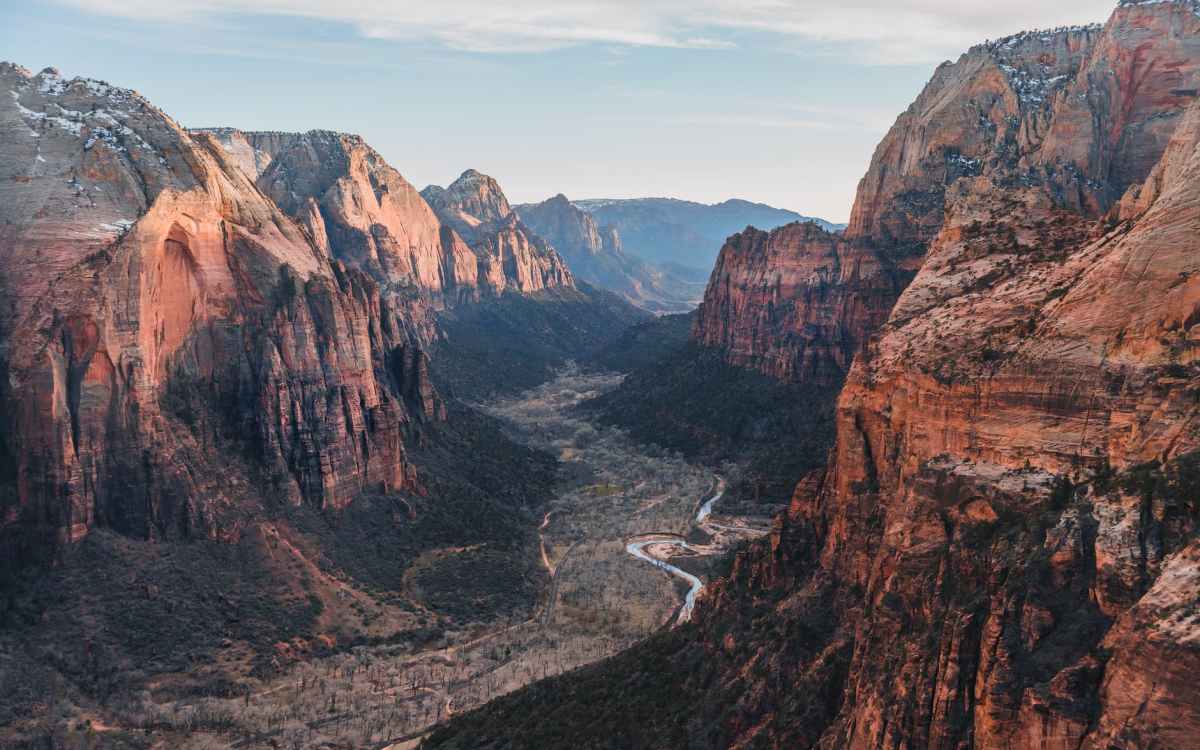
I spent much of my 20s living in the desert, and whenever I was feeling stressed out or in need of some quiet time, I would drive out past the city limits to an overlook that took in views of Nevada’s Red Rock Canyon and a seemingly endless expanse of earth and sky.

Some people find the desert off-putting: all of that muted, windswept rock and dirt and shrub, where you cannot hide from the sun or from yourself; but others, like John the Baptist, are drawn to such places for precisely this reason—because there is no distraction, because it is a place of unobscured perception, of stark clarity, where one can see farther outward and further inward, if they are willing to brave the emptiness.

Indeed, if you have ever stood at the rim of a desert canyon, you know what it is to comprehend the immense majesty of such emptiness. These clefts in the earth, carved by the incessant flow of water over millenia, are rocky vessels holding a world unto themselves. 

Peer over the edge and look down into the sky held between the canyon walls—a highway for the howling wind and winged creatures of the air. 

Look down upon the stubborn shrubs clinging to the ledges, where tiny crawling things seek precarious shelter at the edge of the abyss. 

And then look down, down, down to the bottom, to the river—the improbable, sinuous source of this vast openness, branching out like a vein, still eroding and shaping the earth in its insistent passage towards a distant sea. 

In the canyon, we perceive how negative space has its own power; we find that we are just as compelled by what is missing–what has been hollowed out–as we are by what remains. There is a potentiality, a spaciousness in the open chasm that, in gazing upon it, we also begin to sense within ourselves, in the caverns of our soul, a certain thick luminousness, a sense of seeing deep into the heart of things that are usually hidden under the surface.

And so perhaps it is in just such a place, deep in a canyon in the Judean wildnerness, that we might imagine John the Baptist, his voice crying out, echoing off of the wizened rockface, mingling with dust and birdsong, proclaiming the Coming of Christ: an approach that will, like a river of Living Water, soon carve its own path through the petrification of the human heart. 

John heralds the advent of God’s own bone and breath and blood; the anointed flesh of the Messiah, which, in its birthing and breaking and Belovedness, will reveal the truth of how our own lives are sustained by the Divine ecology of Love.

But before we get there, we are here, in Advent country, in the desert. And just as emptiness defines the canyon, so it is, in this season, that discovering our identity in God is predicated, first, upon clearing away all that is not for us, in order to discern exactly how God might fill that open space.

“Who are you?” John is asked by those eager to label him and his peculiar mission. But he responds only with negations.

“I am not the Messiah,” he says. 

Are you Elijah? “I am not.” 

The prophet? “No.”

Relinquishment of these identity markers, alluring as they might be, is John’s act of humility, of refusing to be carried away the expectations or agendas of others. He is so grounded in God that he has become an open channel of grace and truth, letting the breath of the Spirit blow through the cracks in his soul, like a reed, like a wind-song. 

And, if we wish to let God shape the melody of our own lives, so must we be.

How often we secretly wish that we were solid rock; the savior of ourselves; the long-expected sovereign of our own small dominions, with the power to do it all, to be it all. How often we take on the titles offered to us, not because they are accurate, but because they’re there, because it sounded good at the time, and because an identity, a name, even one that doesn’t quite fit, makes us feel more real to ourselves, at least for a while. 

But just as the canyon only becomes itself in the void, so, too, with us: so it is ok, it is necessary, even, to not be all things to all people. It is ok to let go of the names and roles that never quite fit. It is ok to let your life take on some empty space, to let the wind rush through you. Because, like John, it is only in each of our own negations that we get closer to the spare, essential truth of our identity—the one that God has prepared particularly for us.

John shows us how brave and beautiful it is to simply be what we are, and to trust that, for God, this is sufficient.

But how difficult this can be. In this anxious time, faced with the multiplying needs of our families, our communities, and our planet, we are frequently tempted to take on far more than what we can actually do or be. Even as many of us attempt to slow down and be more attentive to what matters, the world continues to surround us and shout, “Who are you? Who are you?”

But, if we are ever to cultivate the space in ourselves for God to rush in, then, like John, we must respond with:

I am not the Messiah.

I am not.

No.

We must be willing to disappoint the onlookers. We must be willing to embrace the emptiness of what we were never meant to be.

And then, perhaps, we will find what was ours to claim all along.

“I am,” John admits at last, “the voice of one crying out in the wilderness, ‘Make straight the way of the Lord.’”

Not a king. Not a savior. A voice. Just a voice–an invisible resonance piercing the air, unbounded, free. Nothing more and nothing less than this. And exactly what God needs from him.

For John, the purpose of his own voice is clear: the announcement of God’s Incarnate Promise. And so he baptizes in the river, that ancient agent of transformative power, inviting others to let themselves be scoured by it—to let their layers of defensiveness and artifice be stripped away, to hollow out a space in their hearts in preparation for “the one who is coming after,” the Christ, the one who makes all things new.

And here, in another time and in another wilderness—the one that we struggle to navigate each day—John’s invitation remains open to us. It is as urgent as ever, because we are still learning who we are and who we are not. Like the canyon, we are still being shaped; still being laid bare to the wind and the light, still becoming as deep and open and vast as God imagines we can become. And, like John, it is only in the cultivation of our own holy emptiness that we will, at last, be the vessels of God’s inbreaking purpose:

to bring good news to the oppressed,

to bind up the brokenhearted,

to proclaim liberty to the captives,

and release to the prisoners;

to proclaim the year of the Lord’s favor,

and the day of vengeance of our God; 

to comfort all who mourn. (Isaiah 61)

In the Water: A Sermon

I preached this sermon on January 12, 2020, the Baptism of Our Lord, at Trinity Episcopal Church, Fort Wayne, IN. The lectionary texts cited are Isaiah 42:1-9 and Matthew 3:13-17.

Jesus came from Galilee to John at the Jordan, to be baptized by him. John would have prevented him, saying, “I need to be baptized by you, and do you come to me?” But Jesus answered him, “Let it be so now; for it is proper for us in this way to fulfill all righteousness.” Then he consented. And when Jesus had been baptized, just as he came up from the water, suddenly the heavens were opened to him and he saw the Spirit of God descending like a dove and alighting on him. And a voice from heaven said, “This is my Son, the Beloved, with whom I am well pleased.” (Matthew 3:13-17)


So there is John, fueled by God and by his diet of locusts and wild honey, baptizing in the River Jordan, calling people into repentance, into preparation, for the coming Messiah. Prepare the way, Make straight the paths! Repent, for the kingdom of heaven is ever nearer to to you!

We might imagine a group of his followers gathered there on the banks at dawn, sharing a simple meal as they wipe the sleep from their eyes, praying fervently, glancing over at the river, moody and turgid, the water both beckoning and menacing to them, just like John himself. To climb down into to those chilly depths, to be submerged in them by this eccentric prophet: will it change them? Are they ready to repent, to receive a new vision? Can someone ever be ready for a thing that is beyond comprehension?

And yet the river is flowing, and a raspy voice is crying out in the wilderness, and the bruised reeds at the waters edge are trembling, whispering amongst themselves, and they know that today, yes, surely today, is the day their lives will change forever.  Today they will slip into the water and be cleansed of their sin. Today they will prepare the way of the Lord, whatever that might mean. 

But there is one man in their midst, a stranger from Galilee, who isn’t so tentative. He keeps to himself, mostly, but he seems to know what he is doing there. He looks at the water with a sense of determination and acceptance, like the face of one who suddenly understands what must be done, and it is clear that whatever has drawn him here, he will not be deterred.

The group approaches the riverbank, and one by one they wade out alone into its chilly embrace where John awaits them, hurling enticements and warnings. Words thundering across the water, and then a submersion, and a gasp of breath and sunlight, and the reeds in the water are whispering, still whispering—he is coming.

He is almost here. 

Prepare the way.

Prepare the way. 

The man from Galilee steps forward.

Did Jesus know what was about to happen as he approached the river? Did he fully understand what it meant to be plunged deep down into the water, that same water that he, the Eternal Word, breathed over at the beginning of time? Did he realize, as he crested the surface, that his life was now what it was always meant to be? That the time of preparation was over?

We have some idea that he did. “Let it be so now,” he tells the Baptizer. “For it is proper for us in this way to fulfill all righteousness.” 

In other words, this is God’s will, John: 

You and I, the one before, and the one after, and the one who encircles all things. Let us go down into the deep together, baptize me with your cleansing water and I will baptize you with the fire of God’s  descending Spirit, and you will see—we will see together—how the two are inextricable from each other. 

Washed and illuminated and transformed and yet fundamentally ourselves. This is what will fulfill the emergence of God’s righteous purpose.

For this is precisely what the Baptism of Our Lord signifies: emergence. Rising up from the water, we behold the emergence of Jesus, the humble man of Nazareth, into his public revelation as the Son of God; the one who arrives like the Servant heralded in Isaiah:

My chosen, in whom my soul delights

I have put my spirit upon him

He will bring forth justice to the nations. (42:1)

In his baptism, Jesus is revealed as an embodiment of this servant, the one who will be in total obedience to the will of his heavenly Father, and who, through his self-giving service, will inaugurate a kingdom characterized by peace, redemption, and healing. A new world is revealed that morning in the River Jordan—a world with the Triune God at its center, and with Christ as its servant king.

And so when the voice from above says, “this is my Son, whom I love” and when the Spirit descends like a dove upon him, it is not that Jesus becomes something he wasn’t already. It’s that now he is seen more fully for who he always was. He is God,  who has come to us in our frailty, to live as we live, and who calls us into a path of service, so that we might live as God lives.

 What a thing to have witnessed on that day beside the river. 

And what a thing we are witnessing today, in this place, as we baptize two people into the very same experience of God’s enveloping love and concern. 

Because we must remember: our baptism draws us into the reality that Jesus experienced at his own baptism. Just as he emerged from the water to hear himself named as the Beloved, the Servant, the One called to embody his Father’s will, so do we. 

Whether in the river or at the font, the water and the Spirit do their work on us—they name us as God’s children, they incorporate us into God’s household, and they propel us forward into lives that are patterned after Jesus’ own life. Lives of service, and justice, and peace, and self-giving.

For those who will be baptized today, as for each of us who have been marked by the sacrament of baptism, this is the moment when the wait is over. The way has been prepared. A new life in Christ begins now. And they are ready; as ready as anyone can be for something that is beyond comprehension.

So rejoice, this day, my friends, for the Savior has come to the river. He has waded down into the water with us; he is standing in solidarity with us as we cry out for healing, for cleansing, for consolation. He is treading gently amidst the bruised reeds and he is guiding them back upright. 

And when we plunge into the depths and feel what it’s like to die, he will be there; 

and when we emerge into the morning light and breathe in the fulness of life, he will be there; 

there, in the water, calling us Beloved,

calling us onward,

calling us home.

To the Edge: An Advent Reflection

I delivered the following reflection at an Advent retreat I facilitated on Saturday, December 7th, 2019 at Trinity Episcopal Church, Fort Wayne, IN.

In western Scotland, there is an archipelago known as the Inner Hebrides—a collection of wild, sparsely populated islands that hug the coastline like an outcropping of jewels, ensconced in the swirling gray-green tides of the north Atlantic ocean. On a map, they appear easily accessible to the mainland, but to visit them is to enter a world apart.

The Inner Hebrides are home to wild birds—puffins, and rock doves, and golden eagles— and hardy, weather-beaten plants—heather, and thistle, and a host of insistent wildflowers. They contain small fishing villages and hillsides covered in roaming sheep, whiskey distilleries and ruined monasteries.  Some of the islands are vast and mountainous, a series of craggy cliffs and broad, low plains; others are barely a speck of gray rock, grazed by the wings of passing seabirds–namelessly residing amid the roiling waves. 

But for all their remoteness, streams of travelers make their way to this cluster of islands, over 100,000 people each year. They come for a variety of reasons: for hiking, or fishing, or whiskey tasting, or perhaps for a bit of windswept solitude; but they come especially to visit one place in particular: the tiny island of Iona, perched at the outermost edge of the Inner Hebrides, accessible only by boat. 

Iona is humble in size—only a mile wide and a few miles long, with a population of just 120 people—but it looms large in the imagination of many, for it was here that St. Columba arrived from Ireland in 563 CE and established a monastery that would become the center of what we now call Celtic Christianity—an ancient form of the faith, nourished in the misty hills and valleys of what is now Ireland and Scotland, and shaped by the cultures of their early people—a form of Christianity that long predates the establishment of a church in this region with any direct tie to the authorities in Rome. 

It was here, on little Iona, at the rocky edge of the known world, that for centuries monks and scholars and warrior-kings traveled for an encounter with the living God, the One who came to be among us as Jesus, the Christ. It was here, at the edge of the sea, where they dwelt and prayed and studied and died, seeking some whisper of God’s voice in the wind and in the silence. 

And so it is that, still, pilgrims go there, to visit the tiny village, and the crumbling ruins, and the reconstructed Abbey, and the ancient stone Celtic crosses with their inscrutable symbols. They travel by train, and then by boat, and then by bus, and then by boat again, to reach this holy place, this thin space, this island of craggy, rock-strewn grace because…because for some reason they must. 

Because for some reason, each of us is drawn in some way to these places that lie at the edge of knowing, these places where the land and the sea merge, these places where what we know is overwhelmed by that which we will never fully understand. We go to these places to be silent, to listen, to watch, and then to return home, perhaps a bit more awake, a bit more alive than we were before. 

Iona has that effect on people. 

Advent also has that effect on people. 

Advent, as you might know, is derived from the Latin word adventus—it means “to come”—and so this liturgical season is the one in which we focus our attention on a very particular coming—that of Christ, whose birth is proclaimed on Christmas and whose return is promised at the end of the age. 

It is a season of hope and expectation, but also of some severity—for we know that in these comings, our lives will never be the same. The world will never be the same. Arrivals of this magnitude require reflection. Preparation.

And for the same reasons that some make the journey across the moors and the shores to seek out a tiny abbey church on a Scottish isle, to seek the presence of God in a wild land, so each of us ventured here, today, to seek out the importance of this season and what it means to “prepare the way” for the coming presence of Christ.

That phrase, “prepare the way,” the theme of our retreat today, is taken from tomorrow’s Gospel lesson from the third chapter of St. Matthew:

“In those days John the Baptist appeared in the wilderness of Judea, proclaiming, “Repent, for the kingdom of heaven has come near.” This is the one of whom the prophet Isaiah spoke when he said,

“The voice of one crying out in the wilderness: 

‘Prepare the way of the Lord, 

make his paths straight.’”

Now John wore clothing of camel’s hair with a leather belt around his waist, and his food was locusts and wild honey. Then the people of Jerusalem and all Judea were going out to him, and all the region along the Jordan, and they were baptized by him in the river Jordan, confessing their sins.

It is worth noting that John the Baptist, in his mission to proclaim the coming Messiah, does so in the wilderness, not in the city—he is wandering across the uninhabited landscapes of Judea, crying out his message of repentance and preparation.

Matthew tells us that it is the people of Jerusalem and all Judea who come to him, leaving behind the security of their homes to seek something of God in an unguarded landscape, to be baptized by a wild man in a wild river, to embrace a salvation that is spoken of as a cleansing, a burning, a harvesting—an elemental experience, undomesticated and savagely beautiful. 

And like those Judeans, so we, too, venture beyond the familiar in Advent. We come here, not into a physical wilderness, but into the expansive, mysterious, silent heart of this season, a season whose core purpose is to instill in us a sense of Christ’s imminence, his urgent imminence—both in the form of a child, born unto us in a manger, and also in the form of a king, descending again one day in glory to judge and redeem creation at the end of all things. 

We enter this season by stepping beyond what is safe and predictable, into a liminal space—a space between knowing and unknowing, a space between the stories told and the stories yet to be told. 

We are drawn, like the Iona pilgrims, to stumble to the outer edge of the human heart, to gaze into the cloud-draped horizon and to be quiet, to listen, to watch for the One who is coming, like a wave, like a storm, like a still small voice speaking out of the whirlwind, surging over the coastline of our longings and carving them into his likeness, reshaping our hearts like stones polished by the sea. THY kingdom come, THY will be done.

Advent, it must be said, is not a season for the indifferent or the timid. If we go out to meet it, to answer its call, it will change us. 

But what does all of this talk of wilderness and pilgrimage and change have to do with our gentle program today, focused on silence and prayer? Quite a bit, actually. 

Because, you see, we spend our lives surrounded by noise; this is especially evident at this time of year, when the onslaught of saccharine commercialism joins forces with the pervasive noise of toxic online discourse, idle gossip, and media chatter to create a din that is, ultimately, numbing to the soul. 

We careen from one task to another, often with very good intentions, and yet we are often left, at the end of the holiday season, with a sense of depletion and disorientation. 

If Christ has indeed come into our midst through all of this, we run the risk of losing track of him, and thus we might end up cozy, perhaps well-fed and entertained, but unchanged. Untransformed. Untouched by the wonder of God, who gazes back at us through the eyes of an infant, who takes on our innocence and our frailty and imbues it with Divine Love, to show us how special, how good this life can be. 

So in order to break free, in order to find him, in order to find ourselves, we must venture elsewhere, as pilgrims tend to do.

We need not travel to an island. Silence and prayer and Scripture are our pathway on this journey. They invite us into the presence of God and shape our lives as God’s people. They require us to notice everything, both inside of ourselves and in the world around us—the good and the bad—so that we can discern God’s abiding presence in all of it. 

Because God is, indeed, present. God has come to us in the birth of Christ—the first Advent. God comes to us sacramentally in the Eucharistic life of the Church—the continuing Advent. And God will come again at the last day to redeem our turbulent history—the final Advent.  

Our prayer and study, then, remind us not simply that “Jesus is the reason for the season” while blithely going about our frantic business as usual. Our prayer and study instead suggest that the season of Christ’s coming actually asks something of us—no, demands something of us—something that has nothing to do with consuming or producing, nothing to do with the further commodification of our love. 

Advent requires, with its voice crying out in the wilderness, that we make space, that we clear out the noise and the haste, that we “prepare the way” in our hearts and in our societies for the cold, vivifying gust of salvation that will soon be borne on the wind, on the waves, on the breath of the One who approaches, toppling old injustices and healing old wounds.

The One whom John the Baptist proclaims. The One who, even now, hovers at the edge of our perception, like an island shrouded in mist, so close we can touch it, though we cannot quite see it, yet. The One who will make us, and our winter hearts, and our flagging, tired dreams, new again. The One who will bring us to life. 

Today you are making a journey of your own—a journey to the edge—into the realm of Advent, where nothing is resolved and yet everything is possible. You do not have to achieve anything today. You are simply invited to make the trip, to pray, to listen to the silence and to yourself, and to one another. 

Simply to do this is an act of courage, an act of pilgrimage. Simply to do this will help prepare the way for Jesus to enter your life more deeply. And when he comes—and he will come, as sure as the ebb and flow of the tide, a sure as the beating of your own heart—you will know that there is, ultimately, no wilderness in which you are alone. There is no distant shore where he cannot reach you. In Advent, he comes to us. In Advent, you will find that he is already here. 

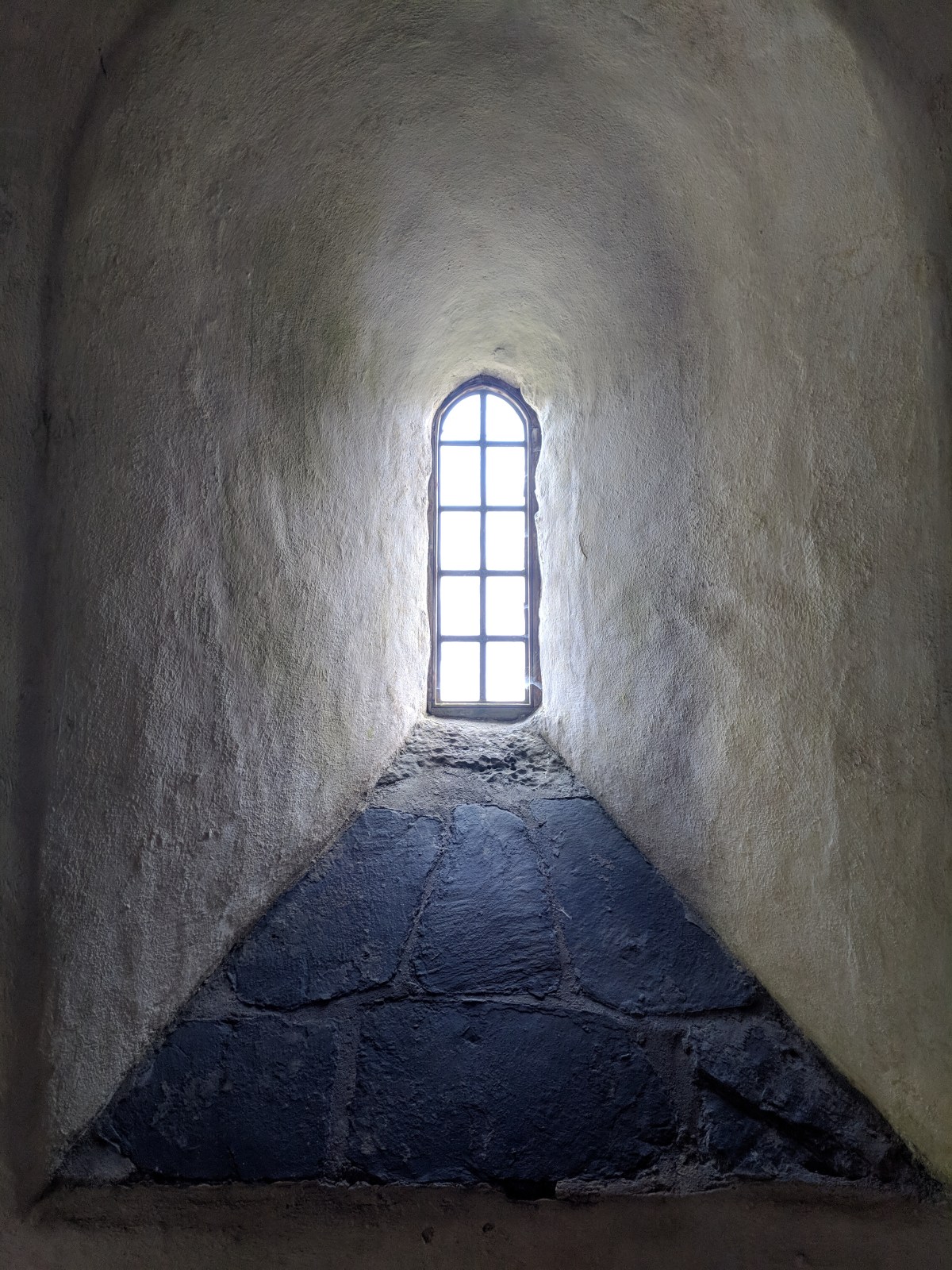
Maker:S,Date:2017-11-9,Ver:6,Lens:Kan03,Act:Lar02,E-YFrom my own pilgrimage to Iona in April, 2018.