
The Cup: A Sermon

I preached this sermon on Maundy Thursday, April 14, 2022 at Trinity Episcopal Church, Fort Wayne. The communion cup, which had been suspended in our parish during the COVID-19 pandemic, was restored at this service.

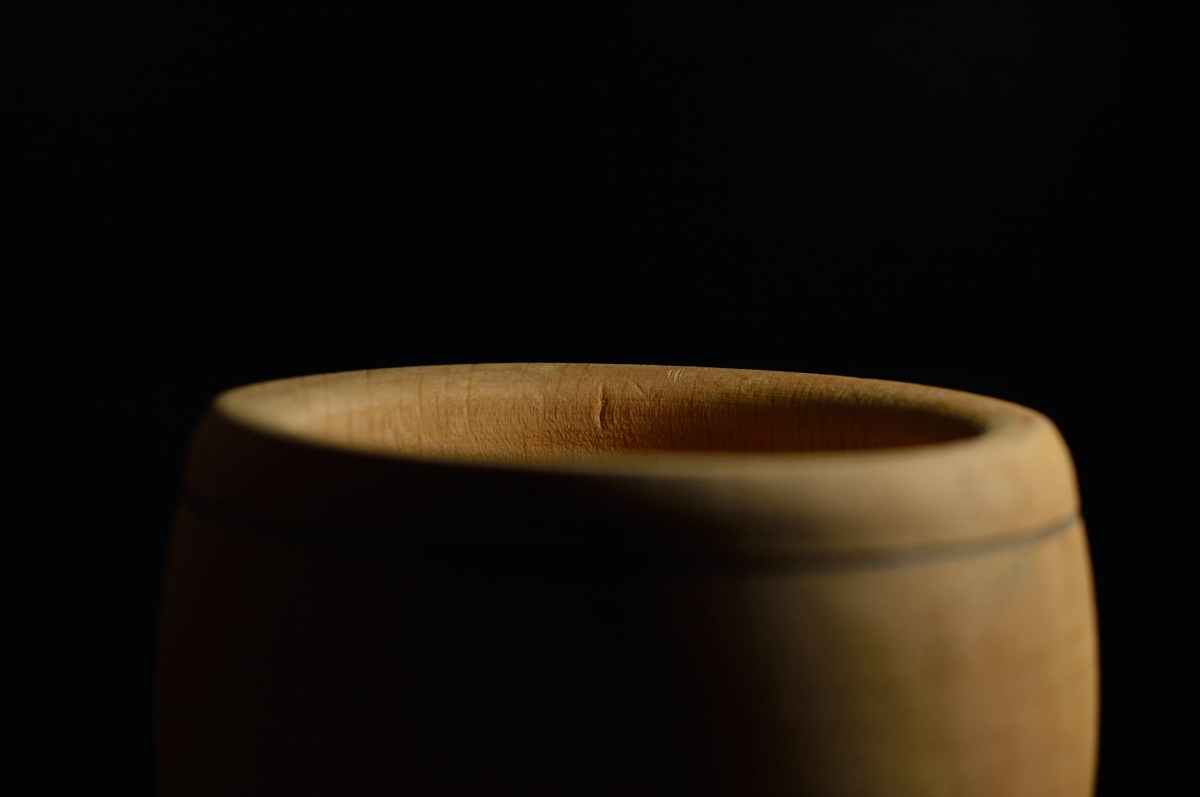
There isn’t a general confession in tonight’s liturgy, so allow me a bit of time for a very minor confession of my own. While I generally try to embrace material simplicity, there is one area in which I have grievously failed, and it is this: I have an embarrassingly large collection of cups and mugs in my kitchen at home. Far more than any one person should have. Perhaps you can relate to this. When I open up my cupboard, there they are, stacked on top of one another, balanced precariously, mismatched, the designs a bit faded in spots, but comforting—a jumble of memories. 

There is the juice glass I used to use every morning as kid visiting my grandma’s house. There is the coffee mug from a monastery I visited when discerning the priesthood. There is a cup that my mom and I picked up while driving Route 66. There is the 175th anniversary coffee mug from Trinity Fort Wayne. There is a wine glass I bought in Europe. There is yet ANOTHER coffee mug that I don’t especially love but that was given to me by someone whom I do love. You get the idea. 

In terms of problems to have, it’s a very silly one. But it reminds me that there is something very evocative about cups. For some strange reason we are drawn to them; they mean more to us, somehow, than just a receptacle to hold a beverage.They hold memories, too, they tell a story about where we come from, the things we have seen, and what our life has been about. When we bring them to our lips, we kiss the past and we hold a part of ourselves. The cups reveal, in some small way, who we are. 

Maybe that’s why it has been so disorienting, these past two pandemic-shaped years, to have no cup offered during the Eucharist. The Church decided, out of an abundance of caution, to suspend this aspect of Holy Communion, and while we’ve certainly been on solid theological ground receiving only the bread during this time, I admit I have still felt a bit lost at sea without that other component of the Eucharistic feast: the common cup shared among us, the sweetness on the lips, and those words that satisfy our deepest thirst: the blood of Christ, the cup of salvation.

It is fitting, deeply fitting, then, on this Maundy Thursday when we remember and celebrate Jesus’ institution of the Eucharist, that the common cup is returning to our communion offering. This evening when you come forward to be nourished by Christ’s body in the form of bread, the chalice of his blood will be offered to you as well, and if you feel comfortable doing so, you are invited to drink, and remember what this particular cup reveals about where we come from, the things we have seen, and what our life together is about. 

But this cup that we drink from is special, it is singular, because unlike the mugs and the glasses stacked on our shelves, each holding our own private histories, this Eucharistic vessel also reveals something essential about about God’s history, about who God is and what God has done. In truth, the Eucharistic cup is God’s cup first and foremost, not our own. It bears the story of God’s journey alongside and among humankind.

In the Hebrew Scriptures the prophets and the Psalmist speak often of the cup: the cup of consolation, the cup of wrath, the cup of trembling, the cup of astonishment—a cup that holds the strange mix of grace and fury that is God’s complex and unfolding relationship with the world. And tonight we come to realize that it is this same cup that Jesus must reckon with in Gethsemane—Father, if it be possible, let this cup pass from me. Ultimately he does what God has always done: he accepts the cup as the price of loving his wayward creation, drinking in the sweetness and the bitterness of his solidarity with the children of the earth.

And so I imagine that if we were to go to heaven and rummage through the cupboards, we’d open them up and find, in quiet repose, this one cup, ancient, gleaming, heavy with significance, hallowed by its use, held aloft at a thousand feasts, emptied out upon a thousand battlefields, stained with the blood and the salt-tears of our Creator. The same cup that, in the mystery of Eucharistic grace, is handed to us on this night, that we might take hold of its heavy glory. No longer God’s cup alone, but also ours.

“I received from the Lord what I also handed on to you,” Paul tells the church at Corinth, recounting the words of Jesus at the Last Supper—a meal, of course, at which he himself was not present, but which, we must conclude, he must have come to know as part of the all-encompassing, all-consuming revelation of Christ he experienced on the Damascus road. 

Paul understood, somehow, in the lifelong aftermath of his conversion, that this particular meal, this particular bread and cup, reveal the truth about God’s deepest self—and that as often as we eat this bread and drink this cup, we are taking part in God’s own feast—the banquet prepared from the foundation of the world. In so doing, God’s story, God’s sustaining life becomes ours as well. 

And so, tonight, like the disciples who gathered in the lamplight of the Upper Room, we glimpse salvation upon this table, and we drink from this cup—the cup of memory, the cup of sorrow, the cup of laughter, the cup that holds the fermentation of finitude and eternity, the cup that holds ALL THINGS in the costly covenant of love—we drink from this cup tonight for Jesus’ sake because he drank from it for our sake. He drank it to the dregs, knowing what it meant to do so, knowing that living also means one must die, knowing that it was worth dying for us in order to live for us. 

All of that significance, all of that history, all of that costliness, all of that promise, all held in a single sip. A sip he now asks us to take as well, so that at last, we might know him for who he is. 

I know all of this is true, I know it is real, but I cannot really comprehend it. And yet, like you, I will hold that cup in my hands, I will receive it with wonder and gratitude, trusting that even if I never really understand the mystery of death and life, even if I never understand the depth and breadth of God’s love, at least I will know what it tastes like. 

And that will be enough.

For as we will discover repeatedly throughout these holy days, words can only take us so far. Ultimately we must do a thing for it it be real. The feet must be washed. The bread must be broken. The cup must be poured out. 

These actions are both a question and their own sort of answer, because they are the pieces of God’s story that speak best for themselves, like a cupboard full of jumbled vessels, passed down, love-worn, inexplicably precious, infinitely capable of holding our own stories—the old stories, the ones we are living through today, and the story that God, with us, is only now beginning to tell.

Tonight is the night that story begins, again. 

Drink it in, beloved children of God. Drink it all in. 

No Regrets: A Sermon

I preached this sermon on Sunday, March 6, 2022, the First Sunday in Lent. The lectionary text cited is Luke 4:1-13, Jesus’ temptation in the wilderness.

We inhabit an unsettled moment. That statement is true on many different levels, but in this instance I am referring to something deeper and more elemental than the news headlines. I am thinking instead about the changing of the seasons that accompanies our entry into Lent in the northern hemisphere.  Amid the turbulent moods of early spring, when we are caught up in the vacillating space between ice and dewdrops, between dirt and blossom, between the cradle and the Cross, there is a keener sense perhaps, of the fertile mix of decay and growth that characterizes our lives on this earth. On Ash Wednesday, the cold mud of winter was imprinted on our brows, and eventually on Easter Day we will convulse with joy among the fields of lilies, but for now we are held in the tension of the time-being, suspended in the middle of frost and flower, mortality and miracle. 

Lent is the pungent season when life and death speak to one another. Too often we keep these two realities isolated in separate corners of our minds, so it is good for us to listen to their conversation over the next several weeks, to notice how life and death layer upon and fertilize the other, both in the Liturgy and in the world around us. Lent is when this life—the delicate, earthy existence we have been given—is brought into clarity and focus by accepting its brevity and, indeed, sometimes its cruelty and brokenness. But it is also a season for celebrating that life, for rediscovering the urgency of living deeply and well while we have the chance, before it is too late, and we go down to the dust once more. 

There was an article that became popular online several years ago, written by a hospice nurse. In it, she reflected on the conversations she’d had with the countless people she’d cared for in the final weeks and days of their lives, and she shared the top five regrets that people expressed as they prepared to die. They were as follows:

1. I wish I’d had the courage to live a life true to myself, not the life others expected of me.

2. I wish I hadn’t worked so hard.

3. I wish I’d had the courage to express my feelings.

4. I wish I had stayed in touch with my friends.

5. I wish that I had let myself be happier.

And while these five regrets might not be true for every person in every time and place, I think they are striking, because they point to the heart of the things that matter when everything else falls away, when there are no illusions left to hide behind, when the wind blows cold across the bare fields and we remember the trace of that muddy cross on our brow. We might say they are the insights of a Lenten spirit, from the passage between life and death, the unadorned space between the seasons of the soul. 

And they reveal that when we die, the thing we might grieve the most is simply that we never allowed ourselves to truly live. That we didn’t connect with others. That we didn’t connect with our deepest selves. And that, having been tempted by other distractions, we might face the great mystery of eternity without having deeply savored the great mystery of now.

God knows this is our struggle. God has always known this. And that is why, I suspect, we see the same struggle woven through God’s own life among us in Jesus. Consider today’s gospel passage from Luke, when Jesus is compelled by the Holy Spirit to enter the wilderness and submit to the temptations that humanity has always faced—the temptation to control our own destiny rather than trust in God’s providence, to adorn ourselves with the false security of power and prestige and material comfort; to laud safety and strength rather than vulnerability and humility. 

These were the same temptations that Israel faced in the wilderness and again when they reached the Promised Land. They are the same temptations that each of us must contend with in our own particular way. And if and when we succumb to them, the result is the same—disconnection, distrust, inauthenticity, the cultivation of a brittle and strident spirit, and then, at the end, a litany of sorrows that might sound something like:

I wish I’d had the courage to live a life true to myself. I wish I hadn’t worked so hard. I wish I’d expressed my feelings. I wish I had stayed in touch with my friends. I wish that I had let myself be happier.

But Lent is an opportunity to pull back from this trajectory in our own lives. And Jesus, in a Lenten moment of his own in this Gospel, shows us how to do so. He faces the temptations of the devil—those temptations to pattern his life in self-serving ways, to become something that he is not, and he chooses, instead, to be exactly who he is, exactly who his Father wills him to be. Which is to say, he chooses relationship, he chooses simplicity, he chooses depth, he chooses trust, he chooses love. And the words he speaks are a ray of light burning away the frost, a budding promise to us, even now, as we wait for the spring:

One does not live by bread alone.

Worship the Lord your God, and serve only him.

Do not put the Lord your God to the test.

Simple, ancient words, drawn from the Hebrew Scriptures. True words. Words that are almost like a death, in that they remind us of the fleeting nature of most of the things we fixate upon and obsess over, and instead call us back to what is eternal. These are the words that allowed Jesus to stay focused on who he was, and they can do the same for us whatever our journey looks like. They are the words that invite us to a life—and a death—that is the opposite of regret.

How do we get there? How do we live as Jesus chose to live? How do we die as Jesus chose to die?

1. Have the courage to be yourself. Abide deeply in the love that is inside of you, the love that God gave you to share with others.

2. Don’t work so hard, at least not for the things we usually give away our lives for. Work for God’s kingdom, and rest in knowing that you don’t have to do it all by yourself. You were created for wonder and praise more than you were for achievement. 

3. Express your feelings. Jesus certainly did. Don’t be afraid to be vulnerable, to be wrong, to show your weaknesses, because they are part of what will save you. We worship a God who was crucified before he was glorified. 

4. Stay in touch with your friends, and with all of the important people in your life. They are the most likely place where you will experience the love of God firsthand, and are thus the true treasures of this world. 

5. Let yourself be happy. Let yourself love this imperfect world, whether it’s deep winter or glorious spring or the messy middle with all of its unanswered questions. Let yourself be dazzled by the mystery of existence, by the mystery of God’s love, embrace it while you live, and then you will regret nothing, because you will experience everything. 

This is the life Jesus chose in the wilderness. This is the life he invites to choose. And this is the strange, holy, in-between season where we must make our choice. This is Lent. 

And so here we stand, with a trace of mud on our brow, leaning into the light; children of the broken earth, children of God. Tempted, yes. Stumbling, sometimes. Seeking, always. 

But loved, always loved, in death and in life, in winter, and in spring, and in the glorious mystery that is beneath and beyond all seasons.

And with a love that powerful, that eternal, that true, there is nothing to regret. 

Transfixed: A Sermon

I preached this sermon on Sunday, February 27, 2022 at Trinity Episcopal Church, Fort Wayne, IN. The lectionary text cited is Luke 9:28-36, an account of the Transfiguration.

Like many of you, I have been transfixed by the images coming out of Ukraine the past several days. I was transfixed by the video clips of parents kissing their children goodbye. I was transfixed by the story of a young couple who got married one day and signed up to defend their city the next. I was transfixed by the images of people sheltering in subway stations last night, the thought of lives upended and ended, and of the incomprehensibility of yet another needless war blighting the face of God’s beloved creation. I have been transfixed by the question: what now? What next?

I use that word, transfix, intentionally. It means “to make motionless with amazement, awe, or terror,” and in the face of the brutalities that too often characterize life in this world, I do sometimes find myself shocked into motionlessness. I find myself without words or insights or any idea how to meaningfully respond. My prayer this week has been little more than silence and variations of, “Lord have mercy. Christ have mercy. Lord have mercy.” Even the beautiful language of the Prayer Book has felt dry and heavy on my tongue.

It is easy to feel this way when we are inundated with challenging news. Ukraine is the latest iteration of the world’s grief, but in this interconnected planet, I think we are more keenly aware than ever of the collective heartbreak of the human family. We’ve faced our share of it together in the past few years. And it can feel, some days, like too much to process. Like my heart and my mind can’t hold it all. And so I am simply transfixed. 

But our generation is not alone in this experience. As I reflect on all of this, I feel some connection to Peter and John and James in today’s gospel—up on the mountain to pray, they see something incomprehensible—the figures of Moses and Elijah appearing in glory, speaking with Jesus, who is himself visibly changed in some mysterious way. And while we might tend to think of this as an exciting and beautiful vision, in truth it was terrifying and overwhelming for the disciples. It was too big for them, not something they were prepared to process. 

I have an icon in my office of this scene, and in it, the disciples are not gazing placidly, reverently up at Jesus and Moses and Elijah. They are falling back in shock, tumbling down the mountainside, as if they are in the process of being struck dead.

Luke describes their state of being while all of this was going on by saying “Peter and his companions were weighed down with sleep.” They were tired. They were frightened. We might say that they were transfixed. And so I have to wonder whether their prayer as the cloud enveloped them on the mountaintop was also some version of “Lord have mercy. Christ have mercy. Lord have mercy.”

In the face of what is new, and strange, and frightening, it is natural for us to not know what to do, and therefore to end up doing very little. We cannot comprehend the mind of God. We cannot save the world. We cannot explain the persistence of evil. And so we get stuck. We tell ourselves that we are just bystanders, poor pilgrims caught up in the storm on the mountain, waiting for the clouds to break, waiting for things to go back to normal. Waiting, transfixed, until someone else figures out what to do, what the next step should be.

But I fear we might be waiting a long time if that is all we do. Because here’s the thing, both about this gospel passage in particular and about our lives as followers of Jesus more generally: it’s not about being transfixed. It’s a different “t” word.

The word of the day today, the key word in this story, and the key word for our discipleship in moments such as this is not transfixion but transfiguration. That is what is happening up on the mountaintop. Transfiguration—the transformation of one thing into another, better thing. 

Let me say that again: the transformation of one thing into another, better thing. Now you might think, wait a second—Jesus is already fully God and fully human, long before he went up this mountain—he doesn’t need to be transformed into something better. And you would be correct.

Because in truth, although we usually focus on his changed appearance, Jesus is not the one being transfigured in this encounter. It is the disciples. It is the disciples who are changed—it is the disciples who are given eyes to see and ears to hear. It is the disciples who in this moment perceive the fullness of God’s truth, who feel what it is to bear the glorious weight of God’s love. It is the disciples who are being stretched and shaped and re-formed by this experience into who God intends them to become. And that invitation, that challenge, extends to us as well, we who are the disciples of the present, perilous moment.

Jesus, in revealing his eternal inner radiance, is actually inviting the disciples, and us, to let go of that sleep-heavy paralysis, that transfixed state of limited imagination, and to step out into a transfigured life, a life in which we are awake. A life in which we may not have all the answers, a life in which pain and suffering and war still persist, but also a life in which we are ready to face whatever lies ahead because we have seen, we have held, we have tasted–if only for a moment–the fullness of the glory of God.

And if you wonder, how can I live that way? Where will I find the courage? What if I am not  good enough or strong enough or centered enough? Well, yes, I ask myself those things every day, too.

And then I look again at those parents kissing their children goodbye, willing to die to protect them–parents who just a week ago were not very different from you and me. I think of that couple whose marriage is being consecrated as we speak in the laying down of their lives for their friends. And I think of all the saints and the martyrs, the advocates and the prophets, the justice-seekers and the wound-healers, the citizens of God’s kingdom, the famous and the unsung, the ones who gave their lives over to God’s dream of peace even in world that mocks peace, and I don’t know why it must be this way, or how it all works, but I see that it does, indeed, work—that in the mystery of grace, transfiguration is possible. That we can face the moment when it comes. That we won’t be transfixed forever.

So yes, let us pray for peace. In Ukraine, and around the world. And let us also pray for peace to transfigure our hearts, that we might become makers of peace.

And until then,

Lord have mercy. Christ have mercy. Lord have mercy.

The Island: A Sermon

I preached this sermon on Sunday, February 13, 2022 at St. Paul’s Episcopal Church in Mishawaka, IN. The lectionary text cited is 1 Corinthians 15:12-20.

I spent most of the summers of my childhood in the Upper Peninsula of Michigan, where my dad’s side of the family lived for generations. Now here in Mishawaka, you all live relatively close to Lake Michigan, so you have a good sense of the beauty of the Great Lakes, and if you have ever gone way up north, you know how rugged and beautiful it is on the shoreline of Lake Superior—rock formations and dense forests colliding with the open expanse of the water in its many shades and moods. 

And although there are any number of places along the shore of Lake Superior where one might be struck by its wild beauty, there is one particular spot we would visit as a kid that always stayed with me—the type of place that impresses itself upon your psyche, such that you might recall it out of nowhere while absentmindedly washing the dishes or just before drifting off to sleep at night—a pleasurably haunting memory, a dream, a landscape pregnant with unspoken meaning. 

It is a rocky, forested point of land, stretching out into the lake, with a small sandy beach at its tip and then, across a churning channel of  water, an island—so close that you can see it clearly, and, when the waters are calm, even dare to wade across to its shore. I have a distinct memory of doing so, by myself, as a child—scrambling through the water and ending up on the other side, giddy with freedom—just a couple hundred feet from the mainland but a world apart.

The point of land, the channel of water, the island—the image of that place stayed with me through many long and parched seasons of my life—chronic illness, the uncertainties of young adulthood, the sudden death of my father and, then, later, my grandparents. And although I had not been back to visit Michigan for nearly a decade and hadn’t been back to the lake for even longer than that, when I moved to Indiana nearly three years ago to serve at Trinity Fort Wayne, one of the first things I did was make the long drive north through the landscape of my past, through the mining towns and the forests. Eventually I ended up at Lake Superior, and I found the point of land again, and I walked out to the edge of it.

What struck me, though, was how deep the waters were this time—choppy waves and wind blowing in off the lake, no rocks visible to scramble on, no chance of crossing over. All I could do was stand and stare at the island, that childhood dreamscape, so close, but just beyond my reach. 

As we grow up and grow older, we tend to experience life as a sort of expanding distance from the solidities of the past. Sometimes we are grateful for that increased distance, and other times we mourn it, but either way, I think that there comes a time in each of our lives when we stand at the edge of what we know and glimpse the islands of youth and memory as beloved, yet inaccessible kingdoms. And we might despair how death consumes what was once so present to us—the places, the faces and the voices of another time.  And perhaps we start to believe that this is simply our portion in a fragile and fleeting world.

But there is another choice. There is another way to see this. 

“How can some of you say there is no resurrection of the dead?” Paul asks the church at Corinth. “If there is no resurrection of the dead, then Christ has not been raised; and if Christ has not been raised, then our proclamation has been in vain and your faith has been in vain.”

Apparently there were some among the Corinthians who accepted that Christ indeed had risen from the dead, and that this was a miraculous act of God, but they could not accept the idea that all of the rest of us were destined for the same undying life. In a world where it is self-evident that everything and everyone dies and decays, perhaps it felt foolish to them, naive, even, to claim such a possibility.  They were content, it seems, for Jesus to be the inaccessible island, beautiful to behold but not part of their actual lived reality—not a place they themselves could ever dare to venture. 

But Paul will have none of this. For he understands that we are not just people who have beheld the resurrection of someone else, of Jesus, but we are, ourselves, resurrection people. Where Jesus goes, we go too. And if the chasm between where we stand and where he has risen seems impassable, that is because we have still bought into the lie that death wins. It does not. Not any more. With Jesus, death is not the last word of any story. “If for this life only we have hoped in Christ, we are of all people most to be pitied,” because then we have missed the actual endpoint, the actual telos of following Jesus. Follow me, he says, not just through this world but onward, onward, “further up and further in” as C.S. Lewis wrote, to the undying life of God that makes everything possible.

I think sometimes as good, reasonable Episcopalians, we are hesitant to really lean into this paradigm of resurrection, of life eternal. We don’t want to think so much about heaven that we discount the beauty and the urgent need of this world. But the danger is that we go too far the other way—that we become so focused on our present reality that we forget that we are inheritors of the resurrection—that another world is not only possible, it is promised, and it is already making itself known in our midst. 

And when we see that, it changes EVERYTHING, because death is no longer the precipice over which our love inevitably vanishes. Death is no longer an impassable, stormy channel separating us from God’s life. For God’s Son has calmed the waters, he has made it passable. And so the island beckons once more; its golden shores are a place we were meant to stand; the kingdom beyond death where Jesus stands, welcoming us back into life.

What does this mean for us, here and now, to be Resurrection people? It means that we can be people of joyful courage. We don’t have to stand wistfully on the shore, mourning what once was. Because to believe in Resurrection is to believe that nothing is truly lost; that every good thing is still possible. Even when we are poor, hungry, grieving, or lonely, even when the world is changing, even when the church is changing—every good thing is possible. This is our proclamation and our practice.

And here at St. Paul’s, and down at Trinity Fort Wayne, and in every parish and faith community that comes together in the name of Jesus, we have an opportunity to practice at this together—to practice being Resurrection people. Everything we do in our faith communities—serving, donating, tending to one another, worshipping, studying, feeding, mending, advocating—all of it is a way of saying yes to God’s aliveness, it is a step out into the water, confident that we can reach the other side, that that Divine life awaits us, as long as we hold onto each other and keep our eyes on Jesus.

I know it has been a long hard couple of years, but don’t turn back. Don’t give up. We can get there.

I haven’t been back up to to Lake Superior since that day, and I don’t know if or when I will make it there again. But I think that the island will remain in my mind’s eye forever—a reminder that I have a choice—that life can be viewed either as a wistfully inaccessible, passing dream or it can be viewed as a promise that lies on the other side of death. Every day, with God’s help, I mean to choose the latter. I mean to choose the promise. 

And perhaps, one distant day, when the waters have been stilled forever, I will cross that channel and stand on the other side once more, and life will feel new, and nothing will be lost, ever again. Perhaps that’s where we’re all headed in time. I pray that we are.

And on that day, Resurrection will be not just a promise glimpsed far off, but the ground upon which we stand. 

Prize: A Sermon

I preached this sermon on January 23, 2022 at Trinity Episcopal Church, Fort Wayne. The lectionary text cited is Luke 4:14-21, where Jesus speaks to the community at Nazareth.

I don’t know if they’re still on, but when I was a kid watching television, I would always see those commercials for Publishers Clearing House…you know, the ones where it would show people answering the doorbell and being greeted by an entourage carrying one of those huge checks for a huge amount of money. They showed the people crying and jumping up and down with joy, all of their problems having been seemingly solved by this incredible prize appearing out of nowhere.

Now, we didn’t live in poverty when I was young, but there were lean times for a whole host of reasons, and I came largely from a working class family, so the idea of never having to worry about money, to not have to live paycheck-to-paycheck, was a tantalizing idea that seemed reserved for other families. So I would daydream a bit about what it would feel like if one of those prize committees showed up at our front door—what it would be like to see that check with OUR name on it, to suddenly live without that pervasive, gnawing fear that there won’t be enough. 

And one day, when I was probably 12 or so, we actually got one of those envelopes in the mail from Publishers Clearing House—we had been “selected” to enter to win a prize. Now of course this was no more likely than winning the lottery, but I wanted it so badly to be true—I wanted to believe that we had a chance. So we filled out the entry form and I put it in the mailbox and we waited…and waited….and waited.

I’m still waiting, by the way. I have to believe that because I’ve moved so many times they’ve just not found my current address, and that surely that prize check will find me one of these days.

I tell you about all of this because I wonder if it was a little like that for the people in Nazareth in today’s gospel passage. Struggling to get by under Roman occupation, struggling to get by as a people for as long as they can remember, really. And they’d submitted their supplications to God over the centuries, they’d cried out for some help, and they were waiting, waiting, waiting for that prize to finally show up—the One who would make it possible to live confidently, the One who would fix things, the One who would make the waiting worth it. 

And then, here is Jesus, one of their own, and he tells them something wonderful: he quotes from the prophet Isaiah, speaking of good news and abundant healing and the year of the Lord’s favor—the jackpot, really, the big prize check from God saying “it’s all going to be all right now,” and then Jesus says: today, this Scripture has been fulfilled in your hearing.”

Well, Hallelujah! Break out the balloons! It’s as though Jesus has come to the door, and he’s heaven’s prize committee, and he’s got the solution—in fact, he IS the solution.  I bet a few people in that synagogue, shocked as they were, wanted to cry and jump for joy. 

Have you ever wanted something so badly that you can almost see it, almost feel what it would be like to have it? Have you ever wanted something so badly that it haunts you? I imagine that is what it was like for those people in the synagogue at Nazareth, and here, for one brief moment, they begin to hope that their time has come. That happy days are here again.

But you and I know that’s not exactly how the story ends. It’s a little more complicated than that. Because Jesus goes on to tell them, essentially, that God’s favor, God’s imminent redemption, God’s big victory prize, is not at all what they expected. In fact, it’s not even necessarily for them. He reminds them that when God responded to famine and disease in the past, God sometimes bypassed Israel entirely and bestowed gifts on other nations. 

That would sting. It’d be like opening the door to that prize committee and realizing after a few minutes that they got the wrong address—the check is actually for that neighbor down the street that you can’t stand. So close, yet so far.

So I feel for the people of Nazareth a little bit, even if they do try to throw Jesus off of a cliff. They didn’t really understand yet. They were waiting desperately for a prize, but instead they got a gift—a Savior, entirely unlike the one they expected—the Savior, of all people, everywhere. A gift so big, so incomprehensible, that it didn’t even register as valuable to them right away, or maybe ever.  And so we see them there in the narrative of the Gospel, forever locked in that moment at the edge of the cliff, still waiting, waiting, waiting for the prize they expected, not recognizing the gift that showed up. 

We are liable to do the same thing. It is so easy to look back and measure our lives by whether we got what we wanted–what we expected should be ours. The problem with that, of course, is that we never get everything we want, and even when we do, it’s usually not quite what we’d imagined. So we, too, might find ourselves waiting at the edge of that cliff for our whole lives, shaking our fist at heaven, cursing our dashed hopes. 

Or…we can turn around, and look what what is right in front of us: Jesus. And one another. The true gift. Better than any prize we could win. He has already arrived at our doorstep, sometimes dramatically, sometimes quietly, but he is coming, he is there, I promise he hasn’t lost your address.

And while he’s not carrying a big check, he is offering himself to you—all that he is, all that he has, all that he signifies. The question is, will we accept him, will we recognize that he is what we have been waiting for, or will we spend the rest of our days waiting for something that we imagine to be better?

I assure you, that thing is not coming. 

The Spirit of the Lord is upon me, because he has anointed me to bring good news to the poor. He has sent me to proclaim release to the captives and recovery of sight to the blind, to let the oppressed go free, to proclaim the year of the Lord’s favor.

Today–and every day– that you encounter Jesus, and every day that you love one another in the name of Jesus, this Scripture, this longing, this promise, has been fulfilled in your hearing. It won’t take away all our worries, but it will show us what actually matters. It will guide us—all of us—into that peace which passes all understanding—a peace that no amount of money can buy.

You’re here. You’re loved beyond measure. You’re free. 

So congratulations. You’ve won. 

Hands: A Christmas Eve Sermon

I preached this sermon on Christmas Eve, December 24, 2021, for Trinity Episcopal Church, Fort Wayne, IN.

Just over a year ago, I had the privilege of sitting at the hospital bed with two of our beloved parishioners, Dick and Vera, just before the end of Dick’s life. He was not really conscious at the time, but it was such a blessing, given all of the complications of hospital visitation these days, that Vera was able to be there in person with him to say goodbye after many decades of marriage. 

And there is one image from that afternoon that I think I will never forget—how Vera reached out to hold Dick’s hand, just as she had always done, and how, even though he was deep into his passage away from this life, his hand squeezed back, and his thumb gently caressed her hand. A memory that was deeper than consciousness, a memory of love so deeply inscribed into him that nothing, not even the approach of death, could inhibit its expression. When Vera also left us earlier this year, I thought of the two of them holding hands again in the new life that is promised to us, and it made me smile.

I remember, too, several years ago, holding my infant godson, so afraid I would drop him, so in awe that my life had even a small connection to the beauty and the possibility of this new life. I remember how his little fingers, tiny and determined, would wrap around my finger, surprisingly strong, an instinctive urge to hold on, to connect. His grasp felt like an inquiry, simple and direct: will you be there? Will you care for me? Is it true that I am not alone in this big, strange world? Can I hold onto you?

I think it might be said that from the beginning of our days to the very end, there is no gesture more fundamental than to reach out to the ones we love, to feel their fingers intertwined with ours. Because, if you think about it, this is what we always do—when we’re happy, when we’re frightened, when we’re falling in love, when we’re waiting for important news, when we can’t quite walk on our own strength, and when we must say goodbye for the last time: in all those moments of life when words fail us, we reach out, and we just hold hands. 

I think it can also be said that our journey of faith is much the same—like that famous image from the Sistine Chapel of Adam and God extending their hands towards one another at the moment of creation, their fingertips separated by an infinitely small distance—underneath all of our striving and our doubting, our seeking and our praying, we are extending our hand out into the deep, into the vast mystery of life, reaching out for something certain, something true, something that endures, something (or Someone) to hold onto. When all is said and done, we yearn, quite simply for a God who will reach back and clasp our hand and say, I am with you. Hold onto me.

And that is exactly what we are given on this night. A God whom we can hold onto. A God who holds onto us. All of the music and the lights, all the activity and the excitement, all the exhaustion and ambiguity and yearning that characterize both the holidays and life in general—all of it finds its answer here, in the birth of a child in Bethlehem, in the terrified wonder of the shepherds in the field, in the song of the heavenly host, in the courageous heart of a young mother, and in the tiny hand of an infant that reaches out, surprisingly strong, towards your own hand. It is the hand of God, holding yours in the cool and pregnant darkness, and it is the answer to your own questions: I am here, now. I will care for you. You are not alone in this big, strange world. You can hold onto me.

How else would love come to find us if not like this: in the flesh, in the way we most instinctively understand? How else could God close that infinite distance between the fingertips? Only like this, only by letting us, at last, take his real, incarnate hand. Only by becoming as one of us, in order to say,

I have always loved you, I have always been for you, ever since the beginning, but now I am with you, too. And I promise I will always be here to hold your hand. 

Even when everything else slips away, even when everything you counted on seems to disappear, I am here.  When you laugh and dance for joy, I will take your hand and dance with you. And when you are weak and afraid, I will be there, too, for my fingers are intertwined with yours now, my life is intertwined with yours now. Just hold on.

I don’t know about you, but in the uncertain times in which we find ourselves, when the preciousness and the precariousness of the present moment are both felt so keenly, I need this good news of Christmas more than ever. I need to be reminded that even in a broken world, there is hope, and that God is still with us. 

In the birth of Jesus–the birth of God among us –our outstretched hands brush against the glory of heaven. In the birth of Jesus, we find that the whole world is full of sacramental possibility, especially in those simple actions of love that make up our lives—the wound mended, the bread broken, the injustice addressed, and yes, the hand held. All, now, instruments of grace, because God has taken them on as the work of God’s own hands.

What a gift to be given. And what a gift to pass on to others. Because, essentially, that is what we are trying to do here at Trinity, as followers of this holy child of Bethlehem, this Savior born for us—we are showing up for one another and for our neighbors and for our community, especially the most vulnerable in our midst, extending our hands in love. We are facing life together, we are celebrating and mourning together, studying and praising together, hands clasped in prayer, hands clasped in greeting, hands clasped in solidarity, hands clasped in trust. 

All because, on this beautiful, silent night, when even the loveliest words ultimately fail to express the fullness of our joy, a hand reaches out to us, a tiny hand from the manger, yes, but in truth a hand reaching out from across eternity, down through garlands of stars, down through the centuries of longing, down from the hidden source of our deepest wonder. And it gently caresses our own, a love so deeply inscribed into it that not even death will inhibit its expression, holding us, softly, but firmly,

as if to say, quite simply,

It’s going to be ok. I am here. Just hold on. 

The Hope-Song: A Sermon

I wrote this sermon as a part of The Episcopal Church’s “Sermons that Work” 2021 Advent & Christmas Series. For more information, visit https://www.episcopalchurch.org/sermons-that-work/

The Rev. Pauli Murray once wrote that “hope is a song in a weary throat,” and amid this hopeful season, amid this weary age, we would do well to consider what such a song sounds like. It’s easy to miss sometimes, the hope-song, because it doesn’t always sound the way we might expect. We are too easily distracted by the proud aria or the ironic riff to listen for the soft, tremulous music that hope makes.

Hope is the song of empty karaoke bars, of late nights and of last dances, of a husky voice crying out a melody to defy the encroaching night. It is the song one sings under the breath, an insistent memory, perhaps, or a reassurance on the lonely walk home. It is the warbling note that has no obvious splendor other than its defiant insistence to be heard. The hope-song is not elegant, but it is faithful. It is honest. It is the song one offers up when the song is all that’s left to offer.

Consider this music, then, as we travel with Mary to Elizabeth’s house. Forget for a moment the lush choral arrangements of the Magnificat. Don’t be fooled by the prophetic boldness of the words alone. Remember that there is a fearful precariousness to her position. She is a young woman walking uphill in every sense of the word, seeking the comfort of a familiar face when everything else has suddenly become so very unfamiliar. We might wonder: did Mary sing to herself on the dusty road to the hill country? Was it a song that her own parents once taught her that she practiced on parched lips? Or did she call it up from somewhere deeper within, from the Spirit-infused cells of her very depths, determined to give voice to what was true, even when her life seemed to be caught in uncertainty?

Regardless, she sings, and it is indeed hope in a weary throat, reverberating into eternity: “My soul magnifies the Lord.”

Like any hope-song, there is defiance here, along with the joy and the fear. Yes, Mary says, yes, my soul, my very self magnifies the inexpressible holy name of God. The soul that belongs to this body in all its frailty and in all its fecundity—this is a place where God is revealed. Obscure, vulnerable, enmeshed in the tragic history of my people—I may be all of those things, but God is disclosed in them, not despite them, and God has chosen to take part in this world through me. 

And so, I will sing!

I will sing though I am weary, though I am frightened, because in the singing I place myself within a story, not just a circumstance. I sing a song of victory, not of victimhood. I am a teller of hard truths and I am the bearer of hard hope, the type that survives—it is my people’s hope, and my own.

Do we sing a new reality into being, or do we sing to pierce the veil of delusions, to uncover what is already true? The Kingdom is already, and it is not yet, but either way, Mary knows what must be sung, both because she carries the King within her womb, and because she is herself the Queen—a wisdom-figure, worthy in her own deep humanity, as each of us is, to discover and proclaim the hidden, unfolding power of God. Her song belongs to her ancestors, and it belongs to the child she will nurture. It belongs to all of us. It is ancient, and it is new. It is forever.

And thanks be to God for that, because we need hope-songs now, just as desperately as Mary did then. We need to be reminded of the dream that is encased in the tender core of humanity—the dream that God has placed therein, the dream that God invites us to bear into the world, the dream which refuses to be dispelled even by centuries of disappointment and degradation.

And it is especially important for us to remember, in the cacophonous holiday season, that the song that tells of this dream is not always the loudest or the most popular. It is, instead, the one borne of deep, soul-stirring wisdom. The one that, when you hear it—even when the throat is dry and the voice is garbled by tears—still the melody is recognizable because we have been singing it forever.

His mercy is for those who fear him from generation to generation.

He has brought down the powerful from their thrones, and lifted up the lowly.

He has filled the hungry with good things, and sent the rich away empty.

But what do we do with this song of Mary’s? How do we make it truly our own in a new and urgent time? Do we put it on a t-shirt or a bumper sticker? Do we write a few more books about it? Host a conference to assess the meaning of the words? Arrange it into a new musical setting?

We could. We do. We protect ourselves, sometimes, by turning Mary’s song into an ornament when, in truth, it demands everything we have.

Because that’s the thing about the hope-song: you don’t really know it, you can’t really claim it until you yourself have sung it with a weary throat. You can’t grasp the words until life has grasped at you, until you have been forced to walk up a few hills of your own, whether by choice or chance. And so, if we really want to sing the song, if we really want to mean it, we must first ask ourselves how attuned we are to the precarity of our lives and those of our neighbors. We must examine how vulnerable we are, and how open we have been to the risk of Jesus’ invitation to follow him, on the path first trod by his mother.

And in our self-examination, we might find that we have indeed been brought down low by life, that we are hungry for good things, and that this song of hope will lift us up if we have the courage to trust in its promise and lend our voices to its chorus. For the weary among us, the challenge is to show the world that we are more than our present despair.

Or it may be, for many of us, that we find ourselves to be the ones already in high, comfortable places, the ones who have never relied so much on hope as we have referred to it, because we are ensconced in other, richer melodies—the ones that lull rather than vivify. If so, it is time for us to wake up. It is time for us to come back down to earth and stand on holy ground. Because it is only from there, where Christ abides, that we can truly begin to live in the way God dreams we might.

Either way, Mary’s voice is calling out to you. So, whoever you are, wherever you find yourself, follow the sound of the hope-song. Let it guide you into the place of encounter with your most unencumbered self, and into relationship with the Holy One who calls you onward.

Mary has shown us the way, she has shown us the words, and she has shown us that while hope may be well-acquainted with weariness, it points beyond it, too, toward the place and time when a new song will be born—one of hope fulfilled, of rejoicing, and of rest. We are still learning how to sing that new song, but it is coming. And it is now here.

Feast: A Sermon

I preached this sermon on Sunday, November 21, 2021, Christ the King Sunday, at Trinity Episcopal Church, Fort Wayne, IN. The lectionary text cited is John 18:33-37.

One of my happiest holiday memories is when I would wake up on Thanksgiving day to the smells of an already-busy kitchen: sage and onion and baking pies and brewing coffee. It was almost as delicious as the meal itself, that long moment of awakening, warm and half-dreaming in the morning light, knowing that there was a feast being prepared, that everyone I love would be gathered in one place, and that, even though the world outside was complicated and so were we, for this one day, at least, there was no need for anything else. There was enough, and we were enough, here, now, together. 

And while for some of us, perhaps, Thanksgiving was never quite so happy an occasion, I do think each of us understands the potency of the idea itself: a time of rest and reunion, a world in which no one goes hungry, where everyone is welcome at the table, where being known and seen and loved is a gift available to all.

As we grapple with some of the entrenched realities and the challenges facing our country and our world—racism, violence, economic inequality, and ecological crisis, to name but a few—I acknowledge that for many the observance of America’s Thanksgiving holiday is fraught with complexity, and I also acknowledge that its celebration can bring up feelings of ambivalence for those among us whose families are fractured or scattered or simply gone. 

But the principle of gratitude that underlies the day is something that must be reclaimed and reinvigorated anew by each generation, so that this is not just the passive reception of an unexamined history or a private lament over a broken family system, but a courageous choice to believe in what is still possible—to believe that there might yet remain much for which we can give thanks. Because even as we face what is ugly and messy about the human condition, we must also hold fast to what is beautiful and hopeful—those simple, good gifts that make life not just bitter, but sweet, that make the struggle worth it, the things that tell a story of hope, not just disillusionment. The things glimpsed around the bountiful table of the present moment—a feast of memory, but also of determination and of expectation of a better tomorrow. 

That’s why I love that after this service we will go upstairs and pack bags with food supplies and encouraging notes for our neighbors so that they, too, might enjoy a Thanksgiving meal. It’s our congregation’s own small gesture of gratitude for the blessings in our own lives, and a demonstration of our belief that the world can still be a hopeful place, a generous place, and that we can help make it so, even when fear and scarcity seem to dominate the narratives around us. 

Choosing to believe in the redemptive possibility of this world—in its goodness, in its capacity fpr renewal—this is part of what we mean when we speak of the Kingdom of God—not just a place up in the heavens that we escape to when we die, but the emergent, lived reality of God’s love here and now—the power of that love, the triumph of that love, the sovereignty of that love. The ultimate gift for which we give thanks.

And so while it is somewhat a fluke of the calendar, it is fitting, perhaps, that Thanksgiving and Christ the King Sunday fall in proximity to one another, because each observance, at its best, calls us toward a vision of beloved community. Thanksgiving  calls us back to what is essentially good and true in our own lives, and as we conclude the calendar of the church year and prepare for the cycle to start anew with Advent next week, we pause to ask ourselves: who is this Christ, this King whom we worship and follow? What is the essential goodness and truth that he brings? And how do we take part in it?

I will admit that answering these questions and then living into the answers can be harder than we care to admit. We want to believe that love wins, that hope endures, but sometimes we look at the world around us and we look up at Jesus above the altar, on the cross, and we can feel as incredulous and bitter as Pontius Pilate, and we ask: Are you the King? Are you? Because you are nothing like any king I have ever seen. You are not the sort of king who fixes all of the problems around us. And even if you are, what is truth when no one is honest anymore? And what is love when everyone is just out for themselves? And what is justice when blood flows in the streets and children go hungry, just as it has always been? And what is hope when it’s just the same bitter pill to swallow, time after time?

Are you the King? 

And Jesus simply looks back at us, infinitely tender, and says: “You say that I am a king. For this I was born, and for this I came into the world: to testify to the truth.” 

 Because the truth is that Jesus’ power, Jesus’ kingdom, is still not the type we expect it to be. And he comes into our midst, still, not to rule like other kings. Not to control. Not to gather power and wealth at the expense of others, and not to tell us to do so in his name. Jesus comes to testify to a truth that is deeper and more powerful than kingship, even if it is less obvious. A truth that God has been trying to convey from the very beginning, although we continue to ignore it, time and again. 

A truth that rises up, growing like a seed sown in a field A truth that rises up like yeast in bread. A truth that rises up like a spring of living water. A truth that rises up and refuses to be killed or silenced, even in our most desolate, hungry moments: the truth that love persists through death. The truth that mercy persists through brokenness. That there is, indeed, enough for everyone, if we will let it be so. That we are, indeed enough. That we belong to this earth and to one another. That we are known and seen by God in our weakness, in our hunger, and we are forgiven. 

The truth that we have to stop being afraid, stop hiding from God and one another, and step out towards each other with hope and gratitude and say, yes, here I am. And yes, I believe in your goodness, Lord. And yes, I believe that it is love—not fear, not the power of kings—that is the strongest force in the universe. And so I will take a chance on this Kingdom, I  will reach out my hands to the world, to my neighbor, to give and to receive, to bless and to be blessed, to join in the feast, to gather round the table where there are always enough seats, always enough to satisfy even the hungriest of hearts.

Because that’s the thing to remember about Christ as a king, as a ruler. What did he actually rule over? In his earthly life, Jesus never led an army into a battlefield, nor did he oversee a court of law, nor did he celebrate a Temple rite. 

Instead, he presided over…a meal. Many meals, in fact, culminating in the Eucharistic banquet in which we still take part. A meal to nourish the world. A meal in which his own life, his own love is the substance. He is the Lord of the feast, the King of the abundant table, and more than anything we are his grateful guests, called to celebrate with him, called to invite others to take their place alongside us. 

That is the Kingdom of God, my friends. That is what will transform the world. That is what will transform us. Bigger hearts and bigger tables. More time spent breaking bread, listening to one another’s stories and creating a new story together. A story that tells of peace, of justice, of the deep joy that is the birthright of all people. A story that can yet be true. 

May we live like this, on Christ the King Sunday, on Thanksgiving Day, and on every other day, for the rest of our lives. And then, by God’s grace, may we one day, after a long and deep and restful sleep, wake up in the morning light of a new life, a new earth, warm and half-dreaming, to the smell of brewing coffee and baking pies, and may we know that we are home, that we are all home together at last, and that there will always be enough, and that we will alway be welcome, in that beautiful Kingdom, at that glorious table, forever.

Bones: A Sermon for All Hallows’ Eve

I preached this sermon on October 31, 2021 at Trinity Episcopal Church, Fort Wayne, IN. The lectionary text cited is Mark 12:28-34.

I confess that I am delighted how All Hallow’s Eve, Halloween, falls on a Sunday this year. A little later this morning we’ll gather together outside and celebrate this ancient festival with costumes and treats and a pumpkin hunt. 

I know Halloween itself has a rather fraught relationship with certain corners of Christian culture in our contemporary times, but we would do well to remember that All Hallow’s Eve, which simply marks the day before the Feast of All Saints (or All Hallows) is part of a Christian tradition that traces back to the earliest centuries of the church, when our forebears wanted feast days to honor the martyrs, the saints, and their own beloved dead. 

Furthermore, much of the imagery we associate with this holiday is itself quite old, much of it sprung from the religious art, the popular devotions and the folk practices of countless generations of Christians.

Take, for example, the skeleton. The grinning, dancing skeleton is a Halloween staple, and it is an image that comes to us directly from Medieval Europe, when that continent was overrun by the Bubonic Plague, a deadly pandemic that reduced the population by at least a third, and imposed inescapable daily reminders of the imminence of death and the fleeting nature of our mortal concerns. 

Murals and drawings started popping up around this time, in churches and elsewhere, featuring a motif that is now referred to as the Danse Macabre, which depicts a group of skeletons dancing wildly in rows or circles, either by themselves or with living people. And the slightly silly, slightly sinister skeletons of the Danse Macabre are still with us—think of the skeletons in kid’s cartoons, or those that feature heavily in Day of the Dead celebrations in Mexico and the United States. 

Clearly there is something about them that has stuck with us over the centuries, and, given the events of the past year or two, especially this pandemic that continues to swirl around us, I think that we might be well positioned to understand the magnetism of such artwork. I think, in this new era of plague, we grasp the strange blend of somberness and wry humor that characterizes any honest look at the truth, the truth we feel in our bones, that all things are passing away. 

The dancing skeletons of medieval Europe were a way for people to cope with the underlying fact that we all know but would usually rather forget—that all of us, rich or poor, popular or lonely, beautiful or plain, will one day be a pile of dust and bone ourselves. We are united, moreso than anything, by our mortality; we are a bunch of frail bodies knit together in the Danse Macabre, weaving in an out of the valley of shadows, and so we must do our best, while we walk this earth, to hold on to one another, to live fully, with joy and gratitude for what is given. We must seek hope and purpose even in the face of death.  We must go deep, down close to the bone, stripping away illusions, seeking life’s hard, gleaming essentiality.

And, in his own way, that is what Jesus is doing in today’s Gospel. He has just finished answering a series of antagonistic questions from scribes and Pharisees and Sadducees in Jerusalem. His own passion and crucifixion, his own trip to Golgotha, the place of the skull, is imminent. Death is close, and there is little time left for parables and puzzles and debates. There is only this teaching, the simple truth at the core of everything he is and does:

Love the Lord your God with all your heart, and with all your soul, and with all your mind, and with all your strength.’

‘You shall love your neighbor as yourself.’ 

There is no other commandment greater than these.

We usually refer to this as Jesus’ “Summary of the Law” and so it is. But today we might also imagine it as the skeletal structure that underlies the Law—the structure that holds together all of creation. 

All the ethical decisions, all the customs, all the traditions and codes of conduct—both those of Israel and those we continue to discern and live into as Christians—all of it is undergirded by these two commandments: Love God. Love your neighbor. That’s it. 

Without these two truths, these two practices, we have nothing solid upon which to stand. Without these two things, the whole body collapses. The Law of Love is the bone under the flesh, the essential and unavoidable truth that we sometimes forget when we are distracted by temporary appearances. 

And, to be honest, in the same way we resist looking at death, so too we resist facing and living into the implications of Jesus’ teaching about the supremacy of love. The history of the church—and the history of humanity in general—has been haunted by a fear of love, by a fear of giving ourselves over to its power, a fear of the connection and mutuality and humility that it requires of us.

We hear Jesus’ words, but it makes our bones shake, because to love that deeply and broadly is its own sort of death—the death of our narrow agenda, of our self-centeredness, of our instinct to judge, of our compulsion to win. 

Love, the type that Jesus is speaking of here, dispenses with all of that—it burns away the protective coverings and leaves just the ancient, unyielding truth of our existence: the moment when, just as when Adam saw his companion Eve, we look at one another, with wonder, and say: you are bone of my bone, flesh of my flesh. My life and your life belong to one another. Take my hand. Feel these bones cradling your own, tenderly. Hold on to me, for we are caught up in the same dance. 

But there’s one thing we cannot forget: this dance, the one that we learn from following Jesus, is not just the Danse Macabre. It does not end in death. It is not the dance of futile pleasures. It is the dance of enduring life. And in his resurrection, Jesus has shown us that loving God and loving one another is the part of us that cannot die—it is the part of us that will endure, that will live to dance again, even after everything else has been stripped away. 

So just as we might do well to reckon with our mortality on this All Hallow’s Eve, to look the skeleton in the face and accept that it is, essentially, us—so too we must look at love in the face and accept that it is, essentially, us—it is the supreme law of life. The beginning and the end of the story. We will never escape love’s demands, but neither will we ever be forsaken by its goodness. Nothing, not even the grave itself, will ever change that. Make no bones about it.

Where Waters Meet: A Sermon

I preached this sermon on Sunday, October 17th at Trinity Episcopal Church, Fort Wayne, IN. The lectionary text cited is Mark 10:35-45.

This past week, during a few days of retreat and quiet time, I visited the place where the St. Joseph River merges with Lake Michigan. In case you haven’t been up that way, I’ll describe it to you. The river ends in a broad channel, deep enough for large ships to enter, and the chop and swell on a blustery day, as it was when I visited, makes it hard to distinguish where the river water ends and the great expanse of lake begins. There is a pair of lighthouses marking the spot, though, the St. Joseph North Pier Lights.

Though the weather wasn’t great, I somewhat foolishly decided to walk out along the breakwall to get as close as I could to the lighthouses. The swells were so high that day that they crashed against the wall as I walked along it, the water rushing under my feet on the slick, wet stone, the wind howling. I was the only person out there. And it was clear, the farther I ventured out, that I had crossed a sort of threshold, and this was no gentle river now, but the wild, wide open waves, the swirling, undulating freedom of the great, grey lake.

As I stood out on the breakwall and looked back toward the place where the river gave itself to the expanse beyond, I thought of how far that water had traveled to get there, across hundreds of miles of watershed, accumulating strength and depth as it traveled, along with some broken branches and the fallen petals of summer flowers and autumn leaves, all of it pulled towards this moment, its broad unfolding destiny, no longer a brook or a stream swelling against its own banks, but released, transformed, encountering the greatness of something bigger than itself, shedding its old, narrow boundaries, becoming what it must become, contributing itself into a greater whole: perfect freedom, perfect consummation. 

And I wondered, can a river ever quite comprehend the mystery of the open waters that wait for it? When it is eagerly bursting forth from its headwaters, can it grasp how deep, how wide is the measure of its destiny? Probably not. None of us, when we first set out on a journey, can truly predict what it will be like when we finish, or who we will have become in the meantime.

And in all of this I was reminded of James and John in today’s Gospel, a coupe of exuberant upstarts, babbling like a brook to Jesus, asking for a share of his glory when they don’t fully understand yet what God’s glory even is. They say that they want to sit at his right hand and his left in the coming Kingdom, not realizing that the ones to Jesus’ right and left will be the criminals crucified alongside him on Calvary—for it is there, in the place of the skull, the place where ambition dies, that the coronation of their King will take place, not in a throne room or a temple court. Hence Jesus’ reply to them, perhaps with equal measures of love, incredulity, and pity: “you do not know what you are asking.” Young, eager, thundering river, you are not yet ready for the depths of which I speak. 

Do any of us really know what we are asking for when we set out to follow Jesus? Can we, confined to the landscape of our present understanding, envision both the cost and the promise of where he leads a willing heart? Probably not. The river knows its own banks quite well, but it cannot picture the sea. 

So as easy as it is to laugh a bit at James and John for completely missing the point, for focusing on their own glory rather than God’s, we can’t be too harsh on them lest we condemn ourselves at the same time. For each of us, following Christ, are on a similar course that we don’t fully understand, angling for something better, when what we are actually promised is something deeper—striving for something higher when what we are actually given is something broader, a love as expansive as the open waves, a love that cannot be harnessed to suit our cravings for power or control. 

This all might sound a bit vague and overwhelming, but that’s sort of the point. James and John, too, are overwhelmed, because Jesus has been leading them towards Jerusalem, repeatedly predicting his own torture and death and resurrection, and they are probably feeling scared, disappointed, maybe even a little frustrated. 

Give us something we can rely upon, they seem to be demanding in this moment—give us something to hope for, something to hold onto, something material and reassuring, something that will make all of this make sense. That’s what we all want when things feel uncertain—we want the obvious solution. A cure, a windfall, a sudden change of heart, a surprise advantage. 

We cannot see beyond the next bend, and we are afraid. We cry out, in desperation, “Teacher, we want you to do for us whatever we ask of you.” And of course, we ask for the solutions we are capable of imagining—vanquishing our enemies, winning the struggle, securing our position. For James and John, like us, these are the things that seem within the boundaries of possibility. A river dreams of becoming mightier; it doesn’t know how to dream of becoming an entirely new body. 

And Jesus knows this. And like the rich young man from last week’s Gospel, he sees us in this condition, and he loves us. And yet…

Jesus is not limited by our fear-induced dreams; he is the incarnation of God’s dream. And so even when we are certain that we know what we want, what we need, he often tends to say, as he does to his disciples here:

No, my dear ones, you are missing the bigger picture. I have other purposes for you, things beyond your frantic visions of human glory, things wilder and unpredictable and yet even more true, things more beautiful, more satisfying, than you ever dreamt of along the grassy banks of younger days. Take courage, and follow, follow where the river flows, past where you can see, and yes, drink the cup that I drink, and be baptized with the baptism that I am baptized with: a baptism that began, yes, right here, in the river and yet does not end here, for it is moving, moving, surging inexorably towards true glory, God’s glory, towards the cresting wave of heaven, a chorus of wind and light, thundering on a distant shore. 

That’s what James and John are part of. That is what we are part of. Something big. Big and wondrous and all-encompassing.

This is good news, my friends. For James and John and for you and me. Because it means that no matter how many times we get it wrong, no matter how many times we misunderstand Jesus or ourselves, no matter how many times we let our fear and our striving get the best of us, as long as we keeping following our Lord faithfully, we are borne on a current towards that encounter with wonder, a place we cannot yet even imagine in full. 

And so even on the days when the water is muddy and brackish, when the branches close in and the horizon is lost, when it feels like we’re stuck, or going backwards, if we follow Jesus’ call, then we aren’t really, because we are living in his wake, and it is guiding us, sometimes imperceptibly, sometimes quickly, toward the boundless expanse of that holy dream, towards the place where the river and the waves tumble into one another’s embrace, where, as the Psalmist says, “steadfast love and faithfulness will meet, where righteousness and peace will kiss”——the place where our sometimes lonely sojourns merge into the currents of the one single story—the one that has been unfolding since the beginning of time, guiding us on, guiding us home, beyond the uttermost parts of the sea.

Needless to say, I didn’t get washed off of the breakwall that afternoon and I made it back to the shore, back up the river, back into the enclosure of my days, with all of their twists and turns and unresolved questions, where the horizon is a bit harder to spot.

But that image of the colliding waters remains as a gift in my minds’ eye—an image to draw upon, perhaps, when life feels stifling or disappointing—a reminder that even when I don’t realize it, I am being carried forward by God through this endless stream of days, and that there will come a moment, brave and wonderful and strange, when each of us will finally encounter the fulness of truth, and we will feel the breath of God making waves across the deep, and we will see the Lord standing astride the place where the waters meet, like a lighthouse, arms sweeping wide across the horizon, welcoming us to himself, welcoming us home. 

And on that day, what was once narrowly conceived as the lonely journey, the journey that felt like it was mine and mine alone to bear, will suddenly tumble, with joy and trembling and release, into the breadth and length and height and depth of what was never only mine, never only yours, but ours–always ours, with God, in the limitless love of Christ, forever.