Emperor: A Sermon

I preached this sermon on Sunday, October 22, 2023 at St. Anne Episcopal Church in West Chester, OH. The lectionary text cited is Matthew 22:15-22. This sermon was offered as part of the parish’s annual pledge/fundraising campaign.

Over the past couple of months, I’ve gotten together with many of you at a series of meet-and-greet events. I’ve loved the opportunity for us to learn more about one another and to hear from you about your hopes and dreams for St. Anne. There are still a couple more of these on the calendar, so I hope to see you soon if you haven’t made it to one yet. 

At a few of these, I have been able to share a bit of my own story—how I came to be in The Episcopal Church and how that eventually led me into the priesthood. I am not going to retell that whole story this morning, but a piece of it has been on my mind this week as I’ve been reflecting on both our Gospel for today and our annual pledge campaign to fund St. Anne’s mission and ministry in the coming year, because one common thread in all of these things—my own story, the Gospel story, and in St. Anne’s ongoing story—is that sometimes we discover that God is not at all who we thought God was, or that God does not in any way resemble our longstanding assumptions…and that this can be very good news. 

When I was in college, I drifted away from church; or it might be more accurate to say I ran away. My reasons were personal, but not entirely unique; I think many of us, at one juncture or another, begin to question our foundational understandings of who we are and how the world works and what is ultimately true. And that is exactly what happened to me. 

And so, in my mid-twenties, I found myself in an awkward position: I had spent a number of years feeling very unsure about everything I had been taught about faith and religion, and yet the hunger for meaning, for purpose, for belonging to something greater than myself, would not leave me alone. I longed to be part of a community that was committed to something deeper than just a hobby or a political opinion or a worldview; I wanted to engage the big questions of life and death and love and eternity, but I didn’t want to be given an ultimatum as to how best to answer those questions, and I had always understood religion as a place of ultimatums—believe this, think this, be like this, or else you are not part of this. 

And yet, despite my trepidation, God still haunted me, like the lingering memory of a lost love, and so one day I found myself slipping into the back pew of an Episcopal church near my house, tentative, uncertain, hopeful. I followed along as best I could; I stood and sat and kneeled like Episcopalians do. When it came time to recite the Creed, I only said parts of it, because I didn’t know what I believed anymore, and I didn’t want to lie. 

And yet, when the time came, I nonetheless went up to the rail for communion, praying that if there was a God who still loved me, that he would forgive my confusion and my reticence and still meet me there in the bread and the cup. I prayed that I would not be punished for having so many doubts, for being wayward and unsure of my commitments. And I reached out my hands, almost breathless, waiting to see what would happen.

I think that the stakes of that moment, at least as I perceived them, were similar to the stakes of the question posed by the Pharisees and the Herodians to Jesus in this morning’s gospel passage. They have ulterior motives, of course, but they are asking, fundamentally, where Jesus’ loyalties lie, and whether he is all in for God or for Caesar, as if the two are comparable forces competing for the same spiritual and material resources. 

Although they don’t say so explicitly, there is, woven into their question, the idea that God, like Caesar, is an emperor of sorts—a figure or a force demanding fealty and submission. And to be fair to them, this is an image of God that is embedded in much of our Scripture, since these are texts that were shaped and recorded by a society accustomed to rulers with absolute authority. 

This is the same understanding of God that I had when I approached the communion rail: a God who literally sat on a throne, ready to suss out whether I had been loyal, whether I was willing to pay the price of my authenticity in order to receive his beneficence. 

But what Jesus knew, and what he came to proclaim to the world, is that God is not comparable to Caesar. God is not like an emperor at all; God’s power is from the ground up, not from the top down. And though we still try to put a crown on God’s head and though there are still those who try to fashion God’s Word into a sword rather than a healing balm, Jesus continues to dismiss such posturing. And he continues to console those among us who fear that we are too doubtful, too wayward, too lost to be part of this. 

He says, render unto Caesar your questions of punishment and debt and power.

But render unto God what is God’s—the deepest longing of your heart to be welcomed unconditionally, to be loved without reservation, to be invited into building and sustaining something kind, something beautiful, something true. 

And so you know what happened when I reached out my hands to receive communion on that Sunday so many years ago? Nothing. In the best possible way, nothing. God did not send down a thunderbolt and smite me for having run away. God did not send an angry Episcopalian to berate me for not reciting the whole Creed. God did not punish me for having doubts and questions.

God simply fed me, and that was its own sort of answer. 

Because, as I realized, perhaps for the first time that day, God is not Caesar, demanding conformity and unthinking allegiance, asking “are you worthy, are you certain, are you pure?” No, the God revealed in Christ is more like a person standing on the front porch to welcome you home, saying, “I’ve missed you. Come on in; you look like you need something to eat.”

And I did eat, and I am still eating, responding to that hunger that could not be satisfied anywhere else. And from that first Sunday onward, I knew that if this was what church could be, then it was worth everything I had to give. 

I know, from hearing so many of your stories already, that some of what I am talking about overlaps with your experience of the Episcopal Church and of St. Anne in particular. I know that in this place, many of you have come to the realization that God is not that which we were once taught to fear, and that the point of all this is not to arrive at some untroubled belief in God, but to discover that God believes in us, and that God always will, no matter how far we run or how long we wander.

And I want you to consider what a rare and precious treasure this is—that there is a place in this world, as polarized and fractured as it is, where people are welcomed to come as they are, to be held in community, to be invited to grow in faith while still leaving space for tough questions, for doubt, for mystery, and for a certain acceptance that we don’t have all the answers. 

I know that, because of what I discovered about God that first Sunday in an Episcopal church, I decided to pledge my life to this vision and embodiment of Christianity. And because of the ways that St. Anne so joyfully and passionately pursues that same vision, both within our walls and beyond them, I will be pledging a substantial amount to help fund the mission of this parish in the coming year. 

I want to do that not just because of all the good things already taking place here, but because I know that somewhere out there, maybe just down the road, there are people just like I was on that Sunday so long ago—no longer able to endure the notion of the God of empire, yet still longing to find a place of welcome, longing to belong to and to help build something kind and beautiful and true. Longing to hear a voice saying, I’ve missed you. Come on in. You look like you need something to eat.

This is that place. Let’s make sure they find it. Let’s be ready for them when they do.
The Law: A Sermon

I preached this sermon on Sunday, September 10, 2023 at Saint Anne Episcopal Church, West Chester, OH. The lectionary text cited is Romans 13:8-14.

One night when I was in my early 20s, I was out with a couple of people at a pub. One of them was the man whom I was dating at the time, and at some point in the evening we must have held hands or in some other way indicated that we were together. I got up to use the restroom, and as I was washing my hands, I suddenly heard a group of people who had assembled outside the bathroom door; it was clear that they were talking about me and that they were unhappy with my presence in their midst. As I opened the door, a group of about 8 people, men and women, surrounded me and started yelling at me. They called me names and said a number of things that were very hard to hear, but the thing I heard that has stuck with me in the years since is when one of the women yelled, “you’re breaking God’s law! You’re breaking God’s law!”

I was able to make my way through them somehow and I made a beeline for the front door. The people I was with followed me out and we quickly put some distance between ourselves and that place. Thankfully no one followed us.

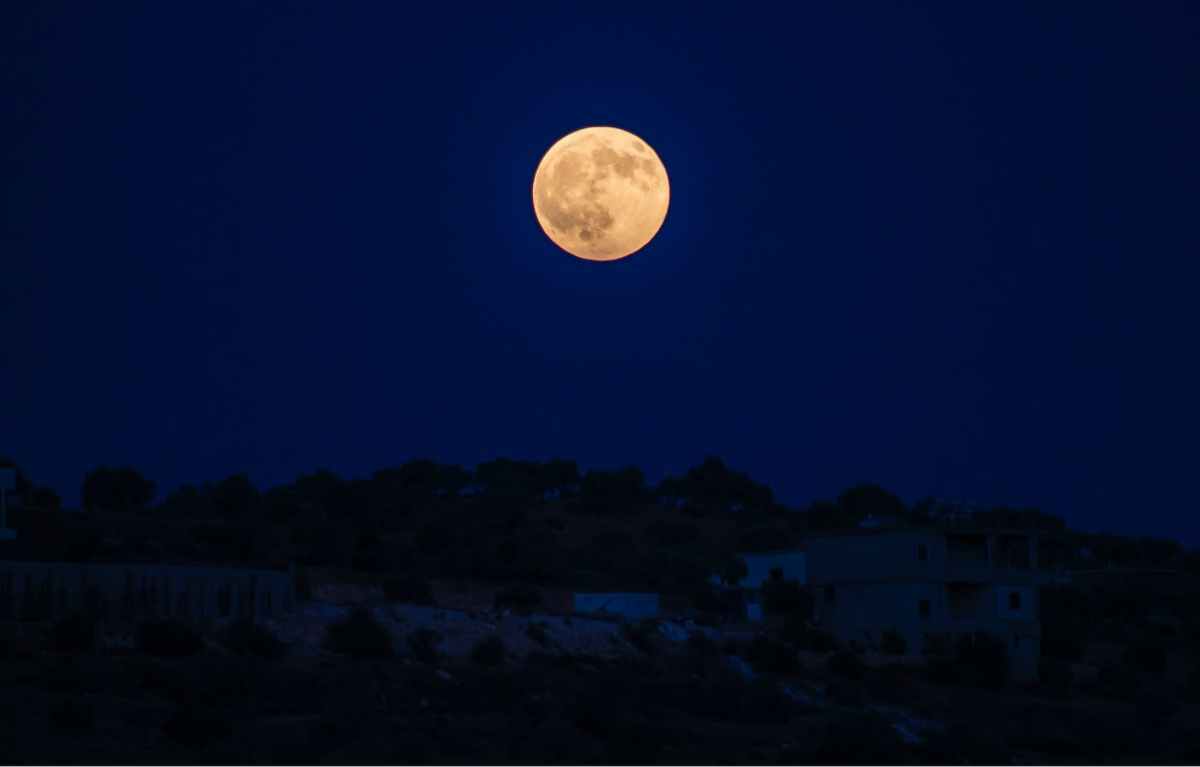
Later that night after walking around and calming our nerves a bit, we paused by the river. The city we were in was near the coast, the air was warm and still, and as we rested and watched the moon reflecting upon the water, suddenly out of nowhere we saw a dolphin leaping out of the water, glistening in the dim light. 

It was so perfect, so surreal, that it felt like a dream, and we fell silent with awe. And what struck me was how strange it was that a vision of such perfect beauty and an experience of such shame and fear could all exist in the span of one evening. And I knew, in a way that I couldn’t quite explain, that whatever God’s law was, whatever it meant to follow that law, it had more to do with this moment of silent wonder and unexpected beauty than it did with whatever those people had been screaming at me about inside. 

I share that story with you not out of a sense of self-pity nor to vilify anyone. We all have our harms and our hurts to account for, and so I’ve tried my best to let that experience in the pub be an instructive one. And what it has taught me, what I fiercely believe because of it and because of other stories I’ve heard from people who are different in one way or another, is that we must continue to wrestle with the meaning and the purpose of the law recorded in Scripture as it has been received in Christian tradition. We must continue to ask ourselves what the Judeo-Christian law is meant to look like and sound like and the fruits that it is meant to bear in our own lives and in our world. 

Because although it might be tempting sometimes, when confronted with the violence or prejudice perpetuated in its name, we cannot ignore the law or dismiss it as irrelevant to modern life. Because we are followers of Jesus, and earlier in Matthew’s gospel he says quite clearly: “Do not think that I have come to abolish the law or the prophets; I have come not to abolish but to fulfill.” 

Such a conundrum: how do we honor what the Law represents—God’s eternal, unchanging desires for how we are to live—while also recognizing that the original writers of the Law were speaking to the needs and concerns of a highly particular culture and geography and context?

How do we arrive at a place where the Law by which we pattern our lives is both substantive and kind, both a defense against harm and yet also a gateway to liberation? How do we conceive of the Law in a way that guards against our most dehumanizing tendencies and yet is as beautiful and elemental and free as that dolphin cresting the shimmering water? Can such a Law be found and followed? 

Yes.

Owe no one anything, Paul says this morning, owe no one anything except to love one another; for the one who loves another has fulfilled the law. The commandments, “You shall not commit adultery; You shall not murder; You shall not steal; You shall not covet”; and any other commandment, are summed up in this word, “Love your neighbor as yourself.” Love does no wrong to a neighbor; therefore, love is the fulfilling of the law.

Love is the fulfilling of the Law. If you take nothing else away from this sermon, I hope you will take that. Love is the fulfilling of the Law. 

Or another way of saying it: the only true measure of the Law is love. The only true measure of whether we are obeying God’s Law is how well, how deeply, how broadly we are embodying love. 

And so if you have, in your life, ever been told that you are unworthy, or if you have ever felt lost or forgotten, or if you have ever struggled to figure out how to be good enough, how to to be strong enough, how to simply be enough in a world that too often fixates on how we fall short, I want you to remember: love is the fulfilling of the Law.

And if you have witnessed the endless debates about what makes a person truly Christian, what makes a church truly Christian, what it means to follow God’s Law, then I want you to remember, love is the fulfilling of the Law. 

And, yes, we can study the history and the context of Scripture to understand how and why the Law took the form it did in that time and place where it was first recorded. But we can also honor the truth that love takes on new contours, new understandings to meet the realities and the revelations of our present moment. And this is not weak or permissive-on the contrary, to love unreservedly is the bravest thing we can do. 

Because if love is the true fulfillment of the law, well, love is scary. Love is risky and strange and it doesn’t always go the way you planned, it doesn’t always look the way you expected. And love demands things of you, it demands you to bend and grow and weep and dance. It requires you to sit beneath the moon and hold pain and beauty alongside one another and still say yes, yes, I will still believe in love, even when the world is ugly and cruel. I will still believe in Love Incarnate, even though he was crucified. And I will still believe that love endures, that it persists beneath the surface of life, cresting unexpectedly to dazzle us, to save us, to remind us of what is true. 

How will love show up for us this year at Saint Anne? How will we discover it amidst the pain and promise of our own lives? How will be give ourselves over to its invitation as we begin a new season of ministry and worship and community? I urge you to listen to how God is stirring your heart into action. 

Whether it is offering a word of support to someone who is struggling with grief, or a word of hope to a society struggling with injustice; whether it is tending the lawn or tending to the shattered fragments of someone’s spirit; whether it is learning to sing or helping others find their own voice; studying Scripture or simply sitting in awe beneath the moon—no matter what you do, if it is offered in love, then it is one more indication of the coming Kingdom, and it is one more revelation of the unchanging truth that will guide us and sustain us in any age:

Love is the fulfilling of the law. And love is the one thing that can never truly be broken.

Do-Over: A Sermon

I preached this sermon on Sunday, August 20, 2023 at St. Anne Episcopal Church, West Chester, OH. The lectionary text cited is Matthew 15:21-28, Jesus’ interaction with a Canaanite woman.

Have you ever looked back at some moment in your life and wished you could have a do-over?  I know that it’s popular to say things like “no regrets” and “everything happens for a reason,” but if I’m perfectly honest, there are plenty of things I would change if I could. Some of them are a bit trivial, like my questionable fashion choices in high school (though some of these, as I approach 40, already seem to be coming back around).

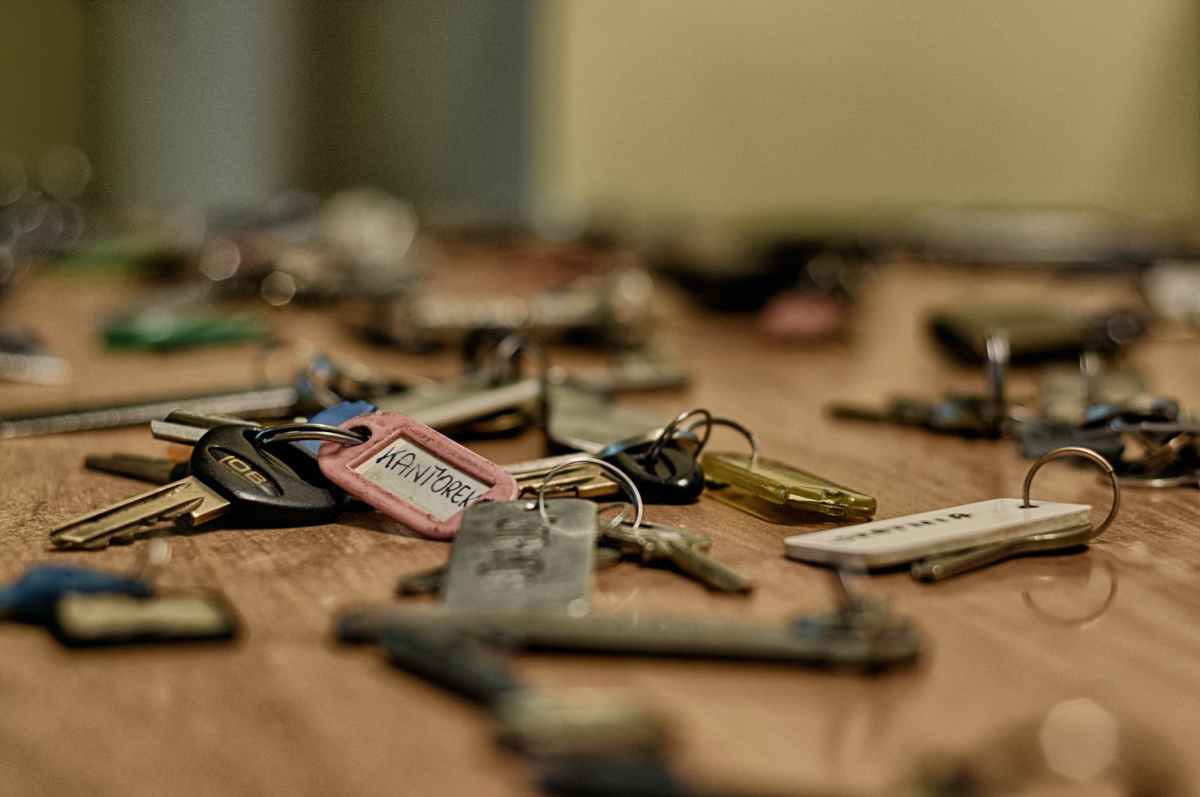
But some of the regrettable things are a bit harder and heavier: the things in my life done and left undone, the things said and left unsaid. They jangle around in my memory like a set of keys—keys for doorways that can no longer be opened—tarnished and jagged and yet hard to throw away. 

Truth be told, though, I am mostly ok with that. While I don’t think it’s helpful to myself or anyone else to wallow in regret, I do think there is value in remembering what has not gone well, what has been broken within us and broken by us, because it informs how we can make different choices in the present and on into the future. 

This is true not just for individuals, but for communities and nations, too, all of whom must reckon with the more painful aspects of their histories if they ever hope to unlock the shackles that bind their greatest ideals, to liberate their deepest and most beautiful dreams. 

We don’t get a do-over, exactly, but we get an infinite number of opportunities, as long as we live, to do better, to discern and to grow in wisdom, informed by our past but never imprisoned by it.

And this not just a sort of humanistic self-improvement philosophy, but the fundamental arc of Scripture, a story of promise and regret and repentance and redemption, a story which is itself filled with the messy choices of people and of nations wrestling with a Divine presence and power only partially understood, and yet who are drawn, always, always, into a new revelation of the breadth and the depth of God’s infinite power and unfailing ability to redeem our complicated histories.

I’ve been pondering all of this about do overs and doing better because, I think, it will help us wrestle with our challenging Gospel text this morning. Not solve it, but wrestle with it. 

Let’s just name the hard thing up front: Jesus is, to say the least, not kind to the Canaanite woman; he associates her and her people with dogs, and seems uninterested, at first, in healing her daughter. And we could, as many have, spend a lot of time wondering whether he was having his own regrettable moment or whether he was, in some opaque Divine way, testing the woman’s faith. Given who Jesus is, neither of these two choices is particularly easy or comfortable. 

But it is also good for us to step back and consider that for the disciples, and even for the original hearers of Matthew’s gospel, the truly remarkable thing in the narrative is not Jesus’ commitment to the children of Israel, nor his verbal sparring with the woman, but the fact that, ultimately, she is a Canaanite who receives God’s blessing. 

For if Israel’s troubled collective memory is a set of old keys, their relationship with the Canaanites is a particularly heavy and sharp one—the Canaanites are the people who originally inhabited the Promised Land, they were the ones displaced and slaughtered by Joshua’s armies, they were among the ones subjugated by the Kingdom of Israel and even now, in Jesus’ time, under Roman rule, the Canaanites are still a people whose name evokes that strange mixture of pride and fear when we encounter those whom we have othered past the point of recognition.

And all of this, all of this spilled blood and rage and this faded ghost of empire is heaped upon the Canaanite woman—this woman who has surely knelt at her child’s bedside, eyes brimming with tears, praying for her to make it; this woman who shouts in the street; who cries out for help; who boldly kneels before Jesus and seeks her daughters survival. She is a woman of unquestionable courage, but as a Canaanite she is also a symbol of all that Israel has wrought, and all that they have lost. No wonder they want to silence here and send her away. We often try to ignore those who remind us of our own wounds.

But there’s something we have to understand about Jesus, something which both explains and underscores the significance of what happens next, the fact that he doesn’t send her away. 

From the very beginning, when he was born as the Son of David in Bethlehem, Jesus has carried both the burden and the promise of Israel within his flesh—their chosenness and their chastening. We might even say that throughout his life, Jesus has embodied and recapitulated the original story of Israel.

And thus, Jesus, like Israel, is exiled into Egypt and then brought back; and like Israel he is sent into the desert to be tested and formed; and like Israel he bears out the weighty tradition of the prophets in his teaching and his miracles. And in all of these instances, he gathers up the glory and the pain and the belovedness of his people to bring it into an ever deepening level of Divine intimacy, knitting Israel’s story of liberation into the very fabric of creation, that it might become everyone’s story, in every time, in every nation.

Which makes his encounter, today, with the Canaanite woman, all the more significant, because we cannot forget that Israel’s history, its journey, is political and territorial, not just theological. And so now Jesus stands here, as Israel once did when they crossed with their armies to the other side of the Jordan, he stands here once again holding the life of a Canaanite in his hands, bearing the ancient grudges and the ancient fears of his people on his shoulders, and….he lays them down. 

He lets this mother’s love, and her faith, and her fierce determination change the story. O Woman, he says, great is your faith, and while the past cannot be erased, somewhere a new has opened, and suddenly the Kingdom of Heaven is bigger than Israel alone, bigger than any one nation. And while the children of the ones who spilled each other’s blood cannot get a do-over, they can do better. They can tell a new story, a story in which the daughter of a Canaanite is as beloved and valued as anyone else, and in which the only conquering power is mercy, and where the only Promised Land is the one big enough for everyone. 

Can we tell that story, too? Can we show the world what it looks like to do better, even if we can’t get a do-over on the most painful parts of our own history? Can we lay down our own ancient enmities and fears and misplaced nostalgia so that the best of who we have been might inform who we yet might become? These are deeply personal questions as well as collective ones for our church and for our world. 

But the good news of the gospel is that the answer is always YES. Yes, there is something on the other side of regret. Yes, there is something on the other side of failure and fear. Yes, there is a place where we won’t need all those old keys jangling in our pockets after all, because in that place all the doors will be flung wide open, and no one will be shut out, and everything that has been lost will be found and made whole.

Call that place what you will: call it the Kingdom, call it the new Creation, or call it Canaan; by any name and by God’s grace we’re heading to that land of promise together, and when we arrive, I suspect it will feel like this: waking up to a mother’s face, brimming with joyful tears, saying, my child, all is well. I am here. You made it.

Stories: A Goodbye Sermon

I preached this sermon on Sunday, July 16, 2023, my final service as Associate Rector at Trinity Episcopal Church, Fort Wayne, IN. The lectionary text cited is Matthew 13:1-9, 18-23, Jesus’ parable of the sower.

I still remember quite clearly the first time I saw Trinity. It was late evening in early April of 2019, just over four years ago. I had flown into Fort Wayne from California that day for my interview weekend, and Fr. T.J. picked me up at the airport and dropped me off at my hotel after a welcome cocktail. But I was still wide awake, restless, a bit nervous, my body on west coast time. 

So I took a walk down Main Street in the dark, past the stately Courthouse, past the workers closing up shop at the Coney Island, past Henry’s, then left on Fulton Street, and suddenly there it was in front of me, lit up, its gold-hued stone walls illuminated by flood lights, a beacon in the still spring night. And I stood there on the corner, looking up at the steeple, and I felt a strange, thrilling sense of knowing, like when you fall in love, and I thought, maybe, just maybe, the long and winding road of my life has led me all the way here. 

And so it did. And the courthouse and the Coney Island and Henry’s and especially these old stone walls have come to hold all sorts of memories and meanings that I could not have imagined back then on that April night, back before I was a priest, before COVID, before I came to know and treasure your names and your faces and your stories, before we navigated the ups and the downs of these four years alongside one another, praising God and praying for each other and engaging, week by week, the graceful rhythm of the liturgy. I could not have imagined all the blessings and the lessons of these years, and how they would leave such an indelible mark on my heart. 

But here we are. And although four years go by so quickly, I know that the story that began on that April night and which ends, for me, on this July morning, will be one of the most cherished and enduring stories of my life. 

But one of the interesting and oddly comforting things that I have learned during my ministry at Trinity, and something that I think is true for all of us who spend time in this place, is that within these walls, our beginnings and our endings are all layered on top of one another, interlocking like those golden stones—time is a bit slippery, and what is seemingly lost to us lives on. 

Just as it is in the liturgy itself, where Alpha and Omega come together, where righteousness and peace kiss, I find that the past and the present commingle in these hallways. Priests and parishioners long gone, long dead, even, are still part of the living memory of this place. One can sit here in the nave on a quiet afternoon, the sunlight bathing the walls in color, and sense the presence of those who came before, the ones who are themselves carried, now, on the light, a thousand fragments of faith, hope, and love, still abiding here. 

And so when things change, when stories end, when people leave, or move away, or even die, these endings are gently incorporated into that which does not end. They are held in trust, like a precious volume added to the shelf, an entry into our one shared story. It is a story that began long before any one of us, and that will continue long after all of us. Each of us comes and contributes what we can while we can, and then we hand it off to God and to the future. 

And as hard as it is to leave, I find peace in the knowledge that my offering is just one of many; for there is something good and necessary and holy to feel, in this life, like you have been part of something far larger than yourself alone. Trinity is a place where each of us can be part of something large, something magnificent, something eternal, even, if we give ourselves over to it. 

And that is so, of course, not simply because of some magic within these stone walls, but because this is the house of God; it is the place where our individual stories collide not only with one another’s and those of our forebears but with the one timeless story of God’s passionate and undying love for us and for all of creation. 

And in a world and a culture that so often tells us that it is up to us alone to determine what is real and true, to wrest some scrap of meaning from the happenstance of our lives, to navigate our way between the lonely waystations of existence and find solace only in ourselves, in this place we learn that this is not so. We learn that we were not made to be alone and that we will not be alone, in the end. We learn that God has knit himself into our stories and has knit us into his own, all-encompassing story. 

I think this is part of the reason that Jesus, the incarnate God, loves to teach his followers in stories and parables. Not just to be obscure or confusing, but to remind us that the whole of salvation is the imaginative exercise of a Creator who longs to re-enchant the world. 

God longs for us to feel a sense of wonder, like the child we used to be, and so he tells us stories of sowers and seeds and soil and sunshine so that we might begin to realize that the Kingdom of God is as close to us as the ground upon which we stand, that this Kingdom grows, somehow, when we recognize that we are a part of everything and that everything is a part of us.

In parables like the one we heard this morning, the parable of the sower, Jesus is not telling us about various types of earth so that we can determine which soil sample fits our own individual story and circumstance—whether we by ourselves are rocky or thorny or rich and fertile.  Instead, he is asking us whether we can dream of and bring into existence a world where all might flourish of fertile ground; where all might be fed by the harvest of a righteousness deep and vibrant as the Indiana cornfields; where all might know the abundance that is possible when we love and care and tend to one another, as we have here. That’s the story God wants us to be a part of. That’s the story I have found here with you.

For God knows that too many of us, myself included, have felt what it is to be trampled down like the dust; to be caught among the thorns and stones. God knows how we have walked endlessly through the night, down unfamiliar streets, down long and winding roads, seeking our place in this world, and that sometimes we need a new promise, a new vision to illuminate the darkness, to dazzle us with its golden possibilities, to give us that strange, thrilling sense of knowing, like when you fall in love. Because God wants you to fall in love again–or for the first time–with him, with who he has made you to be, with this world and all who are in it, with the unique story that has brought you safe thus far, and with the new, shared story that is still being written. 

How good it is, my beloved friends, that our paths have converged in this place. How good it is that the story of God’s love, the one that brought us together, will never truly end. And if you ever find yourself feeling lost, or alone, or unsure about your place in this world, may I commend to you the simple reassurance of these old stone walls, softly glowing in the darkness, and the Spirit that abides herein, which will never forget you, nor me, nor any moment of what we have found and cherished in this place, even long after we are gone. 

So thank you. Thank you for letting me be part of your stories. Thank you, God, for letting me be part of Trinity’s story. And so, until we meet again, in that place and time where all our stories become one, world without end: my gratitude and my love.

The Language of Our Hearts: A Pentecost Sermon

I preached this sermon on Pentecost, June 5, 2022, at Trinity Episcopal Church, Fort Wayne, IN. The lectionary text cited is Acts 2:1-21, the descent of the Holy Spirit onto the Apostles.

A few weeks ago I traveled up to South Bend to attend a conference for all of the Episcopal Churches in Province V, which is a region that roughly encompasses the midwestern United States. It was a wonderful time, both for the workshops and other sessions offered, and also, just as importantly, for the chance to connect with new people and reconnect with some familiar ones—friends and colleagues that I hadn’t seen since well before the pandemic started. As we know from gathering together here at Trinity each Sunday, there is something heartening and healing about being together in person, seeing each other’s faces, hearing each other’s voices.  

When we celebrated the Eucharist at the conference, we were invited to do something that perhaps you’ve experienced before if you’ve attended a large Episcopal gathering or convention, especially one with a diversity of attendees: at that moment in the liturgy when we all join together to say the Lord’s Prayer, we were asked to pray it in “the language of our heart.” The language of our heart. I love that phrase.

And so, after a brief pause, a cacophony of voices rose up in prayer—some praying in the traditional English language version that is so dear and familiar to us here; some in the more contemporary English translation; but also in Spanish, and in other languages—a seminary friend of mine who was there offered prayers in Lakota. The cumulative effect was messy, but beautiful—a collision of hearts and tongues naming God, praising God, asking God for protection and provision. 

Maybe it was because I hadn’t heard the Lord’s Prayer offered that way in a little while, but it touched me deeply, it gave me a different sense of the vastness of that prayer, the billions of times it is offered up each day, in grand churches and in homeless shelters, on mountaintops and on commuter trains, by people we will never meet, people so different from us and yet so fundamentally connected to us, each crying out in the language of their deepest heart. Our Father, who art in heaven. Padre nuestro. Ate unyanpi. (That last one is in Lakota, if you’re curious). 

One of the great tragedies of Christian history has been the idea that being one in Christ means being exactly the same as one another. The idea that being part of the universal Church is more about fitting in than it is about becoming the fullness of who God made each of us to be. That pressure to conform, to get in line, to deny the parts of yourself deemed different or unacceptable—that is a particular cultural force at work, not the Gospel itself. That urge to suppress diversity is the work of tyrants and empires, not the work of God’s Kingdom. Because the Spirit of God speaks in every language, shows up in every type of person and place and circumstance, the Spirit radiates out of every color of the rainbow. 

And, to put it more bluntly for those of us here in the United States: God does not only speak in or understand English. God does not only work through people similar to us. And I thank God that we are part of a church that recognizes the joy and the strength of diversity of every type—social, economic, political, theological, racial, linguistic, and every other sort, too. We are messy, but we are beautiful, this collision of hearts and tongues that we call The Episcopal Church. 

By not simply tolerating our differences but striving to cherish them and learn from them, we live into the reality of the Church that was born on that first Pentecost, when the Apostles were caught up in the whirlwind of the Spirit and were able to proclaim the gospel in the native tongues of the immigrants to whom they spoke. 

There is a nuance here that is essential for us not to miss: the miraculous gift of the Spirit was not that these immigrants could suddenly understand the Apostles speaking in one universal language—which would likely have been Greek or Latin, the dominant languages of the Roman Empire. It was that the gospel was carried to their ears in the language of their hearts—the language of their blood, the language of their native soil, the language their parents sang to them in lullabies, the language by which they learned to count the stars and name the creatures of the earth. 

On this day the gospel–the fiery incandescence of God’s love–was transformed on the lips of the Galilean preachers and rendered into the particular poetry of the hearers’ innermost self. This is the day God called out to each of them not in the language of empire, of conquest, of sameness, but in a voice that was as familiar as their own.

There is a crucial lesson in that, a fundamental Christian truth, especially as we grapple with our own challenges of living in a diverse society where some would still have us give up our God-given uniqueness, would have us mute our stories, our perspectives, our voices, in favor of a monolithic, lifeless consensus masquerading as peace.

That is not what we were made for. That is not what Jesus died for. That is not the type of peace he leaves with us. And that is not what the Spirit came for at Pentecost. The Spirit came to fill each of us with life abundant, to winnow away with fire all the lies we tell ourselves, leaving the clarity and the particularity of our divinely-made selfhood, and the Spirit came to catch us up into a bond of fellowship that honors our differences while uniting us in common practice, in common mission. 

Authenticity and courage and truth, that is our peace. And that is not just who we can be or hope to be, that is who we are when we surrender our fear and our bitterness and our prejudice to the expansiveness of God’s Spirit. A people reborn, a people who are unafraid to speak in the languages of our hearts and yet somehow still understand one another in the wordlessness of grace, the ultimately unspeakable mystery of life and of love. 

Let that Spirit of love be yours today. Let it shape all of your days. Let it shape the work that we do together in this community, in this nation, on this planet. None of the challenges that we collectively face can be met without this Spirit—a Spirit that honors difference, and yet demands from us the discipline of remaining together IN that difference. No retreating into corners; no demonizing one another; no insistence that God only speaks in ways that we alone understand. 

For if the Spirit of God is like fire, like wind, then it is elemental, and limitless, and free—it is available to everyone, kindled in hearths unknown to us, blowing across landscapes we will never see, speaking in languages we will never understand. Today we honor that vast freedom of the Spirit, we put our hope in it, because it means that we, too, might yet be free. We, too, might yet be liberated from the language of empire and speak, instead, the living language of our hearts.

Come, Holy Spirit. Only speak the word, and we shall live. Speak the word, and we shall be healed. 

Names: A Sermon

I preached this sermon on Sunday, May 8 2022 at Trinity Episcopal Church, Fort Wayne. The lectionary text cited is Acts 9:36-43, in which Peter raises a woman from death.

How many names do you have?

The immediate answer to that question might seem obvious—many of us have a first, a middle, and a last, with maybe one or two more thrown in for good measure by our parents. But it’s not always that straightforward—some of us also have old nicknames, the recollection of which might make us squirm with delight or embarrassment; affectionate names given by friends and romantic partners; and names that we have claimed for ourselves later in life as we have better understood who we are and how we wish to be known to the world. There might be other names, too, that we’d rather not hear—the hurtful, insulting ones that were hurled at us at one point or another, the ones that still rattle around in our memory like heavy stones. 

There is great power in the names we carry; power to heal and to harm; to remember who we are and to be reborn. It should not be surprising, then, that much of Scripture is taken up with the giving and the changing and the remembering of names, including the ones we have applied, with the limitations of human language, to the unspeakable name of God. 

We might say that, in some way, the entire story of God’s people thoroughout the Bible is the search for a name—a name by which to know ourselves, a name by which to address the ineffability of divine truth, a name to call out into the silent infinitude of the stars—a name that is sufficient to say what life is, a name that can capture in full something that is ultimately beyond words.

I got to thinking about names because of today’s passage from Acts, where Peter restores to life a woman in the city of Joppa, a woman who bears two names, Tabitha and Dorcas. As the writer of Acts informs us, Dorcas is the Greek translation of the Aramaic name Tabitha, which means “gazelle.” Now, it would be easy to pass right over this detail as we read about her miraculous resurrection, but I think we would miss something important if we did so. 

Commentators note that Tabitha/Dorcas, in addition to being a woman of some financial means who was able to support the widows in her community, was also a woman that straddled two worlds. Joppa is a port city, and given her two names, it is likely that this disciple of Jesus was a Greek-speaking Jewish woman who occupied a liminal space between her Israelite identity and her ties to the Hellenized world of the Roman empire. Her two names suggest that she had learned to traverse the ambiguous territory between colonized and colonizer, between membership in an oppressed nation and the society of the imperial oppressor.

We do not know how she managed this interplay of names and identities, but we do know that in the midst of them, this woman who was both Tabitha and Dorcas dedicated her life to service in the name of Jesus. And perhaps, for her, the name of disciple–follower of the Way, sheep in the flock of the Good Shepherd–was the thread that bound her disparate roles in a fractured world. 

But then note what happens in the passage. Peter (himself another bearer of two names) comes to see the body of the woman, and in raising her back to life, he says, “Tabitha, get up.” Not Dorcas, but Tabitha. Her first name, the name that was with her from the beginning, the name spoken in her people’s original language: this is the name by which she is called back to herself, this is the name that inaugurates her resurrected existence. It is Tabitha, tzvia in ancient Hebrew, the same word that names the gazelle leaping on the mountainside in the Song of Solomon, that is the name of life for her. That is the name by which God, through Peter, breathes life back into her body. And while the Scriptures do not tell us anything about her life after this miracle, I can’t help but imagine that, for the rest of her days, she remembered the sacred power of being brought back to life by the sound of her original name. Tabitha, get up. 

What is the name by which God would call you? What is the name that encapsulates your deepest self, the name that is life to you? And, conversely, what names have been put upon you that no longer work, that no longer tell the whole story of who you are called to be?

I speak not only of given names and surnames, but also of the roles and identities by which we are known and named, which, while important, are too often over-simplified, objectified, and used to label and limit our complexity—old, young, healthy, sick, parent, child. Priest, layperson, spiritual wanderer. Gay, straight, trans*, Black, Brown. American. Foreigner. Pro-Life. Pro-choice. Democrat. Republican. Do these names actually tell you who you are, or who your neighbor is?

Or is there a deeper name, an original name, by which you must identify yourself and those whom you encounter if we will ever hope to actually know one another? Is there a name for ourselves that will bring the dying parts of this world back to life?

There is, in fact.

And it turns out that the woman known as Dorcas heard that it day as she awoke from the sleep of death. Because a funny thing about the name Tabitha—tzvia. That word, in its original language, doesn’t only mean gazelle, but also, simply this: beautiful. Her name was beauty. 

Beautiful one, get up. 

This is the name by which God knows each of us. This is the name that God has called us from the moment the world began. And this is the name by which God, in Christ, desires us to know one another—the name underneath our names, the name beyond every label and slur and stereotype. The name that will bring anyone back to life. 

Beautiful one, get up.

And this is the only name that can heal us, that can see us through the divisions and the suspicions that have plagued not only our recent history but the entirety of the human story. It is only when we know ourselves as beautiful, as beloved, and when we see that same thing in the face of our neighbors, in the face of our enemies, as Jesus taught us to, that we will begin to move back from the brink.

It is only when we see and name the inherent beauty and dignity of all creation and develop a reverence for what God has made and called good that we will move closer toward the kingdom wherein we were meant to dwell. It is only when we stop name-calling and start naming each other as beautiful, when we start noticing the beauty we see, even in the places and people where it’s not first apparent—it is only then that we will finally speak our own true names, and it is only then our mortal tongues will begin to utter something that approaches the one true name of God. 

The God who woke Tabitha from the dead.

The God who woke Jesus from the dead.

The God who will wake each of us, on the last day, saying, quite simply:

Beautiful one, get up. 

Transfixed: A Sermon

I preached this sermon on Sunday, February 27, 2022 at Trinity Episcopal Church, Fort Wayne, IN. The lectionary text cited is Luke 9:28-36, an account of the Transfiguration.

Like many of you, I have been transfixed by the images coming out of Ukraine the past several days. I was transfixed by the video clips of parents kissing their children goodbye. I was transfixed by the story of a young couple who got married one day and signed up to defend their city the next. I was transfixed by the images of people sheltering in subway stations last night, the thought of lives upended and ended, and of the incomprehensibility of yet another needless war blighting the face of God’s beloved creation. I have been transfixed by the question: what now? What next?

I use that word, transfix, intentionally. It means “to make motionless with amazement, awe, or terror,” and in the face of the brutalities that too often characterize life in this world, I do sometimes find myself shocked into motionlessness. I find myself without words or insights or any idea how to meaningfully respond. My prayer this week has been little more than silence and variations of, “Lord have mercy. Christ have mercy. Lord have mercy.” Even the beautiful language of the Prayer Book has felt dry and heavy on my tongue.

It is easy to feel this way when we are inundated with challenging news. Ukraine is the latest iteration of the world’s grief, but in this interconnected planet, I think we are more keenly aware than ever of the collective heartbreak of the human family. We’ve faced our share of it together in the past few years. And it can feel, some days, like too much to process. Like my heart and my mind can’t hold it all. And so I am simply transfixed. 

But our generation is not alone in this experience. As I reflect on all of this, I feel some connection to Peter and John and James in today’s gospel—up on the mountain to pray, they see something incomprehensible—the figures of Moses and Elijah appearing in glory, speaking with Jesus, who is himself visibly changed in some mysterious way. And while we might tend to think of this as an exciting and beautiful vision, in truth it was terrifying and overwhelming for the disciples. It was too big for them, not something they were prepared to process. 

I have an icon in my office of this scene, and in it, the disciples are not gazing placidly, reverently up at Jesus and Moses and Elijah. They are falling back in shock, tumbling down the mountainside, as if they are in the process of being struck dead.

Luke describes their state of being while all of this was going on by saying “Peter and his companions were weighed down with sleep.” They were tired. They were frightened. We might say that they were transfixed. And so I have to wonder whether their prayer as the cloud enveloped them on the mountaintop was also some version of “Lord have mercy. Christ have mercy. Lord have mercy.”

In the face of what is new, and strange, and frightening, it is natural for us to not know what to do, and therefore to end up doing very little. We cannot comprehend the mind of God. We cannot save the world. We cannot explain the persistence of evil. And so we get stuck. We tell ourselves that we are just bystanders, poor pilgrims caught up in the storm on the mountain, waiting for the clouds to break, waiting for things to go back to normal. Waiting, transfixed, until someone else figures out what to do, what the next step should be.

But I fear we might be waiting a long time if that is all we do. Because here’s the thing, both about this gospel passage in particular and about our lives as followers of Jesus more generally: it’s not about being transfixed. It’s a different “t” word.

The word of the day today, the key word in this story, and the key word for our discipleship in moments such as this is not transfixion but transfiguration. That is what is happening up on the mountaintop. Transfiguration—the transformation of one thing into another, better thing. 

Let me say that again: the transformation of one thing into another, better thing. Now you might think, wait a second—Jesus is already fully God and fully human, long before he went up this mountain—he doesn’t need to be transformed into something better. And you would be correct.

Because in truth, although we usually focus on his changed appearance, Jesus is not the one being transfigured in this encounter. It is the disciples. It is the disciples who are changed—it is the disciples who are given eyes to see and ears to hear. It is the disciples who in this moment perceive the fullness of God’s truth, who feel what it is to bear the glorious weight of God’s love. It is the disciples who are being stretched and shaped and re-formed by this experience into who God intends them to become. And that invitation, that challenge, extends to us as well, we who are the disciples of the present, perilous moment.

Jesus, in revealing his eternal inner radiance, is actually inviting the disciples, and us, to let go of that sleep-heavy paralysis, that transfixed state of limited imagination, and to step out into a transfigured life, a life in which we are awake. A life in which we may not have all the answers, a life in which pain and suffering and war still persist, but also a life in which we are ready to face whatever lies ahead because we have seen, we have held, we have tasted–if only for a moment–the fullness of the glory of God.

And if you wonder, how can I live that way? Where will I find the courage? What if I am not  good enough or strong enough or centered enough? Well, yes, I ask myself those things every day, too.

And then I look again at those parents kissing their children goodbye, willing to die to protect them–parents who just a week ago were not very different from you and me. I think of that couple whose marriage is being consecrated as we speak in the laying down of their lives for their friends. And I think of all the saints and the martyrs, the advocates and the prophets, the justice-seekers and the wound-healers, the citizens of God’s kingdom, the famous and the unsung, the ones who gave their lives over to God’s dream of peace even in world that mocks peace, and I don’t know why it must be this way, or how it all works, but I see that it does, indeed, work—that in the mystery of grace, transfiguration is possible. That we can face the moment when it comes. That we won’t be transfixed forever.

So yes, let us pray for peace. In Ukraine, and around the world. And let us also pray for peace to transfigure our hearts, that we might become makers of peace.

And until then,

Lord have mercy. Christ have mercy. Lord have mercy.

Prize: A Sermon

I preached this sermon on January 23, 2022 at Trinity Episcopal Church, Fort Wayne. The lectionary text cited is Luke 4:14-21, where Jesus speaks to the community at Nazareth.

I don’t know if they’re still on, but when I was a kid watching television, I would always see those commercials for Publishers Clearing House…you know, the ones where it would show people answering the doorbell and being greeted by an entourage carrying one of those huge checks for a huge amount of money. They showed the people crying and jumping up and down with joy, all of their problems having been seemingly solved by this incredible prize appearing out of nowhere.

Now, we didn’t live in poverty when I was young, but there were lean times for a whole host of reasons, and I came largely from a working class family, so the idea of never having to worry about money, to not have to live paycheck-to-paycheck, was a tantalizing idea that seemed reserved for other families. So I would daydream a bit about what it would feel like if one of those prize committees showed up at our front door—what it would be like to see that check with OUR name on it, to suddenly live without that pervasive, gnawing fear that there won’t be enough. 

And one day, when I was probably 12 or so, we actually got one of those envelopes in the mail from Publishers Clearing House—we had been “selected” to enter to win a prize. Now of course this was no more likely than winning the lottery, but I wanted it so badly to be true—I wanted to believe that we had a chance. So we filled out the entry form and I put it in the mailbox and we waited…and waited….and waited.

I’m still waiting, by the way. I have to believe that because I’ve moved so many times they’ve just not found my current address, and that surely that prize check will find me one of these days.

I tell you about all of this because I wonder if it was a little like that for the people in Nazareth in today’s gospel passage. Struggling to get by under Roman occupation, struggling to get by as a people for as long as they can remember, really. And they’d submitted their supplications to God over the centuries, they’d cried out for some help, and they were waiting, waiting, waiting for that prize to finally show up—the One who would make it possible to live confidently, the One who would fix things, the One who would make the waiting worth it. 

And then, here is Jesus, one of their own, and he tells them something wonderful: he quotes from the prophet Isaiah, speaking of good news and abundant healing and the year of the Lord’s favor—the jackpot, really, the big prize check from God saying “it’s all going to be all right now,” and then Jesus says: today, this Scripture has been fulfilled in your hearing.”

Well, Hallelujah! Break out the balloons! It’s as though Jesus has come to the door, and he’s heaven’s prize committee, and he’s got the solution—in fact, he IS the solution.  I bet a few people in that synagogue, shocked as they were, wanted to cry and jump for joy. 

Have you ever wanted something so badly that you can almost see it, almost feel what it would be like to have it? Have you ever wanted something so badly that it haunts you? I imagine that is what it was like for those people in the synagogue at Nazareth, and here, for one brief moment, they begin to hope that their time has come. That happy days are here again.

But you and I know that’s not exactly how the story ends. It’s a little more complicated than that. Because Jesus goes on to tell them, essentially, that God’s favor, God’s imminent redemption, God’s big victory prize, is not at all what they expected. In fact, it’s not even necessarily for them. He reminds them that when God responded to famine and disease in the past, God sometimes bypassed Israel entirely and bestowed gifts on other nations. 

That would sting. It’d be like opening the door to that prize committee and realizing after a few minutes that they got the wrong address—the check is actually for that neighbor down the street that you can’t stand. So close, yet so far.

So I feel for the people of Nazareth a little bit, even if they do try to throw Jesus off of a cliff. They didn’t really understand yet. They were waiting desperately for a prize, but instead they got a gift—a Savior, entirely unlike the one they expected—the Savior, of all people, everywhere. A gift so big, so incomprehensible, that it didn’t even register as valuable to them right away, or maybe ever.  And so we see them there in the narrative of the Gospel, forever locked in that moment at the edge of the cliff, still waiting, waiting, waiting for the prize they expected, not recognizing the gift that showed up. 

We are liable to do the same thing. It is so easy to look back and measure our lives by whether we got what we wanted–what we expected should be ours. The problem with that, of course, is that we never get everything we want, and even when we do, it’s usually not quite what we’d imagined. So we, too, might find ourselves waiting at the edge of that cliff for our whole lives, shaking our fist at heaven, cursing our dashed hopes. 

Or…we can turn around, and look what what is right in front of us: Jesus. And one another. The true gift. Better than any prize we could win. He has already arrived at our doorstep, sometimes dramatically, sometimes quietly, but he is coming, he is there, I promise he hasn’t lost your address.

And while he’s not carrying a big check, he is offering himself to you—all that he is, all that he has, all that he signifies. The question is, will we accept him, will we recognize that he is what we have been waiting for, or will we spend the rest of our days waiting for something that we imagine to be better?

I assure you, that thing is not coming. 

The Spirit of the Lord is upon me, because he has anointed me to bring good news to the poor. He has sent me to proclaim release to the captives and recovery of sight to the blind, to let the oppressed go free, to proclaim the year of the Lord’s favor.

Today–and every day– that you encounter Jesus, and every day that you love one another in the name of Jesus, this Scripture, this longing, this promise, has been fulfilled in your hearing. It won’t take away all our worries, but it will show us what actually matters. It will guide us—all of us—into that peace which passes all understanding—a peace that no amount of money can buy.

You’re here. You’re loved beyond measure. You’re free. 

So congratulations. You’ve won. 

Other Nations: A Sermon

I preached this sermon on the Feast of the Baptism of Our Lord, January 9, 2022 at Trinity Episcopal Church, Fort Wayne. The lectionary texts cited are Psalm 29 and Luke 3:15-17, 21-22.

Last summer I was browsing in a used bookstore, as I tend to do, and I came across a copy of The Outermost House, written in 1928 by the author and naturalist Henry Beston. It is considered a classic in the genre of nature writing, and although I’d never heard of it before, I was quickly drawn into the author’s vivid, poetic reflections that capture a year he spent alone in a small cottage on a lonely, windswept beach at the edge of Cape Cod in Massachusetts. 

His only companions are the fog-enshrouded beacon of a distant lighthouse, the layers of sound made by the undulation of the waves, and the wild wind of midwinter storms—and all of these he observes with a sense of reverent wonder. But more than anything, he notices and celebrates the wildlife along the shore, especially the birds who pause there in the midst of their migratory patterns, hunting for food, resting on the long journey north or south, attending to their own mysterious rhythms of existence. I am not an especially devoted birdwatcher, but even I was moved by his description of what he calls the “constellations” of shorebirds flying in perfect, intuitive unison above the sea:

He writes: “We need another and a wiser and perhaps a more mystical concept of animals…for the animal shall not be measured by man…they move finished and complete, gifted with extensions of the senses we have lost or never attained, living by voices we shall never hear. They are not brethren, they are not underlings; they are other nations, caught with ourselves in the net of life and time, fellow prisoners of the splendor and travail of the earth.”

They are other nations. I love that line. In the magnificent otherness of the birds, Beston realizes that we cannot always interpret everything in the world as simply an extension of ourselves. Some things are foreign to us, unknowable, inhabiting their own truth, inaccessible, and yet still beautiful, still worthy in their own right.

I find a sense of restfulness in that observation. The restfulness of not needing to understand something or someone fully in order to love them. The restfulness of letting them be what they are without trying to control them or shape them into our own likeness.

How much more peaceful my own life might have been, at several junctures, if I had done this. If I had let others—friends, family, partners—be who or what they were, rather than trying to fashion them into what I expected or demanded them to be. And how peaceful it might have been to let myself be what I was, rather than conform to what others expected or demanded of me. How good it is to fully inhabit the mystery of our deepest selves, and to honor that mystery in others.

I was reminded of all this—of birds and freedom and flight and identity—as I reflected this week on the image of the Holy Spirit, who comes like a dove, descending upon Jesus at his baptism. 

This aspect of the scene is a bit enigmatic, when you think about it, but I suspect that when we hear this passage, we tend to focus more on the figure of Jesus in the water, or even on the reassuring voice of the Father from heaven, so much so that we might overlook the descent of the dove, who is, lest we forget, also God. 

Our gaze might easily sweep right past her; we might not stop to wonder where she has come from, this dove, where she is going, or what it means that she chooses to anoint this moment with her arrival, with a brush of her wings, carried on the breeze blowing down from the open gates of heaven. What is her part in this revelatory moment? A specific answer is not given to us. The dove who is God remains just beyond our grasp, just beyond our comprehension.

And if we don’t know quite what to do with the dove in this story, I would also say, too, that we often don’t know what to do with the Holy Spirit at all. The Spirit is unpredictable, elusive, wholly other—wing and wind and flame. Jesus, we can see, we can listen to, we can follow. And the Father we can imagine, at least to some degree, because we know what it is to have or to be a parent. 

But the descending dove—she is not like us. Her experiences, her senses, her scope of vision are beyond ours. She is the person of God that cannot be domesticated or contained. She is free. She is another nation, sovereign and unassailed. She arrives and departs and shapes events on her own inscrutable terms.

And while that can be a bit unsettling, I also love that about the Holy Spirit. The Spirit teaches us not to be afraid of the things we don’t know, the things that we cannot know. She reminds us that sometimes we have to let go of controlling outcomes in our life—for we cannot harness the wind. She humbles us. 

So whether we are considering the baptism of our Lord, or our own baptism, or any other aspect of our faith, it is good to remember and celebrate this wild, strange, impregnable aspect of God’s activity in our midst. For as much as we long for intimacy with our Creator, and as much as we seek to know and be known by our Savior, I think we also desperately need to be surprised by God. 

We need a God, perhaps now more so than ever, who can do a new and unexpected thing in our lives. We need a God who is not bound by the limits of human imagination, who is not subject to the old, tired tyrannies, not governed by the mistakes of our past, a God who can, as the Psalmist says, split the flames of fire and shake the wilderness—in other words, a God who can dazzle us, wake us up, surpass the timid longings of the earth, and teach us how to fly. 

It is true that our salvation is found in a God who loves us enough to become as one of us, but our liberation requires a God who is not like us. A God who is another nation, who conquers us with grace.  Because only in the power of God’s strange and insistent newness can we dream of a newer world. Only under her wing can we be carried there.

Where is that wild Spirit of God calling you? Which expectations or disappointments must you lay down to let God’s freedom be your own? To what great mystery are you willing to entrust your heart as you navigate “the splendor and travail of the earth?”

For we must learn to trust in the things we do not fully understand. That is the essence of faith. And that is the essence of God’s love—a nation unto itself, but now descending, softly, on the wings of the dove, to anoint you with uncompromising authenticity. 

Stand on the shore, at the edge of comprehension, and marvel at her arrival, at all that she is, all that she brings, this bearer of God’s deep, inexpressible, freely given self. Let everything be possible again.

How much more peaceful it might be when we do.

Feast: A Sermon

I preached this sermon on Sunday, November 21, 2021, Christ the King Sunday, at Trinity Episcopal Church, Fort Wayne, IN. The lectionary text cited is John 18:33-37.

One of my happiest holiday memories is when I would wake up on Thanksgiving day to the smells of an already-busy kitchen: sage and onion and baking pies and brewing coffee. It was almost as delicious as the meal itself, that long moment of awakening, warm and half-dreaming in the morning light, knowing that there was a feast being prepared, that everyone I love would be gathered in one place, and that, even though the world outside was complicated and so were we, for this one day, at least, there was no need for anything else. There was enough, and we were enough, here, now, together. 

And while for some of us, perhaps, Thanksgiving was never quite so happy an occasion, I do think each of us understands the potency of the idea itself: a time of rest and reunion, a world in which no one goes hungry, where everyone is welcome at the table, where being known and seen and loved is a gift available to all.

As we grapple with some of the entrenched realities and the challenges facing our country and our world—racism, violence, economic inequality, and ecological crisis, to name but a few—I acknowledge that for many the observance of America’s Thanksgiving holiday is fraught with complexity, and I also acknowledge that its celebration can bring up feelings of ambivalence for those among us whose families are fractured or scattered or simply gone. 

But the principle of gratitude that underlies the day is something that must be reclaimed and reinvigorated anew by each generation, so that this is not just the passive reception of an unexamined history or a private lament over a broken family system, but a courageous choice to believe in what is still possible—to believe that there might yet remain much for which we can give thanks. Because even as we face what is ugly and messy about the human condition, we must also hold fast to what is beautiful and hopeful—those simple, good gifts that make life not just bitter, but sweet, that make the struggle worth it, the things that tell a story of hope, not just disillusionment. The things glimpsed around the bountiful table of the present moment—a feast of memory, but also of determination and of expectation of a better tomorrow. 

That’s why I love that after this service we will go upstairs and pack bags with food supplies and encouraging notes for our neighbors so that they, too, might enjoy a Thanksgiving meal. It’s our congregation’s own small gesture of gratitude for the blessings in our own lives, and a demonstration of our belief that the world can still be a hopeful place, a generous place, and that we can help make it so, even when fear and scarcity seem to dominate the narratives around us. 

Choosing to believe in the redemptive possibility of this world—in its goodness, in its capacity fpr renewal—this is part of what we mean when we speak of the Kingdom of God—not just a place up in the heavens that we escape to when we die, but the emergent, lived reality of God’s love here and now—the power of that love, the triumph of that love, the sovereignty of that love. The ultimate gift for which we give thanks.

And so while it is somewhat a fluke of the calendar, it is fitting, perhaps, that Thanksgiving and Christ the King Sunday fall in proximity to one another, because each observance, at its best, calls us toward a vision of beloved community. Thanksgiving  calls us back to what is essentially good and true in our own lives, and as we conclude the calendar of the church year and prepare for the cycle to start anew with Advent next week, we pause to ask ourselves: who is this Christ, this King whom we worship and follow? What is the essential goodness and truth that he brings? And how do we take part in it?

I will admit that answering these questions and then living into the answers can be harder than we care to admit. We want to believe that love wins, that hope endures, but sometimes we look at the world around us and we look up at Jesus above the altar, on the cross, and we can feel as incredulous and bitter as Pontius Pilate, and we ask: Are you the King? Are you? Because you are nothing like any king I have ever seen. You are not the sort of king who fixes all of the problems around us. And even if you are, what is truth when no one is honest anymore? And what is love when everyone is just out for themselves? And what is justice when blood flows in the streets and children go hungry, just as it has always been? And what is hope when it’s just the same bitter pill to swallow, time after time?

Are you the King? 

And Jesus simply looks back at us, infinitely tender, and says: “You say that I am a king. For this I was born, and for this I came into the world: to testify to the truth.” 

 Because the truth is that Jesus’ power, Jesus’ kingdom, is still not the type we expect it to be. And he comes into our midst, still, not to rule like other kings. Not to control. Not to gather power and wealth at the expense of others, and not to tell us to do so in his name. Jesus comes to testify to a truth that is deeper and more powerful than kingship, even if it is less obvious. A truth that God has been trying to convey from the very beginning, although we continue to ignore it, time and again. 

A truth that rises up, growing like a seed sown in a field A truth that rises up like yeast in bread. A truth that rises up like a spring of living water. A truth that rises up and refuses to be killed or silenced, even in our most desolate, hungry moments: the truth that love persists through death. The truth that mercy persists through brokenness. That there is, indeed, enough for everyone, if we will let it be so. That we are, indeed enough. That we belong to this earth and to one another. That we are known and seen by God in our weakness, in our hunger, and we are forgiven. 

The truth that we have to stop being afraid, stop hiding from God and one another, and step out towards each other with hope and gratitude and say, yes, here I am. And yes, I believe in your goodness, Lord. And yes, I believe that it is love—not fear, not the power of kings—that is the strongest force in the universe. And so I will take a chance on this Kingdom, I  will reach out my hands to the world, to my neighbor, to give and to receive, to bless and to be blessed, to join in the feast, to gather round the table where there are always enough seats, always enough to satisfy even the hungriest of hearts.

Because that’s the thing to remember about Christ as a king, as a ruler. What did he actually rule over? In his earthly life, Jesus never led an army into a battlefield, nor did he oversee a court of law, nor did he celebrate a Temple rite. 

Instead, he presided over…a meal. Many meals, in fact, culminating in the Eucharistic banquet in which we still take part. A meal to nourish the world. A meal in which his own life, his own love is the substance. He is the Lord of the feast, the King of the abundant table, and more than anything we are his grateful guests, called to celebrate with him, called to invite others to take their place alongside us. 

That is the Kingdom of God, my friends. That is what will transform the world. That is what will transform us. Bigger hearts and bigger tables. More time spent breaking bread, listening to one another’s stories and creating a new story together. A story that tells of peace, of justice, of the deep joy that is the birthright of all people. A story that can yet be true. 

May we live like this, on Christ the King Sunday, on Thanksgiving Day, and on every other day, for the rest of our lives. And then, by God’s grace, may we one day, after a long and deep and restful sleep, wake up in the morning light of a new life, a new earth, warm and half-dreaming, to the smell of brewing coffee and baking pies, and may we know that we are home, that we are all home together at last, and that there will always be enough, and that we will alway be welcome, in that beautiful Kingdom, at that glorious table, forever.