On The List: A Sermon

I preached this sermon on Sunday, October 13, 2024 at St. Anne Episcopal Church, West Chester, OH. The lectionary text cited is Mark 10:17-31.

Most of you know that my last job before I went to seminary was as a fundraiser with a regional ballet company in Nevada. It was great—I planned events and wrote grants and worked with donors from all walks of life. But as you might imagine, ballet is an art form that has a somewhat rarified sensibility, so many of the environments I found myself working in were quite wealthy—spaces that a kid from a fairly humble background had never imagined being part of. So I’d put on my clearance rack suits and smile and do the best I could. People were generally lovely and kind, so it was fine. 

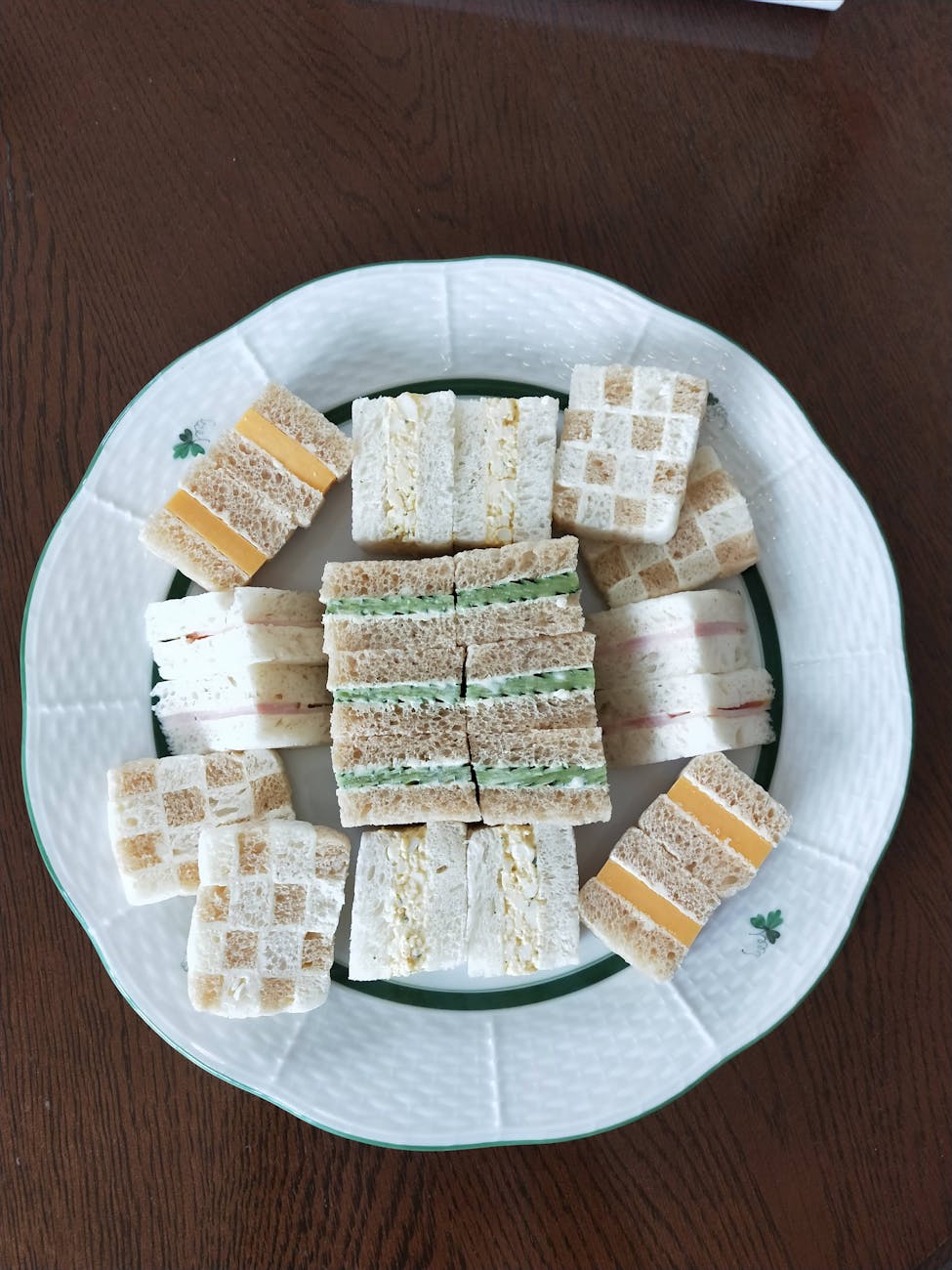
But there was one part of my job that always made me feel a little awkward, maybe because of my own background. You see, whenever the ballet company was putting something on at our regional performing arts center, it was my job to stand at a little desk outside of this place called the Founders Room; it was the VIP area reserved for top tier donors and their guests. The Founders Room was a luxurious lounge with elegant furniture and art and little trays of sweets and finger sandwiches set out for whoever got to come in. 

I was meant to stand there to greet our top donors as they arrived, but also to make sure that other people did NOT come in. The privacy and the exclusivity of the space was the point, of course, not just the finger sandwiches. 

But at nearly every performance, someone would come up to the door, or at the very least walk slowly past, peering in at the room and at the small group of wealthy people mingling inside…and a certain look would come across their face. It was some combination of curiosity and wistfulness, almost as if they knew it was not for them, but they couldn’t help wondering what it would be like to come inside. A few would ask me what it was, and I would tell them as graciously and apologetically as I could that, no, it was not open to them. You had to be on the list

So there I was in my cheap suit, like St. Peter at the pearly gates, casting the unworthy back down into the bowels of the lobby where they’d have to stand in line and buy their own finger sandwiches. 

And I have to admit, it just made me a little sad to stand guard in that way–to be the keeper of a party not everyone was invited to. I got tired of VIP lists and inner circles. Who knows, maybe that’s partly why I felt drawn to the priesthood in that season of my life.

Because the thing about church (at its best), and the thing about the Kingdom of God, is that everyone is invited to the party. With all due respect to St. Peter, at least this side of eternity there are no gates and guest lists—just one open door, one table, one host. And that’s the only way I want to live. That’s the only way I think we are truly meant to live. 

But for whatever reason, we struggle with this. Generation after generation, outside the church and sadly sometimes inside it too, we still find people standing at the threshold wanting to determine who’s in and who’s out. Maybe we even find ourselves buying into such notions from time to time. 

The rich young man in today’s Gospel is certainly one such person. Before we get too hung up on Jesus’ words about wealth, first we have to understand the mistake that this earnest man has made in his question about inheriting eternal life. And it is essentially his mistake is this: he has misunderstood the Kingdom of God to be something like the Founders Room.

He has learned, somewhere along the way, that God’s domain must be a private and exclusive place, reserved only for the virtuous and the successful, where there is milk and honey and trays of finger sandwiches as far as the eye can see. You just have to be good enough or holy enough or know the right people or pray the right prayer.

And we might shake our heads at the young man for his folly, but we also might want to be careful. Because while we might not be keepers of the law in the same way he was, most of us have bought in to certain standards and expectations and identities that we are convinced will help us solve the problem of ourselves. If we just try a little harder, if we just work at it a bit more, if we just buy that one thing or get that one particular ideology to win out over the others, then, then all will be well and our God and our neighbor will smile on us and we will have mattered. We will be on the list

And so we might imagine that rich young man approaching Jesus as if he were standing at that little desk in the lobby, looking in at the room beyond and asking, “Good Teacher, what must I do to get in?”

But here’s the thing, my friends. Here’s the thing that will save the world in the end. Jesus looks at him and loves him and says, in so many words, “my beloved child, that’s not the Kingdom of Heaven.” That’s not the thing you are seeking. Heaven is not a private reserve for the privileged few names on a list. And anyone who tells you that it is has fundamentally misunderstood the nature of God. 

God is in the hubbub of the crowded lobby, where people are standing in line for overpriced drinks and make new friends. God is out where little ones in ballerina dresses tug at their parent’s coats and dream big dreams and where people bump into each other say they’re sorry and where it’s all a little messy but there’s room enough for everyone. That’s where God is. That’s where heaven will emerge. 

And if you have spent your whole life storing up treasure and accomplishments and status symbols to try to wheedle your way into that little room, I’m telling you right now—you don’t have to do that anymore. Get rid of all that. Let it go. Come and follow Jesus out into the crowd as we all wait together for the dance to begin. 

But at least on this day, in this instance, well…I guess the young man really wanted to taste those finger sandwiches. So he goes away, shocked and disappointed, curious and wistful. We might hope and imagine that eventually he comes back. 

It’s funny…throughout the gospels, Jesus is actually somewhat ambivalent about money—he dines with and calls people from all sorts of backgrounds, he is noncommittal about those coins with Caesar on them and he is unbothered by costly jars of ointment poured on his feet. And he loves a good feast.

What bothers Jesus is when people decide that money is God, when we all know that love is God. He has pity on those who have forgotten this, and he has anger for those who knowingly exploit this lie to their own advantage, or to keep others down. But mostly, Jesus is patient, and he waits for us to realize our mistake and to follow him…and to discover where the true party is at. 

And you know what, St. Anne, I am grateful every day of my life that now I get to stand at that door each morning and say, unequivocally to every single person who passes through—you belong here. You are on the list, because everybody is. You are worthy, because there is nothing you can do to make God love you any less. All we have to do is step in and join the celebration and let the love and the hospitality that pervades this space make us more loving and hospitable, too. 

And that’s one difference about gathering pledges and donations for a community like this instead of what I used to do. Like the ballet, we, too, are committed to building something beautiful and lasting and inspiring and dynamic, but here we are not just audience members with varied levels of access. We are the art itself.

We are the practitioners of a love without gatekeeping, of a belonging without list-making, and a truth without exclusivity. That’s worth everything and anything that we can afford to give to it—our resources, yes, but most importantly, our hearts.

So I’ve let go of most of my cheap suits in favor of this priestly outfit that I don’t even own—an outfit that is pure gift. And I don’t stand at a little desk in a lobby these days, checking my list. 

Instead, I get to stand up here, by God’s grace, looking out at all of you. And it’s true, we might look up at this altar with our own mixture of curiosity and wistfulness sometimes, but it is my distinct pleasure to tell you: this is for you. It has always been for you. We don’t have finger sandwiches, but we do have the bread of life. And we have each other.

Come on in. 

Trailer Park: A Sermon for Christ the King

I preached this sermon on Sunday, November 26, 2023 at St. Anne Episcopal Church, West Chester, OH. The lectionary text cited is Matthew 25:31-46.

I think the holiday season, more so than any time of year, inspires within us the desire to catch a glimpse of a kinder and more compassionate world. There is so much harshness, so much sorrow, and yet right about now we bring out the lights and the wreaths and the inflatable lawn decorations as though to remind ourselves and others—or maybe, to insist to ourselves and others—that suspicion and gloom are not the whole story. That there is still beauty. There is still hope. And there is still a general posture of friendliness that we can assume towards our neighbor, despite everything else. 

But I have to say, the friendliest neighborhood I ever lived in—both in the holidays and throughout the whole year—was a trailer park in Santa Rosa, California. Yes, for about two or three years, when I was an adolescent, I lived in a small travel trailer on the outskirts of town, due to a complex set of family circumstances that are a whole other story. But the thing that’s on my mind this week is not so much about my reasons for ending up in the trailer park, but instead the extraordinary hospitality and kindness that I witnessed there among people who were, for various reasons, going through seasons of challenge and transition in their lives.

This was not a vacation-destination sort of place, but the kind of community you go to when money is tight and you don’t have any other options. Most of our neighbors were either paycheck-to-paycheck or getting by on even less than a paycheck.

But the remarkable thing—the thing that I have carried with me ever since—was that the people there were friendlier, more approachable, and more open to the stranger in their midst than any other place I’ve lived. These were folks who couldn’t even afford to put up Christmas decorations in their yard, but a mysterious light illuminated the place nonetheless. 

People would, without hesitation, invite you over to share some food, or would stop to have a chat while passing by your trailer, or check in on someone when they were sick or hadn’t been seen in a couple of days. The kind of attentiveness and care that feels almost quaint in this day and age.

Our neighbor, an older woman named Pearl, would peer out of her screen window, chain smoking cigarettes and eating Burger King, observing the neighborhood and dispensing her thoughtful insights about life in between puffs of cigarette smoke. Her eyes looked like they had seen more than their fair share of hardship, but they were gentle eyes. 

“I’m tiiiiired, man, I’m tiiiiired,” she would say in her Oklahoma drawl, but she was never so tired as to not invite me in for a visit, to ask how I was doing, to really listen to me, which meant a lot to an awkward 13 year old who had a lot of emotional baggage and who felt unseen much of the time.

I can’t say that I loved living in the trailer park, or that everything was easy there. And I don’t want to romanticize the desperate circumstances faced by so many of the folks who were living there. But I can’t deny that overall, my memory is one of kindness, of welcome, and of compassion. 

And it’s that final quality, compassion, that I think was the key distinction between that neighborhood and the other, more typical places that I have lived. Whether they thought about it in this way or not, the people in the trailer park lived with an almost instinctive sense of compassion towards their neighbors, because they knew that, no matter the reason someone found themselves there, they probably needed a little understanding, a little care. 

And they knew this because they, too, needed the same thing. There was a sense that, though we might be living in cramped quarters, making a home on cracked pavement, we were all in this together. And though yes, we were tiiiired, we were not alone. 

You know, it’s funny, this is Christ the King Sunday, and we expend a lot of energy in the Church pondering the mysteries of the Kingdom and what it’s like and who is part of it and how to get in, but I think in the end, it’s not as complicated as some make it out to be. 

To put it simply, I think the Kingdom of God is like that trailer park I lived in. Because the Kingdom of God, more than anything else, is a place shaped by compassion. And it glows with a light that is not dependent upon any season.

It has nothing to do with your material resources, this Kingdom of God. It has nothing to do with your nationality or your sexuality or your gender or your political party. It has nothing to do with the mistakes you’ve made or the wrong turns you’ve taken. If we are to take this morning’s gospel passage seriously, truly seriously, then the only criteria of the Kingdom prepared before the foundation of the world is that it is a place of compassion. 

Compassion for everyone we meet, including those whom the world tends to forget. Compassion for our enemies. Compassion for creation. Compassion for ourselves.

And the thing about compassion is that it is not the same as benign goodwill or charity. It is not someone sitting in a lofty place dispensing a favor to someone less fortunate. Compassion, the Latin root of which means “to suffer with,” is about experiencing the solidarity of human existence, of realizing that we all need each other, that we are all blessed by one another, and that perhaps those who have struggled, those who have experienced life’s challenges the most, will be the ones to bless us with a particular depth of wisdom. I have often found that to be true.

Compassion, in other words, is not saying “there but for the grace of God go I,” it is saying “by God’s grace, we are in this together. Let’s care for each other.” It is what Jesus embodied in his ministry and in his own passion, and it’s what he asks us to embody as well, if we would know what life is truly about, if we would enter the Kingdom where true life is found. 

So when we ponder the Kingship of Christ, and the Kingdom over which he reigns, and how we might seek it here and now so that we might be its inheritors in the age to come, then I will tell you this: it’s right in front of us. It is not reserved for the morally perfect or the privileged. To take part in God’s reign, simply look to cultivate a life of compassion. 

And the simplest way to do this? Look for the places in your own story, in your own heart, where there is a wound, a vulnerability, a hard lesson learned, that moment when you were hungry, or sick, or felt imprisoned by circumstance. In other words, recall a time when you needed compassion, and let that memory guide your actions. 

Find those who are doing their best to get by, who are tired, or who are struggling in a particular way that you understand, because you’ve been there yourself. And go be with them. Literally, go be with them at least once this holiday season. See how your own life is blessed and illuminated by doing so. 

And if you are the one struggling to get by this morning, if you are feeling unseen or lost, then simply imagine the God of the universe looking at you the same way Pearl looked at me all those years ago: with gentle, infinitely compassionate eyes, asking nothing of you other than to do your best, to not give up, to keep that beautiful light burning within you.

The giving and receiving of compassion. That’s it. That’s the Kingdom. Poor or rich, virtuous or broken, sheep or goat, in the end, compassion is the only thing that will show us what heaven looks like, what salvation feels like. 

And compassion is the only thing that will endure and live on when our selfishness and indifference and judgment—the stubborn goat that lives inside all of us—has been separated out from our long and complicated history and is burned up in the regenerating fire of God’s justice and love. And even then, yes, even then, on the other side of judgment, I believe that compassion will win out, and that something new will grow from the ashes of our failures, up from the cramped quarters and the cracks in the pavement where we’ve been trying to make a home. 

So, I don’t know what it looks like when you close your eyes and imagine the Kingdom of Heaven. Maybe it is a beautiful place, a perfect place, a place of twinkling lights and evergreen and streets gleaming like freshly fallen snow. 

But I will confess, for me, it looks a little bit like that trailer park, a place of open doors and broken hearts still beating, a place of no illusions and of deep strength. A place where everyone is welcomed, where every wayward soul has a place to call home. 

Like Pearl said, some days I’m tiiiired, man, I’m tiiiiired, and maybe you are too, but I think we’ll get there someday, and when we do, to be part of God’s reign forever, to meet Christ our King, to meet Jesus our friend, compassion will be the crown upon his head, and the whole earth will glow with its radiance. And so will we. 

Fisherman: A Sermon

I preached this sermon on January 22, 2023 at Trinity Episcopal Church, Fort Wayne, IN. The lectionary text cited is Matthew 14:12-23.

And Jesus said to them, “Follow me, and I will make you fish for people.”

My grandpa, like any person born and raised in the Upper Peninsula of Michigan, loved to go fishing. And in particular he loved to go ice-fishing.

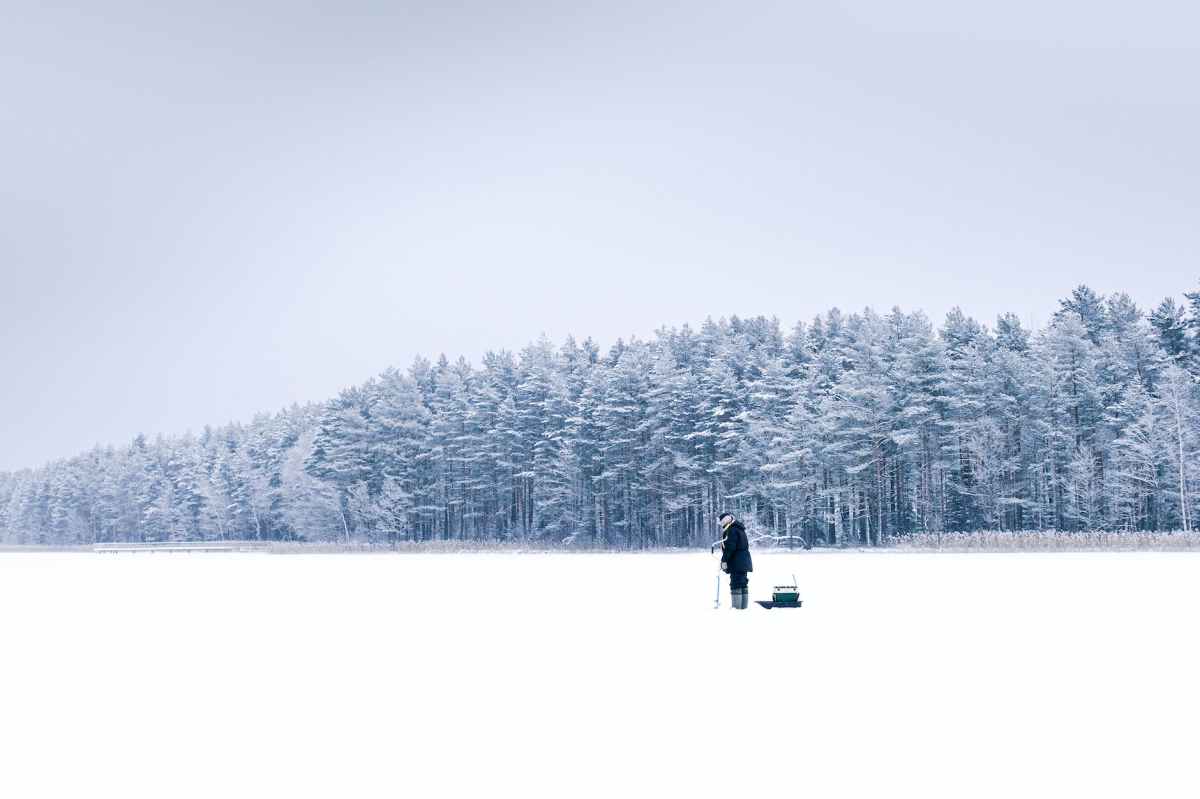
If you are not among the hardy (foolhardy?) souls who have tried this pastime, maybe you can still picture it: a frozen lake in the dead of winter, all sentient life wisely hibernating or hunkered down in a warm place. Except for the intrepid ice-fishers, who drag their shacks and their camp chairs out onto the quiet snow-blown expanse to drill holes in the ice and to sit—in bitter cold and in pensive expectation—waiting for a bite. 

I confess, the few times I went out ice-fishing with my family as a kid, I didn’t get it. I was bored and restless—and cold! I didn’t understand why anyone would willingly do this for fun, especially when you could just get fish at the grocery store. But then, I was a kid who grew up mostly in cities and in California sunshine, and the lake water didn’t run in my veins like it did for my grandpa. The stoic beauty of the ice-fisherman’s reverie was lost on me.

He would sit out on the ice, munching on a sandwich, sipping coffee from a thermos, contemplating the tree line, the sky, maybe his place in the universe; I was never quite sure. Sometimes he’d catch something, often he wouldn’t. He never seemed to mind. And truth be told, I think he liked the ritual of the trip to the lake—its sensations and its silences—just as much, if not more so, than bringing home a catch. 

Now you still aren’t likely to find me out on a frozen lake these days, but as I look back, I have come to appreciate not only the spare beauty my grandpa found in ice-fishing, but also how his going out onto the ice was, in many ways, an encapsulation of who he was in the rest of his life. The quiet and the deliberative spaciousness of ice fishing were the same qualities he evoked most other days, with his family and with his neighbors and friends. 

He had his hot-tempered moments, but for the most part he moved through the world with a gentle attentiveness to things and to people: content to be who he was, where he was, patient, not obsessed with the elusive big catch of one sort or another that many of us chase after. Maybe he had always been that way. Or maybe all those years of ice-fishing helped make him that way. I’m not sure, but I do know that it was a part of him.

My grandpa and his ice-fishing have been on my mind this week, of course, because Jesus, in calling the first disciples, finds a handful of fishermen by the Sea of Galilee and invites them, in a clever turn of phrase, to “fish for people” instead. It’s a beloved scene in the Gospels, but oftentimes I think we focus so much on the abruptness of the disciples’ response—how they seem to drop everything and follow Jesus on the spot—that we don’t spend a lot of time pondering what they were doing beforehand: namely, their original vocation as fishermen. I wonder, though, why Jesus singles them out, these men on the shore, among all the other people he might have invited into his circle. 

Was Jesus calling them just because they happened to be there, without regard for their previous life experience? Was he, in effect, asking them to become someone entirely new, or did he see some particular potential in these men with their nets and their boats and their weather-beaten faces?

Given who Jesus is, I like to think he saw something already formed in them after a lifetime of traversing open waters and mending things that are frayed and waiting, day after day, with persistent hope for an unseen harvest from the deep. I like to think he saw something that made these fishermen exactly the right people for the journey that was about to unfold.

Because I believe that who we are and what we have done with our lives, no matter how simple or quiet or humble, matters to God. It matters in the Kingdom of God. 

In the same way that my grandpa’s ice fishing and the rest of his life seemed to mutually inform one another, perhaps these Galilean fishermen already had what Jesus needed them to have as future apostles. Maybe their decision to follow him, as dramatic and abrupt as it seems, was not, in fact, a clean break from their past. It was not a rejection of who they had been, a rinsing off of the smell of fish and mud, but an embrace of what these things had taught them—it was the decision to trust that their lives, their skills, and their gifts might be brought forth in a new way for the purposes of God. 

Maybe Jesus did not call them away from themselves and their original vocation, but deeper into those things. For he did not say follow me and I will make you something other, something better than a fisherman, but follow me, and I will make you fishers of people. In other words, I will make you the fullness of who you already are.

And so those fisherman had the courage to follow him away from the shore because they knew that they had what they needed within them; they were already enough. And if that is so, then perhaps we have what we need, too, perhaps we are already enough for wherever God is calling us to go. Not running away from ourselves but going deeper into ourselves so that we might embody what God created us to be.

And I know all of us, myself included, have parts of ourselves, parts of our story, parts of our personality, parts of our past, that feel worthless, parts we would just as soon leave behind. The embarrassments that enmesh us in a net of shame. The regrets that linger on us like the scent of lake water. The things that prevent us from believing we have anything of value to offer. 

But Jesus is standing there, seeing all of it, knowing all of it, and he is saying, yes, you. I’ve been looking for someone just like you. Follow me. Follow me as you are. Follow me with what you have, no matter how great or small. Fishermen, follow me. Tax collectors, follow me. Saints and sinners, follow me. The mighty and the lowly; the famous and the forgotten; everyone, follow me— for everyone is needed where we’re going. And all that you have been and known and done will be gathered in and it will be made purposeful, it will be made beautiful by my love. It will be more than enough. 

That, in the end, is what I learned from my grandpa and how his quiet, patient days fishing on the ice spilled over into his quiet, patient life: to trust in the sufficiency of who you are; of what you love; of what you know. Trust it to guide you, with God’s help, into what you do not yet know. Trust that God is already at work in the small things of daily life, shaping you for the vast and timeless purposes that only God can truly understand. 

And regardless of whether it is ice-fishing or mending nets on the shore of Galilee or raising your kids or caring for your neighbor or striving for your daily bread, whatever it is that has formed you into who you are today, trust that you are ready to respond when Jesus calls you. You are ready and able, not in spite of your life but because of it, because every life has potential, every one of us shimmers with the possibility of God’s glory, like ice glittering in the sun. 

Follow me, Jesus says, and I will make you fish for people.

So follow him. And let him show you the blessedness of who you can still be. The blessedness of who you already are.