This is How it Ends: An Easter Sermon

I preached this sermon on Easter Day, April 20, 2025 at St. Anne Episcopal Church, West Chester, OH. The lectionary text cited is John 20:1-18, Mary’s encounter with the risen Jesus in a garden.

This is how it ends. THIS is how it ends. 

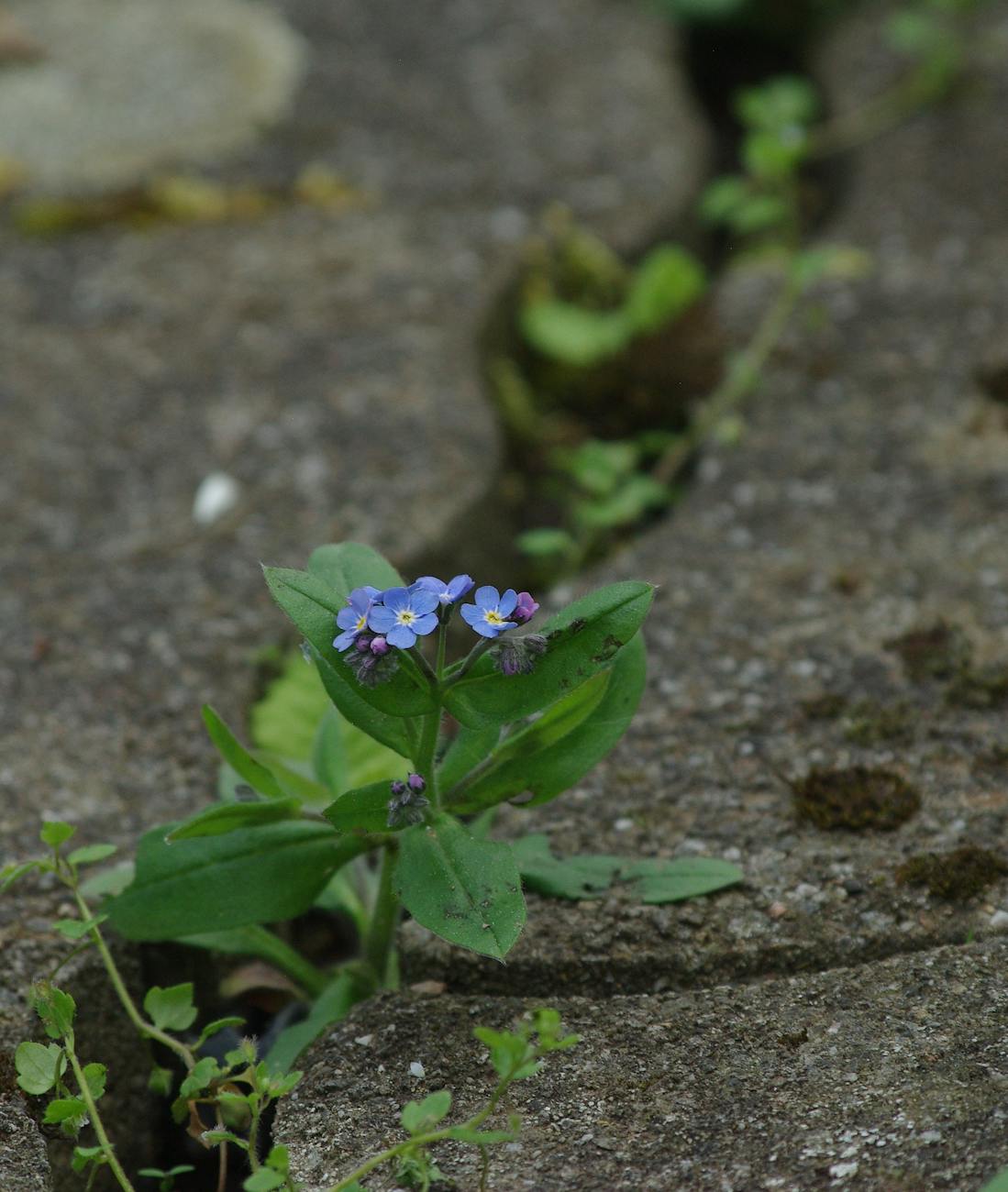
Take a look around you—at the morning light, at the flowers, and the flame that burns, refusing to be overtaken by darkness. Bathe in these rolling waves of alleluias, all of us here, together, finally, on the edge of a new day, standing in the risen light. If you take nothing else away from this moment, from this season, from this life, just hold on to the revelation all around you now: this is how it ends. 

Whatever else has ended, or is ending for you, or in this world, this is how it ultimately ends. Whatever you are afraid of, or angered by, or regretful of, take heart, because this is how it ends. Whatever grief you carry, whatever wrongs you can’t take back, whatever words you never got to say, this is how it ends. Whoever you have lost, whatever parts of yourself you have betrayed, whatever you are still trying to find, this is how it ends. Whatever seems to be falling down around us or fraying apart at the seams: remember, and believe, and taste and see, that this is how it actually ends. 

In this line of work, every day I hear and I feel, underneath all the words spoken and headlines blaring and the anxieties that pervade our church and our country and our time on this fragile earth, every day I hear the fear of endings. I hear that we are “in decline”, that we are losing ground, that we are coming apart, that everything we’ve loved and worked for is leaving us. 

I hear this across all spectrums of identity and ideology and outlook and circumstance. We have all been seized by this sense of an ending, a bad ending, and like Mary Magdalene we are, many days, stooped over by the weight of our tears.  Like her, we are wailing at the angels to give us back the things we love most, the things we cannot bear the ending of. 

But why are you weeping? Look around you, and see, and know again, or for the first time, the truth of Easter: this is how it ends

Whatever breaks, whatever dies, whatever unravels in us and around us—that is not the actual ending that God has in store for us. This is. Because our God is the God of Love and Life, our God is an Easter God, and we are Easter people, and on this clear and fragrant morning our Living, Loving Risen God emerges from the darkness, up among the flowers like a gardener, asking us to look, to look, and to see how the first green shoots of this new and deathless creation are rising right up all around us, right out of the wreckage of all those dreaded endings we fear.

So look! Stop your weeping and look!

Now, I love this moment of reunion between Mary Magdalene and Jesus; I find it one of the most poignant in all of Scripture. But I have also wondered sometimes if Mary felt like she got the brush off from Jesus. He’s in an awful hurry. 

Here she is, the only one who stuck around after the men left and went back home, here she is crying her heart out, suddenly reunited with her Lord and teacher and friend, and then through her blur of tears and joy and relief, Jesus is just like, “Girl, bye! I’ve got places to be. It’s Easter; I’ve got brunch plans. I love you, Mary, but kindly extricate yourself from my person.” 

Well, maybe he was a little more pastoral than that. But he doesn’t stick around long enough to explain or even to instruct. Because how can you really explain all of this. He simply needs her to look, to see, for that briefest, most crucial moment in human history: to see that, whatever has us bowed down in grief, this is how it ends. With you and I, and him, and everything alive, redeemed, renewed—and united with the One who made us. And on that day, oh what an Easter brunch it will be.

And this is important, especially now: that this glimpse, this Easter day that shows us how it all will end: this is meant for something far more than consolation. It is meant to EMBOLDEN us. It is meant to make us a little brave, a little feisty, because this ending means that we are free. We are free from despair. We are free from shame. We are free from death. We are free!

And Mary, well, she gets it. She understood the assignment. Because out of that garden she goes—she goes and she announces—she PROCLAIMS what she has seen. Oh yes, if you hadn’t noticed, the first APOSTOLIC PROCLAMATION of the risen Lord…the first human heralding of the new creation…is borne on a woman’s lips to the men hanging out at home. 

Because what has been cast down is being raised up and blessed are those who mourn for they shall be comforted; and blessed are the pure in heart for they, THEY shall see God; and blessed is she who has believed that the Lord would fulfill his promises to her!

And as Mary goes along proclaiming, mind you, the world still looks the way it always did. Caesar is still on his throne, and Pilate is in his judgment seat wondering what truth is, and the crowds who called for crucifixion still know not what they have done. And all around are all of those usual endings, endings, endings, and falling temples and crumbling nations. Oh yes, we’ve been here before. 

But Mary? Mary is emboldened now, because she stands at the center of a new world, she has seen, before anyone else, that this is how it ends. And when you know that this is how it ends, you can do anything that love requires, because there is nothing left to fear. 

Friends, Easter is the feast of fearlessness. It is the feast that invites us to not just cling to the hope of some good news someday, somehow, but to see it here, now, alive, in front of us and around us. It is the feast that asks us to stop wailing at angels, and to dry our tears and hike up our garments and chase after that good news. Proclaiming as we go this thing, this Person, this Risen One, this new world that we have glimpsed. 

And as we go, if we run into those petty tyrants of every age and the structures that prop them up, we will laugh, and we will stand in the streets and tell them: NO. You have no ultimate power. Because this is how it ends!

And if we see our beloved church changing through the years, we will cry out joyfully: it will be ok, because we are not limited by institutional realities, we are proclaimers of the Gospel of the Risen Lord, and this is how it ends!

And if we must say goodbye to each other along the way, as we certainly will in time, then we will say goodbye with tears and with tenderness but also with hope, because we know that this is how it ends. 

And frankly, even if society were to fracture all around us and we had to stand on the rubble of what has been built, even then, even then, like the generations before us, even then we will look for that green shoot rising up at the mouth of the empty tomb and we will point and say, LOOK. This is how it ends!  I have seen the Lord and this is how it ends!

Just like this. With love and truth and possibility, and resurrection, and a day that is not actually an ending at all, but a beginning. Look around you. This is the first glimpse of a new heaven and a new earth, with flowers, and a flame that will not be overtaken by darkness, and a torrent of unstoppable alleluias, and all of us together, finally, fully, always. 

So why are you weeping? This is how it ends. 

Trick or Treat: A Sermon

I preached this sermon on Sunday, October 27, 2024 at St. Anne Episcopal Church, West Chester, OH. The lectionary texts cited are Job 42:1-6, 10-17 and Mark 10:46-52.

Every year about this time, I come up against two things that are both true and yet are hard to reconcile with one another. The first is that Halloween was my absolute favorite holiday growing up and is still something I find great joy in. And the second is that 12 years ago, my father died on Halloween.

For a long time I didn’t really know what to do with that.

Even many years on, now, when this season comes around, that intersection of nostalgic pleasure on one hand and lingering sadness on the other strikes me as a very strange thing. But it also strikes me as a very true thing about life. It is the time of year when I’m reminded that the very good and the inexpressibly hard always brush up against one another–fairy princesses and ghosts both knocking at the door.

Halloween is when I realize that grief and joy are not a binary choice I can pick between, but two companions who have different things to teach me. We navigate the autumn, the three of us–grief and joy and I–and so I have found a new way of being in this season.

Because as much as I used to love it, I am well past the age of going trick or treat; instead I’ve come to that point when one learns that both treats and tricks arrive in our tentatively outstretched hands as the years go by. The key is to keep our hands and our hearts open anyhow; to trust that, with God’s help and with each other, we can sift through whatever is given.

That’s easier said than done, though. 

We live at time in which the general tendency is to see grief and joy as enemies of one another, as a sort of zero sum struggle, and this false binary has all sorts of dangerous implications.

For example, we get caught up in partisan divisions which suggest our grief and grievance must be satisfied by destroying the joy of those who are different from us. 

At times our public discourse cannot bear subtlety or compromise, as one group seeks to maximize its pleasure and discount its perceived enemy’s pain.

Or we find ourselves caught up a brittle, toxically positive culture that frames joy as the absence of sadness or weakness, suggesting that something is wrong with anyone who dares to weep or crack or mess up or show fear. 

And when this happens, we become a shallower, meaner, more haunted society.

We have been here before, though. Just read the story of Israel. Read the Psalms, including the hard parts our Sunday lectionary leaves out. Read the Gospels. The wisdom of our spiritual forebears, the wisdom of Scripture, has always understood that fullness of life–this thing that Jesus speaks about and wants to invite us into–is a space which gives voice to every human condition, and that the only way to approach God is to move toward that strange crossroads where joy and grief coexist.

Consider, for example, the culmination of the Book of Job, which we heard today. At first glance, it might sound almost like a fairy tale, a sweet treat for frightened children—a tidy, happy resolution where this poor man gets back even more than what was taken from him. 

Except when we stop to consider the fact that his questions to God never did get answered, and that his new wealth and his new children will never erase the pain of what he has been through, not really. 

Anyone who has suffered loss will recognize this: that Job must learn to live out his days somehow with both grief and with joy, and it is only in the holy tension of these two that a new sort of blessedness is visited upon him, one that is deeper and wiser and more alive than that of earlier, simpler days. 

We come to realize that Job’s story is the journey of the soul’s movement toward God through the ambiguities and complexities of life. 

And something similar is revealed in the story of Bartimeus, the blind beggar, healed by Jesus just before his own final entry into Jerusalem. Unlike the rich young man and the ambitious disciples we’ve heard about in recent weeks, Bartimeus has no illusions about life. His experience at the margins of society and his close intimacy with sorrow have shown him what seeing eyes could not see—that the true disciple of Christ is no prosperity gospel status seeker but the one who is unafraid of darkness. 

Like Bartimeus, the true disciple, though they cannot see God, calls out anyway, saying walk with me, God of grief and of joy, let me follow you wherever you might go, let me see everything, for the first time, as it really is, not just what I am accustomed to seeing. 

Show me who you are, God, and reveal who I am, too, and though we are long past a transactional trick or treat sort of faith, let us see what good might yet be done as we go wandering together in this night strewn with tears and candy wrappers. 

Because let’s be honest with ourselves—that is the world we live in. That is life, in all its bittersweet complexity. 

I know, especially in this election season, a lot of us are struggling to manage a lot of feelings at once these days—fear, anger, anxiety, uncertainty, hope, gratitude, determination. We have many good reasons for this, personal and political and cultural. But one thing that we cannot lose sight of as we navigate the next few weeks or months or years is that no single one of these emotions is the whole story. 

Beware of anyone who wants you to tap into only your anger, only your fear, or only your craving for the sweet things in life. The only way that we can be faithful, purposeful, authentic disciples of Jesus is to carry all of it with us: the sadness, the delight, the gratitude, the humility, the resilience.

Being Christian, following Jesus, means we aren’t trick or treating anymore—we don’t get to choose just one thing or the other—strength or compassion, patriotism or prophetic witness, righteousness or relationship. Resisting idolatry, whether of nation or party or religious institution or even of our own identities means standing in that crossroads of understanding with Job and Bartimeus and Jesus, guided into a deeper sense of empathy and connection with one another above all else.

If you haven’t realized this already, I hope you will understand that one point of a parish like ours is that it’s a place where we practice this together. Church is like a workshop for the heart and soul, where we try out this honest relationship with grief and joy, with each other and with God, so that we can go out and do that same thing in the rest of our lives, in this world that so badly needs it.

I am grateful that the church, that this church, can be such a place. I am grateful that Jesus in the fullness of his gospel makes space for everything that we are, and everything that we have lost, and that he does this for everyone. 

It helps make the strange collision of all my Halloweens—and any other haunted seasons of our life in this world–a bit easier to bear. A bit easier to keep going, to keep hoping, to keep believing, no matter what comes next, whether trick…or treat.

The Table: A Sermon For All Saints

I preached this sermon on Sunday, November 5, 2023, the observance of All Saints’ Day at St. Anne Episcopal Church, West Chester, OH. The lectionary texts cited are Revelation 7:9-17 and Matthew 5:1-12.

It’s in storage at the moment, but I am in possession of a rather unusual coffee table that my mom bought years ago. At the time, she was a young woman living in northern California, and one day as she was driving along, she saw a random man just sitting there on the side of the road selling furniture made out of oddly shaped pieces of reclaimed redwood. Apparently this was *totally normal* in the 70s in California, so she stopped to take a look and ended up going home with this particular coffee table, and it’s been handed on and passed down ever since. 

Now I will admit, it is not the most useful piece of furniture. Because it is made from an irregularly shaped slab of wood, you can’t really put much on top of it, and the base is a little bit wobbly, and I’ve lost a few cups of coffee off of it and I’ve banged my shins on its jagged edges more than once in the dark, evoking some colorful language on my part. 

But as impractical as it might be, I will never give up that table. Part of that is sentimentality of course; but also because the wood itself is so beautiful. The man who made it put a protective polish on it, but you can still see the deep, natural, rich hue of the redwood, the undulating grain, the nicks and the scars, the dark glow of its inner luminosity. In all my life, I have never seen another table quite like it. And so someday, when Matt and I have a house, I’ll hopefully find some corner where we can set it up with minimal risk to our shins. 

What I love most about that table is that when you look at it, you can see its source. You can see the tree that formed it, the very shape of its origin, the textures and the imperfections acquired by its life in some long forgotten, cloud draped forest. You can see all the things that, when we craft something, are typically glossed over, shaved away, painted and and stained and hidden in the pursuit of a uniform perfection. 

And it might sound strange, but I pulled out that table and looked at it this week as I was reflecting on the Feast of All Saints, which we are observing today. All Saints is, itself, a bit of a quirky object with a few jagged edges. One one hand, it’s, of course, a day when we call to mind the saints—people in the distant and recent past who, by some measure, experienced a particular closeness with God and God’s mission in the world. On the other hand, we also incorporate into our observance bits and pieces of All Souls Day, recalling the beloved dead, saintly and otherwise, who have populated our own past and whose memory lingers, sometimes a comfort, sometimes a painful thing we stumble up against in the dark. 

And so in this one day we have a whole range of themes, references, and feelings to try and make sense of: a bit of joy; a pang of grief; a sense of calling toward something profound and eternal; and yet a lingering doubt about how to do so when life feels so temporary and fragile.

Our scriptures appointed for the day are similarly confounding. We are given a startling depiction in Revelation of martyrs in blood-white robes before the throne of God, an image that feels both vivid and yet impossibly remote from our day-to-day reality, where blood tends to stain a different color. And we are also given the deceptively simple Beatitudes of Jesus—equally vivid, yet equally remote once we try to figure out how to practically live them out. I have not yet figured out how to determine whether I am sufficiently poor in spirit or pure in heart.

But that confounding quality, that ambiguous, jagged beauty, is, I would argue, the point of this feast, because All Saints, in requiring us to grapple with grief and gratitude and hope all at once, is about reclaiming purpose from those things in our lives that are raw and unstructured and unvarnished, those irregularly shaped experiences we carry with us. 

And at its core, All Saints’ wants to teach us that these things are not an obstacle but an answer; that sainthood is not something neat and tidy and peaceful; it is about the courage to reconnect with the deep, untidy, God-given authenticity within us, whether in this life or the next.

Because death and sainthood have something in common: they are both a sort of returning back to God, a stripping away of the cheap veneer, the paint and the pretense. The dead and the saints both experience a reconnection with that mysterious divine power which created all things. 

The saints remind us that we can make this return even while we live, that by prayer and service, we can scrub ourselves down to the essential substance of which we were made, revealing the undulating grain, the dark glow of God’s inner luminosity in our very flesh. 

But the dead remind us that even if we fail to return to God fully in this life, we will nonetheless, by God’s grace, do so in death, our souls restored to their original character, abiding in God like a stand of redwoods in a clouded forest. Everyone we have ever loved and lost is there now, standing tall and graceful, embedded back into the fabric of life itself, awaiting the day of a new creation when we will be fashioned into something even more honest, more complete.

And so if we read the Scriptures from this vantage point—that sainthood is not about wearing a  golden halo but about the reclamation of our raw, inner radiance—then the texts reveal something important, something that my quirky old coffee table also seems to tell me whenever I look at it: our life of faith is not about acquiring layers of lacquer and gilding; it is not about being whittled down into something that barely resembles us; it is not about the straight line or the perfect edge. It is about the surrender to an organic, unbridled sort of beauty; it is about showing forth something of our eternal origins; it is about reminding all who gaze upon us, even with our nicks and our scars and our unsteady legs and our jagged edges, that we bear the image of the One who made us.

Which means that the Beatitudes are not, in fact, a checklist for achieving sainthood: they are the promise that even when bad things happen, even when all else is stripped away from us, our intrinsic blessedness will shine through. 

And that image from Revelation is not just a remote tableaux of lofty, saintly figures in white; it is the promise that even when we bleed, even when we die, in Christ we will be revealed as what we always were: vessels of pure, divine light. 

So my advice, for all of us, is to let All Saints be what it is. Let it be a little rough around the edges. Let it be delightful and let it be sad. Let it inspire a glance towards heaven and another down towards the dark earth where our loved ones rest. We will say their names and we will sing our songs, and maybe it will all be a little bit wobbly, a bit of a stumbling hazard, but it will be so very honest, so very meaningful, as all real, unvarnished things are. 

I know I will never meet that mysterious man on the side of the road who was selling that redwood furniture, but if I could, I think would ask him, what inspired you to try and make something useful out of such rough, unruly, imperfect materials? Didn’t you know it wouldn’t quite work? Didn’t you know we would stumble in the dark and hit our shins and that it would hurt, that we would curse the ground we walk on? 

But, at least in my imagination, I wonder if he might look back at me with a dark, gentle glow in his eyes and say, 

Blessed are the ones who see the beauty in what is unruly and imperfect. 

Blessed are the ones who love such things anyway. 

Blessed are the ones who stumble and hurt and keep going. 

Blessed are the ones who live. 

Blessed are the ones who die.  

Blessed are the jagged-edged and the real and the saintly. 

And blessed, too, are the ones who simply try.

Prize: A Sermon

I preached this sermon on January 23, 2022 at Trinity Episcopal Church, Fort Wayne. The lectionary text cited is Luke 4:14-21, where Jesus speaks to the community at Nazareth.

I don’t know if they’re still on, but when I was a kid watching television, I would always see those commercials for Publishers Clearing House…you know, the ones where it would show people answering the doorbell and being greeted by an entourage carrying one of those huge checks for a huge amount of money. They showed the people crying and jumping up and down with joy, all of their problems having been seemingly solved by this incredible prize appearing out of nowhere.

Now, we didn’t live in poverty when I was young, but there were lean times for a whole host of reasons, and I came largely from a working class family, so the idea of never having to worry about money, to not have to live paycheck-to-paycheck, was a tantalizing idea that seemed reserved for other families. So I would daydream a bit about what it would feel like if one of those prize committees showed up at our front door—what it would be like to see that check with OUR name on it, to suddenly live without that pervasive, gnawing fear that there won’t be enough. 

And one day, when I was probably 12 or so, we actually got one of those envelopes in the mail from Publishers Clearing House—we had been “selected” to enter to win a prize. Now of course this was no more likely than winning the lottery, but I wanted it so badly to be true—I wanted to believe that we had a chance. So we filled out the entry form and I put it in the mailbox and we waited…and waited….and waited.

I’m still waiting, by the way. I have to believe that because I’ve moved so many times they’ve just not found my current address, and that surely that prize check will find me one of these days.

I tell you about all of this because I wonder if it was a little like that for the people in Nazareth in today’s gospel passage. Struggling to get by under Roman occupation, struggling to get by as a people for as long as they can remember, really. And they’d submitted their supplications to God over the centuries, they’d cried out for some help, and they were waiting, waiting, waiting for that prize to finally show up—the One who would make it possible to live confidently, the One who would fix things, the One who would make the waiting worth it. 

And then, here is Jesus, one of their own, and he tells them something wonderful: he quotes from the prophet Isaiah, speaking of good news and abundant healing and the year of the Lord’s favor—the jackpot, really, the big prize check from God saying “it’s all going to be all right now,” and then Jesus says: today, this Scripture has been fulfilled in your hearing.”

Well, Hallelujah! Break out the balloons! It’s as though Jesus has come to the door, and he’s heaven’s prize committee, and he’s got the solution—in fact, he IS the solution.  I bet a few people in that synagogue, shocked as they were, wanted to cry and jump for joy. 

Have you ever wanted something so badly that you can almost see it, almost feel what it would be like to have it? Have you ever wanted something so badly that it haunts you? I imagine that is what it was like for those people in the synagogue at Nazareth, and here, for one brief moment, they begin to hope that their time has come. That happy days are here again.

But you and I know that’s not exactly how the story ends. It’s a little more complicated than that. Because Jesus goes on to tell them, essentially, that God’s favor, God’s imminent redemption, God’s big victory prize, is not at all what they expected. In fact, it’s not even necessarily for them. He reminds them that when God responded to famine and disease in the past, God sometimes bypassed Israel entirely and bestowed gifts on other nations. 

That would sting. It’d be like opening the door to that prize committee and realizing after a few minutes that they got the wrong address—the check is actually for that neighbor down the street that you can’t stand. So close, yet so far.

So I feel for the people of Nazareth a little bit, even if they do try to throw Jesus off of a cliff. They didn’t really understand yet. They were waiting desperately for a prize, but instead they got a gift—a Savior, entirely unlike the one they expected—the Savior, of all people, everywhere. A gift so big, so incomprehensible, that it didn’t even register as valuable to them right away, or maybe ever.  And so we see them there in the narrative of the Gospel, forever locked in that moment at the edge of the cliff, still waiting, waiting, waiting for the prize they expected, not recognizing the gift that showed up. 

We are liable to do the same thing. It is so easy to look back and measure our lives by whether we got what we wanted–what we expected should be ours. The problem with that, of course, is that we never get everything we want, and even when we do, it’s usually not quite what we’d imagined. So we, too, might find ourselves waiting at the edge of that cliff for our whole lives, shaking our fist at heaven, cursing our dashed hopes. 

Or…we can turn around, and look what what is right in front of us: Jesus. And one another. The true gift. Better than any prize we could win. He has already arrived at our doorstep, sometimes dramatically, sometimes quietly, but he is coming, he is there, I promise he hasn’t lost your address.

And while he’s not carrying a big check, he is offering himself to you—all that he is, all that he has, all that he signifies. The question is, will we accept him, will we recognize that he is what we have been waiting for, or will we spend the rest of our days waiting for something that we imagine to be better?

I assure you, that thing is not coming. 

The Spirit of the Lord is upon me, because he has anointed me to bring good news to the poor. He has sent me to proclaim release to the captives and recovery of sight to the blind, to let the oppressed go free, to proclaim the year of the Lord’s favor.

Today–and every day– that you encounter Jesus, and every day that you love one another in the name of Jesus, this Scripture, this longing, this promise, has been fulfilled in your hearing. It won’t take away all our worries, but it will show us what actually matters. It will guide us—all of us—into that peace which passes all understanding—a peace that no amount of money can buy.

You’re here. You’re loved beyond measure. You’re free. 

So congratulations. You’ve won. 

Holy Week at Home #8: Easter Day

The final installment of my “Holy Week at Home” posts; a meditation on happiness and joy in a season when both feel harder to inhabit. Yet still we say: Christ is Risen! Alleluia!

Something I am continuing to discover is how joy and happiness are not the same thing. And on this particular Easter, when the usual signs of celebration are absent or muted by grief, understanding that distinction feels more important than ever.

Happiness is precious and usually comes, in its purest form, unbidden, from humble things. A flower blooming, a familiar voice, a gentle hand outstretched. But happiness also vanishes as quickly as it comes, and cannot be pursued. We must learn to hold it gently, and then let it go.

Thus I think of Mary Magdalene encountering Jesus in the garden on Easter morning. There is a flower and a voice and an outstretched hand, yes, but also this: “Do not hold onto me, because I have not yet ascended to the Father, to my God and your God.” This happiness is only momentary. Resurrection is not just reunion. It’s also letting go.

So, we must consider what we mean by joy, and Easter joy in particular. Not mere happiness, but perhaps, instead, a fullness. Fullness of life. Fullness of presence, both God’s presence and our own. A fullness that contains happiness, yes, but also grief, and confusion, and wonder, and mercy, and everything else that emanates from the deep heart of Life. A fullness that sustains us even when our pleasures feel meagre, as they sometimes do.

As we live into the reality of this unusual Eastertide, I find myself kneeling in the garden with Mary Magdalene, having experienced such a collision of grief and happiness that my soul feels stretched beyond its capacity. But I am choosing to trust that in the stretching, there is the shape of joy. In the stretching, Christ is forming me into something new. Something that can contain a bit more of the vastness of God’s dream, wherein Resurrection finds its source and endpoint.

Blessed Easter, dear friends. I wish you happiness to soothe your spirit. And I wish you joy, that each of us might become who God made us to be.