Greater Things: A Sermon

I preached this sermon on Sunday, January 14, 2024 at St. Anne Episcopal Church, West Chester, OH. The lectionary text cited is John 1:43-51.

This past week, we were in the process of finding a new person to clean our church buildings here at St. Anne, as our previous cleaner has moved on to other endeavors. And Greg, who graciously coordinated our interviews for someone new, joked to me in the midst of all of it that perhaps an exploration of cleaning services would work their way into this week’s sermon. 

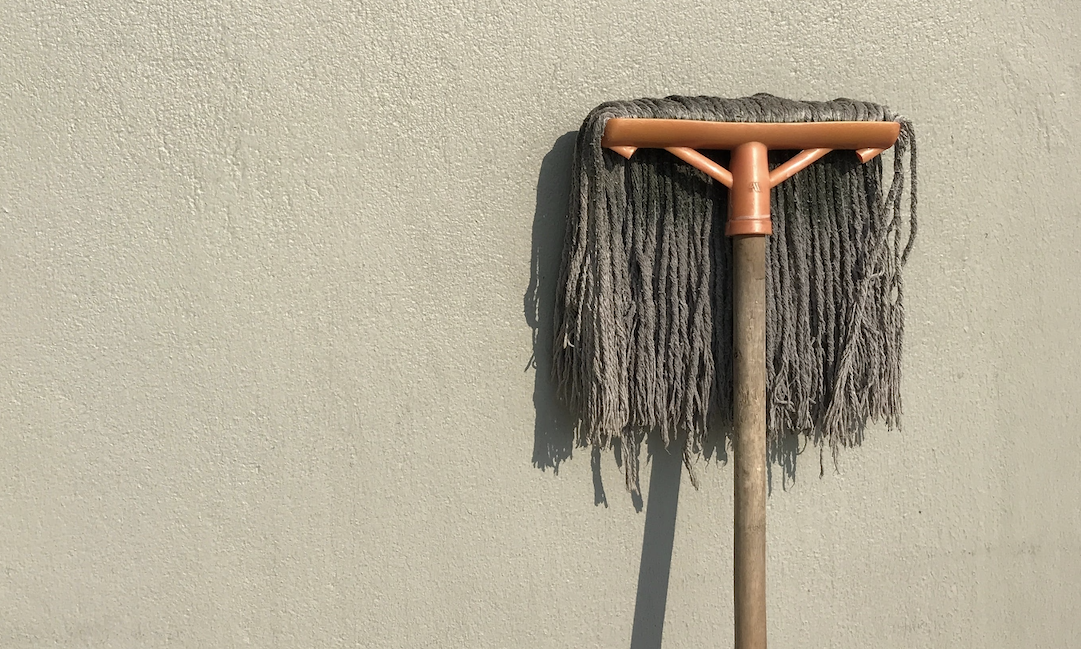
So I was reflecting on this week’s Gospel passage, where Jesus is calling his disciples and then encounters Nathanael (who, by the way, most scholars agree is another name for the apostle Bartholomew)…and I know Greg was kidding… but I got to thinking…and yes, actually, there is a connection to be made. Really, when you come down to it, everything we do, everything that we encounter, for good or ill, the sublime and the mundane, is an opportunity to look for God looking back at us—you can indeed glimpse the Kingdom of heaven hidden among the mops and brooms and cleaning rags. 

My grandpa was a janitor for many years up in Michigan—he would clean the school buildings in the nighttime, when the halls were empty and the classrooms silent. He used to tell funny stories about some of his coworkers, and a few scary stories about things that went bump in the night in those old buildings. 

And even though, in that role, he was not necessarily seen or lauded by any of the students or teachers or administrators, and even though he never made a ton of money, it was clear that he took pride in his work, and that he knew that what he did was something that mattered—one of those hidden-yet-essential roles that keeps things going day after day, year after year.

The people like my grandpa, and like all those who clean up and repair and fix and tend—like our cleaning staff and like our sexton, Tim, and like many of you who volunteer to keep this place standing—these are the saints behind the scenes, the ones upon whom we all rely. 

Creation groans, and empires rise and fall, and the future might feel uncertain, and existential angst might swirl about like winter snow, but somewhere, at every hour of the day, there is someone who is nevertheless salting and shoveling the walks and mopping the floor and sweeping up the shattered pieces and doing all of the other little tasks that seem to say: this is what hope looks like. Because things may break, but it’s worth trying to put them back together again. And things may become a mess, but it’s worth scrubbing them down and starting anew each morning. 

My grandpa cleaned those school rooms knowing, of course, that they’d be dirty again the next day, but he also knew that future generations were being educated and formed in those hallways, and so I think he hoped to do his small part. He wanted those floors to gleam with the promise of what they carried. 

And it is a beautiful, sacred thing to care with such dogged persistence for some place, for some thing, to keep cleaning up the forgotten corners that gather dust and to mend the things that wear out.

We care for broken pipes and furnaces, just as we care for broken hearts and spirits—even though we know, in both cases, that the breaking is inevitable—because the caring itself is an act of resistance against the forces of decay and despair. It is a sign of our faith in a future time and place and reality where all of those small, loving, unremembered practicalities will have mattered, that they will have amounted to something greater than the sum of their parts, that they will be revealed, in truth, to have been the very foundation of the world.

For our lives have taken shape upon a thousand different floors that were mopped and swept by unseen hands. We have been  fed by the labors of people we will never see, liberated by the sacrifices of names we will never speak. Our world is sustained by so many things—so many gestures of care and selflessness and quiet courage—that we tend not to see. 

And in that sense, Nathanael in today’s Gospel is a bit like all of us. He is, we presume, a man who is keenly interested in knowing the Messiah, in experiencing for himself the way that God is going to act and manifest his glory in the world. 

But Nathanael, like many of us, is looking for the obvious, impressive sorts of signs. And upon hearing about this nobody named Jesus, from a small village in an unremarkable region of the country, Nathanael is decidedly not impressed. “Can anything good come from Nazareth?” he asks. Can the world be saved by a carpenter and his ragtag group of friends? Will oppressive empires fall to the power of the saw and the broom and the fishing net? Nathanael thinks not. 

It is only when he thinks Jesus has some superhuman psychic ability—claiming that he saw Nathanael sitting under a fig tree before they ever met—that he starts to get excited. Maybe this Jesus does have some impressive tricks up his sleeve after all. Maybe he is about to reveal himself as a mighty king in hiding, and the whole humble carpenter thing was a just a costume, a front for the real sort power that God’s Son must surely wield.

And then Jesus says to him, knowingly, lovingly, devastatingly—do you believe because I told you that I saw you under the fig tree? 

Do you still believe that God is like a magician?

Do you still believe that prayer is like a parlor trick?

Do you still believe it is the impressive, obvious forms of power that will save the world? 

Do you still believe that the Messiah will be like any other king, with swords and stratagems? 

Do you still believe that wars and the ones who wage them are the backbone of history or the gateway to an everlasting peace?

Do you still believe only in the world you can see in front of you? 

You will see greater things than these. 

You will see heaven opened you will begin to understand its true simplicity.

You will see the angels of God ascending and descending and the hidden, delicate interdependence of all creation and begin to understand true sustenance. 

You will see the tearstained faces of the oppressed and the marching of the peacemakers and the work of humble hands and the bravery of trampled hearts and you will begin to understand true blessedness. 

You will see the faith of the sick and the generosity of the widow and the fierce devotion of the parent and you will begin to understand true love.

You will see violence itself laid to waste, the nullification of the cross and the sword and the stone. You will see the dawn on the other side of death, and you will begin to understand true power.

You will see the unsung, unnoticed acts of care that renew the world each day and you will begin to understand true salvation. 

Do you believe because I told you that saw you under the fig tree?

Well, brace yourself.

Because you will see that, in the end, the world will indeed be saved by the carpenter, and the fisherman—and the janitor and the cook and the mechanic and the gardener. And empires will indeed yield to the power of the saw and broom and net and plow, because the most enduring thing in the world is the persistence of care, the unyielding dedication of the ones hidden in plain sight who clean up and patch over and refuse to let things fall apart—for they are the signs of the one true God, who is also hidden in plain sight, and who has been cleaning and patching and refusing to given up on us since the beginning of the world. 

The God who is, indeed, smiling back at us from amidst the mops and the brooms and the rags, who wants us to do nothing more than to care for what is in front of us, to fix what is broken, to make the world gleam with the promise of what it carries. 

Thanks be to God for the ones who already do this. Blessed are they. 

And, like Nathanael, blessed are we, when we finally see them. 

Pinky Promise: A Sermon

I preached this sermon on Sunday, January 7, 2024, the Baptism of Our Lord, at St. Anne Episcopal Church, West Chester, OH. The lectionary text cited is Mark 1:4-11.

This may not be a very popular opinion, but I actually love new year’s resolutions. Every December, in that odd lull between Christmas and New Year’s Eve, I find myself pondering what I might want do more or less of in the coming year. And I know for some this is a tiresome custom, but it honestly never gets old for me. When we are able to spend the holidays together, my mom and I have a tradition of writing down our resolutions on a scrap of paper on December 31st, reading them aloud, signing our names at the bottom, and then doing that most sacred gesture of commitment, a pinky promise, and then we tuck the piece of paper away into a wallet or bag for future reference. 

Now, truth be told, I usually find the scrap of paper sometime around June and have a look and a good laugh at my own expense, because undoubtedly my record at that point is mixed at best. I think I’ve been resolving to take up jogging for the past 20 years, and so far I’ve managed a fast walk. But I like to think of this less as a disappointment and more as persistent optimism. And 2024 is a new year—I did jog for about a minute on the treadmill the other day. Anything is possible!

But the thing that helps me—the thing that I have to remind myself, sometimes, in order to stay optimistic—is that while the goals and resolutions we have might indeed be worthwhile, and even drastically improve our lives, they do not impact our fundamental worthiness or value. 

What I have come to realize is that my mom and I are able to relax and enjoy making our lists and our pinky promises together, even if we know we will likely stumble along the way, because we know that even if we have fallen short of every single resolution by next December, it will still be ok, because it is the dreaming together and the trying that matter. 

The pinky promise that we make, I think, is more about saying—we promise we’re in this together, for good or ill, come hell or high water, no matter what happens through the turning of the seasons. It’s the sort of promise that is stronger and more enduring than any failure, because it is rooted in love. 

I think we sometimes have a complicated relationship with resolutions because it can start to feel like they are a checklist that must be accomplished IN ORDER for us to be good enough, to become, somehow, worthy of love, rather than the other way around—knowing that we are already loved, and then figuring out what to do with that knowledge. Love comes first, always.

And what shocks me, sometimes, is that even after two millennia of Christian practice and storytelling and worship and prayer, there are so many people who refuse to recognize that this is also the whole message of the Gospel: that love comes first, always. 

People so easily forget that the entire story of our existence is rooted in an unshakeable love. That, as we heard this morning in Genesis, God ventured into the chaos of primordial darkness and created the world precisely so that he could love it all—and not just the easy stuff, but the light and the darkness together. All of it. Always.

People forget that God’s promise to love us—and everyone, and everything—is itself stronger and more enduring than any failure, and that there is nothing that we can do to alter or diminish this. Some folks like to say hate the sin, love the sinner, forgetting, first, that this statement is not actually in the Bible, and second, that our greatest commandment is to not hate anything, but to love foolishly, indiscriminately, without calculation or agenda or expectation or condition. And to let ourselves be loved in that same way. 

In a world that is so shaped by contracts and conditional promises and careful measurements and demarcations, maybe this unreserved, unabashed, unbounded sort of love is inconceivable. Maybe it is a scandal. And maybe it always has been. 

It would seem so if we consider the Baptism of Jesus, which is itself, when you ponder it, a rather scandalous act, at least for our good friend John the Baptist. We don’t get as many details in Mark’s version that we just heard a few minutes ago, but in other accounts John is actually quite dismayed that Jesus—the one he was waiting for his whole life, the one coming after who is so much more powerful, so much greater—that this Holy One submits himself to a ritual cleansing from sin and failure. Where was the fire and the winnowing fork and the judgment and the display of great strength? 

Whatever John was expecting, this, apparently, was not it. He had proclaimed a Messiah who would shake the foundations of the earth, and yet this promised One comes forward like a simple man, not so different in appearance from the countless others baptized in the River Jordan, with their unmet resolutions and their faltering hopes. Jesus comes forward like one eager to love, eager to be among us, eager to confound us with his humility. 

He comes from within us, content to step down and be submerged in the current of our human frailty, content to love us precisely as we are, not as he is. Jesus’ baptism is God saying to us, we’re in this together, for good or ill, come hell or high water.

And that, essentially, is what Jesus hears, too, when he emerges from the river: this is my Son, whom I love. With him I am well pleased. Since the day the world began, God has desired for us to know and claim our belovedness, and now he has come to show us in the flesh what it looks like.

This belovedness, we begin to see, is not conditional on Jesus’ failure or success. It is woven into the very core of his being. It is this belovedness that will propel  forward into everything that will follow—the temptations and the miracles and the everyday moments.  It is this belovedness that will sustain him even when things get hard, when things fall apart, when he falls apart. And it is this belovedness that he has come to declare as both the birthright and the purpose of all people—of all creation. 

Judgment and punishment are easy to understand. But this is the incomprehensible scandal of the Gospel that no one—maybe not even John—expected: that God is love, and that God loves you and everything and everyone, and that, try as you might, nothing will change this. And once we realize this essential truth—this epiphany–we must begin to live in a new way, with the mercy and tenderness of someone who no longer needs to prove themselves worthy, and who understands the inherent worthiness of everyone else. 

But still we struggle to understand or accept this, even 2,000 years on. Still we think that somehow we must earn our place in the cosmos. But we do not. We need not. We cannot. Because love came first. 

And even if we crawl over the finish line of a particular year, and even if we crawl over the finish line of our lives, God will still say, you are my child, the beloved, with you I am well pleased. And even if we have failed and made a mess of everything, somehow, even then, I think he will be there saying we’re in this together, for good or ill, come hell or high water. 

Because God is not out there somewhere waiting for us to measure up, waiting for us to figure it all out before he loves us fully and comes alongside us. He already does. And he already has.

He has stepped down into the water with us. He has taken note of everything we’ve tried and the things we were afraid to try. The ways we have succeeded and the ways we have fallen short. The resolutions kept and the ones we still keep writing with foolish optimism on a scrap of paper. And through it all, I think he simply delights in our willingness to dream together, to try—our willingness to keep showing up, year after year, to share in a hope that is stronger and more enduring than any failure. The kind that only comes when you know that you are truly, eternally beloved.

Because you are. And that’s a pinky promise. 

Joy: A Sermon

I preached this sermon on the Third Sunday of Advent, December 17, 2023 at St. Anne Episcopal Church, West Chester, OH. The lectionary texts cited are Isaiah 61:1-4, 8-11, Psalm 126, and John 1:6-8, 19-28.

One of the great privileges of my vocation as a priest is when I am invited to spend time with people who are near the end of their life. For reasons that are both self-evident and yet hard to put into words, the dying and those who love them often find deep meaning and comfort in the simple rituals of familiar old prayers offered at the bedside, of oil traced in the shape of the cross on the brow, of meaningful silences and gentle hand-holding. 

And every time I am welcomed into such a space, to bear reminders of God’s love and to bear witness to it among families and friends, I think to myself: this is what it’s all about, when everything else is stripped away. This is what it’s all about.

This is the moment when the worries and the wondering and the pretensions and the half-kept promises and the striving and the stumbling that preoccupy so much of our days all give way to the spare essentials, and this is when we finally encounter what has always been true: that we have lived, that we will die, that we are loved in ways that surpass both living and dying. 

There is nothing more beautiful to me than the unadorned, earnest intimacy of such moments; few places that feel holier than when people see each other clearly and say what they mean to one other without hesitation or embarrassment.

Would that we experienced such vulnerability and gentleness and openness with each other throughout our lives, and not just near the end of them.

But we tend to lead cluttered, fragmented lives—disappointments jangling in our pockets like loose coins, stacks of should-have-beens and ought-to-dos crowding our peripheral vision, making it difficult to see the path in front of us, difficult to discern how to navigate the shattered landscapes of an equally fragmented world. 

The ruined cities of which the prophet Isaiah speaks, and the devastations of many generations—they are still with us and they are within us, and still we go out weeping, carrying the seed, and so it’s no surprise that we are terrified of tenderness, unable to embody it, unsure whether it is safe to do so. 

Because the truth is, it is not safe. Love never is. That’s probably why our tenderness towards each other too often shows up at the end, when at last there is nothing left to hide from, when there is no value left in posturing or pretending, when we have nothing to lose but time and when we can finally give voice to the hidden depths within us. When we can say, “I love you,” without a hint or irony or self-preservation, and hold the hand of the one we love and notice the miracle of how our fingers intertwine, like stitches in the fabric of the universe. 

What those moments at deathbeds have taught me is that good lives, true lives depend precisely upon a pervasive tenderness, a certain surrender to our need for one another, a relinquishment of the titles and the labels and the boundaries we so often construct in our haste to make sense of things or to protect ourselves. 

None of those things will matter much in the end, none of them will console us as we approach the hiddenness of eternity, and none of them will transform our relationships with one another. Only love will do that.

And other than Christ himself, no one in Scripture understands this better than John the Baptist. Nobody, more so than John, understood the liberating necessity of relinquishment, the power of naked vulnerability, the abandonment to the wild and honest tenderness of God. 

Given his stature in the tradition of the Church, greatest among the prophets, we might tend to think of John through the lens of strength and influence and force, but if we pay close attention to who he is and how he lives and what he says, what we actually discover is a man who has given away everything—including his own capacity to wield power—in order to be filled with the vast, meaningful emptiness of God’s Spirit. He is one whose whole life is lived in the borderland between heaven and earth, the same borderland we usually only glimpse towards the end.

Who are you? ask the priests and the Levites.  I am not the Messiah, he says. 

What then? Are you Elijah? 

I am not. 

Are you the prophet?

No.

Then who are you? What do you say about yourself?

I am the voice of one crying out in the wilderness, ‘Make straight the way of the Lord.’

I am the one who knows that titles do not convey true significance. 

I am the one who has stripped away all my defenses, who is brave enough to love foolishly. 

I am the one who is not lured by disappointments or distractions. 

I am the one who wears my burning heart on my sleeve.

I am the ruined city that is being rebuilt.

I am the other side of devastation.

John is the one who stands on the banks of the river, inviting us to be reborn, inviting the whole earth into that which we will discover on our deathbed: that the only kingdom that will last is the kingdom of love, and that this kingdom is coming and is now here, ready to conquer every human heart willing to be undone by tenderness, willing to be made new by vulnerability. 

John is us, if we dare to be him. He is the truest part of us, after everything else is stripped away. He is the reminder that beneath all of the things that scare us, all of the things that tempt us, all of the things that confuse us and confound us, there is something durable, something undaunted, something unafraid and alive within us that will assert itself if we let it, if we release the clutter and the fear and give ourselves over to its fierce and magnanimous possibilities. What is that something? Well, on the Third Sunday of Advent, we call it joy

But even more fundamentally, it is the image of God, yearning to reveal itself in us, waiting for us to say yes, waiting for us to say, let the light come into the world, and into me, and let me testify to it, let me be baptized in the fire of love and let me reach out to you, my brother, my sister, my sibling, my love, and let me clasp your hand even though we are dying and let that simple embrace be all of the truth that there ever was in this short life, let eternity erupt in the space between our palms, let heaven whisper in the silences that cannot be filled with words. 

And although we are afraid, and although yes, we go out weeping, remember that joy is our enduring harvest,  and so if we are courageous enough, if we are tender enough, may all of life look like its ending: spare and clear and urgent and gentle, love’s unstoppable advent, a deathbed and a birthing, a promise and a fulfillment, all at once, always. 

We do not have to wait til the end of our lives or til the end of time to experience these things. They are available to each of us, here and now, if we, like John, are ready to trust in that Kingdom we already know is coming, to give voice and shape to it wherever we find ourselves. And the cities may continue to smolder, and the devastations will continue to knock upon the door of each generation, but for those who follow in the footsteps of the Baptist, for those who know that a heart broken open is the most powerful thing on earth, for people such as this—for people such as us, we pray—there is another world, there is another way worth seeking, worth speaking, worth dying for, and worth living for, too.

That world, that way, that joy is almost here. Can you feel it?

The Stories We Tell in the Dark: An Advent Sermon

I preached this sermon on Sunday, December 3, 2023, Advent I, at St. Anne Episcopal Church, West Chester, OH. The lectionary texts cited are Isaiah 64:1-9 and Mark 13:24-37.

When I was in elementary school, I auditioned to be in a community theater production of A Christmas Carol. I was so nervous during the audition that I totally flubbed my rendition of Silver Bells, but apparently they needed lots of children in the production, so somehow I was cast as some nameless older brother of the real star, Tiny Tim. I had no solos, which was fine, and I think my only real speaking part was to exclaim something about the Christmas goose. A Tony-award winning role it was not. 

But I loved every minute of it. And since then, I’ve always had a soft spot for A Christmas Carol, which, when you step back and think about it, is really a strange and gloomy bit of entertainment during the holiday season. There are ghosts and nightmares and strange visions in the dark, and the story is, at its core, an exploration of mortality and regret and redemption as Ebenezer Scrooge enters the twilight of his life. A far cry from the doggedly bright and cheerful tone of most things we watch and read and hear this time of year. 

But you might be surprised to learn that Charles Dickens, the author of A Christmas Carol, was not trying to be countercultural by injecting some dark themes into the festive season. In fact, at the time he published the story, in 1843, the winter holidays were actually the preeminent time of year for ghost stories and tales of the macabre. People expected to be frightened a bit at Christmastime. We might associate those things now with Halloween, but in pre-Victorian England, it was wintertime, when the nights were cold and families gathered in close for warmth, that chilling stories were shared and the mysteries of the dark corners of life were explored. 

A Christmas Carol is one of the only remnants we have of this tradition, along with that one line in the Andy Williams song, “It’s the Most Wonderful Time of the Year,” when he references people telling ‘scary ghost stories and tales of the glories of Christmases long, long ago.’ Otherwise, the culture around us seems to favor a cozier, less threatening tone as the winter settles in. 

Except for one place. There is still somewhere you can go if you want to be a bit frightened during the holiday season. Right here, when you step into a liturgical church and listen to the readings during Advent. 

Someone unfamiliar with the church seasons, stumbling into the midst of our Advent observances, might be forgiven for being shocked by the dim and haunting atmosphere of our readings and prayers this time of year. For this, the first Sunday of Advent, we have a yearning, wistful lament from the prophet Isaiah and an unsettling apocalyptic vision from Jesus and a Collect about casting away the works of darkness. One might expect the ghosts of Christmas past and future to show up at any moment, rattling their chains.

But for those of us who stick around to hear the stories, those who don’t run away, who try to make space for the odd collision of gloom and light that is Advent, I think we discover a strange respite in this season, perhaps the same sort that was provided by Christmas ghost stories in earlier times. 

And the respite I am taking about is not the typical, self-soothing, therapeutic language that gets bandied about in some conversations about Advent being a slow and quiet time, an invitation to rest and relax and take part in self-care. Those are very good and healthy things, especially in a manic consumerist culture, but they are not the themes of Advent. Advent is not about a classical music and a bubble bath in between shopping trips. 

Advent is about the stories that we tell in the dark—the stories that send a chill down our spine because they ask us to look into the shadows, the unknowability, the loss and the dissatisfaction and the brevity of things. That’s why you won’t find many light and happy Scripture passages this month; we must pass through the valley of shadows first, so that we can begin to understand the true radiance of what is promised in the first and second comings of Christ. 

In the same way that we tell ghost stories around the fire in order to feel more alive, and in the same way that Scrooge, in A Christmas Carol, has to face his demons before his spirit can soar with the angels, so too does Advent invite us—require us, really—to acknowledge the pain of life so that we might better understand what Jesus is actually coming for in the first place. That is why our readings are not warm and bright and cheerful— because they attempt to be honest about, as Shakespeare put it, “the winter of our discontent” so that we might also be honest about what true contentment looks like when it arrives. 

And what does contentment look like? We begin to collect some images for ourselves this week. Contentment looks like intimacy with our Creator, his hands like a potter molding the clay of our bodies into something beautiful and useful and strong. And contentment looks like intimacy with creation, that we might be as attentive and awake as a fig tree, our souls unfurled to receive the Son of God in due season. 

In Isaiah and in the Gospel, and in all the stories we will tell in the dark over the next few weeks, we are asked to abide in the creative tension of living as a people who are both aware of life’s shortcomings and yet are haunted by the Kingdom of Heaven—knowing that both are real, the deep lamentation and the emerging promise, knowing that God will indeed reshape us, knowing that we do not hope in vain, and yet not knowing when the consummation of that hope will arrive in its fullness to descend upon our war-torn cities and upon our war-torn hearts. 

And so, in Advent, we wait for the peace that the world proves time and again that it cannot give. And we tell the truth: the waiting is hard. 

But may we also discover that in the waiting, even waiting in the dark where ghosts linger, there is still joy and loveliness and courage to be found when we gather in close to one another and do what we have been asked to do: to keep telling the stories of God’s goodness. To keep telling the good news. And to do this, all of this, in remembrance of the One who has promised that the end of the story will be a beautiful one. 

And on that day, when past and present and future all come together, when the long delayed advent of God gives way to arrival, when we are awakened from something deeper than sleep, then, well, what a happy morning that will be. Happier, even than when Scrooge woke up to find himself alive, truly alive, on Christmas Day. I think it will be worth the wait. 

Speaking of Scrooge, I suppose I have accepted the fact that I will probably not feature in any other productions of A Christmas Carol. But that’s ok. I am perfectly content. And you know why? Because I may not have had any good lines on stage back then, but now, every Sunday, I basically get to say the most important line of all, the one Tiny Tim says at the end of the story, the one that really sums everything up, the one that underlies everything we do. I get to say, God bless us, every one. 

God bless us, every one. Everyone. It’s the best ending to a story anyone could hope for. Especially because it happens to be true. God will. 

Emperor: A Sermon

I preached this sermon on Sunday, October 22, 2023 at St. Anne Episcopal Church in West Chester, OH. The lectionary text cited is Matthew 22:15-22. This sermon was offered as part of the parish’s annual pledge/fundraising campaign.

Over the past couple of months, I’ve gotten together with many of you at a series of meet-and-greet events. I’ve loved the opportunity for us to learn more about one another and to hear from you about your hopes and dreams for St. Anne. There are still a couple more of these on the calendar, so I hope to see you soon if you haven’t made it to one yet. 

At a few of these, I have been able to share a bit of my own story—how I came to be in The Episcopal Church and how that eventually led me into the priesthood. I am not going to retell that whole story this morning, but a piece of it has been on my mind this week as I’ve been reflecting on both our Gospel for today and our annual pledge campaign to fund St. Anne’s mission and ministry in the coming year, because one common thread in all of these things—my own story, the Gospel story, and in St. Anne’s ongoing story—is that sometimes we discover that God is not at all who we thought God was, or that God does not in any way resemble our longstanding assumptions…and that this can be very good news. 

When I was in college, I drifted away from church; or it might be more accurate to say I ran away. My reasons were personal, but not entirely unique; I think many of us, at one juncture or another, begin to question our foundational understandings of who we are and how the world works and what is ultimately true. And that is exactly what happened to me. 

And so, in my mid-twenties, I found myself in an awkward position: I had spent a number of years feeling very unsure about everything I had been taught about faith and religion, and yet the hunger for meaning, for purpose, for belonging to something greater than myself, would not leave me alone. I longed to be part of a community that was committed to something deeper than just a hobby or a political opinion or a worldview; I wanted to engage the big questions of life and death and love and eternity, but I didn’t want to be given an ultimatum as to how best to answer those questions, and I had always understood religion as a place of ultimatums—believe this, think this, be like this, or else you are not part of this. 

And yet, despite my trepidation, God still haunted me, like the lingering memory of a lost love, and so one day I found myself slipping into the back pew of an Episcopal church near my house, tentative, uncertain, hopeful. I followed along as best I could; I stood and sat and kneeled like Episcopalians do. When it came time to recite the Creed, I only said parts of it, because I didn’t know what I believed anymore, and I didn’t want to lie. 

And yet, when the time came, I nonetheless went up to the rail for communion, praying that if there was a God who still loved me, that he would forgive my confusion and my reticence and still meet me there in the bread and the cup. I prayed that I would not be punished for having so many doubts, for being wayward and unsure of my commitments. And I reached out my hands, almost breathless, waiting to see what would happen.

I think that the stakes of that moment, at least as I perceived them, were similar to the stakes of the question posed by the Pharisees and the Herodians to Jesus in this morning’s gospel passage. They have ulterior motives, of course, but they are asking, fundamentally, where Jesus’ loyalties lie, and whether he is all in for God or for Caesar, as if the two are comparable forces competing for the same spiritual and material resources. 

Although they don’t say so explicitly, there is, woven into their question, the idea that God, like Caesar, is an emperor of sorts—a figure or a force demanding fealty and submission. And to be fair to them, this is an image of God that is embedded in much of our Scripture, since these are texts that were shaped and recorded by a society accustomed to rulers with absolute authority. 

This is the same understanding of God that I had when I approached the communion rail: a God who literally sat on a throne, ready to suss out whether I had been loyal, whether I was willing to pay the price of my authenticity in order to receive his beneficence. 

But what Jesus knew, and what he came to proclaim to the world, is that God is not comparable to Caesar. God is not like an emperor at all; God’s power is from the ground up, not from the top down. And though we still try to put a crown on God’s head and though there are still those who try to fashion God’s Word into a sword rather than a healing balm, Jesus continues to dismiss such posturing. And he continues to console those among us who fear that we are too doubtful, too wayward, too lost to be part of this. 

He says, render unto Caesar your questions of punishment and debt and power.

But render unto God what is God’s—the deepest longing of your heart to be welcomed unconditionally, to be loved without reservation, to be invited into building and sustaining something kind, something beautiful, something true. 

And so you know what happened when I reached out my hands to receive communion on that Sunday so many years ago? Nothing. In the best possible way, nothing. God did not send down a thunderbolt and smite me for having run away. God did not send an angry Episcopalian to berate me for not reciting the whole Creed. God did not punish me for having doubts and questions.

God simply fed me, and that was its own sort of answer. 

Because, as I realized, perhaps for the first time that day, God is not Caesar, demanding conformity and unthinking allegiance, asking “are you worthy, are you certain, are you pure?” No, the God revealed in Christ is more like a person standing on the front porch to welcome you home, saying, “I’ve missed you. Come on in; you look like you need something to eat.”

And I did eat, and I am still eating, responding to that hunger that could not be satisfied anywhere else. And from that first Sunday onward, I knew that if this was what church could be, then it was worth everything I had to give. 

I know, from hearing so many of your stories already, that some of what I am talking about overlaps with your experience of the Episcopal Church and of St. Anne in particular. I know that in this place, many of you have come to the realization that God is not that which we were once taught to fear, and that the point of all this is not to arrive at some untroubled belief in God, but to discover that God believes in us, and that God always will, no matter how far we run or how long we wander.

And I want you to consider what a rare and precious treasure this is—that there is a place in this world, as polarized and fractured as it is, where people are welcomed to come as they are, to be held in community, to be invited to grow in faith while still leaving space for tough questions, for doubt, for mystery, and for a certain acceptance that we don’t have all the answers. 

I know that, because of what I discovered about God that first Sunday in an Episcopal church, I decided to pledge my life to this vision and embodiment of Christianity. And because of the ways that St. Anne so joyfully and passionately pursues that same vision, both within our walls and beyond them, I will be pledging a substantial amount to help fund the mission of this parish in the coming year. 

I want to do that not just because of all the good things already taking place here, but because I know that somewhere out there, maybe just down the road, there are people just like I was on that Sunday so long ago—no longer able to endure the notion of the God of empire, yet still longing to find a place of welcome, longing to belong to and to help build something kind and beautiful and true. Longing to hear a voice saying, I’ve missed you. Come on in. You look like you need something to eat.

This is that place. Let’s make sure they find it. Let’s be ready for them when they do.

Tunnel: A Sermon

I preached this sermon on Sunday, April 16, 2023 at Trinity Episcopal Church, Fort Wayne. The lectionary text cited is John 20:19-31, when the risen Jesus appears to the disciples, including Thomas.

Many of you know that I was born in Northern California, and for the most part we lived just north of San Francisco. Now, a curious quirk in that part of the world: when you grow up in any proximity to the Bay Area, you don’t refer to San Francisco by name, you just call it the city, and everyone else knows implicitly what you mean. Within a several hour radius, you can simply say “we’re going to the city,” and they will assume that you don’t mean Oakland or Berkeley, or San Jose, or Sacramento.

For northern Californians, for better or worse, there is only one city that is the city, and it’s the one you leave your heart in, as the old song goes—the one that glows like a beacon at the end of the world; the one that is draped in fog and flowers; the one that is complex, and layered, and broken, and is yet still beautiful; the one that looms large in the imagination of everyone who has been there and many who have not—it is only this one that needs no other name but is simply the city

And if you have never been to San Francisco before, let me tell you the absolute best way to see the city for the first time. You have to come by car, from the north, down through the towns and the vertiginous hillsides of Marin County, your view obscured by the terrain: steep, cypress-clad hills and winding roads. 

And as you go along, any notion of what lies ahead is completely hidden from sight, until suddenly you come upon an arched tunnel in the rock, long known as the Rainbow Tunnel. Drive through the dim passage, ever so briefly, and as you emerge on the other side, suddenly, all at once, everything is there before you: the blue of the bay; the shadowy mountains rising up from the sea, reaching toward heaven; the Golden Gate; and beyond it, the city—the luminous city, indeed glowing like a beacon at the end of the world. You’re never quite prepared for it. Every time as a kid that we drove through the tunnel, the shocking beauty of that view took my breath away. 

Now there are all sorts of unexpected views revealed to us as we journey through the world—both the literal ones waiting just over the next hillside, and the more figurative ones, too—those new insights and understandings that come upon us at certain points in our life and change us in profound ways. 

Sometimes we can go looking for such revelations, but just as often they come to us when we do not expect them, when we are deep in a tunnel of one sort or another, rushing ahead, our vision narrowed, and then suddenly, the world opens up and the the landscape is entirely new to us. It can be wonderful, and it can be terrifying; sometimes it can be both.

The season of Easter is just such a moment, when a new and astounding vision unfolds before us. Easter is when everything that seemed impossible, everything that seemed dead and gone, sealed away behind our certainties and our sorrow, is suddenly standing before us, more vivid and alive than we ever imagined, inviting us to reconsider how the world actually works.

Easter is when our tunnel vision falls away and suddenly we see things previously undreamt of: that death is not definitive, that love is more enduring than we ever dared to hope, and that God’s purpose is not simply to make our burdens bearable but to bear our burdens himself; not simply to preserve our lives but to give us his own life. It’s enough to take your breath away.

And it is understandable that, emerging from the long tunnel of our painful histories, we might not know what to do with such a vision. It is only natural that we would feel unprepared for its implications, its possibilities, its endless horizons. As Fr. T.J. said in  last week’s homily, resurrection is messy, because we are messy, and resurrection has come to find us here and now, just as we are: fearful, unsure, full of questions.

But don’t worry, we’re in good company, because you know who else was fearful and unsure, and full of questions? All of the first disciples! All of them—not just Thomas—needed some help in processing what it meant to see the risen Jesus standing in their midst. All of them had their breath taken away by the shock of it. 

And it was only in Jesus ministering to them—giving them his own Spirit-infused breath, showing them his wounds, offering them peace and blessing, commissioning them to go forth in his name—that they were able to begin to comprehend the landscape that awaited them on the other side of the dark, narrow tunnel of grief and fear in which they had found themselves. 

And Thomas, our dear friend Thomas, should actually be called “Believing Thomas,” not “Doubting Thomas,” for it is he who truly emerges first onto the other side of understanding; it is he who comprehends the fullness of the vision before him; it is he who realizes the significance of the risen body of Jesus that, though wounded, persists in life and love; it is Thomas who names what he sees, and who thereby gives voice to the Church’s dawning understanding of what the Resurrection is meant to show all of us: My Lord and my God

My Lord and my God, it is you! It is you, wounded like me! Wounded for me! It is you, complex, and layered and broken and yet still beautiful, and loving me, loving all of us, loving this whole earth for being the same! It is you, glowing like a beacon at the end of the world! It was always you. It will always be you, forgiving, peace-bearing, redeeming, blessing, waiting to reveal yourself, through the dark tunnel, just around the bend, a vision to take my breath away. Now I see. 

And it is this movement from not seeing to seeing that is, in truth, the heart of the message of this Gospel passage, rather than any dichotomy of doubt versus belief. Because the good news of the Resurrection is not about whether we can conquer doubt through the power of our faith; it is about the God who conquers death through the power of his love. It is about the God who comes to show us what that love looks like in this world and in the world to come. It is about the gift, the incomprehensible gift, of seeing something beautiful, hopeful, and true, even when we least expected it. Especially when we least expected it.

You might wonder, though, with all this talk of seeing, what to make of Jesus’ final statement here:

Blessed are the ones who have not seen and yet have come to believe,

It is tempting to read this as a sort of challenge, either to Thomas or to ourselves—as if we might be deemed more faithful, more favored, somehow, by God if we believe in the Resurrection without hard evidence. But I think this misses the point. 

Because this statement, like those in the Sermon on the Mount, is structured as a beatitude (blessed are the poor in spirit, blessed are those who mourn, and so on…) And beatitudes are not challenges, but are God’s promises of comfort and sustenance to those who are struggling in the world as it is. The ones who have forgotten to hope for any glorious new visions.

Thus, blessed are the ones who have not seen is not a gold star for the especially committed believers, the ones who are blithely certain of their faith…

No, it is a word of comfort for the rest of us. It is a word of blessing to those who have not yet seen the fulfillment of God’s Kingdom and yet long for it. It is a word of promise to those who look at the world around them and see only death and injustice and callousness but refuse to give up on the practice of love and the search for truth. It is a word of encouragement to those who are deep in the tunnel, who are deep in the tomb, who are in the dark, but are searching for the light, who are persisting on the path, who are pursuing the vision, who are trusting that somewhere, someday, the City, the heavenly City, the City of God, the City of a Redeemed and Resurrection Creation, the City long promised and long sought, will be just around the bend, glowing like a beacon at the end of the world, and all of us, complex and layered and broken and beautiful will get there, and the gates will be open and the risen, wounded Christ will greet us and say Peace be with you and we will cry out in one voice:

My Lord and My God!

…and it’ll be enough to take your breath away.

Porches: A Sermon

I preached this sermon on Sunday, January 30, 2022 at Trinity Episcopal Church in Fort Wayne, IN. The lectionary text cited is 1 Corinthians 13:1-13.

Since moving to Fort Wayne a few years ago, I have discovered one of the simple, perfect pleasures of life in the Midwest (during the warmer months, at least): strolling through the neighborhood at dusk, fireflies blinking in the humid air, as people sit out on their front porches watching the encroaching twilight.

Growing up largely out west where the houses look very different, I have to say that there is nothing like a good front porch. They are a thing of beauty, especially in the older neighborhoods where they sit broad and benevolent, ensconced amidst leafy green trees, the warm glow of a lamp spilling out into the gathering night. And always a rocking chair or a swing, inhabited in the cool of the evening by some friendly neighbors.

I walk past and we wave to one another, remark on the weather; just a moment of encounter, a little reminder of the permeability of the barrier between our lives and the lives of the people around us—between our homes and the larger home that is our community. Front porches facilitate that somehow.

One evening last spring I was walking through the neighborhood as the blossoms fell and gathered on the streets, and the silhouette of a man on his porch greeted me. “It’s a beautiful night,” he said. “It feels like hope.”

It feels like hope. What an unexpected yet wonderful thing to say to a passing stranger. But he was right, that moment did feel like hope—both the beautiful evening and his poetic greeting.

Early on in the most isolating phase of the pandemic, those porch greetings were sometimes the only real face-to-face interaction I might have in a day, and it was a balm for the loneliness of uncertain times. You might recall that there were stories in early 202 from around the world of people going out on their front porches or their balconies to wave to one another, to dance and to sing, as if to say: yes, we’re all still here. We’re still together, even if we don’t always realize it. 

When we’re out on the front porch, the world is a bit kinder, a bit gentler—we suddenly realize that we live amidst a thousand open thresholds rather than row upon row of closed doors. A thousand open hearts; a thousand possibilities to stop and say hello, maybe even pause together in the night and smell the blooming flowers, to watch the stars come out.

I know, of course, that not all of us live in neighborhoods with front porches, but I hope that at some point in your life you’ve experienced what I am describing—and if you haven’t, then some evening in late spring or summer, park at the church and come take a walk through my neighborhood, and let yourself experience what it is like to see your neighbors again. I promise they’ll be out there on those stately old porches, and you will be greeted, and you will go home feeling a bit more like you belong to this world.

So why all this talk of porches? Because actually I think that they’re a great way of thinking about our life of faith.

Here’s what I mean: It can be tempting to think of our faith as something very private, something that is done behind closed doors, in the seclusion of our church sanctuaries or during our bedside prayers. 

Perhaps we’ve just always done it that way, or perhaps we are suspicious of certain folks who practically chase you down the street with their religious views. Either way, we might start to act as though our Christianity is like eating alone or singing only in the shower—just something between us and God. And while there is indeed a deeply personal dimension to our relationship with Jesus, there is also something else that he asks of us—a willingness to step outside of our domesticity, to seek his face in one another and among the rest of our neighbors–especially the ones we don’t know very well. 

We don’t have to parade ourselves through the streets every day—but we can’t keep the joy of our salvation sequestered either. Our faith needs to exist in that liminal space between indoors and out, neither zealously private nor zealously overbearing. 

And so, it occurs to me that we need a front porch kind of faith. 

Deeply personal, yes, deeply grounded, but also open, inviting, hospitable, and a bit vulnerable—a faith that breathes out in the open air, a faith that is ready to meet whoever comes along and to bless them. A faith that is ready to love our neighbors in Christ’s name. 

The struggle to find this balance is as old as the church itself. Paul, in today’s famous passage from the first letter to the Corinthians, has a lot to say about love, and it is beautiful to hear, but we are well-served to remember why he was writing this letter in the first place. You see, the church in Corinth had some wealthy and worldly members in it—people who tended to think rather highly of themselves. As such, they had a tendency towards insularity—the wealthier members kept to themselves and didn’t share table fellowship with their poorer brothers and sisters. And some of them saw Christianity as, essentially, another Greek mystery religion—a pathway to further wealth and health and wisdom for themselves, rather than a dramatic reordering of their value system and their conduct in the broader community. 

And so when Paul speaks of the preeminence of love over and above all other virtues and achievements, he is telling the Corinthians—and us—that far more than cultivating eloquence or wisdom or impressive piety, we are called to simply take care of one another, and to especially take care of those who need us the most. We are called to recognize our interdependence upon one another. We are, in other words, called to have a front porch faith—a faith that is outward facing, open, and neighborly.

Someone once said, after all, “you shall love your neighbor as yourself.”

Neighbors. That’s who we are in this whole thing. To be a neighbor is our primary vocation as Christians. Not heroes on our own personal quest, not would-be saviors, not judges, nor rulers—just neighbors. Neighbors sitting on the front porch, in joyful proximity to one another, calling out blessings into the summer night, watching the fireflies, waiting for the stars.

Each of us will live out this vocation differently—whether we have an actual front porch or not. For some of us, it might look like getting to know our broader community and its needs a bit better. For others it might be delving more deeply into the ministries and the offerings of this parish. For some it might be writing a letter of encouragement or making a long overdue phone call. There is no bad place to begin. There is only the invitation to do so—to step out, to greet the world and discover that Paul was right–yes, indeed, love does abide, everywhere, in everyone, and the bravest, most impressive thing we can ever do is to live as if this is true.

And when we do so, may we discover the deep satisfaction of being a neighbor and of having one.

May we encounter the joy of remembering that each of us is an integral part of all things.

And at the end of all our journeys, may we find the front porch that waits for us, a lamp glowing in the darkness, and a voice to welcome us home. A voice that says,

It’s a beautiful night. It feels like hope. 

No Paradise: HBO’s “The White Lotus” and the Limits of Natural Theology

This reflection does not contain specific plot spoilers for the HBO seriesThe White Lotus” but it does refer to the overall trajectory of the storyline.

If you are looking for the key question that underlies HBO’s limited series The White Lotus, you will find it in episode 4, during a dinner conversation among the wealthy white Mossbacher family and their daughter’s BIPOC friend, Paula. In the midst of a terse intergenerational argument over race, class, and social change, the normally quiet teenage son Quinn erupts in frustration:

What does it matter what we think? If we think the right things or the wrong things, we all do the same shit. We’re all still parasites on the earth. There’s no virtuous person when we’re all eating less fish and throwing all our plastic crap in the ocean. Like a billion animals died in Australia during the fire. A billion. Where does all the pain go?”

Where does all the pain go, indeed? Who pays the price for widespread abuse and destruction, be it climate change, systemic social injustices or otherwise? 

Although it looks and sounds like a straightforward TV series centering intertwined human dramas, it is the tension between ethics and ecology that is, in truth, the force propelling the stories of the indolent guests at The White Lotus resort. Certain questions linger and prod at us throughout the series: can we (especially we white, economically-privileged westerners) insulate ourselves from the raw forces of nature, including the self-destructiveness of our own predatory instincts? Will nature eventually humble us into a greater sense of mutuality and interconnectedness with our neighbor and our planet?

For The White Lotus, at least, the answer is yes to the first question and no to the second.  Without giving away any specific plot points, it is safe to say that there is no dramatic comeuppance for the hotel guests. They emerge from their vacations largely unscathed, still ensconced in their entitlement, while those who serve them or tread in their wake are left to bear the brunt of the tragedy that ensues.

This can feel a bit disappointing, especially if you were hoping for the emotional gratification of seeing some problematic people get their just deserts. The sinister, sickly-golden artifice of the resort, which at the outset of the series hints at the possibility of some moral reckoning lurking among the hibiscus flowers (like a modern-day Fantasy Island) gives way to an even more sinister truth at the end: there is no reckoning, at least not for those at the top of the food chain. The world, the show seems to admit, continues to reward the dominant and chew up the vulnerable. There is no moral arc intrinsic to the natural order of creation. 

A bleak takeaway for an intelligent and entertaining TV series, perhaps. However, there is much here to consider through the lens of Christian faith—especially for those of us who operate in generally progressive Christian circles or who frequently emphasize the inherent goodness of creation. Here’s why.

If you or anyone you know has ever said something like, “I sense God’s presence most clearly in nature,” you have participated to some degree in what is called natural theology, which explores “what can be known of God through the natural world without any divine guidance or revelation” (McGrath, Christian Theology, 141.) When we behold the beauty of a sunset or marvel at the intricacy of an ecological system and then consider how those things might reveal something of their Creator, we are, in that moment, natural theologians. In our wonder we echo the words of the Psalmist who cries out that “the heavens declare the glory of God; the heavens proclaim the work of God’s hands” (Psalm 19:1). 

This can be a sacred and life-giving pursuit. Natural theology is a deeply important approach, especially because in an age of overly-spiritualized Christianity it emphasizes the goodness and the preciousness of the created world and our responsibility to it. For if nature bears some imprint of God’s own majesty, then presumably we are called to honor it and care for it, just as we do for our neighbor whose own face reveals to us the face of Christ. In the era of destructive climate change, this perspective is more urgent than ever. 

But natural theology has its limits, and we must be mindful of acknowledging them. For as much as we celebrate in the Christian faith that God created the earth and called it good (see:Genesis) this ought not send us into a mawkish romanticism that sees nature simply as a benign object of admiration. For example, it is unarguably lovely to imagine God revealed in a sunset or a rainbow, but far more troubling to consider God as exercising Divine prerogative in an earthquake or a hurricane. And although the record of Scriputure does both, it is far too easy to reject the latter while blithely retaining the former. God becomes the object of our pleasure rather than our awe, and God then suspiciously begins to look a lot like us, as malleable as the landscape we exploit.

And while they do not seem to profess any particular faith, this is, in fact, what the characters of The White Lotus are prone to do in their Hawaiian pseudo-paradise. They are natural theologians in extremis. They admire the waves and the flowers and the hula dancers as scenery while carefully ignoring their own complicity in the subjugation of the land and the people in whose midst they are traveling. Nature is beautiful and largely banal to them because, as those residing at the top of the ecosystem, they can afford to ignore the ugly, brutal stuff. But others (the hotel workers and those in more precarious social circumstances) cannot help but notice that stuff because they are the ones left to clean it up, both literally and figuratively.

Natural theology, unmitigated, can result in a subtle sort of idolatry in which the world as it is is interpreted as an end in itself. Our reverence for creation risks turning into reverence for ourselves with creation as a soothing backdrop, which might sound like a harmless form of self-empowerment until you see it at work among those who hold all of the power and who claim that this is both natural and divinely sanctioned (see: white supremacy.) At the risk of gross understatement, we’ve seen too much of this, and there must be a corrective.

Thankfully, there is. A central aspect of our faith, which can get lost in our contemporary enthusiasm for natural theologies, is that Christianity is revealed—that is, God’s activity and self-disclosure in Christ are outside of the natural order. This activity is characterized by intervention, by miraculousness, and what might be called a loving antagonism against the established natural and social order of the world. 

Because if we, like the creators of The White Lotus, observe that nature is inherently amoral in its ordering, such that “there are righteous people who are treated according to the conduct of the wicked, and there are wicked people who are treated according to the conduct of the righteous.” (Ecclesiastes 8:14), then God has provided a revolutionary new thing (Isaiah 43:19) in the Incarnation, Passion and Resurrection of Jesus. This new thing  is categorically unnatural, because it overturns the tendencies of death and domination that pervade nature as we know it. 

And in its unnatural character, God’s work in Christ liberates us from the expected outcomes. It is a promise that those who feast and laugh (and, ahem, take expensive and exploitative beach vacations) at the expense of others must eventually be accountable for their share of the world’s suffering.  

Divine judgment, which tends to make us progressive Christians squirm, is actually a promise that the brutality of nature is not the end of the story. Hence Mary’s jubilant song: “He has brought down the powerful from their thrones, and lifted up the lowly; he has filled the hungry with good things, and sent the rich away empty.” (Luke 1:52-53). 

This is the moral outcome which is utterly lacking in The White Lotus, but our dismay about that absence is actually a sign of encouragement. For if nature itself (and the society we have built upon its back) is largely indifferent to our basest impulses, then from whence comes our longing for justice and our capacity for selflessness? How can we imagine pure benevolence when we have no direct experience of it in the world around us? That these questions are inherently “unnatural” and unsupported by prevailing evidence suggests that there is more going on in God’s universe than what we can readily perceive.

This is our hope: that the answers to these questions transcend the limits of natural theology and invite us into something more vast than the largest ocean and more beautiful than the most perfect sunset—something made known to us not by human wisdom or striving, but only in the revelation we receive as followers of Christ. While Jesus does not deny that domination and death will still shape our experience of life and discipleship (see: Calvary), he also promises through his conquering of death that yes, there is place where all the pain goes. It goes to a place where it is held and transformed and redeemed by Love itself. We usually call it the Kingdom of God. It is a realm where we are are not just on vacation, but where we—and all of creation—can finally experience what the hapless travelers at The White Lotus never actually find: true peace. 

Home: A Sermon

I preached this sermon on August 15, 2021 at Trinity Episcopal Church, Fort Wayne, IN. The lectionary texts cited are Proverbs 9:1-6 and John 6:51-58.

This past Wednesday the parish gathered outside in the garden (or the garth, as we call it) for a party to celebrate the beginning of a new program year here at Trinity—and, I think, to simply revel in the joy of being together after a very long and challenging year and a half. 

I saw and heard so many beautiful things as I wandered around—friends visiting and reconnecting; some of our downtown neighbors who showed up and appreciated the opportunity to receive a hot meal from the food truck; the sound of music and laughter bouncing off of those old stone walls. It felt so good, like the love that we speak of and cultivate here in the nave of the church had spilled out into the streets. 

If you were there, I think you have a sense of what I am talking about. And if you couldn’t be there, please know that you were thought of, that you were in a sense still part of things, because no matter the day or the week or the year, this place belongs to all of us who have loved it, to all whose lives have crossed this threshold, to all whose hands have tended to its care, whose feet have trod the well-worn path to the altar rail. And so, as we begin another season of worship, study, and service at Trinity, I say again to you what will always be true, every time you come through these doors, whether for the first time or the last: welcome home. 

Now for some, the language of “church home” and a “church family” can come off as overly sentimental or disingenuous, an attempt to gloss over the broken parts of a complex institution, claiming a spirit of welcome and mutuality when what is actually expected is compliance and conformity. I know that many have been harmed in the past by those types of environments, and thus it is so very important here, in this place, that we mean what we say. That we come together in our diversity and difference and live as though there is space enough for everyone at this table, in this house of prayer, because God has told us that, indeed, there is. The door is open to every willing heart.

In today’s reading from Proverbs, the personification of Wisdom calls out to passersby, “you that are simple, turn in here! To those without sense…come eat of my bread.” In other words, no matter how foolish or stupid you are, you are welcome here!

And while I don’t know that that exact wording will show up on any of our parish event invitations, the point is this: we are all, in one way or another, lost, stumbling around, distracted and confused by both the complexity and the banality of our days, and we are all seeking the place that is home. The place where we don’t have to earn our sense of worth. The place where we are loved simply for being there, AND the place where we are invited to lay down our burdens and grow into the fullness of life. 

This is that place. This community, this altar, this moment where our life encounters God’s life is that place. Or at least, it can be, if we will let it be. If we will show up and receive what is offered.

“Very truly, I tell you, unless you eat the flesh of the Son of Man and drink his blood, you have no life in you,” Jesus tells us today, and as much as we sometimes like to equivocate and dance around the bold claims of Christian truth, there is, in these words, a stark choice. Take part in the life of Christ, feast at his table, follow where he leads, or do not. But know that if you do not, you may very well spend the rest of your life searching for home in the wrong places. 

Because your true home is not the house you live in. Your true home is not your political identity. Your true home is not your nationality. It is not found in the private realm made up of your hobbies and tastes and preferences. It is not even found within your “self” as we tend to use that word, the amalgam of your memories and thoughts and experiences.

All of those things are part of who you are, they all matter, but they are not your home. Your home is here, in the presence of the living, beating heart of God. Your home is beneath the loving, penetrating gaze of Jesus, who knows you better than you will ever know yourself. Your home is here, in the Sacraments and in the service of Christ’s body, the church—in the place where our individual stories are enmeshed with the stories of our forebears, the generations of those who came before us, who sat right where you are sitting, who knelt and stretched out their hands and received the bread on a thousand Sundays, just as you are about to do.

Here, among the great cloud of witnesses, at the Eucharistic center of creation, this is where you truly belong.  So yes, you that are simple, turn in here. You that are lost, turn in here. Come home, no matter what you have done, no matter how long it has been. Come home!

And I don’t say all of this merely as a sneaky way to convince you to attend Mass more often or to join in all of our fall programming, though I certainly hope that you will, because I continue to be amazed by the transformation of the heart that I witness among those who engage deeply with prayer and study and fellowship in this place.

I want you to hear and know that this is our true home because we are living through a time when so many people do indeed feel lost—a time when the very idea of home and belonging are unraveling concepts—when it is easy to feel disconnected and divided and estranged from any sense of community, any sense of being a part of something greater than ourselves. People are desperate to find somewhere that feels like home, but they don’t know where it is.

Because maybe at times, you have felt that way, too, wondering: is there a place for me in the world? Does anything I do actually matter? In the face of so much uncertainty and loss and suffering, is there any sense to be made of this life? After all of my wandering, when will I arrive? When will I know that I am truly known?

These are hard questions to answer with mere words. There is no simple phrase or formula that makes everything in this life easy or clear. But there is this place, where we wrestle with the questions and we strive to live into the enfleshed, incarnate answer that we find in Jesus. 

Because I guarantee you, if you stood where I stood on Wednesday and watched the little ones laughing and running in circles, like fish swirling through a pond; if you stood there and saw friends and families of every age and circumstance sitting together sharing a meal on the grass; if you sensed the solid and reassuring presence of this church building huddled there in the twilight, inviting you to rest against its warm stones; and if you can perceive the life that radiates outward, every moment of every day from the Body of God resting in this tabernacle, the Body that will soon be placed in your hands…if you have experienced these things, or if you can simply see how important they are, then you have already glimpsed the answer. The answer to everything. It is here. It has always been here, where God offers himself to you freely. 

“Come, eat of my bread and drink of the wine I have mixed,”  says Wisdom.

“Those who eat my flesh and drink my blood abide in me, and I in them,” says Jesus.

In other words, God is saying to you: Come, take all I have, take my very life, so that you can truly live.

Come, and eat, and know that you will never be a stranger here. Just come. 

Welcome home. 

Parting Words: A Sermon for Good Friday

I preached this sermon on Good Friday, April 2, 2021 at Trinity Episcopal Church, Fort Wayne, IN. The lectionary text cited is the Passion Narrative from John’s Gospel. A recording of the service can be found here.

What can we say, now that we have arrived here?

This is the moment in the Christian year when words fail us, when our platitudes turn to dust. What meager phrase is adequate to express what we see, what we feel, what we fear in this place: the first and only time in the history of creation when we face the prospect of being truly, utterly alone in the cosmos? What could we say that would ever be a sufficient offering, a word of consolation to our God as he hangs on the cross?

For that is what we are doing today, on Good Friday: we are keeping vigil at the side of our Lord as he dies for us. We plant ourselves here, amid the skulls, at the foot of his cross, and we wait, and we watch, not because we can change anything or solve anything, but because somehow we know that to love him is to be present in this moment. Nobody should have to die alone. 

But in our waiting and watching, still, perhaps, we wonder how to express to him what we feel—all the things that we always wanted to say, but never quite could.

My Lord and my God, how quickly the time went; how much more I wish I had told you while we were together. But now we are here in this valley of shadows, and you are slipping away, and there is so little time left. Please don’t leave us. But if you must leave us, what would you have me say?

If you have ever lost someone close to you, you know that this is not just a Good Friday conundrum; when death is imminent, when it is time for that last conversation, we often struggle with what to say. We are often not very good with endings. 

And in those moments, beside the hospital bed, in the moment before we must finally turn away, memory and regret and fear can leave us as inarticulate as Mary and the Beloved Disciple, gazing upon the face of the one who is leaving us, but saying not a word, our tongues parched by grief. 

For what can we say, now that we have arrived here? 

I recently read, though, that, in the end, there are, in truth, just four things that are most important to say to someone you care about before they die. Four statements that we can offer: Forgive me. I forgive you. Thank you. I love you.

So perhaps that is what we can offer today; perhaps that is the best we can do, to give our dying God the same, humble tenderness we might offer each other. To say to him: Forgive me. I forgive you. Thank you. I love you.

Lord Jesus, forgive me. Forgive me for all the times I forgot you, while you patiently waited for me to remember. Forgive my stubbornness and my smallness, and all the times that I got in the way of the joy that you yearned to nurture within me. Forgive me for all the ways that I have passively accepted a world that still crucifies the vulnerable and disregards the poor and the meek and the hungry, whom you have blessed. Forgive me for my silence when I ought to have spoken; and for my careless words when I ought to have been still. Forgive me for holding you at a distance, for trying to preserve myself from the transformational intensity of your love. Lord Jesus, forgive me.

Lord Jesus, it may sound strange to say it, but I forgive you, too. I forgive you for not being present in the ways that I needed you to be when I felt so alone. I forgive you for inaugurating a church that at times, in your name, has harmed so many people. I forgive you for creating a world that allows for sin to break people apart, for this mortal life where we seem to lose everyone we love. I forgive you for being so hard to understand at times, and so hard to follow. I forgive you for not being the type of strong and mighty savior that I expected, the kind that would keep me safe. I forgive you for all these things, mostly because I need to let them go, in order to see you properly, in your fullness, and not the incomplete version of you that has been distorted by my own pain and confusion and resentment. I forgive you because I want to know you as you are, not as I wish you were. Lord Jesus, I forgive you.

Lord Jesus, thank you. Thank you for loving me beyond comprehension. I know that your love is why you hang upon the cross, why you choose to lay down your life for your friends, and although I cannot fully understand it, I feel it—its saving, healing power—deep in my soul. Thank you for showing us what it means to live as a human being fully alive, fully in communion with our Father in heaven, fully in partnership with our neighbors and with the web of all creation. Thank you for the outpouring gift of your grace in water and bread and wine and oil; for giving your flesh and your Spirit to us, unworthy as we may be. Thank you for your church, which, at its best, has saved my life and taught me the meaning of community. Thank you for the invitation to live a life caught up in the joy your life, and to love with a heart enraptured by your undying love. Lord Jesus, thank you.

Lord Jesus, I love you. Not perfectly. Not as consistently as I might hope to. But I love you. I love you for challenging me to be better; for believing in us, in our potential, these wayward children that you have fashioned out of the dust of the earth. I love you for your tenacity and your gentleness; your courage and your peace. I love you because you have taught me how to be myself, the way you created and intended for me to be. I love you because you were yourself, purely and utterly yourself. And as your life slips away on this day, know that I will carry you with me now, for all the days to come, until death is but a memory, until I see your face again. But for now, Lord Jesus, just know that I love you. And it’s ok to go, if you must. I know you must. 

What can we say, now that we have arrived here? 

Forgive me. I forgive you. Thank you. I love you. 

And then, it is finished.

But is enough. It is, perhaps, all he ever wanted us to say.