Runaway: A Sermon

I preached this sermon on Sunday, September 15, 2024 at St. Anne Episcopal Church, West Chester, OH. The lectionary texts cited are Mark 8:27-38 and Proverbs 1:20-33.

I want to tell you a story—a true story—about a young man who ran away from home. And, first things first, this is NOT a story about me, though it might ultimately be a story about all of us. 

So there was a young man. At a fairly young age, about 18 or so, his parents died, and he found himself alone in the world, except for a younger sister for whom he was now responsible. But this young man, who was full of idealism, had a struggle within him. He knew that he should settle down and grow up, especially now that tragedy had struck and responsibilities had fallen into his lap. But he was deeply troubled by the world around him. He was not sure he could bear the life he was expected to live.

You see, he lived in a particular time when society was going through a period of decline. There was political intrigue, and widespread poverty, and rumors of war. Conspiracies and coarseness dominated much of public discourse. And this young man did not want to be part of it, of any of it. 

He had been raised a Christian and he had a sense, nurtured from a very early age, that he was destined for a holier sort of life, something purer, something unstained by tears or bloodshed, something uncorrupted by the accepted order of things. He believed that God wanted him to leave it all behind. 

And so he dropped off his sister with some caretakers and he wandered out into the wilderness, convinced that the pristine solitude of an empty space would fill the void in his spirit, that it would mend the cracks in his heart. 

He knew, he just knew, that if he could purge himself of disappointment and attachment, if he could just find a way to make the pain go away, if he could shed the calamity of human flesh, he would finally be worthy of the peace for which he hungered. By leaving the world behind, he would become worthy of seeing God. 

But a funny thing happened on the way to enlightenment. Somehow, people found out about this young man—brave, holy, or simply out of his mind, no one was quite sure—and certain people came to find him. They would not leave him be. 

They camped near the places he had sequestered himself, waiting to catch a glimpse, waiting for a word from his lips, wondering what he had discovered in his solitude. And as they waited, they made for themselves impromptu communities out in the wilderness, communities, ironically, born of the young man’s initial rejection of communal life. Communities that were formed in the desert at the edge of loneliness, at the border of emptiness, made intimate and strangely alive by the search for another way of being.

The young man, by the way, was named Antony, and he lived in Egypt in the 3rd and 4th century CE, and those travelers who followed him into the wilderness were the first monastic communities in the Christian tradition. Antony is now known as St. Antony the Great, the father of all those called into religious life as monks or nuns. 

But I am not telling you his story as a lecture on Church history. I am telling you Antony’s story because there remains, in each of us, I think, a bit of the impulse to run away from home—to look at the disappointments and the pain and the callousness of whatever is around us, our broken relationships or our broken politics and to say, “no thanks.” I am done with all of that. I am seeking something else, I am seeking something better, something unstained. I am walking away from the world as it is. Peace out.

In our own age of fractured social bonds and conspiracy theories and coarseness, this is a daily temptation. A cave in the desert might sound pretty good to some of us right about now. And of course there are circumstances and seasons, in our own lives, when we do need to walk away and free ourselves from unhealthy situations. 

But what Antony discovered, in his accidental creation of monastic communities—when all he thought he needed was to be alone—what he discovered is that the sacred path, the way of Jesus, might be liberating, but it is never an escape. Choosing God is not the same as opting out of the world. Because God’s love will always, in one way or another, lead us DEEPER into the heart of the world, not further from it. 

The plot twist for Antony was that, after many years of battling his demons in the dark and silent chambers of his soul, he emerged, not as a detached saint who had transcended human flesh, but as someone finally comfortable in his skin—and as someone deeply, deeply committed to the flourishing of others. He traveled back into those cities he once hated to debate theologians and take on emperors, challenging their corruption and their rejection of the truth, insisting, always, that the God of Love was more powerful than any partisan agenda, and that this God will hold all of us to account for the ways we form or deform our common life. 

And that is what we must discover, or rediscover, if we are to live faithfully now. We have to remember that a life of faith is not about running away from home, but about realizing that everywhere is home, and that our task is to ensure that everyone experiences a sense of home in this life, no matter how they differ from us or where they have come from. 

In this same vein, much has been debated and preached about Jesus’ invitation for his followers to take up their cross and follow him. What are we taking on? What are we leaving behind? There is one certain perspective, promoted by some, that Jesus wants us to reject our own humanity, to discount our own needs, to leave behind all that is familiar, and brazenly follow him out into some barren place of suffering for its own sake. To grovel  and winnow ourselves down into a thin sort of holiness.

But that would only be the case if Jesus’ story ended with his death on the cross. And, spoiler alert, it does not. The story of Jesus is the story of resurrection—it is the story of what lies on the other side of rejection and despondency. 

It is the story of a man and a God and a people who say, no, I am not running away. I am not running away from myself. I am not running away from what disappoints me or scares me or makes me feel small. I am going to face it, by God, and I am going to live a life shaped by something other than fear. I am going to let love make me courageous and alive in ways nobody dreamed possible. This is the story.

This our story: to charge headlong, with singing and tears and laughter and clarity, into the courageousness of a love that cannot be killed; into the public square where Wisdom still yearns for someone, anyone, to speak a word of truth. It is to venture into the places we once feared to go and the places we feared to return, until we discover, as Antony did, that God makes everywhere home. 

We are at the beginning of a new season in this community—this fall we are resuming and expanding the ways that we connect with one another and with Christ in this place. We are welcoming new friends into our midst as they seek a home in this parish. And we are navigating, as best we can, a fractious and tense time in the life of our country. 

My invitation to you, and to myself, and to all of us, is this: in all that we do this year, let us be a people who are running towards something, not running away. Running towards each other, even in our differences, not retreating into a corner. Running towards the needs of our neighbors. Running towards a joyful and clear and public witness to the Gospel of Love that is Jesus’ true message. Running towards that sense of community that God invites us to build together, we who are still dwelling at the edge of loneliness, at the border of emptiness, and yet who are made intimate and strangely alive in our continued search for another way of being. 

And in all these things, running towards God–who has been running towards us across the wilderness of time since before time began. Running to say, beloved, you don’t have to keep running. You are here. I am here. We are already home. 

Tomato: A Sermon

I preached this sermon on Sunday, September 1, 2024, the first Sunday in the ecumenical Season of Creation, at St. Anne Episcopal Church, West Chester, OH. The lectionary texts cited are Song of Solomon 2:8-13; James 1:17-27; and Mark 7:1-8, 14-15, 21-23.

When I moved back to the midwest several years ago and started serving in parishes in this part of the world, I got to experience all over again the distinct pleasures of the turning of the seasons.

Living out in California, where summer and fall are pretty much the same, you have to rely on manmade, manufactured reminders—back to school sales and ads for pumpkin spice lattes. But here, in the midwest, we get real, tangible, earthy signs of the changing year as we make our way through it. 

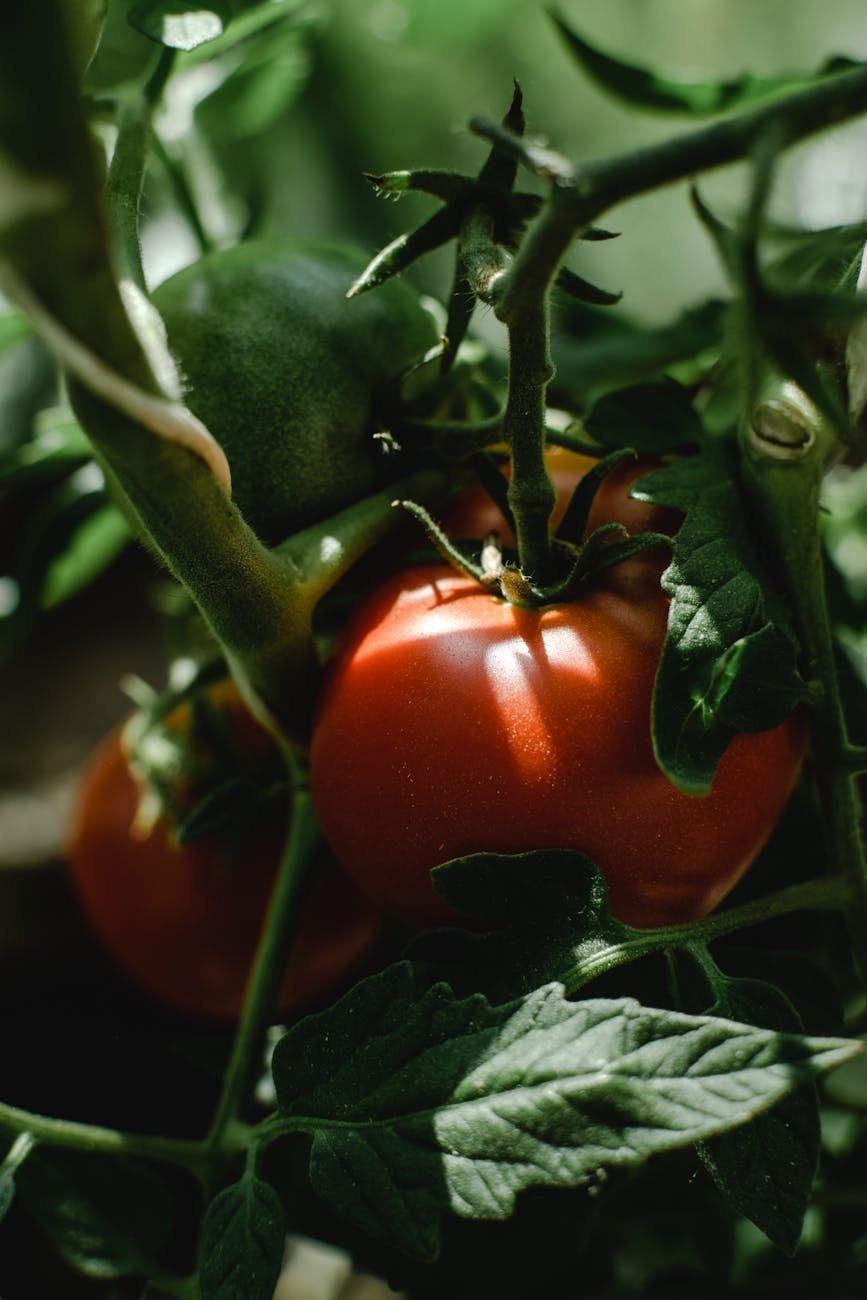
For example, right now is not just Labor Day weekend or the precipice of football season, as wonderful as those things are. It is also…tomato season. Oh dear God, is it ever tomato season. Ask me how I know this.

You see, every year right about this time, a curious thing happens in the life of a midwestern priest. Tomatoes start appearing in odd places. They show up on your desk when you come back from lunch….and they appear randomly on Bible study tables and at breakfast meetings. They manifest, almost miraculously, in little bags pushed into your hands by unseen gift-givers as you make your way through a Sunday crowd. 

Indeed, had Jesus wanted to perform a feeding miracle in our own time, he would have done well to pick August in the midwest, and the crowds would have feasted on bread and tomatoes, and there would have been far more than twelve baskets left over!

I am grateful for the generosity of the gardeners among us, truly, especially since I don’t have much of a green thumb. For those who enjoy them, as I do, there are few things that approach pure, balanced perfection more than a late summer tomato, barely able to contain within its fragile skin the deep, bittersweet, vegetal tang of green stem and sunlight. Tomatoes are, if you will forgive my tendency towards poetics, almost saintly in their abundant, delirious, self-giving, delicious brightness. 

Oh yes, you can look for reminders of God even in a tomato.

And I was thinking about tomatoes this week not just because Matt and I have a stack of them on our counter and because we’ve been eating salads and BLTs and tomato sandwiches for dinner, but because these tomatoes revealed something to me about our Scripture passages this week. 

Yes, really.

What all of our passages this morning are all talking about, to some extent, is what I would describe as an ancient struggle experienced by humanity in its search for meaning and healing and hope: the perceived struggle between our inner life and our outer life. 

Think about it. Almost without realizing, we constantly talk in our faith lives about the tension between inner reality, inner spirituality, inner knowing, and what happens on the so-called outside: our actions in the world or those of others. This dichotomy is always with us. And usually we understand this interplay between inner and outer as one of conflict. 

Maybe our inner thoughts and feelings strive to be kind and loving, but then our outward actions betray us. This is what James is warning against in his letter, when he encourages the church to be doers of the word and not just hearers of it—to put their money where their mouth is and match their actions with their interior commitments. 

But then at other times, we might actually be doing good things, helpful and righteous things in public view, yet there is war and bitterness in our hearts. We are consumed with pettiness or jealousy or some other self-defeating emotion. This is what Jesus is warning against in the Gospel as he reproaches the scribes and Pharisees for committing grand public acts of virtue while their inner life and their theological imagination are shriveled and small and hard. To Jesus, the Pharisees are like the most beautiful tomato you have ever seen, only to bite into it and realize it is made of wax. 

But God wants neither of these outcomes for us—God doesn’t want us to be houses divided against ourselves, or to live divided lives. God wants our insides and our outsides to match.

That’s the invitation that Jesus is making to his disciples. It’s really quite simple. And really quite hard!

If we want to know what this looks like in practice, of course, we can look at Jesus who was, in a way no one else ever could be, someone who cultivated within himself and lived visibly with an undivided love for God, self, and neighbor. 

When he tells the Pharisees that what comes out of a person is what defiles them, he is not saying that the interior life matters more; he is upending their assumptions about how the world works so that they might finally perceive that their judgment is not just harmful, it is irrelevant, because everyone and everything is part of a whole.

One of the most distinctive and important aspects of Jesus is that in him, the ancient dichotomy of struggle between the inner and outer life does not exist. There is simply—life. Life flowing through, life taking shape, life abundant, rising up as urgently as a summer garden. Nothing to hide, everything to offer.

And I don’t know about you, but my God, as I look around our world, full of real crises and manufactured divisions and illusory promises…my God how I long for something with integrity, for something true, for something that is what it says it is, someone who is what they appear to be. And how I long to be the version of myself that is also all of these things, even when things get tough.

Like the voice crying out in the Song of Solomon, looking for her lover through the latticework, we are all desperately seeking something true, something whole, something that won’t betray us or turn on us or trick us, and it can often seem rather impossible to find…

…until you meet Jesus and realize that he is–my Lord and my God–the real deal. That he is the ripe summer fruit that is just as delicious as it looks. He is the fruit that bears no curse. The simple, abundant gift of life rising up from the earth and coming down from heaven. Stem and sunlight.

And if we, as the church, as the followers of this simple, bittersweet, abundant God, if we hope to show the world who he is, then by God we’d better get out there and act like it, whether in the pews or in the laundromat or in the office or in the public square. And we’d better get in here, too, into our hearts, and nourish ourselves with the prayer and silence and study that seed and nourish our work. 

Because the Gospel, ultimately, is about leaving behind the notion of inner and outer lives. We don’t get to choose between them. The world needs us to do love and to be love at the same time. The world needs us to be disciples who are as uncontrived, as self evident, as whole as Jesus. And yes….as uncontrived and self evident and whole as those tomatoes that keep appearing everywhere I look. 

So I guess that’s what the tomatoes showed me this week—those saintly summer tomatoes. They aren’t the most impressive or exotic thing. But, they are, blessedly, exactly what they appear to be. They are a promise kept, for once in this world. And they offer themselves, without reservation, without calculation, and with completeness, for the sustenance of all.

And just when you think there’s nothing left….they keep showing up, in unexpected places, to remind you what sunlight tastes like. Sort of like Jesus. And, at our best, like us, too.

So yes, if anyone asks you this week, you can say, well…he preached about tomatoes

But if I have learned anything thus far, it is that you can look for reminders of God everywhere, even in a tomato.

And imagine—if God can be revealed in a tomato, then, maybe, just maybe, he can be revealed in us, too.

Montana: A Sermon

I preached this sermon on Sunday, August 25, 2024 at St. Anne Episcopal Church, West Chester, OH. The lectionary text cited is John 6:56-69.

As most of you know, my dad’s side of the family lived in a small town in the woods of upper Michigan. I talk about that place a lot, in sermons and in stories, and I think about it a lot too, because it inhabits that place in my heart where one finds something true and good to hold onto as the years go by. 

Because as a kid in California who moved around a lot, Iron River, MI, (population 2,000) was an unconventional promised land of sorts: a place where the doors always stood open and porches creaked hospitably when you stepped on them and streets were paved in golden sunlight. It was (and to some extent remains for me) a sort of dream. Maybe you have your own such place, somewhere within your own heart and history. A particular golden landscape. A door that always stood open for you. 

But for my family who actually lived full time in Iron River—and especially my grandpa, Russ, who lived there his entire life—it was not a dream. It was simply where he lived, and where his family had always lived, for generations. He loved it in his own practical way, but I think it’s safe to say it did not dazzle or tantalize him like it did me. No, for my grandpa, the promised land was another place entirely. It was…Montana. 

If you’ve been you know that Montana is a stunning place, especially in the western half where the mountains are like green teeth chewing the sky, with lakes as still as glass mirrors reflecting the faces of the big thunderhead clouds. And while I was busy dreaming of Michigan, it was Montana that had long fueled the daydreams of my grandpa. So much so that at one point, when my dad and his siblings were young, he attempted to move the family out there. 

It didn’t work out, and they soon returned back to Michigan, but for as long as I can remember, he would get a sort of dreamy, wistful sound in his voice whenever he talked about the big sky and the small western towns and that one particular diner in eastern Montana that had the best tomato soup known to God or humankind.

But ultimately, while my grandpa loved the idea of Montana, the freedom and adventure it represented to him, it was Michigan that was home for his entire life, until he died at the age of 89. It was that one small Michigan town where he swept hallways as a janitor and drove buses and went fishing and paid bills and fixed broken things down in the basement while puffing on his little cigars. 

And while he might have dreamt of the wind singing in the pines on some far off Montana peak, it was in Michigan where he sang songs to his grandchildren and watched us grow up to dream our own dreams. 

I was thinking about all of this—Michigan and Montana and the places that tantalize us and the regular places where we make a life—because I have realized that it parallels and illuminates something really important about our lives of faith. In particular, I’ve been thinking about that very word, faith

When I say the word faith–when I ask you to talk about your faith–what would you say in reply? 

Typically, we would start to talk about what we believe—what we think—about who God is and how God acts in the world. Faith is the word people often use to describe their attitude towards the Bible and Jesus and whether they think he is who he says he is. And so, if I say I have found my faith, it means I think one thing about Jesus. And if I have lost my faith, it means I think something else. 

Faith, understood in this way, is very conceptual; it’s an idea that we wrestle with. It is sort of like Montana was for my grandpa—this lovely but not quite solid thing that rattles around in our head, a vision that remains always just out of reach.

But what I have realized is that Jesus is not all that interested in this sort of faith. I don’t think he came just to tantalize us with concepts or give us more fuel to endlessly debate ideas about God. He came to give us something real, something tangible. He came to give our actual lives back to us.

Because Jesus teaches, time and again, that the Kingdom of Heaven is not a place hidden beyond the horizon. It is the ground beneath our feet, made holy by our daily choices. It is the temple of the present moment, open to all who recognize here, now as the place where we meet God.

At the risk of sounding overly provocative, I am suggesting that Christian life is less about faith and more about fidelity—the commitments we make and the promises we keep, where love looks less like a map to a far off place and more like an object mended in the basement. In this Christian way of life, we commit not so much to an idea as we do to a set of choices made and acted upon. Choices that build a sense of home and hope for ourselves and the people around us. 

That’s why Jesus is so insistent about bread and flesh and blood in this discourse we’ve been hearing for the past few weeks. He is telling his disciples, and us: stop treating all of this—what I am doing, what I am saying, what I am teaching—like it’s an idea that you can take or leave. God is not an idea. Love is not a theory or a concept or an ideology. It is the fundamental substance of existence.

And until we realize this–until we realize that God is not an idea and heaven is not a dream destination, but the enactment of our daily fidelity to love–until we claim this, we do not have life in us. Not truly, not fully, not yet. 

And so if you are ever looking to check in with God about your discipleship, about how things are going between the two of you, I would encourage you to spend less time agonizing over your doubts or relishing your certainties and spend more time asking: to what or to whom have I given my fidelity? What choices am I making? What relationships am I building? What simple, practical work am I doing to love the ground beneath my feet in the name of Jesus?

I daresay that the Gospel of Christ has endured for over 2000 years less because of the triumph of an idea and more because certain people in each generation decided, as Jesus did, to put some flesh on their love—they decided to stop talking and actually live the gospel out. To give their own bodies and selves as living bread for the life of the world. Even if it just looks, most of the time, like fixing broken things, paying the bills, sweeping the hallway, and singing to your grandchildren.

You know, I have sometimes wondered, when my grandpa died and went to be with God, what it looked like for him when he got there. I wondered if it looked like Montana..that maybe he got there at last and finally found himself at home in the high peaks, bathed in wind and cloud and Spirit. 

But if I am honest, I bet his homecoming looked more familiar than that—that heaven is more like being enfolded back into the love we spend our life on.

And so maybe, just maybe, in some quiet, woodsy corner of heaven, he is still tinkering in the basement, still singing in the night, or driving down a quiet highway, headed not towards Montana or any ineffable dream, but to the place where God actually abides—the place that looks like flesh and blood and fidelity. The place that looks like home.

Purpose, Passion, Practice: A Sermon

I preached this sermon on Sunday, August 11, 2024 at St. Anne Episcopal Church, on the occasion of my one-year anniversary as Rector. The lectionary text cited is John 6:35, 41-51.

In a revelation that will surprise exactly no one, I was a theater kid growing up. My first big role was as an ice cream cone in the 2nd grade Christmas pageant at school. In 3rd grade, I was promoted to a Russian Baker in the Nutcracker; I rocked the chef hat but the dance moves eluded me. Then in 4th grade my big break came: I starred as the Nutcracker himself. 

This was a low budget production in a rural California elementary school, so my costume was made out of a long old white silk shirt of my mom’s that she fashioned into a sort of tunic with red tights, and God help me, somewhere there are photos of this. You wouldn’t ever catch me in such an over the top getup these days, but….well…*looks down at vestments* Nevermind!

Anyway, growing up, I loved theater so much—not just being on stage, but the immersive process and culture that surrounded it. The lore and the lingo and all the little traditions of theater people that go on behind the scenes. The bond that you form with the other people working on a production. The sense that, no matter what else is going on in your life—no matter how strange or scary or lonely things might be elsewhere—in this place, doing this thing, you know where you fit. In this place you have a part to play, both literally and figuratively, and other people have your back as your strive together towards a common vision. 

What a healing, even saving experience it was, as a nerdy, closeted kid, to be enfolded into a community and a way of life like that. 

If you were ever a theater person, you know what I mean. But if not, then still, I hope, somewhere along the way, that you have experienced your own version of a tight knit community of purpose and passion and practice. 

Maybe it was a team sport. Or music. Or another hobby or fellowship group that brings you deep joy. I’ve met devotees of bird watching and of stamp collecting and of long distance running and there’s always something so beautiful about the way their faces light up when they talk about this thing, whatever it is, that guides and sustains and challenges them. 

And then, of course, there’s church. And church can be complicated.

Now, I will tell you, that one of the primary things that led me to begin serving as your rector exactly one year ago was that, when I got to meet folks from the Vestry and the Search Committee, their eyes also lit up when they talked about St. Anne. I thought—YES, this type of joy and enthusiasm is what we SHOULD experience when we walk into the doors of a church on Sunday morning. 

But you and I both know that the church, more broadly, is not always this way. And in some corners of our society, it’s quite the opposite. It is a place where too many people, for a whole host of reasons, experience their faith not as a community of purpose and passion and practice but as some combination of duty, and fear, and anxiety. For them, church can feel like that bad dream people have where you’re on stage and the big spotlight is shining down on you and you forgot all your lines and you just know there’s a trapdoor that going to swallow you up. 

But here’s the thing (and it needs to be said out loud): the true purpose of church is not, and should not ever be like that. Church should not be a place that plays into our fears and anxieties. It can be a place where we acknowledge our fears and anxieties, of course, but it should not play into them. It should not exacerbate fear or foster suspicion in our conduct with others. 

When you’re a theater kid, you learn to overcome your worst fears and your stage fright because you know that you are part of something bigger than just you, that there is something beautiful worth putting yourself out there for…and church should be the same. At its best and truest, it always has been.

There’s a bit of this in today’s Gospel reading today. Jesus is under the spotlight, he’s been pursued by a group of folks who want to know how he’s going to perform for them, how closely he is going to follow the script of what they are expecting in a Messiah. And they’re not fully convinced. They say, “is not this Jesus, the son of Joseph, whose father and mother we know?” He is not nearly mighty or impressive or well-connected enough to topple empires and lead us to victory over our enemies. 

And I get it. These people are afraid. They are hungry and tired and afraid. They want someone strong who is going to help them be less afraid of all the big forces in the world they cannot control. God forgive us, we still want that. A sort of typecast strongman messiah. 

But here’s the thing about Jesus—maybe one of the most important things about Jesus. He refuses to play that part, because Jesus refuses to let fear be the defining feature of the human experience. 

Just as God has been saying throughout all of Scripture (more so than anything else God says in Scripture): Do not fear. Be not afraid. Not because fear isn’t normal or natural—it is—but because fear is not the pathway to the answers we seek. The fearful, vindictive, vengeful warrior is not who God ultimately reveals himself to be, and it is not the role any of us were meant to play either.

If God—and Jesus as God’s Son—wanted to traffic in fear, he would have said to this crowd: I am the Warrior you have been waiting for. I am the one who will get rid of your enemies. I am the one who scorns the people you scorn and hates the people you hate. And they probably would have been thrilled!

But that’s not what he says is it? He says, instead, I am the bread of life. I am the bread of life. I am not a warrior, I am just bread. I am a warm meal at the end of a long day. I am  a table with enough seats for everyone. I am nourishment and kindness and a lively, earthy, sacred love. I am the one who is inviting you in to a way of life, not an imperial religion, not an endless series of wars both military and cultural. I am inviting you into a community of purpose and passion and practice. I am not going to play upon your fears. I want to see your eyes light up. 

Somewhere along the way, friends, much of the church lost that script, or decided to toss it out. They decided to stage a different sort of production, one that is more about power and control and influence than it is about love and justice and mercy. 

But what I love to see, and what gives me undaunted hope—both here in our parish—and elsewhere in the Episcopal Church—and in other parts of the so-called “declining” church—which, by the way, is really just the church getting back to its roots—is that we are reconnecting with that spark of fearless creativity. We are trying new things. We are laying down old prejudices and assumptions. We are asking good questions and admitting that we don’t have all the answers. We are doing it together.

To me that sounds like Jesus, and it is as delightful and delicious as the scent of warm baking bread. And, for me, it is as thrilling as those old theater days when I was a little bit afraid but I realized I was part of something bigger and lovelier and livelier than just me—that I didn’t have to go it alone anymore, that I belonged.

We belong, here. We belong to each other, here. All of us, in this community of purpose, passion and practice that is the church. That is what we are building together here at St. Anne. That is what we are going to welcome people into when they come through our red doors; and when we are out in the community; and when we are talking about our faith with our friends. We are going to say: this is what brings me joy and hope and peace and determination and compassion, and that is enough. That is what the Bread of Life, the Lord of Love, the great I AM came to help us do. 

You know it’s funny, the very last play I was ever in, as a senior in college—and I am NOT making this up—included a scene where I had to play a priest. God has a sense of humor sometimes.

But God knows, better than we do, the many roles we will be called to take on, and this, right here, is where we work to discover them. Not as theater people, but just as people. People made for the single greatest role ever written: ourselves, transfigured by God’s love, with light in our eyes.

Mercy: A Sermon

I preached this sermon on Sunday, August 4, 2024 at St. Anne Episcopal Church, West Chester, OH. The lectionary text cited is 2 Samuel 11:26-12:13a.

People sometimes ask the question, if you could have dinner with any one person, living or dead, who would it be, and why? And usually the answer we give is a celebrity or some other interesting figure from history—somebody fun or fascinating. Mine would probably be either Rowan Williams, the theologian and former Archbishop of Canterbury…or Dolly Parton. And that probably tells you all you need to know about me!

But this morning I have a different question for you…and it’s maybe a little bit of a harder one: If you could make amends with any one person in your life, living or dead, who would it be? If you could sit down across from just one person and know that somehow, the breach between you could be repaired, the fence mended, the hostility put to rest…who would you pick? Imagine, for just a moment, what that would feel like.

Imagining such a thing can be a tender, even painful sort of moment…especially if we feel that this is not a realistic possibility. I can think of a few people who were once in my life that I wish, somehow, I could get another chance to say the thing I never said, or to take back the thing I did say. 

But that pang in the stomach, that sense of longing for reconnection…it’s good to be reminded of it from time to time. I would say it’s necessary, even, in our life as Christian disciples. Because that pang, that longing, is indicative of a fundamental part of our faith. It’s a part that we don’t talk about a lot, because it can get overlooked in our conversations about love or justice or wisdom or truth. And that fundamental thing is mercy

Mercy is an somewhat misunderstood concept. It is not just what a judge offers to a criminal, or some sort of favor bestowed the unworthy. It is far humbler, and gentler and more mutual than that. Mercy is the softening of the heart that takes place when we truly, fully see each other. It is the thing that makes reconciliation possible.

For me, mercy is like that feeling when your aching bones and tired mind sink into a warm bath at the end of the day, when there is nothing left to give or to prove or to hide. Mercy is like slipping under cool sheets and falling asleep beneath the untroubled, drifting stars. It is the remembrance of the fundamental kindness that holds all things and all people together.

And the desire to take part in mercy is what prompted you to think of that one, seemingly inaccessible person. It’s that part of ourselves that longs to say to the ones we’ve lost and the ones who’ve hurt us, I see now, I see YOU now, and I feel seen by you now, and so now let us rest in the silence of what we have seen, of the price that was paid, of what is forgiven, and of whatever it is that waits for us on the other side of regret. 

This sort of mercy is important. And it’s essential, actually, if we hope to begin to understand the Gospels and the many complicated stories that are given to us in Scripture. Without mercy, they can seem more like a series of vivid, sometimes frightening dreams. But with mercy—it all begins to make a bit more sense. 

For example, consider the reading from 2 Samuel. I promised you last week that we would get the rest of the story—David’s comeuppance after his seduction of Bathsheba and his plot to kill her husband. And today we see it. The Lord sends a prophet to David and, by way of a parable that contrasts mercy and hard-heartedness, he gets David to unwittingly pronounce judgment on himself. 

You are the man, the prophet Nathan says—you are the man without mercy. You are the one who has tramped on the vulnerable! You are the one who has forgotten who you are! Where is the old David, the one with the gentle light in his eyes? Where is the young shepherd who would not hurt even the smallest lamb? Where is the brave young man who stood up to terrible giants? When did you, David, decide that you were now a terrible giant yourself?

And, even though he has done horrific things, and even though he will eventually pay a dear price for them, David understands. He sees his failure. And he seeks God’s mercy. “I have sinned against the Lord,” he says, and this one sentence is the key to the story—the softening of his heart, the crack in his defensiveness, the one thing that makes healing and reconciliation possible again.

Without mercy, this would just be a story of a violent king and an angry God. But with mercy, it is a reminder that even in our worst moments, God refuses to forsake us. God will always call us back to the most innocent and compassionate and tender version of ourselves. 

Because sometimes that one person we wish we could sit across from and make amends with is simply an earlier version of ourselves. And in such moments, mercy begins with recognizing how far we have strayed from the person we thought we were, or the person we once hoped to be. 

Mercy, for David, is being able to look at himself and to say, I see now, God. I see YOU, now, God, and am seen by you, God. Every part of me: the terrible king I’ve become and the gentle child I once was. Come what may, let me not forget this seeing, God. Let me sing Psalms about this seeing. Let me not forget how you called me back to myself, how you reminded me that the best parts of myself are not lost entirely. 

My friends, if we hope to make any sense of the Bible, and of what it means to follow Jesus, and what it must look like to navigate the troubled times in which we live, I will tell you this: mercy is the key. Not being right all the time. Not being the strongest or the most impressive. Not winning the game or the prize, whatever that is. It’s just mercy.

Mercy is the only thing that will lead not just to change in our world, but transformation of our world. And it begins, as most things do, within each of us. 

If you are wondering how on earth to begin, or how to engage in the practice of mercy, here and now, I have a very practical exercise for you—one I read about in a book many years ago. It’s simple but powerful, and it goes like this:

This afternoon, or this evening, or whenever you have a few quiet minutes to yourself, I want you to call to mind that person you thought of a few minutes ago. The one that is distant from you. Imagine them, as vividly as you can, at their happiest or healthiest. Imagine them as God might see them, before the hurt, beneath the pain and fear. Imagine yourself the same, the two of you sitting across the table, both of you at your best. 

And then, just for a few minutes, imagine what you would say to them.

Maybe it’s, I forgive you. 

Maybe it’s, please forgive me. 

Maybe it’s, I don’t know how to forgive you just yet, but I’d like to someday. 

Maybe it’s, I know you tried your best. 

Maybe it’s just, I don’t understand why it turned out the way it did between us but I wish it were different.

And I see you, now. 

And I wish you peace. 

Maybe you can imagine them saying something back. Or maybe not. It’s ok either way.  

And then rest in the silence. And know that, somewhere, somehow, in this imagined conversation which is a sort of prayer, that a small seed of mercy has taken root in your heart and has been released into the world. 

Try it sometime. I’d love to hear how it goes if you do. And with practice, maybe it will even empower you to have a real-life conversation like that with someone when the time comes. And God will be glad.

Because what I believe, fundamentally, is that if you asked God who he’d like to sit across the table from and make amends, it’s you, and me, and all of us. God is hoping for some version of this conversation each week at this Eucharistic table, so that he can say to us, yes, I see now, I see you, now, I long to be seen BY you, that you might slip into my love like a warm bath and slide under the cool sheets to sleep an untroubled sleep. 

And then you will understand that this was always the key to every story, this was always the dream written in those silent, drifting stars, this was alway the word written upon your soul to call you back to yourself and to one another:

Mercy. 

Speak it, and practice it, and it will tell you all you need to know. 

Annoying: A Sermon

I preached this sermon on Sunday, July 28, 2024 at St. Anne Episcopal Church, West Chester, OH. The lectionary texts cited are 2 Samuel 11:1-15 and John 6:1-21.

Now, I tend to think that I was a pretty nice, friendly kid growing up—I liked being around people, including my mom and dad and my other relatives. But there’s a funny thing that happens to most of us, somewhere around the age of 14 or so—we suddenly want our parents and the rest of our family members to leave us alone

I was not a very rebellious teenager, but still, somewhere around that age, I became totally uninterested in what the rest of my family was up to. I couldn’t drive yet, and this was long before the age of smartphones, but I would still check out and close myself up in my room, reading books or talking to my friends on the phone or surfing the internet (the kind that you had to connect to on a landline). 

And yet, for some reason, my family would keep pestering me! My dad would knock on the door to tell me dinner was ready, or my mom would call and want to know how school was going. One time my grandma got mad at me because I had been on the dialup internet for so long that no one could make calls in or out of the house. 

I was just convinced that their whole mission in life was to cramp my style. The nerve of these people. Didn’t they understand that I was my own person, that I needed space to do exactly what I wanted to do, when and how I wanted to do it?!

If you happen to be going through that right now as a teenager, I want to say, you’re not entirely wrong. There is something really important about figuring out who you are as a person and how that might be different from the expectations of all the people around you. Figuring ourselves out takes time and trial and error and you need a little space to do that. 

It’s also true, though, many years on from 14, that now I would give just about anything to have my dad knock on the door to call me to dinner or to hear my grandma fussing at me about the busy signal on the phone. Maybe it’s just a function of getting older—the prospect of being on one’s own loses a bit of its luster. 

Nonetheless, it strikes me that our relationship with God is a bit like the push-pull of growing up and feeling both grateful for and claustrophobic around the ones we love. 

I know it’s very pious to talk about how much we love to spend time with God, and we say a lot in church about how wonderful it is that God came to be with us in the flesh in Jesus, how he will never leave us, how he is always there when we call on him. 

But in the midst of all of that, I think we need to be honest with ourselves: there is a part of us that might prefer for our Lord to leave us alone once in a while. There is a part of us that finds it awfully exhausting and burdensome to have the Way, the Truth, and the Life constantly knocking on the door, reminding us we are spending too much time closed up in our rooms, asking us to get off our phones and come out and be part of the human family. 

The nerve of this Divine Person! Doesn’t he know that I need space to do exactly what  want to do, when and how I want to do it? It would be so much easier if we could just stay in our own little world rather than contend with the real world.

In this week’s reading from the Old Testament, David is caught up in this tendency towards self-isolation, and unfortunately for him it comes at great cost. The implication of the text we heard today is that, as King, he should have been out there in solidarity with the troops who are fighting his battles, but instead he chooses to stay home and take advantage of his newfound royal power, using it to exploit and manipulate others for no reason other than his own idle satisfaction. 

If that reading made you uncomfortable, good—that’s the point. David and those like him are not our savior; God is. We will return to this story next week and we will learn the grave cost of his actions, but for now we simply see in David the terrible danger of cutting ourselves off from a sense of responsibility to the people around us—of assuming that God doesn’t care what we do with our time. David will soon learn that, like any annoyingly persistent parent, God does indeed care, and God is not inclined to leave us to our own devices forever, even when we would rather he did.

And, at the risk of sounding really impious, there is no greater evidence of God’s annoying, parental persistence than the incarnation of Jesus. He just had to come down and get up in our business. He just had to come knock on our door to tell us to get off the internet for a minute and open our eyes and look at each other and listen to one another.

Yes, God becoming flesh and walking among us and revealing to us the urgent necessity of embodying the Father’s love—let’s get real for a minute here—it’s beautiful and revelatory, but it’s also quite inconvenient. 

Because, Lord, I don’t want to love my enemies! Lord, I don’t want to relinquish my own ambitions and self-interest for the greater good! Lord, I don’t want to face the suffering of the world and realize that I am expected to actually do something about it. I just want to be left alone! Stop knocking on my door, please. Stop calling me up and telling me that I was made for something more. Just let me put on my headphones and talk to the people I like and leave the rest for someone else to figure out!

Thankfully God doesn’t listen to me when I say that, anymore than my parents or grandparents ever did. Because Jesus is, as God always has been, the one who says, no, it’s time you come and have something to eat. It’s time you rejoined the land of the living. It’s time you remembered that you are, indeed, part of a family—the family of all of creation—and while we all need a bit of solitude and self-exploration from time to time, you were not made to be alone.

Jesus showing up here in our midst, week after week, in the form of bread and wine, showing up to knock on the door of your heart, is not just a pretty idea—it’s a reminder of that frustratingly persistent tendency of God to never leave us be, to never give up on us, to wait for us, all of us, however long it takes, until we realize that this—this love, this way of life, this relationship with God and with each other—is what we needed most all along, at age 4, and at 14, and at 104. 

Because there will be a moment that comes for each of us, at a certain age, when we look up and realize that, like those disciples on the Sea of Galilee, we have been rowing our boat alone on the waves for a bit too long, and the waters around us are stormy, and we are far from home, and now we would give anything to hear our father or our mother or our grandmother’s voices instead of the howling wind. And then, quite suddenly, there is Jesus, coming across the water, saying It is I, do not be afraid. 

Annoyingly, stubbornly, blessedly, miraculously, he has followed us the whole way, out past our pride, out past our loneliness and bewilderment. He has refused to leave us to our own devices, even when we thought we wanted him to. 

I hope that, following in Jesus’ footsteps, I can be just as annoyingly persistent in my own commitment to caring for others and the world around me. I’d like to think that this is what are about here at St. Anne, that this is what we are celebrating today on St. Anne Day. 

I pray that, as we do this more and more and more, there are folks out there in our community who might start to say, oh gosh, there go those St. Anne people again, always inviting everyone to come to the table, always advocating for justice and mercy, always going on about how much God loves everyone, always trying to call us back into relationship with one another. When will they let up with all of that? When will they leave me to my own devices? When will they give up on that annoying, persistent hope in something better for this world?

Never, my friends.

I pray the answer is never.

The Way of Peace: A Sermon for Troubled Times

I preached this sermon on Sunday, July 14, 2024 at St. Anne Episcopal Church, West Chester, OH. The lectionary text cited is Mark 6:14-29, the beheading of John the Baptist.

I sometimes wonder what John the Baptist thought about, just before the end of his life.

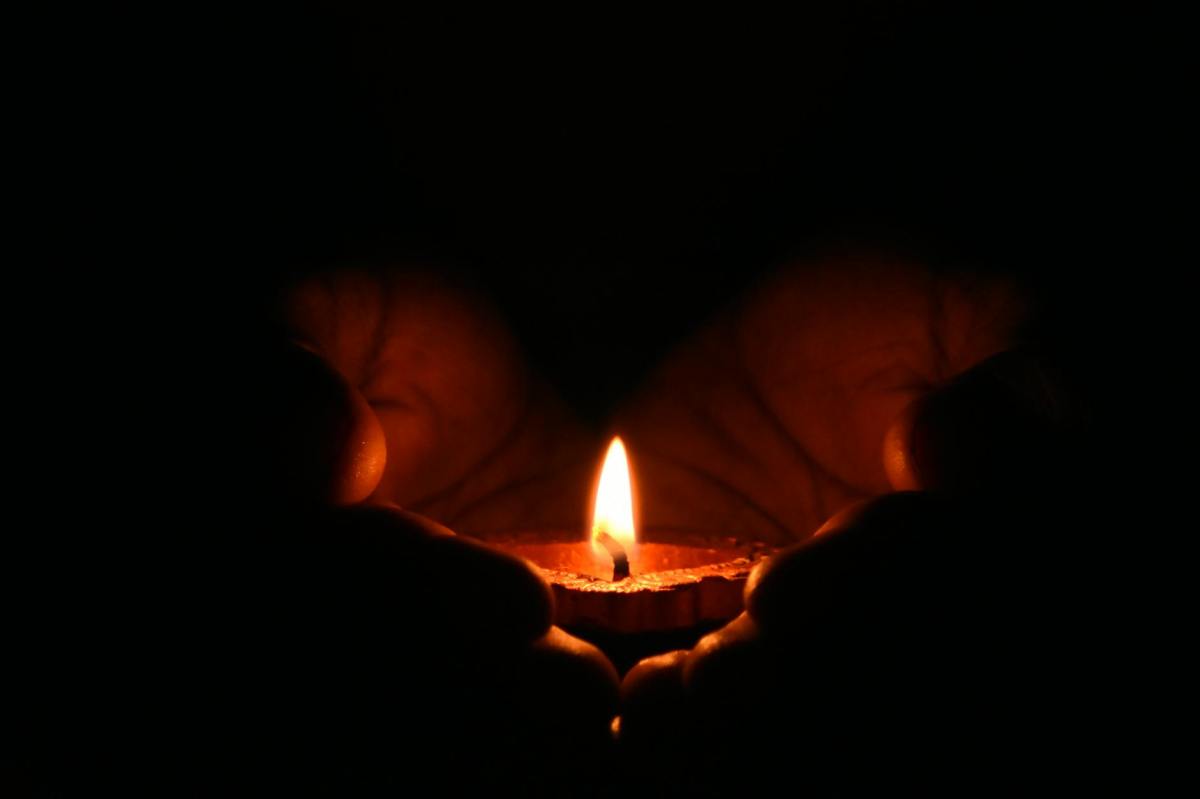
They say that sometimes the past comes back to us in our final moments, in visions and in fragments–that we can see people long dead, and that we can hear the music of songs long finished. And so I wonder what faces and melodies danced in the darkness of John’s prison cell.

Maybe it was the face of his mother, Elizabeth, who in her old age thought she’d never be a mother, looking upon him once more with a gaze of tenderness and wonder. Maybe he heard the song of his father, Zechariah, the song sung the day of John’s birth, the one even we might remember: and you, my child, will be called the prophet of the Most High, for you will go before the Lord to prepare his ways.

And so he did, all the way up to this moment in our Gospel text.And while I imagine he might have wept for that all that seemed lost, all that felt like it had been wasted, my hope is that all of God’s promises came back to John in the end, carried on a wind that smelled of wilderness and wild honey. A glimpse of heaven, even as he commended himself to the unseeing darkness. 

I hope so. I hope he knew that his efforts were not in vain, that he had done his part, that his voice had indeed cried out and been carried on the wind where it needed to go. That the paths had been made straight. 

I hope so because his actual death, and the circumstances that led up to it, are, like all political violence, so unbearably shortsighted and pointless and small. John, the prophet of the Most High, the one who bathed Jesus in the waters of baptism, the one who, his whole life, burned with the fire of the Holy Spirit, is here, today, snuffed out over a bit of palace intrigue, by the machinations of another petty empire. 

No dignified sacrifice, no farewell discourse—just a debauched party and an idle grudge and a series of terrible decisions and a swift, pitiful ending. Even the writer of Mark’s Gospel seems at a loss for words, unwilling or unable to describe anyone’s reaction to the senselessness of what has taken place. 

Because, as is always the case, what can you really say when rage and violence emerge, yet again, into our midst? Thoughts and prayers for your family, John. This is not who we are, John. We promise we’ll be nicer to each other in the future, John, so that your death meant something. 

And we keep on saying it, hoping next time it will be true.

Yesterday, another act of political violence struck at the heart of our civic life in what should be a peaceful political process in this country. The shooting at former President Trump’s rally in Pennsylvania, which resulted in the death of one bystander and which will likely have historic repercussions we cannot yet understand, is a stark and frightening reminder that we are all still subject to the same destructive tendencies that plagued our forebears. 

We pray for all victims of political violence, including those harmed yesterday. And we are reminded, yet again, how cultures and rhetorics of violence are self-perpetuating—that all the words and wounds we choose to inflict upon one another play out in predictable, terrible ways. I hate to say it, but this is who we are. At least, it’s who we choose to be, too much of the time. 

These forces of division, enmity, and the desire to eradicate those we deem as other are active and at work in our politics, in the broader world and, as hard as it is to admit, to some extent within each of us. We resist them, and build around them, and sometimes even seem to rise above them, but they are there. 

And from time to time, in seasons like the one we are living through now in this country, we are called to account for the persistence of violence. We are called to reckon with the warring impulses of the human heart, called to ask if another way is possible, if indeed our feet might actually be guided somehow into the way of peace. John certainly believed it could be so, but his life demonstrated that calling people prophetically into the way of peace is rarely a safe endeavor.

And so I wonder, as John sat in the darkness, waiting for the end, I wonder whether he finally understood that we need something more than just thoughts and prayers and the invitation to do better next time. That for whatever reason, at least on our own strength, we cannot be much better than we already are. 

I wonder, in those flashes of memory and music, in the fragmentary sum of his long and mysterious journey, if John could sense that Jesus, the One for whom he had waited and prepared the way, was not simply a new political leader strong enough or charismatic enough to enforce peace, but was, in fact, the Holy One who came to show us a truth both very new and eternal: that strength and force and violence will never achieve a redemptive end or guide us to a place of rest. That only love and peace and an embarrassing level of gentleness will do that. 

Because that is what Jesus is. He is the one who embarrasses the Herods of the world by his gentleness; the one who stops the dance of death in its tracks; the one who reveals not just violence’s depravity, but its futility, its weakness. He does this because although he was also killed senselessly, for pointless political ends, he comes to us as the Risen One, the Wounded One who stands in the midst of our fear and our cynicism and our despair and says, peace. 

He says, peace.

He does not say revenge or rage or retribution, but peace. And this is something altogether different from what we have been given to expect of this life or this world, or even of ourselves. Something different, even, than John expected–John who had once spoken of the Lord’s winnowing fork and fire.

And so I hope, somehow, before the end, he saw the truth in the darkness and smiled and said, yes, this, yes, peace, yes, we have warred and wept and wandered in the wilderness, and we may continue to do so for many more generations, but yes, another way is possible and it is here, now, insistently alive even in the face of all this senseless death, and its name is love, and its name is God and its name is Jesus. 

I hope we see this, too, every day, but especially on days like today, when those forces of violence and fear seem so strong, so palpable, and when forcefulness seems to be the only way forward. I hope we will see that there is something deeper and stronger than anger that animates our common life and our work and our faith, even after all that has been done and left undone.

Long before our own endings, long before we must gaze into the darkness, I hope we will glimpse that vision, fragmented though it might be…the one that is revealed in the faces of the ones we have loved and in the songs of peace we have sung and in the ways we have tried to practice tenderness and gentleness with each other in this place.

And then I hope we will go out and proclaim that vision in the world, costly as its might be to do so. Not to win a political or cultural battle, not to earn a spot in heaven, but simply because it is true. It is the only true thing there is to hold onto—that love and justice and peace and forgiveness are the only things which will endure in the end, long after our seemingly endless capacity for violence has consumed itself. 

Because this is the Gospel: that on that day, when everything is finished, when every game is played and ever last war is waged, God will still be there standing on the wreckage of our best intentions and worst impulses and God will still be saying, Peace, peace I give to you. My love I give to you. My life I give to you. Let the dawn from on high break upon you, my children. Let us begin again. 

We don’t have to wait til the end to begin, though. We can start right now. Because no matter what happens in the next several months in this country, or the next several years of our lives, or in the next several generations on this planet, I can tell you this: the things worth doing, the things that will survive and flourish long after we are gone, are the same things that John glimpsed in the dark: the face of love and the song of peace, and the courage to trust in something other than the hurt we’ve known.

God be with our country as we try to remember this.

God be with us as we try to live it. 

Weeds: A Sermon

I preached this sermon on Sunday, July 30, 2024 at St. Anne Episcopal Church, West Chester, OH. The lectionary text cited is Mark 5:21-43.

I am not an adept gardener, but I can always tell when we have reached peak growing season—it’s when those pesky weeds spring up through the cracks in the sidewalk. I plucked out several this morning on the walkway into church, likely nourished by this weekend’s rain. It’s the eternal struggle—we weed, God laughs. But I also admire the tenacity of those weeds! They seem to defy our best efforts to subdue them. Their impulse to grow is strong. 

Maybe they have something to teach us. Have you ever noticed that, throughout human history, our impulse towards growth and freedom also emerges most often in the summer? 

There’s the Fourth of July, of course, when we Americans were the proverbial weeds in the garden of King George III, but there was also the singing of the Magna Carta (which happened in June); and the storming of the Bastille in France (in July); and the March on Washington (in August); and the summer Freedom Rides of the civil rights movement; and the Stonewall riots and the Pride marches inspired by them; and the racial justice protests of 2020; and many, many other such moments when people had finally had enough and demanded something new… and they all unfolded in the long, hot, hopeful days of summer. 

I’ve been wondering this week why that is. It’s almost as though the human spirit comes alive, too, in this warm growing season with our own renewed, fierce determination to flourish, almost as if our souls were like stalks of summer corn, reaching up towards the infinite blue sky, determined to reach the clouds, to brush against the hem of eternity, to thrive unencumbered.

And you might notice that, in the seasons of the Church, we acknowledge this impulse too, adorning the altars and the ministers with green, the color of an insistent, stubborn vitality. After Easter and Pentecost, in the long green season of Ordinary Time, we are reminded that the Church, at is best, is indeed like a weed growing up through the cracks of empire, or like wildflowers growing in a forgotten ditch—it is the embodiment of the beautiful, humble, pesky aliveness of Christ that challenges anything and everything that would try to pave it over. 

And so, we, too, in the church, have our own summer revolutions. One of them is coming up in just a few weeks, on July 29th. Do you know what it is?

It’s the 50th anniversary of the Philadelphia Eleven, the first eleven women ordained to the priesthood in the Episcopal Church on July 29, 1974. These women were indeed possessed of a fierce determination to flourish. They were not willing to wait for the church hierarchy of the time to drag its feet any longer, and so they found a few retired bishops willing to ordain them and they simply…did it. They went up to the altar and put on those green vestments, for they knew that they, too, were called to brush against the hem of eternity, and they said, now is our time to thrive, unencumbered. Call us a weed in the garden if you want, but we know what we are: fully alive.

And thank God for them. I would not be able to be the out and proud priest I am today if it were not for their courage to be the priests God made them to be. And thank God for all those saints and heroes of summers past who decided to grab hold of their chance to flourish. We need their witness now more than ever. 

In an age where it is especially easy to be cynical, or even despairing about our politics and our culture and our collective future, the examples of the Philadelphia Eleven and all the summer revolutionaries remind me that true change, true justice, true peace, are gifts of God, but gifts that must be claimed and grown and harvested if we want them in our own time.

And more often than not, these revolutions are initiated by those at the bottom of the power structure, those at the margins, those weeds in the garden who finally say: we have languished for too long. Now is our time to thrive. All of Scripture and much of human history is a testament to this.

A perfect example is our Gospel reading today. Jesus has been traveling around the countryside, criss-crossing the Sea of Galilee, calming storms and casting out demons and offering all sorts of signs of his power. And there is a particular woman who hears about all of this—a woman who, because of illness and poverty has been consigned to a meager, desperate existence. She is a woman who is tired of waiting for relief, tired of grieving, tired of bleeding and calling out for help while people look the other way. She is not dead, like Jairus’ daughter, but she is a ghost among her people.

But when she hears about Jesus, something shifts within her. Who knows, maybe it was summertime, maybe she was hot and tired and fed up with the way things were. 

But whatever it was, something deeper than despair, something stronger than cynicism or despondency arises within her and she says, “if I but touch is clothes, I will be made well.” If I reach out and brush against the hem of eternity and say, I too, deserve to thrive unencumbered, then it will be so.

And so she did. And so it was.

And I imagine her standing there, this unnamed woman, this patron saint of nothing left to lose, and what I realize is that, when Jesus says, “daughter, your faith has made you well,” he is not just talking about a cure to her illness—he is saying, you, my child, have tapped into the stubborn vitality that is at the heart of God. 

And by claiming the blessing long denied you, by asserting your inherent dignity, you have discovered the one thing that cannot be taken away, the one thing that rises up again and again like a weed, or like a stalk of summer corn—God’s life, God’s love, God’s wholeness, God’s humble, pesky aliveness, which is now my gift to you and all who have been told for too long that they do not deserve it. Receive it today, this love and this life freely given to you and for you, for this is the revolutionary truth at the center of creation. 

So I wonder, are we willing to be revolutionaries, too, St. Anne? Revolutionaries for the sake of love? It’s a good question to ask on the 4th of July or in any season, really. 

God knows we need to be, for our own sakes and for the sake of our neighbors. Like the woman with the hemorrhage, we may be bleeding and tired, but we do not have the luxury of languishing in despondency, no matter how gloomy it looks out there. Just like all those generations before us, we are called to be people with summer hearts, with souls on fire for justice, with bodies and spirits ready for the necessary work of liberation that arises in every age. And how we will engage that work is a conversation we must continue to have. 

We’ve made some strides already in our parish. But there is more we can do together, more we must do given the challenges of our time and the demands of our faith. 

Conversations are rising up among us about social justice ministries and creation care work and more proactive outreach to people who have been hurt by other churches, and more formation to equip us for ministry, and I am thrilled by all of this, and I encourage you to seek out these conversations and take part in them and then take part in making them a reality. Let’s brush up against the hem of eternity, and let’s pursue the vitality that is God’s gift to us, and let’s see what happens. 

Because we and the whole Church, when we’re at our bravest and our best, we are still that weed, growing up through the cracks; we are still that wildflower in the ditch, reminding people of what’s beautiful about this world, what is not easily killed, what it looks like to reach up towards the infinite blue sky, and to be fully, truly, stubbornly, miraculously alive.

And wouldn’t you know, it’s summertime. Signs of life are all around us. Sounds like a good time to grow.

Photographs

A sermon preached on the Fifth Sunday after Pentecost, June 23, 2024 at St. Anne Episcopal Church, West Chester, OH. The lectionary text cited is Mark 4:35-41.

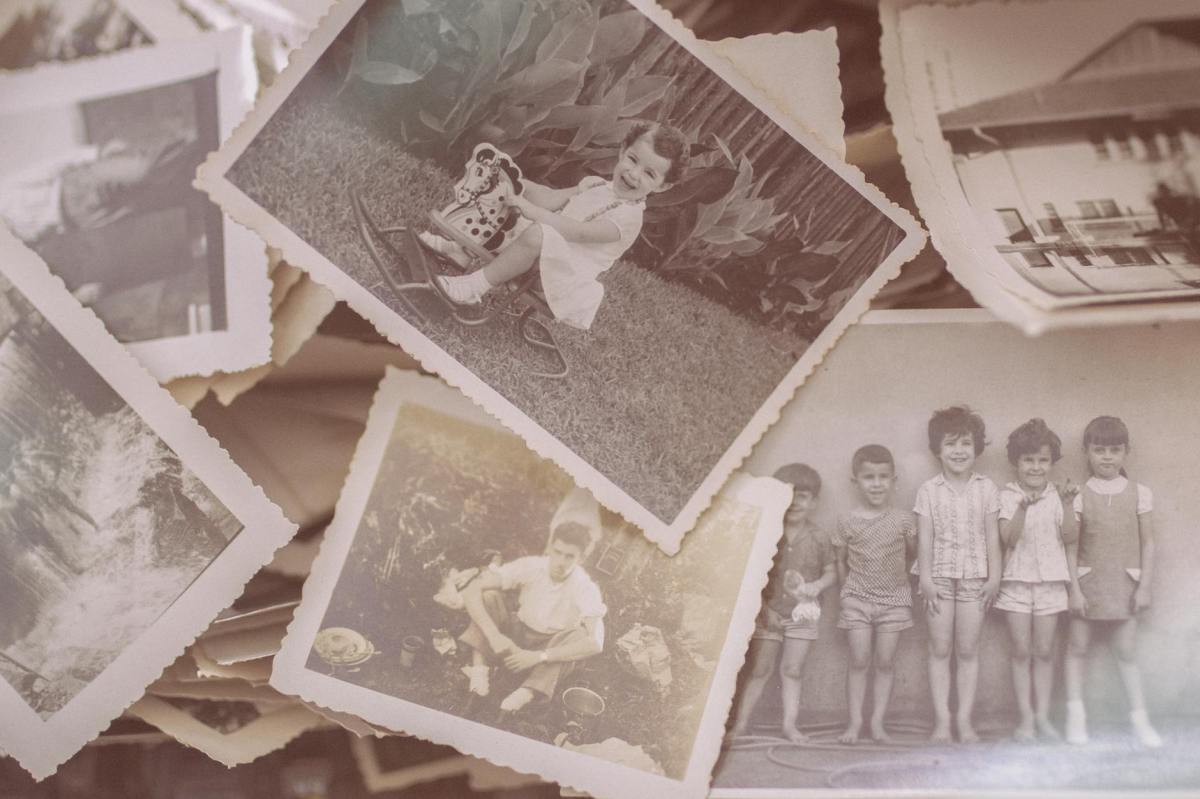
My fiancé, Matt, and I have been in the process of moving into our new apartment over the past few weeks, and combining all of our belongings and finding space for all of our stuff is an adventure. As with any time you move, we are realizing how much stuff we all carry around with us as we go through life. And some of that stuff can be pared down or donated or sold, but there are always those things that you hold onto, no matter what. And among these, probably for almost all of us, are boxes of old photos. 

I have a big plastic tub of family photos that I keep swearing I’m going to sort through and organize…and I’ve been saying this for the past 15 years. Every so often, usually when I move, I will drag out that tub and open the lid and gasp in horror at the mixed up stacks and envelopes. Then I close it up and slowly back away. 

But I could never give them up, of course, because our photos are valuable in a different sort of way than other belongings. They are like a pathway through the forest of memory that thickens as we grow older… a pathway that guides us back to other homes, other times, other faces, other versions of ourselves that would otherwise be lost from view in the shadow of the passing years. We pull them out to show others—and ourselves—all that we have known, all that we have been.

In my own collection, I see many things. Here is my mother, sitting on the back of a pony when she was two years old..land here is my father as a young man, laughing in his college dorm room…and here is my great-grandmother, her smiling face obscured by a wide brimmed hat in the summer heat, and here—oh goodness—here is a child that was once me, dancing on the sand on some forgotten beach, yelling something into the wind. 

Memories and mysteries, all of these photos. Perhaps we carry them with us, wherever we go, both to remind ourselves of where we’ve come from and to reassure ourselves that whatever we have become, we were also, this. And this, and this. And that life is, somehow, holding together all these layers, finding the truth not in any one picture, but somewhere in the sum of them, in the shape of what they reveal.

It might sound odd, but I think it’s helpful to think of Scripture the same way, almost like a box of jumbled snapshots. Because our sacred texts, too, are repositories of memory and mystery, and just like a single photograph, no single Scripture passage can ever reveal the whole truth about the life of God. Remember that when someone tries to cherry-pick a verse to use against…whomever. No, we must gather all of these verses together, all these little glimpses of God’s face, and ponder the bigger story they tell. 

With this in mind, then, I think the most striking image of God’s face we are handed this week is Jesus asleep in the storm-tossed boat, his disciples as panicked and furious as the sea itself. You can practically close your eyes and see it. So let’s pull that one out of the box and ponder it together, shall we?

It is dark. Bands of rain and wind are lashing against a small boat on a stormy sea. The disciples are looking at their teacher, sleeping in the tumult, and they are bewildered—they can’t begin to imagine why Jesus isn’t awake, why he isn’t helping them fix the situation, giving them direction, something, anything. And so they wake him up and, at a word, he uses his mighty power to still the storm.

Is it easy to see what’s going on here? Just a scary storm and a God who will make it stop? Look a bit closer.

As is often the case, there is much more to this image than what immediately meets the eye. Because it’s interesting—Jesus, after calming the wind and the waves, doesn’t look at them and offer soothing reassurance. He doesn’t say what we might expect God would say, “there, there, I fixed it for you, don’t worry, you’re fine.” 

No. Instead, a better Greek translation of his words to them might be, “why are you so timid? Do you not trust?”  And the Gospel says then, and only then, after the storm, that the disciples “ephobethesan phobon megan” — they feared with a great fear — not because of the storm, but because of the One who stilled it.

You see, in that moment, the disciples have a brief encounter with enlightenment—they realize, right then, that Jesus is more than just a sleeping teacher who can fix their problems—more, even, than the prophetic miracle worker they’d been following around.

You might say that it was as though a collection of old photos suddenly appeared before them, and for the first time they could really see Jesus—all of him—and there he was, sitting on the back of a donkey, escaping to Egypt with his mother. And there he was, laughing as a young man in the Temple, astounding the scribes in his Father’s house. And there he was, dancing on the sand of some forgotten wilderness, rebuking the temptations of Satan, yelling something into the wind. And there he was, too, even farther back, before time and image and memory itself, the Eternal Son, like light looking up from the brim of deep darkness–the original Creator of the water and the wind now riding with them on the waves.

And for them, in this moment, to see Jesus—to see all the images that make up who he is and what he is—is to realize that loving him and following him is not about fixing their problems..it is about re-creating the entire world in the image of Love.

We are the inheritors of that same encounter, you and I, that same collection of images. We, too, are reminded that Jesus will not remain the flat, convenient, utilitarian image that might suit us best. 

If we want him to appear as a mere teacher, we must also discover that he is Lord. And if we want him to appear as the victorious one, we must also see that he is the crucified one. And if we want him to bless our health and our wealth, we will also find that he makes his home among the poor and the sick and the forgotten.

And he is all of these things–this whole jumbled stack of images, this whole collection of memories and mysteries–not to make our faith an impossible task, but to make impossible our tendency to render God in our own image–our propensity to make God as small as our own fears and misgivings. He asks, ‘why are you so timid?’ because he wants the disciples, and us, to see that God’s love is so much bigger than we can envision, so much bigger than our fear.

And so, even now, this Jesus asks us— today, here, in The Episcopal Church; here, in the United States; here, on a planet on fire; here among all of us who have tried to be diligent, polite, welcoming people of faith—he asks us, as we fear that the church is shrinking and the world is raging and the ship is sinking, he asks again, Why are you so timid? 

Do we not trust that love is the strongest force on earth? Because it is.

Do we not believe that the world needs this good news more than anything else? Because it does.

Do we not feel that love raging in us like a storm of life giving water? Because it’s there, waiting to be set free. 

And all of this—the storm of love and the memory and the mystery, and the countless revelations of eternity—if it is part of Jesus, we must let it become part of who we are, too. We must let this undaunted, unfaltering, fearless type of love become the shape of us, the sum of all the images we are, the precious treasure that we can never give away, no matter how many years go by.

And maybe, if we were to look for this in ourselves, and in others, we would brush up against enlightenment, too. Maybe we would see that every person we meet also carries with them a box of old photos. That they were once two years old on the back of a pony, or laughing with their friends or dancing on the sand or shouting into the wind or smiling in the light of the sun.

Maybe if we saw all of one another, we would be less timid, less overwhelmed by the storms we are navigating, because we would realize that Jesus isn’t asleep while the world falls apart. He is dreaming a new world into being and inviting us to dream with him. A world in which, instead of fearing with a great fear, we will love with a great love

It’s a beautiful image, isn’t it? I think I’ll hold onto it. 

Troubled Water: A Sermon For Pride Month

I preached this sermon on Wednesday, June 12 at Lord of Life Lutheran Church, West Chester, OH for the Butler County Affirming Churches service of Healing & Affirmation. The Scripture cited is Mark 12:28-34.

When I was in the sixth grade, I had a friend…we’ll call him Chris. And in a particular way that maybe some of you can relate to, I had confusing feelings about Chris. All I wanted to do was spend time with him. I went over to his house to play video games even though I didn’t care one bit about video games. And I hung on every word he said, even though he wasn’t much of a conversationalist. I got nervously excited whenever he was around.

In my young mind, back in a time and place where “liking” other boys was not acceptable or even acknowledged, I interpreted these feelings as simply wanting to be “best friends” with Chris, and so I told myself that this ardor, this devotion, was probably what any two friends were supposed to share with each other. But I had to know…did he want to be my “best friend” too? So I decided that, clearly, the thing to do was to tell Chris exactly how much he meant to me…as a “friend.”

Back in those days (and I’m dating myself here) we had typing classes in a special computer lab in our elementary school. This was pre-smartphone, pre-internet, pre-everything. But on these computers, you could send little messages to someone at another workstation, like a very early version of email. And I decided that I was going to send Chris a really special message so that he knew what a good friend I wanted to be. 

And so (remember, I was in sixth grade, but I still cringe recalling this)…I decided to type out the full lyrics of the Simon and Garfunkel song “Bridge Over Troubled Water” and send them to him as an expression of my friendship.

Yes, really.

If you don’t know that song, look up the lyrics later, and I promise you, no matter what your sexual orientation is, you will be embarrassed on my behalf. 

So I hit send on this message and I was eager to see what he would write back. But…of course he didn’t write back. He didn’t say a word to me after that. And although, to his credit, he was never cruel, there were definitely no more invitations to come over and play video games. 

I realized then, as much as I could at the time, that I had gotten things mixed up somehow. The feelings I had were real, and true, and earnest, but all the cues around me said that they were something I should be embarrassed about, something that was unwelcome, and perhaps for the first time, at 12 years old, I understood what it was to feel like a stranger in one’s own skin.

Now, I know that unrequited affection and feelings of shame are not experiences restricted to LGBTQ+ folks alone, but I do think that, more than most, we are intimately acquainted with the great gap that can exist between the love we have to give and the desire of others to accept it. To express queer love and queer identity is to live with an ever-present sense of risk.

So many of us, whether in 6th grade or much later in our lives, have stood at the edge of our own troubled waters, looking for a bridge, looking across toward our childhood crushes, or our family members, or our churches, or our communities. And many of them are standing on the other side of the gap, too often refusing to extend a hand back toward us, turning away in confusion or embarrassment or worse.

And so we queer folks learn something important as we navigate this reality: we learn that love, true love, is never a guarantee in this life. It is something that must be fought for and claimed and created and protected, from within the deepest parts of yourself. 

We learn that love is not the prize for successfully assimilating to the dominant culture. We learn that love is not passive compliance with the accepted order of things. It is not medal you win when you meet everyone else’s expectations of how you are to live or be.

No, we queer folks know, firsthand, that love—love for ourselves, love for the ones our hearts and our bones and our flesh cry out to hold—this love can be costly. We know this because that is what you learn when it is a political act every single day to take your partner’s hand in public. You know this when it becomes a profound act of courage to put on the outfit that best expresses your identity or dare to name the pronoun that resonates most with your spirit. 

When that is your life, you realize that love is not just a nice feeling among pleasant people; it is something tangible and active that requires strength and vulnerability and the willingness to be misunderstood. The willingness to put yourself out there and sometimes to pay the price for what is deeply, wholly, inescapably true, even if it’s not popular or acceptable to those around you. 

It can be bewildering, sometimes, all of this. It can feel like you’re the only one who gets it.

But it’s interesting. You know who else had something to say about that real, hardscrabble, costly, risky sort of love? That true, inclusive, expansive, all-encompassing sort of love? Jesus.

Jesus of Nazareth. Jesus, the Son of God. Jesus, the One who embodies divine mystery in his flesh. Jesus, who came as a teacher, as a Savior, as the champion of all who have been trampled upon and left behind. Jesus who was himself rejected and misunderstood and deemed a threat to the accepted order.

The Church has tended to forget this throughout its history, but Jesus, in the deepest, most essential heart of the Christian story, is the embodiment of a truth that any LGBTQ+ person could already tell you: that love is scary and it is beautiful and it is necessary and it is all-powerful, and that this love cannot be prayed away by those who don’t understand it. This love cannot be killed or stamped out by judgment or greed or patriarchy or empire or any of the other maladies that afflict us. 

Jesus lived and died and rose again to demonstrate that this type of unending, unyielding love of God queers the narrative about life—it troubles the conventional wisdom about the way things are, and who is included, and it reveals the extent to which God will go to rescue us from the binaries and the judgments that bind us. And God will go as far as it takes to save us from this, all the way to the grave and back again.

And if any Church, or anyone tries tell you that Jesus is anything other than this, then they have conveniently ignored this evening’s Scripture reading. 

In this passage, when Jesus is asked about the greatest commandment, he says it is this: love God, and love your neighbor as yourself. That’s it. Everything else we might do is secondary to this, and just as important, everything else we think about Christian faith must be interpreted in light of this commandment. As Michael Curry, the Presiding Bishop of the Episcopal Church likes to say, if it’s not about love, it’s not about God. Period. 

And if that is so, then what I would like the broader Church—our allies and all the rest—to understand is this: if you want to know about God’s love, if you want to understand what is meant when Jesus talks about love, I suggest that one of the first things you do is talk to your LGBTQ+ neighbors and friends and family members. 

Ask them what it has cost to simply be themselves. Ask them why they were willing to pay that cost. Ask them how they navigate the daily razors edge between love and danger. And perhaps when you do this, you will realize that what they are describing to you is, in fact, a reflection of Jesus’ own story—his own cost, his own love, his own danger.

You see, for far too long LGBTQ+ people have been thought of as the outsiders who ought to be welcomed inside the Church in the name of Christian love, when the truth is that the LGBTQ+ folks are the ones who have something to teach the Church and the world about what the love of Jesus actually looks like. 

Because believe me, we know all about crucifixion—we have watched our siblings be vilified and victimized, we have watched them bleed in the streets because they dared to exist openly,  we have watched them die forsaken in hospital beds. 

And we know all about God’s abundant forgiveness and grace, because we have so often been the ones who seek reconciliation with those people and institutions who refuse to extend any charity back to us. 

And we know a bit about resurrection, because although so many of us have tasted the despair of loneliness and rejection, we have been brought back to life by the power of music, of laughter, of solidarity, of chosen families, of mentors and drag mothers and allies and friends. 

And we know about building the Kingdom of Heaven, too, because alongside our allies, we are the builders and champions of inclusive, affirming spaces where all are seen and known and enough, whether in a church or in a protest march or on a dance floor. 

Yes, if anyone wants to know more about Christian love actually is, talk to a queer person. And then you will begin to see how, as Jesus always teaches us, you will see how the Reign of God indeed springs up in queer places, at the margins of power and privilege, not at its center. You will begin to see where the Spirit resides, how she emerges out of those troubled waters like a rainbow, like a promise, like a sign from heaven that says: even if no one else understands it, your love is enough. However mischaracterized, however rejected or rebuked or unrequited, your love is more than enough.

Because, my LGBTQ+ siblings, God is that very same love that wells up in your own heart and seeks to express itself through your deepest authenticity, come what may. Even if it is costly. Even if some people never accept it. And yes, even if your email full of sappy song lyrics never gets a response. God sings with you. God understands. And God is proud of you. So very proud of you for showing the world what love can be. Be proud of yourself, too.

Because the Pride we speak of, the pride that we have fought for and died for and chosen to live for, is not, as some might say, the rejection of humility. Pride is the dismantling of shame. Pride is the construction of dignity. And when you finally get what this Pride actually means, what it actually represents, what it actually signifies, it is a beautiful thing to behold.

Sort of like what Jesus talked about. Sort of like love.

Thank God for all the LGBTQ+ people, marvelously and perfectly made, who continue to show us what love is.

May your Pride be happy. And may it be blessed.