
I preached this sermon on Sunday, July 14, 2024 at St. Anne Episcopal Church, West Chester, OH. The lectionary text cited is Mark 6:14-29, the beheading of John the Baptist.
I sometimes wonder what John the Baptist thought about, just before the end of his life.
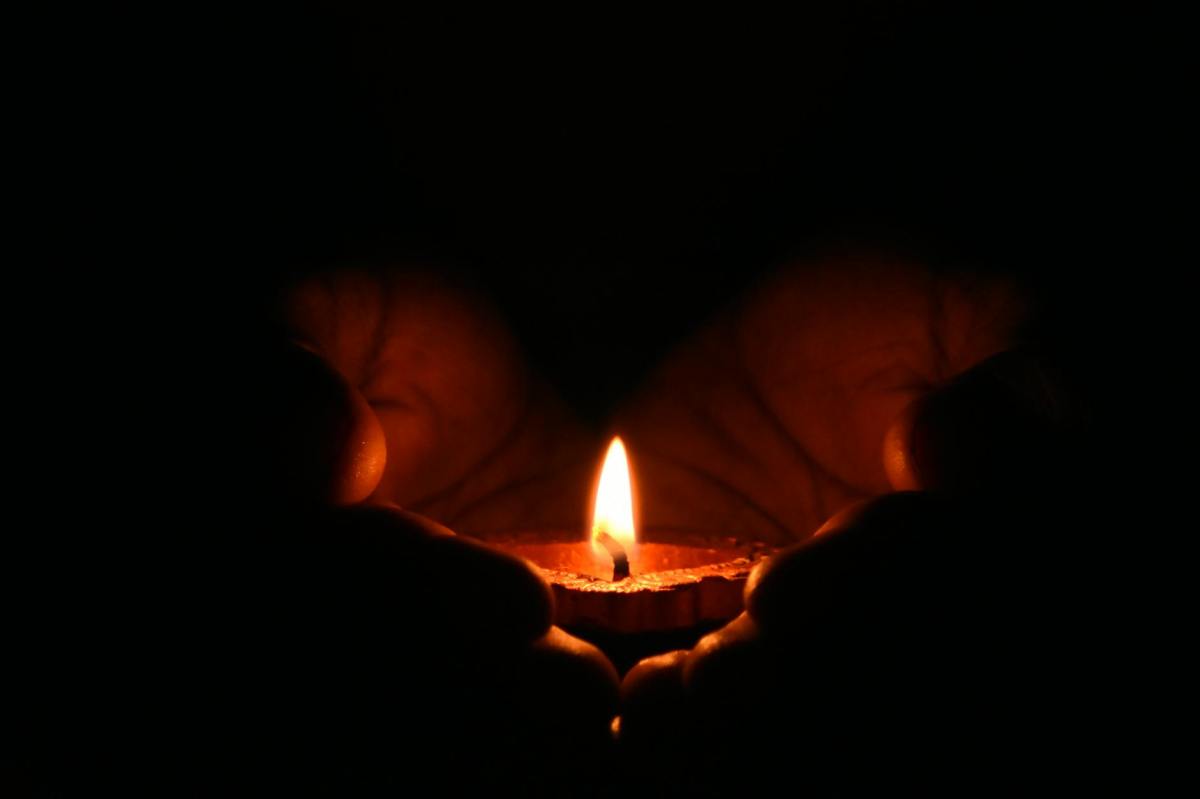
They say that sometimes the past comes back to us in our final moments, in visions and in fragments–that we can see people long dead, and that we can hear the music of songs long finished. And so I wonder what faces and melodies danced in the darkness of John’s prison cell.
Maybe it was the face of his mother, Elizabeth, who in her old age thought she’d never be a mother, looking upon him once more with a gaze of tenderness and wonder. Maybe he heard the song of his father, Zechariah, the song sung the day of John’s birth, the one even we might remember: and you, my child, will be called the prophet of the Most High, for you will go before the Lord to prepare his ways.
And so he did, all the way up to this moment in our Gospel text.And while I imagine he might have wept for that all that seemed lost, all that felt like it had been wasted, my hope is that all of God’s promises came back to John in the end, carried on a wind that smelled of wilderness and wild honey. A glimpse of heaven, even as he commended himself to the unseeing darkness.
I hope so. I hope he knew that his efforts were not in vain, that he had done his part, that his voice had indeed cried out and been carried on the wind where it needed to go. That the paths had been made straight.
I hope so because his actual death, and the circumstances that led up to it, are, like all political violence, so unbearably shortsighted and pointless and small. John, the prophet of the Most High, the one who bathed Jesus in the waters of baptism, the one who, his whole life, burned with the fire of the Holy Spirit, is here, today, snuffed out over a bit of palace intrigue, by the machinations of another petty empire.
No dignified sacrifice, no farewell discourse—just a debauched party and an idle grudge and a series of terrible decisions and a swift, pitiful ending. Even the writer of Mark’s Gospel seems at a loss for words, unwilling or unable to describe anyone’s reaction to the senselessness of what has taken place.
Because, as is always the case, what can you really say when rage and violence emerge, yet again, into our midst? Thoughts and prayers for your family, John. This is not who we are, John. We promise we’ll be nicer to each other in the future, John, so that your death meant something.
And we keep on saying it, hoping next time it will be true.
Yesterday, another act of political violence struck at the heart of our civic life in what should be a peaceful political process in this country. The shooting at former President Trump’s rally in Pennsylvania, which resulted in the death of one bystander and which will likely have historic repercussions we cannot yet understand, is a stark and frightening reminder that we are all still subject to the same destructive tendencies that plagued our forebears.
We pray for all victims of political violence, including those harmed yesterday. And we are reminded, yet again, how cultures and rhetorics of violence are self-perpetuating—that all the words and wounds we choose to inflict upon one another play out in predictable, terrible ways. I hate to say it, but this is who we are. At least, it’s who we choose to be, too much of the time.
These forces of division, enmity, and the desire to eradicate those we deem as other are active and at work in our politics, in the broader world and, as hard as it is to admit, to some extent within each of us. We resist them, and build around them, and sometimes even seem to rise above them, but they are there.
And from time to time, in seasons like the one we are living through now in this country, we are called to account for the persistence of violence. We are called to reckon with the warring impulses of the human heart, called to ask if another way is possible, if indeed our feet might actually be guided somehow into the way of peace. John certainly believed it could be so, but his life demonstrated that calling people prophetically into the way of peace is rarely a safe endeavor.
And so I wonder, as John sat in the darkness, waiting for the end, I wonder whether he finally understood that we need something more than just thoughts and prayers and the invitation to do better next time. That for whatever reason, at least on our own strength, we cannot be much better than we already are.
I wonder, in those flashes of memory and music, in the fragmentary sum of his long and mysterious journey, if John could sense that Jesus, the One for whom he had waited and prepared the way, was not simply a new political leader strong enough or charismatic enough to enforce peace, but was, in fact, the Holy One who came to show us a truth both very new and eternal: that strength and force and violence will never achieve a redemptive end or guide us to a place of rest. That only love and peace and an embarrassing level of gentleness will do that.
Because that is what Jesus is. He is the one who embarrasses the Herods of the world by his gentleness; the one who stops the dance of death in its tracks; the one who reveals not just violence’s depravity, but its futility, its weakness. He does this because although he was also killed senselessly, for pointless political ends, he comes to us as the Risen One, the Wounded One who stands in the midst of our fear and our cynicism and our despair and says, peace.
He says, peace.
He does not say revenge or rage or retribution, but peace. And this is something altogether different from what we have been given to expect of this life or this world, or even of ourselves. Something different, even, than John expected–John who had once spoken of the Lord’s winnowing fork and fire.
And so I hope, somehow, before the end, he saw the truth in the darkness and smiled and said, yes, this, yes, peace, yes, we have warred and wept and wandered in the wilderness, and we may continue to do so for many more generations, but yes, another way is possible and it is here, now, insistently alive even in the face of all this senseless death, and its name is love, and its name is God and its name is Jesus.
I hope we see this, too, every day, but especially on days like today, when those forces of violence and fear seem so strong, so palpable, and when forcefulness seems to be the only way forward. I hope we will see that there is something deeper and stronger than anger that animates our common life and our work and our faith, even after all that has been done and left undone.
Long before our own endings, long before we must gaze into the darkness, I hope we will glimpse that vision, fragmented though it might be…the one that is revealed in the faces of the ones we have loved and in the songs of peace we have sung and in the ways we have tried to practice tenderness and gentleness with each other in this place.
And then I hope we will go out and proclaim that vision in the world, costly as its might be to do so. Not to win a political or cultural battle, not to earn a spot in heaven, but simply because it is true. It is the only true thing there is to hold onto—that love and justice and peace and forgiveness are the only things which will endure in the end, long after our seemingly endless capacity for violence has consumed itself.
Because this is the Gospel: that on that day, when everything is finished, when every game is played and ever last war is waged, God will still be there standing on the wreckage of our best intentions and worst impulses and God will still be saying, Peace, peace I give to you. My love I give to you. My life I give to you. Let the dawn from on high break upon you, my children. Let us begin again.
We don’t have to wait til the end to begin, though. We can start right now. Because no matter what happens in the next several months in this country, or the next several years of our lives, or in the next several generations on this planet, I can tell you this: the things worth doing, the things that will survive and flourish long after we are gone, are the same things that John glimpsed in the dark: the face of love and the song of peace, and the courage to trust in something other than the hurt we’ve known.
God be with our country as we try to remember this.
God be with us as we try to live it.
 By Another Road
Thank you Fr Phil. I tried to say this to my parish this morning but you have said it better than I could. You are a blessing to St Anne’s parish and to the whole Church
LikeLike
Powerful words, and true. Thank you.
LikeLike
Thank you Fr Phil. I tried to say this to my parish this morning but you have said it better than I could. You are a blessing to St Anne’s parish and to the whole Church
LikeLike