

Visitor: An Advent Sermon

I preached this sermon on Sunday, December 1, 2024, the First Sunday of Advent. The lectionary text cited is Luke 21:25-36.

If you are relatively new to the Episcopal Church, one thing you will learn very quickly at this time of year is that Episcopalians really want you to know that Advent is not the same as Christmas. And once you begin to profess, in hushed, knowing tones, your particular love for Advent…I guarantee you are well on your way to becoming a bonafide Episcopalian!

The world around us might be playing Christmas carols at full volume and decking the halls with boughs of holly, but we, by God, we are the select few who know that Advent is not all fun and games. It’s serious business. It has apocalyptic Scripture readings for us to enjoy(!) and hymns about the Second Coming of Christ(!) and a decided lack of frivolity.

And for all that, I do love it. Advent is the slow, thoughtful descent into winter darkness, as candle flames tremble in the night and our souls reach out towards the cold, silent stars, looking for a sign of hope.

But let’s be honest with ourselves—a lot of us sort of do Advent and Christmas at the same time. We alternate between cozy cheer and prayerful pondering depending on when and where we find ourselves. Matt and I put up our Christmas tree this past weekend and we did some Black Friday shopping with the best of them.

And yet he is engaged to an Episcopal priest, the poor guy. As we were driving, Matt put on some cheerful Christmas tunes and then it was my turn to pick a song and I put on that absolute Advent banger, “Lo! He Comes with Clouds Descending.” I wildly waved my arms around in the car, conducting the unseen choir of King’s College, Cambridge while Matt patiently drove and listened. And…that really sums up our relationship, now that I think about it.

But I do find it restful and gratifying that here, in church, we embrace a bit of reflective, anticipatory energy in these weeks. We let Advent be what it is- we let it be its intense, quiet self. We allow it to make us squirm a bit with wonder and and longing and even a little fearfulness, if only so that when Christmas does arrive, we are fully prepared to be undone by the simple, gentle loveliness of a baby in a manger.

I think the pairing of these two seasons right alongside each other is helpful in developing our spiritual palates, because, to be honest, life is an acquired taste…most often bitter and sweet on the tongue at the same time. And we are learning, as we grow in faith, to appreciate the more complex flavors. 

As I was thinking the other day about the bitter and the sweet, and the peculiar blessings of Advent, all of the sudden I thought of my great uncle Dick—my grandma’s brother. Now, Dick was a unique character. I think I would describe him as Advent in the flesh—pale and slim and serious; a man of very few, yet very deliberate words. And when Dick came to visit, it always made me a little nervous because, although a kind man, he was not like other people. You would come into my grandma’s kitchen and suddenly there he’d be, sitting in the lamplight at the kitchen table with a cup of weak coffee, surveying the room, saying nothing. If I’m honest, Uncle Dick was a complete mystery and as a kid he scared me a little— I just didn’t know what to make of him. 

Then one day, without any explanation, when I was about 8 or 9, he told me to come with him, and we walked down the street to a little restaurant and he bought me a strawberry shortcake and we ate it in silence. And on the way home, we stopped at the dime store and he bought me a package of those old fashioned Ticonderoga pencils, the kind you have to sharpen. The whole time he said almost nothing at all.

I can’t tell you why, but of the many gifts I’ve received in my life, for some reason that outing with the shortcake and the pencils sticks with me. It haunts me with its quiet sweetness to this very day. 

I think Advent is sort of like that—kind, stern, a bit hidden from view, and very precious as the years go by, especially once you realize that life is more than just bright lights and loud noise. Because it is the quiet moments and the quiet people and the quiet revelations of love that often make everything else make sense.

We need those Advent people, the Uncle Dicks of this world, to tether us to the value of that which is unadorned and profound. For it is their arrival which prepares our hearts for the winter seasons of life, when we cannot see clearly and when we need to rely on that something which is deep and dim and cool, long buried in our souls beneath the striving and the haste.

And this is exactly what Jesus is trying to convey to his disciples in this morning’s Gospel and what he wants us to realize, too. We might hear all of the imagery he speaks of—the roaring sea and the shaken heavens—and think that the apocalypse is the part of the story that matters most to Jesus. We might think that war and ruin are his chosen manner of appearing. But that is a misreading of his words. 

Jesus is not apocalyptic noise; he is the quiet revelation who comes afterwards. That’s why Jesus tells his disciples over and over again to stay alert, aware, attentive, suggesting that, just like when he came the first time as a baby in a manger, perhaps his second coming will also be easy to miss. Like a thief in the night or a light in the darkness or…like a quiet visitor who slips in unannounced, gazing at you across the kitchen table over a cup of weak coffee. We must be ready to recognize him when he comes.

Because here’s the thing—apocalypse and noise are always around us. They’re nothing special. No, it is the cool, clear, quiet of grace and peace and the advent of those who bear these things which is transformative. It is ones such as these who reveal to us something worth knowing: that God will conquer the world and will conquer our hearts not through sword and terror but through strawberry shortcakes. And Ticonderoga pencils. 

Jesus is many things, and he asks us to be many things, but above all he wishes for us to be unprovoked by fear and satisfied by the simplicity of love. Heaven and earth will pass away, but my words will not pass away, he says to us. My authority will not crumble like a temple, my hope will not decay like a body in the tomb, because true authority and true hope is here, in the advent of another sort of kingdom. The kind we are baptized into. The kind that indeed comes descending upon the clouds and lo, it is quiet, and it is gracious, and it is love.

Which is exactly what I hope each of us will seek, in our own way, during the next few weeks. It’s ok—do Advent and Christmas all at once if you need to. Go ahead and listen to all the songs and trim your trees and attend your parties and engage in whatever deeds of goodwill you can.

But also stop, every once in a while, and be quiet, and tend to that hidden corner of yourself where festiveness gives way to something deeper, something more substantive and kind than anything that can be written on a greeting card. Learn to savor that bittersweetness at the bottom of your heart, that mixture of weak coffee and shortcake, where God abides in us. 

My Uncle Dick died years ago, but every time I happen to a sharpen a pencil, I am reminded of him, and I feel a twinge of gratitude for his grave, lonely gentleness. Thanks to him, I know what Advent looks and feels like. And thanks to him and his visits, I think that, should God come again in my own life, my heart will be attentive and ready and a little less afraid of an unexpected visitor. 

And we’ll stare at one another across the table, God and I, as the winter shadows lengthen, and the lamplight burns and the world at last comes home to itself. And we’ll pour another cup of coffee. And no words will be necessary. 
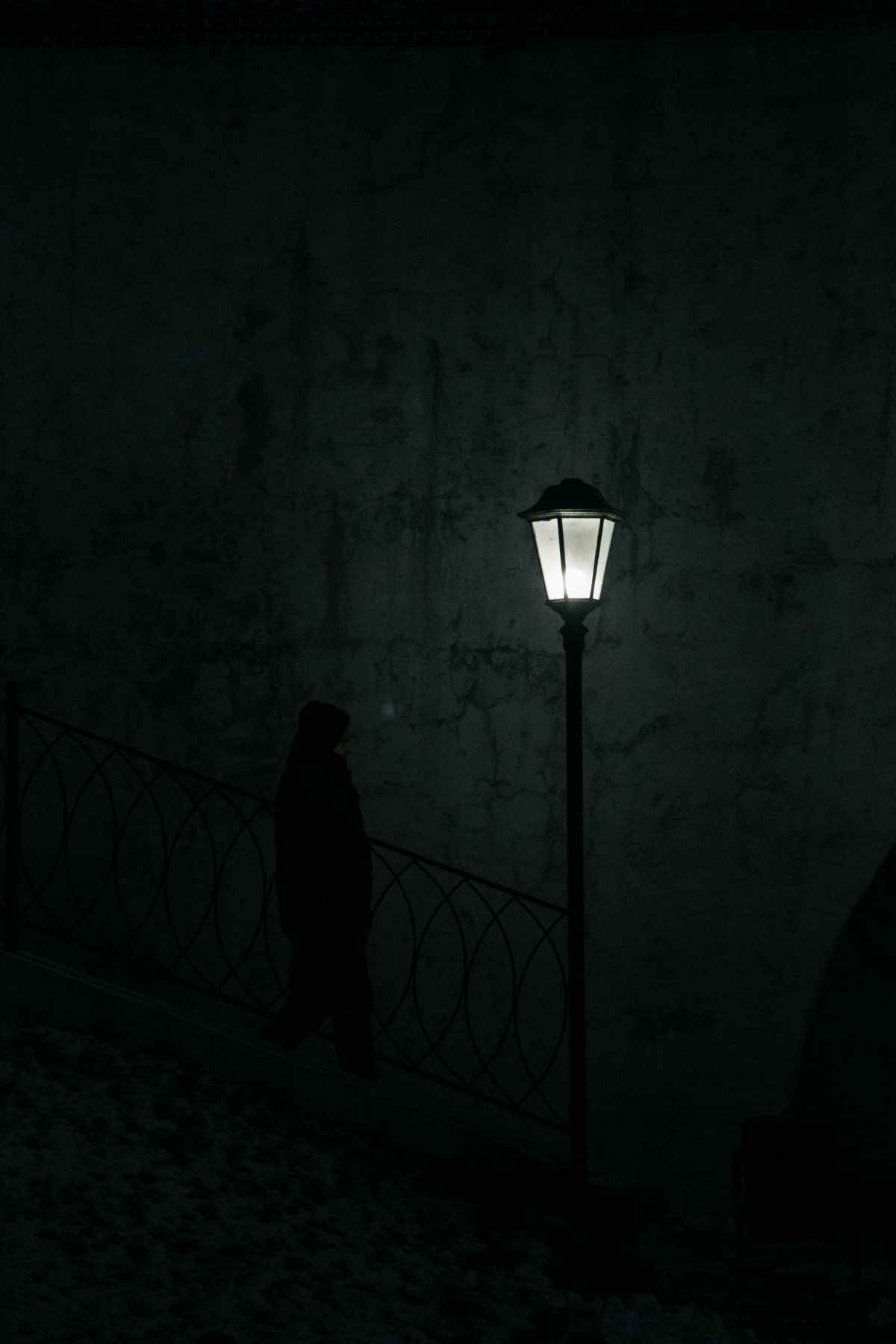
The Stories We Tell in the Dark: An Advent Sermon

I preached this sermon on Sunday, December 3, 2023, Advent I, at St. Anne Episcopal Church, West Chester, OH. The lectionary texts cited are Isaiah 64:1-9 and Mark 13:24-37.

When I was in elementary school, I auditioned to be in a community theater production of A Christmas Carol. I was so nervous during the audition that I totally flubbed my rendition of Silver Bells, but apparently they needed lots of children in the production, so somehow I was cast as some nameless older brother of the real star, Tiny Tim. I had no solos, which was fine, and I think my only real speaking part was to exclaim something about the Christmas goose. A Tony-award winning role it was not. 

But I loved every minute of it. And since then, I’ve always had a soft spot for A Christmas Carol, which, when you step back and think about it, is really a strange and gloomy bit of entertainment during the holiday season. There are ghosts and nightmares and strange visions in the dark, and the story is, at its core, an exploration of mortality and regret and redemption as Ebenezer Scrooge enters the twilight of his life. A far cry from the doggedly bright and cheerful tone of most things we watch and read and hear this time of year. 

But you might be surprised to learn that Charles Dickens, the author of A Christmas Carol, was not trying to be countercultural by injecting some dark themes into the festive season. In fact, at the time he published the story, in 1843, the winter holidays were actually the preeminent time of year for ghost stories and tales of the macabre. People expected to be frightened a bit at Christmastime. We might associate those things now with Halloween, but in pre-Victorian England, it was wintertime, when the nights were cold and families gathered in close for warmth, that chilling stories were shared and the mysteries of the dark corners of life were explored. 

A Christmas Carol is one of the only remnants we have of this tradition, along with that one line in the Andy Williams song, “It’s the Most Wonderful Time of the Year,” when he references people telling ‘scary ghost stories and tales of the glories of Christmases long, long ago.’ Otherwise, the culture around us seems to favor a cozier, less threatening tone as the winter settles in. 

Except for one place. There is still somewhere you can go if you want to be a bit frightened during the holiday season. Right here, when you step into a liturgical church and listen to the readings during Advent. 

Someone unfamiliar with the church seasons, stumbling into the midst of our Advent observances, might be forgiven for being shocked by the dim and haunting atmosphere of our readings and prayers this time of year. For this, the first Sunday of Advent, we have a yearning, wistful lament from the prophet Isaiah and an unsettling apocalyptic vision from Jesus and a Collect about casting away the works of darkness. One might expect the ghosts of Christmas past and future to show up at any moment, rattling their chains.

But for those of us who stick around to hear the stories, those who don’t run away, who try to make space for the odd collision of gloom and light that is Advent, I think we discover a strange respite in this season, perhaps the same sort that was provided by Christmas ghost stories in earlier times. 

And the respite I am taking about is not the typical, self-soothing, therapeutic language that gets bandied about in some conversations about Advent being a slow and quiet time, an invitation to rest and relax and take part in self-care. Those are very good and healthy things, especially in a manic consumerist culture, but they are not the themes of Advent. Advent is not about a classical music and a bubble bath in between shopping trips. 

Advent is about the stories that we tell in the dark—the stories that send a chill down our spine because they ask us to look into the shadows, the unknowability, the loss and the dissatisfaction and the brevity of things. That’s why you won’t find many light and happy Scripture passages this month; we must pass through the valley of shadows first, so that we can begin to understand the true radiance of what is promised in the first and second comings of Christ. 

In the same way that we tell ghost stories around the fire in order to feel more alive, and in the same way that Scrooge, in A Christmas Carol, has to face his demons before his spirit can soar with the angels, so too does Advent invite us—require us, really—to acknowledge the pain of life so that we might better understand what Jesus is actually coming for in the first place. That is why our readings are not warm and bright and cheerful— because they attempt to be honest about, as Shakespeare put it, “the winter of our discontent” so that we might also be honest about what true contentment looks like when it arrives. 

And what does contentment look like? We begin to collect some images for ourselves this week. Contentment looks like intimacy with our Creator, his hands like a potter molding the clay of our bodies into something beautiful and useful and strong. And contentment looks like intimacy with creation, that we might be as attentive and awake as a fig tree, our souls unfurled to receive the Son of God in due season. 

In Isaiah and in the Gospel, and in all the stories we will tell in the dark over the next few weeks, we are asked to abide in the creative tension of living as a people who are both aware of life’s shortcomings and yet are haunted by the Kingdom of Heaven—knowing that both are real, the deep lamentation and the emerging promise, knowing that God will indeed reshape us, knowing that we do not hope in vain, and yet not knowing when the consummation of that hope will arrive in its fullness to descend upon our war-torn cities and upon our war-torn hearts. 

And so, in Advent, we wait for the peace that the world proves time and again that it cannot give. And we tell the truth: the waiting is hard. 

But may we also discover that in the waiting, even waiting in the dark where ghosts linger, there is still joy and loveliness and courage to be found when we gather in close to one another and do what we have been asked to do: to keep telling the stories of God’s goodness. To keep telling the good news. And to do this, all of this, in remembrance of the One who has promised that the end of the story will be a beautiful one. 

And on that day, when past and present and future all come together, when the long delayed advent of God gives way to arrival, when we are awakened from something deeper than sleep, then, well, what a happy morning that will be. Happier, even than when Scrooge woke up to find himself alive, truly alive, on Christmas Day. I think it will be worth the wait. 

Speaking of Scrooge, I suppose I have accepted the fact that I will probably not feature in any other productions of A Christmas Carol. But that’s ok. I am perfectly content. And you know why? Because I may not have had any good lines on stage back then, but now, every Sunday, I basically get to say the most important line of all, the one Tiny Tim says at the end of the story, the one that really sums everything up, the one that underlies everything we do. I get to say, God bless us, every one. 

God bless us, every one. Everyone. It’s the best ending to a story anyone could hope for. Especially because it happens to be true. God will. 

No Regrets: A Sermon

I preached this sermon on Sunday, March 6, 2022, the First Sunday in Lent. The lectionary text cited is Luke 4:1-13, Jesus’ temptation in the wilderness.

We inhabit an unsettled moment. That statement is true on many different levels, but in this instance I am referring to something deeper and more elemental than the news headlines. I am thinking instead about the changing of the seasons that accompanies our entry into Lent in the northern hemisphere.  Amid the turbulent moods of early spring, when we are caught up in the vacillating space between ice and dewdrops, between dirt and blossom, between the cradle and the Cross, there is a keener sense perhaps, of the fertile mix of decay and growth that characterizes our lives on this earth. On Ash Wednesday, the cold mud of winter was imprinted on our brows, and eventually on Easter Day we will convulse with joy among the fields of lilies, but for now we are held in the tension of the time-being, suspended in the middle of frost and flower, mortality and miracle. 

Lent is the pungent season when life and death speak to one another. Too often we keep these two realities isolated in separate corners of our minds, so it is good for us to listen to their conversation over the next several weeks, to notice how life and death layer upon and fertilize the other, both in the Liturgy and in the world around us. Lent is when this life—the delicate, earthy existence we have been given—is brought into clarity and focus by accepting its brevity and, indeed, sometimes its cruelty and brokenness. But it is also a season for celebrating that life, for rediscovering the urgency of living deeply and well while we have the chance, before it is too late, and we go down to the dust once more. 

There was an article that became popular online several years ago, written by a hospice nurse. In it, she reflected on the conversations she’d had with the countless people she’d cared for in the final weeks and days of their lives, and she shared the top five regrets that people expressed as they prepared to die. They were as follows:

1. I wish I’d had the courage to live a life true to myself, not the life others expected of me.

2. I wish I hadn’t worked so hard.

3. I wish I’d had the courage to express my feelings.

4. I wish I had stayed in touch with my friends.

5. I wish that I had let myself be happier.

And while these five regrets might not be true for every person in every time and place, I think they are striking, because they point to the heart of the things that matter when everything else falls away, when there are no illusions left to hide behind, when the wind blows cold across the bare fields and we remember the trace of that muddy cross on our brow. We might say they are the insights of a Lenten spirit, from the passage between life and death, the unadorned space between the seasons of the soul. 

And they reveal that when we die, the thing we might grieve the most is simply that we never allowed ourselves to truly live. That we didn’t connect with others. That we didn’t connect with our deepest selves. And that, having been tempted by other distractions, we might face the great mystery of eternity without having deeply savored the great mystery of now.

God knows this is our struggle. God has always known this. And that is why, I suspect, we see the same struggle woven through God’s own life among us in Jesus. Consider today’s gospel passage from Luke, when Jesus is compelled by the Holy Spirit to enter the wilderness and submit to the temptations that humanity has always faced—the temptation to control our own destiny rather than trust in God’s providence, to adorn ourselves with the false security of power and prestige and material comfort; to laud safety and strength rather than vulnerability and humility. 

These were the same temptations that Israel faced in the wilderness and again when they reached the Promised Land. They are the same temptations that each of us must contend with in our own particular way. And if and when we succumb to them, the result is the same—disconnection, distrust, inauthenticity, the cultivation of a brittle and strident spirit, and then, at the end, a litany of sorrows that might sound something like:

I wish I’d had the courage to live a life true to myself. I wish I hadn’t worked so hard. I wish I’d expressed my feelings. I wish I had stayed in touch with my friends. I wish that I had let myself be happier.

But Lent is an opportunity to pull back from this trajectory in our own lives. And Jesus, in a Lenten moment of his own in this Gospel, shows us how to do so. He faces the temptations of the devil—those temptations to pattern his life in self-serving ways, to become something that he is not, and he chooses, instead, to be exactly who he is, exactly who his Father wills him to be. Which is to say, he chooses relationship, he chooses simplicity, he chooses depth, he chooses trust, he chooses love. And the words he speaks are a ray of light burning away the frost, a budding promise to us, even now, as we wait for the spring:

One does not live by bread alone.

Worship the Lord your God, and serve only him.

Do not put the Lord your God to the test.

Simple, ancient words, drawn from the Hebrew Scriptures. True words. Words that are almost like a death, in that they remind us of the fleeting nature of most of the things we fixate upon and obsess over, and instead call us back to what is eternal. These are the words that allowed Jesus to stay focused on who he was, and they can do the same for us whatever our journey looks like. They are the words that invite us to a life—and a death—that is the opposite of regret.

How do we get there? How do we live as Jesus chose to live? How do we die as Jesus chose to die?

1. Have the courage to be yourself. Abide deeply in the love that is inside of you, the love that God gave you to share with others.

2. Don’t work so hard, at least not for the things we usually give away our lives for. Work for God’s kingdom, and rest in knowing that you don’t have to do it all by yourself. You were created for wonder and praise more than you were for achievement. 

3. Express your feelings. Jesus certainly did. Don’t be afraid to be vulnerable, to be wrong, to show your weaknesses, because they are part of what will save you. We worship a God who was crucified before he was glorified. 

4. Stay in touch with your friends, and with all of the important people in your life. They are the most likely place where you will experience the love of God firsthand, and are thus the true treasures of this world. 

5. Let yourself be happy. Let yourself love this imperfect world, whether it’s deep winter or glorious spring or the messy middle with all of its unanswered questions. Let yourself be dazzled by the mystery of existence, by the mystery of God’s love, embrace it while you live, and then you will regret nothing, because you will experience everything. 

This is the life Jesus chose in the wilderness. This is the life he invites to choose. And this is the strange, holy, in-between season where we must make our choice. This is Lent. 

And so here we stand, with a trace of mud on our brow, leaning into the light; children of the broken earth, children of God. Tempted, yes. Stumbling, sometimes. Seeking, always. 

But loved, always loved, in death and in life, in winter, and in spring, and in the glorious mystery that is beneath and beyond all seasons.

And with a love that powerful, that eternal, that true, there is nothing to regret.