Bus: A Sermon

I preached this sermon on Sunday, September 21, 2025 at St. Anne Episcopal Church, West Chester, OH. The lectionary text cited is Luke 16:1-13, the parable of the dishonest manager.

My dad didn’t always have that VW van I mentioned a couple of weeks ago. Before that, when summertime came around, we had to get back to the family home in Michigan some other way. And once, when I was probably in the second grade, we took a Greyhound bus all the way from northern California to the Upper Peninsula. 

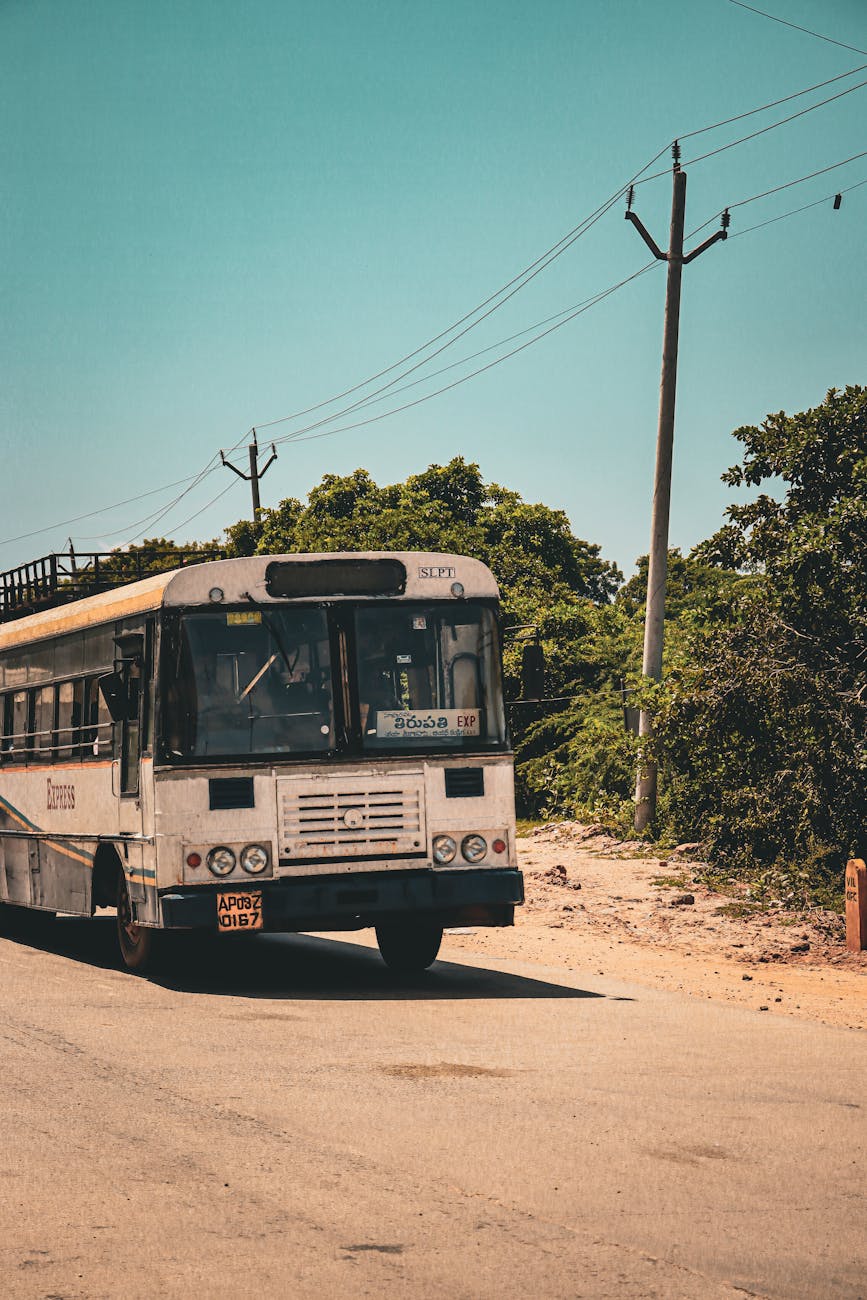
Now, have you ever ridden on a Greyhound bus? Have you ever ridden 2,300 miles cross-country on a Greyhound bus? Let me tell you, that trip is not for the faint of heart. Hard seats, barely any air conditioning, and back then people still smoked cigarettes on board. We only stopped for a few minutes at a time at run down bus stops and gas stations and other places at the frayed edge of human comfort.

When you make such a trip, though, you discover a kinship with the folks riding next to you, because all of you are united by the one fervent desire of anyone who is on a long-distance bus: to get home. At every stop, people were speaking of home, remembering home, wondering how much longer it would be to get there. 

Those of us on the Greyhound were not out for a pleasure ride or a sightseeing trip. Most all of us had been somewhere else, far away from where we wanted to be, and now we were doing whatever it took to get back.

And sometimes you face desperate circumstances. One night on that trip, in the middle of Des Moines, Iowa, our bus was hit by a drunk driver. Thankfully nobody was seriously injured, but the bus was, and so my dad and I found ourselves in a downtown station, bleary eyed and stranded at 4 in the morning with no money. It’s been over 30 years, but I still remember that pit in my stomach, the rising tide of panic. 

We are all just trying to get home in this life, friends. In one way or another, we are all just trying to get home. Some of us have a fairly comfortable time of it. And some of us do not. But beneath and beyond the material circumstances of our lives, that desire to get home, to find a home, to build or reclaim a sense of home—this is what unites us.

I wish we could see that more clearly, especially in divided times like these. I wish we could understand that while our opinions and our ideologies may vary, our basic desires usually do not. We’re all just people on the bus, driven by the memory of a particular porch light, hoping it’s been left on for us if we can ever get back to it. 

As it so happens, Jesus came to help us get back home, in every sense of the word. But first—and I think this is a core goal of his teaching ministry—Jesus wants us to see that we are all on the trip together—this long, surprising trip, with its many perils and compromises. And so we arrive at today’s parable. 

Now, I will fully admit, this Gospel passage is a tough one. The story, the motivations of the characters in it, and Jesus’ message for us all feel a bit confusing, even contradictory. We are told that one cannot serve God and wealth as two masters, which is easy enough to understand, even if it’s difficult in practice. 

But then we are also told to make friends by means of “dishonest wealth.” Why would the Son of God tell us such a thing, sounding more like a rascal than a Redeemer? This is not “Scary” Jesus, but it is Crafty Jesus, speaking to us with an irreverent wink. 

Whenever I come up against a perplexing passage of Scripture, I try to remember my two guiding principles for how these texts should be read: first, through the lens of love. And second, as I have said before, is to read Scripture from the margins—through the eyes of those people and places which exist out at that frayed edge of human comfort. 

And when I do so with this parable, what I notice is how the manager—crafty though he may be—is really just a man with a desperate need to find a home. 

“I have decided what to do,” he says to himself, probably because he has no one else to turn to. I have decided what to do. I will figure out how to get someone, anyone, to care whether I live or die. I will figure out how to find a home that won’t be taken from me. 

How lonely he must be! And this dialogue with himself—this broken man trying to survive—this, for me, is the heart of the parable.

Because note, first, that we don’t know if he actually squandered any property—just that he was accused of doing so by someone with more power than him. And we can’t quite tell whether his subsequent choices were immoral, or resourceful, or subversive, or some combination of these. 

But what we do know about this manager, much like the character of the Prodigal Son, (which is, by the way, the story just before this one in Luke), and what we might even begin to empathize with is that, when faced with the breakdown of everything he thought he could count on, the manager discovers, in a flash, the only thing that actually matters in this life. He discovers the one thing we all seek, in the end: to find that one porch light that might be left on for us. To get home, however far we might have to go to get there. 

And so he tries, however imperfectly, to do just that. I don’t know if I admire him, but I see him. I understand him. 

Because I think it’s safe to say that every single person on that old Greyhound bus had a lot in common with this manager. We were all people without much money, all having to face down our frightening sense of need. We were all people who felt the urgency of getting to a place where someone would finally open the door and welcome us in. 

And guess what: that hungry urgency of homegoing—the kind that leads you down lonely highways, the kind that keeps you going through peril and fatigue, the kind that makes you do surprising things—that, that is part of discipleship. That is part of following Jesus, who called tax collectors and dined with sinners and who, I am fairly certain, would also be quite comfortable with bus stops and the people who rely on them. 

Because it’s not a pleasure ride or a sightseeing trip, this Christian path through life. It is the long, necessary journey through our failure and sinfulness and on towards home, back to God. It is late nights and lonely gas stations; it is grace and compassion and cigarette smoke; it is extravagant hope and deep hunger. That is the truth of this Christian journey. Every story Jesus tells us reveals that this is so. 

And if we don’t pick up on that in his stories, well, it’s time to read them again, with love and from the margins.

So here’s what I’ll ask of you today, whether you have ever ridden the Greyhound or not: don’t judge the manager too harshly, or throw up your hands at the complexity of his story. We are all a tangled mess of crafty and caring, after all. 

Just see him for who he is: a fellow traveler on the bus with you, with his own mistakes and missteps, his own private failures and desperate choices, just like yours or mine, just sitting in Des Moines at 4AM with his head in his hands, wondering what he’s going to do next and when or if he will ever be home again. Some times, that’s all of us. 

And if that inspires a bit of tenderness in you, a bit of compassion for the many imperfect ways people have to survive in this world and the ways that God loves us and welcomes us regardless…well, then perhaps the parable has done its job after all. Perhaps Jesus has met us, again, as he tends to, at the frayed edge of human comfort.

On that bus trip, we did finally make it to Michigan, by the way. But in a bit of a twist, we didn’t get there on the Greyhound. After the accident, we were stranded. So my grandpa got in his old truck and drove over 500 miles to Des Moines and brought us home with him. The porch light was indeed on when we got back. 

And you know, I’m fairly confident that’s what heaven would feel like for me if I ever get there: the light on and the door opening, and the One who just looks and me and says, long trip, huh? 

And I’ll say, Lord, you have no idea

And he’ll say, maybe with an irreverent wink, actually, I do. 

Worth It: A Sermon

I preached this sermon on Sunday, September 7, 2025 at St. Anne Episcopal Church, West Chester, OH, which was observing its “Faith in Action” ministry celebration. The lectionary text cited is Luke 14:25-33.

I mentioned “Scary Jesus” a couple weeks ago, and it seems he’s back with us today using very strong language to tell us something fairly self-evident: often in life you have to count the cost of something and decide if it’s worth it, whatever “it” is. But sometimes…sometimes you just can’t know in advance if it will be worth it, or how, but you know you have to do it anyway. And that’s when things get interesting. That’s when faith begins. 

So, for this Faith in Action Day we are observing, here’s a story, in three parts, about determining the worth of things.

Part 1:

It was love at first sight.

My father saw it sitting there in the parking lot with a bunch of other used vehicles, bathed in the promise of a perfect spring morning: a gleaming, goldenrod, vintage VW van—the kind that, when you see it, you feel lighthearted and adventurous, and you swear you can hear Hotel California playing on some distant radio, and you feel that open road unfurling from some point of origin within your deepest self. Oh yes, it was love, and he was all in. 

Never mind that he didn’t have much money. Never mind that the old man selling it was vague on its maintenance history. My dad saw that van and he knew he had to get it, he knew that it could carry us long and wondrous distances: California to Michigan and back again, or even farther, maybe, all the way to the promised land.

And so he plunked down some cash and, a few weeks later, once I was done with school, we threw what we had in the back and headed east, ready for anything. Well, maybe not anything.

Because the first time we made a quick stop, a few hours from home, the van wouldn’t start. And we were stuck in a rest area outside of Willows, California, on a 90-something degree day in June, unsure how to keep going. 

I don’t remember exactly how he figured it out—this was before cell phones and internet access—but somehow he determined that we had to manually spark the ignition to start the van again—I had to sit in the driver’s seat and turn the key, and he was out there, cussing in the heat, pressing some fuses together or something. Essentially we had to hotwire our own vehicle every time we started it. And so we did, all the way across the country, until we got to Michigan and he could afford to fix it. 

Was the van worth it? Depends on how you count the cost. It never really did work that well, and years later I think he sold it for next to nothing. 

But on the other hand, I can tell you that when I think of what it means to be free, and safe, and alive in this world, when I think of what hope feels like…what I remember is riding in that old VW van with the windows down somewhere in the Great Plains, eating a ham sandwich, singing an old song on the radio with my dad and I think: oh, maybe we did get to the promised land after all. 

Part II: 

It was love at first sight.

Those disciples had met Jesus in any number of ways, caught up in the various worries and occupations that constitute a normal life, but when they saw him, they saw Life with a capital L. They saw a different sort of road unfurling in front of them, one that carried with it all the promise of a spring morning. And how could they not follow, to see where they might go together? Wouldn’t that be worth just about anything?

And it’s true, that most of them didn’t have much to lose—no money or status. Maybe they thought that following Jesus would give them the dignity and the peace and the protection that are scarce resources in this life.

But then, we come to today’s Gospel passage, and somewhere at a rest stop along the way to Jerusalem, maybe in the 90 degree summer heat, Jesus has some difficult news for them: this journey is going to cost a whole lot more than they imagined.

The language of hating what is dearest to us and of giving up what is most precious—it lands hard on the ears, it makes a person sweat and second guess their choices. It suggests that whatever this love is, it is not the comfortable, cruising along smooth highways kind.

And its worth cannot be measured in the same way as those kings who wage war and build towers. Jesus, I think, talks about those things not to equate them with discipleship, but to contrast them. He is being ironic. He is saying, the book of True Life is not a ledger. The way of True Peace is not a negotiated settlement. 

Therefore, none of you can be my disciples unless you let go of all that. You have to follow me by faith and when they ask, on the other side of the cross, was it worth it, you will have discovered a new way to speak of worth.

And only then will you be free, and safe, and alive in this world. Only then will you reach the promised land. 

Part III:

I imagine, for many of us, it was love at first sight, or close to it—the first time we came through those red doors of St. Anne, or another door like it. The first time we heard the Spirit reverberate through an old hymn or felt Jesus press against our lips in the shape of bread. The first time we understood that we were welcomed just as we are, and felt the possibility of something new unfurling within us. 

And what a journey it is, to be in a church like this, to build a community like this, to see it grow and change and stumble and get back up again. To show up in the light of spring mornings, and on winter nights, too, and to know that something, that Someone, waits for us here, waits to huddle in close, to hotwire our hearts, to ignite something long dormant within our souls, to make us feel alive again. That is the gift of church at its best. That is the gift of a place like St. Anne. Its worth is hard to measure.

And yet, it doesn’t always go the way we think it might, or should. We’ve had our moments when we felt stranded on the side of the road, the world rushing past, and I imagine there have been times when it feels like we are getting by on a lick and a prayer, because, well, frankly, sometimes that’s the best anyone can do.

Which is why Faith in Action day is so much more than just a ministry fair or a sign-up event. It is an acknowledgment of the cost—the deep and continued and holy cost—of following Jesus, and of figuring out how we are going to bear it, and share it, and even rejoice in that costliness together. It is a moment to say thank you to one another for all of the ways, large and small, that we’ve shared in the cost of keeping this place going, mile by by mile. 

I hope, as we travel around the tables at coffee hour today, we will take time to say thank you to each other—for being here. For trying. For sweating in the summer sun and shoveling the snow and planning the programs and assembling the ham sandwiches. I hope we will taste the goodness of all of it, and recommit ourselves to the love that drew us in, that draws us out, that keeps us here and keeps us going. 

Because it’s funny, when you consider the value of our life together here: it is not “useful” in any traditional sense of the word. We are not building towers and waging culture wars. We are not “winning” anything. We are just loving everything, and everyone. 

What a miracle that this is enough—more than enough. What a miracle that this is everything.

What a miracle that we persist in the foolish, extravagant experiment of a life founded on chasing after Jesus, wherever he goes, for no other reason than this: that it was love at first sight.

And, as with all great love stories, perhaps, when all is said and done here at St. Anne, if someone were to ask us if all of this was worth it—all the false starts and the broken engines, all the hard questions and the hellos and the goodbyes—I hope that we will be able to look up and say: depends on how you count the cost. 

But we can tell you this much: here, we were free. Here, we were safe. Here, maybe for the time, we were alive in this world. 

And yes, oh yes, every now and then, I think we even saw the promised land. 

Montana: A Sermon

I preached this sermon on Sunday, August 25, 2024 at St. Anne Episcopal Church, West Chester, OH. The lectionary text cited is John 6:56-69.

As most of you know, my dad’s side of the family lived in a small town in the woods of upper Michigan. I talk about that place a lot, in sermons and in stories, and I think about it a lot too, because it inhabits that place in my heart where one finds something true and good to hold onto as the years go by. 

Because as a kid in California who moved around a lot, Iron River, MI, (population 2,000) was an unconventional promised land of sorts: a place where the doors always stood open and porches creaked hospitably when you stepped on them and streets were paved in golden sunlight. It was (and to some extent remains for me) a sort of dream. Maybe you have your own such place, somewhere within your own heart and history. A particular golden landscape. A door that always stood open for you. 

But for my family who actually lived full time in Iron River—and especially my grandpa, Russ, who lived there his entire life—it was not a dream. It was simply where he lived, and where his family had always lived, for generations. He loved it in his own practical way, but I think it’s safe to say it did not dazzle or tantalize him like it did me. No, for my grandpa, the promised land was another place entirely. It was…Montana. 

If you’ve been you know that Montana is a stunning place, especially in the western half where the mountains are like green teeth chewing the sky, with lakes as still as glass mirrors reflecting the faces of the big thunderhead clouds. And while I was busy dreaming of Michigan, it was Montana that had long fueled the daydreams of my grandpa. So much so that at one point, when my dad and his siblings were young, he attempted to move the family out there. 

It didn’t work out, and they soon returned back to Michigan, but for as long as I can remember, he would get a sort of dreamy, wistful sound in his voice whenever he talked about the big sky and the small western towns and that one particular diner in eastern Montana that had the best tomato soup known to God or humankind.

But ultimately, while my grandpa loved the idea of Montana, the freedom and adventure it represented to him, it was Michigan that was home for his entire life, until he died at the age of 89. It was that one small Michigan town where he swept hallways as a janitor and drove buses and went fishing and paid bills and fixed broken things down in the basement while puffing on his little cigars. 

And while he might have dreamt of the wind singing in the pines on some far off Montana peak, it was in Michigan where he sang songs to his grandchildren and watched us grow up to dream our own dreams. 

I was thinking about all of this—Michigan and Montana and the places that tantalize us and the regular places where we make a life—because I have realized that it parallels and illuminates something really important about our lives of faith. In particular, I’ve been thinking about that very word, faith

When I say the word faith–when I ask you to talk about your faith–what would you say in reply? 

Typically, we would start to talk about what we believe—what we think—about who God is and how God acts in the world. Faith is the word people often use to describe their attitude towards the Bible and Jesus and whether they think he is who he says he is. And so, if I say I have found my faith, it means I think one thing about Jesus. And if I have lost my faith, it means I think something else. 

Faith, understood in this way, is very conceptual; it’s an idea that we wrestle with. It is sort of like Montana was for my grandpa—this lovely but not quite solid thing that rattles around in our head, a vision that remains always just out of reach.

But what I have realized is that Jesus is not all that interested in this sort of faith. I don’t think he came just to tantalize us with concepts or give us more fuel to endlessly debate ideas about God. He came to give us something real, something tangible. He came to give our actual lives back to us.

Because Jesus teaches, time and again, that the Kingdom of Heaven is not a place hidden beyond the horizon. It is the ground beneath our feet, made holy by our daily choices. It is the temple of the present moment, open to all who recognize here, now as the place where we meet God.

At the risk of sounding overly provocative, I am suggesting that Christian life is less about faith and more about fidelity—the commitments we make and the promises we keep, where love looks less like a map to a far off place and more like an object mended in the basement. In this Christian way of life, we commit not so much to an idea as we do to a set of choices made and acted upon. Choices that build a sense of home and hope for ourselves and the people around us. 

That’s why Jesus is so insistent about bread and flesh and blood in this discourse we’ve been hearing for the past few weeks. He is telling his disciples, and us: stop treating all of this—what I am doing, what I am saying, what I am teaching—like it’s an idea that you can take or leave. God is not an idea. Love is not a theory or a concept or an ideology. It is the fundamental substance of existence.

And until we realize this–until we realize that God is not an idea and heaven is not a dream destination, but the enactment of our daily fidelity to love–until we claim this, we do not have life in us. Not truly, not fully, not yet. 

And so if you are ever looking to check in with God about your discipleship, about how things are going between the two of you, I would encourage you to spend less time agonizing over your doubts or relishing your certainties and spend more time asking: to what or to whom have I given my fidelity? What choices am I making? What relationships am I building? What simple, practical work am I doing to love the ground beneath my feet in the name of Jesus?

I daresay that the Gospel of Christ has endured for over 2000 years less because of the triumph of an idea and more because certain people in each generation decided, as Jesus did, to put some flesh on their love—they decided to stop talking and actually live the gospel out. To give their own bodies and selves as living bread for the life of the world. Even if it just looks, most of the time, like fixing broken things, paying the bills, sweeping the hallway, and singing to your grandchildren.

You know, I have sometimes wondered, when my grandpa died and went to be with God, what it looked like for him when he got there. I wondered if it looked like Montana..that maybe he got there at last and finally found himself at home in the high peaks, bathed in wind and cloud and Spirit. 

But if I am honest, I bet his homecoming looked more familiar than that—that heaven is more like being enfolded back into the love we spend our life on.

And so maybe, just maybe, in some quiet, woodsy corner of heaven, he is still tinkering in the basement, still singing in the night, or driving down a quiet highway, headed not towards Montana or any ineffable dream, but to the place where God actually abides—the place that looks like flesh and blood and fidelity. The place that looks like home.

Maps: A Trinity Sunday Sermon

I preached this sermon on Trinity Sunday, June 12, 2022 at Trinity Episcopal Church, Fort Wayne, IN. The lectionary text cited is John 16:12-15.

Ever since I was a little kid, I have loved looking at maps. Our family went on lots of road trips, and there was a sort of weighty, sacred significance in the big printed road atlas that was usually kept somewhere in the car. Even if we weren’t going anywhere in particular, we would get it out and we would look at it together, and I would trace my finger along the blue and red and green roads and highways crisscrossing the printed page like ribbons, or rivers, or veins, each one an invitation, a daydream, a path leading somewhere, towards a place just over the horizon of the present moment. A place that, to my young mind, was mysterious. A place that was beautiful. 

To this day I still love looking at maps and pondering places to explore, both near and far. And so it happened that this weekend I was scrolling on my phone across the map of this area and I noticed the place, about an hour from here, where the state lines of Indiana, Ohio, and Michigan converge. As best I could tell, it was just a spot along a country road pretty far from anything, with a little stone marker.  Worth driving an hour each way? I’ll let you be the judge of that, but the map was calling out to me, and so I hopped in my car on an impulse and headed north. 

After getting off of the interstate, I ended up on one of those beautiful two-lane country roads that we have in abundance around here. The land rose and fell gently, like the belly of a sleeping giant. The clouds were big and voluptuous, the trees an insistent shade of green, the red barns and the farmhouses nestled among the fields. And still I kept driving, and driving some more, far past any town, out to where the roads arent quite yet dirt, but where they’re starting to think about becoming dirt. 

And suddenly, there it was. Just off the road, with a little place to pull off: a stone marker perched on a small rise, which indicated that 130 feet to the south, the three states meet in one spot. And so I parked the car and walked a little ways, and there it was—not much to see, I’ll admit—just a little metal plaque embedded into the middle of the road with the letter “M.” So I’m guessing Michigan got to put it there.

And as you do when you drive over an hour to see a letter in the middle of the road…I stood on it. And then I took a couple of pictures of my feet standing on it. And I looked around at the loveliness of that quiet road, accompanied only by the birds and the breeze rustling the flowers and the wild grass, and I thought about how strange and yet oddly thrilling it was to be standing upon the precise intersection of three places, each with their own unique character, each with their own people and histories and hopes, and yet here, together, gently resting up against one another, hidden away in the middle of nowhere, or, depending on how you look at it, in the middle of everywhere. 

And while it was not quite as glamorous as some of the places on the map I’d daydreamed about as a kid, it was mysterious. And it was beautiful.

Now, given that today is Trinity Sunday, that day in the Church year when we preachers try, however imperfectly, to ponder and speak about the God revealed to us in Scripture who is both three and one, you might already see where my imagination is going with this. And although I admit any attempt to reduce the Trinity to a tidy analogy or image is destined to be insufficient, I couldn’t help but think about it as I stood on that spot in the road, trying to imagine where exactly on that little plaque one state ended and the other started, searching for the infinite vanishing point between uniqueness and unity. 

Uniqueness and unity. We could say something similar about the Triune God, a theological mystery which is itself perhaps marked with an M, somewhere out beyond the cosmos, in the backroads of heaven, among the fields of wheat and the wildflowers and the swooping doves. Theologians and preachers and all kinds of other people have written a lot of words trying to map the Trinity, to describe its contours and characteristics and the best way for us mere mortals to approach it. We all want to “get it” or get close to it. And yet as close as we might get, we can never quite reach the center of what or where or how the Trinity is. It is hidden from us, just out of reach, that infinite vanishing point where Father, Son and Spirit touch and intertwine, beyond the limited scope of our perception. It is nowhere, and it is everywhere. It is mysterious. And it is beautiful.

How thrilling and humbling it is, when you really think about it, that as Christians we give our lives, our whole selves, over to something—to Someone—whom we can’t quite understand. But that’s what love is, in the end, isn’t it? A headlong leap into mystery. 

And so today, on Trinity Sunday, we honor that mystery of God’s love, not trying to solve it like a riddle or simplify it into a diagram, but instead to celebrate the journey that we make together in its general direction, like travelers with a map in our hands—longing for the promise that lies beyond the horizon of the present moment, searching for that place at the end of the long road, the place where all of our unique stories, all of our hopes and our homelands meet, gently resting up against one another— a place we know is real because Jesus has revealed its possibility to us, even if we can’t quite describe it or see it yet.

But that’s the whole point—we haven’t fully arrived. We haven’t plotted the precise coordinates of the Kingdom—no, not a single one of us. And we as the Church are at our best when we acknowledge that our journey toward understanding God is still a work in progress. The depth of the Trinity, that is to say the depth of God’s grace-filled self, is still being revealed to us. And admitting this prevents us from all manner of ills: legalism and self-satisfaction and complacency and hardened certainties. It keeps us tender, open to being surprised, open to admitting that perhaps God is even more wondrous, more loving, more liberating than we—or anyone—has ever dared to hope. 

“I still have many things to say to you, but you cannot bear them now,” Jesus says in today’s Gospel passage. “When the Spirit of truth comes, he will guide you into all the truth…he will declare to you the things that are to come.” 

This story—this revelation of the divine life of the Trinity—is not over yet. The Spirit is still working within us and within the present moment; the Son is still journeying with us, even to the end of the age; and the Father stills waits to greet us, his prodigal children, at the end of our travels, running across the field, arms open wide, a feast heavy upon the table. The Trinity is all of this, and more. It is mysterious, and it is beautiful.

Our only task is to keep going. Keep going, even when we stumble. Keep going, even when it feels like we’ve lost the path. Keep going, even when nobody else seems to want to come with us. Keep going, even when the map is stained with our tears and the lines bleed together. Keep going.

Because if nothing else, to speak of the Trinity, the way it moves and holds and calls us, is to speak of God’s ongoing invitation to keep going. It is the proclamation that God was, and God is, and God will be with us as we do so, and that wherever we are going, we will meet him in the end. We will converge, somewhere on that hidden road, into that infinite vanishing point of uniqueness and unity, of God and of creation, of flesh and blood and bread and wine and breath and wind and flame. We will stand right there at the intersection of eternity, and finally, we will know. Finally, we will be known.

I still keep an atlas in my car, by the way. Every once in a while I’ll take it out and trace the roads on the map with my finger, dreaming of what more there is to see. There’s always more to see. The only difference is that now, I have come to know that you don’t have to travel very far to see wondrous things. The infinite mysteries of the universe—of love, of life, of God—are close to you, closer than you can imagine. 

Sometimes, if you know how and where to look, they’re just under your feet. 

Standing on the spot where Indiana, Ohio, and Michigan converge.

Poems on the Road

I’m on a night train heading through the Oregon wilderness, and I decided to share a couple poems I jotted down recently. I’ve been reflecting a lot on the spirituality of love and desire this past year, and these are small, imaginative windows into that journey, one from the perspective of Mary Magdalene, and the other from Judas Iscariot. Hope they resonate for you in some way. Peace, friends.

Magdalene

I needed you so much that
I whispered my deepest longings into a jar
And poured its dark sweetness upon your feet
Not that you would grant them, but
That you would absorb them into your self
My desire like sweat on your skin

I wept tears of love so pure and burning
that they felt like grief
Salt water sonnets
Braided through my hair like jewels or
Serpents

And just now
In the garden of re-encounter
Which never looks like the old days
When love was initial:
I saw
Briefly, ever so
The glimmer of my longing, and my tears
Transfigured into something selfless and whole
In you

Do not hold on
You said
Not because I shouldn’t love you
(Impossible)
But because my love
Reached its home in
Your heart
The sweetness and the salt are yours now
Ours now
The world’s now
Now, always
Anointing
Washing
Outpouring
Shameless
Free


Judas

You offered me the cup, said it was your blood.
Oh how I hated you, and loved you
For your generosity
When all I wanted was to bite your flesh and make you bleed from my desire.
You called me by name once
And I thought I loved you
Purely, selflessly
But now I know I wanted what i thought you were
What I needed you to be
Most beautiful of men
And when I realized that your inner light was as perfect as your shining face
I hated you, because I could not possess you for myself
Apple, flesh, my joy and sweet poison
They killed you and I thought I’d find relief
From your perfection
But there is no rest apart from you.
My tears are silver discs
And I weep, not for you, Who is peace itself
But for myself, because I realize
We could never have been united
Until I let you be Yourself. And I couldn’t.
My desire was misplaced.
I long for you still.
I will join you.
Beyond death, somehow, find me.

Half-Finished Life

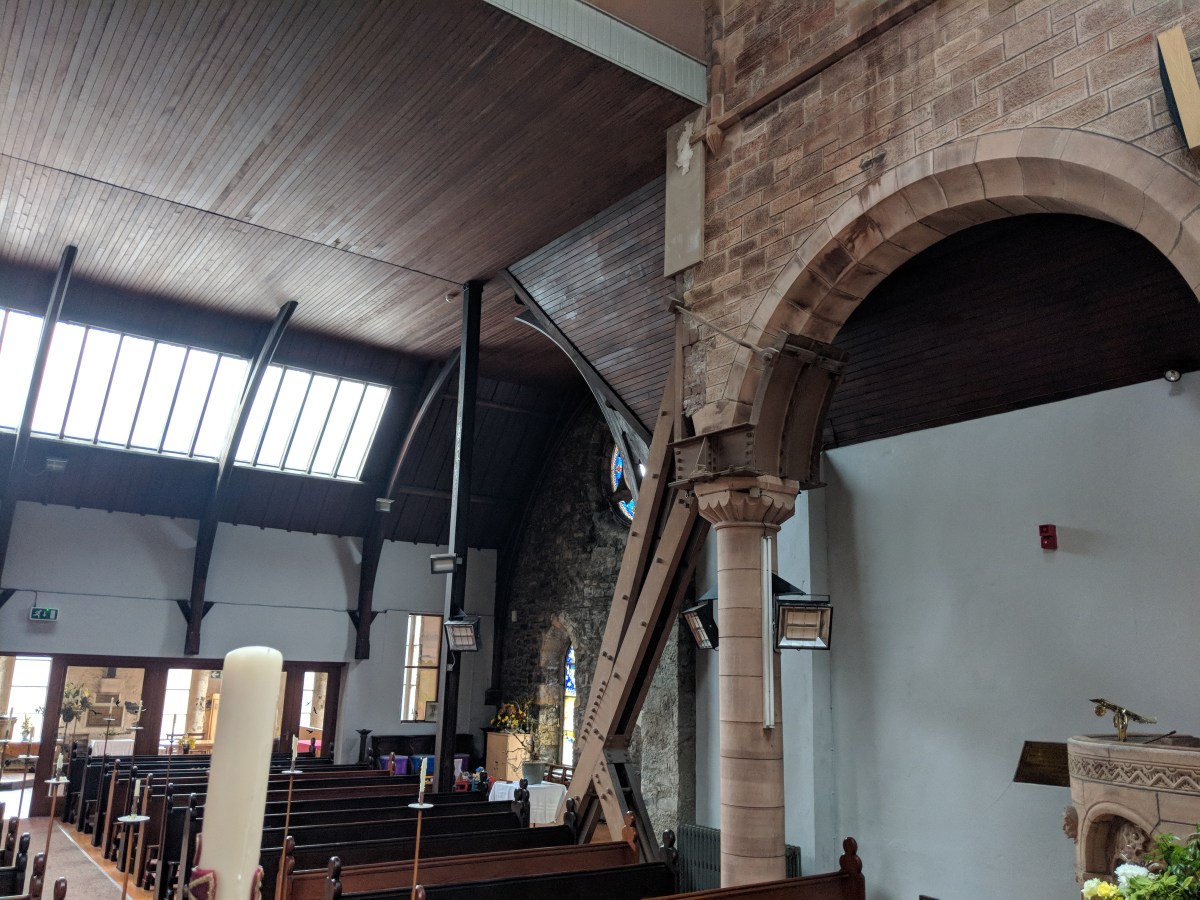
On the coast of Scotland in the town of Oban, there is a church—a cathedral, in fact. It’s the most unusually constructed building I’ve ever seen. It started as a simple little brick structure, and then some years later the leaders had a grand vision of expanding it into a massive stone edifice. They had more vision than they had money, though, and when funds ran out, they’d only partially begun the addition.

Today, when you walk in, you can clearly see where the old building and the new were awkwardly joined—there are huge steel girders holding up the new section, and while these beams were probably meant to be temporary, they’re now just part of the interior. So far the whole thing has held together. You can see what it looks like in the photo attached to this post.

I feel a bit like that church building, and maybe you have have, too, at various points in your life. I want to be polished and put together, I don’t want the ugly interior structures showing. I want to be all incense and candles and beautiful music. Instead most days I feel like a half-finished project cobbled together from bits of false starts and broken dreams.

But you know what? God is still present.

God is still present in that half-finished cathedral, and in my half-finished life, and in yours. God doesn’t care about smooth walls and cohesive aesthetics. God isn’t worried if all you can put together is a misshapen hovel, as long as it’s built with love.

This might be self-evident to you, but goodness is it hard for me to accept. I have sought love and validation in every place where it cannot be found. I have spent years trying to be a Grand Cathedral sort of person–perfect, alluringly ornamented, trying to stand out, trying to earn the approval of teachers and lovers and friends. Not because they demanded it, but because I was convinced of the ancient lie: you will be complete when…When you know more. When you create more. When you look better. When you are more sophisticated. When you are admired.

God doesn’t care about any of it. Christ didn’t live, die and rise again so that I could achieve social respectability or admiring glances. So why, oh why, do I keep wanting it? I am weak, Lord. Help me be happy in the permanent construction zone that is life.

These months at Mirfield, and the events of my life therein, have definitely stripped me down to the steel girders. But I’ve learned about the dignity of silence. I’ve witnessed the beauty of consistency, in both prayer and work. Yes, I’ve felt the sting of loneliness and rejection, which is a small death, but also the warmth of kindness, which is a bit of resurrection.

These are good things. Necessary things. I wish them for you, too, to the extent that they draw you closer to the God Who loves you regardless of how well put-together you are.

There is so much more to say, but not now. For now I’m looking at those unsightly cathedral girders and reminding myself that what is humble is often what is strongest.

Home in just over six weeks. Pray for me, as I am for you.

Pausing in the Ruins

Holy Week began tonight with the first evensong of Palm Sunday, and Mirfield is a buzz of activity as visitors arrive to participate in the Community’s extensive schedule of observances. Over the next seven days we will have upwards of 50(!) worship services, plus communal meals and public lectures. It is, according to everyone who has experienced it before, a singularly transformative experience.

I will admit, though, that the excitement of Easter’s impending arrival (and the two-week break that follows!) also feels bittersweet, like a valedictory. This time of Lent, now entering its final stretch, has been rich with challenge and insight, and I’ve taken much time and space throughout these 40 days for an unflinching look at my life. Some of it has been consoling, and some of it has been jarring. This penitential season has a way of stripping you down to the skin, revealing your fears and flaws, leaving you shivering and raw and somehow even more alive as a result.

That’s how it felt last week when I took a trip by myself to the seaside to visit the ruins of Whitby Abbey.  The site stands on a headland overlooking the North Sea, and on the day of my visit the weather was so inclement that there wasn’t a single other person around. The wind blew so forcefully that it almost knocked me over as I traversed the wide grassy field, and when I sought shelter beneath the crumbling Gothic arches, the rain whipped through the intricately carved stone window openings that once held stained glass, stinging my eyes with tears. It was miserable and beautiful all at the same time and I thought: this is Lent, in all its luminous, wondrous fury. We spend a season alone, praying and crying amid the majestic ruins of our regret, as the cold wind of God blasts through, shocking us back into reverence and life.

Now, though, back in the community at Mirfield, it’s time to come in from the cold and embark on a different type of journey: into Jerusalem with Christ for a final week of tribulation and revelation. On Palm Sunday we join the throng and enter the holy city, waving our palms as an assemblage of lost souls who still seek salvation on our own terms: power, success, admiration. And as we move through the days and the liturgies, there is still so much yet to be faced and relinquished—our false hopes, our jealousies and our idleness, our tendency to betray the love that is offered to us, bargained away for a few coins and an empty kiss.

But just like my rain-soaked excursion to Whitby, it’s a journey we can’t help but make, because it is often from the depths of pain and isolation that we begin to recognize the miracle of new life that comes on Easter day. I have been wrestling with so much these past few months, and I feel ready to step into the redemptive light of whatever lies ahead. For just a few days more, though, I will sit and be attentive to the yearning and the questioning that have been my gentle companions for this season.

Wherever you are this Holy Week, and whatever you might be going through, I pray that you will find courage in facing what you must face, and solace in knowing that everything good awaits us on the other side of the Cross.

Peace, my friends.