
The Master: Sermon

I preached this sermon on Sunday, November 19, 2023 at St. Anne Episcopal Church, West Chester, OH. The lectionary text cited is Matthew 25:14-30, Jesus’ parable of the talents.

The other day a very exciting thing happened to me: I received in the mail a copy of the Vermont Country Store Christmas catalog. Now, if you are not familiar with this company or its catalog, it is a family-owned business in Vermont that primarily sells home goods and clothing and other items for anyone who is enticed by things like flannel sheets and wool sweaters and maple syrup. 

And the Christmas catalog, especially, is something I look forward to all year, even though I rarely buy anything from it. Just to flip through it is a treasure trove of nostalgia—vintage holiday decorations and cakes made from “old world” recipes and cozy slippers like the ones my dad used to wear on cold nights in northern Michigan. To read the Vermont Country Store catalog is, for me at least, to be drawn into that landscape of memory that feels especially potent as the holidays approach, as the past reaches out to embrace us.

And although our memories of the past can be both pleasant and painful, there is something about this time of year that seemingly compels us not just to remember it but to re-engage it, to make it live again through recipes and traditions and songs. 

For me it might be the Vermont Country Store catalog, for you it might be something else, but I am willing to bet that there will be something in the next several weeks—a scent, a taste, a melody—that will suddenly collapse the boundaries between past and present such that your life will suddenly feel both very spacious and very small all at once—spacious enough to hold so many memories, small enough to still feel like they were only yesterday. Time is strange like that. 

I’ve been thinking about time this week. It is precious, isn’t it? Perhaps the most precious thing we are given. It seems so abundant when we start out. It can feel interminable when we are waiting for something to happen. 

And then, suddenly, it slips away, and we think, oh, wait, not quite yet. I thought I had a bit more, I need a little bit more. There were still things I wanted to do, there were still words I needed to say. I don’t know why I didn’t. Maybe I was distracted. Maybe I was afraid. Please, just a bit more time. 

But the dying light and the winnowing down of the year reminds us that time is a relentless master; we are given what we are given, and it is up to us to make the most of it. It is up to us to imbue it with light and love and care while we can. I think we try to remind ourselves of this during the holidays.

If you wonder why on earth I’m going on about Christmas catalogs and time and memory, it’s not just because Thanksgiving is coming up in a few days, although I am excited about that. I have my Cool Whip ready!

No, it’s because I have been wrestling all week with the parable we have been given this morning, seeking a life-giving word from what can feel like an impenetrable text. Jesus, yet again, gives us an image of the Kingdom that seems, on its face, short on mercy and full of dire threats from a cruel master demanding a return on his investments. Is this supposed to be God? I cannot believe it. And so, yet again, I found myself seeking good news in an unexpected place.

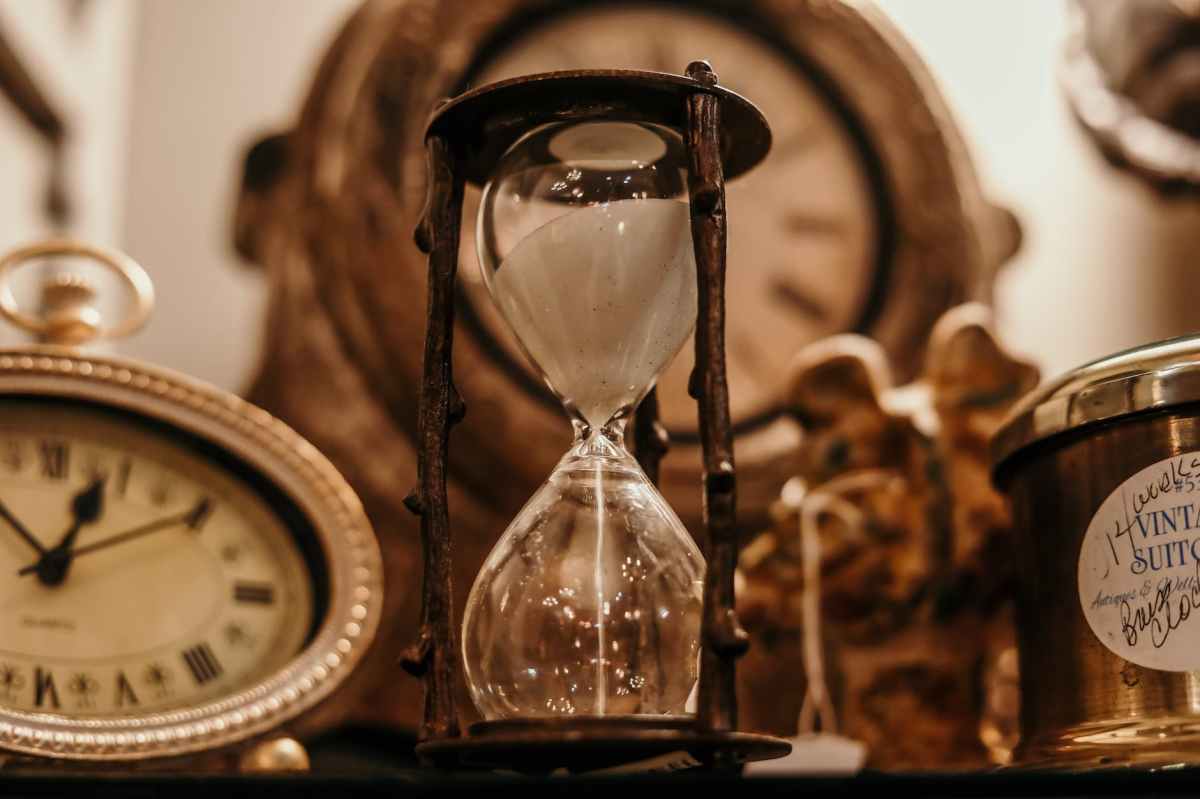
And as I was flipping through that Christmas catalog and reflecting on the past, I found it. Not in the catalog itself, but in that tender sense of longing for times past that it evoked in me. It made me realize, in a new way, that the thing in this life that is of greatest value—the closest thing we might equate with both  the “talents” given in this parable and the Master who dispenses them—is not God. It is time. 

Time is our greatest resource. Time is our most precious gift. Time is the thing we must decide how to use while it is entrusted to us. And time, in the end, is the unyielding master of our mortal bodies, for it will run out, and it will call us to account. Time will ask us, in the dying light, in the winnowing down of our own years: what did you do while you could? What dividends of love and justice and peace do you have to show for it all?

And yes, I know that for generations, the Church has interpreted the Master in this parable as Christ and the talents as our material or spiritual resources that we should not bury out of idleness or fear. But I will be honest, I don’t believe that God punishes us simply because we are afraid, because we didn’t know quite what to do, because we didn’t yield a certain rate of return. I think such notions of God have been used to exploit people or at the very least, to make them feel like they are never enough, that they had better produce results or else, usually for the cruel masters of this world. 

Because here’s the thing about God—here’s the good news for those of us wearied and tearstained by the passage of the years—God is bigger than time. God is not bound by time. God is not sitting out there somewhere, watching the clock, waiting to see what you and I will accomplish. God is not making a list and checking it twice. 

God already knows. God has always known all that you would be, and all that you wouldn’t, or couldn’t be. And God has loved you anyway. Whether time has been kind or cruel to you, God has been with you every moment of your life, and will continue to be there, even when time runs out. And on that day, God will guide you out beyond time itself, beyond longing and regret and fear to that place where nothing is wasted, where nothing is lost, where everything is given. 

And if this is so, then perhaps the true invitation of this parable, the way into a Kingdom that arises in the midst of the cruelty and finitude of time, is simply this: cherish what you have been given. Savor the collection of fleeting moments that are your life. Use your days to make a world that is more peaceful, more beautiful and gentle and loving. 

Not to try and impress that master, Time, who will take all we have back for himself, but to get in touch with something even more powerful—to awaken to the reality that no matter what is taken from us by time, the love that we experience and share in this life is timeless, it is eternal, for it belongs to God. And one day Christ will come and give back everything and everyone that time has taken, and it will be a gift more precious than anything you can order in a catalog. 

It will be the life that is beyond time, which we cannot yet even imagine, and yet which is deeper, even, than our most cherished memories. Because even more so than our own lives, God is both very spacious and very small, all at once—spacious enough to hold forever, small enough to hold you. 
Feast: A Sermon

I preached this sermon on Sunday, November 21, 2021, Christ the King Sunday, at Trinity Episcopal Church, Fort Wayne, IN. The lectionary text cited is John 18:33-37.

One of my happiest holiday memories is when I would wake up on Thanksgiving day to the smells of an already-busy kitchen: sage and onion and baking pies and brewing coffee. It was almost as delicious as the meal itself, that long moment of awakening, warm and half-dreaming in the morning light, knowing that there was a feast being prepared, that everyone I love would be gathered in one place, and that, even though the world outside was complicated and so were we, for this one day, at least, there was no need for anything else. There was enough, and we were enough, here, now, together. 

And while for some of us, perhaps, Thanksgiving was never quite so happy an occasion, I do think each of us understands the potency of the idea itself: a time of rest and reunion, a world in which no one goes hungry, where everyone is welcome at the table, where being known and seen and loved is a gift available to all.

As we grapple with some of the entrenched realities and the challenges facing our country and our world—racism, violence, economic inequality, and ecological crisis, to name but a few—I acknowledge that for many the observance of America’s Thanksgiving holiday is fraught with complexity, and I also acknowledge that its celebration can bring up feelings of ambivalence for those among us whose families are fractured or scattered or simply gone. 

But the principle of gratitude that underlies the day is something that must be reclaimed and reinvigorated anew by each generation, so that this is not just the passive reception of an unexamined history or a private lament over a broken family system, but a courageous choice to believe in what is still possible—to believe that there might yet remain much for which we can give thanks. Because even as we face what is ugly and messy about the human condition, we must also hold fast to what is beautiful and hopeful—those simple, good gifts that make life not just bitter, but sweet, that make the struggle worth it, the things that tell a story of hope, not just disillusionment. The things glimpsed around the bountiful table of the present moment—a feast of memory, but also of determination and of expectation of a better tomorrow. 

That’s why I love that after this service we will go upstairs and pack bags with food supplies and encouraging notes for our neighbors so that they, too, might enjoy a Thanksgiving meal. It’s our congregation’s own small gesture of gratitude for the blessings in our own lives, and a demonstration of our belief that the world can still be a hopeful place, a generous place, and that we can help make it so, even when fear and scarcity seem to dominate the narratives around us. 

Choosing to believe in the redemptive possibility of this world—in its goodness, in its capacity fpr renewal—this is part of what we mean when we speak of the Kingdom of God—not just a place up in the heavens that we escape to when we die, but the emergent, lived reality of God’s love here and now—the power of that love, the triumph of that love, the sovereignty of that love. The ultimate gift for which we give thanks.

And so while it is somewhat a fluke of the calendar, it is fitting, perhaps, that Thanksgiving and Christ the King Sunday fall in proximity to one another, because each observance, at its best, calls us toward a vision of beloved community. Thanksgiving  calls us back to what is essentially good and true in our own lives, and as we conclude the calendar of the church year and prepare for the cycle to start anew with Advent next week, we pause to ask ourselves: who is this Christ, this King whom we worship and follow? What is the essential goodness and truth that he brings? And how do we take part in it?

I will admit that answering these questions and then living into the answers can be harder than we care to admit. We want to believe that love wins, that hope endures, but sometimes we look at the world around us and we look up at Jesus above the altar, on the cross, and we can feel as incredulous and bitter as Pontius Pilate, and we ask: Are you the King? Are you? Because you are nothing like any king I have ever seen. You are not the sort of king who fixes all of the problems around us. And even if you are, what is truth when no one is honest anymore? And what is love when everyone is just out for themselves? And what is justice when blood flows in the streets and children go hungry, just as it has always been? And what is hope when it’s just the same bitter pill to swallow, time after time?

Are you the King? 

And Jesus simply looks back at us, infinitely tender, and says: “You say that I am a king. For this I was born, and for this I came into the world: to testify to the truth.” 

 Because the truth is that Jesus’ power, Jesus’ kingdom, is still not the type we expect it to be. And he comes into our midst, still, not to rule like other kings. Not to control. Not to gather power and wealth at the expense of others, and not to tell us to do so in his name. Jesus comes to testify to a truth that is deeper and more powerful than kingship, even if it is less obvious. A truth that God has been trying to convey from the very beginning, although we continue to ignore it, time and again. 

A truth that rises up, growing like a seed sown in a field A truth that rises up like yeast in bread. A truth that rises up like a spring of living water. A truth that rises up and refuses to be killed or silenced, even in our most desolate, hungry moments: the truth that love persists through death. The truth that mercy persists through brokenness. That there is, indeed, enough for everyone, if we will let it be so. That we are, indeed enough. That we belong to this earth and to one another. That we are known and seen by God in our weakness, in our hunger, and we are forgiven. 

The truth that we have to stop being afraid, stop hiding from God and one another, and step out towards each other with hope and gratitude and say, yes, here I am. And yes, I believe in your goodness, Lord. And yes, I believe that it is love—not fear, not the power of kings—that is the strongest force in the universe. And so I will take a chance on this Kingdom, I  will reach out my hands to the world, to my neighbor, to give and to receive, to bless and to be blessed, to join in the feast, to gather round the table where there are always enough seats, always enough to satisfy even the hungriest of hearts.

Because that’s the thing to remember about Christ as a king, as a ruler. What did he actually rule over? In his earthly life, Jesus never led an army into a battlefield, nor did he oversee a court of law, nor did he celebrate a Temple rite. 

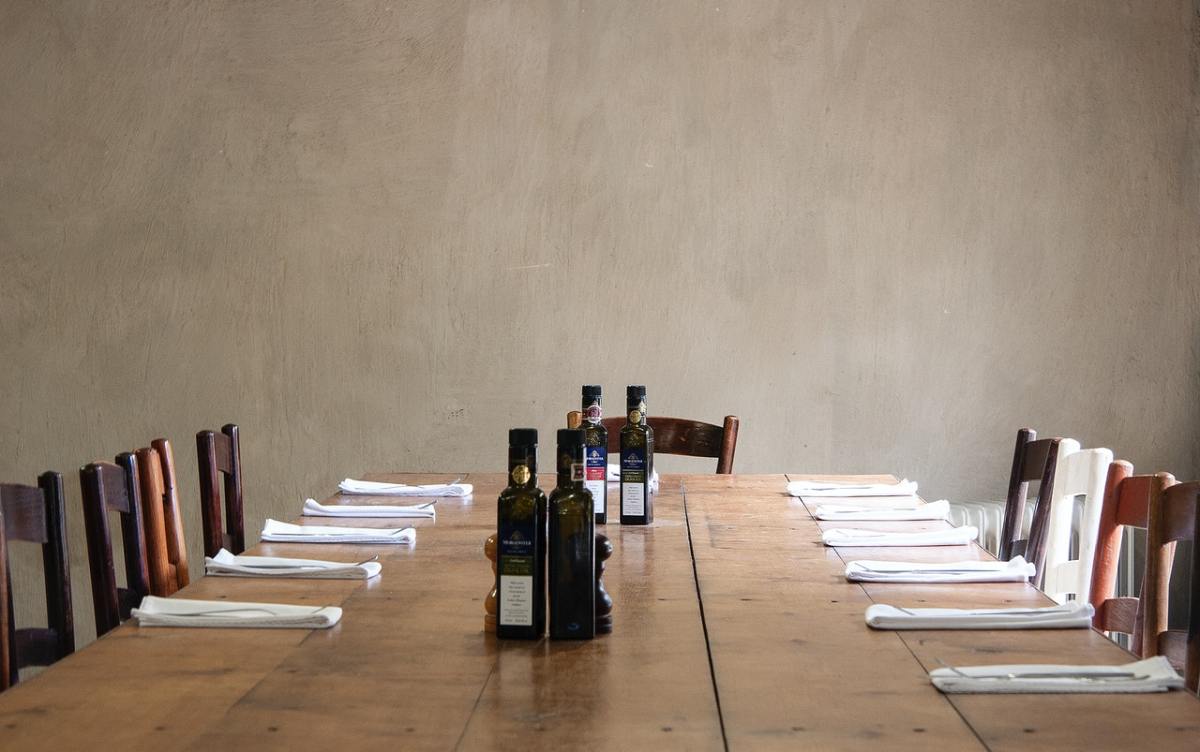
Instead, he presided over…a meal. Many meals, in fact, culminating in the Eucharistic banquet in which we still take part. A meal to nourish the world. A meal in which his own life, his own love is the substance. He is the Lord of the feast, the King of the abundant table, and more than anything we are his grateful guests, called to celebrate with him, called to invite others to take their place alongside us. 

That is the Kingdom of God, my friends. That is what will transform the world. That is what will transform us. Bigger hearts and bigger tables. More time spent breaking bread, listening to one another’s stories and creating a new story together. A story that tells of peace, of justice, of the deep joy that is the birthright of all people. A story that can yet be true. 

May we live like this, on Christ the King Sunday, on Thanksgiving Day, and on every other day, for the rest of our lives. And then, by God’s grace, may we one day, after a long and deep and restful sleep, wake up in the morning light of a new life, a new earth, warm and half-dreaming, to the smell of brewing coffee and baking pies, and may we know that we are home, that we are all home together at last, and that there will always be enough, and that we will alway be welcome, in that beautiful Kingdom, at that glorious table, forever.