I preached this sermon on Palm Sunday, March 29, 2026 at St. Anne Episcopal Church, West Chester, OH.
It is Palm Sunday. It is Palm Sunday, and I find myself thinking about the palms.
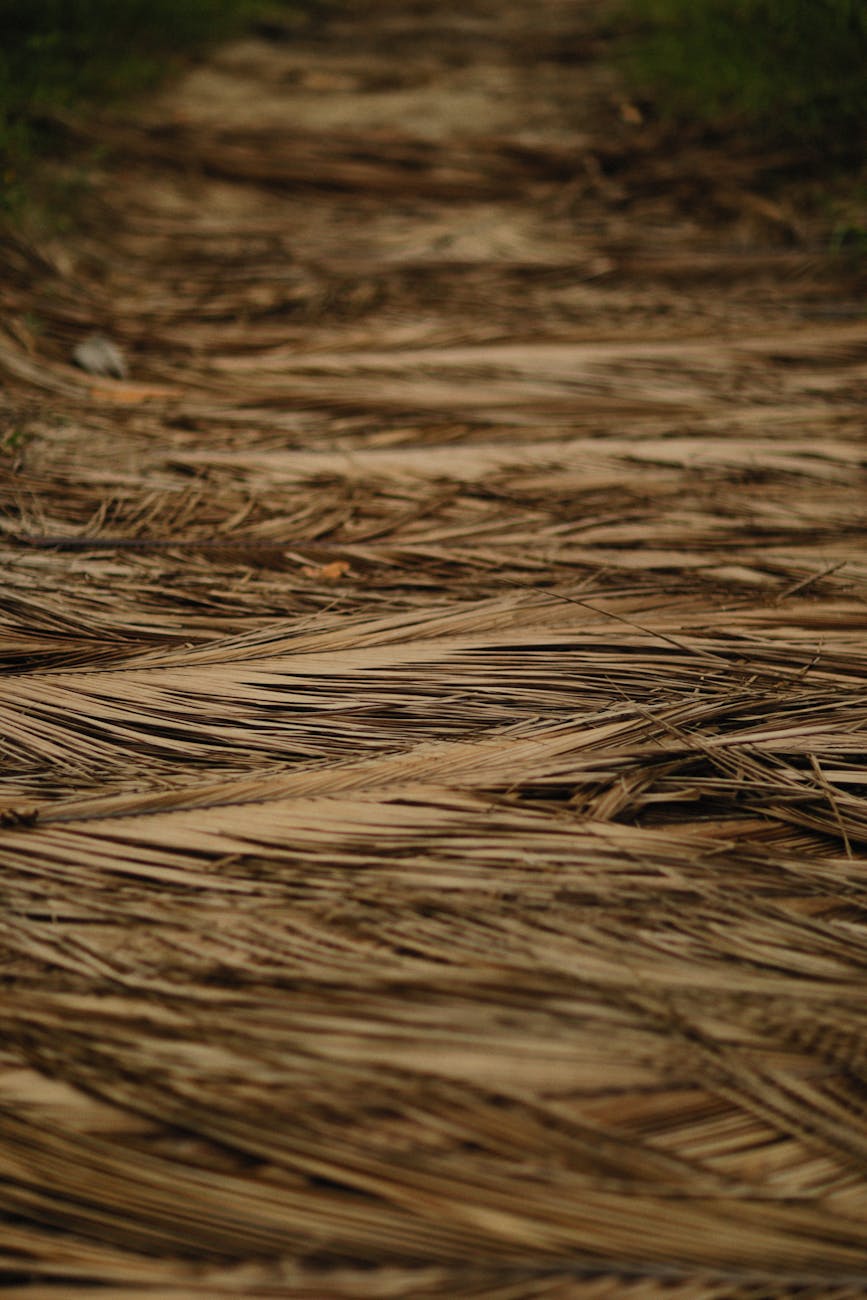
Do you ever think deeply about the palms on Palm Sunday? Do you ever wonder about their perspective on all of this? The day is named for them after all. These broken fronds, these green tongues are unfurling some silent word that nobody seems to hear.
It’s such strange day, a strange liturgy, full of abrupt changes. We bless the palms and we take them up like swords, or prayers, or both, and we process and cry Hosanna, and then the story takes a sharp turn–sharp as nails–and the palms lie forgotten in our hands, on our seats, in our hearts. They are consigned to the dust upon the streets of Jerusalem as the crowd, the whole human crowd across time and space, converts its longing into loathing.
Frightening, that—how longing can so quickly turn to loathing in the human heart. Frightening and true.
And meanwhile, the palms lie trampled, forgotten, like most innocent things do in the wake of the warfare we seemingly cannot help but wage upon each other.
So it’s Palm Sunday, and I am thinking about the palms, because Jesus told me that the marginal things are the blessed things, and in this human & divine drama so poignantly told, the palms, just like the body of our Lord, are the refuse and the reminder of our many failed dreams. The dreams of an uncomplicated savior who would conquer with strength and certainty. The dreams of a life that would be simple and straightforward and easy to understand. The dreams of a world that would somehow let us off the hook if we just shouted louder than our enemies.
Those dreams, all bound up in the palms waved by the desperate crowds….those dreams were crucified along with Jesus. Jesus, who could not or would not be what we demanded.
And so perhaps it is no wonder that we don’t think about the palms too much—perhaps they are too painful to think about. Maybe that’s why we tuck them away to dry up like old love letters we are embarrassed we ever wrote. Maybe that’s why we burn them in the fire, because we regret the false optimism they represent and somehow we want to be liberated from our naivety.
I don’t know. But regardless, I am thinking about the palms on Palm Sunday, because the story of Jesus’ passion and death demands that I look at the things I would rather tuck away, the things I would rather forget.
And so, in the shadow of the Cross, I look down, and I see the palms lying there in the dirt: forgotten, strange, awkward, like a glimpse of myself in a mirror that I wasn’t ready to look into.
And what I see, when I look at the palms, is that part of myself that would still, even now, be willing to trample over the vulnerable if it would guarantee my personal peace. The part of myself that would still turn on whatever is good and pure if it threatened my success or even just my comfortable assumptions.
The palms bear witness to the war within myself, the war that erupts in that thin space between longing and loathing, when I don’t get what I want and I hate whatever is given instead. The palms say: how easily you waved me and shouted with desperate joy. How easily you threw me down and shouted with desperate fury. And those are both YOU.
Those are both us.
I think that we have to think about the palms on Palm Sunday and what they have to say, crumpled and forgotten in the dust, or crunched up in our clenched fists, or tucked away between the pages of forgetfulness, or twisted into crosses to make it all pretty somehow, as we try and sanctify our rage. I think we have to look at them and learn from them if this Palm Sunday service is to have any purpose at all.
Because the world is still at war with itself. Deep within itself, the world is still living one perpetual Palm Sunday. Still, still we are both longing and loathing almost in the same breath—our political enemies, the objects of our desire, the many things and people we both envy and disdain and crave and hate for craving; the ways in which we both try and fail and still never seem to learn. We cannot find any peace, and so we crucify the peaceful. We cannot bear vulnerability so we crucify the vulnerable on whatever altar is handy: nationalism, tribalism, racism, sexism, classism, our multifaceted phobias, or our simple, idle neglect to be kind to the people in front of us.
But try as we might, crucifixion never brings peace. The eradication of the other never helps us find ourselves.
And the palms, they see it all, up from the dust where they lie. They see it all, in the way that marginal things often do. They catch the tears that fall to the ground, they catch the blood that spatters, they see the downcast gaze of a people who have either forgotten or decided not to look upward anymore.
And yet, I think, despite all of this, I think they love us anyway, these palms. I think that they, the refuse, they, the cast off, they, the lowest of the low, I think they can see us in ways we cannot see ourselves. And I think, in their green and simple honesty, they take pity on us. I think the palms on Palm Sunday say:
My sister, I know what it is to be broken.
My brother, I know what it is to have your life cut short.
My friend, I know what it is not to fulfill the purpose you originally dreamt of.
My beloved, I know what it is to be loved and then cast aside.
So I see you, they say. I see all of you. I see that, despite your rage and your tragic disappointment, I see that a part of you still remembers how to hope. I see it and I know it because I was there when you clutched me in your hands, like an eager child. I was there when your pulse beat faster and faster with delirious, hungry joy as God rode by in his humble majesty. I was there when, for one split second, you dared to dream that another world had arrived, that love was actually true.
And so even now, on the other side of your regret, say the palms, on the other side of your fickleness and your fury, still, I see all of you. And I, the palm, remember all of you. And lying here in the dust, I forgive you, you who are also dust. I forgive you as God forgives you, for God abides in the lowly places and in the voices you forgot to listen to.
The Cross may tell one story of who we are and what we can do, but the palm still holds the memory of our other story. The story with which we began this day, this life, this creation, together. The story of green palms and gardens and life and love and tenderness and voices lifted up in praise rather than hatred.
That story, that part of us…it is still true, too. And the palms are here to help us remember it, if we’re willing. If we will just look down at the fragments of beauty underfoot and try to remember.
And so I am thinking about the palms, friends, perhaps because I cannot bear to forget them anymore.
I cannot bear a world that continues to look more like Golgotha, more like the Cross than it does like the Kingdom. So today I am looking away from the pageantry of death and empire and I am down on my hands and knees looking for love wherever I can, even among the bits and scraps we tend to forget and throw away.
And what else can we do, really? After all, our Lord has been crucified before us. He is dead, again, and we said nothing to stop it.
Do you ever notice that? Year after year, on this day, the story unfolds, and we never say anything to stop it. We continue to reenact our own despair.
So perhaps, since our prayers and our nice words and our best intentions have failed us, perhaps the least we can do on this holy day, and in this holy week, is to bend down low, very low, and look for whatever remains of his procession through our lives. Whatever remains of the best parts of ourselves. The palms are there, and they will show us, they will remind us, if we let them. All marginal things and voices will, if we let them.
Blessed are the ones who let them.
So yes, friends, it’s Palm Sunday, and I am thinking about the palms.
My prayer is that you will, too.

 By Another Road