
I preached this sermon on September 17, 2023 at Saint Anne Episcopal Church, West Chester, Ohio. The lectionary text cited is Matthew 18:21-35.
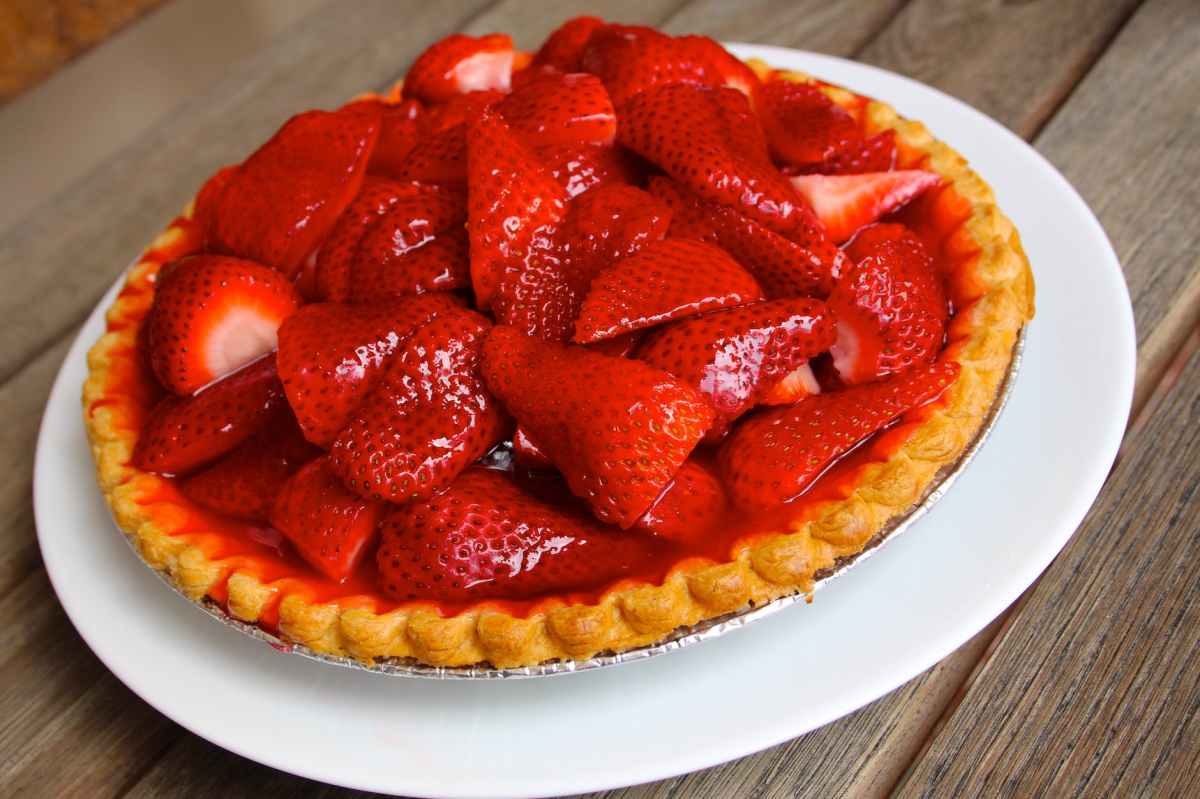
As I have shared with many of you, when I was a kid, I would spend the summers in Michigan with my dad and my grandparents. There were a number of things about those vacations that I looked forward to all year long, and a lot of them had to do with food. First there was my grandma’s cooking and baking, which filled the house with mouth-watering fragrances throughout the day. Her fresh strawberry pie was the stuff dreams are made of. But another thing was the little general store that was just down the block, an old-fashioned kind of place that sold a few groceries and sundries, but in which the main attraction, at least for an eight year old, was the selection of ice cream and penny candies and trading cards.
My cousin, Mike, and I were particularly interested in that selection of trading card packets, and it was our singular mission each year to get our hands on enough money to buy them. Now, of course, we could have just asked our family for spare change, but at some point we decided to get a bit entrepreneurial.
So, for several summers we would take over the enclosed, rarely used front porch of my grandparents’ house and we turned it into a couple of “shops” of our own, cobbled together with odds and ends from some spare room of the house, and offering what was, in retrospect, a rather underwhelming selection of goods and services. One iteration was a restaurant that served plastic play food and real glasses of water, 10 cents a piece. Another, perhaps my most efficient business model, was simply setting up a desk in the porch and declaring that the house was now a hotel, and that our family members now had the privilege of paying 25 cents a night to sleep in their own beds.
But our parents and our grandparents were dutiful customers, and so we collected up our coins day by day and ran down to the general store, and spent them all on cards and candy, quite pleased with ourselves.
This is a very happy memory, of course, but I was thinking about it this week because it occurred to me that for all those summers, while my cousin and I were focused on the nickels and dimes and quarters that would buy us all of those treats we daydreamed about, we were less aware of the most wondrous thing of all: that when we got tired of playing and scheming and striving for coins, we could just go down the hall to our grandma’s kitchen, and there would be more food and more love than we knew what to do with. And in the end, that was the truly priceless treasure. I don’t have much use for those trading cards anymore, I don’t even know what happened to them, but I would give just about anything for another bite of my grandma’s strawberry pie at that kitchen table, surrounded by loved ones who are now long gone.
We spend so much of our lives, I think, in a similar posture—so focused on the measurement and acquisition of the things we want (or think we want) while failing to sit up and recognize the immense—but less quantifiable—blessings in our lives: the relationships that shape us and sustain us and guide us forward, the simple gifts of time and care freely given by the ones who love us. And if we’re not careful, we might spend our whole existence scrounging for penny candies while the true feast sits, beckoning yet unappreciated, just down the hall.
For me, at least, this image has helped me think about the parable that Jesus offers us in today’s Gospel, which is also, at its heart, about a person who doesn’t really understand what he is being given.
A king forgives the debt of a slave, or a servant, as some translations put it, but then this servant refuses to do the same for someone in debt to him, and is thrust back into the fear and scarcity with which he started.
We are told that this is a parable about forgiveness, and that somehow it should model for us what the Kingdom of Heaven is like. The tricky part is that this King, who many of us interpret to represent God, ultimately rescinds the forgiveness originally offered. So is this a “be good or else” type of story, such that we should be forgiving others out of fear of eternal punishment?
I don’t think so. I don’t think God’s mercy has conditions like that, and I don’t think forgiveness under duress is a healthy or life-giving way of understanding human relationships. No, I think this parable is suggesting that the heart of forgiveness—and the heart of really every virtue we try to embody—is rooted in a proper understanding and appreciation of what is truly important in life. And it is not the things that can be counted.
We are not hearing this parable in Jesus’ own time and place, so we might miss the key point that the amount of debt forgiven by the king, 10,000 talents, is not just a big amount, it is an absurd amount—it is more money than any empire had, more money than someone could conceive of. And so the king in this parable is not just telling the servant he can walk away from his debts. He is essentially saying to the servant, walk away from the entire notion of indebtedness. I am uninterested in measuring it anymore. You are free now. Everything is free now. Live as if this is true.
This is good news, but it is also strange news, for we are all too accustomed to counting the cost of everything, both literally and figuratively. And so the real mistake that the servant makes is that he does not comprehend the gift that has been given. The servant doesn’t understand that he is living in a kingdom where there is no longer any need for calculation, where there is no grasping and groveling, where there is no currency at all. Just the current of goodwill that encompasses all things, all people.
He doesn’t see it, or he refuses to see it, and so he keeps on counting the cost, he keeps on demanding payment from others, because that is what he knows how to do, and his inability to understand that another way is possible, his refusal to trust that another way has been given to him, sends him right back to the dead end where he started, back to the world that is easier to believe in, where Kings torture and no payment is ever enough. And to the extent that we have treated love and forgiveness and grace as commodities to be bought and sold and bartered, the same will be true for us. We will have missed the point. We will have squandered the true gift. That other realm, where everything is possible, will be lost to us.
So no, Jesus is not just saying be kind and forgiving or else. Jesus is saying, if you would enter into the Kingdom of God, if you would understand mercy, if you would know what it truly feels like to love and be loved, to forgive and be forgiven, then look up from your games, beloved children, stop playing shopkeeper. You have to realize that the important stuff is all free. You don’t have to spend your life scrounging for coins to purchase paradise. 10,000 talents are worthless in my sight; your heart is the true treasure.
Because this Kingdom is not, in fact, a hotel with a 25 cent nightly rate; it’s just the house we get to call home, if we choose it, and the light is always on in the front porch, and there’s a feast at the end of the hallway, luscious as strawberry pie, a slice for everyone, free of charge.
That’s what forgiveness is, when you get down to it: love without a price tag. And when we realize it is all free, then we will be free, too. Forever.
 By Another Road