Runaway: A Sermon

I preached this sermon on Sunday, September 15, 2024 at St. Anne Episcopal Church, West Chester, OH. The lectionary texts cited are Mark 8:27-38 and Proverbs 1:20-33.

I want to tell you a story—a true story—about a young man who ran away from home. And, first things first, this is NOT a story about me, though it might ultimately be a story about all of us. 

So there was a young man. At a fairly young age, about 18 or so, his parents died, and he found himself alone in the world, except for a younger sister for whom he was now responsible. But this young man, who was full of idealism, had a struggle within him. He knew that he should settle down and grow up, especially now that tragedy had struck and responsibilities had fallen into his lap. But he was deeply troubled by the world around him. He was not sure he could bear the life he was expected to live.

You see, he lived in a particular time when society was going through a period of decline. There was political intrigue, and widespread poverty, and rumors of war. Conspiracies and coarseness dominated much of public discourse. And this young man did not want to be part of it, of any of it. 

He had been raised a Christian and he had a sense, nurtured from a very early age, that he was destined for a holier sort of life, something purer, something unstained by tears or bloodshed, something uncorrupted by the accepted order of things. He believed that God wanted him to leave it all behind. 

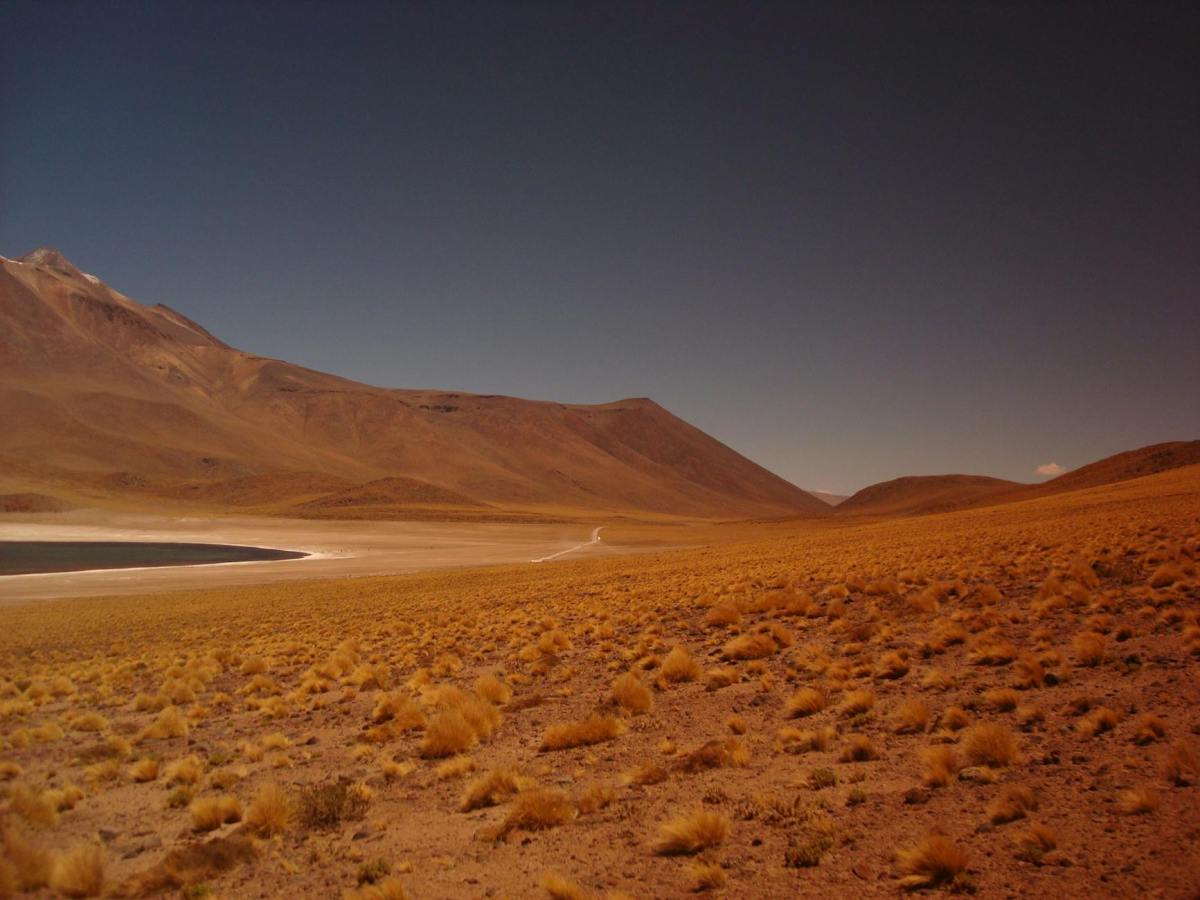
And so he dropped off his sister with some caretakers and he wandered out into the wilderness, convinced that the pristine solitude of an empty space would fill the void in his spirit, that it would mend the cracks in his heart. 

He knew, he just knew, that if he could purge himself of disappointment and attachment, if he could just find a way to make the pain go away, if he could shed the calamity of human flesh, he would finally be worthy of the peace for which he hungered. By leaving the world behind, he would become worthy of seeing God. 

But a funny thing happened on the way to enlightenment. Somehow, people found out about this young man—brave, holy, or simply out of his mind, no one was quite sure—and certain people came to find him. They would not leave him be. 

They camped near the places he had sequestered himself, waiting to catch a glimpse, waiting for a word from his lips, wondering what he had discovered in his solitude. And as they waited, they made for themselves impromptu communities out in the wilderness, communities, ironically, born of the young man’s initial rejection of communal life. Communities that were formed in the desert at the edge of loneliness, at the border of emptiness, made intimate and strangely alive by the search for another way of being.

The young man, by the way, was named Antony, and he lived in Egypt in the 3rd and 4th century CE, and those travelers who followed him into the wilderness were the first monastic communities in the Christian tradition. Antony is now known as St. Antony the Great, the father of all those called into religious life as monks or nuns. 

But I am not telling you his story as a lecture on Church history. I am telling you Antony’s story because there remains, in each of us, I think, a bit of the impulse to run away from home—to look at the disappointments and the pain and the callousness of whatever is around us, our broken relationships or our broken politics and to say, “no thanks.” I am done with all of that. I am seeking something else, I am seeking something better, something unstained. I am walking away from the world as it is. Peace out.

In our own age of fractured social bonds and conspiracy theories and coarseness, this is a daily temptation. A cave in the desert might sound pretty good to some of us right about now. And of course there are circumstances and seasons, in our own lives, when we do need to walk away and free ourselves from unhealthy situations. 

But what Antony discovered, in his accidental creation of monastic communities—when all he thought he needed was to be alone—what he discovered is that the sacred path, the way of Jesus, might be liberating, but it is never an escape. Choosing God is not the same as opting out of the world. Because God’s love will always, in one way or another, lead us DEEPER into the heart of the world, not further from it. 

The plot twist for Antony was that, after many years of battling his demons in the dark and silent chambers of his soul, he emerged, not as a detached saint who had transcended human flesh, but as someone finally comfortable in his skin—and as someone deeply, deeply committed to the flourishing of others. He traveled back into those cities he once hated to debate theologians and take on emperors, challenging their corruption and their rejection of the truth, insisting, always, that the God of Love was more powerful than any partisan agenda, and that this God will hold all of us to account for the ways we form or deform our common life. 

And that is what we must discover, or rediscover, if we are to live faithfully now. We have to remember that a life of faith is not about running away from home, but about realizing that everywhere is home, and that our task is to ensure that everyone experiences a sense of home in this life, no matter how they differ from us or where they have come from. 

In this same vein, much has been debated and preached about Jesus’ invitation for his followers to take up their cross and follow him. What are we taking on? What are we leaving behind? There is one certain perspective, promoted by some, that Jesus wants us to reject our own humanity, to discount our own needs, to leave behind all that is familiar, and brazenly follow him out into some barren place of suffering for its own sake. To grovel  and winnow ourselves down into a thin sort of holiness.

But that would only be the case if Jesus’ story ended with his death on the cross. And, spoiler alert, it does not. The story of Jesus is the story of resurrection—it is the story of what lies on the other side of rejection and despondency. 

It is the story of a man and a God and a people who say, no, I am not running away. I am not running away from myself. I am not running away from what disappoints me or scares me or makes me feel small. I am going to face it, by God, and I am going to live a life shaped by something other than fear. I am going to let love make me courageous and alive in ways nobody dreamed possible. This is the story.

This our story: to charge headlong, with singing and tears and laughter and clarity, into the courageousness of a love that cannot be killed; into the public square where Wisdom still yearns for someone, anyone, to speak a word of truth. It is to venture into the places we once feared to go and the places we feared to return, until we discover, as Antony did, that God makes everywhere home. 

We are at the beginning of a new season in this community—this fall we are resuming and expanding the ways that we connect with one another and with Christ in this place. We are welcoming new friends into our midst as they seek a home in this parish. And we are navigating, as best we can, a fractious and tense time in the life of our country. 

My invitation to you, and to myself, and to all of us, is this: in all that we do this year, let us be a people who are running towards something, not running away. Running towards each other, even in our differences, not retreating into a corner. Running towards the needs of our neighbors. Running towards a joyful and clear and public witness to the Gospel of Love that is Jesus’ true message. Running towards that sense of community that God invites us to build together, we who are still dwelling at the edge of loneliness, at the border of emptiness, and yet who are made intimate and strangely alive in our continued search for another way of being. 

And in all these things, running towards God–who has been running towards us across the wilderness of time since before time began. Running to say, beloved, you don’t have to keep running. You are here. I am here. We are already home. 
Preparing for Lent

The season of Lent is almost upon us. The preparations at Mirfield have me learning about some very old customs that are quite new to me. Today, for example, is Collop Monday.  What’s a collop, you might ask? Apparently it’s a word that refers to bits of leftover meat, often bacon, which are traditionally eaten up on this day before the Lenten season of fasting begins on Ash Wednesday.  The grease from the meat (at least, if Wikipedia is to be trusted) is then used to fry up the pancakes that are traditionally eaten tomorrow, Shrove Tuesday. Mmmm, pancakes.

All the students at the College went up the hill to the monastery house this afternoon to eat Collop Monday lunch with the brethren. It was a feast, although sadly no bacon to be found. BUT there was brisket, roast chicken, stuffing, and tons of dessert. Gotta get those calories in before the menu is pared down for Lent!

Lent is taken quite seriously here, and many of my classmates have been pondering what sort of discipline they are going to adopt starting Wednesday. If you have been part of any liturgical church tradition, you are probably familiar with the question, “what are you giving up for Lent?”  The idea is that in the relinquishing of a particular habit, or in the adoption of a new spiritual discipline, we are creating space in our hearts to listen to God as we approach the commemoration of Christ’s death and resurrection in Holy Week. It’s 40 days of soul-searching, and I could sure use it.

At Mass this morning the homily talked about how in our soul-searching we tend to bargain with God, usually petitioning for favors or for the cessation of misfortune. I do this all the time, frankly, even though I don’t necessarily think God relates to us in that way. I’ve been doing a lot of imploring to the heavens lately as I adjust to life over here and battle some inner and outer demons. Maybe you can relate.

Truth be told, I get really annoyed by people who sneer at anyone who prays with a desperate heart. “Well, he only prays when he wants something!” Come now, we all want something–don’t kid yourself that you are holier just because you pray at other times, too. The fact that we are compelled to cry out to God in any circumstance is a sign of grace to me; it just so happens that our need and our fear is usually the hollow space in which God can enter us, if we let God do so. (See Luke 18:9-14)

The challenge, at least in my case, is to remain open–to allow God to dwell in the space that’s usually cluttered up with the distractions and novelties that pervade my life. And so Lent is a little bit like spring cleaning for the heart; it’s an intentional effort to clear out some room and prepare a seat for the Holy One to come and abide with me as we wait together for new life to emerge.

I’m pretty sure what my Lenten discipline is going to be, but I’m going to pray on it a bit more between now and Wednesday before committing. If you’ve already settled on something for yourself, I’d love to hear about it in the comments!

God bless you, friends. If you’re reading this, I am grateful for your companionship on this journey. I’ll write in a couple of days to describe the Ash Wednesday liturgy, which I’ve heard is beautiful.

xo

Tea with the Monks

Sundays are a whirlwind at Mirfield. Mattins (morning prayer) at 7:30 with fellow students and the monks of of the Community of the Resurrection, then a sung Mass til 9, and then I dash off to my field placement church(es) in town: St. Mary’s in the center of Mirfield at 9:45, followed by St. John’s in the nearby village of Upper Hopton at 11:15. Four worship services before noon!

After Sunday lunch back at the College there is a bit of a pause when students are welcome to go up for tea in the large home where the monks live. I didn’t go my first Sunday and decided I would venture up today to meet some of the brethren (as the monks are collectively called).

A classmate and I got into a long conversation with Fr. Eric, who has been a monk with the Community since 1961 when he arrived at Mirfield as an “unwilling” young novice–he said that as a young man he felt the call to monastic life but he was resistant to it at the same time. He admitted that he even kept his luggage packed for the first three weeks at the monastery, ready (hoping?) at any moment to be dismissed and to go back to his regular life. And yet nearly 60 years later he is still there, still working out his calling, still seeking God each day in worship and contemplation.

Given my own struggles (see previous post) I was deeply comforted by Fr. Eric’s frankness. Do we ever really know FOR SURE that the thing we are doing is the only thing we could have/should have done? Whether it’s a career, a relationship, or any other major life decision, we always step into it with an element of blind trust, because we can never know how it will turn out. I asked Fr. Eric if he ever reached a place in his life where he ceased to struggle with his calling and he chuckled. “A retreat visitor once asked me if I ever questioned becoming a monk,” he said with a smile. “Before giving it much thought I answered her, ‘every day!'” He laughed merrily.

There are no guarantees when you commit to a relationship, even when it’s with God. There will be doubt and struggle, and sometimes you will question why on earth you are doing any of this. And when you think about it, God has no guarantees when entering into a relationship with us, either: we are fickle and resistant far more than we might like to admit.

Despite this, God remains committed, and that divine fidelity hopefully inspires our own faithfulness–to God, to each other, and to the loving commitments that we make in this life. Not out of a sense of duty, and not because we are free of doubts, but because we trust that fidelity itself is a transformative practice, no matter the outcome.

Fr. Eric then told us another story about an elderly monk who is visiting the Community right now from the northern reaches of England. He is not a member of their order, but he has a longstanding relationship with them. This particular monk lives alone on a mountaintop; he’s been there for years, waiting and hoping that some others will join him to form a community. Nobody has ever come, though, and so he lives as a de facto hermit. I was both fascinated and shaken by this image of a man waiting for a vision to come true despite all evidence to the contrary. What kind of patience and commitment must that take? Did he ever second guess his decision? How does he know that he should stay up on the mountain?

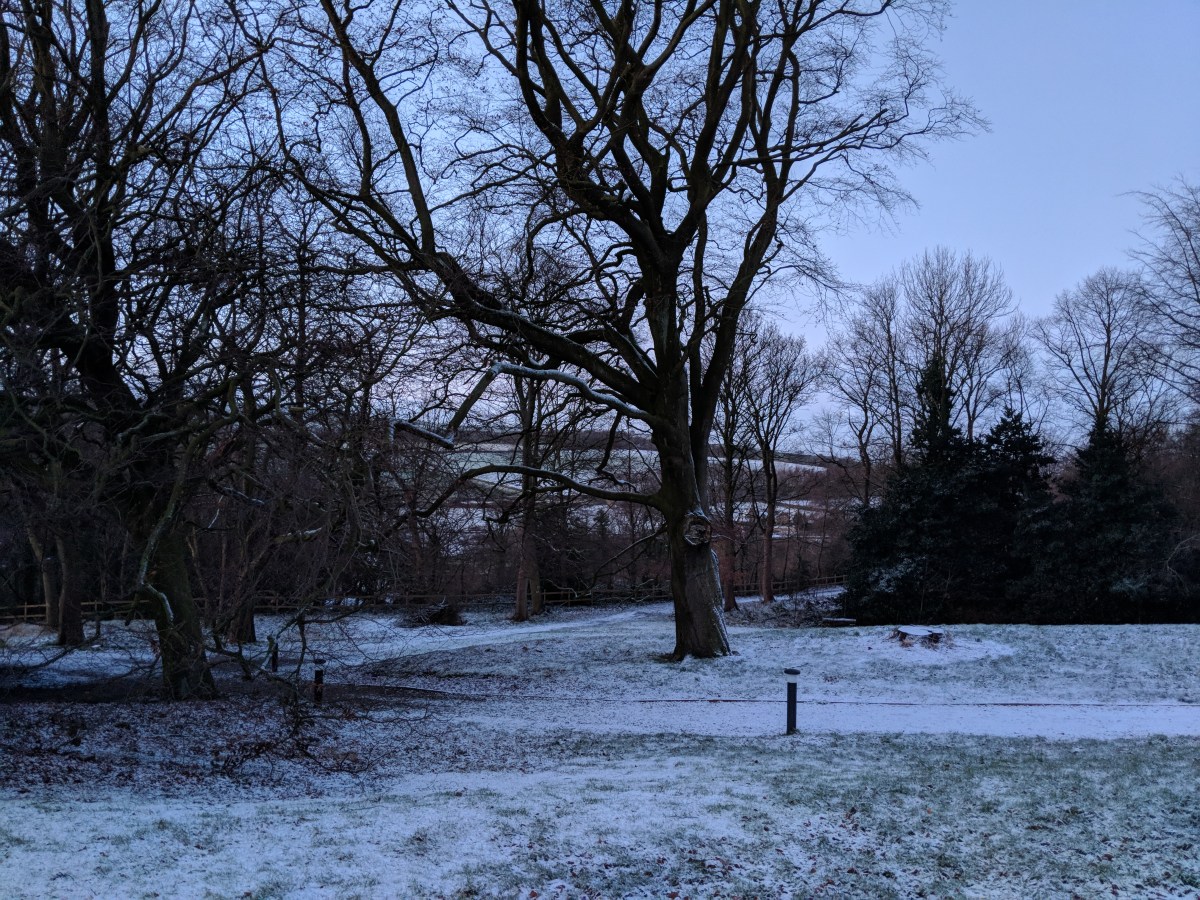
After the tea ended, with all of these thoughts lingering in my mind, we walked back through the garden towards the College building; the sun had set and the air was damp and icy. My classmate pointed toward a cluster of forlorn bushes and said that before I leave in June, they will be covered in roses. It was hard to imagine it then in the February twilight, but I imagine he must be right; the roses will arrive in their time. A few months from now, on a balmy night, the air will smell sweet and who knows what I will have learned. I can’t quite picture it, but I have to trust.


Daily Life

I’m still new here and I’m learning all sorts of details about *how things are done* at Mirfield, but what follows is a typical day so far:

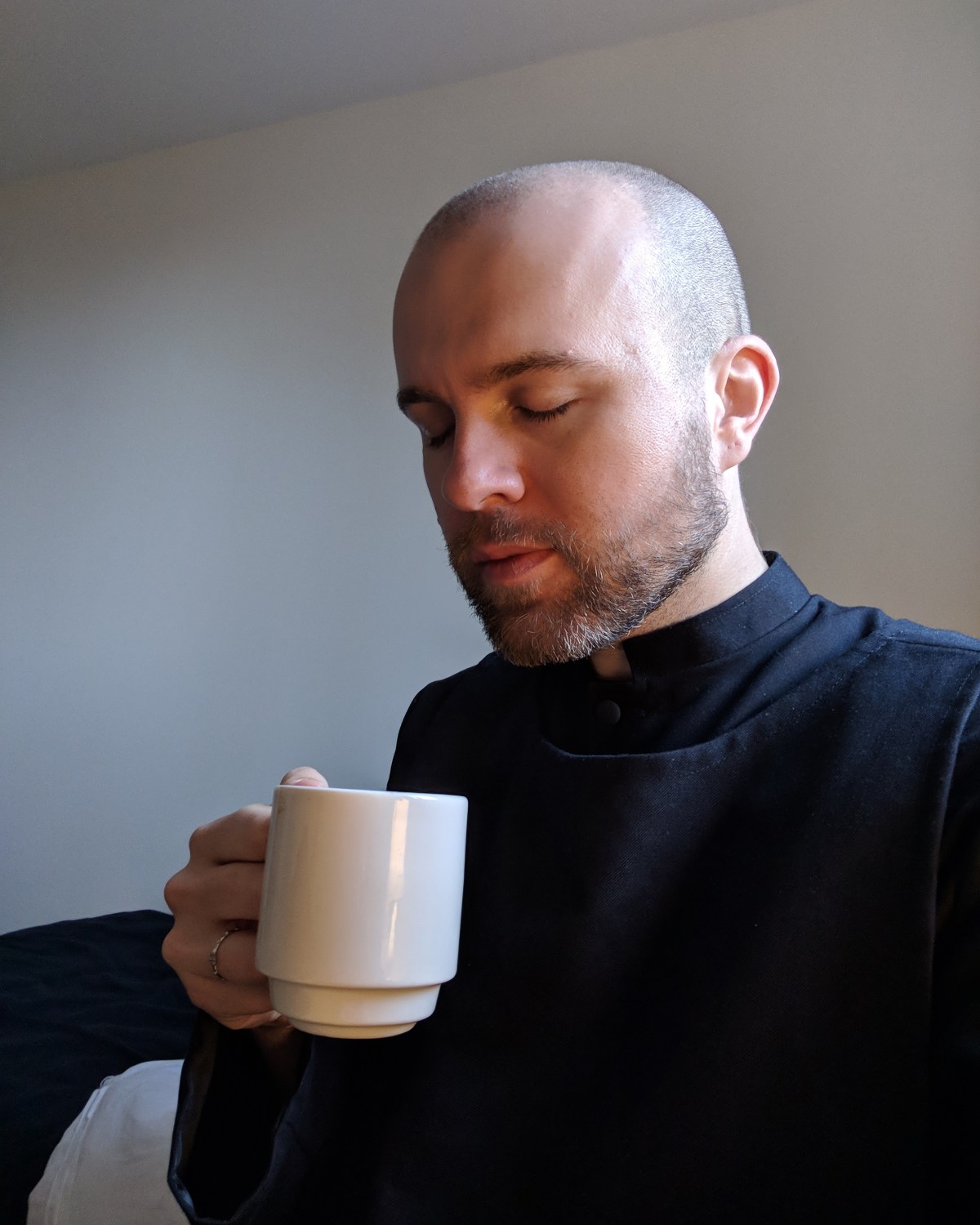
6:45AM: Alarm goes off. It’s still dark, and I fumble my way through a quick morning routine before putting on the required attire for all services and most meals: a black cassock (basically a long black robe that buttons down the front) and matching scapular (think of it like an apron that drapes over your shoulders, covering your front and billowing out behind you like a little cape when you walk). Underneath, people just wear a regular shirt and dark pants, and black shoes and socks are a must. A belt around the outside of the cassock and I’m good to go. I grab a borrowed copy of the Church of England’s “Common Prayer: Daily Worship” book and head out the door by 7:15. I might encounter some other students along the way up to the church, but everyone remains silent, as there is no speaking on campus from 9:30PM until after breakfast the next morning.

7:30: Mattins. This is a morning prayer service in the College’s worship space that consists of a few psalms, a canticle, one scripture reading, and some prayers. We aren’t with the monks for this one; they are upstairs in the main portion of the church.

One of my favorite moments of the day is when the students begin mattins by singing “O Lord, open our lips/And our mouth shall proclaim your praise” in the most beautiful harmony.  Since we are otherwise observing silence, this is literally the first sound that anyone utters as the day begins. We use the same language to open morning prayer back home, too, but the resonance of the words is somehow heightened when they pierce the silent gloom of pre-dawn after not speaking all night.

8AM: Mass. This is a very simple Eucharistic (communion) service, officiated by one of the faculty priests, without any singing. It is optional for students to stay for this portion (mattins, described above, is required every day) but a good number do remain. After we receive communion and close the service, everyone departs for breakfast.

8:30(ish): Breakfast in the refectory (dining hall). I’ll talk more about the meals another time, but it is simple, tasty, and eaten in silence. Once you finish your food and leave the refectory, you may talk at leisure for the rest of the day.

11AM: Tea & coffee are offered in the refectory, and students pass through, chat, whatever.  Very casual.

12PM: There is an optional (for students) midday prayer service in the main church with the monks of the Community of the Resurrection.  It’s only about 15 minutes, and is mostly psalms, chanted in plainsong.

1PM: Lunch in the refectory. Students do not need to wear their cassock and scapular to lunch, though you may if you would like to do so. Lunch is simple, often a casserole or a soup, and everyone is chatting and socializing.

4PM: Tea and coffee are again set out in the refectory.  There are usually some scones or other treats, too. As you can see, you don’t go hungry here! Everyone jokes about the “Mirfield Stone”, which is something akin to the Freshman 15.

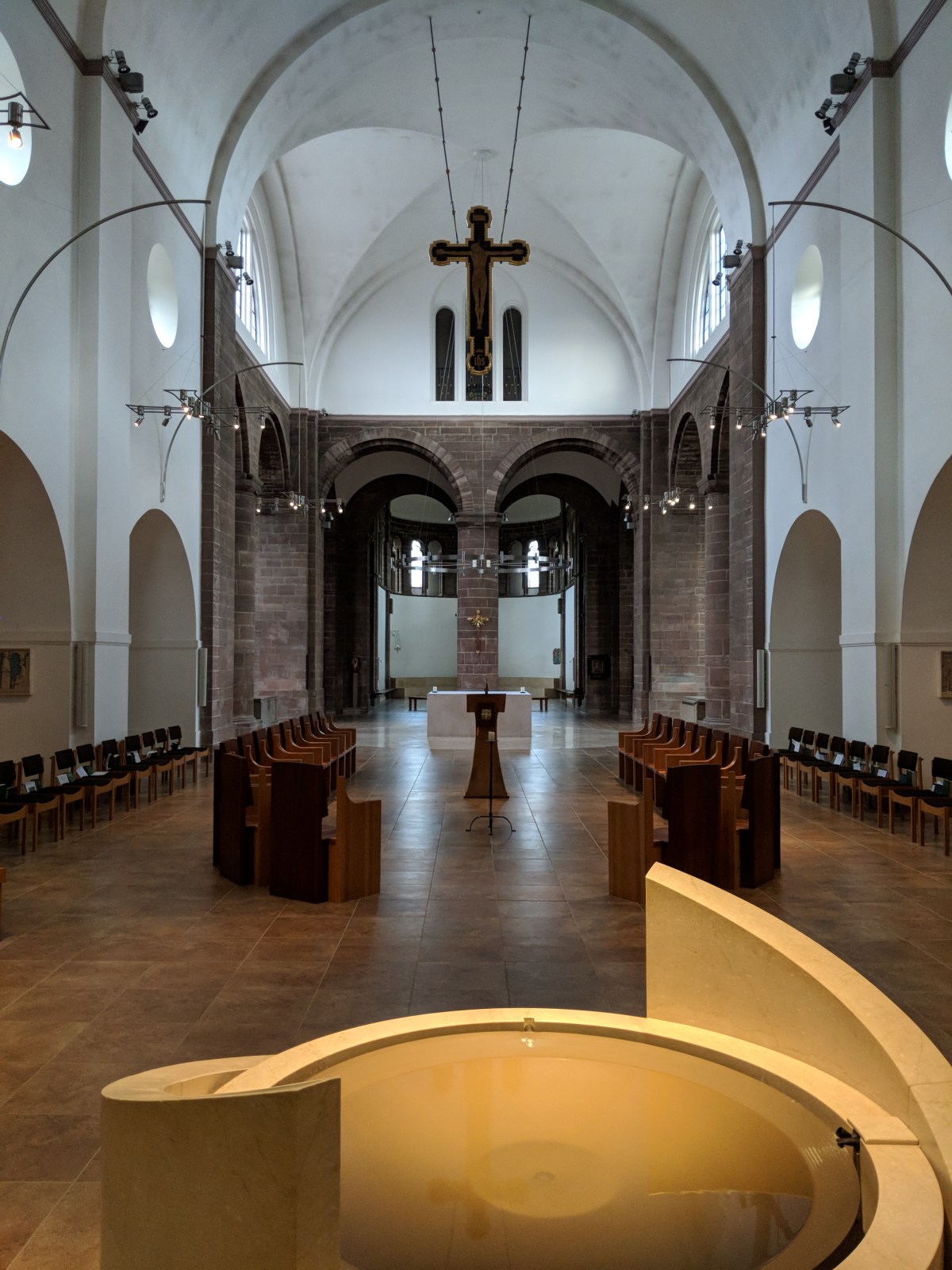
6PM: Evensong (sung evening prayer) with the monks in the main church.  We put our cassocks and scapulars back on for this one, and it is a required service. The monks are seated in a circle in the middle of the worship space, and we are in a circle around them. Visitors to the monastery are in separate seats. Evensong is, again, made up of a number of chanted psalms, a reading, silence, and other prayers. It is incredibly beautiful to hear the assembly join its voices together; the vaulted ceilings of the church create a sound that envelops you.

6:45ish: Immediately after evensong, the students head back to the refectory for dinner. It’s always lively and the food is hearty. We open and close with grace, so everyone remains at the table until the meal is completed.  Then we all go downstairs to the common room for coffee and tea and more conversation.

9:15PM: Compline. This is an optional, very brief, bedtime prayer service with the monks again in the main church. The lights are dim, there is a single candle lit in the middle of the seats, and a few psalms are chanted. This service ushers in the silence that will be kept by the entire community until the next morning.

And then the cycle repeats itself, day in and day out. And that agenda, of course, doesn’t include classes, meetings, personal prayer and study, and socializing–all of which is fit into the hours not spoken for above. It’s a rigorous schedule, and yet I have found the rhythm comforting, especially since I am so new and sometimes feeling lonely and overwhelmed. Even when you are feeling lost on the inside, there is always another moment of prayer or fellowship approaching, carrying you like a current down a stream. You are carried by the schedule, by the community, and by God, Who is ever present in the ebb and flow of the day.

First Impressions

I’ve intended to start a blog for a long time, at least since I was preparing to enter seminary a couple of years ago. For various reasons the practice never stuck. Like daily prayer, regular blogging is easily derailed by the petty anxieties of the present moment.

Now, though, I find myself thousands of miles from home (the western U.S.), adjusting to life in northern England for a semester at College of the Resurrection, Mirfield, and I realized I owed it to myself (and anyone else with a passing interest) to document the experience. So here we are.

Mirfield is, in a word, singular. It is the only seminary in the entire Anglican Communion (the worldwide body of churches that includes, among many others, both the Church of England and the Episcopal Church) that is adjacent to and deeply intertwined with a monastic community. The students and the monks pray at multiple short services per day, sometimes together and sometimes separately, and an interdependent communal life is emphasized, required, and celebrated.

I came to Mirfield after a year and a half at my own seminary, Church Divinity School of the Pacific, because I was yearning for a deep spiritual formation that a monastic setting might provide.  In addition, I was drawn to Mirfield’s Anglo-Catholic traditions (more on that in another post, perhaps) and saw that aspect as a helpful counterpoint to my experiences in parishes back home.

There is much uncertainty that I am carrying with me on this journey to England, in nearly every aspect of my life. My hope is that this will be a space where I can 1) describe some of the interesting aspects of my time in England (and there are many already!) and 2) do some written spiritual reflection that illuminates my formation. Who knows, maybe I’ll even get in the habit of blogging and keep it up after I go home in June!

If you are reading this, whether we know each other in person or not, take away two things about me. First, I am a gay man who wrestled with the intersection of my faith and my sexual orientation for many years, and I am still discovering what it means to believe that God loves me exactly as I am. Second, studying for the priesthood has shown me that we never “get there” to a place where we are 100% sure of ourselves and rest in some doubtless bliss where faith is easy. There are no experts in holiness, only fellow travelers. I fret and struggle and mess up. All. The. Time. And yet somehow God doesn’t count me out. God hasn’t counted you out, either. Promise.

Next time I’ll describe some basics of daily life at Mirfield.  Thoughts or questions or prayer requests? Send me a note in the “About” page.

Peace, friends.

Picture 3


A week ago, jet lagged from the flight to the UK.