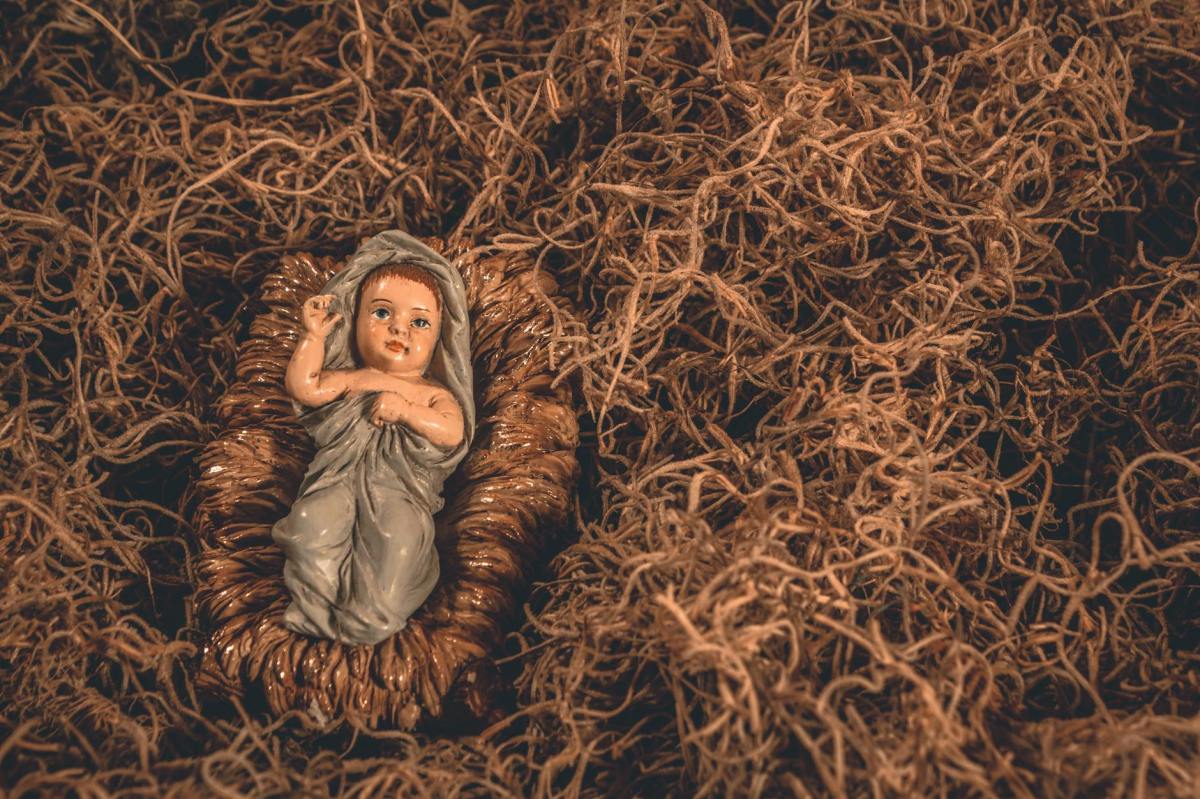
Empathy: A Sermon

I preached this sermon on Sunday, December 21, 2025 at St. Anne Episcopal Church, West Chester, OH. The lectionary text cited is Matthew 1:18-25.

Most of us, while growing up, have certain moments when we realize something difficult about the way the world works. Perhaps that things are not as safe or pleasant as we had thought them to be; that people are often lonelier and more lost than we had imagined, and that we ourselves might someday feel that way, too. These are not happy discoveries, but they are important ones.

When I was in the fifth grade, I had a group of friends, and every day at recess we played foursquare. If you’re not familiar with that game, it’s essentially a group of four people bouncing a large rubber ball back and forth among, you guessed it, four squares, and trying to get each other out. We loved it. 

But one of my friends at the time had a little bit of a schoolyard bully streak in him, and one day at recess he started taunting another boy who was not in our group. The particulars of his taunt don’t really matter—they were made up and casually cruel. But they stuck, and soon some of the other kids joined in. I did not, but I also didn’t say or do anything about it.

This went on for a few days, and I just remember that it started to bother me more and more. Until one day, I told my friend in the middle of the foursquare game that he should stop saying those things, that he was being mean, and that I was not going to be “one of his followers” who went along with this. Oh, this enraged him. He turned on me in a fury and starting aiming that rubber foursquare ball at my face. The other kids didn’t join in, per se, but they didn’t say or do anything, and I soon found myself exiled from that particular group. This is how the world works sometimes.

Now this is not an after-school special on tv—there was no happy ending where I befriended the bullied boy and started a new group of misfit friends. I wish I had. I did realize though, that there are choices to be made, and a price bound up in them, when we encounter those ways the world works which we simply cannot abide. 

But I think the most important thing that I learned in that situation was the power of empathy—of placing yourself in the shoes of someone else and letting your own heart break for them a bit. It is a wondrous thing, empathy—a small, simple choice made in a million different instances that can transform everything within us and among us. 

Now there are some in popular culture and other circles these days who are claiming that empathy is toxic. That it’s dangerous to morality and social order to care too much about others’ feelings or experiences. And for such people….I try to have empathy. We are all afraid or resentful of what we don’t understand, sometimes. But we must decide what to do in response to that fear. 

Which brings us to our gospel today. Another fearful, confused person who has to make a decision about circumstances he does not understand is Joseph. At least that is how I imagine him when I try to empathize with his situation: shocked, bewildered, conditioned by the strict codes of honor and shame within his own culture. 

Before any divine dreams or angelic messages come to explain the circumstances to Joseph, there is simply a regular man, alone, with more questions than answers. Presumably through family or friends, Joseph has been given the news of Mary’s mysterious pregnancy. And, according to the standards of his time, no one would have questioned it if he reacted with rage or rejection. The taunts of schoolyard bullies would pale in comparison to what Mary was up against. 

But instead, we have the first Christmas miracle before Christmas even arrives, and it is simply this: the choice of empathy. So quick you might overlook it: Joseph, being a righteous man and unwilling to expose [Mary] to public disgrace, planned to dismiss her quietly.

It is good to dwell on this sentence. We may not fully understand the patriarchal culture of 1st century Galilee, but we can understand this much: Joseph, in this moment, is not going along with the way that his world works. He is choosing, as best he knows how, to be empathetic with whatever Mary’s situation is. 

This is a risky choice for him. Some people already knew that Mary was with child, so Joseph’s decision to protect her practically ensures the whispers of his neighbors or even their outright derision of him. He is refusing, after all, to punish her and to thereby protect his own honor, as his culture would expect. 

But he is a righteous man, as Mathew tells us, righteous in the ways of God, not of culture wars, and somehow that means he is willing to pay the price of empathy. 

Imagine that—empathy as the hallmark of righteousness. A concept that I wish the whole of the Christian church would embrace. 

Because we should not overlook this in the narrative: Joseph’s empathy comes BEFORE his angelic dream, which then reveals God’s plan. Joseph’s empathy is the precondition of his participation in the Kingdom of Heaven. 

I am going to say that one more time for the ones who need to hear it: his empathy is the precondition of his participation in the Kingdom of Heaven.

Not his knowledge or his power or his strength. Not his social standing or his wealth. Not his capacity for censure or his commitment to cultural purity. 

His empathy is the precondition of his participation in the Kingdom of Heaven. 

Miracle of miracles! At the end of Advent we finally see it clearly: Empathy is “the way of the Lord” we have been commanded to prepare. Empathy is the means of fulfillment of the ancient promises of God. Empathy is the nature of the One who is coming. Who knew?

Well, actually, all of the prophets knew this; all of the patriarchs and matriarchs; all of the saints of every age knew this and continue to say it. But somehow, in 2025, we need to keep saying it, and so we will:

Empathy is the precondition of our participation in the Kingdom of Heaven. We let our hearts break a little bit for someone else, and God rushes in. 

This will come as less than good news to some—the schoolyard bullies we encounter at any age and in every age. The self-righteous and the judgmental. The condemnatory and the incurious. The ones who have confused discipleship with the hard, glossy veneer of social acceptability. They are not yet on board with empathy, but just you wait. 

Because Jesus is coming and has already come to assemble his own group of misfit friends, and nobody is excluded from this group except the ones who lack empathy. They’ll be welcome too, once the veneer cracks. It usually does. Eventually we all discover that things are not as safe or pleasant as we hoped them to be. That we are all a bit lonelier or more lost that we thought we’d end up. 

And that is when empathy is born in us, and when God’s advent can truly begin. 

So here is my invitation to you, friends, in the spirit of St. Joseph: between now and Christmas Eve, think of one person you don’t understand, or whom you resent. It could be anyone, but ideally someone close to your daily life. And as challenging as it might be, I want you to take just five minutes alone and do your prayerful best to empathize with them. Imagine what struggles or fears might be shaping their decisions. Consider what hidden wounds might still plague them. Try to remember even one thing that you probably both share in common. 

And that’s it. You don’t have to write a letter or tell anyone at all. Just give your own heart the brief gift of empathy—the tiniest crack of compassion—so that God can achieve his advent into you. Who knows what dreams or visions might follow. 

I have no idea whatever happened to the boy I defended or the bully I enraged. All I do know is that the empathy I chose that day is something I would never take back. And if I accomplish nothing else in life, I hope that by the end my heart is broken all the way open by love, I hope it is broken into a thousand glimmering pieces of grace given and received, and that God alone will know what do with all of it. 

I know that this is not always how the world works, but how beautiful it will be when it does.

When at last, in perfect empathy, He comes. 

Eyes on Him: A Sermon

I preached this sermon on Sunday, July 20, 2025 at St. Anne Episcopal Church, West Chester, OH. The lectionary text cited is Luke 10:38-42.

Not too long before I began my training to be a priest, I had a meeting with my rector and mentor, Fr. Shannon. I was, as you might imagine, a bundle of nerves and excitement and anticipation, wondering what on earth I’d gotten myself into, even though I also knew it was the only thing I could imagine doing with my life. 

Fr. Shannon was and is a prayerful and wise man; he is the sort of person who cuts right to the heart of the matter when you speak with him. Even so, when I asked him for any last-minute advice as I headed off to seminary, I wasn’t quite prepared for the simplicity of his words. 

Just keep your eyes on Jesus, he said. Just keep your eyes on Jesus and you’ll be fine. 

That was it. 

Now, I can be an over-thinker. With good PR one might call my personality type “introspective,” but if we’re honest, sometimes I just get in my head about stuff.

So when I’m all worked up inside about the future and Fr. Shannon just says to me, keep your eyes on Jesus, I will admit to you that internally, I was kind of like, uh huh….and??? Throw me a bone here, Father. There’s gotta be something more to it than that. How am I going to crack the code and become the ideal priest? How am I going to help fix all the problems of the church and the world? How am I going to shoulder the impossibility of the task ahead?

But that was all he said that day. Keep your eyes on Jesus. 

So I packed my Uhaul truck with a lot of unanswered questions and went on my way. 

And wouldn’t you know, that he was exactly right? Because I would learn in all sorts of ways throughout my years of training and formation—and I continue to learn—that keeping your eyes on Jesus is a deceptively simple invitation. It is actually really, really hard, especially once we realize how many other things we’re accustomed to focusing on. 

The truth is our complicated lives and the complicated world around us and our egos and sometimes even the ups and downs of Church itself seem to conspire to keep our eyes on anything other than Jesus. Anything other than the simple, devastating truth of him and all that he offers, teaches, and dismantles. 

I got to seminary and, as with anything, it was so easy to get caught up in the externalities of it—the grades and the institutional anxieties and the questions about the future. So easy to forget, if I wasn’t careful, that none of that stuff mattered if I wasn’t first focused on the deep, healing love that I had found in Jesus.

And as with any great love, some years on, I’m still only beginning to discover its fullness—only beginning to see what it means to keep my eyes on Jesus and to let that seeing change me. 

I tell you this story, though, because in this light, I hope we can reassess today’s gospel passage. Here’s another confession: if I hear one more take on this story that divides us all into “Martha” types and “Mary” types, or that pits action against contemplation, I will pull out the nonexistent hairs on my head. With all due respect to those interpretations, this is not a passage about any of that. You are not just a Martha or a Mary. This is a meaningless distinction.

If you need some convincing on this point, consider: was Jesus a Martha or a Mary? Was he an active or a contemplative? The answer of, course, is that he was all of these things together and none of them alone. He was and is the unity of love and action, of prayer and prophetic witness, of service and surrender. Which is why, of course, we are supposed to keep our eyes on him—so that we might become like him. 

Consider, too, that in Scripture Martha and Mary are both more than this isolated passage would suggest. Martha, in John’s Gospel, is not a hapless busybody, but a person of deep faith and insight: she is the first person in that book to proclaim Jesus as the Messiah. And Mary, in that same Gospel, is no retiring navel gazer, but a person of decisive word and action. She pours out her expensive ointment and anoints Jesus’ feet with her hair, defying criticism and convention. 

Imagine that, women in scripture actually being more complex and powerful than church interpretive tradition has allowed them to be? What a concept! So let’s lay down that tired old binary these women supposedly represent. It is not real. 

The point here, instead—the distinction that Jesus is making when he talks about Mary “choosing the better part”—is a question of where our focus lies. It is his gentle, direct reminder to Martha to keep her eyes on him in all that she does. In the things that she can set into order and in the things that remain a mess—in all of it, he wants her to not forget what it’s all for, what it’s all about, what it’s all moving towards: union with him, life in him, the eternal love affair between God and creation consummated in him. 

Because Martha, worried and distracted by the many things she genuinely cares about, can only truly learn how to love them if she keeps her eyes on Jesus and receives him not just into her home but into the very depths of her soul. 

And the same is true for us, friends. 

All that we do in the church—our programs and our fellowship and our formation and our service projects—all of it is meaningless unless we first keep our eyes on Jesus and receive him into the deepest parts of ourselves. You’d think this would be obvious, but just like that advice Fr. Shannon gave me, it is deceptive in its simplicity.

Because it is so, so easy to become distracted, worried, and tempted by many other things—the ups and downs of economics and politics, the personal hurts and hungers that plague us, the unresolved conflicts and the institutional inertia. They are all important in their own way; they all need some faithful tending. But without keeping our eyes on Jesus—without making him the main thing that we are actually about—we will never go beyond a sort of well-meaning crisis mode. And I think we find ourselves in well-meaning crisis mode a lot of the time.

But God wants something more for you than that, St. Anne. God wants your liberation. God wants your peace. God wants you to be able to breathe again. And to help others do the same.

And the journey towards that liberation and peace and room to breathe begins, and becomes, and ends, for us, in focusing on Jesus. Listening to him, praying as he prayed, confessing to and confiding in him, studying his teachings, modeling our social ethics and our relationships upon his generous and gentle love. And then receiving him—reaching out our hands and receiving him into the deepest parts of ourselves.

This is what we must be about here at St. Anne, first and foremost: keeping our eyes on Jesus. And when I say Jesus, I mean the real Jesus, by the way, in case you’d forgotten or never been told what he’s actually like: living and present, responsive to reality, no enemy of science or truth or human experience, sacramentally available, still-being-revealed to us, Spirit-driven, justice-seeking, reconciliation-making, mercy-rendering. That is Jesus. Keep your eyes on him. 

The stranger-caring, everyone-welcoming, difference-respecting, listening, peacemaking, table-turning, mountain praying, active, contemplative, holy Jesus. The Martha and the Mary and the Peter and the Paul and even the Judas-loving Jesus. Keep your eyes on him, because he is there waiting to love you, too.

Not Christian nationalist Jesus; not conservative or liberal Jesus; not idol of patriarchy Jesus; not disembodied, benign, relative-truth Jesus; not war-monger Jesus; not mere symbol Jesus; but the real, risen, living, loving, bleeding, blessing, breaking, laughing, dancing, fire and firmament Jesus who demands nothing less than all of you and nothing more than this: to see him, and to fall in love with him, and to fall in love with your neighbor and the world again because of him, and to die and to live again, all at once in him. 

That’s who I am going to keep my eyes on, no matter what else comes along. 

Just like Martha, and just like Mary, and just like everyone else who has ever dared to look up from the worries and distractions that surround them and instead chooses the better part that is, quite simply, Jesus. That is, quite simply, love. 

Whatever else we do, lets start there. Just keep our eyes on Jesus.

As a wise friend told me once, do that, and we’ll be just fine. 

Poetry: A Sermon

I preached this sermon on Sunday, December 22, 2024, the Fourth Sunday of Advent, at St. Anne Episcopal Church, West Chester, OH. The lectionary text cited is Luke 1:39-55, the Visitation of Mary to Elizabeth.

Holy Sacred Spirit/Vanishes noiselessly/Shining Rivers, Dying Trees/Quietly Grass Whispers

This little verse is in a magnetic frame on our refrigerator, and I’m somewhat self-conscious to admit that it’s a poem I wrote in 3rd grade, while sitting with my class in a field in rural northern California. I think the class assignment was to write a haiku, and I didn’t meet the sentence structure or standards of that venerable art form at all, but hey, I was 8. 

I share those few lines with you not because they’re anything remarkable, but because they remind me, whenever I see them, that from a very early age, as kids we are already aware of the sacredness of the world, no matter what words we might attach to this awareness. 

When we are young, wonder and love and fidelity and that vivid, almost-tangible presence we call God are all as natural as breathing. I was not raised going to church, but I could write a poem about the Spirit whispering to me in the brown field grass because, well, I was young, and the whole world felt alive. That’s childhood. We find it easier to accept that God is at work wherever we look.

And then we grow up a bit, and our capacity for poetry falters. The grass is just the grass. It wasn’t until much, much later, after many faith-uncertain years, that I began to wonder what had ever happened to that holy, sacred Spirit who used to whisper and hover and suggest herself to me on the wind.

She hadn’t gone anywhere. One day, years later, I was back again in rural northern California, driving down a winding road with some friends and I looked up into the forested hillside and I saw a mantle of fog unfurling down among the green boughs of the trees and those words came back to me again….holy sacred spirit…and I thought, oh, there you are, old friend. I had almost forgotten. I need to remember to name you when I see you.

Calling God by name, and naming God’s presence. That is, in many ways, the primary vocation and the mission of the Church. We have inherited the story of how God named things—how God made the world and named it good, named it beloved, named us as the bearers of God’s image. 

And in a way, all of Scripture is one long record of us trying to give a name back to to God—to  pronounce that unspeakable holy word disclosed to Moses, I AM THAT I AM—a word in Hebrew, sometimes translated as Yahweh, which isn’t really a word at all, but the sound of breath, of dynamic silence. The sound of the wind stirring the grass. 

And the names we have given this nameless One are many—Elohim. Adonai. Shaddai. And later, in our own language, God. Lord. Creator. Holy, Sacred Spirit

But here’s the thing: we aren’t called or tasked with simply coming up with new names to address God.

No, more importantly we as the people of God are asked to name those moments and movements and things in our world that are revelations of God. We are asked to look for God at work and to point him out when we see him, so that others might understand what God is all about—

We are to say, look! There! Yes! That is what God is like. That is the One we speak of! There he is, filling the hungry with good things. And there is God, leaning against the bus stop in a shabby coat, smiling in the rain. And there she is, doing her children’s laundry with just a few dollars left in her purse. And there, too, there is God, in the grasp of my beloved’s hand when I am frightened, and in the laughter between old friends, and in the candlelight, and in the taste of bread and wine. There is God, and there, and there, and there…This naming is one of our primary jobs as disciples. 

But we forget about it as we grow up. We forget how self-evident is the sacred dimension of all things. We don’t hear God in the grass anymore. The world is a bit more matter of fact, a bit less poetic. Growing up, growing older, can do that.

Elizabeth, who we meet in todays Gospel, would have known something about that. 

Now, we don’t know much about Elizabeth, other than that she is Mary’s much older relative and Zechariah’s wife and that she has been, til now, unable to have a child. In her time and place and culture, this would have been an especially great source of sorrow and shame. 

And we might imagine that Elizabeth had long given up on trying to figure out where to look for God at work in her life, or how to name his presence. She has not lived a life with much poetry in it. 

But then, a miracle. Despite being advanced in age, Elizabeth has been blessed by that holy, sacred Spirit, and in the great Biblical tradition of barrenness transformed into promise, she, like Mary, now carries a child in her womb, a child who will be named John, who will grow up to be sort of wilderness poet himself.

But before John, and before Jesus, and even before Mary sings her own Magnificat, that powerful song of hope and redemption we heard today, Elizabeth does something quite remarkable. It’s easy to overlook. Let’s revisit the text, so that we don’t miss it:

Elizabeth was filled with the Holy Spirit and exclaimed with a loud cry, “Blessed are you among women, and blessed is the fruit of your womb. And why has this happened to me, that the mother of my Lord comes to me?

Do you see what Elizabeth does there? She names the baby in Mary’s womb as Lord. She is the first one—the very first person—to call Jesus Lord

She, Elizabeth, she the forsaken, she the unfruitful, she who had capitulated to an unpoetic life, she is now speaking the first verse of a new creation—the first human person in the Gospel narrative to speak of God and flesh as one—the first person to say that this child is God and that God could be a child and that a new poetry is emerging, being birthed from the deep mystery of life. 

Elizabeth names what thus far only angels have dared to say—that the shining rivers and the dying trees and the whispering grass and the whole laboring creation are about to become ONE with the substance of heaven. 

And in seeing this, and saying this, Elizabeth is, we might say, the very first Christian disciple. The very first to name God where she sees God at work in the world, in the most unexpected of places.

So what does that mean for us, we who are doing our best to make Christ known, here, in another time and place?

It’s means we must do what Elizabeth did. Look for God at work in the world, and take part in God’s labor in the world—the work of peacemaking, of compassion, of justice, of service, of loving our neighbors, of loving the earth—and—this is very important—call it what it is. Call it the work of God. 

Not just a nice deed or an act of human kindness. No, not just that. Give God back his name. Give the world back its divine poetry. Name the work of love as the true work of God, the true nature of God—the God who is love—the God who saves and sings and comes to us in frailty and gentleness. 

Because the problem of our own time is that the Christian message has been de-poeticized. It has been stripped of its creativity and robbed of its lush beauty. It has been turned into a cultural weapon or a social club or a benign pastime we fit in between brunch and grocery shopping when what the Kingdom of Heaven really is, is the insistent, upwelling, powerful transcendence of the living God that saturates and spills out of every cell of creation and asserts its advent into every moment of our day. If only we would look for it and name it and take part in it. 

The world needs us to take part in it. The world needs to hear the true name of God, which is love, which is undying, reconciling, proactive, poetic love, which is what we are waiting for in Advent, which is what we are naming when we speak the name of Christ, and when we speak the name of that holy, sacred Spirit who still sings, in wind and grass and in the Magnificats that well up in our hearts. Let them well up, my friends. Let yourself see the world as poetry again. 

And when we do, then we, much like Elizabeth, will be able to say,

Blessed are we, and blessed is the fruit we bear. And blessed are those who know that God has a name we are finally able to speak, and that it is Jesus, and that it is love. 

And blessed are those who speak it. 

O Great Mystery: A Sermon for Christmas Eve

I preached this sermon on Christmas Eve, December 24, 2022, at Trinity Episcopal Church, Fort Wayne. The lectionary text cited is Luke 2:1-20.

A couple of years ago, after both of my grandparents were gone and their house was in the process of being emptied and sold, I received a package in the mail. My cousin had sent me a few of my grandmother’s Christmas decorations, including an ornament or two and one of those plug-in yule logs from the 1950’s with electric candles on top of it. It meant a lot to receive these things and to be able to put them up alongside my own childhood decorations. 

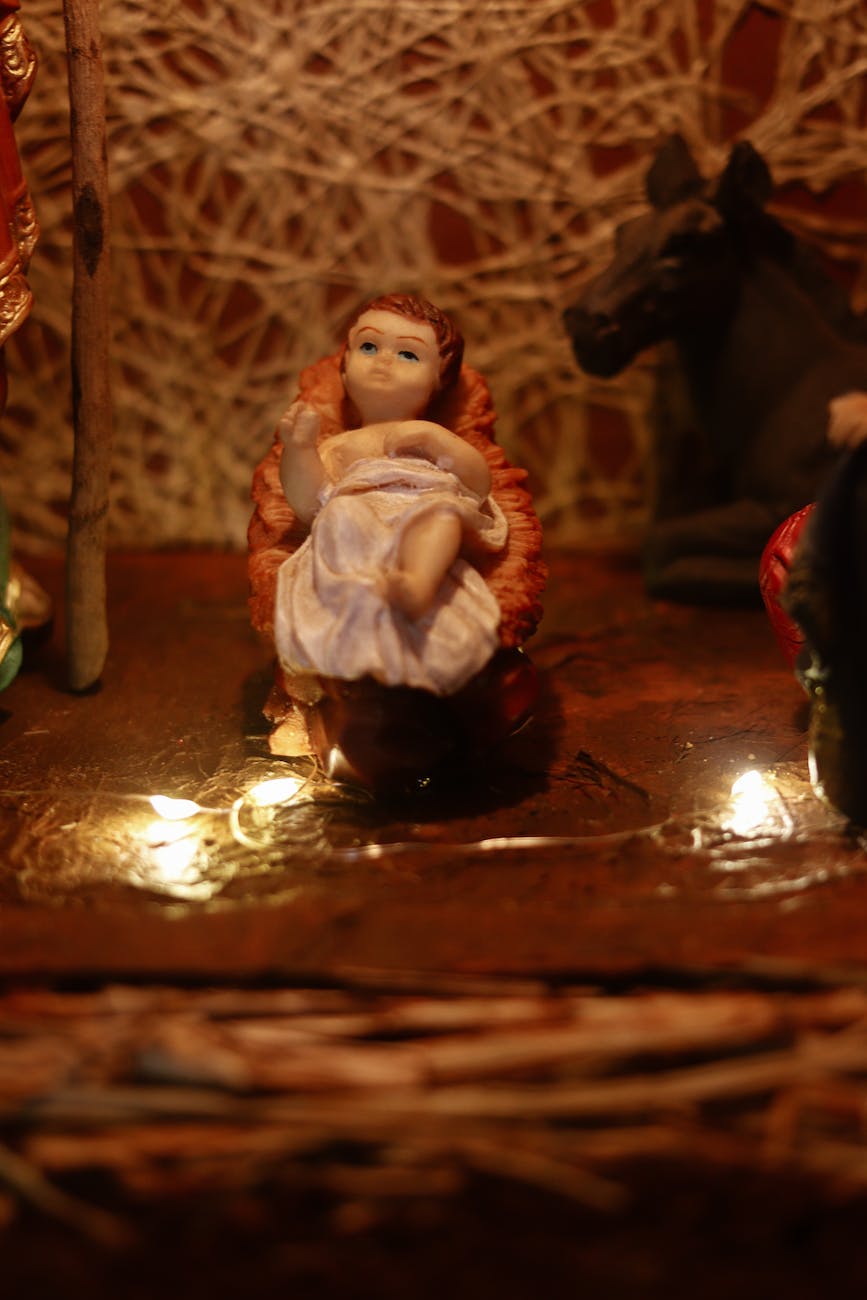
And among my grandma’s decorations was a small, slightly timeworn Nativity set. The figures have a few chips and cracks, a fragment missing here or there, and it’s just the bare essentials: Mary and Joseph and the baby Jesus in the manger, and a donkey and an ox. That’s it. No shepherds or angels or wise men. Just the Holy Family and a couple of animals attending them. At first I thought maybe some pieces were missing, that the scene felt incomplete, but now I have come to love the simplicity of the scene—how these few figures capture a quiet moment before the arrival of the angels with their songs and the clamoring shepherds with their questions. The donkey and the ox, it seems, are able to simply take the miracle in stride.

It’s interesting, as much as we love animals, that we don’t usually say much about the ones present on that wondrous night in Bethlehem, although they show up in nearly every depiction of the Nativity. If you read the text from Luke closely, you might be surprised to notice that no animals are explicitly mentioned. The Christ child is laid in a manger, a sort of feeding trough for livestock, but the creatures themselves are only implied by the setting.

In fact, it’s in the first chapter of Isaiah, and not in the Gospels, that we discover the donkey and the ox who eventually wandered their way into our collective imagination and into my grandmother’s Nativity set. They are found when the prophet says: 

The ox knows its master, the donkey its owner’s manger, but Israel does not know, my people do not understand.

The implication of Isaiah is that it’s the animals, embedded as they are within creation, who are able to recognize their true source of life and sustenance in ways that we humans, in our delusions of self-sufficiency, are not able to do. God longs that his people might be as trusting and dependent and open to his protection and providence as the donkey and the ox are to their caregivers. But are we? As we arrive at our Lord’s manger on Christmas, as we behold, in the flesh, the Redeemer of the Earth, do we finally understand who he is, what he offers, what he asks?

The question persists, and the donkey and the ox bear witness. In the early centuries of the church, the combination of Isaiah’s imagery and the nativity account were blended into a verse composed by an unknown author and chanted for centuries in Latin at the midnight prayer office on Christmas Day: O Magnum Mysterium. O Great Mystery. In English, it reads: 

O great mystery and wonderful sacrament, that animals should see the newborn Lord, lying in a manger! O blessed virgin, whose womb was worthy to bear the Lord Jesus Christ. Alleluia!

A simple verse, but it contains much to ponder. For it says that the Magnum Mysterium, the Great Mystery, is not just the birth of Jesus, but the witnesses to that birth—that it was the animals, before anyone else, who beheld the Lord in his manger. It was the animals, not the shepherds, not the wise men, who first saw their Creator enter his creation and then gathered in to greet him. Only the animals, wordless, attentive, uncalculating. They knew their master’s voice, they recognized their owner’s manger, and so they huddled close, sharing their solid warmth with him and his mother in the chill of that silent, holy night.

What can this scene teach us, we who still struggle to understand?

It is often said that our Savior being born into such a setting is a sign of God’s humility; that it is a great self-emptying of divine power to be born as a helpless infant, surrounded by animals, lying in a feeding trough. And God’s humility is indeed part of the Great Mystery of Christmas, but I think we miss something important if we just leave it at that. 

Because anyone who has worked with animals, or who has simply cared for and loved them, knows that they possess their own sort of wisdom, their own inherent dignity and grace. Not just the donkey and the ox, but all of God’s creatures play their own role in the vast network of interdependent life on this earth, each carrying in their very bones a knowledge of what they are, and what they must do to live, to flourish, to endure. Animals are different from us, but they are not lesser than us. 

And so perhaps for Christ to be born into their company is not so much about divine self-abasement as it is a sign of human reconnection with the fundamentals that shape and sustain all of life, including our own: birth, and death, and nourishment, and warmth, and companionship, and trust. All of us need these things. All of us can give these things. 

Perhaps the Great Mystery that we glimpse this night, alongside the animals at the manger, is not God’s weakness, but God’s true, elemental strength. For what is stronger than showing up in deep solidarity with creation? What is mightier than taking part in the persistent, generative power shared by all living things? 

What if the wonderful sacrament is not to be understood so much as Christ descending into a poor and helpless form, but as the Creator arising into his creation, emerging from the hidden depths of the cosmos, from the womb of his mother, from the cradle of eternity, to claim all the earth as his own beloved home, to name all living things as his kin—as sacred partners in the unfolding birth of the Kingdom? 

For it should not be lost on us that the very things Jesus will later name as our essential Christian vocation—feeding the hungry and thirsty; sheltering the weak; being present to the most vulnerable,—these things are not lofty theological propositions. They are creaturely things: old, and instinctive, and earthy. They are the basic stuff of life. And they are, O Magnum Mysterium, the very things that the animals offered Jesus that first night in Bethlehem.

For the ox knows its master, and the donkey its owner’s manger.

But the question remains: do we know? Do we understand yet? Or are we so overwhelmed by the seeming complexity of God, or the complexity of our world, that we have forgotten the ultimate simplicity of what is needed, what is given, what is required of us in this life: to tread lightly and compassionately upon this earth in union with all of creation? 

Might we, on this most blessed of nights, rediscover our truest selves? We who are made in the image of the God who now bears our image, too. We who are called only to love; called only to sustain one another, to sustain the earth, as he sustains us. O Great Mystery, that life— messy, tearstained, bleeding, breathing, fragile, undaunted, beautiful life—is itself the most wondrous sacrament of all.

In it, may we finally come to see that Christ is not born this night to save us from our humanity, nor to deliver us from the world he has made, but to inhabit these things fully, to love them fully, that we might gather alongside all creatures, to behold the majesty of God in the flesh, and to join our voices with the song of the angels and the bray of the donkey and the bellow of the ox, a chorus of unceasing praise. Tonight, may the whole world at last know its master, know its Lord’s manger, and thereby know itself for what it is—beloved, sustained, redeemed.

The Nativity scene is here, in our midst. Our Savior awaits. What the animals did first and best, let us do so now, too, with the joy that is fullness of life. 

Come, let us adore him.

Dreamer: A Sermon

I preached this sermon on December 18, 2022, Advent IV, at Trinity Episcopal Church, Fort Wayne, IN. The lectionary text cited is Matthew 1:18-25.

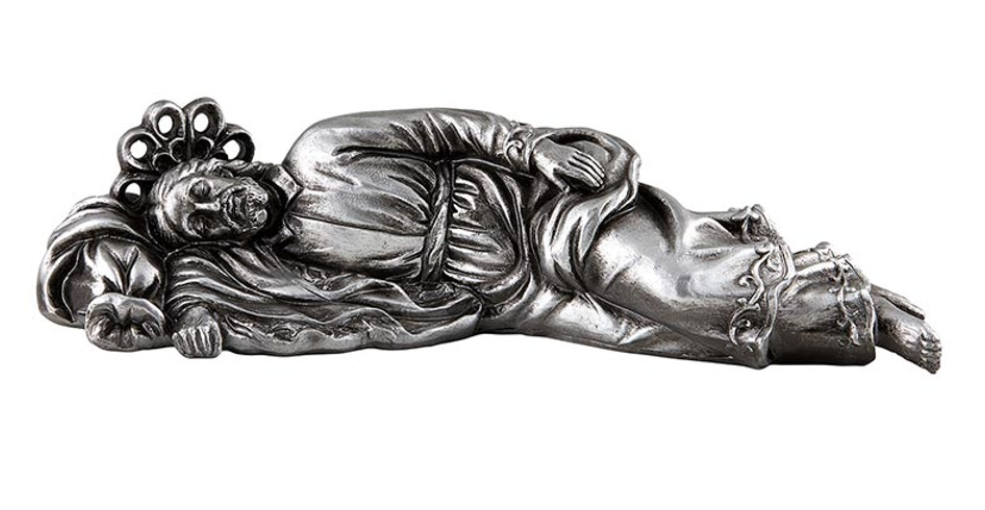
If you ever wander into my office, you’ll see a whole collection of religious art and objects, each with their own special meaning and story. One of the newer additions is a small statue right on my desk—it’s a pewter figure of St. Joseph, who is depicted laying down on his side, eyes closed, deep in sleep. It caught my eye because it’s a bit unusual as far as saint statutes go; they’re usually upright and alert, like toy soldiers: eyes wide, halos glowing, ready to pray for us. 

And maybe I was just feeling extra tired that day, but when I saw sleeping Saint Joseph for the first time, I thought—yes, Lord, at last, here is a saint who really gets me. For I am quite sure that I’m at my holiest and best behaved when I’m sleeping. And I’ll confess that some days the only thing standing between me and a grievous sin is a good long nap! So I was delighted to later receive the statue as a gift, and he continues to remind me, especially in this busy season, to rest. 

The tradition of the sleeping St. Joseph figure is found throughout Christian art, but it’s especially popular in Latin America. It has become more widespread in recent years because Pope Francis is fond of it. He told a crowd once that he has an old figurine of sleeping Joseph, and when the Pope is worried about something, he writes it down on a piece of paper and slips it under the statue so that Joseph can dream about it and in so doing, carry those prayers up to God.

The reason, of course, that Joseph is depicted as sleeping and dreaming in these images is because dreams are a key part of his story in Scripture, as we just heard in today’s Gospel. Matthew tells us that it is in a dream that the Angel of the Lord directs Joseph to do his part in the unfolding story of the Incarnation: to take the pregnant Mary as his wife despite the threat of scandal; to protect her and this mysterious unborn child; and then to name the child Jesus and to adopt him as Joseph’s own. And later, it will also be a dream that warns Joseph to flee with his family to Egypt to escape the murderous plotting of King Herod. 

Like many of his ancestors before him, Joseph was asked to trust in the power of dreams to reveal God’s presence and purpose. And perhaps this is not all that surprising, because even for us dreams are a potent landscape of possibilities. As our body rests and our mind wanders through many chambers at the edge of consciousness, it is in dreams where reality expands, where hope and memory intertwine, where demons lurk and angels whisper. It is in dreams, often, that we can see the things we’re not yet ready to face in the daylight, or perhaps that we hadn’t even begun to imagine. 

And so as Joseph sleeps, he is shown a new possibility: something the social codes and the conventional wisdom of his time would have never allowed. The Angel speaks to him of mercy and courage and fidelity, of trusting in the wild promise of a newborn savior, of journeys long and perilous and good. And then Joseph stirs from sleep, and all of creation waits to see what he will do. The Angel holds its breath. Joseph opens his eyes. And though we never hear him speak, I like to imagine him emulating the response of Mary: 

Here am I, the dreamer of the Lord. Let it be done with me according to your word. 

I think it is no small thing that Joseph decided to trust in his dream. Who among us, in the light of day, doesn’t tend to forget our dreams or brush them off, even when they seem significant? How easy it would have been for Joseph to do the same—and how different things would have been for all of us if he had. And so we honor him not only as a protector and earthly father figure of Jesus, but as a dreamer–as the one who believed in the dream of God. The one who woke up and said yes, that is possible. I can do that.

In some ways, this story–Joseph’s dream, and his waking, and and his choosing to believe–is the story of the whole church. For in Christ we have all been visited by God’s redemptive dream for creation. We have all been asked to wake up and believe, to let the dream change us, to let it shape our choices and our lives, so that God might continue to be made incarnate in the world through us. We, too, are the dreamers of the Lord, and the world is yearning for us to open our eyes, to remember what has been revealed, and to say, yes, that is possible. I can do that.

But how do we know? How do we know that it is indeed God’s dream welling up in us, and not just some random impulse of our own? How did Joseph know that he should trust the dream rather than dismiss it? 

The answer is what the answer always is: love. We will have many of our own fleeting dreams and desires and designs, but the dream of God is love, and the dream of God will always ask of us just one thing: to act out of love. The dream of God speaks of mercy and courage and fidelity, of trusting in love’s wild promises, of journeys long and perilous and good. The dream of God says, just love: love generously, love scandalously, love insistently, and then indeed you will hear the angels sing and you will see the heavens bend down to stand upon the earth and then you will no longer be sleeping. The whole world will at last be awake and the dream will be real. It will be enfleshed. It will be Emmanuel—God with us.

And so I ask you: what is it that you have been dreaming of this Advent? What visions have dazzled you in the darkness? What hopes have stirred within your heart? What new word has God placed upon you in this season?

Whatever it is, hold fast to it. Write it down, and if you happen to find a statue of St. Joseph, slip it beneath him and let him dream with you a bit longer in the cold winter night.

But remember that we are deep into Advent, now, and the light is gathering. The Dayspring approaches. 

Are you ready to wake up? Are you ready, not just to dream, but to believe in the dream God has given you, to make it real? 

All creation waits. The Angel holds its breath. 

And now, dreamer, open your eyes.

The Mother of All: A Homily for Our Lady of Guadalupe

I preached this homily at a Choral Evensong observing the Feast of Our Lady of Guadalupe at Trinity Episcopal Church, Fort Wayne.

She appeared in 1531, near a small village at the outskirts of Mexico City.

She appeared in the winter, when roses do not bloom. She appeared in the wild, where the powerful do not venture. She appeared to an indigenous man, a person at the margins who saw what others did not, could not see. She appeared just as she had lived and loved and labored in her earthly life—in the hidden, borderless, bracing landscapes where heaven and earth intertwine, where the wind rushes over the hillside and the angels cry ave and the dream of God is revealed, not to calculating kings, but to the wakeful wanderer. 

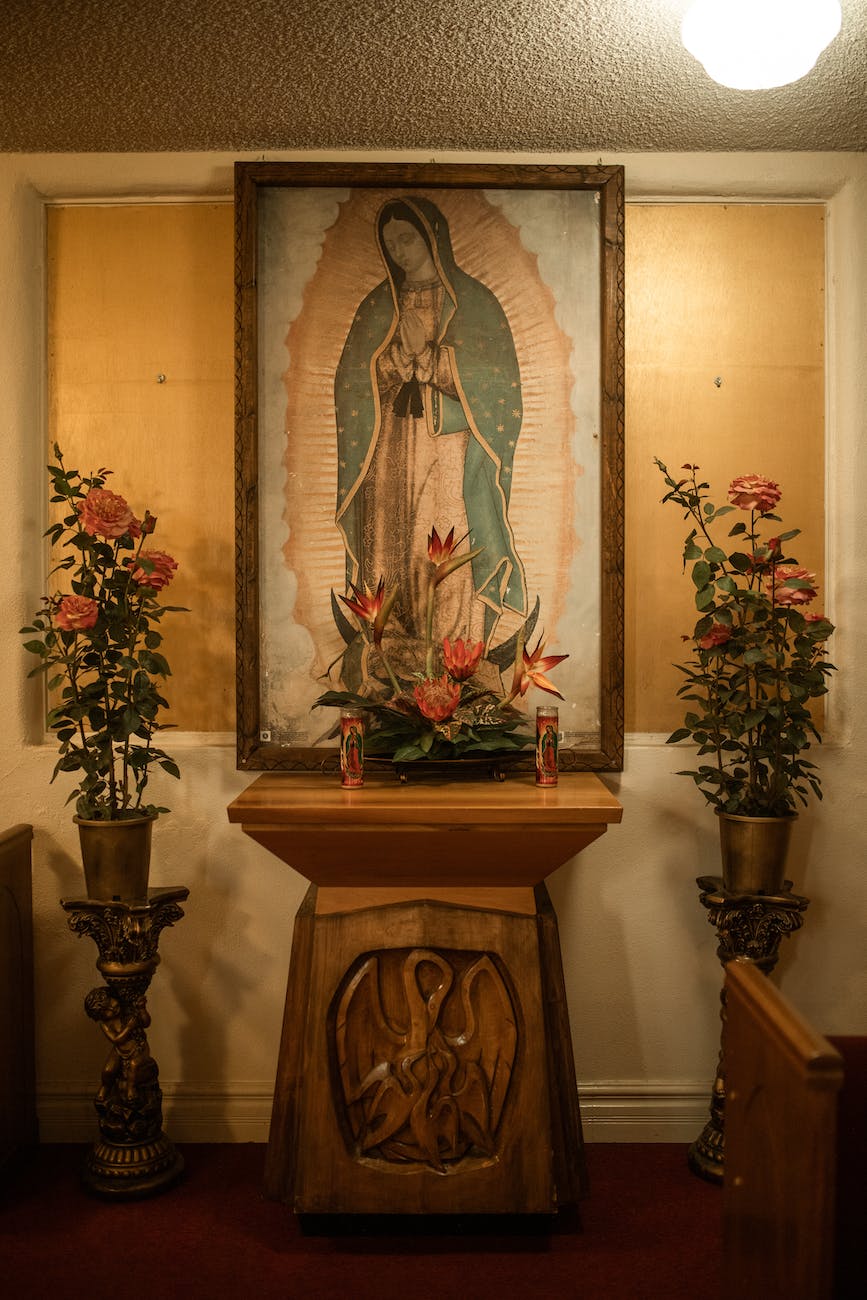
It is not sufficient to describe Our Lady of Guadalupe as a pious legend or a miraculous tale, for no matter what you believe about the veracity of Juan Diego’s vision of Mary in 1531, it is indisputable that she is real in the hearts and souls and prayers of millions across our continent and beyond. She is everywhere, her image burned into our consciousness, into our culture, as surely as it was onto that peasant’s cloak over 450 years ago. 

As the Psalmist says of God, so might we say of the Virgin of Guadalupe: where can I flee from your presence? We cannot, for she appears everywhere. She looks back at us from prayer cards and bumper stickers and paintings, from the pages of books, from the pages of our collective memory—even if we know nothing about her or the details of her original apparition, even if we doubt or dismiss the story, somehow we instinctively recognize her, this woman draped in stars, this woman carrying a child in her womb, this woman with dark hair and downcast eyes. 

Unlike many other Marian apparitions, there has always been something visceral about Guadalupe, something that almost transcends the structures of faith and doctrine and resonates, instead, with a more elemental and universally human need: the need to know that we have a mother who loves us. The need to know that we were born into a world that wants us. And to have somewhere to turn, someone who remembers us, someone who calls us their beloved child, even when we are no longer children. Especially when we are no longer children. 

For generations of people, Our Lady of Guadalupe has been an embodiment of that longing for the profound gentleness of heaven, particularly for those who felt estranged from the patriarchal images of God mediated through the historic colonial church. 

For the indigenous people of north and central America, who understandably might have associated images of Jesus and God the Father with the conquerers and clerics who upended their ancient ways of life, Our Lady of Guadalupe appeared as something altogether different—a divine message of love and care directed to them, a messenger of grace who stood with them and for them, who could subdue the high and mighty not with a sword, but with her peaceful word, with her fecundity, with the possibility of roses blooming in the snow. 

She appeared, not just as the mother of a foreign God, but as the mother of all people, and especially the mother of the impoverished and forgotten, those original inhabitants of an old land called the New World. She imprinted herself, not on the robe of a bishop, but on the flimsy tilma of a poor man. 

And though centuries have passed, there she remains, a mother for any and all of us who find ourselves feeling poor and forgotten, those of us who still navigate the uncertain landscape of this New World that is not yet a new heaven and earth, this land with its collision of promise and deprivation, wealth and uncertainty, privilege and peril. Amid the rubble of colonialism, astride the divisions of nations and ethnicities and languages, still she stands, hands clasped, waiting, seeing, saying to us the things we do not know how to say to each other: 

This land can hold all of you, God can hold all of you, you who have been harmed, you who have done harm. You who came from afar, you who were always here. You of every color, you of every path, you of every loss, you of every dream—I can love you if you will let me, if you will give your heart into my care. 

Come to me, and let me show you the true nature of God, the God who is like a child, who is like a dove, who is like a rose climbing up from the cold, dark earth. Come to me, you who know a mother’s love, you who have lost it, you who never felt it before. Come to me, for I have come to you, and I will not leave you. 

No, we cannot flee from her presence, this Lady of Guadalupe. And thanks be to God that we cannot. Thanks be to God that she has not forsaken us, that her image endures, that she remains, still, everywhere we wander, a sign of God’s relentless desire to care for each of us, for all of us. For it is your life, too, that she carries in her womb, it is your name she remembers in her prayer, and it is your homeland that lies beneath her mantle of stars. She is God’s mother, and your mother, and ours, forever. 

The Edge of Knowing: An Advent Reflection

I offered this reflection as part of a contemplative retreat on Saturday, December 3rd at Trinity Episcopal Church, Fort Wayne, IN. The theme of the retreat was Be Born in Us: Preparing for the Advent of Christ.

In those days Mary set out and went with haste to a Judean town in the hill country, where she entered the house of Zechariah and greeted Elizabeth. When Elizabeth heard Mary’s greeting, the child leapt in her womb. And Elizabeth was filled with the Holy Spirit and exclaimed with a loud cry, ‘Blessed are you among women, and blessed is the fruit of your womb. And why has this happened to me, that the mother of my Lord comes to me? For as soon as I heard the sound of your greeting, the child in my womb leapt for joy. And blessed is she who believed that there would be a fulfillment of what was spoken to her by the Lord.’ -Luke 1:39-45

Imagine: two women stand, side by side, at the edge of the world. 

Behind them, receding from view, the conventional lives that they expected—lives of predictable joy and predictable sorrow, all held safely within the boundaries of what they already understood. Behind them, now, the future that they had been preparing for—the one that the world had prepared them for from their earliest days.

Here they stand, bearers of good news carried on the lips of angels. Here they stand, backs turned on all of those old certainties, facing instead toward a great unknown. 

True, the villagers in this unnamed Judean hill town might just see two women like any other, shoulder to shoulder, staring out at nothing in particular. Hands instinctively resting upon their bellies. Two regular women, pausing to catch their breath, perhaps, caught up in a memory, or a daydream, or a question.

And why has this happened to me? asks Elizabeth.

They might still look the same as before, but inside, it feels as though they are standing at the edge of the earth, at the edge of a wide and restless sea, knowing that whatever must come next is out there beyond the solidity of the ground beneath their feet. But how does one step out into the unknown? How does one learn to walk on water?

The sun is coming out. The light is bright in their eyes.

Are they weeping? Are they laughing? Maybe both? Who can say? 

But at the very least, they are willing.

Yes, let it be done according to your word. Blessed are we among women.

For Mary and Elizabeth, one just beginning her life and one late in her years, there is a new type of kinship on this day. Not just one of blood, and not just because they both find themselves unexpectedly bearing a child in their womb.

No, they are kindred spirits in this moment because they, like so many others before and after them, have come to the edge of what they know, of who they thought they were, and now must ask themselves: 

How do I prepare for whatever comes next?

How do I prepare for the things nobody told me about? The things I could not have seen coming? How do I prepare for the bottom dropping out, for the unimaginable news at the door?

And how do I prepare for God, who comes like a thief in the night, making off with my comforts and my complacency, leaving me instead with strange, shadowy miracles and a song on my lips, only half-understood?

How do I prepare when I could not have ever prepared for this?

These, ultimately, are questions for all of us. And at their heart, they are Advent questions. 

Because Advent, far from simply being a cozy, quiet season ahead of Christmas, is actually a season of learning how to live with that which is unknown and unresolved in our hearts and in our world.

It is the season of waiting and of preparation for Christ, but it is also the season that reminds us that preparation only brings us so far, because what lies ahead—the fullness of who God will be for us, who God will ask us to be for Him—is inevitably surprising and more expansive and more wondrous than we can imagine. It demands all, even as it redeems all.

What will be revealed to us, Lord, when you arrive? What will be revealed about us when you arrive? How can we ever prepare ourselves for you, when you are so much more than we understand?

And yet, even as we ask such unanswerable questions, even as we stand facing the unknown, there is new life stirring within us, leaping with joy at the promise of His appearing.

So we come here today to ask such questions, to notice this joy, to find kinship with Mary and Elizabeth: to dare to believe that God can indeed be born in each of us, even if we feel utterly unprepared for that to be possible. Even if it scares us a little bit. 

It should scare us a little bit, if we’re honest. The truly important things always do.

I invite you to consider what you need this year during Advent—if there is a prayer or a question on your heart in this season of your life. I invite you, right now, to take a moment and close your eyes and call it to mind. 

Feel the significance of that need or prayer or question within you, how your body holds it. Is it light? Is it heavy? Is it comforting? Is it unsettling?

What is God calling forth from within you?

My hope is that you will carry that intention with you in this season, that you will spend some time being very honest with God and with yourself—that you will consider what it is that you need, and who you are becoming, and that you will name these things—whether in conversation with others or in the silence of prayer with God.

Because the strange thing is that even if we cannot perfectly prepare for the unknown future, it is in knowing God and ourselves more deeply, and in knowing one another more deeply, that we will be able to bear it, whatever comes, whenever it comes. 

Even if, sometimes, it feels like you are standing at the edge of the world, remember that you are not standing there alone. You are in solidarity with Mary and Elizabeth and with every person who has ever longed to let the powerful love of God be born in them, to transform them, to take them out beyond certainty, beyond complacency, into the wide and eternal mystery of grace.

Today we step out upon those waters, trusting that they will hold. Trusting the spirit of God who lives and moves within us. Trusting that the life of God which we carry will ultimately carry us

For this is, in the end, how we truly prepare: by being bearers of love. By letting God’s love be born in us each day, no matter what happens. Standing side by side in the light of sun, facing forward, saying yes, saying come, saying even though I will never be ready, I am willing. Blessed are we. Blessed are we.

Are we weeping? Are we laughing? Maybe both? Who can say?

But we are willing. Yes, whatever comes, let us be willing.

The Hope-Song: A Sermon

I wrote this sermon as a part of The Episcopal Church’s “Sermons that Work” 2021 Advent & Christmas Series. For more information, visit https://www.episcopalchurch.org/sermons-that-work/

The Rev. Pauli Murray once wrote that “hope is a song in a weary throat,” and amid this hopeful season, amid this weary age, we would do well to consider what such a song sounds like. It’s easy to miss sometimes, the hope-song, because it doesn’t always sound the way we might expect. We are too easily distracted by the proud aria or the ironic riff to listen for the soft, tremulous music that hope makes.

Hope is the song of empty karaoke bars, of late nights and of last dances, of a husky voice crying out a melody to defy the encroaching night. It is the song one sings under the breath, an insistent memory, perhaps, or a reassurance on the lonely walk home. It is the warbling note that has no obvious splendor other than its defiant insistence to be heard. The hope-song is not elegant, but it is faithful. It is honest. It is the song one offers up when the song is all that’s left to offer.

Consider this music, then, as we travel with Mary to Elizabeth’s house. Forget for a moment the lush choral arrangements of the Magnificat. Don’t be fooled by the prophetic boldness of the words alone. Remember that there is a fearful precariousness to her position. She is a young woman walking uphill in every sense of the word, seeking the comfort of a familiar face when everything else has suddenly become so very unfamiliar. We might wonder: did Mary sing to herself on the dusty road to the hill country? Was it a song that her own parents once taught her that she practiced on parched lips? Or did she call it up from somewhere deeper within, from the Spirit-infused cells of her very depths, determined to give voice to what was true, even when her life seemed to be caught in uncertainty?

Regardless, she sings, and it is indeed hope in a weary throat, reverberating into eternity: “My soul magnifies the Lord.”

Like any hope-song, there is defiance here, along with the joy and the fear. Yes, Mary says, yes, my soul, my very self magnifies the inexpressible holy name of God. The soul that belongs to this body in all its frailty and in all its fecundity—this is a place where God is revealed. Obscure, vulnerable, enmeshed in the tragic history of my people—I may be all of those things, but God is disclosed in them, not despite them, and God has chosen to take part in this world through me. 

And so, I will sing!

I will sing though I am weary, though I am frightened, because in the singing I place myself within a story, not just a circumstance. I sing a song of victory, not of victimhood. I am a teller of hard truths and I am the bearer of hard hope, the type that survives—it is my people’s hope, and my own.

Do we sing a new reality into being, or do we sing to pierce the veil of delusions, to uncover what is already true? The Kingdom is already, and it is not yet, but either way, Mary knows what must be sung, both because she carries the King within her womb, and because she is herself the Queen—a wisdom-figure, worthy in her own deep humanity, as each of us is, to discover and proclaim the hidden, unfolding power of God. Her song belongs to her ancestors, and it belongs to the child she will nurture. It belongs to all of us. It is ancient, and it is new. It is forever.

And thanks be to God for that, because we need hope-songs now, just as desperately as Mary did then. We need to be reminded of the dream that is encased in the tender core of humanity—the dream that God has placed therein, the dream that God invites us to bear into the world, the dream which refuses to be dispelled even by centuries of disappointment and degradation.

And it is especially important for us to remember, in the cacophonous holiday season, that the song that tells of this dream is not always the loudest or the most popular. It is, instead, the one borne of deep, soul-stirring wisdom. The one that, when you hear it—even when the throat is dry and the voice is garbled by tears—still the melody is recognizable because we have been singing it forever.

His mercy is for those who fear him from generation to generation.

He has brought down the powerful from their thrones, and lifted up the lowly.

He has filled the hungry with good things, and sent the rich away empty.

But what do we do with this song of Mary’s? How do we make it truly our own in a new and urgent time? Do we put it on a t-shirt or a bumper sticker? Do we write a few more books about it? Host a conference to assess the meaning of the words? Arrange it into a new musical setting?

We could. We do. We protect ourselves, sometimes, by turning Mary’s song into an ornament when, in truth, it demands everything we have.

Because that’s the thing about the hope-song: you don’t really know it, you can’t really claim it until you yourself have sung it with a weary throat. You can’t grasp the words until life has grasped at you, until you have been forced to walk up a few hills of your own, whether by choice or chance. And so, if we really want to sing the song, if we really want to mean it, we must first ask ourselves how attuned we are to the precarity of our lives and those of our neighbors. We must examine how vulnerable we are, and how open we have been to the risk of Jesus’ invitation to follow him, on the path first trod by his mother.

And in our self-examination, we might find that we have indeed been brought down low by life, that we are hungry for good things, and that this song of hope will lift us up if we have the courage to trust in its promise and lend our voices to its chorus. For the weary among us, the challenge is to show the world that we are more than our present despair.

Or it may be, for many of us, that we find ourselves to be the ones already in high, comfortable places, the ones who have never relied so much on hope as we have referred to it, because we are ensconced in other, richer melodies—the ones that lull rather than vivify. If so, it is time for us to wake up. It is time for us to come back down to earth and stand on holy ground. Because it is only from there, where Christ abides, that we can truly begin to live in the way God dreams we might.

Either way, Mary’s voice is calling out to you. So, whoever you are, wherever you find yourself, follow the sound of the hope-song. Let it guide you into the place of encounter with your most unencumbered self, and into relationship with the Holy One who calls you onward.

Mary has shown us the way, she has shown us the words, and she has shown us that while hope may be well-acquainted with weariness, it points beyond it, too, toward the place and time when a new song will be born—one of hope fulfilled, of rejoicing, and of rest. We are still learning how to sing that new song, but it is coming. And it is now here.

Ordinary: A Christmas Sermon

I preached this sermon on Christmas Day, 2020, at Trinity Episcopal Church, Fort Wayne, IN. The lectionary text cited is Luke 2:8-20.

Not quite as planned. A bit haphazard. Maybe somewhat underwhelming, even, after so much hope and expectation and hardship. Confusing and, for some, tinged with fear. And yet, somehow, in its startling ordinariness, still happening, still a quiet miracle, still infused with unspeakable grace. 

Am I describing how many of us have experienced the holiday season this year? Or am I speaking about the birth of the Messiah in Bethlehem over 2000 years ago? 

Yes.

On this Christmas, perhaps more than any in recent memory, we perceive the hidden, frank domesticity of the Nativity, for we, too, like the Holy Family, have been gathered in, with few options, seeking shelter above all else. 

But despite our recent immersion in the spare, the low-key, and the unadorned, it must be acknowledged that, even with all that we have learned and lost this year, with all the comforts foreclosed, we might still struggle to wrap our heads around the Savior of the world coming exactly in the way that he did—as an infant, born to an average family in a humble town, in a common peasant home, with the guest rooms past their capacity and animals crowded in for the night. Few expected, then or now, for the Messiah, the promised Holy One of God, to be, by all appearances, so very ordinary.

But so he was. A baby as fragile as any other, born with no particular privileges or advantages apparent, at a precarious moment in his people’s history. 

I know that I say to myself every year that I understand this, that I love how God came to us in suprising humility, but then I wonder, when I look at the habits of my life and when I look at what I am tempted by in the world around me: do I understand, really? Do I love him, just as he is, this child in the straw, who offers love, but not safety?

Because even now, even though we know better, even though we’ve told the story a thousand times and more, we still keep looking for Jesus to enter the world elsewhere—in a palace, in a capital city, among splendor and power and success.  We still admire and imitate the people who live and work in those places, and in our dominant western culture we tend to shape our values around their opinions and agendas. We long for the child of Bethlehem, but we keep looking for an emperor. 

And even in the history of the church this can be true, when we have tried to retroactively ennoble the Christ child in our imagination–ensconcing him in gilt and velvet and crowns, sometimes forgetting that these are subversive symbols of how he turns earthly values on their head, not actual depictions of his birth and life. 

But thankfully, blessedly, try as we might, we cannot escape the fact that he was not born as an actual king—and we are reminded in the Christmas story that God did not enter creation through the ornate front doors to be greeted by the servants, as it were, but instead came in the back way, through the service entrance, seen only by those who tend the sheep.  

And what good, good news it is that this is so. 

Because it means, for average people like you and me, that God was never interested in being unattainable. God was never interested in being insulated from us. God never wanted to be known as someone who is too busy, too important, to notice and regard with care the details of our lives. On the contrary, God was born in such an ordinary way to signify that it is here, in the midst of our vulnerable, complicated, boring, unimpressive, precious little days that he desired to make a dwelling place. 

He wanted his own life to be as plain and sweet as ours sometimes can be—a life of both chores and of chocolates—because he is Emmanuel—God WITH us—and that means with us through all of it: the good, the bad, and the long stretches of the simply OK. And thanks be to God that he visits us there, because most of our lives are made up of the simply OK, and I, for one, long to be known and loved even in those moments where I feel entirely uninteresting. 

The manner of Jesus’ birth is good news, also, because it means that we need not become impressive, powerful people in order to take part in God’s life or God’s mission. No matter what family we were born into, no matter how much money we make, no matter how many times we have failed or fallen down, we have not missed out on the chance to participate in the things that God truly cares about, because those are, in the end, quite ordinary things—feeding, clothing, visiting, listening, forgiving, remembering, grieving, rejoicing. They are the things that you can do wherever you are, no matter who you are. And the day that we realize that these things are all that God requires of us, that they are the elements of a truly important life…that is the day we are free. 

Let that day be today, this eminently ordinary day, as you gaze at a baby in the manger, with common shepherds as your companions. Let God’s humble birth, his little bed of hay, his quiet Mother, teach you that your life can be enough, will be enough, humble and little and quiet as it, too, might be, if you will only give over your love, your heart, to be pierced and shaped— not by the Savior we expected, but the Savior that we needed. The Savior of the everyday.

It is for him we say:

“Glory to God in the highest heaven,” AND glory to God in the lowliest birthing place.

“On earth peace,” AND in our ordinary hearts, peace, this Christmas day, and every day to come.