Hello/Goodbye: A Sermon

I preached this sermon on Sunday, May 21, 2023 at Trinity Episcopal Church, Fort Wayne, IN. The lectionary texts cited are Acts 1:6-14 (an account of the Ascension of Jesus) and John 17:1-11.

I find it a fascinating feature of certain languages that the same word can be used for both hello and goodbye. In Italian, whether coming or going, people often simply say “ciao.” In Hawaiian, it is “aloha.” In the Czech Republic, where I did a study abroad year in college, they say “ahoj,” which honestly always made me feel a little bit like a pirate. When a word like this contains within itself more than one meaning, it is called polysemy

We have many polysemous words in English, too, of course, but we typically use different words to greet one another and then to take our leave. Although even for us, we might choose to say “good day” or “good evening” on both arrival and departure. 

In all of the instances when one word serves as both hello and a goodbye, our languages reveal something deeper than their simple function. When both meanings are held in the same word, there is an acknowledgment of the fluidity of time and space and our place within them; when hello and goodbye are the same, then every coming together acknowledges an inevitable parting of ways, and yet every parting of ways holds within it the hope of inevitable reunion. 

I like this very much, not only because it is linguistically nuanced, but because it feels true, it feels like a little reminder that whether, in this moment, we are moving closer or farther from one another, we are still connected. 

And if that is true, then it suggests that the narratives we so often tell of encounters and departures—of definitive hellos and devastating goodbyes—are all, in reality, held within a larger, more gentle and generous story wherein all the roads we travel are interconnected, where all of our hellos and goodbyes lead back to one another in the end. Which is, itself, a polysemous, complex realization. 

Because if hello and goodbye are never truly final, it’s a consolation when we feel the sting of loneliness and yet it’s also a caution when we would rather escape our histories or shrug off our responsibilities to right relationship, because the intertwining of all our hellos and goodbyes signifies that we are inextricably tied to one another and to the whole of the earth. It suggests that, as the poet Tennyson says, we are a part of all that we have met, and, thus, it is part of us. Hello, you are part of me. Goodbye, I am part of you. No matter where we go, we will never not be part of each other. And knowing this, we must decide how best to live.

I am thinking about hellos and goodbyes and polysemy this week because we have just celebrated the Feast of the Ascension this past Thursday and you can tell that its story is echoing into our lectionary readings this morning, and to tell the truth, this story has always felt like kind of a bummer to me in the midst of our Easter joy. 

Because viewed from one angle, the Ascension is a goodbye narrative. The risen Jesus, only recently reunited with his beloved friends and family, is carried up in a cloud, into the great Mystery where it is beyond our capacity to see him, and his disciples are left staring at the sky, yearning for one last glimpse of him. 

And from this perspective, especially for all of us who have grieved the loss of a beloved face, who have felt the hollowness of being the one left behind, the Ascension might feel a bit like a flat note in the jubilant melody of the season. 

We might say, You loved us enough to come back from death, Lord, so why must you go, now, to a place where we cannot see you? Why must we continue to let go of you? Why is it still the case, even after the Resurrection, that everyone and everything we love still says goodbye to us in the end? Why must we wait here alone, waiting for the unresolved promise of your peaceable kingdom?

And yes, Lord, I know you have promised us the Spirit as our Comforter and guide, but if I am brutally honest, Lord, there are days I would trade that unseen Spirit for just one glimpse of your face, for one moment of your actual hands holding mine, reassuring me that I am not alone on this journey, some proof that your leaving was not forever, that there will come a day when we can say hello and it will not also mean goodbye. I would give anything to know that there will be, one day, an end to endings. 

But depart he does, and wait we must. And so for now, like the disciples on the mountain, we must stand in this polysemous moment of the goodbye that searches for a hello, containing within itself both joy and grief, reunion and relinquishment, and we must continue to wonder why and how and when we will understand the necessity of loss. 

But then this week, as I was reflecting on all of this, something occurred to me: that the Ascension, like so many other stories in Scripture, is itself polysemous—it, too, means multiple things at once. And while it is indeed a farewell narrative from the perspective of us and the disciples on the mountain, I realized that from the vantage point of God the Father, from the vantage point of the Spirit aloft on the high wind, from vantage point of the innermost heart of the Trinity, the Ascension is a hello, a celebration, a homecoming. It is Jesus, the Son, in the fullness of his risen, reclaimed, redeemed human flesh, crossing back over the threshold of heaven saying to the Father, here I am, I have returned to you, and much have I seen, and long have I loved you, and how good it is to be in your embrace again. 

And if we truly love him, how could we not want our Lord to finally be at home? How could we not feel some joy that even though we must say goodbye, it is because he needed to see his Father’s face once more? I can’t begrudge him that. I know I want to see my father’s face again someday, too.

And there’s also this: in the Ascension, when Jesus says goodbye to us and hello to eternity, he is, in truth, doing something entirely new, something that only he could do, fully human, fully divine, his polysemous body drawn up and out beyond the limits of the flesh, blurring the boundaries between heaven and earth, reigning as the Lord of both. 

He is not simply saying both hello and goodbye at the same time; he is breaking down the barriers between hello and goodbye; the barriers that separate us from God and one another. He is effecting his prayer that we might all be one, never parted. He is transfiguring all our beginnings and our endings, all of our greetings and our grief, all of our hope and our fear, into something bigger, something timeless, something that we cannot even imagine because we have not yet known a story that didn’t have an ending. 

By journeying to a realm where human flesh could never have otherwise gone, he is making a place for us, a place where we will be greeted and welcomed, and somehow, where we will never have to say goodbye.

And when he returns, bringing back the glory of heaven for our eyes to behold at last, it will be a new word that he speaks, neither hello nor goodbye, but some word no mind has yet conceived, that no lip has dared to speak, a word that contains all things within itself, a polysemous Word that resolves every question, dries every tear, mends every broken heart, a word that will make the earth tremble with its beauty and its power, a word that will hold more than we could ever say but that will say it all. A word that will initiate our own Ascension.

What will that word be? I do not know. But in essence, I think it will say, here I am, I have returned to you, and much have I seen, and long have I loved you, and how good it is to be in your embrace again. 

And now, no more hellos, no more goodbyes. Only this. Only us. All of us together. Always. 

Tunnel: A Sermon

I preached this sermon on Sunday, April 16, 2023 at Trinity Episcopal Church, Fort Wayne. The lectionary text cited is John 20:19-31, when the risen Jesus appears to the disciples, including Thomas.

Many of you know that I was born in Northern California, and for the most part we lived just north of San Francisco. Now, a curious quirk in that part of the world: when you grow up in any proximity to the Bay Area, you don’t refer to San Francisco by name, you just call it the city, and everyone else knows implicitly what you mean. Within a several hour radius, you can simply say “we’re going to the city,” and they will assume that you don’t mean Oakland or Berkeley, or San Jose, or Sacramento.

For northern Californians, for better or worse, there is only one city that is the city, and it’s the one you leave your heart in, as the old song goes—the one that glows like a beacon at the end of the world; the one that is draped in fog and flowers; the one that is complex, and layered, and broken, and is yet still beautiful; the one that looms large in the imagination of everyone who has been there and many who have not—it is only this one that needs no other name but is simply the city

And if you have never been to San Francisco before, let me tell you the absolute best way to see the city for the first time. You have to come by car, from the north, down through the towns and the vertiginous hillsides of Marin County, your view obscured by the terrain: steep, cypress-clad hills and winding roads. 

And as you go along, any notion of what lies ahead is completely hidden from sight, until suddenly you come upon an arched tunnel in the rock, long known as the Rainbow Tunnel. Drive through the dim passage, ever so briefly, and as you emerge on the other side, suddenly, all at once, everything is there before you: the blue of the bay; the shadowy mountains rising up from the sea, reaching toward heaven; the Golden Gate; and beyond it, the city—the luminous city, indeed glowing like a beacon at the end of the world. You’re never quite prepared for it. Every time as a kid that we drove through the tunnel, the shocking beauty of that view took my breath away. 

Now there are all sorts of unexpected views revealed to us as we journey through the world—both the literal ones waiting just over the next hillside, and the more figurative ones, too—those new insights and understandings that come upon us at certain points in our life and change us in profound ways. 

Sometimes we can go looking for such revelations, but just as often they come to us when we do not expect them, when we are deep in a tunnel of one sort or another, rushing ahead, our vision narrowed, and then suddenly, the world opens up and the the landscape is entirely new to us. It can be wonderful, and it can be terrifying; sometimes it can be both.

The season of Easter is just such a moment, when a new and astounding vision unfolds before us. Easter is when everything that seemed impossible, everything that seemed dead and gone, sealed away behind our certainties and our sorrow, is suddenly standing before us, more vivid and alive than we ever imagined, inviting us to reconsider how the world actually works.

Easter is when our tunnel vision falls away and suddenly we see things previously undreamt of: that death is not definitive, that love is more enduring than we ever dared to hope, and that God’s purpose is not simply to make our burdens bearable but to bear our burdens himself; not simply to preserve our lives but to give us his own life. It’s enough to take your breath away.

And it is understandable that, emerging from the long tunnel of our painful histories, we might not know what to do with such a vision. It is only natural that we would feel unprepared for its implications, its possibilities, its endless horizons. As Fr. T.J. said in  last week’s homily, resurrection is messy, because we are messy, and resurrection has come to find us here and now, just as we are: fearful, unsure, full of questions.

But don’t worry, we’re in good company, because you know who else was fearful and unsure, and full of questions? All of the first disciples! All of them—not just Thomas—needed some help in processing what it meant to see the risen Jesus standing in their midst. All of them had their breath taken away by the shock of it. 

And it was only in Jesus ministering to them—giving them his own Spirit-infused breath, showing them his wounds, offering them peace and blessing, commissioning them to go forth in his name—that they were able to begin to comprehend the landscape that awaited them on the other side of the dark, narrow tunnel of grief and fear in which they had found themselves. 

And Thomas, our dear friend Thomas, should actually be called “Believing Thomas,” not “Doubting Thomas,” for it is he who truly emerges first onto the other side of understanding; it is he who comprehends the fullness of the vision before him; it is he who realizes the significance of the risen body of Jesus that, though wounded, persists in life and love; it is Thomas who names what he sees, and who thereby gives voice to the Church’s dawning understanding of what the Resurrection is meant to show all of us: My Lord and my God

My Lord and my God, it is you! It is you, wounded like me! Wounded for me! It is you, complex, and layered and broken and yet still beautiful, and loving me, loving all of us, loving this whole earth for being the same! It is you, glowing like a beacon at the end of the world! It was always you. It will always be you, forgiving, peace-bearing, redeeming, blessing, waiting to reveal yourself, through the dark tunnel, just around the bend, a vision to take my breath away. Now I see. 

And it is this movement from not seeing to seeing that is, in truth, the heart of the message of this Gospel passage, rather than any dichotomy of doubt versus belief. Because the good news of the Resurrection is not about whether we can conquer doubt through the power of our faith; it is about the God who conquers death through the power of his love. It is about the God who comes to show us what that love looks like in this world and in the world to come. It is about the gift, the incomprehensible gift, of seeing something beautiful, hopeful, and true, even when we least expected it. Especially when we least expected it.

You might wonder, though, with all this talk of seeing, what to make of Jesus’ final statement here:

Blessed are the ones who have not seen and yet have come to believe,

It is tempting to read this as a sort of challenge, either to Thomas or to ourselves—as if we might be deemed more faithful, more favored, somehow, by God if we believe in the Resurrection without hard evidence. But I think this misses the point. 

Because this statement, like those in the Sermon on the Mount, is structured as a beatitude (blessed are the poor in spirit, blessed are those who mourn, and so on…) And beatitudes are not challenges, but are God’s promises of comfort and sustenance to those who are struggling in the world as it is. The ones who have forgotten to hope for any glorious new visions.

Thus, blessed are the ones who have not seen is not a gold star for the especially committed believers, the ones who are blithely certain of their faith…

No, it is a word of comfort for the rest of us. It is a word of blessing to those who have not yet seen the fulfillment of God’s Kingdom and yet long for it. It is a word of promise to those who look at the world around them and see only death and injustice and callousness but refuse to give up on the practice of love and the search for truth. It is a word of encouragement to those who are deep in the tunnel, who are deep in the tomb, who are in the dark, but are searching for the light, who are persisting on the path, who are pursuing the vision, who are trusting that somewhere, someday, the City, the heavenly City, the City of God, the City of a Redeemed and Resurrection Creation, the City long promised and long sought, will be just around the bend, glowing like a beacon at the end of the world, and all of us, complex and layered and broken and beautiful will get there, and the gates will be open and the risen, wounded Christ will greet us and say Peace be with you and we will cry out in one voice:

My Lord and My God!

…and it’ll be enough to take your breath away.

What He Saw: A Sermon for Good Friday

I preached this sermon on Good Friday, April 7, 2023, at Trinity Episcopal Church, Fort Wayne, IN. The lectionary text cited is the Passion Narrative according to John, in which Jesus, as he dies, says, “It is finished.

I was not there to witness it, but I was told that shortly before my great-grandma died, many years ago, she began speaking to her own mother, long since dead—speaking to her as though she was right there in the room with her. Not mumbling in her sleep, not in a delusional state, but clearly,  directly, as you might talk to anyone who has come to visit your bedside. She saw her mother’s face, and then, not too long afterwards, she died, and it was finished

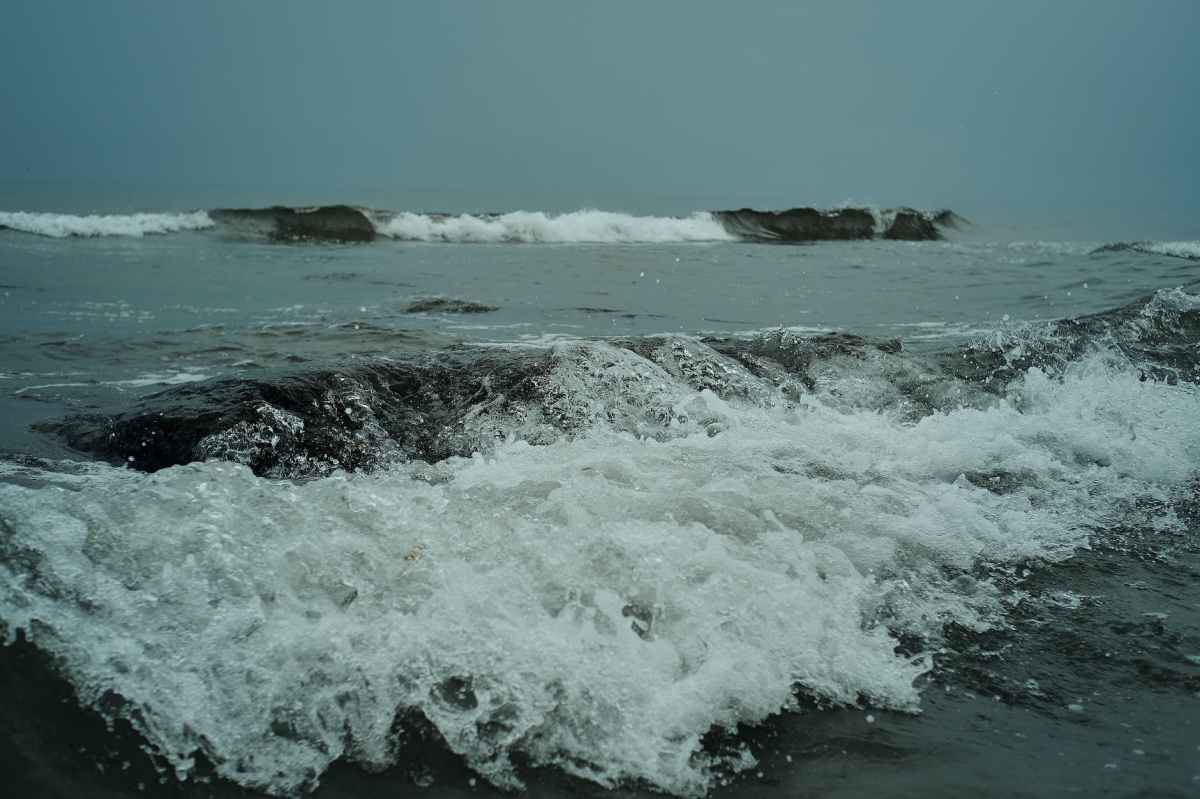
I’ve heard many similar stories about other people since then, and while I don’t really know how to explain them, they seem to suggest that as our lives ebb, like a wave pulling away from the shore, a returning wave of something makes its presence known to us—something very real and very deep. Maybe we call it a memory…or maybe we call it divine presence…or maybe, like my great-grandma, we simply call out, mother. Whatever it is, whoever it is, there is a shared sense across many cultures and generations that in our final moments, we catch a glimpse of the people and the places we have known and loved. 

As they say, our life flashes before our eyes.

Just last year a medical paper was published documenting, for the very first time, how this is in fact true—how life does flash before your eyes in the end. Somewhat by chance, the brain waves of a dying man were captured by an advanced medical scanning device. The doctors noticed that in the moments both immediately before and after this person died, the portion of the brain that processes memory was activated. As his other brain waves ebbed, the gamma waves—the waves of memory and meaning—flowed. He was remembering—processing a vision, somehow—of someone or something familiar. Something lost that had come back to him in the end.

And I wonder what he saw, that unnamed man. Was it his mother’s face? Maybe the time he got lost as a child? Was it the way the sun sets over the water on a summer evening? The fragment of a half-forgotten song? The smell of baking bread or the taste of good wine? How his father used to smile at him? And I wonder, were they just memories, just impulses in the brain, or were they a response to something real, something, like my great-grandma’s mother, that was somehow truly present again in a way that no medical scanner could ever detect? Those are questions that science cannot answer, but that the heart ponders nonetheless. 

Because I like to think that, whatever it was that the dying man experienced, or whatever it was that my great-grandma saw as her life slipped away, that they were not just alone with their thoughts. I want to believe that their lives and their love came back to them at the very end, like a returning wave upon the shore, a presence, a promise that even though it is finished, it still all mattered. And that nothing was lost. Not really.

And if that is true, then I also can’t help but wonder what Jesus saw in his final moments on the Cross before he said, it is finished. He who felt so alone, he who was so abandoned, so undeserving of the ending he received. My God, My God, why have you forsaken me? 

But if it’s true that our life flashes before our eyes, that love returns to us in the end to companion us into the darkness, I wonder what he saw as his breath ebbed away.

We know, of course, he saw his mother’s face, still alive, but deadened by grief.

And maybe, as he closed his eyes, maybe he saw the time he got lost as a child, when they found him in the Temple, when everything was new and possible. Or perhaps he saw the way the sun sets on the Sea of Galilee. Or maybe he remembered the fragment of a half-forgotten song heard long ago: my soul magnifies the Lord, my spirit rejoices in God my savior. Maybe he remembered the smell of bread in the Upper Room.The taste of good wine at that wedding in Cana. Or how his Father smiled at him in secret, in his heart, and from beyond the cold and distant stars.

Maybe it was all of this, the sum of a life, the fragmented pieces of himself gathering back in, returning on a wave, bearing witness to the ending, bearing the memory and the presence of love, bearing the unbearable weight of loneliness until…it was finished.

And although that would be beautiful and meaningful all on its own, and although I believe that Jesus’ own life and love came back to him in the end, I don’t think that’s all there was. I don’t think that’s all he saw as he hung there, his breath crushed under the weight of the world’s brokenness. 

I think we would miss something essential about who he is and what this day is about if Good Friday were the story of just another, single life flashing before someone’s dying eyes.

For the life of Jesus is the life of God, and the mind of Jesus is the mind of God, and the memory of Jesus is the memory of God, deeper and broader than any one returning wave. He holds the whole ocean of time and experience within himself. His life, his mind, his memory encompass everything, everyone, everywhere. 

And so it was not just his own private memories, his own personal life that flashed before his eyes in the end, but ALL of life. All that ever was, all that ever will be. He saw all of it as he died on the Cross. He saw all of you. He saw every part of you. And through eyes blurred with tears and blood and love, he saw, as he always had, in the very beginning, that it was good. Not perfect, but very, very good. 

He saw the time you got lost as a child and your parents found you. 

He saw the time you got lost and nobody came looking. 

He saw the way the sun sets over the lake you sat beside on a summer’s evening.

He saw the way the sun rose on the first day of the world. 

He saw how your mother sang to you when you were afraid. 

He saw the times you were too afraid to sing out loud. The poems you never wrote. The letters you never sent.

He saw every meal on every table. He saw every hungry belly.

He saw the consequential fruit trembling on the tree in Eden; and he saw the unnoticed wildflowers and weeds that grow on the side of the road. He saw the bouquets at every graveside, the names inscribed in stone.

He saw every creature, its life and its death, its peace and its agony, he saw every crack in the earth, every polluted river, every verdant forest, every wave of the infinite sea. 

He saw every battlefield, every bomb and bullet, every needless slaughter, and he saw how our brother’s blood cries out from the ground, seeking justice.

He saw every broken heart, every tearstained face, every lash of the whip, every dream deferred, every march for peace, every backroom deal, every sacrifice and every betrayal, every sleepless night, every tick of the clock. 

He saw all the times we failed, all the times we tried, all the times we made something beautiful, all the times we broke something beautiful. 

He saw all the times we broke.

He saw the worst of what we have done, and the best.

He saw all of it. 

All of life—all of life flashed before his eyes.

And then he said:

It is finished. 

He said, it is finished, now, my beloved child, bone of my aching bone, and flesh of my wounded flesh. Finished because now I see it all, with my own living, dying eyes, everything done and left undone. Now I comprehend your finitude, your fear, how alone you feel in the vastness of creation. I see, with my own eyes, the returning wave of memory and grief, all that was lost, all that was forgotten, all that was loved; all of it is returning to me now, and it is your face I see, your face I call out to, your face I will not forget as I enter into the darkness and whatever lies beyond it. 

It is finished, and I do not know where I am going, but now I see the pain and the beauty and the promise of this entire world and I hold it in my broken heart, in my fading breath, and so wherever I go now, I will carry you all with me. Nothing is lost. Not really.

So let us rest, now. It is finished. For I see, in the end, what was always the only important thing to see: that I love you, all that you are, all that you are not, with the ferocity and the depth and the power and the mystery of the endless ocean, and if I can, I will return it all to you, I will bring it all back to you, I will make it whole again, somehow, someday. 

For all of life—mine, and yours, and ours—has flashed before my eyes, and thus I have drawn all things to myself. 

It is finished.

And then the wave breaks on the shore.

And he is gone. 

And, for today, there is nothing else that can be said. 

The Best Meal I Ever Had: A Sermon

I preached this sermon on Sunday, March 19, 2023 at Trinity Episcopal Church, Fort Wayne, IN. The lectionary text cited is John 9:1-41, in which Jesus opens the eyes of a man blind from birth.

So, I want to tell you about the best meal I ever had.

It was in Assisi, Italy, back when I was in college and my mom and I were doing some travels through Europe. We had gone to Assisi to visit the holy sites associated with St. Francis, but we were, of course, also very happy to enjoy some good Italian food and wine. 

The meal in question was at a simple little restaurant, nothing fussy or expensive. It incuded a bottle of red wine, a plate of ravioli in a light cream sauce flavored with poppyseeds and citrus, and a thick steak so tender that I would put it up against the best you could find at Ruth’s Chris down the street or anywhere else, really. 

We sat at a table near the window, the golden evening light pouring in across the table, and both the servers and the other diners seemed genuinely happy to be there–at peace, in no rush to be anyplace else. Now, maybe I was delirious from the beauty and the sanctity of Assisi, or maybe I was just really hungry, but the food was so lovingly prepared and the setting so homey and warm that as I ate, tears of joy welled up in my eyes. Outside of cherished family gatherings, it was definitely one of the best meals I ever ate. 

I wonder if you can recall a meal or a particular dish that evokes warm memories for you. Maybe it was on a vacation, too, or maybe it is something much closer to home—a family recipe or food from your favorite local spot. 

Now, I am going to do something quite shocking and unconventional in the midst of a sermon. I’m going to ask you to turn to someone next to you or near you (don’t be shy) and very briefly tell them about that food. Doesn’t have to be anything fancy or exotic. Just something you have loved. Take just a moment and tell your neighbor about it.

Feeling hungry yet? Good! 

Food can and should be one of the elemental pleasures of life, and our memories of it are often vivid, tied to beloved people and places. I always find it interesting how easily we can call to mind a favorite dish or restaurant and talk about it to connect with other peope. I think that’s because we speak about food from our lived experience of it, our deeply felt sense of nourishment and identity and belonging. 

And even if we are not expert chefs, even if we don’t know how to cook at all, we can still probably speak with some energy and insight about our experience of food, of being fed, of what that one magical dish tasted like back when we were a kid, or when we cooked it for our family, or, yes, when the evening light spilled across the dining table in Assisi—in all the little moments and morsels when we encountered a little taste of heaven. We may not know the recipe or the reason why, but we can simply say with confidence, this much I know: I was hungry, and I tasted something beautiful.

In his own way, this is the testimony of the man in today’s Gospel story, the man who once was blind but who now can see, the man who has had a little taste of heaven. He is healed by Jesus through a rather earthy recipe: dirt and saliva kneaded together into a paste and then dipped into the sacred water of Siloam. Not a meal, per se, but rather the satisfaction of a deeper sort of hunger, one the man might have given up on: the hunger to belong, the hunger to be something other than “other.” And so this is what Jesus gives him, and to those around him who witness the healing: a sign, a reminder that in God’s Kingdom, there will be no outsiders, there will be no people forgotten at the roadside, there will be no one who hungers from lack of bread or compassion. 

And this man, his eyes having been opened, although he knows not the recipe nor the reason why, speaks with captivating simplicity about what he has experienced. “He put mud on my eyes. Then I washed, and now I see…I was blind, now I see.” I was hungry, and I now I have tasted something beautiful. 

And everyone around him, the neighbors and the Pharisees, they kind of lose it over this miracle served up in their midst . First they refuse to believe this is the same man who was blind. Then, after its clear that he is, they refuse to believe that Jesus is up to any good, and they certainly refuse to believe that this is a sign from God. They want to know how, and why, and to what end all of this has taken place. They want the ingredient list, they want the recipe, they want to speak to the chef, they want to send it back, this exquisite, strange gift, this feast of possibility. 

But the man can’t speak to any of that. He is not a priest or a scribe, he is not a person of any influence. He doesn’t know yet exactly who Jesus is or where he comes from or why he did what he did. And so he just keeps saying what he knows, what he has experienced: I was blind, now I see. I was forgotten, now I am remembered. I was invisible now I am seen. I was lost now I am found. I was nothing now I am part of everything. I was hungry, and now I have tasted something beautiful. That is my testimony. It is entirely up to you whether you partake of it or not. But it has nourished me. It has saved me.

And I wonder, dear friends—I wonder whether we can speak about our faith like the man whose eyes were opened by Jesus. I wonder whether we can speak with simplicity and confidence about the experience of Jesus in our lives. I wonder whether we can describe how we have been encouraged, how we have been sustained, how we have been healed, how we have been fed by our encounters with the Son of God. 

I wonder, really, since we can speak so easily and joyfully about the best meal we ever had, why we can’t always, just as easily, just as joyfully, speak about the One who is the Living Bread, the One who has prepared for us an eternal banquet? I wonder why I hesitate to do this sometimes. 

I have a couple of theories about this, at least for us Episcopal types. 

First, I think somewhere we got the idea that talking about Jesus means that we need to fully understand everything there is to know about Jesus. (As if we ever could!) Maybe we’re afraid we don’t fully understand every line in the Nicene Creed or that we can’t coherently explain the relationship between the persons of the Trinity (pro tip: nobody can!). Maybe we don’t feel up to the task of defending the history of the church to the skeptical or the confused. Maybe we are even a little skeptical or confused ourselves some days. 

But here’s the thing: we do not need to know everything about who Jesus is in order to speak about who Jesus is to us. We do not need to have a degree in theology or church history to describe how we have been changed by an encounter with a loving, welcoming, merciful, dynamic, ever-present God. 

As the man says, Here is an astonishing thing! You do not know where he comes from, and yet he opened my eyes. If we, too, can name the impact that following Jesus has had on our lives, then maybe that’s exactly enough.

The second reason I think we hesitate, sometimes, is that talking a lot about a personal encounter with Jesus sounds like something other types of Christians do—including those whose values and understandings of the gospel differ significantly from our own. We are afraid, perhaps, of coming across as preachy or exclusionary.

But again, here’s the thing: if we take seriously that we are part of God’s life in Christ, then we have to be able to talk simply, humbly about who we are, who we love, what we have experienced of God, without it automatically becoming an exercise in recruitment or conversion. I don’t  think I need to tell you that the world desperately needs Christians who can do this.

So my challenge to you, to myself, to all of us in these final weeks of Lent, is this: think of how you described that favorite meal. Think of how it felt to share about it with your neighbor, not trying to convince them that it needed to be their favorite meal too, or even that they have to learn to cook it themselves. Think about how it was simply you sharing the joy of what you have experienced, what you have tasted, what you have known and loved. 

And then, I want you think about how you would evoke that same feeling when you talk about what Jesus has done in your life. Commit, if you will, to 15 or 20 minutes this week of writing down or thinking about how you would describe the impact upon your life of following Jesus, of being loved by him, of whatever your relationship is with him right now. 

Give yourself the gift of putting that into words, and then, perhaps, God will show you when and how to share it with someone else who needs to hear it. Someone who is hungry for something deeper than food. Someone who is lost, or who cannot see their own belovedness. Maybe you will tell them what you have experienced. Maybe it will save them from despair. Maybe it will save you, too.

Maybe you will simply say, I was blind, but now I see

Maybe you will say, I was hungry, and I tasted something beautiful

Salt & Fire: A Sermon

I preached this sermon on Sunday, February 5, 2023 at Trinity Episcopal Church, Fort Wayne. The lectionary text cited is Matthew 5:13-20, when Jesus says, “You are the salt of the earth.”

Last year as we were preparing for the Easter Vigil (the nighttime service that is the culmination of both Holy Week and, really, the entire liturgical year), Father T.J. let me know that I would be responsible for building and lighting the outdoor Paschal fire, the flames of which signify resurrection and which are used to light the Paschal candle for the first time. 

And I thought, great. I love the Paschal fire; it evokes something so deep and elemental about our faith and worship tradition; it is such a powerful liturgical moment. This was going to be amazing!

But there was just one problem. And if you recall my sermon from a couple weeks ago about my reticence towards going ice fishing, you might be able to put the pieces together: I am not the most outdoorsy person. As a Cub Scout I was more likely to get a badge for indoor activities like cooking or arts & crafts than I was for anything out in the woods. So building fires? Not exactly my strong suit.  Members of the Young Adults group have seen my rather suspect attempts at building a “camp fire” in the church garth by simply lighting a Duraflame log…so they’ve known this for some time. 

But anyway, back to the Paschal fire. Fr. T.J. said, don’t worry, there’s a really simple way to do this. Watch this Youtube video and you will see how to make the fire with just two things: rubbing alcohol and coarse salt. And it’s true! Those two ingredients, when ignited, create a beautiful, bright fire. My struggle to actually get the thing lit is a story for another time, but if you were at the Easter Vigil this past year, you saw the fire blazing out on the labyrinth, and you saw how it sparked the Paschal candle and how it sparked our Easter joy. Just some fuel and some salt for the flames to dance upon.

That’s the amazing thing about salt: sort of like the burning bush that Moses encounters, or the three young men who survive the fire in the Book of Daniel, salt can burn and burn and not be consumed. It is a catalytic agent, which, chemically speaking, means that it affects the rate at which the fuel is consumed. The salt is stable and strong, and so it allows the flame to burn long and hot and steady rather than just flaring up and disappearing in a moment. 

This is very useful for Paschal fires, but also for other things. You see, in 1st century Middle Eastern cultures, among other places, this same principle was employed in the earthen ovens used to make bread: salt would be placed on the bottom, topped by fuel (which in that time was usually dried animal dung) and then lit to produce an intense, consistent heat for baking. 

And it’s true that salt was also used for preserving food, but in a society that had very little access to meat, it was actually this use as a catlytic agent in the earthen oven that was the most prevalent in the daily lives of common people. Over time, if the salt became mixed with dirt or other materials that decreased its ability to help the fire burn, it would be discarded for a fresh supply. 

And so now, I invite you to listen again to that moment when Jesus says, You are the salt of the earth; but if salt has lost its taste, how can its saltiness be restored? It is no longer good for anything, but is thrown out and trampled under foot.

The first time I learned about the connection between salt and the earthen oven, it was like hearing that famous passage from the Gospel for the first time. Especially when you realize that the Greek word for “earth” that Matthew uses here is drawn from a Hebrew word that elsewhere in the Bible means not just the earth, the ground, the land but literally the earthen oven, the furnace.

And so some Biblical scholars who have made this connection argue that a more accurate rendering of the passage could be:

You are the salt of the earthen oven; but if salt has lost its saltiness, (that is, its ability to catalyze), how can it be restored? It is no longer good for anything, but is thrown out and trampled under foot.

In other words: in your place and time, here and now, you, the disciples of Jesus, are the catalysts of the flame of God’s Spirit. This is what you are. This is what God made you to be: salt to bear the heat, salt to sustain the fire of love, to allow it to burn in you and through you with the Divine promise that it will not consume you and it will not destroy you, for to bear this flame of love is your God-given purpose on this earth.

You are the salt of the earthen oven. And the world will be warmed and fed and illuminated by the holy fire you carry, by the brightness of God’s light that encircles you.

And I know that there are other symbolic layers to the image of salt, too, but if we take this interpretation to heart, then it suggests that being salt, being light, being disciples of Jesus, is not so much about preservation—which is, in essence, the slowing down of transformation—but about sustaining the transformative process: giving ourselves over to that ever-emerging fire, that blazing brightness we refer to as God’s Kingdom. 

We are salt when we let our selves and souls and bodies nourish the flame of love and help it to burn long and slow and steady down through the ages. We are salt when we turn our insitutions and our societies, like that earthen oven, into places where there is food and warmth and safety for everyone; where the lonely and the lost and the hungry gather in around the hearth; where our daily bread is found until that day when the true feast that God is preparing for us–the bread of heaven, the bread of life–is ready at last. 

And so if we strive to follow our Lord’s counsel, if we long to be the salt and light he tells us that we are, then we must ask ourselves: when and where do I feel on fire with purpose and joy? What thing have I been given to do, big or small, that stirs up a sense of warmth and light within me and around me? 

Or, if we’re not quite sure of that yet, then ask, what inspires me in the lives of others, those in my life or in the history of our faith, who have clearly been set ablaze with God’s love? Whatever it is—a creative pursuit, an act of service, a cause for justice and peace, a conversation with a neighbor, a small gift offered in love, a dedication to prayer—focus on these things, make note of them, and consider deepening your practice of them as we begin to approach our season of Lenten reflection and devotion.

Even now, in the deep chill of winter, long before the salt and fuel are mixed and the Paschal flame is lit anew, we can still light up the world. We can still be the source of brightness and the providers of nourishment. 

For if we are the salt of the oven, scattered gently down upon the earth by our Creator, baptized with fire and the Holy Spirit, then we have but one mission: to keep the flame burning for as long as we can; to nourish the world with our love; and to let our Alleluias and our Amens rise up like ember and smoke and the scent of baking bread: the spark of eternity, the scent of heaven, the taste of home. 

For more on the scholarship behind this sermon, visit: https://www.ajol.info/index.php/hts/article/view/70848/59805

Fisherman: A Sermon

I preached this sermon on January 22, 2023 at Trinity Episcopal Church, Fort Wayne, IN. The lectionary text cited is Matthew 14:12-23.

And Jesus said to them, “Follow me, and I will make you fish for people.”

My grandpa, like any person born and raised in the Upper Peninsula of Michigan, loved to go fishing. And in particular he loved to go ice-fishing.

If you are not among the hardy (foolhardy?) souls who have tried this pastime, maybe you can still picture it: a frozen lake in the dead of winter, all sentient life wisely hibernating or hunkered down in a warm place. Except for the intrepid ice-fishers, who drag their shacks and their camp chairs out onto the quiet snow-blown expanse to drill holes in the ice and to sit—in bitter cold and in pensive expectation—waiting for a bite. 

I confess, the few times I went out ice-fishing with my family as a kid, I didn’t get it. I was bored and restless—and cold! I didn’t understand why anyone would willingly do this for fun, especially when you could just get fish at the grocery store. But then, I was a kid who grew up mostly in cities and in California sunshine, and the lake water didn’t run in my veins like it did for my grandpa. The stoic beauty of the ice-fisherman’s reverie was lost on me.

He would sit out on the ice, munching on a sandwich, sipping coffee from a thermos, contemplating the tree line, the sky, maybe his place in the universe; I was never quite sure. Sometimes he’d catch something, often he wouldn’t. He never seemed to mind. And truth be told, I think he liked the ritual of the trip to the lake—its sensations and its silences—just as much, if not more so, than bringing home a catch. 

Now you still aren’t likely to find me out on a frozen lake these days, but as I look back, I have come to appreciate not only the spare beauty my grandpa found in ice-fishing, but also how his going out onto the ice was, in many ways, an encapsulation of who he was in the rest of his life. The quiet and the deliberative spaciousness of ice fishing were the same qualities he evoked most other days, with his family and with his neighbors and friends. 

He had his hot-tempered moments, but for the most part he moved through the world with a gentle attentiveness to things and to people: content to be who he was, where he was, patient, not obsessed with the elusive big catch of one sort or another that many of us chase after. Maybe he had always been that way. Or maybe all those years of ice-fishing helped make him that way. I’m not sure, but I do know that it was a part of him.

My grandpa and his ice-fishing have been on my mind this week, of course, because Jesus, in calling the first disciples, finds a handful of fishermen by the Sea of Galilee and invites them, in a clever turn of phrase, to “fish for people” instead. It’s a beloved scene in the Gospels, but oftentimes I think we focus so much on the abruptness of the disciples’ response—how they seem to drop everything and follow Jesus on the spot—that we don’t spend a lot of time pondering what they were doing beforehand: namely, their original vocation as fishermen. I wonder, though, why Jesus singles them out, these men on the shore, among all the other people he might have invited into his circle. 

Was Jesus calling them just because they happened to be there, without regard for their previous life experience? Was he, in effect, asking them to become someone entirely new, or did he see some particular potential in these men with their nets and their boats and their weather-beaten faces?

Given who Jesus is, I like to think he saw something already formed in them after a lifetime of traversing open waters and mending things that are frayed and waiting, day after day, with persistent hope for an unseen harvest from the deep. I like to think he saw something that made these fishermen exactly the right people for the journey that was about to unfold.

Because I believe that who we are and what we have done with our lives, no matter how simple or quiet or humble, matters to God. It matters in the Kingdom of God. 

In the same way that my grandpa’s ice fishing and the rest of his life seemed to mutually inform one another, perhaps these Galilean fishermen already had what Jesus needed them to have as future apostles. Maybe their decision to follow him, as dramatic and abrupt as it seems, was not, in fact, a clean break from their past. It was not a rejection of who they had been, a rinsing off of the smell of fish and mud, but an embrace of what these things had taught them—it was the decision to trust that their lives, their skills, and their gifts might be brought forth in a new way for the purposes of God. 

Maybe Jesus did not call them away from themselves and their original vocation, but deeper into those things. For he did not say follow me and I will make you something other, something better than a fisherman, but follow me, and I will make you fishers of people. In other words, I will make you the fullness of who you already are.

And so those fisherman had the courage to follow him away from the shore because they knew that they had what they needed within them; they were already enough. And if that is so, then perhaps we have what we need, too, perhaps we are already enough for wherever God is calling us to go. Not running away from ourselves but going deeper into ourselves so that we might embody what God created us to be.

And I know all of us, myself included, have parts of ourselves, parts of our story, parts of our personality, parts of our past, that feel worthless, parts we would just as soon leave behind. The embarrassments that enmesh us in a net of shame. The regrets that linger on us like the scent of lake water. The things that prevent us from believing we have anything of value to offer. 

But Jesus is standing there, seeing all of it, knowing all of it, and he is saying, yes, you. I’ve been looking for someone just like you. Follow me. Follow me as you are. Follow me with what you have, no matter how great or small. Fishermen, follow me. Tax collectors, follow me. Saints and sinners, follow me. The mighty and the lowly; the famous and the forgotten; everyone, follow me— for everyone is needed where we’re going. And all that you have been and known and done will be gathered in and it will be made purposeful, it will be made beautiful by my love. It will be more than enough. 

That, in the end, is what I learned from my grandpa and how his quiet, patient days fishing on the ice spilled over into his quiet, patient life: to trust in the sufficiency of who you are; of what you love; of what you know. Trust it to guide you, with God’s help, into what you do not yet know. Trust that God is already at work in the small things of daily life, shaping you for the vast and timeless purposes that only God can truly understand. 

And regardless of whether it is ice-fishing or mending nets on the shore of Galilee or raising your kids or caring for your neighbor or striving for your daily bread, whatever it is that has formed you into who you are today, trust that you are ready to respond when Jesus calls you. You are ready and able, not in spite of your life but because of it, because every life has potential, every one of us shimmers with the possibility of God’s glory, like ice glittering in the sun. 

Follow me, Jesus says, and I will make you fish for people.

So follow him. And let him show you the blessedness of who you can still be. The blessedness of who you already are.

The Word: A Sermon for Christmas Day

I preached this sermon on Christmas Day, 2022, at Trinity Episcopal Church, Fort Wayne. The lectionary text cited is John 1:1-14.

One of the gifts that we are given each year on Christmas Day is a poem of sorts:

In the beginning was the Word. And the Word was with God. And the Word was God. 

Today’s Gospel reminds us—lest we forget in the immediacy and the intimacy of our holiday celebrations, with the lights and the songs and the smiling baby in the manger—that Christmas also has vast, cosmic dimensions. The poetic language of John’s prologue tells us that the significance of this day begins out beyond the stars, beyond time itself, back to the hidden and infinite source of all things. 

It’s an intuition, a hunch, a golden thread tugging at the human heart from some unknown depth, when we say that in the beginning, before the beginning, God simply was, in timeless communion with himself, beyond conception, boundless, complete. 

We were not there to see such a thing, of course, and the mind cannot really understand this, as hard as we might try, and so, with St. John, we do what we always do when our usual way of communicating falls short: we resort to poetry, to language that strains against its limits, language that reaches past itself, trying to speak of that which is ultimately greater than our words. We say, 

In the beginning was the Word,

And yet even in this evocative statement, we fail—albeit gloriously, with great beauty,—to capture the fullness of whatever it means. When we speak of timeless beginnings, of eternity, our souls lean toward that which our mind cannot grasp, like flowers turning toward the distant sun, seeking the source of life, hungering to know where, and how, and why all things are. 

From where did all things come into being, God?

How did all things coming into being, God?

Why did all things come into being, God? 

These are big and timeless questions, carried on the lips of humanity from time immemorial. And while we may not always associate them with Christmas, still, the birthing of God into our midst lends itself to considerations of origin and purpose—both his, and our own. 

In the beginning was the Word.

The Scriptures are full of figures asking for an explanation, a solution, or at least an assurance that there is some shape and purpose to life on this earth, especially when it can seem so obscure and aimless at times.

“Oh, that I knew where I might find him, that I might come even to his dwelling,” Job cries out at one point in his long tribulation. “Why are times not kept by the Almighty, and why do those who know him never see his days?”

This is, in essence, the question we have been asking during the long Advent that preceded this glorious morning. We have been searching for the day and the dwelling place of God for a very long time, trying to locate him, trying to see him, trying to learn from him why it is that we find ourselves here, enfleshed, imperfect, haunted by beauty, hungering for truth, wanderers on the earth, struggling to remember our true home, saying,

In the beginning was the Word, 

And hoping that we will discover, in the end, a fuller sense of what this means for us. Hoping that this Word, one day, might speak a word back to us, to reveal both our origin and our future.

And today, quite suddenly, he does. Today, as an infant, the Word gives his answer.

For, the Word became flesh and lived among us, and we have seen his glory, the glory as of a father’s only son, full of grace and truth.

Christmas is the feast of holy materiality. It is the day when what was poetic becomes incarnate. What was eternal and unreachable becomes finite and present. God reveals that his days and his dwelling place and his origin and his purposes are not solely in some distant realm, but right here, in our midst, no longer hidden or inscrutable, but fully accessible, as vulnerable and open to us as a newborn child. 

And this is a new thing. 

For when Job cried out to God, and when God replied, God did so only with more questions. God said, “Where were you when I laid the foundation of the earth?” He said. “Who laid its cornerstone when the morning stars sang together and all the heavenly beings shouted for joy?” And Job had to be satisfied with not knowing the answer.

But on this day, God says, instead, “come to Bethlehem and behold the foundation of the earth in the flesh, for I have come that you might reach out and hold it. Come and see the cornerstone of the universe, lying right here in a manger. Come and see with your own eyes the Morning star rising in your sight, that you, too, might shout for joy like the angels. For though I come from an eternally distant place, I am no longer hidden from you, my purposes and my plans are here for all to see, and though they are deeper and older than time itself, they are quite humble, quite real. 

God says, You have asked a question of me across the ages—where? And how? And why? And the answer, the long awaited answer I give to you, the answer– you who are now bone of my bones, and flesh of my flesh–the answer is simply this:

Cherish what is given; be at peace with what is taken; believe in what endures.

For yes, in the beginning was the Word, shrouded in the silence of eternity, but today you shall hear the Word with your own ears, you shall see it with your own eyes. The Word is love. And this Love was with God. And this Love is God. Today, and forever. 

And now, let your life become the incarnate poetry of God’s love. Let your life be the thing that strains against the limits of language, that reaches past itself. Let your life become an answer to your own questions. And let the child in the manger who is God teach you that such an answer—where, and how, and why we are—can only be enacted and embodied, not fully comprehended. Because love is a verb, and Christmas is an origin story, and the world still yearns to see where it will lead through all of us. 

In the beginning was the Word, and the Word was with God. 

And today, at last, we are with God, too. 

Real: A Sermon for All Saints’ Day

I preached this sermon on November 6, 2022, All Saints Sunday, at Trinity Episcopal Church, Fort Wayne, IN. The lectionary text cited is Luke 6:20-31.

One of my favorite books when I was little was The Velveteen Rabbit, and I will admit that even now, many years later, it still brings a tear to my eye when I read it. If you’re not familiar with the book, by Margery Williams, it tells the story of a toy rabbit who is given to a young boy as a Christmas present. The toys talk to each other when people aren’t around, and the little rabbit befriends a threadbare old hobby horse, learning from him the secrets of what is called “nursery magic,” including the mysterious concept of becoming “real.”

“What is REAL?” asked the Rabbit one day. ”Does it mean having things that buzz inside you and a stick-out handle?”

“Real isn’t how you are made,” said the Skin Horse. “It’s a thing that happens to you. When a child loves you for a long, long time, not just to play with, but REALLY loves you, then you become Real.”

“Does it hurt?” asked the Rabbit.

“Sometimes,” said the Skin Horse, for he was always truthful. “When you are Real you don’t mind being hurt.”

“Does it happen all at once, like being wound up,” he asked, “or bit by bit?”

“It doesn’t happen all at once,” said the Skin Horse. “You become. It takes a long time. …Generally, by the time you are Real, most of your hair has been loved off, and your eyes drop out and you get loose in the joints and very shabby. But these things don’t matter at all, because once you are Real you can’t be ugly, except to people who don’t understand.”

And thus begins the Velveteen Rabbit’s own journey toward becoming “real,” which, as you might imagine, is not just about becoming more realistic, like the other rabbits who can jump and run and play, but about becoming more true: it’s about discovering the luminousness that radiates from within a person when they have given themselves over to a life of deep and faithful love.

For the little toy rabbit, this process of becoming real proves surprising, and costly, and beautiful, and I will leave it to you to revisit the story to find out exactly what happens to him. You can find the full text of the story online

I was moved to do so myself this past week because the Velveteen Rabbit’s journey feels especially appropriate for the feast we are observing today. In the world of nursery magic it might be called becoming “real,” but in the Christian tradition we have another, very particular name for following the long and twisting road towards love: we call it sainthood. 

Sainthood, to be honest, has an unhelpful reputation. We too often associate it with the opposite of “real”: plaster statues of seemingly perfect people, with their halos and their dreamlike gaze directed towards heaven. We might feel inspired by such figures, but we might also struggle to see how their seemingly exemplary lives bear any resemblance to our own imperfect ones. 

But if you have ever felt that way, I have good news for you: the saints, even the most famous and revered ones, are far messier and more real than you might expect. If you have never done so, find a biography about one of them and read it. They struggled with doubts, with despair, with health conditions, with war and economic instability. They fought with their colleagues. They ended up in prison and in exile. Some of them were beloved in their own time, many were not. And really, in the end, the only thing that is consistently true about them is that they were somehow dedicated to the vision of blessedness that Jesus elucidates in the Beatitudes from today’s Gospel: that God stands on the side of those who are vulnerable and trampled upon, that God enlivens those who give their lives away for love’s sake, that God does not forget those who pay the cost of caring deeply in a callous world. 

God’s mission in Christ is to make these things real, to make them tangible, indeed, to make them inescapably present even as the forces of death and despair surround us—this is what we mean when we talk about the kingdom of God. And sainthood, far from being a sort of self-satsified, holier-than-thou lifestyle choice, is simply what it looks like to participate as best we can in that kingdom, in the redemptive work of love in our lives, for as long as we can, until most of our hair has been loved off, and our eyes drop out and we get loose in the joints and very shabby, until our carefully cultivated defensiveness and artifice have been worn down so thin that we burn, burn, burn brightly with the fearlessness, with the joy, with the reality of love. That is what a saint looks like. And, however imperfect our lives and our circumstances, that is what we have been invited into, from the day of our baptism until this very moment.

This morning, baby Natalie will be baptized into the Body of Christ, taking her own place within the Church’s long journey toward becoming real, becoming saints, becoming all that God made each of us and all of us to be. We will bathe her in water and in prayers, passing on that which we have been given in our own baptisms: a glimpse of what is real, and the One who is real, and the wondrous hope that we will come to know that reality in our very flesh…that over the course of our lives, we will become as part of it. Natalie’s share of this story is just beginning, and we rejoice for her and her family. 

And yet, as it is said, “in the midst of life we are in death,” and so this morning, on All Saints, we also summon the memory of those whose stories have ended—those whom we love and see no longer and yet who are no less real simply because they are absent. In fact, we might say that that they are even more real now, blessed and at peace in the nearer presence of the Living God. 

Our beloved dead are so real, now, that our limited senses cannot quite perceive them, except in our hearts, in those moments when we still feel the weight of our love for them, how it endures beyond death, how it cannot be destroyed, how we are bound together for all time, beyond all time. We say their names out loud, each one a life now infused with eternity, and in the silences between, we listen for the music of heaven.

And so here we find ourselves, beloved ones, saints-in-progress, weary hearts still daring to believe in nursery magic—here we are, suspended on this November morning between life and death, between warmth and winter, between the promise of the future and the tenderness of the past. Here we are, asking what is true and what is real and what is worth living and dying for, and knowing, in the end that the answer can only be love, that it can only be the name of love, which is Jesus. 

Here we are, rich and poor, hungry and full, laughing and weeping, longing for him, for the Savior who will gather up our worn out bodies and call us blessed, who will make us whole, who will make us truly alive. Not perfect, plaster saints, but real ones: threadbare, wise, and full of grace. 

Just Finish: A Sermon

I preached this sermon on Sunday, October 23, 2022, at Trinity Episcopal Church, Fort Wayne, IN. The lectionary text cited is 2 Timothy 4:6-18, 16-18.

When I was probably about 10 or 11 years old, my mom took up a new hobby — rollerblading. It was the 90s, so rollerblades were all the rage. And for those of you who know my mom, who is quite the adventurous person, you can imagine that she took on this new pastime with great enthusiasm. So much so that before long, she had signed up to compete in a local rollerblade race where you go in laps around an empty office park on a Saturday afternoon—yes, this was actually a thing back in the day (at least out in California in the 90s.)

Now, I will admit that I had little to no interest in rollerblades. I had a pair, and I would sort of wobble along in them around the neighborhood after school, but I was not then–nor am I now–the most athletic or graceful person. I wasn’t fast or agile or daring. Most weekends I would’ve rather been reading a book or singing along to the soundtracks of my favorite Broadway musicals. You know, we just are who we are. 

But my mom was so excited about this rollerblade race that she was bound and determined that I would also sign up and be in the kid’s competition, making it a sort of family activity. And for some reason I will never understand, I agreed to do so. 

We showed up that morning and I was in my little skates with my baggy jeans and knobby knees and thick glasses and a helmet askew on my head, and the other kids…I mean, they looked like they’d been training their whole short lives for this race. They were in lycra shorts and fancy rollerblades and they skated more gracefully than I could even walk. It was one of those moments when you realize you’ve made a very bad decision, but now it’s too late and you just have to roll with it. Literally, in this case.

We all gathered in a cluster at the starting line and they blew the horn and we took off, and the crowd was cheering, and….you can probably imagine exactly what happened next. Those other kids took off  on their skates like they were sprinting, and they went so fast around the course that they lapped me at least once, if not more, and meanwhile I was stumbling along on my skates, breathing heavily, trying to stay upright, telling myself “you just have to finish. Just finish.”

And I did. It wasn’t pretty, but I made it.

Eventually, long after the other kids were done, here I came, stumbling across the finish line by myself. 

But you know what? It was ok. Now, would I ever do it again? Not a chance. But it was ok. Because when I got to that finish line, some of the people were still there, my mom included, waiting to cheer for me. I was so relieved to be done that it felt like arriving in heaven, and people gave me hugs, and the sound of their encouragement was, in that moment, like the sound of angels rejoicing. 

I think of that rollerblade race once in a while, because it reminds me that on the other side of embarrassment, on the other side of disappointment, there is a strange sort of grace that you sometimes find in simply finishing what you set out to do. Especially when the road is long and challenging, just finishing can be its own sort of victory.

I think many of us spend our lives feeling like we need to jockey for a place at the front of the pack of whatever we’re doing—to win the contest, to be the best at whatever it is, or at least to feel like we’re not the worst. We’re afraid of falling behind, of stumbling and skinning our knees—of becoming an object of derision or pity as the race of life wears on. 

And it’s all too easy to approach our faith like this, too, somehow imagining Jesus as the leader at the front of the race, the one who runs fastest and hardest, the one we’re chasing, just out of the reach of us mere mortals with our aching joints and our eyes burning with sweat and tears. We know we can’t overtake him, but somehow we think we’re supposed to try. 

I wonder, sometimes, if this is how Paul first understood Jesus after his conversion on the Damascus Road. Paul, after all, was a Roman citizen who was well acquainted with the competitive spirit of the Empire and who loved using athletic metaphors in his writing. In his early letter to the Galatians, he expresses anxiety about his mission to the Gentiles, wanting “to make sure that I was not running, or had not run, in vain.” He uses similar language in his letter to the Philippians, and, though its authorship is uncertain, there is that famous line in the letter to the Hebrews which encourages believers to “run with perseverance the race that is set before us.”

So one can imagine a younger Paul, bursting with energy and determination, ready to win the race for the sake of the gospel—to be the best, to go the farthest, to conquer his opponents, to be right up in front, ahead of all the other apostles, trailing just behind Christ.

But then in today’s reading we meet Paul at the end of his life: an old and infirm man, sitting in prison, awaiting execution, writing to his companion Timothy, trying to make peace with the way his life has actually turned out:

“I am already being poured out as a libation, and the time of my departure has come. I have fought the good fight, I have finished the race, I have kept the faith. From now on there is reserved for me the crown of righteousness.”

Not, “I have won the race,” but simply “I have finished.” Not “the crown of victory”–the laurel wreath of the athletic champion–but “the crown of righteousness,” the crown of blessedness, the crown worn by those who finish last in this world—the crown worn by his savior, and ours. The crown of thorns.

Paul came to understand, as each of us must when we are inevitably humbled by life–when we finally see things as they are, not as we expected them to be–that winning was never the point. Coming in first was never God’s expectation for us. And Jesus, whom we try so hard to follow, to be like, to catch up to, was never, in truth, at the front of the pack, showing off his divine athleticism and daring us to match it. 

On the contrary, Jesus was (and remains) at the back of the pack, watching over those of us who are moving slowly, those of us who are just struggling to keep up. He’s back alongside the ones who were never graceful or impressive or strong. And he’ll stay there, bringing up the rear of the race until every last one of us has made it over the finish line, aching joints and skinned knees and all. 

And when we do, I imagine that he will say to us,

“It is enough that you finished. It is enough that you fought the good fight and kept the faith. It is enough. You were enough, just as you were, even if it took you a long time to get here. Even if you were in last place, I loved you from the first.”

And perhaps this is what Paul wanted to remind us at the end of his own race, in his final message to Timothy and to those of us who would one day come along, stumbling on our skates, breathing heavily, trying to stay upright.  Maybe he just wanted us to know:

You might not end up in first place. You might look like a total failure at times. It doesn’t matter. If you have stayed the course with gentleness in your heart, if you have cared for your neighbor along the way, if you have loved this broken world as you have travailed across it, you have already won.

So just finish the race. Just finish.

And when you do, when you stumble across that finish line, there will be arms outstretched to welcome you, and the angels will rejoice.

Small Things: A Sermon

I preached this sermon on Sunday, October 9, 2022 at Trinity Episcopal Church, Fort Wayne, IN. The lectionary text cited is 2 Kings 5:1-3, 7-15 and Luke 17:11-19.

I don’t know why, exactly, but fall is a season when I start to reflect on the past — something about the approach of holiday traditions and the winding down of the year and the brilliance of the autumn leaves lends itself to the sharpening of particular memories. These recollections waft on the air like woodsmoke, sweet and sharp, occasionally stinging the eyes. 

And it’s interesting—I don’t know if this is true for you, but I have noticed that when I am looking back on life and remembering things and people and places that are long gone, long past, my most vivid memories are of very small things, very particular little details, rather than one big grand narrative playing out in my mind. 

I might suddenly recall the sound of my dad’s laughter one afternoon in late September when I was 15, or the particular way my grandmother carved a chicken on Sunday afternoons, or the scent of the gardenias my mom used to buy on the way home from work when I was a little boy. 

All ordinary things, unremarkable, perhaps, to an outside observer, but nonetheless these are the little things that stick, that signify meaning, long after the worries and speculations and fantasies of the past have faded away. I don’t remember most of the conflicts and longings and unsatisfied desires that seemed so important when I was 12 or 22, but I can recall with crystalline specificity the small moments of beauty and kindness and care that have been strewn along the path of my life.

This suggests to me that it is, in the end, these small things that imbue our lives with significance, with holiness, with hope. And it is these small things that are vessels of God’s grace, far more than the big concerns and bold plans that so often preoccupy our imaginations.

We may have great expectations, but it is the small things that sustain us. It is the small things that save us. 

But this isn’t always easy to see. Naaman, the mighty general seeking a cure for his leprosy in today’s reading from 2 Kings, doesn’t quite understand the value of small, ordinary things, or perhaps he has simply forgotten it in all of his conquering and striving to be important. He is a man burdened by disease, but he is also burdened by the sense of his own significance, and so he presumes that any healing he might receive from the prophet Elisha will come at great cost and will arrive with great dramatic impact. No humble, commonplace treatments for this man. And so he loads up his treasures and his servants and his other accumulated defenses and brings them to Elisha’s door, ready for anything. 

For anything, that is, except for the rather anticlimatic thing that actually happens. Elisha, in his wisdom, doesn’t even come outside, and instead simply sends out a message Naaman: go take a bath in the river. 

Imagine having come all that way, with so much build-up, with your whole entourage looking on expectantly, and then being asked to take a dip in an unremarkable, muddy body of water. Naaman, who expects so much more of himself and of the world, is offended by the simplicity of it all. Surely that can’t be it? Surely this God of Israel, if he is so powerful, would reveal his works in a more impressive way? Surely healing requires something more than this? Surely, after I have suffered so much and traveled so far, salvation cannot come from such a small thing?

We might laugh a bit at Naaman’s pride and his self-importance, but I also have to say I relate to his disappointment a little bit. I look back at my life, and I look around at the problems facing our world today, and I know what it feels like to be overwhelmed by the magnitude of longing for a big and decisive answer. I know what it feels like to want a dramatic solution, to yearn for God to appear in glory and make it all better, make it all clear, to lift us up from the mud and the misery. 

So maybe I, too, would be frustrated by the instructions to go bathe down in that mud instead. Maybe I, too, would just want to pack it in and go home. Because I confess that some days I get tired of meager solutions to big problems. I get tired of relying on small things when the grief of the world is so big. 

Maybe somedays you get tired, too. Naaman would certainly understand if you do. 

But then, at the moment when all hope seems to be lost, another small thing: this time it is the voice of one of Naaman’s servants, the voice of practical wisdom—

“if the prophet had commanded you to do something difficult, would you not have done it? How much more, when all he said to you was, `Wash, and be clean’?

In other words, yes, the journey has been long, and the outcome may be uncertain. But it can’t hurt to do the small thing that is asked of you in this moment. And, in fact, it may be that finding hope in such small things, believing in the power of small things, is more reflective of God’s purposes than any dramatic solution. Why that might be, I cannot say for sure. I only know that I remember my father’s laughter, and my grandmother’s hands, and the scent of my mother’s gardenias in the cool of the evening, and that these things matter more than I can say. 

They matter in the same way that it matters that God offers us himself in the frail body of a man, and in a morsel of bread and in a sip of wine. It seems that he longs for us to love the small things, to submit ourselves to their humble grace. He asks us, like Naaman, and like the grateful Samaritan healed by Jesus, to remember that when we encounter love and beauty, no matter how simple or small, we are seeing God. 

He is in the muddy waters and in mended bodies. He is in the gifts we share with one another. He is in the moments when we remember to say thank you.  He is in everything, every small thing, holding the universe together with love. 

Naaman does, of course, eventually take Elisha’s advice. He strips off his many layers of armor and submerges himself in that muddy water and emerges, the text tells us, with flesh appearing as it did long ago, skin gleaming like when he was a young boy. When he himself was a small thing: bright, laughing, free.

And perhaps that is the mystery of love: not only that it flourishes in small things, but that it distills us back down to smallness ourselves, like children, sloughing off our grief and our delusions of grandeur, leaving only our essence, our innoncence, our intense and enduring joy. 

Can you remember what that felt like, back when you were small, too? Can you remember that version of yourself, back through the turning of the seasons? Can you remember when you believed in simple things, when love was not a memory, but an ever-present gift, as numerous as the autumn leaves? 

God, help us to remember.