
Screen Door: A Sermon

I preached this sermon on Sunday, February 11, 2024 at St. Anne Episcopal Church, West Chester, OH. The lectionary text cited is Mark 9:2-9, an account of Jesus’ transfiguration.

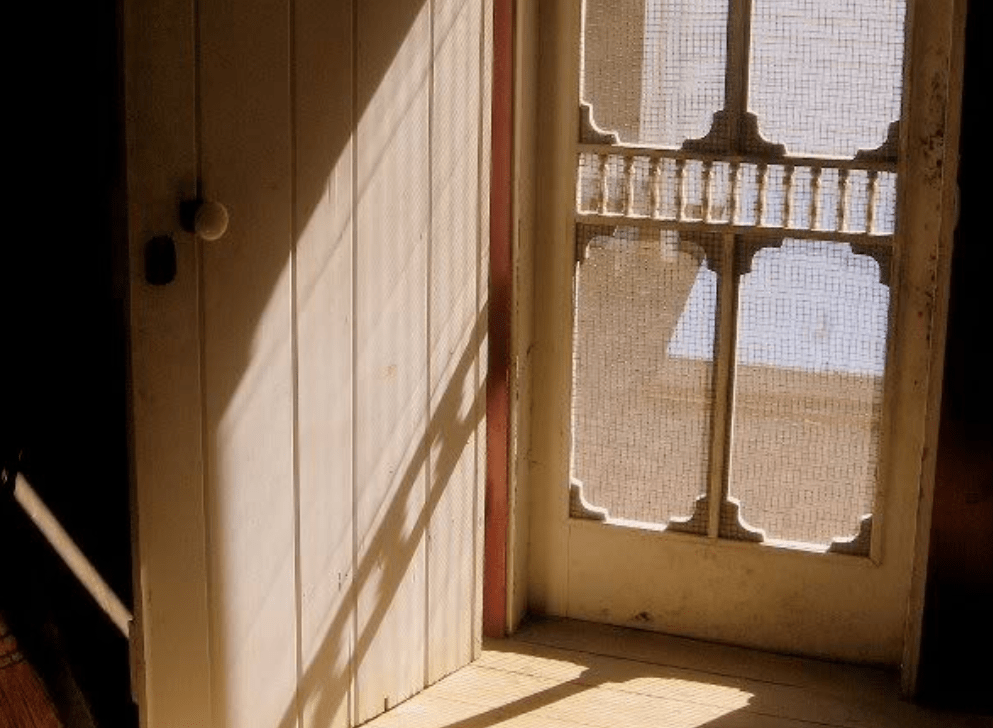
It has been many years, but I can still remember the sound of the screen door opening and slamming shut in the back porch of my grandparent’s house. The door was old and worn and yet amazingly resilient given the infinite number of times that people had passed through it on their way in and out. You see, in that house, nobody ever came in the front door, through the living room—it was always, always through the old screen door out back, and then a few steps through the porch, and on into the kitchen, the room where, as with most Midwestern families, all the truly important stuff took place. 

Maybe you remember a home or a place or a time like this—a season in your own life when the doors were always open. And so it was for us—that loud screen door was never locked, it was always at work, announcing the in-breaking  of the world that lay out beyond the warm cloister of the dim and fragrant kitchen. 

If we happened to glimpse anyone approaching the door from far off, they would emerge first as a glimmer of color and moving light out beyond the wire mesh of the screen and then—creak, rattle, slam!—there they would be, standing in our midst, in the flesh, stomping their boots, commenting on the weather. Friends and family members often showed up like this unannounced, a stream of visitors seeking to share a meal or a moment’s company, bearing news and stories. 

And I am sure someone, at some point, must have knocked, but I don’t remember it. I don’t recall the sound of knocking at all—only the familiar opening and closing of that screen door and how normal it was that people would come right in—how natural it felt for there to be a permeable boundary between what is already known and what comes to make itself known. 

There is an odd sort of paradox in a screen door, when you think about it. It is a barrier, but it’s one that is flimsy by design. It may have the shape of something absolute but it is rather ambiguous in its purpose, used to shield what is within it, but also to receive what is beyond it—the cooling breezes and the beams of light and the birdsong that travel through the screen to mingle with the inside smells of dinner and dish soap. 

It is not much of a safety measure, the screen door, but rather a way for two unique worlds to coexist alongside one another and to reveal themselves to one another. The screen door teaches us that the practice of passing back and forth between privacy and welcome; between domesticity and wildness; between the familiar and the unknown; is a good and necessary thing to do. 

And it seems to me that we have arrived at our own sort of screen door moment today, on the Sunday in the year when we see the Transfiguration, when the familiar and the unknowable commingle on the top of a mountain, when the human and the divine aspects of Jesus reveal themselves in a collision of time and light and cloud, of terror and belovedness. 

We, alongside Peter and James and John, are drawn into the strange paradox of looking at two realities at once—God’s and humanity’s—and realizing that, in Jesus, the boundaries between them are shockingly permeable. 

Today we conclude the seasons of Incarnation and Epiphany, where we have seen how the Son of God has been born and made his way into the world, approaching us, a glimmer of color and light beyond the mesh of our familiar understanding, and yet now—creak, rattle, slam!—here he stands, in his fullness, the eternal God come to pass through our door, to share a meal or a moment’s company, bearing good news and stories. 

And this, I think, is one of the most important things to understand about the Transfiguration—it’s not simply that Jesus revealed himself in a particularly magnificent way in this one moment to a handful of disciples, but that in all of our life with God, in worship and discipleship and service, transfiguration is always ready to reveal itself—the boundaries between our lives and the life of God are as permeable as a screen door through which the breeze of heaven blows.

I have seen and heard and felt him in so many different places. In moments of prayer and song. Beside a deathbed. Last week at the laundromat with the Outreach team. In conversations shared with many of you. Gathered around this table, week by week. And certainly, gathered around a kitchen table.

As we prepare for a long and thoughtful journey through Lent, to the Cross and beyond it, we are reminded today, right before we set out, that there is no aspect of human experience—even the most difficult and despairing ones—where Jesus is not able to come and be with us, to enter through the back door to sit a while, to remind us that he is separated from us by only the thinnest, most pliable boundary, if we are willing to look and listen and receive him.

Which begs the question—if the Kingdom of God is approaching us from the other side of the screen, then what must we do on our side to be ready, to greet this new world when it reveals itself? What does a screen door faith look like for us who desire a glimpse of the transfigured world beyond?

And in that, I think my grandparents were on to something simple, but essential: their door was always open. Part of what we practice here, week after week, in liturgy and in hospitality and in service and in formation, is a permeable, open-door way of life, a blurring of the demarcations between personal and communal, finite and eternal.

First, we engage in the pattern of the Eucharist so that we will go out into the world beyond our red doors and replicate that same pattern elsewhere, giving away our own selves for the sake of love, just as Jesus has done for us.

We practice welcoming visitors and strangers into the doors here at St. Anne because being open to new faces, new stories is how we cultivate openness to the presence of God whenever and however God comes into our lives—which is quite often in the form of visitors and strangers. 

We serve our neighbors, approaching the threshold of their experiences and getting to know them so that we begin to see how little separates us from anyone else; how their well-being is bound up in our own; and how the differences we perceive, while real, are not a barrier to meaningful relationship. 

And we pray and learn and study and challenge our assumptions and expand our perspectives, so that we can be attuned to the infinite number of ways that God passes into our world and abides with us, because Jesus, in that transfigured collision of flesh and light, of time and eternity, has broken down the division between heaven and earth, or at the very least he has made it like a door that will never be locked, a door to eternity that is flimsy by design, a door that is, in fact, like a screen door, where the commingling of two realities finally meet—God’s heart and our heart, God’s life and our life, the beams of light and the birdsong, the dish soap and the dinner, and all of it is God’s and all of it is ours and all of it is sacred.

And so as we approach Lent, and whatever you decide to do or not do in that season, most of all I want you to consider this: how you will stay present to the thin and permeable boundary between you and God? How will you stay open to the life that lies on the other side of the screen? Will you glimpse heaven at the laundromat, in the food pantry? Will you look for the glimmer of color and light that dance behind the words of Scripture? Will you bring good news to your neighbor, share your story with them, proclaim a word of peace to a hurting world? Will you set the table? Will you unlock the door?

Because what we do know is that God will indeed come to see us. We may not know when or how, but in every moment, on every mountain and in every valley, God is always there, ready to be with you , ready to enter in, so eager that he might not even knock, so wondrous that even if you hear his approach—creak, rattle, slam!—you may never be the same once you look up and see him: glorious, stomping his boots and commenting on the weather, seeking to share a meal, a moment; seeking, ultimately, to stay forever in you, in your heart, where, at last, he is transfigured into your flesh, your life.

And then, everything will be both familiar and new; safe and free; and you will be in heaven and you will be at home, all at once. 

On Facebook: A Sermon

I preached this sermon on Sunday, February 4, 2024 at St. Anne Episcopal Church, West Chester, OH. The lectionary texts cited are Isaiah 40:21-31 and Mark 1:29-39.

Today, February 4, 2024, is a somewhat significant anniversary. Do you know what it is?

It’s the 20th anniversary of Facebook. 

On February 4, 2004, Facebook, or “The Facebook” as it was originally known, was launched by a team of students at Harvard as a sort of high-tech student directory and then began its long, seemingly unstoppable march towards changing the way we interact with one another and the world around us. Two months after launching, in 2004, it had 70,000 active monthly users. Now it has over 3 billion, or 37% of the world’s population. As with many types of anniversary dates, reflecting on who we were then, before Facebook, and who we are now might bring up some mixed feelings. 

I was a senior in college when Facebook started, and I still remember hearing about it from some friends and signing up for the website in my dorm room in early 2005, uploading a grainy picture of myself and hunting for my real-life friends on there, when there were no links to news articles, no “like” buttons, no videos or vindictive comment sections. 

It was, back then, a novel and gently thrilling thing to be able to connect (or reconnect) with so many people at once, almost as if everyone you had ever known had moved back into your neighborhood, their lives and their stories no longer obscured by time and distance. Maybe you, too, if you ever signed up for Facebook, felt that same sense of promise, of an infinite horizon somehow drawn close enough to touch. 

But 20 years on, even if we continue to be active users of Facebook or other social media platforms, I think it’s safe to say that we have come to experience the shadow side of such a vast network of connections. And I am not just referring to the casual vitriol that seems to infect so much online discourse or the amount of time we spend staring at screens, though those are major challenges of their own. 

But even more fundamental than these, I think, and something that we might overlook, is that the vastness of information and awareness that is available via digital social networks is more than any one person is equipped to process and integrate. It might be wonderful to reconnect with lost friends, but it is also true that we only have so much bandwidth to invest in deeply meaningful, mutual relationships. 

And it is indeed valuable to have access to information about other people’s experiences, especially those whose lives are very different from our own, but the unceasing avalanche of content of all kinds, means that we also run the risk of becoming numb from overexposure, or that we end up spend a great deal of energy arguing and posturing around areas of social concern without actually engaging them in our off-screen realities.

But it makes sense that this would happen. It is not simply a failure of the will, but the reality of our limited capacity as mortal beings who, despite our deep hunger for knowledge and our inherent sense of empathy, cannot know everything, cannot respond to everything in the world with the depth and nuance it requires.

And running up against our limitations in the face of the seemingly infinite need and infinite possibility of the world–transmitted to us online–can lead us to rage, or despair, or cynicism, or some strange mixture of the three. Thinking of this through a scriptural lens, every day we bite the bitter fruit of the tree of knowledge of good and evil, and the truth is as it always has been: it was not meant for us; we cannot digest it. 

And here we are, 20 years on. 

But lest we get too down on ourselves and the ills of a digital age, we must acknowledge that this wrestling with our capacity for knowledge and compassion is as ancient as existence itself. It is a tension that is woven into all of Scripture, including our readings this morning. 

The prophet Isaiah, in a passage of both comfort and gentle reproach for Israel, asks the people whether they have forgotten the incomparable scale of God–not only that God is acting on their behalf, to care for and deliver them, but that God alone has the capacity to do so. They, by themselves, cannot conceive of or effect their own salvation. Only God can do that. God alone is able to hear and understand the many cries of the people, to bear the pain and the longing of all creation and discern a path toward healing and reconciliation. God alone can do that, because God alone has a heart large enough to break open and hold all things, and to beat and to burn with determination for the rescue and restoration of all things. 

Have you not known? Have you not heard? Has it not been told you from the beginning? It is he who sits above the circle of the earth…his understanding is unsearchable…he does not grow faint or weary. 

In other words, only God can digest the fruit of the tree of knowledge. Only he can bear the fullness of knowing and loving all of us and each of us. And God does not give in to rage or despair or cynicism in the face of our infinite need. Our hope is found in the One who can do what we ourselves cannot: to be the agent of infinite compassion, of unyielding justice, of uncompromising charity. This is who God is for us. 

And yet this truth about God sets up a deep and striking irony in the Gospel passage from Mark, where Jesus, picking up from last week, continues his ministry of healing and exorcism and in so doing, draws out the desperation and the hope and the curiosity of everyone in his vicinity, such that “the whole city was gathered around the door.” The whole city was gathered around the door. Much like reading the news online, when it can feel like the whole world is at our door, it was surely more than any one person could keep up with or even comprehend. Even Jesus.

Because unlike the infinitely expansive capacities of God spoken of in Isaiah, Jesus is–like us–just one man. Despite his eternal power, he is as finite as we are, and he can only take in so much need, so much information. And this is perhaps why, whether out of exhaustion or frustration, or both, he decides to evade the clamoring crowds, trying to stay focused on his mission to proclaim the Kingdom. 

It is as though God, in the flesh, had his own epiphany: the needs of the world are too numerous for any of us to comprehend, much less to solve on our own. We children of the dust cannot bear the fullness of what it means to be alive, to suffer, to dream. And we need something more than help. We need some measure of God’s mind, God’s heart, God’s body to mingle with our own if we ever hope to digest the bitter fruit of the tree and know what to do with it. 

And that, of course, is what Jesus ultimately gives us—not just help, but transformation into his likeness. This is my body, given for you. My peace I give to you.

So I think of Jesus, sometimes, when I struggle on Facebook and elsewhere with the enormity of the world’s grief and anxiety and the endless profusion of the world’s ideas. I think about how he, too, struggled to take it all in, and had to figure out what to do. I think about how his decision, in that moment, was not to try and understand everything or solve everything, nor to reject everything, but to love everything.

I think about how he showed up as one of us and how he blessed our finitude; how he demonstrated that true wisdom is less about an infinite capacity for knowledge or strength and more about getting in touch with the deep well of compassion that forms and sustains the cosmos. 

And I think about how we are invited—when we are overwhelmed by waves of information and endlessly expanding networks of connectivity—to neither ignore them nor to be subsumed by them, but, like Jesus, to find the still, small center of love that abides at the core of our immensely complex world and to hold fast to it no matter what. To observe and bless the ground beneath our feet; to pray; to heal whom we can heal; to love whom we can love; to proclaim what we have been sent to proclaim–the Kingdom of incarnate love; to trust that this will be sufficient. 

And to realize that, as we do so, even in our limited capacity, we are taking part in the infinite; that we are part of the broken, beating, burning heart of the One who will gather us all in and hold us; the One does not grow faint or weary, the One who will someday carry us up on eagle’s wings into the vast interconnectedness of heaven and creation, of time and eternity. Into something far better than a social network–into the very fabric of life itself, where we will be truly known and understood, where our infinite stories and endless longings will finally make sense, and where the fruit of the tree of knowledge, at long last, will be for us, and we will eat of it, and it will be sweet.

River Towns: A Sermon

I preached this sermon on Sunday, January 28, 2024, the date of the annual parish meeting at St. Anne Episcopal Church, West Chester, OH. The lectionary text cited is Mark 1:21-28.

It’s somewhat customary, when preaching on the Sunday of a parish’s annual meeting, to focus on the state of things in our faith community and to explore what it looks like to follow Jesus in this place. And I will get to that, but first, of course: a little story. 

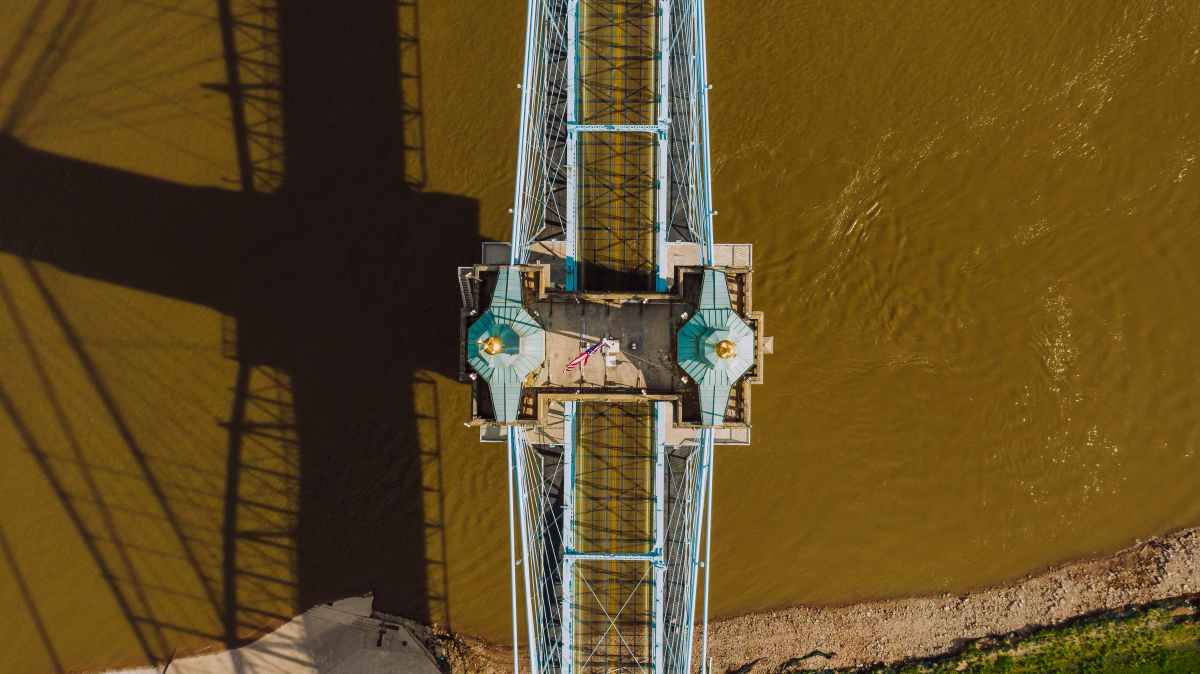
Last September, on my 40th birthday, Matt and I took a drive out from Cincinnati and along the Ohio River, first down the Kentucky side and then crossing the river by boat on one of the region’s last remaining car ferries, and then down the Ohio side of the river and eventually back up again. Surely many of you have made this trip. And if you have, you know it’s a meandering journey through a number of river towns, some of decent size, some no more than a cluster of quietly deteriorating houses. 

But what you notice in all of these places, no matter their size or condition, is that the river always looms large, just at the edge of vision and consciousness. Even if the broad water is hidden by trees or the swell of a hill, you know it is there, flowing swiftly, quietly, with determination, and the towns along its edge have conformed to the river’s temperament; they have been indelibly formed by its moods and its movement. 

I later read a book by a local author reflecting on the history of these river towns, the ones large and small, and he noted that, because there is both great opportunity and great risk in choosing to dwell at the river’s edge, people must learn to coexist with its power rather than trying to control it. 

Because when you live alongside a mighty force like the Ohio, it provides both sustenance and danger; it offers both a point of connection with the rest of the world and an ever-present possibility of inundating you. To build alongside the river, and to stay there, season after season, requires a particular blend of pragmatism, irrational hope, and surrender.

And in that sense, those river towns are a perfect metaphor for a life of faith, for a community of faith like the one that has been built here at St. Anne. To build up a church is an act of vision and of great trust in something much larger and more powerful than ourselves. We do not sit at the edge of a literal river here, of course, but we have planted ourselves alongside the living waters that comprise God’s movement through our individual lives and through the course of human history, and here at our particular bend in the stream, we must continuously live in that same precarious, energizing balance between preparedness and vulnerability, never knowing exactly what God will do next.

And while this sense of unpredictability might feel especially disorienting because of contemporary politics or technology or culture, in truth it is not a new thing—it is as old as the church itself, older even than that. It is, in fact, bound up in the very reality of God in our midst, who is always both sustaining us and overwhelming us all at once. We cannot domesticate this God any more than we can tame the power of the river, even as we are drawn to build our community upon his holy banks. 

Did you know, St. Anne, that simply by building this place, and by tending to it, and welcoming others into it, you have bravely staked a claim in close proximity to the infinite, outpouring majesty of heaven? And the whole purpose of what we do here is to learn how to live faithfully in the presence of such a force, to arrive at a knowledge of God that is born of a direct encounter with his immense and dynamic vitality. How incredible that you have done this. How wondrous that we get to continue doing this together!

And this wondrous proximity is exactly what our Gospel passage today speaks of. Consider this: Jesus, when he goes to the synagogue in Capernaum and begins to teach, impresses those present because he has what is termed “authority,” somehow unlike the wisdom of the scribes. The scribes, remember, were very learned interpreters of the law—they knew a lot of stuff—but Jesus spoke and acted as one with direct, unmediated understanding of the living force that pulsed beneath the letter of the law. 

Whatever he offered in that synagogue, however he conveyed God’s activity in the now-imminent Kingdom of Heaven, it was not just a lecture or a study guide; it was like a familiar riverbed of understanding suddenly swelling up with a previously unseen fullness—recognizable in its shape, but newly enthralling in its force, and perhaps a bit scary, too. If you have ever stood near a river that threatens to crest its banks, you might imagine what it felt like to be in the presence of Jesus. And that image might be a useful one for us to think about how God shows up to transform us and the world around us.

If you have ever witnessed a piece of art or oratory that made you well up with tears because it is so urgently true, God was there. And if you have ever stood amidst an undulating sea of protestors crying out for justice, God was there. And if you have been overcome by the beauty of a song or a thunderstorm or the silence between two kindred hearts, you might know what this looks and feels like, this torrent of God’s presence. Let justice roll down like waters and righteousness like an ever-flowing stream, says the prophet, and so we come down to the river and pray for it to roll and flow through us. 

And so it does in the synagogue at Capernaum, because Jesus does not simply teach via dry explanation or interpretation. He is the lesson. He washes away the clinging roots of demonic forces, he floods the space with holiness, he saturates the crowd with divine possibility and this is a new teaching indeed, this is authority indeed, for like a river that will not be contained, the Son of God is on a course not fixed by human machinations or timelines but is One who flows freely, with a wild, unruly peacefulness, towards the vast and hidden depths of the Father’s will. 

And the invitation—and the challenge—both for those in Capernaum back then and those of us sitting here today—is to dive in after him. To decide how we will bear witness and bear within ourselves this unmediated current of divine love and justice. How we will let our lives become the riverbeds that hold God’s life, how we will coexist, in humility and hope, with the Kingdom of God that rolls down through our cities and through our lives like those mighty waters, sustaining us and sweeping us away all at once. How will we, as the church, be like those who dwell alongside the river, building our common life with that same blend of pragmatism, irrational hope, and surrender?

Practically speaking, those are questions we will have to answer together in this new season of life at St. Anne, but they are questions we are well equipped to answer because this community knows how to build wisely and well, and this community knows how to love courageously in the face of challenge, and this community knows how to welcome the surprising in-breaking of the Spirit. 

And I am so grateful that God’s providence has led us all to be here, on the proverbial riverbank, at the outset of a new year, in that precarious, energizing balance between preparedness and vulnerability, figuring it out together. 

And so we will, this year and in the years to come, continue to construct a community that looks outward, that understands how deeply our well-being and our liberation is bound up in the well-being and the liberation of our neighbor. We are going to go deep into the riches of our spiritual life, in prayer and worship and study. We are going to welcome, with intentionality and care, every single person brought to our doors by the currents of the Spirit, so that no one here ever feels like a stranger. We are going to proclaim to all who will listen that God’s love is the most unstoppable force in the world, and that the way of love, though it can make life challenging, is the only way to truly be alive. 

On some level, we cannot know exactly how this will play out or what the future will bring. But what I do know is that all of this—what we do here, how we adapt, how we flourish, how we navigate the rise and fall of the years—is the most beautiful and courageous and necessary thing we will ever do. 

I am so excited to walk with you as we do so, because this way of life draws us into the presence and the power and the authority of the living God, whose sole purpose is to inundate the world with grace and mercy and truth. May we build faithfully at the water’s edge; may we be swept away; and may we, like all who dwell beside the mighty river, choose each day–with determination and love–to do it all over again. 

Greater Things: A Sermon

I preached this sermon on Sunday, January 14, 2024 at St. Anne Episcopal Church, West Chester, OH. The lectionary text cited is John 1:43-51.

This past week, we were in the process of finding a new person to clean our church buildings here at St. Anne, as our previous cleaner has moved on to other endeavors. And Greg, who graciously coordinated our interviews for someone new, joked to me in the midst of all of it that perhaps an exploration of cleaning services would work their way into this week’s sermon. 

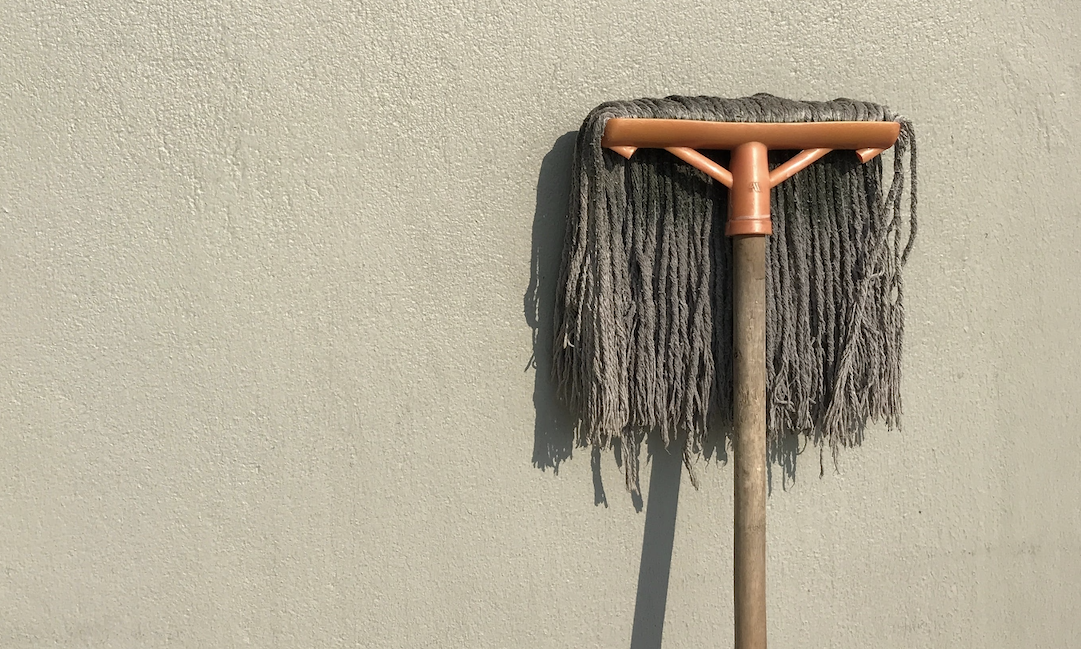
So I was reflecting on this week’s Gospel passage, where Jesus is calling his disciples and then encounters Nathanael (who, by the way, most scholars agree is another name for the apostle Bartholomew)…and I know Greg was kidding… but I got to thinking…and yes, actually, there is a connection to be made. Really, when you come down to it, everything we do, everything that we encounter, for good or ill, the sublime and the mundane, is an opportunity to look for God looking back at us—you can indeed glimpse the Kingdom of heaven hidden among the mops and brooms and cleaning rags. 

My grandpa was a janitor for many years up in Michigan—he would clean the school buildings in the nighttime, when the halls were empty and the classrooms silent. He used to tell funny stories about some of his coworkers, and a few scary stories about things that went bump in the night in those old buildings. 

And even though, in that role, he was not necessarily seen or lauded by any of the students or teachers or administrators, and even though he never made a ton of money, it was clear that he took pride in his work, and that he knew that what he did was something that mattered—one of those hidden-yet-essential roles that keeps things going day after day, year after year.

The people like my grandpa, and like all those who clean up and repair and fix and tend—like our cleaning staff and like our sexton, Tim, and like many of you who volunteer to keep this place standing—these are the saints behind the scenes, the ones upon whom we all rely. 

Creation groans, and empires rise and fall, and the future might feel uncertain, and existential angst might swirl about like winter snow, but somewhere, at every hour of the day, there is someone who is nevertheless salting and shoveling the walks and mopping the floor and sweeping up the shattered pieces and doing all of the other little tasks that seem to say: this is what hope looks like. Because things may break, but it’s worth trying to put them back together again. And things may become a mess, but it’s worth scrubbing them down and starting anew each morning. 

My grandpa cleaned those school rooms knowing, of course, that they’d be dirty again the next day, but he also knew that future generations were being educated and formed in those hallways, and so I think he hoped to do his small part. He wanted those floors to gleam with the promise of what they carried. 

And it is a beautiful, sacred thing to care with such dogged persistence for some place, for some thing, to keep cleaning up the forgotten corners that gather dust and to mend the things that wear out.

We care for broken pipes and furnaces, just as we care for broken hearts and spirits—even though we know, in both cases, that the breaking is inevitable—because the caring itself is an act of resistance against the forces of decay and despair. It is a sign of our faith in a future time and place and reality where all of those small, loving, unremembered practicalities will have mattered, that they will have amounted to something greater than the sum of their parts, that they will be revealed, in truth, to have been the very foundation of the world.

For our lives have taken shape upon a thousand different floors that were mopped and swept by unseen hands. We have been  fed by the labors of people we will never see, liberated by the sacrifices of names we will never speak. Our world is sustained by so many things—so many gestures of care and selflessness and quiet courage—that we tend not to see. 

And in that sense, Nathanael in today’s Gospel is a bit like all of us. He is, we presume, a man who is keenly interested in knowing the Messiah, in experiencing for himself the way that God is going to act and manifest his glory in the world. 

But Nathanael, like many of us, is looking for the obvious, impressive sorts of signs. And upon hearing about this nobody named Jesus, from a small village in an unremarkable region of the country, Nathanael is decidedly not impressed. “Can anything good come from Nazareth?” he asks. Can the world be saved by a carpenter and his ragtag group of friends? Will oppressive empires fall to the power of the saw and the broom and the fishing net? Nathanael thinks not. 

It is only when he thinks Jesus has some superhuman psychic ability—claiming that he saw Nathanael sitting under a fig tree before they ever met—that he starts to get excited. Maybe this Jesus does have some impressive tricks up his sleeve after all. Maybe he is about to reveal himself as a mighty king in hiding, and the whole humble carpenter thing was a just a costume, a front for the real sort power that God’s Son must surely wield.

And then Jesus says to him, knowingly, lovingly, devastatingly—do you believe because I told you that I saw you under the fig tree? 

Do you still believe that God is like a magician?

Do you still believe that prayer is like a parlor trick?

Do you still believe it is the impressive, obvious forms of power that will save the world? 

Do you still believe that the Messiah will be like any other king, with swords and stratagems? 

Do you still believe that wars and the ones who wage them are the backbone of history or the gateway to an everlasting peace?

Do you still believe only in the world you can see in front of you? 

You will see greater things than these. 

You will see heaven opened you will begin to understand its true simplicity.

You will see the angels of God ascending and descending and the hidden, delicate interdependence of all creation and begin to understand true sustenance. 

You will see the tearstained faces of the oppressed and the marching of the peacemakers and the work of humble hands and the bravery of trampled hearts and you will begin to understand true blessedness. 

You will see the faith of the sick and the generosity of the widow and the fierce devotion of the parent and you will begin to understand true love.

You will see violence itself laid to waste, the nullification of the cross and the sword and the stone. You will see the dawn on the other side of death, and you will begin to understand true power.

You will see the unsung, unnoticed acts of care that renew the world each day and you will begin to understand true salvation. 

Do you believe because I told you that saw you under the fig tree?

Well, brace yourself.

Because you will see that, in the end, the world will indeed be saved by the carpenter, and the fisherman—and the janitor and the cook and the mechanic and the gardener. And empires will indeed yield to the power of the saw and broom and net and plow, because the most enduring thing in the world is the persistence of care, the unyielding dedication of the ones hidden in plain sight who clean up and patch over and refuse to let things fall apart—for they are the signs of the one true God, who is also hidden in plain sight, and who has been cleaning and patching and refusing to given up on us since the beginning of the world. 

The God who is, indeed, smiling back at us from amidst the mops and the brooms and the rags, who wants us to do nothing more than to care for what is in front of us, to fix what is broken, to make the world gleam with the promise of what it carries. 

Thanks be to God for the ones who already do this. Blessed are they. 

And, like Nathanael, blessed are we, when we finally see them. 

Pinky Promise: A Sermon

I preached this sermon on Sunday, January 7, 2024, the Baptism of Our Lord, at St. Anne Episcopal Church, West Chester, OH. The lectionary text cited is Mark 1:4-11.

This may not be a very popular opinion, but I actually love new year’s resolutions. Every December, in that odd lull between Christmas and New Year’s Eve, I find myself pondering what I might want do more or less of in the coming year. And I know for some this is a tiresome custom, but it honestly never gets old for me. When we are able to spend the holidays together, my mom and I have a tradition of writing down our resolutions on a scrap of paper on December 31st, reading them aloud, signing our names at the bottom, and then doing that most sacred gesture of commitment, a pinky promise, and then we tuck the piece of paper away into a wallet or bag for future reference. 

Now, truth be told, I usually find the scrap of paper sometime around June and have a look and a good laugh at my own expense, because undoubtedly my record at that point is mixed at best. I think I’ve been resolving to take up jogging for the past 20 years, and so far I’ve managed a fast walk. But I like to think of this less as a disappointment and more as persistent optimism. And 2024 is a new year—I did jog for about a minute on the treadmill the other day. Anything is possible!

But the thing that helps me—the thing that I have to remind myself, sometimes, in order to stay optimistic—is that while the goals and resolutions we have might indeed be worthwhile, and even drastically improve our lives, they do not impact our fundamental worthiness or value. 

What I have come to realize is that my mom and I are able to relax and enjoy making our lists and our pinky promises together, even if we know we will likely stumble along the way, because we know that even if we have fallen short of every single resolution by next December, it will still be ok, because it is the dreaming together and the trying that matter. 

The pinky promise that we make, I think, is more about saying—we promise we’re in this together, for good or ill, come hell or high water, no matter what happens through the turning of the seasons. It’s the sort of promise that is stronger and more enduring than any failure, because it is rooted in love. 

I think we sometimes have a complicated relationship with resolutions because it can start to feel like they are a checklist that must be accomplished IN ORDER for us to be good enough, to become, somehow, worthy of love, rather than the other way around—knowing that we are already loved, and then figuring out what to do with that knowledge. Love comes first, always.

And what shocks me, sometimes, is that even after two millennia of Christian practice and storytelling and worship and prayer, there are so many people who refuse to recognize that this is also the whole message of the Gospel: that love comes first, always. 

People so easily forget that the entire story of our existence is rooted in an unshakeable love. That, as we heard this morning in Genesis, God ventured into the chaos of primordial darkness and created the world precisely so that he could love it all—and not just the easy stuff, but the light and the darkness together. All of it. Always.

People forget that God’s promise to love us—and everyone, and everything—is itself stronger and more enduring than any failure, and that there is nothing that we can do to alter or diminish this. Some folks like to say hate the sin, love the sinner, forgetting, first, that this statement is not actually in the Bible, and second, that our greatest commandment is to not hate anything, but to love foolishly, indiscriminately, without calculation or agenda or expectation or condition. And to let ourselves be loved in that same way. 

In a world that is so shaped by contracts and conditional promises and careful measurements and demarcations, maybe this unreserved, unabashed, unbounded sort of love is inconceivable. Maybe it is a scandal. And maybe it always has been. 

It would seem so if we consider the Baptism of Jesus, which is itself, when you ponder it, a rather scandalous act, at least for our good friend John the Baptist. We don’t get as many details in Mark’s version that we just heard a few minutes ago, but in other accounts John is actually quite dismayed that Jesus—the one he was waiting for his whole life, the one coming after who is so much more powerful, so much greater—that this Holy One submits himself to a ritual cleansing from sin and failure. Where was the fire and the winnowing fork and the judgment and the display of great strength? 

Whatever John was expecting, this, apparently, was not it. He had proclaimed a Messiah who would shake the foundations of the earth, and yet this promised One comes forward like a simple man, not so different in appearance from the countless others baptized in the River Jordan, with their unmet resolutions and their faltering hopes. Jesus comes forward like one eager to love, eager to be among us, eager to confound us with his humility. 

He comes from within us, content to step down and be submerged in the current of our human frailty, content to love us precisely as we are, not as he is. Jesus’ baptism is God saying to us, we’re in this together, for good or ill, come hell or high water.

And that, essentially, is what Jesus hears, too, when he emerges from the river: this is my Son, whom I love. With him I am well pleased. Since the day the world began, God has desired for us to know and claim our belovedness, and now he has come to show us in the flesh what it looks like.

This belovedness, we begin to see, is not conditional on Jesus’ failure or success. It is woven into the very core of his being. It is this belovedness that will propel  forward into everything that will follow—the temptations and the miracles and the everyday moments.  It is this belovedness that will sustain him even when things get hard, when things fall apart, when he falls apart. And it is this belovedness that he has come to declare as both the birthright and the purpose of all people—of all creation. 

Judgment and punishment are easy to understand. But this is the incomprehensible scandal of the Gospel that no one—maybe not even John—expected: that God is love, and that God loves you and everything and everyone, and that, try as you might, nothing will change this. And once we realize this essential truth—this epiphany–we must begin to live in a new way, with the mercy and tenderness of someone who no longer needs to prove themselves worthy, and who understands the inherent worthiness of everyone else. 

But still we struggle to understand or accept this, even 2,000 years on. Still we think that somehow we must earn our place in the cosmos. But we do not. We need not. We cannot. Because love came first. 

And even if we crawl over the finish line of a particular year, and even if we crawl over the finish line of our lives, God will still say, you are my child, the beloved, with you I am well pleased. And even if we have failed and made a mess of everything, somehow, even then, I think he will be there saying we’re in this together, for good or ill, come hell or high water. 

Because God is not out there somewhere waiting for us to measure up, waiting for us to figure it all out before he loves us fully and comes alongside us. He already does. And he already has.

He has stepped down into the water with us. He has taken note of everything we’ve tried and the things we were afraid to try. The ways we have succeeded and the ways we have fallen short. The resolutions kept and the ones we still keep writing with foolish optimism on a scrap of paper. And through it all, I think he simply delights in our willingness to dream together, to try—our willingness to keep showing up, year after year, to share in a hope that is stronger and more enduring than any failure. The kind that only comes when you know that you are truly, eternally beloved.

Because you are. And that’s a pinky promise. 

Unimpressive: A Christmas Eve Sermon

I preached this sermon at the 2023 Christmas Eve services at St. Anne Episcopal Church in West Chester, OH. The lectionary text cited is Luke 2:1-20.

All of us probably have a story or two about a Christmas gift that we received that wasn’t quite what we were hoping for. Something in the wrong size or style, maybe, or some odd item that we don’t know quite what to do with. It’s bound to happen at some point, of course, because we are all just people doing our best to know and to provide for one another, and sometimes we miss the mark a bit. That’s life. It’s ok.

But 4-year old me did not understand this quite as well. 4 year old me, I must confess, had a very particular expectation of what a Christmas present should look like. And so it came to pass that, when I was in pre-school, I had to learn a tough lesson during our classroom gift exchange.

I was only 4, but I remember it vividly. Every student brought in one gift to give, and they were all placed in a circle around the Christmas tree. And then, sort of like musical chairs, we all got in a circle around the tree, too, and when the music started, we started marching around it, and when the music stopped, whichever present was in front of us was ours to open.

Well, the music started, and off we went, and I was eyeing all the various packages and boxes under the tree, getting more excited by the moment. And then the music stopped, and there in front of me was a big box, beautifully wrapped, big enough to be a board game or a whole set of toys. I thought, this is looking good for me! 

And then, all of the sudden—immediately to my left, the kid next to me swooped forward and grabbed that big present and ran off with it. I can still feel the indignity of it! And all the other kids grabbed their presents and ran off, too, and before I knew what to say or do, there I was, alone at the tree with the gift that the little thief next to me didn’t want. 

It was a very small little box, wrapped in some crumpled paper. 

And I stood there and opened it up and it was a tiny little plastic bear, the kind you could stick onto the end of a pencil. 

I was FURIOUS. I will admit to you now that I stood there in my Christmas sweater and I cried sad, angry tears, and I refused to be consoled. Whatever had been in that big box was supposed to be MINE and now all I had was this stupid little plastic bear.  My parents tried to tell me something about gratitude, but I wasn’t having any of that! I didn’t get it. Not then. Not yet. All I knew is that I thought I was going to get something big and shiny and instead I had this tiny, unimpressive little thing in my hands.

I think a lot of life is like that little plastic bear. We carry with us so many big hopes and expectations of what will be, what ought to be, what WE ought to be, and then the music stops and we look in front of us and instead we are only given what is, and we are who we are, and things might look a little dimmer and dingier and smaller than we imagined. Even Christmas, bright and lovely though it is, can feel like that, sometimes, depending on what we’re going through, what the year has brought (or taken) from us. 

And when that happens—when plans fall apart, when we lose what is precious, when the world turns out to be a messy and complicated place where joy is sometimes snatched out from under us—well, maybe we all shed a few sad, angry tears in those moments, too. And that’s life. It’s ok.

But here’s the thing about Christmas, about the Christmas story, in particular—the one that we just heard retold a few minutes ago about the birth of a baby in Bethlehem, and the frightened shepherds in the field and the new mother pondering this strange, small gift she now cradles in her arms—here’s the thing about all of it: 

It is good news for us precisely because it is unimpressive. Surprising, unexpected, even miraculous, yes, but on the surface, by all outward appearances, the nativity of Jesus is entirely unimpressive. 

We forget this, too easily perhaps, because our traditions and our music and our associations with the holiday are all so beautiful and rich with meaning, as they should be, given that we know who Jesus turned out to be. But if we pay close attention to what is actually told in the narrative itself, the bare facts underneath the wrapping paper and ribbons,  it’s a rather simple little story, that can be summed up like this:

A young, unwed mother gives birth in a tiny town of no great wealth or prominence. She is in crowded quarters because her fiance’s family is of modest means and so she has to place her newborn into a makeshift crib. A few ragtag men show up in the night telling a story about a strange vision they just had out in the fields. The family members, or whoever happens to be around, are surprised by this odd visit. Maybe they believe them; maybe they think the shepherds are off their rocker. We don’t really know. Then the shepherds leave. And that’s it.

The night is quiet, and the baby slumbers, and the world spins on. 

No palaces, no proclamations from the king, no processions or parades or parties in the street, no big board games wrapped under the tree. From the perspective of any passerby in Bethlehem, the birth of Jesus is completely unimpressive. God is born and heaven unites itself with mortal flesh and the One who is mightier than any emperor is in our midst…and yet still the animals must be brought in from the cold and hungry mouths must be fed and everyone still goes to bed with backaches and unfinished to-do lists.

The coming of the Messiah is small: small like a child sleeping in the night, small like a little gift wrapped in crumpled paper, small like real life can be, all the average moments that are too easily overlooked in the quest for bigger brighter, more impressive things. And although the years go by with their ups and downs, and although sometimes we cry sad, angry tears and it’s hard to feel grateful for what we are left holding, still he comes in the night, still he waits for us look down and behold him. Still he invites us to appreciate the difference between grandeur and grace, and how those two things rarely resemble one another in this life. 

This is the good news of Christmas: that God came into our midst in an unimpressive way because God works primarily through unimpressive, normal, struggling, imperfect people and places and things. Which means that, no matter who you are, no matter what you have done or not done, no matter who you love or how you have failed to love or how love has eluded you, no matter the doubts and the fears and the wounds you carry, no matter whether you are famous or forgotten, God still seeks to be born in you. God seeks to live and move and have his being in your ordinary, unimpressive, perfectly normal life. 

And he is small enough, humble enough to fit wherever there is space. Wherever you can make a bit of room in your heart, he is content there—content to be the small, unexpected gift that will transform our understanding of everything if we will let him. 

And if we do, then what we will see, as I could not on that Christmas long ago—clutching that tiny plastic bear—is that the things which will endure in our memories and in our hearts when all is said and done, the things that will teach us how God desires for us to live, how to be grateful and joyful no matter what, are the small, unimpressive things—the things that come wrapped in crumpled paper, the gifts we did not expect or perhaps even want, but through which God comes to us and abides with us and reveals the simplicity of his message: that love, though it be small and vulnerable, is the most powerful force on earth. 

May tonight, and the humble story that we tell, and the humble lives that we have been given, come together as a sign to help us understand this love. 

Because Christ is born on this holy night, unimpressively, with unimaginable grace, for you and for all. He has come to be with us, just as we are, whether you are laughing or crying, whether life has been a delight or a disappointment. He has come as the tiniest, most surprising and precious gift, waiting for you when the music stops, waiting for you to pick him up and behold the truth: that God is in the small things. That we will be saved by small things. That whenever you hold even the smallest bit of love in your hands and in your heart, you are holding him. 

God Comes to Us in the Dark: A Meditation

I offered this meditation at a service for The Longest Night at St. Anne Episcopal Church in West Chester, OH on December 20, 2023. It is a time of prayer, music, and stillness for those who are struggling in the holiday season.

God comes to us in the dark. This has always been true.

In the beginning, when God created the heavens and the earth, the earth was a formless void and darkness covered the face of the deep. So says Genesis. So say our ancestors in faith, grasping back through time, back through the shadowy recesses of human memory, back to an original stillness, an original peace, an original fullness, back to when God, alone, was—and it was dark, and it was already good.

And all that follows—let there be light, and let there be all of this, and let there be you and me—all of it emanated from the darkness of love, where God dreamed and saw visions, where God composed the constellations, where God traced out the edges of the universe and imagined all that could be if there were such a thing as being. In the dark, God already knew both the price and the promise of being—what it would require—of God, and of us—and so God made a promise, from the very start, when our being came to be: 

And that promise is: I am here. I am here. And again and again, when you lose sight of me, I will come to you. In every season, in every hour. When the light is bright, I am here. When it fades, I am here. And when it is night—on the face of the earth, or in the depths of your soul—then I am still here. You will not lose me in the dark. No, in the dark you will encounter me as I was from before the beginning: hidden but present, dreaming but awake, tracing, now, the edges of your face, your flesh now holding a universe of meaning. I am here, gazing at the constellations in your eyes, reminding you that being, simply being, here and now, together, is enough. It is all I ever wanted. It always has been. Even in the dark. Especially in the dark

For God comes to us in the dark. And this has always been true.

Despite this truth, we have a complicated history with the darkness, for reasons both pragmatic and imaginative. Job calls down the darkness as a curse; the Psalmist yearns for light like the watchmen waiting for morning.  We understand this in our bones. 

Because, until recently, the night was, for most people, an inevitable and somewhat threatening feature of daily life. Before electric lights and heaters, it was a cold and dim and dangerous time when one had to gather in close to others for safety and warmth. For our siblings who have no home to go to on this night, for those who are alone, this is still true—the night is not always our friend. 

And yet there are other reasons we fear the dark, ways we have been formed to fear it in our mind’s eye. We have been taught, too often, that night metaphors are literal—that the light itself is somehow truer, purer, stronger, more moral, and that the darkness is a time of indolence, of deceit, of confusion and waywardness. And so when we find ourselves in a seemingly dark place—a place in our lives where we cannot see the path ahead, where we cannot understand what has happened to us and why—we might assume that we have been forsaken, that we have been forgotten, that we are at fault, or that God has left us to fend for ourselves.

We call this the dark night of the soul and think that we are talking about God’s absence. But we are wrong.

For we must remember, again: God comes to us in the dark. 

Not just in the beginning, but always. The darkness is when God chooses to appear. 

Consider how the Passover and the Exodus and God’s liberating work all began at night. 

Consider God speaking to Moses on a mountain covered in thick, dark cloud, amid thunder and lightning. 

Consider Jacob wrestling with an angel all through the night, claiming a blessing upon his wounded body before sunrise.

Consider the promise spoken by the prophet Isaiah: I will give you the treasures of darkness and riches hidden in secret places.

Consider the child, soon to be born in Bethlehem, in the silent, holy, starlit night.

Consider the Risen Christ, emerging from the darkness of the tomb into the predawn shadows of a garden.

And consider how the Lord promises his return when “the sun will be darkened, and the moon will not give its light,” how he will reveal himself, in the end, as he was in the beginning, emanating from that deep original mystery, that unseen, unspoken, ageless night of dreaming, older than the stars. 

Yes, God always comes to us in the dark.

And if we consider this, then perhaps we will begin to realize that, indeed, darkness and light to God are both alike, because God’s presence and power and mercy are not dependent upon whether we walk confidently, whether we understand, whether we see clearly, whether we know exactly what to do next or how. God arrives in the night because God is at peace with hiddenness, with the unfolding mystery that God is to us, with the unfolding mystery that we are to God, and so we are invited, also, to make peace with that which is hidden—the reasons and the justifications and the certainties that elude us, and the ways that love endures regardless of what we know or do not know. 

And God arrives in the night because, in truth, the darkness has its own particular knowing—its own intimacies and surrenders and quietude that come precisely when we cannot see everything, when we let go, when we cannot strive or plan or rely on ourselves as much as we do in the light of day. 

The night engenders a deeper trust, if we will let it. If we will rest in it.

So whatever you carry with you on this night—a weariness, a fear, a grief, a bitterness, a question, a regret, a secret dream—what you must know is that God is still present to you in this place, God sees you and knows you, even if you cannot see God’s face, even if you don’t recognize who you have become.

Like a mother cradling her child, or like a lover in the darkness, God sees you, God gazes upon you tenderly, whispering gentle reminders of promises made and kept and renewed, of a covenant, of a bond deeper than eternity—one that will not break, even when we do. And we do sometimes.

But God comes to us in the dark, saying: do not be afraid, and saying, blessed are you who mourn, for I will make my home in the cracks of your shattered heart, and saying your pain will turn into joy—not because pain is holy but because I AM, and I am the one who offers you a joy that is deeper than fear — the joy that is my own self, that same self from before the beginning, a divine darkness bathed in the stillness of eternity and traveling, traveling, across the constellations and the cosmos to be here, right here, to hold you when your eyes are blurred with tears and shadows on this long, long, longest night.

And to tell you that even when it’s not ok, even when you are not ok, you are loved.

In a few days, we will celebrate a birth, and we will speak of the Light of the World, and on that day we will be talking, of course, about God. But remember, as we do, and as you go from this place tonight, that the Light of the World is not all that can be said of God. For before the light, God was

And here, in the night of the earth and, perhaps, in the night of your soul, God has not left you. God is still doing what God always has been doing, in that original, timeless, holy darkness: dreaming, creating, forming, loving. Remembering all the prices you have paid. Remembering the promises God has made. And reminding us of the one thing that is always true, the one thing God will never stop telling us, even in the dark: 

I am here. I am here. I am here.

The Stories We Tell in the Dark: An Advent Sermon

I preached this sermon on Sunday, December 3, 2023, Advent I, at St. Anne Episcopal Church, West Chester, OH. The lectionary texts cited are Isaiah 64:1-9 and Mark 13:24-37.

When I was in elementary school, I auditioned to be in a community theater production of A Christmas Carol. I was so nervous during the audition that I totally flubbed my rendition of Silver Bells, but apparently they needed lots of children in the production, so somehow I was cast as some nameless older brother of the real star, Tiny Tim. I had no solos, which was fine, and I think my only real speaking part was to exclaim something about the Christmas goose. A Tony-award winning role it was not. 

But I loved every minute of it. And since then, I’ve always had a soft spot for A Christmas Carol, which, when you step back and think about it, is really a strange and gloomy bit of entertainment during the holiday season. There are ghosts and nightmares and strange visions in the dark, and the story is, at its core, an exploration of mortality and regret and redemption as Ebenezer Scrooge enters the twilight of his life. A far cry from the doggedly bright and cheerful tone of most things we watch and read and hear this time of year. 

But you might be surprised to learn that Charles Dickens, the author of A Christmas Carol, was not trying to be countercultural by injecting some dark themes into the festive season. In fact, at the time he published the story, in 1843, the winter holidays were actually the preeminent time of year for ghost stories and tales of the macabre. People expected to be frightened a bit at Christmastime. We might associate those things now with Halloween, but in pre-Victorian England, it was wintertime, when the nights were cold and families gathered in close for warmth, that chilling stories were shared and the mysteries of the dark corners of life were explored. 

A Christmas Carol is one of the only remnants we have of this tradition, along with that one line in the Andy Williams song, “It’s the Most Wonderful Time of the Year,” when he references people telling ‘scary ghost stories and tales of the glories of Christmases long, long ago.’ Otherwise, the culture around us seems to favor a cozier, less threatening tone as the winter settles in. 

Except for one place. There is still somewhere you can go if you want to be a bit frightened during the holiday season. Right here, when you step into a liturgical church and listen to the readings during Advent. 

Someone unfamiliar with the church seasons, stumbling into the midst of our Advent observances, might be forgiven for being shocked by the dim and haunting atmosphere of our readings and prayers this time of year. For this, the first Sunday of Advent, we have a yearning, wistful lament from the prophet Isaiah and an unsettling apocalyptic vision from Jesus and a Collect about casting away the works of darkness. One might expect the ghosts of Christmas past and future to show up at any moment, rattling their chains.

But for those of us who stick around to hear the stories, those who don’t run away, who try to make space for the odd collision of gloom and light that is Advent, I think we discover a strange respite in this season, perhaps the same sort that was provided by Christmas ghost stories in earlier times. 

And the respite I am taking about is not the typical, self-soothing, therapeutic language that gets bandied about in some conversations about Advent being a slow and quiet time, an invitation to rest and relax and take part in self-care. Those are very good and healthy things, especially in a manic consumerist culture, but they are not the themes of Advent. Advent is not about a classical music and a bubble bath in between shopping trips. 

Advent is about the stories that we tell in the dark—the stories that send a chill down our spine because they ask us to look into the shadows, the unknowability, the loss and the dissatisfaction and the brevity of things. That’s why you won’t find many light and happy Scripture passages this month; we must pass through the valley of shadows first, so that we can begin to understand the true radiance of what is promised in the first and second comings of Christ. 

In the same way that we tell ghost stories around the fire in order to feel more alive, and in the same way that Scrooge, in A Christmas Carol, has to face his demons before his spirit can soar with the angels, so too does Advent invite us—require us, really—to acknowledge the pain of life so that we might better understand what Jesus is actually coming for in the first place. That is why our readings are not warm and bright and cheerful— because they attempt to be honest about, as Shakespeare put it, “the winter of our discontent” so that we might also be honest about what true contentment looks like when it arrives. 

And what does contentment look like? We begin to collect some images for ourselves this week. Contentment looks like intimacy with our Creator, his hands like a potter molding the clay of our bodies into something beautiful and useful and strong. And contentment looks like intimacy with creation, that we might be as attentive and awake as a fig tree, our souls unfurled to receive the Son of God in due season. 

In Isaiah and in the Gospel, and in all the stories we will tell in the dark over the next few weeks, we are asked to abide in the creative tension of living as a people who are both aware of life’s shortcomings and yet are haunted by the Kingdom of Heaven—knowing that both are real, the deep lamentation and the emerging promise, knowing that God will indeed reshape us, knowing that we do not hope in vain, and yet not knowing when the consummation of that hope will arrive in its fullness to descend upon our war-torn cities and upon our war-torn hearts. 

And so, in Advent, we wait for the peace that the world proves time and again that it cannot give. And we tell the truth: the waiting is hard. 

But may we also discover that in the waiting, even waiting in the dark where ghosts linger, there is still joy and loveliness and courage to be found when we gather in close to one another and do what we have been asked to do: to keep telling the stories of God’s goodness. To keep telling the good news. And to do this, all of this, in remembrance of the One who has promised that the end of the story will be a beautiful one. 

And on that day, when past and present and future all come together, when the long delayed advent of God gives way to arrival, when we are awakened from something deeper than sleep, then, well, what a happy morning that will be. Happier, even than when Scrooge woke up to find himself alive, truly alive, on Christmas Day. I think it will be worth the wait. 

Speaking of Scrooge, I suppose I have accepted the fact that I will probably not feature in any other productions of A Christmas Carol. But that’s ok. I am perfectly content. And you know why? Because I may not have had any good lines on stage back then, but now, every Sunday, I basically get to say the most important line of all, the one Tiny Tim says at the end of the story, the one that really sums everything up, the one that underlies everything we do. I get to say, God bless us, every one. 

God bless us, every one. Everyone. It’s the best ending to a story anyone could hope for. Especially because it happens to be true. God will. 

The Master: Sermon

I preached this sermon on Sunday, November 19, 2023 at St. Anne Episcopal Church, West Chester, OH. The lectionary text cited is Matthew 25:14-30, Jesus’ parable of the talents.

The other day a very exciting thing happened to me: I received in the mail a copy of the Vermont Country Store Christmas catalog. Now, if you are not familiar with this company or its catalog, it is a family-owned business in Vermont that primarily sells home goods and clothing and other items for anyone who is enticed by things like flannel sheets and wool sweaters and maple syrup. 

And the Christmas catalog, especially, is something I look forward to all year, even though I rarely buy anything from it. Just to flip through it is a treasure trove of nostalgia—vintage holiday decorations and cakes made from “old world” recipes and cozy slippers like the ones my dad used to wear on cold nights in northern Michigan. To read the Vermont Country Store catalog is, for me at least, to be drawn into that landscape of memory that feels especially potent as the holidays approach, as the past reaches out to embrace us.

And although our memories of the past can be both pleasant and painful, there is something about this time of year that seemingly compels us not just to remember it but to re-engage it, to make it live again through recipes and traditions and songs. 

For me it might be the Vermont Country Store catalog, for you it might be something else, but I am willing to bet that there will be something in the next several weeks—a scent, a taste, a melody—that will suddenly collapse the boundaries between past and present such that your life will suddenly feel both very spacious and very small all at once—spacious enough to hold so many memories, small enough to still feel like they were only yesterday. Time is strange like that. 

I’ve been thinking about time this week. It is precious, isn’t it? Perhaps the most precious thing we are given. It seems so abundant when we start out. It can feel interminable when we are waiting for something to happen. 

And then, suddenly, it slips away, and we think, oh, wait, not quite yet. I thought I had a bit more, I need a little bit more. There were still things I wanted to do, there were still words I needed to say. I don’t know why I didn’t. Maybe I was distracted. Maybe I was afraid. Please, just a bit more time. 

But the dying light and the winnowing down of the year reminds us that time is a relentless master; we are given what we are given, and it is up to us to make the most of it. It is up to us to imbue it with light and love and care while we can. I think we try to remind ourselves of this during the holidays.

If you wonder why on earth I’m going on about Christmas catalogs and time and memory, it’s not just because Thanksgiving is coming up in a few days, although I am excited about that. I have my Cool Whip ready!

No, it’s because I have been wrestling all week with the parable we have been given this morning, seeking a life-giving word from what can feel like an impenetrable text. Jesus, yet again, gives us an image of the Kingdom that seems, on its face, short on mercy and full of dire threats from a cruel master demanding a return on his investments. Is this supposed to be God? I cannot believe it. And so, yet again, I found myself seeking good news in an unexpected place.

And as I was flipping through that Christmas catalog and reflecting on the past, I found it. Not in the catalog itself, but in that tender sense of longing for times past that it evoked in me. It made me realize, in a new way, that the thing in this life that is of greatest value—the closest thing we might equate with both  the “talents” given in this parable and the Master who dispenses them—is not God. It is time. 

Time is our greatest resource. Time is our most precious gift. Time is the thing we must decide how to use while it is entrusted to us. And time, in the end, is the unyielding master of our mortal bodies, for it will run out, and it will call us to account. Time will ask us, in the dying light, in the winnowing down of our own years: what did you do while you could? What dividends of love and justice and peace do you have to show for it all?

And yes, I know that for generations, the Church has interpreted the Master in this parable as Christ and the talents as our material or spiritual resources that we should not bury out of idleness or fear. But I will be honest, I don’t believe that God punishes us simply because we are afraid, because we didn’t know quite what to do, because we didn’t yield a certain rate of return. I think such notions of God have been used to exploit people or at the very least, to make them feel like they are never enough, that they had better produce results or else, usually for the cruel masters of this world. 

Because here’s the thing about God—here’s the good news for those of us wearied and tearstained by the passage of the years—God is bigger than time. God is not bound by time. God is not sitting out there somewhere, watching the clock, waiting to see what you and I will accomplish. God is not making a list and checking it twice. 

God already knows. God has always known all that you would be, and all that you wouldn’t, or couldn’t be. And God has loved you anyway. Whether time has been kind or cruel to you, God has been with you every moment of your life, and will continue to be there, even when time runs out. And on that day, God will guide you out beyond time itself, beyond longing and regret and fear to that place where nothing is wasted, where nothing is lost, where everything is given. 

And if this is so, then perhaps the true invitation of this parable, the way into a Kingdom that arises in the midst of the cruelty and finitude of time, is simply this: cherish what you have been given. Savor the collection of fleeting moments that are your life. Use your days to make a world that is more peaceful, more beautiful and gentle and loving. 

Not to try and impress that master, Time, who will take all we have back for himself, but to get in touch with something even more powerful—to awaken to the reality that no matter what is taken from us by time, the love that we experience and share in this life is timeless, it is eternal, for it belongs to God. And one day Christ will come and give back everything and everyone that time has taken, and it will be a gift more precious than anything you can order in a catalog. 

It will be the life that is beyond time, which we cannot yet even imagine, and yet which is deeper, even, than our most cherished memories. Because even more so than our own lives, God is both very spacious and very small, all at once—spacious enough to hold forever, small enough to hold you. 

Cool Whip: A Sermon

I preached this sermon on Sunday, November 12, 2023 at St. Anne Episcopal Church, West Chester, OH. The lectionary text cited is Matthew 25:1-13, the parable of the 10 bridesmaids.

Have you ever experienced something in your life that you only understood a little bit later, when you were looking back at it, maybe with a few more years under your belt, a little bit more wisdom or humility? 

One little thing that always amused me a bit, growing up, was my grandma’s excessively large collection of empty Cool Whip containers. You know the kind I’m talking about, those blue and white plastic tubs? Now, I love Cool Whip, it’s sweet and soft, like a cloud melting on your tongue. And we ate a lot of desserts at my grandparents’s house, so there was almost always some Cool Whip in the refrigerator. 

But while most of the other bottles and cartons we used were tossed out or recycled, for reasons I could not decipher my grandma seemed determined to save every single Cool Whip tub the family had ever consumed. They were used as containers for Thanksgiving leftovers, for all sorts of leftovers, actually, and they were repurposed to hold all sorts of random odds and ends on cupboards and shelves. 

And somewhere, deep in some drawer, I am sure there was a back stock of them, all nested together, ready to be drawn out at a moment’s notice should some unexpected object need to be sealed up and stored away. 

When I was young, the notion of why anyone would need so many Cool Whip containers was beyond me. I figured it was just some quirk, an odd little habit in a family with a zealous attachment to whipped dessert topping. 

And it was only much later, as I reflected both on my grandma’s life and the circumstances that shaped it, that I realized there was more to it than just a quirky habit.

You see, my grandma grew up with very little money. She was born in the midst of the Great Depression, one of four children, the daughter of a Lutheran pastor who died when she was a teenager, leaving her family’s budget even tighter than it had already been. 

And once she was married, my grandma raised six children as a stay-at-home mother, tending to her family on my grandpa’s modest, blue-collar wages. For my grandma, love looked like providing enough food for her kids, making a dollar stretch, getting to the end of the month, and if that meant reusing a Cool Whip container to save some money, to preserve food and to make sure there was always something stashed away in the fridge, then that is what she would do. 

And it’s only once I got a bit older and had to pay my own bills and navigate some of my own lean financial seasons that I came to appreciate exactly what my grandma and others in her position had to overcome—they had to survive in the face of scarcity, with very little in the way of a safety net. And so even if it just looked like a collection of Cool Whip containers stashed away in a drawer, I feel like she was storing up all her hopes and her unspoken dreams in that drawer, too, all nested together, a stack of prayers that someday her children and her grandchildren would have a better, easier life. 

What a gift, when we can look back with empathy and and finally see in a new way all the ways, big and small, that we have been cared for. And when we do so, it can also help us think about other things in a new way, too.

Take, for example, this morning’s parable from Jesus about the foolish and the wise bridesmaids. This is, by all accounts, a parable about the promised return of Christ, and about the ways in which we are encouraged, as partakers of the Kingdom, to be prepared for this return.

The challenge, of course, in the long, long wait for this return, is that we may grow confused or unsure about what wisdom and preparation should actually look like in our day-to-day lives. And Christian tradition, at various stages in its history (and its present), has unfortunately used such parables as instruments of fear, of enforcing moral purity, saying, be prepared, be obedient, be well-behaved, good Christian, or else! The door will be locked to you and you will suffer forever in the darkness. 

Nevermind the fact that the whole thrust of Jesus’ message is that the morally lost, the wayward, and the broken will be the first ones invited to the feast of God. Nevermind his radical inclusivity. 

No, we are so conditioned by our own notions of insiders and outsiders, of the worthy and the outcast, that we cannot help but imagine that this parable reinforces the predictable judgments and punishments of our own world, where grace is meager and perfection is mandatory, despite its being impossible.

But what if that wasn’t the point of this parable at all? What if this depiction of the Kingdom was getting at something else entirely? 

And that brings me back to the Cool Whip containers, and my grandma—back to the scrimpers and the savers of this world, and Jesus’ particular affection and solidarity with the ones who have little—in short, it brings me back to the poor and the marginal. If we want to find the good news, we must alway read the Gospel from the margins. The margins will show us the way to the center of God’s heart.

What I realize, now, is that the bridesmaids who bring extra oil are not stand-ins for the morally perfect and pure…they represent the ones who know about scarcity. Their wisdom is the type that comes from having very little, of needing to make your resources stretch through a long, cold night. It’s the sort of thing that Jesus’ followers, most of them people of low social and economic circumstance, would identify simply as “common sense.” The same thing that my grandma told me, as a child prone to flights of fancy, that I needed a bit more of. 

In contrast, the bridesmaids who do not bring enough oil are the type who have never had to make a dollar stretch; they don’t plan ahead because they have never imagined a resource that would run out, and even if it did, they are the type who assumes that someone else will bear the cost and fix the problem. They are probably not the kind who have ever had to worry about the light bill or whether there will be enough food at the feast. They are the type who don’t quite get the value of a Cool Whip container. 

Jesus is offering this parable to his ragtag band of followers as they express some concern and fear about when he will come back to them, when he will make things finally and truly right and whole and just for all people. They are maybe even a bit scared that they don’t have what it takes to get by until that unknown day. So maybe he is giving them the type of encouragement that they will understand. Maybe he is saying to them,

You who have had to get by with little, you who know what it means to save up your oil for the lamp, you who know what it is to pray for your daily bread, you who have stored up your tears in your jar and your dreams stacked up in a drawer, you who know what it means to be wise in this world, to survive in this world—you already have what it takes to endure, you already know how to be ready for that day, for you are already living with integrity and care. 

And so until then, just keep doing what you are doing. Stay humble, stay aware of the preciousness of every resource, stay grateful for every simple gift, steward the earth and those entrusted to you with wisdom and care and gentleness, and then dream. Dream of what can be. Dream of what will be. Stash those dreams away, all nested together, pull them out when you need them, and one day, I promise, the world will be sweet and soft, like a cloud melting on the tongue, and it will all have been worth it. It will all make sense. 

My grandma is gone, and I don’t know what happened to all of her Cool Whip containers. But every time I am in the grocery store and walk past them in the case, I smile and think of her. And I think about all the people in the world who are getting by as best they can, saving back a bit of oil for the lamp, saving back whatever they can for their families until a better day arrives, and I am grateful that now I understand a bit better now than I used to: they are the true face of wisdom. They are the true face of love. 

And until the day when the Bridegroom returns at last, they are the closest glimpse we will have of the face of God.