
I preached this sermon on Sunday, November 9th, 2019 at Trinity Episcopal Church, Fort Wayne, IN. The lectionary texts cited are Haggai 1:15-2:9 and Luke 20:27-38.
Before the weather took a cold turn and we all started buttoning up a bit more, some of you might have noticed when the sleeves of my shirt were rolled up that I have tattoos on both of my forearms.
I got them at different times in my life and they each have a different personal story behind them, but as I was reflecting on the scripture this week, my eyes kept straying to the tattoo on my left arm. It is the very last line of the poem “Ulysses” by the Victorian poet Alfred, Lord Tennyson, which has been a favorite of mine since I was young. That poem speaks in the voice of Ulysses (or Odysseus), the legendary explorer-king of Greek mythology, and it concludes with this reflection from him, speaking as an elderly man nearing the end of his life:
Tho’ much is taken, much abides; and tho’
We are not now that strength which in old days
Moved earth and heaven, that which we are, we are;
One equal temper of heroic hearts,
Made weak by time and fate, but strong in will
To strive, to seek, to find, and not to yield.
In Tennyson’s poem, Ulysses offers these words as encouragement to his beloved, now-aged companions as they recall their former glories and wonder how they might still live a purposeful life.
“Something ere the end,” Ulysses urges a bit earlier, with fervent hope in his voice,
Something ere the end, some work of noble note, may yet be done.
…
Come, my friends, tis’ not too late to seek a newer world.”
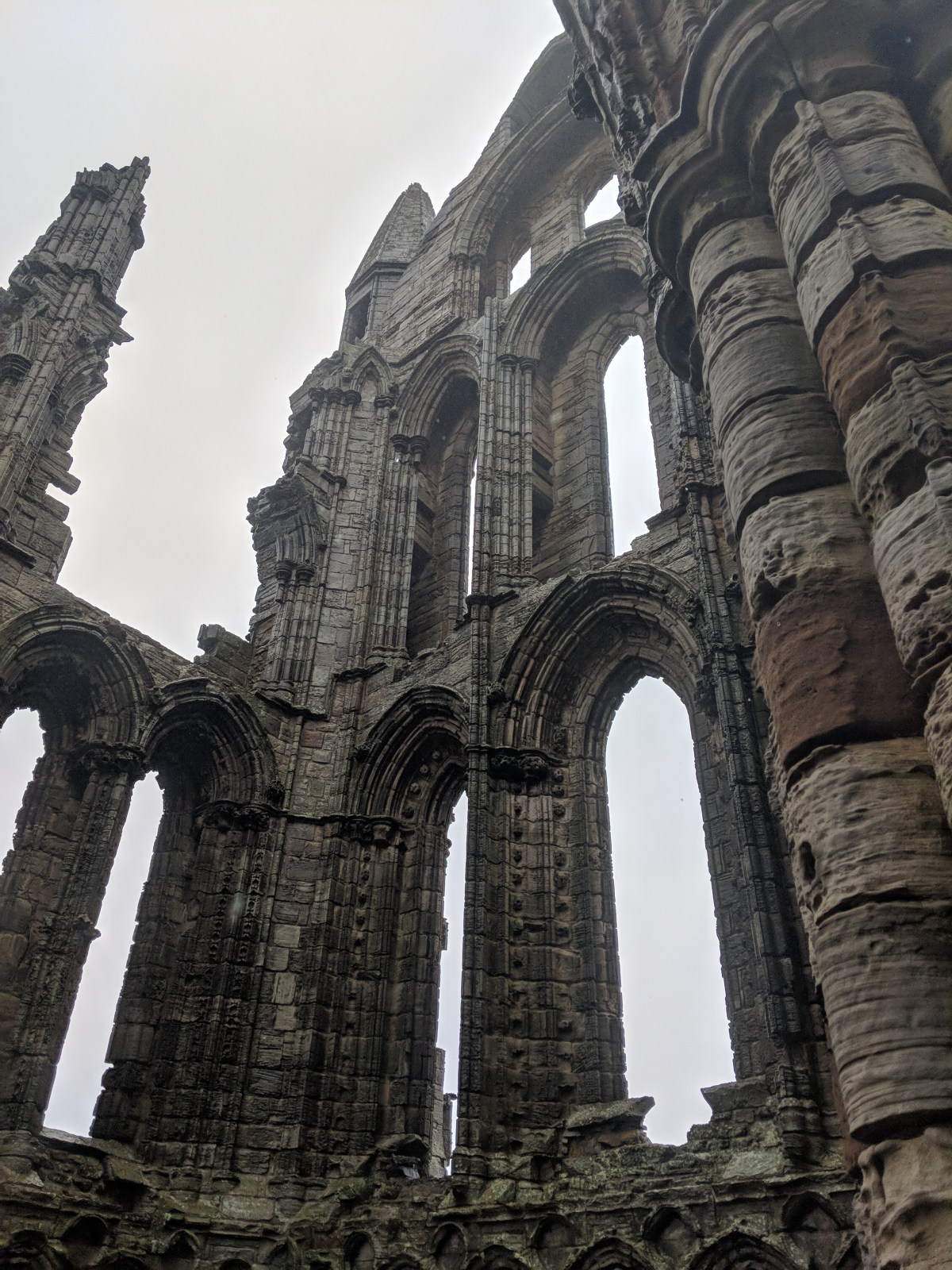
Poetic words from a mythical king, and yet, I can’t help but imagine something similar being uttered by the prophet Haggai as he called out to the people of Israel amid the rubble of King Solomon’s temple, encouraging them to rebuild the House of God.
“Take courage, all you people of the land, says the Lord. Work, for I am with you…according the promise that I made you when you came out of Egypt.” (Haggai 2:4-5)
We can actually date this particular prophetic statement with startling precision: according the to the information contained within the text, Haggai spoke these words on October 17th in the year 520 BCE, shortly after the return of the Judean exiles from Babylon. The original, grand temple of the Israelite monarchy had been destroyed by their conquerors over 60 years prior, and the primary focus of Haggai’s prophetic work was ensuring that the temple was rebuilt.
But this was easier said than done. Those who had returned from Babylon, most of whom had been born in exile, were attempting to rebuild their society in a devastated land with few resources, and the initial attempts at temple construction proved less than inspiring.
“Who is left among you that saw this house in its former glory?” Haggai asks, well aware that those who have lived long enough to remember the original temple are thus far underwhelmed by the progress on replacement. “Is it not in your sight as nothing?” he inquires, but the question is rhetorical. This new temple, built on a shoestring budget in the ruins of a fallen monarchy, pales in comparison to its predecessor.
Like Ulysses and his friends, the people of Judah have been “made weak by time and fate” and Haggai is aware that their nostalgia for the glory that once was threatens to undermine the necessity to do what can be done with the resources of the present moment.
And thus the prophet reminds them that even if the new temple is not yet as grand as the former, they must persist in their task anyway, because God remains with them. “My spirit abides among you. Do not fear. The latter splendor of this house will be greater than the former” (Haggai 2:5,9).
In other words: do what you can now, work with what you have now, and God will take the hollowed out crater of your disillusionment, the rubble of your broken dreams and will refashion them into something so glorious that you cannot yet imagine it. Do not forget this Divine Promise! For this is our God, the God of Abraham and Isaac and Jacob, the Living God—the one who knows us. The one who has preserved us. The one who calls us His children.
“That which we are, we are.”
Now, this tension between the lure of nostalgia and the urgency of the present is still with us in contemporary societies, in the Church, and perhaps for each of us in our private histories. There are days and seasons where it seems that everything good has been lost. Some will claim that the glory days are over, never to return. The wind has blown in from the north and the bleak midwinter beckons. The world looks like a threatening place.
And in these moments, we might be tempted, like the Judeans, to be paralyzed by longing, to be consumed by a remembrance of past greatness (or at least by our imagined version of that past) and thus find the present moment intolerable.
Now, when the pain of loss is especially great, whether personal or collective, this is an understandable impulse. Lament and longing have their place in the language of our hearts. But we cannot succumb to them forever. Because God is always calling us forward into an unfolding story—God’s unfolding story. God has never left our side, and never will. So remember the past, yes, celebrate its joys, learn from its trials, but live now. Work now. Minister now, in the bleak pre-winter chill, in the rubble, in your brokenness. Let that brokenness open up your heart to the world’s present needs and present possibilities.
“Though much is taken, much abides.”
And just as Haggai proclaimed the Lord’s promise that the Temple would be rebuilt with an even greater splendor than they had known before, so it is that what is yet to come for us, for the Church, and for all of God’s people, is greater than we can possibly envision.
What is yet to come is the resurrected life of which Jesus speaks in today’s Gospel: a new Jerusalem, a renewed creation, a radiant and unending Life that is so deep and true and free that even our greatest human conceptions of love and union are a mere glimpse, a prelude, to the Love awaits us when we fall to our knees before the throne of the Triune God.
This promise of new Life, unfolding and enduring, is the context of our missional life together. We are knit together by the Holy Spirit with all who have come before us, and all who will follow us, rebuilding the ruined temples of our age–perhaps with tearstained faces and cracking voices–but doing so in hope, in trust, and in joy. Striving, seeking, finding, and never yielding because God will never yield in His love for us.
He has proven that this is so through His Son, and we are here in this place and in this time and in this very moment to say YES; to say, Lord, we are ready; to say together that we are indeed “one equal temper of heroic hearts” and we will walk together, cherishing our past but moving forward into the future that God has prepared for us, toward the Holy Temple, toward the Holy Dwelling Place that can never be destroyed.
“Take courage, says the Lord; work; for I am with you, says the Lord of hosts.”
May we believe it to be true, and live accordingly.


 By Another Road