
I preached this sermon at St. Anne Episcopal Church, West Chester, OH on Christmas Eve, 2025.
Here’s the thing about the circumstances of that first Christmas: it was the best they could do.
We’ve heard the story so many times, and maybe we’ve imagined it as something quaint and simple, but it was not. Consider: there’s a young woman soon to give birth, and man who is not quite yet her husband, both suddenly compelled into a long, challenging journey to Bethlehem. It’s place that is not their home and where no familiar faces wait to welcome them.
And so they did the best they could do, these two, but by the time they got to their destination, there was no space left. And no time left, either. No choice for Mary and Joseph but to do their best—to make way for the baby now, to prepare the way of the Lord now, in this wilderness of happenstance, for he is coming, here, right now, this mysterious, urgent, holy child. He will not wait for the peaceful or convenient moment to appear; God rarely does.
No, the birth pangs of a new creation have come, as they so often do, in the midst of displacement and discomfort, and Jesus emerges, ready or not, into the messiness of life, just as it is.
As that old Anglican hymn tries to put it politely, with classic British understatement: lo, he comes.
Replace “lo” with whatever word slips out of your mouth when things go wrong, and you probably have a more accurate sense of the scene.
Lo, he comes, as all babies do, with tears and cries. Lo, he comes into a world not quite ready to greet him. Lo, he comes, from up beyond the drifting clouds and the blazing stars, to see how our tense and divided world might yet learn to love again.
No space? No time? So be it, for lo, he comes anyway—God emerging from outside of space, outside of time itself to make a home with us, just as we are.
And yet, we might think, surely, surely, despite all the challenges in their journey leading up to this, surely when this moment comes, Mary and Joseph will at least be able to welcome him properly. Surely this birth-of-God moment, despite our long and imperfect history, will itself be perfect.
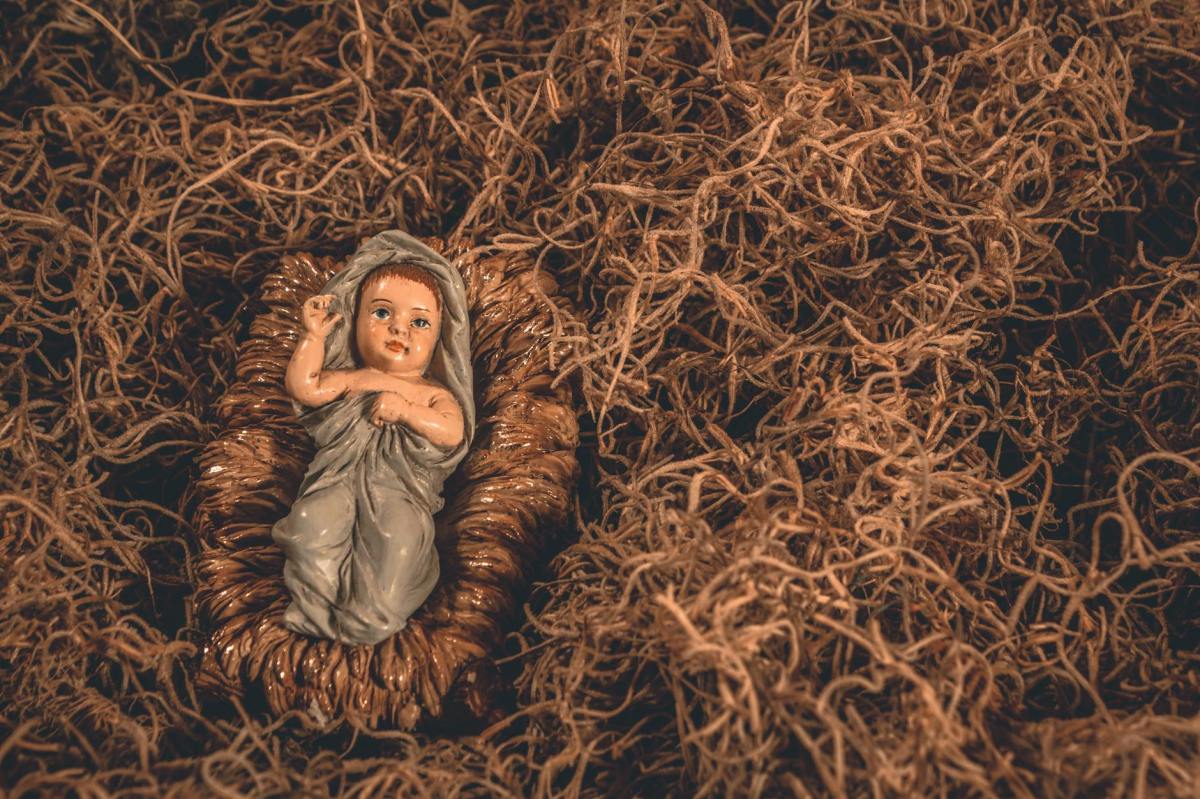
But, lo, there is just that one little problem: no space. No time. And no cradle, either. And so poor Mary and Joseph have to plop the precious little Creator of the universe into a manger, which is, let’s not sugar coat it, a feeding trough for livestock, and, we can imagine, not a very clean one.
Given the circumstances, it was the best they could do.
Blessedly for us, though, I think Mary and Joseph set a precedent for Christmases to come, because saying “just put the baby in the trough” is somehow representative of all those moments when our plans fall apart. Those moments when, due to circumstance or desperation, we have to make a hard pivot towards “good enough.”
Maybe I wanted to wrap all my presents perfectly, but end up stuffing them into gift bags sometime late on Christmas Eve. Or I planned the perfect dish, and it burned (and I definitely said some word other than “lo”), so my potluck contribution will just have to be some extra napkins and my winning personality.
Or, more significantly, perhaps I thought this would be the year that I finally mended a few fences, patched up a few broken relationships, helped to make a more just and compassionate society take shape, but it didn’t quite go that way. So I come and sing Silent Night one more time hoping it’ll stick this year, that such peace will exist someday for me, for my neighbor, for this world.
It’s the best I can do.
And the baby in the feeding trough gets it. He has understood from the very beginning.
If you take some time with the story of Jesus’ nativity, and if we can look past, for a moment, all of the beautiful art and poetry and pageantry that accompanies our observance of this night, you will find that it’s actually the story of a big old mess. I think that’s what helps it feel so true.
We have the manger, yes, and the rushed journey to Bethlehem, and there are also the shepherds—not considered respectable company in those days—and then there’s just the fact that there are all these people running around in the dark of night, shouting strange news at each other by starlight. Dirt and sweat and stumbling and confusion. There is absolutely nothing perfectly composed about this moment. Nothing clear or easy about the arrival of the answer to our deepest questions. Just a bunch of imperfect people doing the best they could do and finding themselves bathed in grace anyway.
Lo, he comes, just as we are.
And that is the most hopeful thing I can imagine. Because I don’t know about you, but I am more intimately acquainted with messiness than I am with perfection. I know quite well what it feels like to have no space, no time. I am less familiar with transcendent and abiding peacefulness.
I look around, most days, and that is what I see: people doing the best they can do. Trying to understand themselves, trying to endure. Trying to love their neighbors. Trying to provide for their families. Trying to know who God is. Trying to cultivate some small moments of joy and contentment and right relationship in cultural, economic, and political landscapes that are not always hospitable to those things.
I see people, against all odds, still looking up at the drifting clouds and blazing stars, seeking a reassurance that it will all be ok—that we might sing Silent Night this yearand actually feel it. That it is not all just a pipe dream, this Kingdom of heaven bending down to kiss us and dry our tears.
And so how wondrous and how wonderful that, on this night, God is precisely what he is: a baby born of displaced, stressed parents, resting in a resting in feeding trough, making his home amidst our foibles and fears and tremblings. How glorious that God looks at all of our various “best that they could dos” and says to all of them: Yes.
Yes, I am here for that. Yes, I am here to love you in the middle of that.
You may think that this is the God of perfectly wrapped gifts and finely seasoned dishes, but I am here to tell you this is also the God of unmade beds and messed up schedules and burnt tongues. You may fear that this is the God who demands fine garments and unstained reputations, but in truth this is the God of shepherds; of dark places; of those who sorrow and those who survive.
And this God has come to you this night. Yes, you—you who may be questioning yourself or questioning all of this or wondering how we can sing any song at all while the world is heaving with grief and this God is here to tell you: you have to sing and you have to pray and you have to just “put the baby in the trough,” because we have to start with the best we know how to do, and then we just keep going.
And that will somehow be enough.
So says the God who has been working, working, working since the world began to help us see that we are enough, that perfection was never his purpose for us, but connection. Connection with each other and connection with the infinite divine Love by which we were made. Connection with the beauty of the earth and the beauty hidden within our hearts, broken and burdened though they might be.
And though our long history with God has been full of ups and downs, of misunderstandings and missed opportunities, tonight God is trying something new.
Perhaps he realized, in the end, that this was the only way to truly connect with us: to be with us completely, to experience the same failures that we do, to gather them into himself and guide us toward another type of world, one where there is plenty of space and all the time in the world.
And if it all has to begin in a manger, so be it.
For lo, he comes anyway, ready to give his whole life to us.
Ready to risk everything to see us, at last, face to face.
When you think about it, I think it was, perhaps, the best that he could do.



 By Another Road