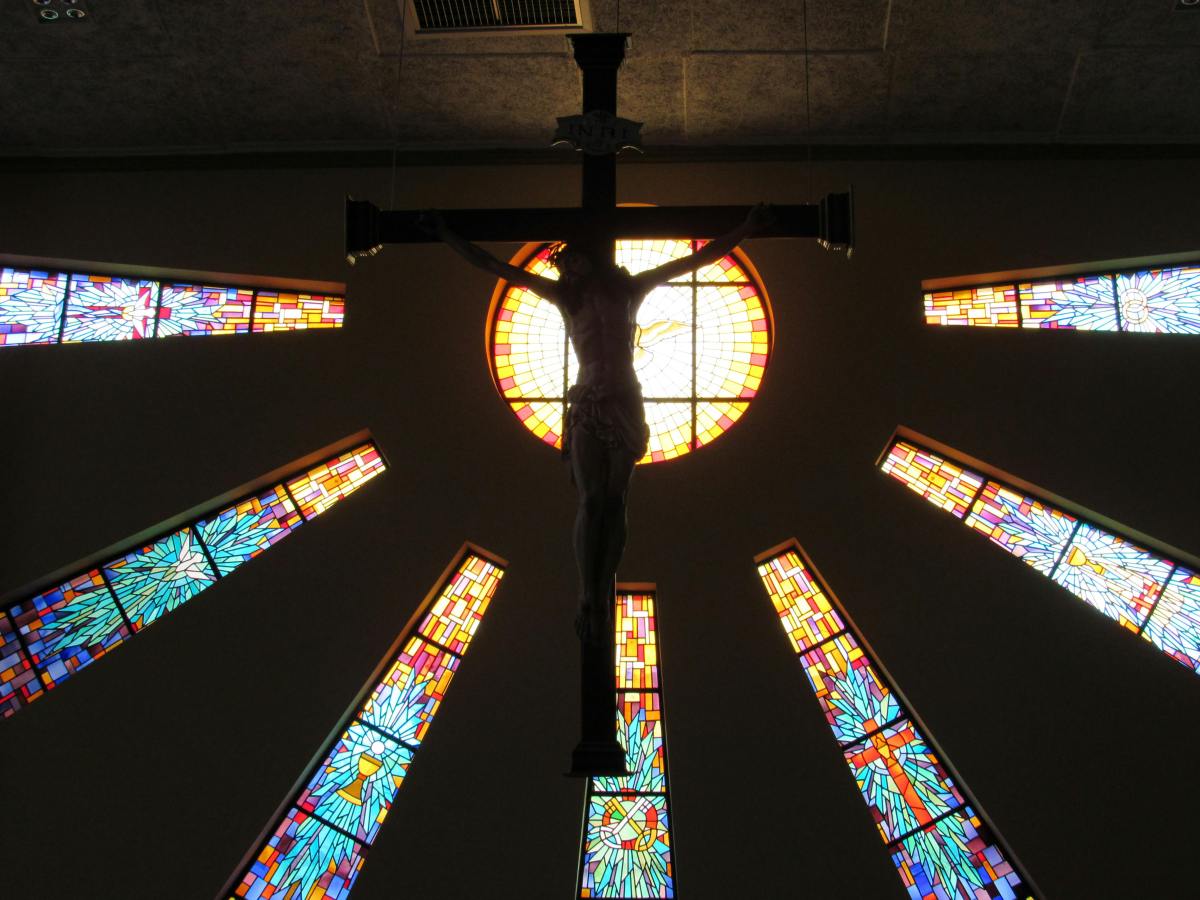

The Feast of All Hungers: An Ash Wednesday Sermon

Offered on Ash Wednesday, March 5, 2025, at St. Anne Episcopal Church, West Chester, OH.

Ash Wednesday has an unusual quality to it. It’s a bit hard to describe. It’s not exactly mournful like Good Friday, but it’s not joyful, either. It’s quiet and sharp and dim and bright all at once. But to me, more than anything else, Ash Wednesday is a hungry day. 

I remember back in seminary, when I studied and lived for a bit of time at a theological college in England next to a community of monks, they took their Lenten observances quite seriously. On the morning of Ash Wednesday I went into the dining hall and discovered that we were being given the sparest of meals to last us for most of the day. Talk about wailing and gnashing of teeth; I felt the fear of God deep in my stomach that day!

So yes, sometimes Ash Wednesday is literally a hungry day if you participate in the tradition of fasting, but that’s not all I mean. It’s about other types of hunger, too.

You know how we celebrate a Feast of All Angels in September and a feast of All Saints in November? 

I have come to the conclusion that Ash Wednesday is the feast of all hungers. It is the day when we acknowledge that, simply by virtue of being alive, we are hungry people—hungry for many things. There is a rumble in our stomachs and a yearning in our souls, and we are driven by the pursuit of them across the long, lean years of life. 

In Psalm 51, a version of which we will recite in a little while, the Psalmist declares, “I have been wicked from my birth, a sinner from my mother’s womb.” And while that sounds a little dire, we might relate to the Psalmist, who is frustrated by the many gnawing hungers, bodily and spiritual, that never seem to go away—the hungers that assert themselves afresh each day. The Psalmist senses, as we do, the desperate sense that enough is an elusive concept, and that we will be starving for something for all our days. Call it wickedness, call it sin, but whatever it is that plagues us, its origin is that we are so very hungry. 

And so Ash Wednesday is when we name, without too much fanfare, that this is where we begin in Lent. This is the human condition. That we come into the world this way: from our first gasp and cry outside of the womb, we are hungry for air and for food, and also for love, for protection, for shelter, for community.

And as we grow, these basic hungers endure; they are our companions for as long as we live, joined in time by other, subtler pangs—a hunger for purpose, for meaning, for wholeness, for righteousness, for beauty. And every once in a while, by some grace or tribulation, we tap into the deepest hunger of all—the hunger for the One we call God. 

Despite its reputation as a very pious sort of observance, I would argue that Ash Wednesday is actually a visceral feast day, not an ethereal, spiritual one. You feel Ash Wednesday in the gut, sort of like I did sitting at that monastic breakfast table. And, as odd as it might sound, that means it is an ideal time to come to church even if you don’t know what you believe about God, because no matter what we believe, what we all know is this: that we are hungry. That we are very hungry.

And we also know that we are tired—tired of seeing the world go hungry, whether for bread or justice or love or simple human kindness. We are tired, ourselves, of going to bed with an emptiness in our stomachs and in our souls. We long for that which satisfies, wherever or whatever (or Whoever) it is.

And today all of these hungers and longings collide, both the temporal and the transcendent. We stand at the raw edge of springtime, the earth hungry for sunlight and our mouths watering for a fulfillment we can’t quite name. A fulfillment that, our readings and our worship suggest, might be found in the places we don’t tend to look. 

And if Lent is the journey toward an answer to that fulfillment–an answer that will come, in time, with the scent of lilies and the song of resurrection–then today, Ash Wednesday, is simply when we dare to make the admission that yes, despite our desire to seem satiated and wise and successful and strong….we are really just hungry. So truly, honestly hungry that we are willing, even, to follow this Lenten road all the way to the Last Supper and the Passion and the Cross, because something that groans deep within us suggests that we will be fed, here, in a way that nothing and no one else can offer. 

In that spirit of hunger, then ,the mark that we are about to receive on our foreheads—the mark of dust and ashes—takes on a slightly different meaning. 

If you heard Jesus’ words about not being ostentatious in our piety and if you are wondering how that squares with wearing a cross on your forehead the rest of the day, I would simply offer this: the ashes on your brow are not a sign of membership in a club. They are not a status symbol. They are not proof of our collective and elevated holiness. Those are the self-important, self-deluding impulses Jesus advises against. 

Instead, consider this: that the mark that you are about to receive simply indicates: I am hungry. I am hungry for God. I am hungry for a glimpse of my truest, most beloved self. And like all who have come before me, like all the children of the dust that ever lived and died, I came into this world hungry, and I walk through my days hungry, and I admit it openly here and now on this feast of all hungers. Because I trust, somehow, that if I can name my hunger, then God will fill the depth of it with himself. 

And that on the other side of this hungry season, this hungry life, there will be something waiting for us. There will be an answer. There will be a feast. And there will be One who welcomes us, and who bids us rest, and who says, again, and at last, and always,

Blessed are you who are hungry, for you shall be satisfied. 

Coming Out: A Sermon on the Transfiguration

I preached this sermon on Sunday, March 2, 2025 at St. Anne Episcopal Church, West Chester, OH. The lectionary text cited is Luke 9:28-43, an account of Jesus’ transfiguration on the mountaintop.

I came out when I was eighteen. And although I came from a pretty open-minded family, it was still a struggle, as it often is for people. But there came a point about halfway through my first year of college when I was just weary of hiding—hiding from others, hiding from myself, hiding from that fundamental desire to be loved and to love someone back. I was willing to do anything, to give up anything, if it meant that I could stop being half-invisible. To live authentically and experience fullness of life. Or at least have the chance to try, and mess up, and keep trying like anybody else. 

And so, I came out. And it’s been mostly wonderful, and sometimes difficult, but it was never really optional, because it was simply the truth of me. Ultimately life requires us to acknowledge what is true, even if folks don’t get it or don’t want to get it. 

Because what is true is that most of us fundamentally want very similar things: to understand and to be understood; to be able to feel things; to experience life without fear or scarcity; to know and share love; and to leave behind something meaningful when we’re gone. These desires are pretty much universal, whether we are gay or straight; black or white; whether we are in Cincinnati or Kiev; whether we are rich or poor; or any of the other myriad ways people inhabit this world. 

It’s just that for some such people, because of their characteristics or their location or their status, they find themselves having to convince other, more powerful people they actually deserve those fundamental things, too. That they aren’t half-invisible. 

And while the powerful don’t usually like it very much, many such people, in their own ways, eventually have to muster the courage to come out—not specifically as I did, but to come out into the world in the fullness of their own humanity and say, this is who I am, and I dare to be seen. I dare to inhabit the dignity of myself. And I offer myself—all of myself—for I am no longer constrained by the fear of being misunderstood or maligned. Because I would rather perish in the light than wither in the shadows.

Every liberating impulse of the human heart, guided by the Spirit and made manifest in everything from the crossing of the Red Sea to the Stonewall riots to the sit-ins of the Civil Rights movement to the demands of peacemaking of our own time—all of it is a form of coming out. Coming out of Egypt, coming out of Jim Crow, coming out of the closet, coming out from behind the structures of prejudice and fear and choosing to see each other as we are, as the beautifully diverse children of God. 

Churches could learn a lot from all of this coming out, I think. Especially, God love us, those polite, well-meaning churches that have, for too long perhaps, been hiding our own light within our walls, wondering why the world is looking elsewhere. I wonder what such a church might learn from the people who’ve had to come out in their own lives. 

And I wonder, too, what we might learn from today’s Gospel account of the Transfiguration, when Jesus came out as…God. 

Make no mistake, that’s what this story is: a coming out story. Not as any of the categories of identity we usually associate with that term, but a coming out nonetheless. A bold revelation of selfhood to a world not quite ready for it.

On this particular mountaintop, just before his journey to Jerusalem and the suffering that awaits him there, Jesus decides he is tired of being half-invisible, too. He is, perhaps, weary of hiding the truth of himself: that he is the Son of God; the indwelling of the divine light; the Creator aching with love for creation—and he cannot hide it anymore. And for this moment, at least, in the company of his most trusted friends, before he surrenders himself to the culmination of his difficult work, he decides to come out. 

And so he does. And so we behold him.

This is Jesus, in blazing brilliance, in that white light which is formed by every color of the rainbow. This is Jesus, at last inhabiting the dignity of himself. This is Jesus, God, who also fundamentally wants the same things: to understand and be understood by us, to know and share love with us, and to leave us something meaningful of himself when he’s gone. This is Jesus, willing to pay the price for being himself, willing even to be rejected, because he knows that the truth is not optional, because the truth of him is love in its many forms, and it always has been and it always will be. 

This is Jesus, the God who has always called his children to come out from whatever harmed them or held them back from fullness of life, now doing it himself. 

The point of this, my friends, is that if Jesus can come out as God in a world that did not welcome him….and if our vulnerable siblings can come out as human beings seeking dignity  in a world that does not welcome them…then perhaps we as the church should realize that our own future also depends on our willingness to come out of the shadows and into the light. To come out and say, we are Christians, and this is what we stand for. And that we will no longer let others hijack the narrative of our faith or the nature of the Gospel for craven, fear-based, or politically expedient ends. 

We who seek to do good and proclaim love as the Way, perhaps we need to come out and say that we do so not simply because we are well-educated or well-mannered people, but because we are passionate followers of Jesus, and that is what followers of Jesus actually do: they love without exclusion, they surrender their lives to compassion, and they are not cowed by the forces of evil and mistruth. 

Perhaps we who often find it easier to practice a private, respectable faith need to align ourselves more closely with those of our neighbors whose very humanity is a matter of public debate. Our neighbors of other ethnicities and creeds and identities whose very decision to step outside the house and exist each day is an act of courage. Perhaps by seeking them out and knowing them better, we could find some of the courage we need ourselves as Christians. The courage to name Jesus as Lord. The courage to reject, in the name of Jesus, those forces which diminish or demonize any category of people. The courage to not be half-invisible ourselves any longer. To wear God’s heart on our sleeve. 

Because we are living in a time that demands an accounting of our values, of our commitments to one another, and of the depth of our souls. We are not the first to live in such a time, nor will we be the last.

And for those of us who have already had to come out and be ourselves in one way or another…well, some of us are rather accustomed to this sense of high stakes in the basic activities of living. We’ve got some tips to share. There is much that we can learn from one another to navigate the road head. To encourage each other. To stand with each other.

I hope and pray we will continue to do that work here. Whether through the building up of people participating in outreach services, or in the expansion of our advocacy and justice ministries, or in deepening our study of Scripture or in the practice of prayer and contemplation, I hope our parish will find and reveal the fullness of itself in this time. I hope that, right here in West Chester, we will help guide the broader church out into the possibilities of the present moment, despite the perils of stepping into the light. We have too much good news to share here to let it hide behind the doors or wither in the shadows.

If that sounds a little daunting, I get it. But as God likes to say, don’t be afraid. Pretty much anyone who’s had to risk simply being themselves in one way or another can tell you: it’s mostly wonderful. Sometimes difficult, yes: even Jesus, after the transfiguration, still had to keep on casting out demons and dealing with people who couldn’t or didn’t want to understand him.

But mostly, the peace of being wholly oneself with other people, without fear, is a wondrous gift. A gift from God. It is the thing that has saved some of us. Maybe it will help save all of us, together.

All we have to do, beloved church, is hold fast to the love that is the truth of us.

And then…come out.

Greeting Cards: A Sermon

I preached this sermon on Sunday, February 23, 2025 at St. Anne Episcopal Church, West Chester, OH. The lectionary text cited is Genesis 45:3-11, 15 and Luke 6:27-38.

I was heartened during last week’s sermon when our preacher, Baker, confessed that he, too, has a penchant for accumulating books. It helped me feel a little bit better about my own endless accumulation! Though I like to say that am a collector of books, because that sounds so much more elegant than “hoarder of books” or “person who is constructing the leaning Tower of Pisa with books.” No, no, I’m a collector. So it’s fine.

Well, with that in mind, I’ll tell you there is something else I am a collector of—and I have stacks of them, too, squirreled away here and there—and that is old greeting cards. I have a tough time letting go of the cards that I’ve received. Whether it’s those I’ve been given as a priest, or for birthdays, or even the occasional thank you note…every so often I’ll open a drawer or a folder and there they’ll be, little bundles of time and relationship and memory. 

And just when I think, oh, I probably don’t need to hold onto these anymore, I’ll open one up and suddenly I am reading about how proud my dad was at my high school graduation, or some half-forgotten in-joke from a long lost college friend, or a Christmas greeting from a beloved parishioner who has since died. And I just slide them all back into the drawer. Really, I suppose I am a collector of heartfelt sentiments, but I am not ashamed of that. 

Because we need reminders sometimes, don’t we, of all the things that we have been to other people, and of all that they have been to us. And really, when you think about it, those greeting cards and other such notes are one of the few tangible signs we ever receive that this is indeed the case. They are evidence that we’re not, in fact, just isolated figures navigating the surface of the earth, but that we are of something, that our hearts and our bodies have been tethered to something, to someone. And in a lonely age, any such reminder is a precious, even sacred thing. 

Think about it: when we die, if a stranger were to go through our house and clear out most of our belongings—the clothes and the pots & pans and yes, even the books—it is only a few items, maybe just the greeting cards and the letters and the photos—that would actually tell the story of the love that has shaped our lives. Sobering thought, maybe, but clarifying, too, about what actually matters in this life. What is worth holding onto and what is worth saying to one another in the bit of time we are given.

And for me, few scenes in Scripture capture the preciousness and power of what is said to one another more so than this morning’s Old Testament reading. To set the scene, we are with a handful of isolated figures navigating the face of the earth—the elder brothers of Joseph, who have come to Egypt in the midst of a famine searching for food. Instead, they end up finding Joseph himself, whom they secretly sold into slavery many years before. Joseph is now a powerful figure in Pharaoh’s household, and at first the brothers don’t recognize him. 

But as we hear today, Joseph reveals his identity to them and, instead of exacting righteous revenge or punishment, he does something quite astounding. He pours out words of love. He forgives them and welcomes them and weeps upon them, and what he says is tender and generous and full of unexpected grace.

I’ll admit, sentimental as I am, Joseph’s decision here can still sound a bit unrealistic, the stuff of greeting card verses rather than real life. And that’s fair enough. Accountability for harm done is a real and important facet of healthy relationships, and there are plenty of examples of it in Scripture, too.

But what we might want to take away from this story is not simply that Joseph was a very nice person who did a very nice thing by letting his brothers off the hook, but that this narrative represents something deeper and more profound for the people who wrote it down. It captures something of Israel’s own fundamental, fragile hopes. 

They, too, often felt like people isolated on the face of the earth, and like those elder brothers consumed by hunger and regret, Israel prayed that they might one day hear God again saying to them: “come down to me, do not delay…you shall settle in the land…and you shall be near me, you and your children and your children’s children.”

And so what Joseph offers his brothers is what Israel itself longed to receive, and maybe what we all long to receive at our core—a word, an assurance, direct from God’s own heart, that says, “you are not an isolated figure, because you are mine, and I am yours and I, the one who Created you, weep for the love of you. And so no matter what has happened before, no matter what is broken, I your God will make it all fit together somehow. No matter how you have failed, no matter how far you’ve wandered, we are not lost to one another.”

This is not just sentimentality, but the reality of grace. And I think we wait our whole lives hoping to hear some version of it. It is why Jesus came as God Incarnate, to deliver the same message in person through his life, death, and resurrection. 

But there’s a twist with Jesus, of course (there always is)—because he invites us not just to receive the word of grace, but to live it. Jesus asks us to become the very word we long for. 

And that’s important to keep in mind when we hear Jesus’ seemingly impossible instruction on forgiveness and loving our enemies. Just as we might be incredulous at Joseph, so we might find ourselves skeptical of this teaching. Doesn’t Christ, of all people, know that the world is not so simple? How can we turn the other cheek and resist judgment, when there is so much hate and harm?

And Jesus looks at us and says, because that is what God does. And I, your Lord, have come for one thing: to invite you to participate in the life of God. 

And in that Life, God weeps for the love of you. God forgives you. God turns the other cheek to you. God refuses to give up on relationship with you, with anyone. And so if you would dare surrender to the fullness of the life of God…then so it will be for you. For all of us. For at last, in Christ, we will see as God sees and we will love as God loves.

You might even say we will become the people that our stacks of greeting cards say we are–that all of those thank you notes and letters of apology and kind greetings are what will endure of us, once everything else is stripped away.

To become the words we long to hear: this is, at its heart, what discipleship is. Like Joseph and Jesus before us, this is our participation in the life of God. It is God’s sentimental, foolish, stubborn, unabashed, greeting-card-worthy love, now pouring out of us. We who are so used to being strategic in our affections, careful in our compassion….Jesus says, no, the Christian life is something else. It is becoming an unashamed collector of heartfelt sentiments. It is stumbling over teetering stacks of forgiveness. It is letting grace accumulate in your desk drawers. It is to die with nothing but little bundles of faithfulness left behind as our legacy. It is the opposite of the way the world works, and that is the entire point.

So with this in mind, I have a proposal for you. It’s rather simple, maybe even silly, but so be it. This week, I propose that you go out and buy a greeting card and send it to someone. Maybe someone in this community you want to acknowledge. Maybe a friend or a family member whom you haven’t talked to in a while. Maybe even to someone you need to forgive,

Whoever it is, send them a card with a little note, saying whatever it is that you need to say. I wonder what would happen if you did. 

It might be that years from now, when most of our other things have fallen apart or been given away, that this part of you will endure. It might be that your notes will still be tucked away somewhere, precious and sacred, a reminder that you were tethered to something, to someone for this brief moment while we navigated the face of the earth together. And that somehow, even with all that is broken all around us, we still fit together, and wept upon each other for love, and at last became the words we longed to hear.

Because God knows: that’s the one thing worth holding onto.

Jackrabbit: A Sermon

I preached this sermon on Sunday, February 9, 2025 at St. Anne Episcopal Church, West Chester, OH. The lectionary texts cited are Isaiah 6:1-13 and Luke 5:1-11.

Fun fact about me: at least three or four times, I’ve traveled the remnants of Route 66, that famous old highway which once stretched from Chicago to Los Angeles. A lot of the roadside attractions and cafes and motels from its heyday in the 40s and 50s have been lost to time, but even now it’s a beautiful and worthwhile trip, a sort of pilgrimage road across America, where odd wonders abound.

For example, as you drive across northeastern Arizona, just a bit south of Navajoland, you might notice these signs along the desert highway. They’re ambiguous, just old wooden billboards painted bright yellow, no words, just the silhouette of a big black rabbit and a number of miles counting down. 

150 miles, one sign says…and then 100….and 50….and 10…and as you drive across the empty landscape with not much else to look at, you find yourself overly invested in these mysterious signs, wondering, what exactly are we counting down to? What is that big rabbit all about? What or who is waiting out there across the desert, across the hours and the miles and long, winding road?

So you can imagine that, by the time you get to the end of the countdown, you have to pull off the highway to see whatever this thing is that has been tantalizing, taunting, beckoning you. And as you arrive at the exit, there’s one last sign, bigger than all the rest, still bright yellow like the noonday sun with that big black rabbit and big red letters that spell out, at last, three words: HERE. IT. IS.

That’s all the sign says. Here it is.

And you better believe, like countless travelers before us, we turned off the highway to see what IT is. Nothing would have stopped me. 

And do you know what’s there, shimmering in the desert sun, under the gaze of the big black rabbit?

A gift shop. 

Yes, it’s just a gift shop. Mildly disappointing, perhaps. It’s the Jackrabbit Trading Post and it’s been there since 1949 offering t-shirts and cold drinks and restrooms for all those wide-eyed pilgrims.

But if that sounds underwhelming, fear not. Because there’s also a big statue of a jackrabbit in the parking lot, with a saddle attached to it, that you can mount for a completely absurd photo of yourself. And did I get up on that jackrabbit every single time I’ve stopped there, including when I was 35 years old? You bet your life I did!

Because, well, why not? Maybe the sign is right after all. Here it is, five miles outside of Joseph City, Arizona…as good a place as any to find whatever it is we’ve been looking for in this life. 

As the years go by, I’ve found a sort of contemplative wisdom in that phrase, here it is. Especially when things don’t go quite the way I thought they would.

Bad diagnosis? Bad breakup? Tough election outcome? Before I can act purposefully, I have to start by saying, well, here it is. And, since it has always been true before, I also have to trust that God is not done with me just yet. In the meantime, the best I can do is to just get up on the jackrabbit so to speak, and accept the invitation of the present moment. 

Because here it is, this moment we’ve been given. And there’s still abundant life to be found here. Besides, what I notice so often in Scripture is that that the mildly disappointing and the foolish and the transcendent often converge in surprising ways.

As it happens, we have two such stories in our readings this morning—two call stories where somebody gets less than what they bargained for. Here’s what I mean.

First there’s Isaiah. Forget the billboards, he’s just had a vision of the throne of God, a glimpse of the heavenly court singing the same song we do during the Eucharist, Holy, Holy, Holy Lord. And he’s been touched by the burning coal of truth and he feels ready. HERE I AM he cries out. HERE IT IS! Here is my time to shine, my opportunity to tell the world exactly how powerful God is!

But God says, no. That’s not quite how this works. In fact, the people will not hear you. They will not understand. No, as they tend to do, the people will look for other, smaller, more alluring salvations, the ones promised by the forces of this world with better marketing. No, God says, you, my prophet, you will be left alone in the dry desert, sitting up there on your jackrabbit, the cars whizzing past you. But even though you won’t understand it, I am asking you to get up on there anyway. Here it is.

And then there’s Simon Peter, who sees Jesus perform the miraculous sign of abundant fish at Lake Gennesaret. Peter, like Isaiah, is both impressed and overwhelmed by this show of power, and he tells Jesus, “go away from me Lord, for I am a sinful man,” but we can also imagine he’s pretty excited to be in proximity to the One who can do such things. He may feel unworthy, but he wants to be among the inner circle of such a Lord. 

But as we will come to see, Jesus does not end up saving the world through abundant displays of power. The fish thing is a bit of a head fake. Not because God can’t do impressive things, but because Jesus chooses not to, and it’s in the self-limiting, foolish weakness of God that true salvation becomes possible for us all. A Messiah who rides on the back of a donkey, which is not a jackrabbit, but pretty close.

And those, like Peter, who have been counting down the miles til their glimpse of the Messiah, are destined to be mildly disappointed, at least for a little while. But here it is.

God says to all of us still clamoring for an impressive sort of divinity who is nothing more than the satisfaction of our desires—God says, no. That’s not quite how this works. 

I am the God of forgotten things…of forgotten trading posts and forgotten people on the side of the road. I am not in the halls of power and privilege and plenty. I am waiting for you out on the wilderness road, waiting to share a drink and a meal with you, out under the ramshackle sign that says, HERE IT IS. Here is what salvation is, at the intersection of the sublime and the absurd. Waiting for those brave, holy fools who understand that sometimes in this life, you just have to get up on the jackrabbit and go with it. 

And really, we do.

In such a time as we are living through now, friends—a time of political crisis and climate crisis and cultural crisis, when Neo-Nazis are trying to set up their own signs above our highways and when it can feel like we are many miles from home—in such a time as this, we run a great risk as disciples of Jesus.

We run the risk of being so burdened by fear that we lose our ability to respond to the present moment with what it requires: defiant, purposeful joy. We run the risk of letting despair make us small and hard and cynical and incurious, terrified of the future and longing for the past, unable to get on with the somewhat absurd work of hope and love here, now, where it is needed. We cannot let that happen. We will not let that happen here.

At the risk of exhausting the metaphor, we need to get up on the jackrabbit—to clamber up onto the unapologetic foolishness of our proclamation, which is that Christ’s mercy and peace and kindness are more substantive than the evil we see. And even if it’s not as impressive or mighty as some of the other narratives out there, we have to go with it. Because that proclamation is the only thing that will save us.

And as for the ones who try to put up the billboards of hate and fear and petty grievance to lure people in—to them we point to our own unambiguous signs—to the Cross of Christ crucified for love’s sake and to the Risen Christ who defeated hatred for love’s sake, and we say, HERE IT IS. Here is the truth about about this world: foolish and transcendent and sometimes mildly disappointing, yes, but also lovely and good and worth not giving up on. Worth following. Worth looking a bit foolish for.

So, like those who have been called before us, here we are, too, Lord. Here we are, only beginning to understand what You are all about. Here we are, praying and serving and speaking truth and caring for our weary neighbors. Here we are, counting down the miles, trusting your promise, the one that waits for us at the end of the many lonely roads we have traveled.

Here we are, ready to just go with it, ready to speak your name and get up on that jackrabbit and tell the world, tell anyone who will listen—

Here it is. You who have been longing for whatever is on the other side of fear and disappointment. 

Here it is. 

The Other Part: A Sermon

I preached this sermon on Sunday, January 26, 2025 at St. Anne Episcopal Church, West Chester, OH. The lectionary text cited is Luke 4:14-21, Jesus’ teaching in the synagogue at Nazareth.

It was the 5th grade, and I was about 10 years old, and I was enraged. When I tell you the reason, it will sound so trivial, but the stakes of things can feel big when you’re young. 

Here’s the situation: I was in an after-school drama program where we picked a scene from any play to perform for parents and friends. I was really into theater as a kid, and so I took this very seriously. At 10, I was obsessed with Greek mythology (and yes, I know how nerdy that makes me sound, but so it was). And so I’d picked a scene from the ancient Greek tragedy Prometheus Bound for my partner and I, mainly because I wanted to play the role of the Greek god Hermes. It was my 10-year old dream in life to play the part of the Greek god Hermes. Did I mention I was not a particularly popular kid? 

No matter. I’d picked out the scene and it was so good—Hermes, the messenger of the gods, comes to visit the mortal Prometheus, who is punished for stealing sacred fire from Mt. Olympus and giving it to humanity for those mundane things like staying warm and cooking food. And as Hermes, I would get to show up and make a solemn speech about all the ways Prometheus had violated the sacred order of the universe. It was going to be my shining moment as a Greek god!

And then, a nightmare situation: the teacher watched us rehearse and decided that, in fact, I should play Prometheus and the other kid would get to be Hermes. My dreams were dashed. He got to wear the cape and the fancy helmet and I had to be some sad, angry man tied to a chair, ranting and raving about justice. The indignity!

I won’t bore you with all the details, but the short version is that I did indeed end up playing Prometheus in that little scene, and among all the parts I ever played, I think it was the one that stuck with me most. Because what I couldn’t see at the time-what that wise teacher recognized-was that there was something deep within my own heart that needed to be set free by playing the other part. I am grateful, now, that that teacher dared challenge the part in which I had cast myself. 

I wonder, though, friends—I wonder how often we are willing to let ourselves be challenged in the parts we have cast ourselves. I wonder what we do when the truth comes knocking insistently, telling us that we were meant for something more, something different than that to which we have become accustomed? Do we admit willingly, yes, oh, yes, of course, you’re right, my whole life has been built upon a pile of half-understood desires and misinterpreted signs. Or do we, perhaps, become a little bit enraged that someone dares challenge our carefully constructed sense of ourselves? 

Jesus learned something about this in Nazareth after his teaching in the synagogue. Lamentably, our lectionary skips over a big part of this story. Because after saying “this scripture has been fulfilled in your hearing” Jesus tells his hometown crowd, in so many words, that their understanding of themselves as the only victims, as the only ones who will receive God’s mercy, is completely misguided—because God’s scope of concern includes not just the poor, the captives, and the oppressed on their side of the cultural and political divide, but also the ones they fear and resent. 

Well, after hearing that, they don’t want to just tie him to a rock, they try to throw him off the top of a cliff. Tough crowd. 

But we can’t be too hard on the crowd in Nazareth. Because every single one of us, in one way or another, would benefit from some reflection on the scope of God’s mercy, and how it includes those vastly different from us—and how Jesus’ message requires us to play a part in this world perhaps different from the one we would prefer.

A lot of ink has been spilled this week about the part that the church ought to play in political discourse in our country. The sermon offered by Episcopal Bishop Mariann Edgar Budde this past Tuesday has generated, shall we say, keen interest among those both in support of what was preached and those outraged by it. 

And it’s true, the mercy of God is outrageous. But what I found interesting in the debate is that there wasn’t much critique of the sermon’s content—which was, after all, taken directly from that useful preaching resource called the Bible. No, the complaint is mostly that it was an inappropriate time or place to say what was said. That it’s not the church’s role to speak into our civic life. That a direct plea for mercy towards the vulnerable, and especially towards those perceived by some as enemies, was a disturbance to the civility of the occasion. And yes, I suppose it was a disturbance of sorts. 

But I hate to have to remind us all, 2000 years on from the death and resurrection of Jesus, but placid civility in support of the current social order is not the primary goal of coming into a church, as much as we have become accustomed to the church taking on that role. 

Really, this whole uproar has helped me realize that the real problem is that too many folks think the church is just there as a sort of spiritual backdrop to their own headlining role in the world. That it’s just The Universe, starring Me and My Opinions. But then there’s that pesky gospel of Jesus Christ, always getting in the way of my good time. 

No matter our outside affiliations, we would all do well to remember the part we are called to play when we step through these doors and into the liturgy–into an encounter with the sacramental and Scriptural presence of the Living God.

We would do well to remember that none of us is the main character in this play, that this is an ensemble piece, and that, whether we are a president or a pauper or Prometheus himself, we dare to come here to consider a power greater than any one of us and to which all of us will be held accountable in the end: the power of love, and truth, and justice, and yes, unfailing mercy, which Scripture teaches is the yardstick by which our lives will be measured.

And so today, as we consider with some urgency the role we and our church are to play in the present moment—on this day I would ask us to consider: do we understand what we are supposed to be about in this place? Do we understand that Jesus doesn’t just draw us here, week after week, to give us a snack and a pat on the head? Do we hear Jesus’ call upon our lives–his disturbing, surprising, humbling, but ultimately transformative invitation–to be like him, to take on his part in the world, to live as he actually lived, to die and rise again with him—liberating the oppressed, healing the sick, bearing good news to the poor, repairing the breach, trusting that love is more powerful than death and more important than mere civility? 

Because the curtain is up now, friends, and the world is waiting for us to act, and the old bit parts we’ve been playing at aren’t going to cut it anymore. If you want untroubled civility….and an unexamined conscience…and an easy peace with the world as it is…then I’d say be careful coming into an Episcopal Church, because you might get more than you bargained for. You might get the whole story about how God loves you and how God loves everything and how God expects us to love each other unconditionally. We’re a whole lot of fun, I promise, but when it comes to speaking truth and living in love, we’re not playing around. Kind of like Jesus.

And it can feel scary sometimes to take on that part, I know. When I am tired and fearful, sometimes, I still say, gosh, God, couldn’t I just go back and play the part of Hermes—couldn’t I just stay aloof, untouched by sorrow, detached from the risks and the mess that love requires? And God sees me, and loves me, and says…no. 

So be it. 

St. Anne, we were meant for a life big enough, bright enough, brave enough to make those old gods on Mt. Olympus shudder. We were meant for the life of Jesus: uncivil and gentle and beautiful and true. And that life is now ours to live out, ours to share, ours to bring to bear upon the public square and in the deepest chambers of our hearts. It is the life we were created for.

It is the role, however surprising, that we and the whole church were born to play. 

The Fire That Never Came: A Sermon

I preached this sermon on Sunday, January 12, 2025, the Feast of the Baptism of Our Lord, at St. Anne Episcopal Church, West Chester, OH. The lectionary text cited is Luke 3:15-17, 21-22.

I’ve shared with you in the past how, when you live in California, you become acquainted with the risk of wildfire. You make an uneasy peace with it. Much of the year it’s in the back of your mind and then, when the risk level is high, you look nervously towards the hills, wondering if and when something might spark. 

But because you never really know, most days you go about your business and go to work and do the dishes and pay the bills, carving out a sense of normalcy and telling yourself that, if it does happen, if the fire does come, somehow you will manage. Or maybe, in your less noble moments, you just figure it will happen to somebody else.

But the fires do come, in their own cruel time and manner, and it is hard to be prepared when they do. As we’ve seen this week in Los Angeles—as some of you know intimately well through the impact on friends and family members—the fires come without much warning, and they blaze and they creep up upon the homes and lives of people without much regard for their wealth or background or virtues or vulnerabilities. 

They come, these fires, and they do what fires do—they consume. We know already this week of Episcopal churches and whole communities consumed by this most recent set of wildfires. We also know that we are living in a time when human-impacted climate conditions will only continue to increase the likelihood and intensity of such events. The unquenchable fires have come. 

And maybe it’s just me, maybe when you grow up with this threat of flame and smoke, it has a formative effect..but I have to say that, as evocative as it is, I find little that’s romantic or alluring about most of the fire imagery in Scripture. I’m circumspect about declarations, like the one that John the Baptist makes in this morning’s text, about how God will come and burn and consume things for some divine purpose. There is nothing pretty or transcendent about that. Not when you have seen or known what fire can actually do, what it can take.

And yet that imagery is there for us to contend with. John, admonishing the crowds before Jesus’ appearance, warns of a Messiah who will come bearing unquenchable fire to burn up all that is wicked and unworthy. And I get it, he is angered by injustice and wants the people to look a bit nervously toward the hillsides, wondering when their reckoning will come. As prophets often do, he wants them to experience an uneasy peace with the world as they know it. He assumes that God will save the world through a display of vengeance and power, in billows of smoke and flame. 

He is not alone in that, even today. I found a number of news articles this week in which people described the Los Angeles wildfires as “biblical” and “apocalyptic” and as being like a scene from “the battle of Armageddon.” Still, still, even if we don’t want to, we imagine and speak of God working through destructive forces, raining down judgment upon us like ashes, threatening at any moment to take away all that we know, or, in our less noble moments, to come and take from somebody else. 

I wish we could loosen our grip on that fiery imagery somehow. Because I will tell you that so much of why I am Christian, why I was able to give my life over to the way of Jesus, is because of what actually happens in today’s Gospel after John’s dire predictions. 

And it is this: that Jesus, the Son of God, appears in Galilee, the Incarnate Deity appears at last, coming over the hills…but the fire never comes. Not in the way that anyone expected anyway (and Pentecost is a story for another day). 

No, on this day Jesus appears and it is not as a vengeful blaze cresting the ridge, but as a man ready to get down into the water like everyone else. A man ready to come alongside all of us in the uneasy peace we have negotiated with this life. A man who wants us hope for something more than mere escape and to believe in something more than just survival.

And truly, thank God for that. Because I will tell you, my friends, I am tired of fires, and of people who blithely traffic in the language of fire when talking about God and our common life. I am sick of “burn it down” and “let it burn” and of fire & brimstone theologies that devour human dignity in the name of purgation. I am sick of destruction—of bodies and landscapes and souls—and how they are cast as part of God’s saving mission. 

I don’t want to settle for an uneasy peace anymore. I want the peace that the world cannot give, the peace born of water and Spirit. And today we see where it comes from—from the God who stands in solidarity with us in the River Jordan, whose only fire is the one burning in his heart with love. 

Because John, for all his Spirit-inspired wisdom, got this part wrong, and it’s important that we don’t just read past his mistake. There’s a reason, in other versions of the story, that he is actually somewhat dismayed Jesus wants to be baptized with water. There is a reason, later from prison, John asks, are you the one we have been waiting for

Because John himself is also discovering, as we must, that the true Messiah, the Christ, is not an inferno coming to gobble up everything we’ve tried to build; God is the one strengthening us and helping us to carry those buckets of water– all that blessed baptismal water–to put out all the fires we ourselves have started on this earth. 

And yes, God will help us separate the wheat from the chaff within ourselves and in our world, but God will do so not through devastation but by the devastating power of his mercy and kindness.

And the thing is, we already know this. We already know, if we stop to reflect on it, where and how God shows up in the world. We know that God is not the one burning the hillsides of Los Angeles or blessing the gunfire in war zones. We know that God is instead with the firefighters and the first responders and the widows and the orphans and the volunteers and the communities of people who are sheltering each other and guiding each other into safety. 

We know that Christ asks us to do the same for each other no matter what landscape we live in or what disasters befall us. We know this, because it is what Jesus demonstrated and proved the value of in his life, death, and resurrection. And we can’t let anyone distort this truth.

No matter what we must navigate in our time and in times to come, no matter how many times the fire looms at the edge of the horizon, we are still, and will always be, the people who proclaim the good news of the one fire that never came—that so-called fiery, angry God who instead appeared in the water, like a falling dove, like a gentle Word, stooping down from the misty heavens to scoop up our fears in his hands and bless them and say,

Peace. I am here. You don’t have to be afraid anymore, you who have been uneasy for so long. Step down into the water with me, where the flames cannot reach.

Drench yourself in love, and let us begin again. 

By Another Road: A Sermon

I preached this sermon on Sunday, January 5 at St. Anne Episcopal Church, West Chester, OH. The lectionary text cited is Matthew 2:1-12, the journey of the Magi to see the baby Jesus.

Some of you know that I post the text of my sermons each week on a little blog site I created several years ago. I’ve always loved writing, and it started out as a helpful way for me to share some of my early sermons and reflections with a few family members and friends. It has transitioned into, I hope, a convenient way for anyone to go back, if they want to, to see what exactly I was attempting to say on any given Sunday—whether because you found it interesting, or perhaps because it made no sense at all. I make no promises! 

It is the humbling labor of a preacher each week to launch out our words as an offering to the community we serve and out into the universe as an offering to God. We hope, at best, to leave behind a small impression—which can feel like trying to skip a stone on the surface of the sea.

But I digress. The blog where I post my sermons and skip my stones is titled By Another Road, and folks have asked me on occasion why it’s called that. Well, in this morning’s Gospel reading, you have your answer. I took it from Matthew’s account of the Magi (or Wise Men) who, after visiting the baby Jesus and having been warned of King Herod’s nefarious intentions, decide to travel home “by another road.” 

On its face, this little phrase is just part of the plot—the Magi literally have to go home a different way in order to avoid an awkward or dangerous conversation with Herod. They’ve accomplished what they came to do, paying homage to this newborn king, and now they slip down a back road to their own homelands.  

But for me, at least, this phrase, by another road, always meant something more. Maybe it’s because, for various reasons, I have known what it feels like to be “other” myself. When a person feels different somehow from those around them, you come to know what it means and what it costs to walk a road through life that some people cannot—or choose not—to understand.

This can be many things. For some, this “other road” is tied to an identity we carry with us; for others perhaps it is shaped by our personal or family history, or our physical limitations, or the unexpected responsibilities and challenges that life has visited upon us. The more I live and serve as a priest and hear people’s stories, the better I understand that we are all traveling “by another road” of one sort or another.

And what I became convinced of at a particular point in my walk with God, and which I fervently believe is the basis of our faith, is that the story of following Jesus is less about conforming ourselves to one straight and narrow, conventionally acceptable path, and instead is about opening our hearts and our eyes and our minds to recognize how God is present on every road we must travel. And that God is present, too, on the roads we do not recognize—the ones walked by people very different from us. 

The point of being Christian is found not so much in which road we take, but how we travel. Are we going gently and justly? Are we helping others along the way? Are we stopping to notice the beauty of the world around us and giving thanks for it? Are we treating those whom we meet as adversaries, or as fellow pilgrims? 

To travel by another road, ultimately, means seeing the world as the Wise Men did after their encounter with the Christ child—once they decided to opt out of whatever political intrigue they’d been drawn into. It is to see the world no longer as place of transactional relationships and personal ambitions, but as a network of winding paths—all our pasts and futures and sorrows and dreams, all converging, ultimately, beneath the star of Bethlehem, in the flesh of God, and in the humble gifts we offer to one another…all of us skipping our stones on the surface of the sea. 

And to be a follower of Jesus is to commit to walking whatever road we’re on as if all of this is true and worthwhile. Because in every worship service and in every act of service to our neighbor we affirm that it is—that God was born into this world to bless every pathway we have stumbled upon, and even to journey by another road of his own, to the Cross and beyond. 

Now, I’ll admit that the idea that there isn’t just one road, one perfect way to “do” this Christian life, and that—heaven help us—there might even be holy pathways for people who look or love or live differently than us— might be a bit disorienting, even offensive to some. So be it.

But I’ll tell you—it’s this realization–that God was with me on my own road, that Jesus wanted to walk with me just as I am–that saved me, and continues to save me every day of my life. And I suspect, because you have found a sense of home at St. Anne, that might be true for you, too.

Because the other thing I love about the story of the Magi is that they, themselves, discovered in their encounter with Jesus that it was ok to be different. They were not Israelites. They weren’t part of the in-crowd in this story. And yet God, as a child, welcomed them as any child would—full of love and trust and wonder. These Magi were enough, just as they are; they were loved and blessed not because of the particular road they have traveled, but simply because they have come. And so it is for you.

I hope we learn something from all of this. And so, if I could ask you to do two things, my dear friends, at the outset of this new calendar year, it would be this:

First—take some time to look at the road you’re on, whether in this past year or maybe for your whole life. Maybe it’s not perfect. Maybe it’s been hard. But I want you to kneel down and bless that road, and bless the body and soul that has carried you on it. 

I want you to trace a cross in the dust of this road you’ve been walking, trace a cross over the story you’ve been carrying in your heart, over the questions you’ve been asking, over the fears you’ve been fearing, and I want you to say to yourself, God is on this road with me. Jesus is on this road with me. And so I will travel it with my head held high, with a sense of love and purpose and care, because like any other road, it is made sacred by the journey.

And second—take some time to learn about the road someone else is walking. Maybe someone close to you whose life just doesn’t make a lot of sense to you. Or maybe someone you’ve lost touch with. Or maybe a community of people whose life experiences differ greatly from yours. 

In whatever way you can, whether through conversation or study, try to understand the road that they are walking. Maybe you can ask them those questions I suggested last November:  What do you love? What do you fear? What do you hope for? And another important question one of you added to that list: What can I do to help? 

Because the Epiphany that we speak of this time of year—the Epiphany of God’s revelation in our midst—is not just about the news of Jesus born in Bethlehem all those years ago, visited by wise men and feared by kings. 

No, the Epiphany is also that God is still here with every one of us, no matter which road we’re on—the winding roads and the dangerous ones; the placid pathways and the ones cut short; the long hauls and the dead ends. 

And we are now the ones who must be Wise Men and Wise Women and Wise People, putting one foot in front of the other, following that star, bearing our own particular gifts, so that kings and tyrants might yet tremble in the face of love and peace and mercy, both in the form of a child and in the ones who seek him—the ones, like us, who dare to travel by another road. 

A road which, no matter where it goes, always leads us home.

Uncountable: A Christmas Sermon

I preached this sermon on Christmas Eve, 2024 at St. Anne Episcopal Church, West Chester, OH. A version of this sermon was also featured as the 2024 Christmas offering in The Episcopal Church’s Sermons that Work project.

They came to be counted. 

This is where our story begins tonight: Joseph and Mary, just two of many in the teeming, trembling, transcendent history of their people, just two, traveling the well-worn roads of their ancestors and coming, at last, to Bethlehem, the city of that singular king, David. 

They came, these two, to be registered in a census decreed by distant ruler on a foreign throne—one who knew few of their number and cared even less; a ruler who had likely never stood where they stood or stopped to consider the centuries of sacrifice and prayer and supplication that cried out from the stones of this particular wilderness.

But nonetheless they obeyed, Joseph and Mary, and they came to be counted. Counted among the multitude of faces, both familiar and strange, in a place that barely felt like home. Counted as two, though a third was on the way. Counted as fixed commodities of an empire that did not suspect and could not comprehend the infinite possibility carried in this flesh of theirs—a child, yes, but even before that new miracle, an older one: a long history of survival, an ancient promise of human dignity yet to be delivered in its fullness. A fullness that will not and cannot be commodified or controlled. A fullness that is a story, not a sum. 

And although that story has shaped us and brought us here today, it is safe to say that most of us are still caught up in the process of counting. We are a people encircled by an empire of metrics and measures, whether for economies or households or faith communities or even our own bodies. This is understandable to a certain extent. We pursue the stability and the clarity that numbers offer. We want an objective proclamation of what is real, even if we can’t decide what to do about it. 

But it is also true, especially evident in recent times, that numbers alone cannot save or solve our most urgent and fundamental questions. We can count, and count, and count some more, and order census after census and survey after survey to track our shared challenges, but in the face of deep spiritual hunger and anger and grief and change, the power of these numbers is limited. They can be idolized or distorted or ignored. At their worst, they become weapons rather than tools, used to shape arguments rather than reveal truth. Like the empires that wield them, numbers can be useful in the project of uniformity, they are insufficient for the pursuit of salvation.

No, as we travel the well-worn roads of our own ancestors, bearing our own miracles of survival, something else must be revealed to us, something else must arrive. Something—or someone—else must come, not just to be counted, but to make our lives count.

And today, that something does arrive. He arrives. The surprise addition to the census; the child whom no one was counting on.

If we wish to begin to understand the significance of Jesus’ birth and how this Christmas gospel begins to counter our empires of counting, we should pay close attention to how his arrival is heralded. Not by an agent of the orderly government, but by an angel of light, by one who emanates from the expanse of a heavenly host more numerous than the stars. “A multitude,” Luke’s narrative tells us, and the Greek word is plethos, which connotes a number so large it is impossible to quantify. 

And then we are told that this divine plethora delivers its message, not to the statisticians or the bureaucrats of Caesar, but to the shepherds in the fields. And they are figures who are themselves barely considered countable, roaming elusively among fields and pastures at the edge of respectability or safety. These nameless, numberless shepherds are given a message that would likely have been ignored by larger, more august bodies: that the long sought answer, the long awaited promise kept, is to be found in the most unlikely of places—in a manger, in a child, in the smallest fraction of possibility, nearly obscured by the margin of our errors. 

The angels no one can count and the shepherds nobody bothers to count—these are God’s chosen messengers. These are the means of revelation. No census could ever account for it. 

And yet this baby, this Jesus—he is perhaps the greatest surprise of all. For he is not just one of many, he is the One with a capital O—the One who made many. He is the One who, as the Psalmist says, determines the number of the stars and gives to all of them their names. He is the Uncountable One who has, for the sake of love, come himself to be counted, to submit himself to the census of our despair, to the sum of our fears, to stare all our empires in the eye and forgive them, knowing that they know not what they do. 

And on this night of his birth the ways in which this baby in the manger will do all of this have not yet revealed to us, but the story is set into motion, and the countdown to our transformation has begun anew in his newborn flesh. 

This transformation is still at work in us, never more visible than in this season. Because the joy of Christmas is and always has been this: that despite all our attempts to categorize and commodify ourselves and the world around us, God always manages to introduce an element of the immeasurable into our midst. 

Just like the child whom we celebrate, Christmas itself refuses to yield itself entirely to our lists and our ledgers. Just when we become overburdened by the weight of expectations or regrets or the other ways we fear we don’t quite measure up—the number on the scale or the number in our bank account or the number of empty seats at the table this year—suddenly there is a song in the night, and a burning star, and the old story retold, and although we, too, may feel like just one of many in the teeming, trembling, transcendent history of the world, we remember that there is a fullness meant for us, too, and it is still seeking us, even now. It has a name and a face that we can call upon even when nothing else makes sense. 

It is Jesus, and he, too, has come to be counted. Counted as one of us. And even more importantly, he has come to be counted upon by you and by me and by all who seek a life that is more than the sum of its parts. 

And like the shepherds who first received this good news, Christmas is also an invitation for us to stand up, to go forth, and to be counted upon as well. To be counted upon as those who keep telling the story, who keep seeking the signs of a new Kingdom being born, and who will keep working to make this new Kingdom something more than a fleeting dream in the night. 

Because the paradox of the Uncountable One becoming one of the counted actually suggests the opposite for us: that even in the finite number of moments that make up our individual lives, there is an element of numberless eternity that abides and yearns to be born through our prayers and our actions. 

We are called not only to behold a birth but to give birth ourselves, through the labor of our hearts, to the tangible realities of glory and peace and justice and hope for the entirety of the plethos, the multitudes, who live on the face of the earth and who are still searching the heavens for something more than that which can be quantified.

Christmas is the enduring moment when that search was—and continues to be—answered. And the answer, for all creation, is the same as it was for Mary and Joseph:

You, who have traveled so very far, who have perhaps arrived in a place that barely feels like home, and who fear that you will be counted among the lost and the forgotten and the used up of this world—on this day, eternity has been born unto you; infinite love has condensed itself down to be as one for you, to be one with you, and to show you the way into a life that cannot be commodified or conquered. All we must do is seek him, and hold him, and stand with him. 

And when we do, the story will reach its fullness all over again in our lives, just as it did on that night in Bethlehem: the ancient promise fulfilled, and the innumerable host of heaven singing its song, and something measureless welling up within us to be revealed.

And what is that something?

It is love. It is the love we were born to bear into the world. The One True Love that holds all things together. 

And tonight, and forever, it is yours.

Poetry: A Sermon

I preached this sermon on Sunday, December 22, 2024, the Fourth Sunday of Advent, at St. Anne Episcopal Church, West Chester, OH. The lectionary text cited is Luke 1:39-55, the Visitation of Mary to Elizabeth.

Holy Sacred Spirit/Vanishes noiselessly/Shining Rivers, Dying Trees/Quietly Grass Whispers

This little verse is in a magnetic frame on our refrigerator, and I’m somewhat self-conscious to admit that it’s a poem I wrote in 3rd grade, while sitting with my class in a field in rural northern California. I think the class assignment was to write a haiku, and I didn’t meet the sentence structure or standards of that venerable art form at all, but hey, I was 8. 

I share those few lines with you not because they’re anything remarkable, but because they remind me, whenever I see them, that from a very early age, as kids we are already aware of the sacredness of the world, no matter what words we might attach to this awareness. 

When we are young, wonder and love and fidelity and that vivid, almost-tangible presence we call God are all as natural as breathing. I was not raised going to church, but I could write a poem about the Spirit whispering to me in the brown field grass because, well, I was young, and the whole world felt alive. That’s childhood. We find it easier to accept that God is at work wherever we look.

And then we grow up a bit, and our capacity for poetry falters. The grass is just the grass. It wasn’t until much, much later, after many faith-uncertain years, that I began to wonder what had ever happened to that holy, sacred Spirit who used to whisper and hover and suggest herself to me on the wind.

She hadn’t gone anywhere. One day, years later, I was back again in rural northern California, driving down a winding road with some friends and I looked up into the forested hillside and I saw a mantle of fog unfurling down among the green boughs of the trees and those words came back to me again….holy sacred spirit…and I thought, oh, there you are, old friend. I had almost forgotten. I need to remember to name you when I see you.

Calling God by name, and naming God’s presence. That is, in many ways, the primary vocation and the mission of the Church. We have inherited the story of how God named things—how God made the world and named it good, named it beloved, named us as the bearers of God’s image. 

And in a way, all of Scripture is one long record of us trying to give a name back to to God—to  pronounce that unspeakable holy word disclosed to Moses, I AM THAT I AM—a word in Hebrew, sometimes translated as Yahweh, which isn’t really a word at all, but the sound of breath, of dynamic silence. The sound of the wind stirring the grass. 

And the names we have given this nameless One are many—Elohim. Adonai. Shaddai. And later, in our own language, God. Lord. Creator. Holy, Sacred Spirit

But here’s the thing: we aren’t called or tasked with simply coming up with new names to address God.

No, more importantly we as the people of God are asked to name those moments and movements and things in our world that are revelations of God. We are asked to look for God at work and to point him out when we see him, so that others might understand what God is all about—

We are to say, look! There! Yes! That is what God is like. That is the One we speak of! There he is, filling the hungry with good things. And there is God, leaning against the bus stop in a shabby coat, smiling in the rain. And there she is, doing her children’s laundry with just a few dollars left in her purse. And there, too, there is God, in the grasp of my beloved’s hand when I am frightened, and in the laughter between old friends, and in the candlelight, and in the taste of bread and wine. There is God, and there, and there, and there…This naming is one of our primary jobs as disciples. 

But we forget about it as we grow up. We forget how self-evident is the sacred dimension of all things. We don’t hear God in the grass anymore. The world is a bit more matter of fact, a bit less poetic. Growing up, growing older, can do that.

Elizabeth, who we meet in todays Gospel, would have known something about that. 

Now, we don’t know much about Elizabeth, other than that she is Mary’s much older relative and Zechariah’s wife and that she has been, til now, unable to have a child. In her time and place and culture, this would have been an especially great source of sorrow and shame. 

And we might imagine that Elizabeth had long given up on trying to figure out where to look for God at work in her life, or how to name his presence. She has not lived a life with much poetry in it. 

But then, a miracle. Despite being advanced in age, Elizabeth has been blessed by that holy, sacred Spirit, and in the great Biblical tradition of barrenness transformed into promise, she, like Mary, now carries a child in her womb, a child who will be named John, who will grow up to be sort of wilderness poet himself.

But before John, and before Jesus, and even before Mary sings her own Magnificat, that powerful song of hope and redemption we heard today, Elizabeth does something quite remarkable. It’s easy to overlook. Let’s revisit the text, so that we don’t miss it:

Elizabeth was filled with the Holy Spirit and exclaimed with a loud cry, “Blessed are you among women, and blessed is the fruit of your womb. And why has this happened to me, that the mother of my Lord comes to me?

Do you see what Elizabeth does there? She names the baby in Mary’s womb as Lord. She is the first one—the very first person—to call Jesus Lord

She, Elizabeth, she the forsaken, she the unfruitful, she who had capitulated to an unpoetic life, she is now speaking the first verse of a new creation—the first human person in the Gospel narrative to speak of God and flesh as one—the first person to say that this child is God and that God could be a child and that a new poetry is emerging, being birthed from the deep mystery of life. 

Elizabeth names what thus far only angels have dared to say—that the shining rivers and the dying trees and the whispering grass and the whole laboring creation are about to become ONE with the substance of heaven. 

And in seeing this, and saying this, Elizabeth is, we might say, the very first Christian disciple. The very first to name God where she sees God at work in the world, in the most unexpected of places.

So what does that mean for us, we who are doing our best to make Christ known, here, in another time and place?

It’s means we must do what Elizabeth did. Look for God at work in the world, and take part in God’s labor in the world—the work of peacemaking, of compassion, of justice, of service, of loving our neighbors, of loving the earth—and—this is very important—call it what it is. Call it the work of God. 

Not just a nice deed or an act of human kindness. No, not just that. Give God back his name. Give the world back its divine poetry. Name the work of love as the true work of God, the true nature of God—the God who is love—the God who saves and sings and comes to us in frailty and gentleness. 

Because the problem of our own time is that the Christian message has been de-poeticized. It has been stripped of its creativity and robbed of its lush beauty. It has been turned into a cultural weapon or a social club or a benign pastime we fit in between brunch and grocery shopping when what the Kingdom of Heaven really is, is the insistent, upwelling, powerful transcendence of the living God that saturates and spills out of every cell of creation and asserts its advent into every moment of our day. If only we would look for it and name it and take part in it. 

The world needs us to take part in it. The world needs to hear the true name of God, which is love, which is undying, reconciling, proactive, poetic love, which is what we are waiting for in Advent, which is what we are naming when we speak the name of Christ, and when we speak the name of that holy, sacred Spirit who still sings, in wind and grass and in the Magnificats that well up in our hearts. Let them well up, my friends. Let yourself see the world as poetry again. 

And when we do, then we, much like Elizabeth, will be able to say,

Blessed are we, and blessed is the fruit we bear. And blessed are those who know that God has a name we are finally able to speak, and that it is Jesus, and that it is love. 

And blessed are those who speak it. 

Visitor: An Advent Sermon

I preached this sermon on Sunday, December 1, 2024, the First Sunday of Advent. The lectionary text cited is Luke 21:25-36.

If you are relatively new to the Episcopal Church, one thing you will learn very quickly at this time of year is that Episcopalians really want you to know that Advent is not the same as Christmas. And once you begin to profess, in hushed, knowing tones, your particular love for Advent…I guarantee you are well on your way to becoming a bonafide Episcopalian!

The world around us might be playing Christmas carols at full volume and decking the halls with boughs of holly, but we, by God, we are the select few who know that Advent is not all fun and games. It’s serious business. It has apocalyptic Scripture readings for us to enjoy(!) and hymns about the Second Coming of Christ(!) and a decided lack of frivolity.

And for all that, I do love it. Advent is the slow, thoughtful descent into winter darkness, as candle flames tremble in the night and our souls reach out towards the cold, silent stars, looking for a sign of hope.

But let’s be honest with ourselves—a lot of us sort of do Advent and Christmas at the same time. We alternate between cozy cheer and prayerful pondering depending on when and where we find ourselves. Matt and I put up our Christmas tree this past weekend and we did some Black Friday shopping with the best of them.

And yet he is engaged to an Episcopal priest, the poor guy. As we were driving, Matt put on some cheerful Christmas tunes and then it was my turn to pick a song and I put on that absolute Advent banger, “Lo! He Comes with Clouds Descending.” I wildly waved my arms around in the car, conducting the unseen choir of King’s College, Cambridge while Matt patiently drove and listened. And…that really sums up our relationship, now that I think about it.

But I do find it restful and gratifying that here, in church, we embrace a bit of reflective, anticipatory energy in these weeks. We let Advent be what it is- we let it be its intense, quiet self. We allow it to make us squirm a bit with wonder and and longing and even a little fearfulness, if only so that when Christmas does arrive, we are fully prepared to be undone by the simple, gentle loveliness of a baby in a manger.

I think the pairing of these two seasons right alongside each other is helpful in developing our spiritual palates, because, to be honest, life is an acquired taste…most often bitter and sweet on the tongue at the same time. And we are learning, as we grow in faith, to appreciate the more complex flavors. 

As I was thinking the other day about the bitter and the sweet, and the peculiar blessings of Advent, all of the sudden I thought of my great uncle Dick—my grandma’s brother. Now, Dick was a unique character. I think I would describe him as Advent in the flesh—pale and slim and serious; a man of very few, yet very deliberate words. And when Dick came to visit, it always made me a little nervous because, although a kind man, he was not like other people. You would come into my grandma’s kitchen and suddenly there he’d be, sitting in the lamplight at the kitchen table with a cup of weak coffee, surveying the room, saying nothing. If I’m honest, Uncle Dick was a complete mystery and as a kid he scared me a little— I just didn’t know what to make of him. 

Then one day, without any explanation, when I was about 8 or 9, he told me to come with him, and we walked down the street to a little restaurant and he bought me a strawberry shortcake and we ate it in silence. And on the way home, we stopped at the dime store and he bought me a package of those old fashioned Ticonderoga pencils, the kind you have to sharpen. The whole time he said almost nothing at all.

I can’t tell you why, but of the many gifts I’ve received in my life, for some reason that outing with the shortcake and the pencils sticks with me. It haunts me with its quiet sweetness to this very day. 

I think Advent is sort of like that—kind, stern, a bit hidden from view, and very precious as the years go by, especially once you realize that life is more than just bright lights and loud noise. Because it is the quiet moments and the quiet people and the quiet revelations of love that often make everything else make sense.

We need those Advent people, the Uncle Dicks of this world, to tether us to the value of that which is unadorned and profound. For it is their arrival which prepares our hearts for the winter seasons of life, when we cannot see clearly and when we need to rely on that something which is deep and dim and cool, long buried in our souls beneath the striving and the haste.

And this is exactly what Jesus is trying to convey to his disciples in this morning’s Gospel and what he wants us to realize, too. We might hear all of the imagery he speaks of—the roaring sea and the shaken heavens—and think that the apocalypse is the part of the story that matters most to Jesus. We might think that war and ruin are his chosen manner of appearing. But that is a misreading of his words. 

Jesus is not apocalyptic noise; he is the quiet revelation who comes afterwards. That’s why Jesus tells his disciples over and over again to stay alert, aware, attentive, suggesting that, just like when he came the first time as a baby in a manger, perhaps his second coming will also be easy to miss. Like a thief in the night or a light in the darkness or…like a quiet visitor who slips in unannounced, gazing at you across the kitchen table over a cup of weak coffee. We must be ready to recognize him when he comes.

Because here’s the thing—apocalypse and noise are always around us. They’re nothing special. No, it is the cool, clear, quiet of grace and peace and the advent of those who bear these things which is transformative. It is ones such as these who reveal to us something worth knowing: that God will conquer the world and will conquer our hearts not through sword and terror but through strawberry shortcakes. And Ticonderoga pencils. 

Jesus is many things, and he asks us to be many things, but above all he wishes for us to be unprovoked by fear and satisfied by the simplicity of love. Heaven and earth will pass away, but my words will not pass away, he says to us. My authority will not crumble like a temple, my hope will not decay like a body in the tomb, because true authority and true hope is here, in the advent of another sort of kingdom. The kind we are baptized into. The kind that indeed comes descending upon the clouds and lo, it is quiet, and it is gracious, and it is love.

Which is exactly what I hope each of us will seek, in our own way, during the next few weeks. It’s ok—do Advent and Christmas all at once if you need to. Go ahead and listen to all the songs and trim your trees and attend your parties and engage in whatever deeds of goodwill you can.

But also stop, every once in a while, and be quiet, and tend to that hidden corner of yourself where festiveness gives way to something deeper, something more substantive and kind than anything that can be written on a greeting card. Learn to savor that bittersweetness at the bottom of your heart, that mixture of weak coffee and shortcake, where God abides in us. 

My Uncle Dick died years ago, but every time I happen to a sharpen a pencil, I am reminded of him, and I feel a twinge of gratitude for his grave, lonely gentleness. Thanks to him, I know what Advent looks and feels like. And thanks to him and his visits, I think that, should God come again in my own life, my heart will be attentive and ready and a little less afraid of an unexpected visitor. 

And we’ll stare at one another across the table, God and I, as the winter shadows lengthen, and the lamplight burns and the world at last comes home to itself. And we’ll pour another cup of coffee. And no words will be necessary.