
Trick or Treat: A Sermon

I preached this sermon on Sunday, October 27, 2024 at St. Anne Episcopal Church, West Chester, OH. The lectionary texts cited are Job 42:1-6, 10-17 and Mark 10:46-52.

Every year about this time, I come up against two things that are both true and yet are hard to reconcile with one another. The first is that Halloween was my absolute favorite holiday growing up and is still something I find great joy in. And the second is that 12 years ago, my father died on Halloween.

For a long time I didn’t really know what to do with that.

Even many years on, now, when this season comes around, that intersection of nostalgic pleasure on one hand and lingering sadness on the other strikes me as a very strange thing. But it also strikes me as a very true thing about life. It is the time of year when I’m reminded that the very good and the inexpressibly hard always brush up against one another–fairy princesses and ghosts both knocking at the door.

Halloween is when I realize that grief and joy are not a binary choice I can pick between, but two companions who have different things to teach me. We navigate the autumn, the three of us–grief and joy and I–and so I have found a new way of being in this season.

Because as much as I used to love it, I am well past the age of going trick or treat; instead I’ve come to that point when one learns that both treats and tricks arrive in our tentatively outstretched hands as the years go by. The key is to keep our hands and our hearts open anyhow; to trust that, with God’s help and with each other, we can sift through whatever is given.

That’s easier said than done, though. 

We live at time in which the general tendency is to see grief and joy as enemies of one another, as a sort of zero sum struggle, and this false binary has all sorts of dangerous implications.

For example, we get caught up in partisan divisions which suggest our grief and grievance must be satisfied by destroying the joy of those who are different from us. 

At times our public discourse cannot bear subtlety or compromise, as one group seeks to maximize its pleasure and discount its perceived enemy’s pain.

Or we find ourselves caught up a brittle, toxically positive culture that frames joy as the absence of sadness or weakness, suggesting that something is wrong with anyone who dares to weep or crack or mess up or show fear. 

And when this happens, we become a shallower, meaner, more haunted society.

We have been here before, though. Just read the story of Israel. Read the Psalms, including the hard parts our Sunday lectionary leaves out. Read the Gospels. The wisdom of our spiritual forebears, the wisdom of Scripture, has always understood that fullness of life–this thing that Jesus speaks about and wants to invite us into–is a space which gives voice to every human condition, and that the only way to approach God is to move toward that strange crossroads where joy and grief coexist.

Consider, for example, the culmination of the Book of Job, which we heard today. At first glance, it might sound almost like a fairy tale, a sweet treat for frightened children—a tidy, happy resolution where this poor man gets back even more than what was taken from him. 

Except when we stop to consider the fact that his questions to God never did get answered, and that his new wealth and his new children will never erase the pain of what he has been through, not really. 

Anyone who has suffered loss will recognize this: that Job must learn to live out his days somehow with both grief and with joy, and it is only in the holy tension of these two that a new sort of blessedness is visited upon him, one that is deeper and wiser and more alive than that of earlier, simpler days. 

We come to realize that Job’s story is the journey of the soul’s movement toward God through the ambiguities and complexities of life. 

And something similar is revealed in the story of Bartimeus, the blind beggar, healed by Jesus just before his own final entry into Jerusalem. Unlike the rich young man and the ambitious disciples we’ve heard about in recent weeks, Bartimeus has no illusions about life. His experience at the margins of society and his close intimacy with sorrow have shown him what seeing eyes could not see—that the true disciple of Christ is no prosperity gospel status seeker but the one who is unafraid of darkness. 

Like Bartimeus, the true disciple, though they cannot see God, calls out anyway, saying walk with me, God of grief and of joy, let me follow you wherever you might go, let me see everything, for the first time, as it really is, not just what I am accustomed to seeing. 

Show me who you are, God, and reveal who I am, too, and though we are long past a transactional trick or treat sort of faith, let us see what good might yet be done as we go wandering together in this night strewn with tears and candy wrappers. 

Because let’s be honest with ourselves—that is the world we live in. That is life, in all its bittersweet complexity. 

I know, especially in this election season, a lot of us are struggling to manage a lot of feelings at once these days—fear, anger, anxiety, uncertainty, hope, gratitude, determination. We have many good reasons for this, personal and political and cultural. But one thing that we cannot lose sight of as we navigate the next few weeks or months or years is that no single one of these emotions is the whole story. 

Beware of anyone who wants you to tap into only your anger, only your fear, or only your craving for the sweet things in life. The only way that we can be faithful, purposeful, authentic disciples of Jesus is to carry all of it with us: the sadness, the delight, the gratitude, the humility, the resilience.

Being Christian, following Jesus, means we aren’t trick or treating anymore—we don’t get to choose just one thing or the other—strength or compassion, patriotism or prophetic witness, righteousness or relationship. Resisting idolatry, whether of nation or party or religious institution or even of our own identities means standing in that crossroads of understanding with Job and Bartimeus and Jesus, guided into a deeper sense of empathy and connection with one another above all else.

If you haven’t realized this already, I hope you will understand that one point of a parish like ours is that it’s a place where we practice this together. Church is like a workshop for the heart and soul, where we try out this honest relationship with grief and joy, with each other and with God, so that we can go out and do that same thing in the rest of our lives, in this world that so badly needs it.

I am grateful that the church, that this church, can be such a place. I am grateful that Jesus in the fullness of his gospel makes space for everything that we are, and everything that we have lost, and that he does this for everyone. 

It helps make the strange collision of all my Halloweens—and any other haunted seasons of our life in this world–a bit easier to bear. A bit easier to keep going, to keep hoping, to keep believing, no matter what comes next, whether trick…or treat.
Bones: A Sermon for All Hallows’ Eve

I preached this sermon on October 31, 2021 at Trinity Episcopal Church, Fort Wayne, IN. The lectionary text cited is Mark 12:28-34.

I confess that I am delighted how All Hallow’s Eve, Halloween, falls on a Sunday this year. A little later this morning we’ll gather together outside and celebrate this ancient festival with costumes and treats and a pumpkin hunt. 

I know Halloween itself has a rather fraught relationship with certain corners of Christian culture in our contemporary times, but we would do well to remember that All Hallow’s Eve, which simply marks the day before the Feast of All Saints (or All Hallows) is part of a Christian tradition that traces back to the earliest centuries of the church, when our forebears wanted feast days to honor the martyrs, the saints, and their own beloved dead. 

Furthermore, much of the imagery we associate with this holiday is itself quite old, much of it sprung from the religious art, the popular devotions and the folk practices of countless generations of Christians.

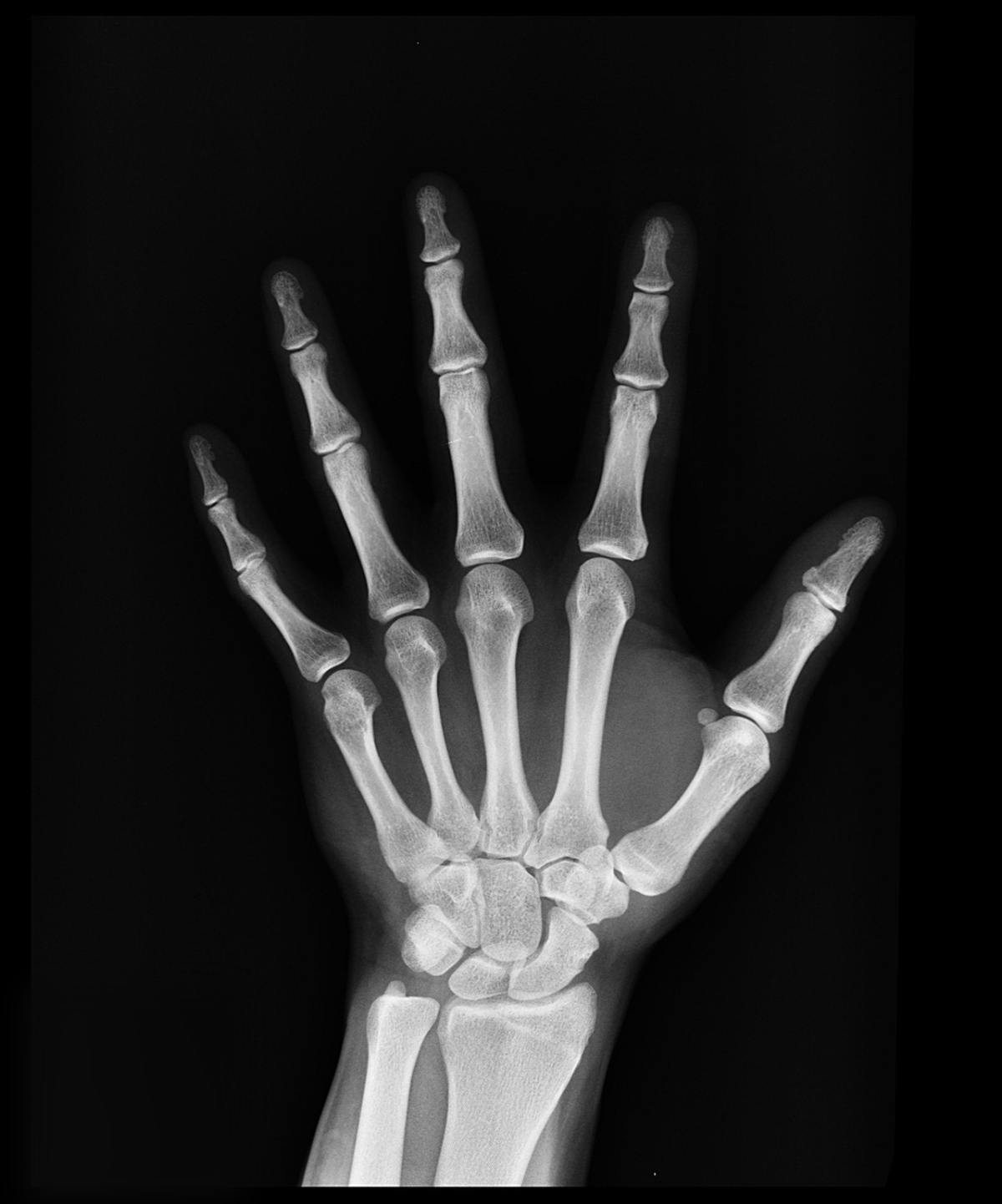
Take, for example, the skeleton. The grinning, dancing skeleton is a Halloween staple, and it is an image that comes to us directly from Medieval Europe, when that continent was overrun by the Bubonic Plague, a deadly pandemic that reduced the population by at least a third, and imposed inescapable daily reminders of the imminence of death and the fleeting nature of our mortal concerns. 

Murals and drawings started popping up around this time, in churches and elsewhere, featuring a motif that is now referred to as the Danse Macabre, which depicts a group of skeletons dancing wildly in rows or circles, either by themselves or with living people. And the slightly silly, slightly sinister skeletons of the Danse Macabre are still with us—think of the skeletons in kid’s cartoons, or those that feature heavily in Day of the Dead celebrations in Mexico and the United States. 

Clearly there is something about them that has stuck with us over the centuries, and, given the events of the past year or two, especially this pandemic that continues to swirl around us, I think that we might be well positioned to understand the magnetism of such artwork. I think, in this new era of plague, we grasp the strange blend of somberness and wry humor that characterizes any honest look at the truth, the truth we feel in our bones, that all things are passing away. 

The dancing skeletons of medieval Europe were a way for people to cope with the underlying fact that we all know but would usually rather forget—that all of us, rich or poor, popular or lonely, beautiful or plain, will one day be a pile of dust and bone ourselves. We are united, moreso than anything, by our mortality; we are a bunch of frail bodies knit together in the Danse Macabre, weaving in an out of the valley of shadows, and so we must do our best, while we walk this earth, to hold on to one another, to live fully, with joy and gratitude for what is given. We must seek hope and purpose even in the face of death.  We must go deep, down close to the bone, stripping away illusions, seeking life’s hard, gleaming essentiality.

And, in his own way, that is what Jesus is doing in today’s Gospel. He has just finished answering a series of antagonistic questions from scribes and Pharisees and Sadducees in Jerusalem. His own passion and crucifixion, his own trip to Golgotha, the place of the skull, is imminent. Death is close, and there is little time left for parables and puzzles and debates. There is only this teaching, the simple truth at the core of everything he is and does:

Love the Lord your God with all your heart, and with all your soul, and with all your mind, and with all your strength.’

‘You shall love your neighbor as yourself.’ 

There is no other commandment greater than these.

We usually refer to this as Jesus’ “Summary of the Law” and so it is. But today we might also imagine it as the skeletal structure that underlies the Law—the structure that holds together all of creation. 

All the ethical decisions, all the customs, all the traditions and codes of conduct—both those of Israel and those we continue to discern and live into as Christians—all of it is undergirded by these two commandments: Love God. Love your neighbor. That’s it. 

Without these two truths, these two practices, we have nothing solid upon which to stand. Without these two things, the whole body collapses. The Law of Love is the bone under the flesh, the essential and unavoidable truth that we sometimes forget when we are distracted by temporary appearances. 

And, to be honest, in the same way we resist looking at death, so too we resist facing and living into the implications of Jesus’ teaching about the supremacy of love. The history of the church—and the history of humanity in general—has been haunted by a fear of love, by a fear of giving ourselves over to its power, a fear of the connection and mutuality and humility that it requires of us.

We hear Jesus’ words, but it makes our bones shake, because to love that deeply and broadly is its own sort of death—the death of our narrow agenda, of our self-centeredness, of our instinct to judge, of our compulsion to win. 

Love, the type that Jesus is speaking of here, dispenses with all of that—it burns away the protective coverings and leaves just the ancient, unyielding truth of our existence: the moment when, just as when Adam saw his companion Eve, we look at one another, with wonder, and say: you are bone of my bone, flesh of my flesh. My life and your life belong to one another. Take my hand. Feel these bones cradling your own, tenderly. Hold on to me, for we are caught up in the same dance. 

But there’s one thing we cannot forget: this dance, the one that we learn from following Jesus, is not just the Danse Macabre. It does not end in death. It is not the dance of futile pleasures. It is the dance of enduring life. And in his resurrection, Jesus has shown us that loving God and loving one another is the part of us that cannot die—it is the part of us that will endure, that will live to dance again, even after everything else has been stripped away. 

So just as we might do well to reckon with our mortality on this All Hallow’s Eve, to look the skeleton in the face and accept that it is, essentially, us—so too we must look at love in the face and accept that it is, essentially, us—it is the supreme law of life. The beginning and the end of the story. We will never escape love’s demands, but neither will we ever be forsaken by its goodness. Nothing, not even the grave itself, will ever change that. Make no bones about it.

Dying: A Sermon

I preached this sermon on the Feast of All Saints, Sunday, November 1, 2020, at Trinity Episcopal Church, Fort Wayne, IN. The lectionary text cited is Matthew 5:1-12, wherein Jesus teaches the Beatitudes (“Blessed are the poor in spirit…”).

This is a sermon about dying, but it is not about death. 

Dying is all around us, especially now, in the late fall, when the night lengthens and the trees lose their color and the landscape quiets itself for a deep slumber. There is a sense of relinquishment at this time, a pang of letting go, deep in our bones, as the year, in equal measure of grace and resignation, gives itself over to an inevitable ending. 

And so it is not surprising that, in this hinge-point between abundance and absence, people turn their thoughts to the dead—the saintly dead, our beloved dead, as well as the more ambiguous spectres of our haunted imaginations. 

Allhallowtide, as this brief cluster of observances is known on the liturgical calendar—All Hallow’s Eve, All Saints Day, All Souls Day—is rooted in a consciousness older than the church, as old as the seasons itself, but it is also a particular opportunity for us, as Christians, to gather in the fading light of the year and to reckon with dying—how it shapes us, how we ought to live with it, what it can teach those of us who believe in a God who is willing to die for humanity. 

Other than perhaps the mournfulness of Ash Wednesday and Good Friday, Allhallowtide is one of the few instances in the church year when dying is brought to the forefront of our liturgical attention. We might attend a funeral, of course, but those services, at their core, are actually focused more on life—the earthly life of the one who has left us, and the resurrected life promised to each of us in the risen Christ. 

And so it is really just here, for these few days in the fall, that we as a Church consider what it means to die—and to die well—as a Christian. In a culture that tends to deny the reality of death altogether, this is actually rather courageous: the willingness to acknowledge, without succumbing to existential terror, that each of us must eventually die. 

And the saints, in their glory, help us with this. In remembering the saints of God on this feast day, we affirm that they are in Communion with the life of the Trinity, and one another, and with us, in a manner surpassing the mystery of death.

But at the same time we begin to understand that, more than anything, this blessed, living Communion is in fact largely characterized by a certain capacity for dying.

Again, dying, not just the state of death itself. The death of the body is an inescapable biological fact, one that is, of course, shared by all living things, the trembling king and the trembling autumn leaf alike. So it is not death per se that informs our connection to the Christian Saints, but dying as a verb, as a practice of faith, as a definitive pattern of release, of selflessness, of loving surrender, one that is and always has been intrinsic to the Christ-shaped response to life. 

As Paul describes in his letter to the Romans, we have been baptized into Christ’s death as well as his life, and thus we cannot separate the two; we cannot experience the Living of Jesus without also taking on the Dying of Jesus. Indeed, it is this dynamic tension between living and dying, of affirming and negating, that characterizes so much of Jesus’ teaching about what is real and true—and it’s everywhere once you look for it, including, I would argue, in our gospel passage for today, the Beatitudes.

At first glance, this passage doesn’t seem to have much to do with dying and everything to do with how to live. And so we might assume that we are given the Beatitudes on this feast day as a sort of instruction book for how to be “saintly,” as if we might just follow a few simple steps to achieve the holiness of the ones who have gone before us.

But on closer reading this interpretation starts to break down, because the Beatitudes don’t actually tell us what to do, in all times and all places. How precisely does one act poor in spirit? How do I most efficaciously practice meekness? How do we measure whether we have mourned successfully, or hungered and thirsted most efficiently for righteousness? How do we quantify adequate peacemaking and maximize our purity of heart? What sort of persecution should we aim for, exactly?

These questions are slightly absurd, of course, because blessedness is not a one-size fits all garment, and the Beatitudes are not just a code of conduct, a checklist of tasks for each of us to complete and compare against the progress of others. They are, instead, a cumulative illustration of what life looks like, what is true and enduring, once we have let every distraction and impediment to sanctity—to pure, holy being— die and fall away. The Beatitudes depict the spare essentials of God’s movement through creation—what is truly important once our delusions and denials have been stripped from us, by choice or circumstance. 

And so, more than being explicitly prescriptive, Jesus offers the Beatitudes to help us to discern how to practice dying while we still live—how to discern what to let go of so that there is more space for Christ within us. 

Whatever it is in ourselves and in our society that distorts this vision of blessedness, that is the thing which must be relinquished, cleared away, so that God’s mission of healing and mercy might assume its proper place in our lives. And then, as time passes and circumstances change, we must be willing to repeat the process, like the turning wheel of the seasons, letting something else pass away in order to welcome the urgent promise of new life.

This is what the saints have done, each of them in their own particular way: they have let die, lovingly, whatever it is within them that obstructs their pathway into the heart of God, and they have named and challenged those same obstructions in the world around them, clearing the way for the poor, the hungry, and the merciful. 

The saints are simply those Christians who have taken the gospel in full seriousness and have understood it in full joy: that dying opens the gate to new life—and that this is something as true in our small daily acts of dying to sin and selfishness as it is in the ultimate mystery of death and Resurrection. They are the practitioners of this Way of Love, this Way of Dying and Living, and they invite us to be strengthened and encouraged by their example, even if our own time, our own story, seems very different from theirs.

Because ultimately, there is just one story: the story of a falling leaf that nourishes the earth for the coming spring. The story of a grain of wheat which falls into the ground and dies but bears much fruit. The story of a God who taught us how to lay down our lives for love so that we might live in love eternally. It is the story of beatitude. It is the story of sainthood. It is God’s story, and your story, and mine, and ours. This day, and forever.