Unimpressive: A Christmas Eve Sermon

I preached this sermon at the 2023 Christmas Eve services at St. Anne Episcopal Church in West Chester, OH. The lectionary text cited is Luke 2:1-20.

All of us probably have a story or two about a Christmas gift that we received that wasn’t quite what we were hoping for. Something in the wrong size or style, maybe, or some odd item that we don’t know quite what to do with. It’s bound to happen at some point, of course, because we are all just people doing our best to know and to provide for one another, and sometimes we miss the mark a bit. That’s life. It’s ok.

But 4-year old me did not understand this quite as well. 4 year old me, I must confess, had a very particular expectation of what a Christmas present should look like. And so it came to pass that, when I was in pre-school, I had to learn a tough lesson during our classroom gift exchange.

I was only 4, but I remember it vividly. Every student brought in one gift to give, and they were all placed in a circle around the Christmas tree. And then, sort of like musical chairs, we all got in a circle around the tree, too, and when the music started, we started marching around it, and when the music stopped, whichever present was in front of us was ours to open.

Well, the music started, and off we went, and I was eyeing all the various packages and boxes under the tree, getting more excited by the moment. And then the music stopped, and there in front of me was a big box, beautifully wrapped, big enough to be a board game or a whole set of toys. I thought, this is looking good for me! 

And then, all of the sudden—immediately to my left, the kid next to me swooped forward and grabbed that big present and ran off with it. I can still feel the indignity of it! And all the other kids grabbed their presents and ran off, too, and before I knew what to say or do, there I was, alone at the tree with the gift that the little thief next to me didn’t want. 

It was a very small little box, wrapped in some crumpled paper. 

And I stood there and opened it up and it was a tiny little plastic bear, the kind you could stick onto the end of a pencil. 

I was FURIOUS. I will admit to you now that I stood there in my Christmas sweater and I cried sad, angry tears, and I refused to be consoled. Whatever had been in that big box was supposed to be MINE and now all I had was this stupid little plastic bear.  My parents tried to tell me something about gratitude, but I wasn’t having any of that! I didn’t get it. Not then. Not yet. All I knew is that I thought I was going to get something big and shiny and instead I had this tiny, unimpressive little thing in my hands.

I think a lot of life is like that little plastic bear. We carry with us so many big hopes and expectations of what will be, what ought to be, what WE ought to be, and then the music stops and we look in front of us and instead we are only given what is, and we are who we are, and things might look a little dimmer and dingier and smaller than we imagined. Even Christmas, bright and lovely though it is, can feel like that, sometimes, depending on what we’re going through, what the year has brought (or taken) from us. 

And when that happens—when plans fall apart, when we lose what is precious, when the world turns out to be a messy and complicated place where joy is sometimes snatched out from under us—well, maybe we all shed a few sad, angry tears in those moments, too. And that’s life. It’s ok.

But here’s the thing about Christmas, about the Christmas story, in particular—the one that we just heard retold a few minutes ago about the birth of a baby in Bethlehem, and the frightened shepherds in the field and the new mother pondering this strange, small gift she now cradles in her arms—here’s the thing about all of it: 

It is good news for us precisely because it is unimpressive. Surprising, unexpected, even miraculous, yes, but on the surface, by all outward appearances, the nativity of Jesus is entirely unimpressive. 

We forget this, too easily perhaps, because our traditions and our music and our associations with the holiday are all so beautiful and rich with meaning, as they should be, given that we know who Jesus turned out to be. But if we pay close attention to what is actually told in the narrative itself, the bare facts underneath the wrapping paper and ribbons,  it’s a rather simple little story, that can be summed up like this:

A young, unwed mother gives birth in a tiny town of no great wealth or prominence. She is in crowded quarters because her fiance’s family is of modest means and so she has to place her newborn into a makeshift crib. A few ragtag men show up in the night telling a story about a strange vision they just had out in the fields. The family members, or whoever happens to be around, are surprised by this odd visit. Maybe they believe them; maybe they think the shepherds are off their rocker. We don’t really know. Then the shepherds leave. And that’s it.

The night is quiet, and the baby slumbers, and the world spins on. 

No palaces, no proclamations from the king, no processions or parades or parties in the street, no big board games wrapped under the tree. From the perspective of any passerby in Bethlehem, the birth of Jesus is completely unimpressive. God is born and heaven unites itself with mortal flesh and the One who is mightier than any emperor is in our midst…and yet still the animals must be brought in from the cold and hungry mouths must be fed and everyone still goes to bed with backaches and unfinished to-do lists.

The coming of the Messiah is small: small like a child sleeping in the night, small like a little gift wrapped in crumpled paper, small like real life can be, all the average moments that are too easily overlooked in the quest for bigger brighter, more impressive things. And although the years go by with their ups and downs, and although sometimes we cry sad, angry tears and it’s hard to feel grateful for what we are left holding, still he comes in the night, still he waits for us look down and behold him. Still he invites us to appreciate the difference between grandeur and grace, and how those two things rarely resemble one another in this life. 

This is the good news of Christmas: that God came into our midst in an unimpressive way because God works primarily through unimpressive, normal, struggling, imperfect people and places and things. Which means that, no matter who you are, no matter what you have done or not done, no matter who you love or how you have failed to love or how love has eluded you, no matter the doubts and the fears and the wounds you carry, no matter whether you are famous or forgotten, God still seeks to be born in you. God seeks to live and move and have his being in your ordinary, unimpressive, perfectly normal life. 

And he is small enough, humble enough to fit wherever there is space. Wherever you can make a bit of room in your heart, he is content there—content to be the small, unexpected gift that will transform our understanding of everything if we will let him. 

And if we do, then what we will see, as I could not on that Christmas long ago—clutching that tiny plastic bear—is that the things which will endure in our memories and in our hearts when all is said and done, the things that will teach us how God desires for us to live, how to be grateful and joyful no matter what, are the small, unimpressive things—the things that come wrapped in crumpled paper, the gifts we did not expect or perhaps even want, but through which God comes to us and abides with us and reveals the simplicity of his message: that love, though it be small and vulnerable, is the most powerful force on earth. 

May tonight, and the humble story that we tell, and the humble lives that we have been given, come together as a sign to help us understand this love. 

Because Christ is born on this holy night, unimpressively, with unimaginable grace, for you and for all. He has come to be with us, just as we are, whether you are laughing or crying, whether life has been a delight or a disappointment. He has come as the tiniest, most surprising and precious gift, waiting for you when the music stops, waiting for you to pick him up and behold the truth: that God is in the small things. That we will be saved by small things. That whenever you hold even the smallest bit of love in your hands and in your heart, you are holding him. 
Feast: A Sermon

I preached this sermon on Sunday, November 21, 2021, Christ the King Sunday, at Trinity Episcopal Church, Fort Wayne, IN. The lectionary text cited is John 18:33-37.

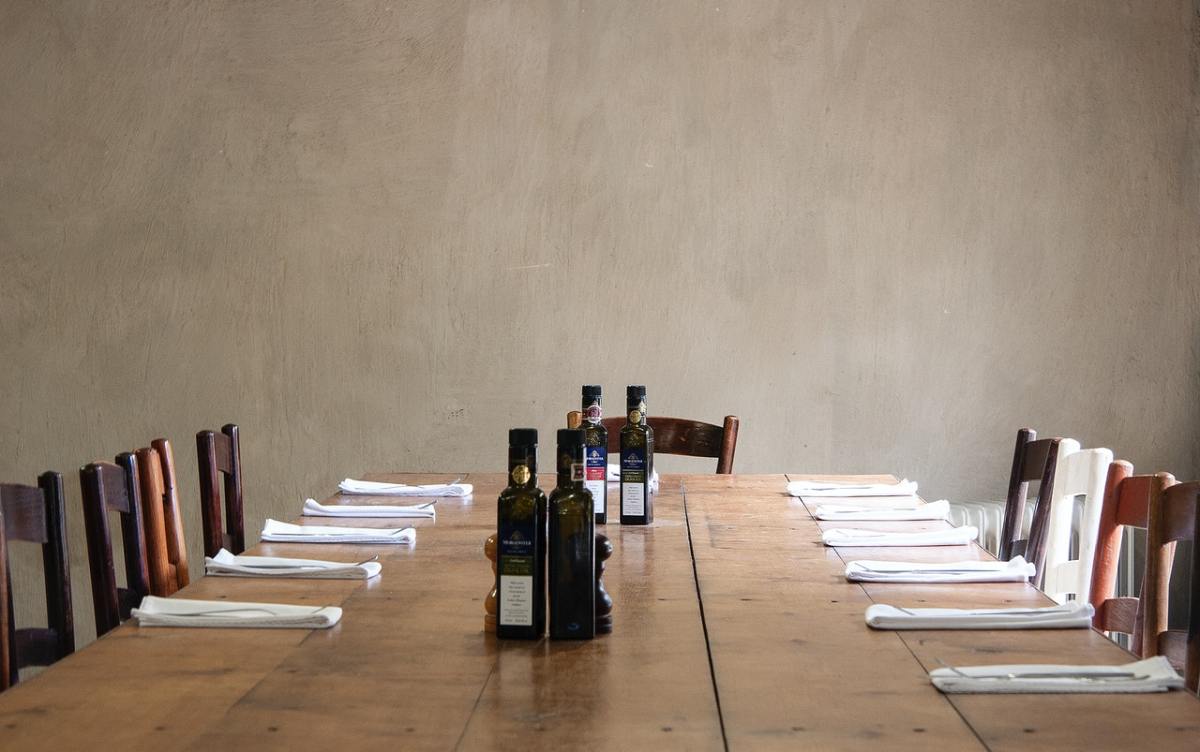
One of my happiest holiday memories is when I would wake up on Thanksgiving day to the smells of an already-busy kitchen: sage and onion and baking pies and brewing coffee. It was almost as delicious as the meal itself, that long moment of awakening, warm and half-dreaming in the morning light, knowing that there was a feast being prepared, that everyone I love would be gathered in one place, and that, even though the world outside was complicated and so were we, for this one day, at least, there was no need for anything else. There was enough, and we were enough, here, now, together. 

And while for some of us, perhaps, Thanksgiving was never quite so happy an occasion, I do think each of us understands the potency of the idea itself: a time of rest and reunion, a world in which no one goes hungry, where everyone is welcome at the table, where being known and seen and loved is a gift available to all.

As we grapple with some of the entrenched realities and the challenges facing our country and our world—racism, violence, economic inequality, and ecological crisis, to name but a few—I acknowledge that for many the observance of America’s Thanksgiving holiday is fraught with complexity, and I also acknowledge that its celebration can bring up feelings of ambivalence for those among us whose families are fractured or scattered or simply gone. 

But the principle of gratitude that underlies the day is something that must be reclaimed and reinvigorated anew by each generation, so that this is not just the passive reception of an unexamined history or a private lament over a broken family system, but a courageous choice to believe in what is still possible—to believe that there might yet remain much for which we can give thanks. Because even as we face what is ugly and messy about the human condition, we must also hold fast to what is beautiful and hopeful—those simple, good gifts that make life not just bitter, but sweet, that make the struggle worth it, the things that tell a story of hope, not just disillusionment. The things glimpsed around the bountiful table of the present moment—a feast of memory, but also of determination and of expectation of a better tomorrow. 

That’s why I love that after this service we will go upstairs and pack bags with food supplies and encouraging notes for our neighbors so that they, too, might enjoy a Thanksgiving meal. It’s our congregation’s own small gesture of gratitude for the blessings in our own lives, and a demonstration of our belief that the world can still be a hopeful place, a generous place, and that we can help make it so, even when fear and scarcity seem to dominate the narratives around us. 

Choosing to believe in the redemptive possibility of this world—in its goodness, in its capacity fpr renewal—this is part of what we mean when we speak of the Kingdom of God—not just a place up in the heavens that we escape to when we die, but the emergent, lived reality of God’s love here and now—the power of that love, the triumph of that love, the sovereignty of that love. The ultimate gift for which we give thanks.

And so while it is somewhat a fluke of the calendar, it is fitting, perhaps, that Thanksgiving and Christ the King Sunday fall in proximity to one another, because each observance, at its best, calls us toward a vision of beloved community. Thanksgiving  calls us back to what is essentially good and true in our own lives, and as we conclude the calendar of the church year and prepare for the cycle to start anew with Advent next week, we pause to ask ourselves: who is this Christ, this King whom we worship and follow? What is the essential goodness and truth that he brings? And how do we take part in it?

I will admit that answering these questions and then living into the answers can be harder than we care to admit. We want to believe that love wins, that hope endures, but sometimes we look at the world around us and we look up at Jesus above the altar, on the cross, and we can feel as incredulous and bitter as Pontius Pilate, and we ask: Are you the King? Are you? Because you are nothing like any king I have ever seen. You are not the sort of king who fixes all of the problems around us. And even if you are, what is truth when no one is honest anymore? And what is love when everyone is just out for themselves? And what is justice when blood flows in the streets and children go hungry, just as it has always been? And what is hope when it’s just the same bitter pill to swallow, time after time?

Are you the King? 

And Jesus simply looks back at us, infinitely tender, and says: “You say that I am a king. For this I was born, and for this I came into the world: to testify to the truth.” 

 Because the truth is that Jesus’ power, Jesus’ kingdom, is still not the type we expect it to be. And he comes into our midst, still, not to rule like other kings. Not to control. Not to gather power and wealth at the expense of others, and not to tell us to do so in his name. Jesus comes to testify to a truth that is deeper and more powerful than kingship, even if it is less obvious. A truth that God has been trying to convey from the very beginning, although we continue to ignore it, time and again. 

A truth that rises up, growing like a seed sown in a field A truth that rises up like yeast in bread. A truth that rises up like a spring of living water. A truth that rises up and refuses to be killed or silenced, even in our most desolate, hungry moments: the truth that love persists through death. The truth that mercy persists through brokenness. That there is, indeed, enough for everyone, if we will let it be so. That we are, indeed enough. That we belong to this earth and to one another. That we are known and seen by God in our weakness, in our hunger, and we are forgiven. 

The truth that we have to stop being afraid, stop hiding from God and one another, and step out towards each other with hope and gratitude and say, yes, here I am. And yes, I believe in your goodness, Lord. And yes, I believe that it is love—not fear, not the power of kings—that is the strongest force in the universe. And so I will take a chance on this Kingdom, I  will reach out my hands to the world, to my neighbor, to give and to receive, to bless and to be blessed, to join in the feast, to gather round the table where there are always enough seats, always enough to satisfy even the hungriest of hearts.

Because that’s the thing to remember about Christ as a king, as a ruler. What did he actually rule over? In his earthly life, Jesus never led an army into a battlefield, nor did he oversee a court of law, nor did he celebrate a Temple rite. 

Instead, he presided over…a meal. Many meals, in fact, culminating in the Eucharistic banquet in which we still take part. A meal to nourish the world. A meal in which his own life, his own love is the substance. He is the Lord of the feast, the King of the abundant table, and more than anything we are his grateful guests, called to celebrate with him, called to invite others to take their place alongside us. 

That is the Kingdom of God, my friends. That is what will transform the world. That is what will transform us. Bigger hearts and bigger tables. More time spent breaking bread, listening to one another’s stories and creating a new story together. A story that tells of peace, of justice, of the deep joy that is the birthright of all people. A story that can yet be true. 

May we live like this, on Christ the King Sunday, on Thanksgiving Day, and on every other day, for the rest of our lives. And then, by God’s grace, may we one day, after a long and deep and restful sleep, wake up in the morning light of a new life, a new earth, warm and half-dreaming, to the smell of brewing coffee and baking pies, and may we know that we are home, that we are all home together at last, and that there will always be enough, and that we will alway be welcome, in that beautiful Kingdom, at that glorious table, forever.

The Joy of Normality

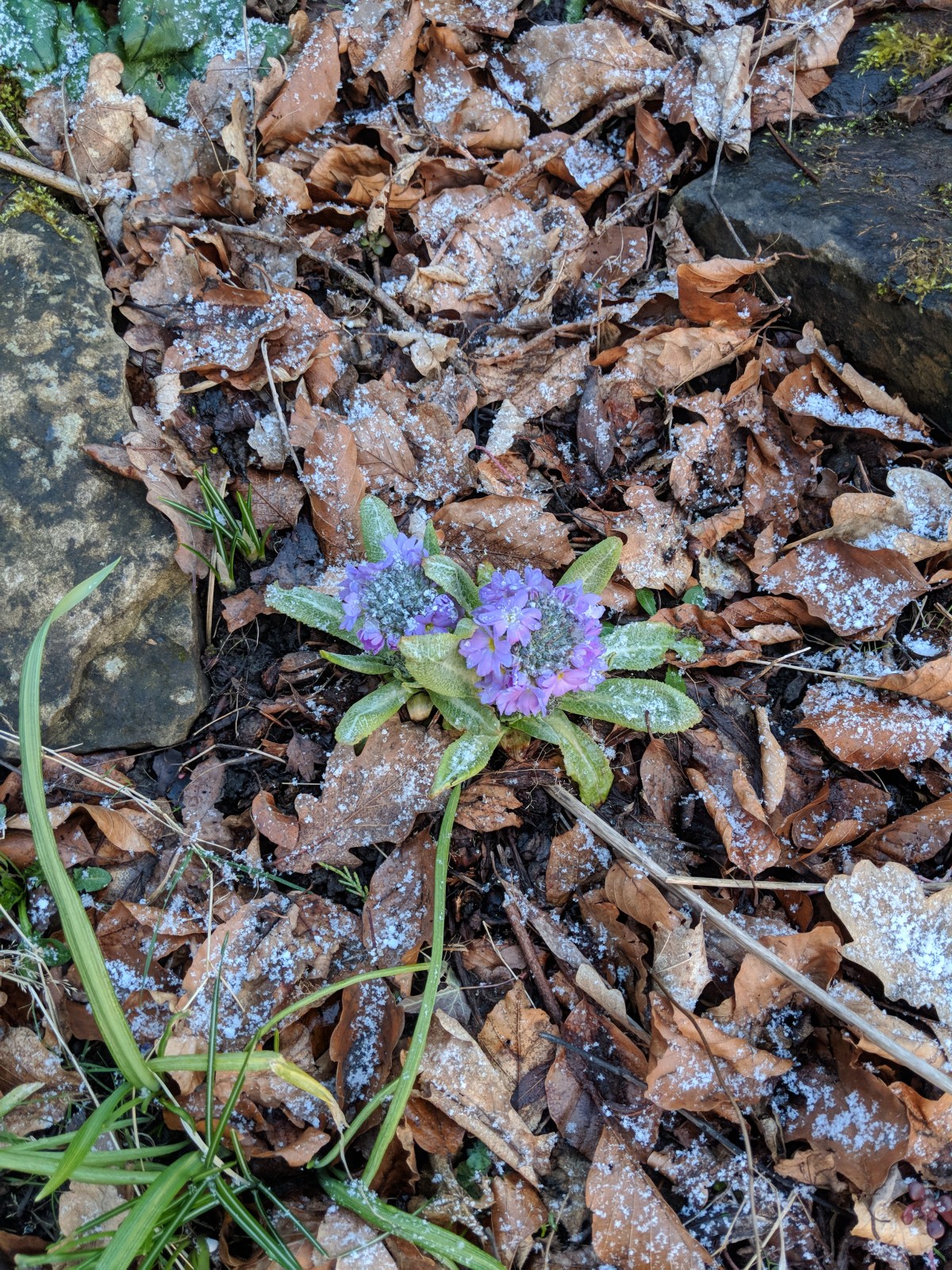
Temperamental spring is flirting with the landscape in Mirfield. In the past two weeks we’ve had snow blanketing the hillsides, unannounced rainstorms that drenched me on the way to morning prayer, and profusions of purple crocuses and yellow daffodils carpeting the parish churchyards. A bit like life itself, the weather in England is unpredictable, occasionally frustrating, and always beautiful.

Having been here almost two months (!) I’ve settled into a rhythm of prayer, study, meals, and periodic frivolity that feels more like a new home than like a “trip”. Given how disoriented and adrift I felt in the first couple of weeks, this change in itself feels like a miraculous revelation. It makes me realize how infrequently I am grateful for normality in my daily life back in California: always hungry for what is next, not for what simply is.

There was a piece I read long ago by the Buddhist teacher Thich Nhat Hanh that referred to this type of everyday gratitude as “the joy of no toothache.” In other words, it’s usually when we are in some type of acute pain that we finally recognize the joy that was already present in the pain-free status quo. Now that the discomforts of adjusting to life in Mirfield have mostly subsided, I am determined to relish the quiet happiness of simply being here.

But how to hold onto that sense of gratitude? For me, in this place, it has come about through a burgeoning sense of prayerful discipline. I am realizing more and more how the constancy of the Daily Offices (morning prayer, Eucharist, evening prayer, etc.) keeps me attentive to God and to the preciousness of the day at hand. Compared to my life back in the US, when I often let prayer become sidelined by academic anxieties, personal angst, and (let’s be honest) a lot of social media-driven idleness, now the rigor and structure of prayer is the framework upon which I build each day. I don’t always *want* to go and pray the Offices, but I must, and in maintaining that commitment, I find small but perceptible shifts in my heart, an accumulation of movements that are reorienting me towards the Divine presence in moments I might otherwise have missed it.

Robert Browning writes of this type of attentiveness in “Pippa’s Song”:

The year’s at the spring,

And day’s at the morn;

Morning’s at seven;

The hill-side’s dew-pearl’d;

The lark’s on the wing;

The snail’s on the thorn;

God’s in His heaven—

All’s right with the world!


The saints often express similar feelings about the miracle of the commonplace (think of St. Francis’ Canticle of the Sun). It is a mistake, I think, to sentimentalize or trivialize these types of observations. Deep satisfaction and delight in the everyday is not the same as naivety, nor is it complacency. To marvel at the poignancy of God’s abiding in the present does not preclude us from clear-eyed hope, from the work of reconciliation, or from the pursuit of justice; instead, it grounds us in pursuing those aims out of love, rather than fear and stridency.

Of all the things I am discovering at Mirfield—the joys of community, the need to take a more holistic view of priestly formation—one of the simplest and best is this experience of inhabiting the day prayerfully, non-anxiously, without a lot of worry about the future. This hasn’t come easily, but it is a change I have experienced quite dramatically in the past few weeks. I told someone recently that there is a bright line around my time here; beyond June 1st I am unsure of what life will hold, and I am suddenly, truly all right with that. If “faith is the assurance of things hoped for, the conviction of things not seen” (Hebrews 11:1) then I am experiencing faith anew here.

So, if I could offer any bit of advice for the perpetually stressed, among whom I have counted myself for many years, I would say this: forget dramatic transformations, and give yourself over to a gentle discipline of prayer. Focus less on an idealized, perfect end result, which is forever beyond our grasp anyway, and find something simple and immediate that will ground you in this day which God has made for us. It might be the Daily Offices, if you are Episcopalian/Anglican, or it might be something else. If you are already engaging in a practice along these lines, I’d love to hear about it in the comments!

Please know that in my daily prayers I am constantly lifting up your names. It is a great consolation to think of all the love that has permeated my life thus far, and I can only hope to give some of it back to God, through my relationships with you and through the worship that I offer up each day.

Peace, dear friends. You are in my heart always.