Worth It: A Sermon

I preached this sermon on Sunday, September 7, 2025 at St. Anne Episcopal Church, West Chester, OH, which was observing its “Faith in Action” ministry celebration. The lectionary text cited is Luke 14:25-33.

I mentioned “Scary Jesus” a couple weeks ago, and it seems he’s back with us today using very strong language to tell us something fairly self-evident: often in life you have to count the cost of something and decide if it’s worth it, whatever “it” is. But sometimes…sometimes you just can’t know in advance if it will be worth it, or how, but you know you have to do it anyway. And that’s when things get interesting. That’s when faith begins. 

So, for this Faith in Action Day we are observing, here’s a story, in three parts, about determining the worth of things.

Part 1:

It was love at first sight.

My father saw it sitting there in the parking lot with a bunch of other used vehicles, bathed in the promise of a perfect spring morning: a gleaming, goldenrod, vintage VW van—the kind that, when you see it, you feel lighthearted and adventurous, and you swear you can hear Hotel California playing on some distant radio, and you feel that open road unfurling from some point of origin within your deepest self. Oh yes, it was love, and he was all in. 

Never mind that he didn’t have much money. Never mind that the old man selling it was vague on its maintenance history. My dad saw that van and he knew he had to get it, he knew that it could carry us long and wondrous distances: California to Michigan and back again, or even farther, maybe, all the way to the promised land.

And so he plunked down some cash and, a few weeks later, once I was done with school, we threw what we had in the back and headed east, ready for anything. Well, maybe not anything.

Because the first time we made a quick stop, a few hours from home, the van wouldn’t start. And we were stuck in a rest area outside of Willows, California, on a 90-something degree day in June, unsure how to keep going. 

I don’t remember exactly how he figured it out—this was before cell phones and internet access—but somehow he determined that we had to manually spark the ignition to start the van again—I had to sit in the driver’s seat and turn the key, and he was out there, cussing in the heat, pressing some fuses together or something. Essentially we had to hotwire our own vehicle every time we started it. And so we did, all the way across the country, until we got to Michigan and he could afford to fix it. 

Was the van worth it? Depends on how you count the cost. It never really did work that well, and years later I think he sold it for next to nothing. 

But on the other hand, I can tell you that when I think of what it means to be free, and safe, and alive in this world, when I think of what hope feels like…what I remember is riding in that old VW van with the windows down somewhere in the Great Plains, eating a ham sandwich, singing an old song on the radio with my dad and I think: oh, maybe we did get to the promised land after all. 

Part II: 

It was love at first sight.

Those disciples had met Jesus in any number of ways, caught up in the various worries and occupations that constitute a normal life, but when they saw him, they saw Life with a capital L. They saw a different sort of road unfurling in front of them, one that carried with it all the promise of a spring morning. And how could they not follow, to see where they might go together? Wouldn’t that be worth just about anything?

And it’s true, that most of them didn’t have much to lose—no money or status. Maybe they thought that following Jesus would give them the dignity and the peace and the protection that are scarce resources in this life.

But then, we come to today’s Gospel passage, and somewhere at a rest stop along the way to Jerusalem, maybe in the 90 degree summer heat, Jesus has some difficult news for them: this journey is going to cost a whole lot more than they imagined.

The language of hating what is dearest to us and of giving up what is most precious—it lands hard on the ears, it makes a person sweat and second guess their choices. It suggests that whatever this love is, it is not the comfortable, cruising along smooth highways kind.

And its worth cannot be measured in the same way as those kings who wage war and build towers. Jesus, I think, talks about those things not to equate them with discipleship, but to contrast them. He is being ironic. He is saying, the book of True Life is not a ledger. The way of True Peace is not a negotiated settlement. 

Therefore, none of you can be my disciples unless you let go of all that. You have to follow me by faith and when they ask, on the other side of the cross, was it worth it, you will have discovered a new way to speak of worth.

And only then will you be free, and safe, and alive in this world. Only then will you reach the promised land. 

Part III:

I imagine, for many of us, it was love at first sight, or close to it—the first time we came through those red doors of St. Anne, or another door like it. The first time we heard the Spirit reverberate through an old hymn or felt Jesus press against our lips in the shape of bread. The first time we understood that we were welcomed just as we are, and felt the possibility of something new unfurling within us. 

And what a journey it is, to be in a church like this, to build a community like this, to see it grow and change and stumble and get back up again. To show up in the light of spring mornings, and on winter nights, too, and to know that something, that Someone, waits for us here, waits to huddle in close, to hotwire our hearts, to ignite something long dormant within our souls, to make us feel alive again. That is the gift of church at its best. That is the gift of a place like St. Anne. Its worth is hard to measure.

And yet, it doesn’t always go the way we think it might, or should. We’ve had our moments when we felt stranded on the side of the road, the world rushing past, and I imagine there have been times when it feels like we are getting by on a lick and a prayer, because, well, frankly, sometimes that’s the best anyone can do.

Which is why Faith in Action day is so much more than just a ministry fair or a sign-up event. It is an acknowledgment of the cost—the deep and continued and holy cost—of following Jesus, and of figuring out how we are going to bear it, and share it, and even rejoice in that costliness together. It is a moment to say thank you to one another for all of the ways, large and small, that we’ve shared in the cost of keeping this place going, mile by by mile. 

I hope, as we travel around the tables at coffee hour today, we will take time to say thank you to each other—for being here. For trying. For sweating in the summer sun and shoveling the snow and planning the programs and assembling the ham sandwiches. I hope we will taste the goodness of all of it, and recommit ourselves to the love that drew us in, that draws us out, that keeps us here and keeps us going. 

Because it’s funny, when you consider the value of our life together here: it is not “useful” in any traditional sense of the word. We are not building towers and waging culture wars. We are not “winning” anything. We are just loving everything, and everyone. 

What a miracle that this is enough—more than enough. What a miracle that this is everything.

What a miracle that we persist in the foolish, extravagant experiment of a life founded on chasing after Jesus, wherever he goes, for no other reason than this: that it was love at first sight.

And, as with all great love stories, perhaps, when all is said and done here at St. Anne, if someone were to ask us if all of this was worth it—all the false starts and the broken engines, all the hard questions and the hellos and the goodbyes—I hope that we will be able to look up and say: depends on how you count the cost. 

But we can tell you this much: here, we were free. Here, we were safe. Here, maybe for the time, we were alive in this world. 

And yes, oh yes, every now and then, I think we even saw the promised land. 
Eyes on Him: A Sermon

I preached this sermon on Sunday, July 20, 2025 at St. Anne Episcopal Church, West Chester, OH. The lectionary text cited is Luke 10:38-42.

Not too long before I began my training to be a priest, I had a meeting with my rector and mentor, Fr. Shannon. I was, as you might imagine, a bundle of nerves and excitement and anticipation, wondering what on earth I’d gotten myself into, even though I also knew it was the only thing I could imagine doing with my life. 

Fr. Shannon was and is a prayerful and wise man; he is the sort of person who cuts right to the heart of the matter when you speak with him. Even so, when I asked him for any last-minute advice as I headed off to seminary, I wasn’t quite prepared for the simplicity of his words. 

Just keep your eyes on Jesus, he said. Just keep your eyes on Jesus and you’ll be fine. 

That was it. 

Now, I can be an over-thinker. With good PR one might call my personality type “introspective,” but if we’re honest, sometimes I just get in my head about stuff.

So when I’m all worked up inside about the future and Fr. Shannon just says to me, keep your eyes on Jesus, I will admit to you that internally, I was kind of like, uh huh….and??? Throw me a bone here, Father. There’s gotta be something more to it than that. How am I going to crack the code and become the ideal priest? How am I going to help fix all the problems of the church and the world? How am I going to shoulder the impossibility of the task ahead?

But that was all he said that day. Keep your eyes on Jesus. 

So I packed my Uhaul truck with a lot of unanswered questions and went on my way. 

And wouldn’t you know, that he was exactly right? Because I would learn in all sorts of ways throughout my years of training and formation—and I continue to learn—that keeping your eyes on Jesus is a deceptively simple invitation. It is actually really, really hard, especially once we realize how many other things we’re accustomed to focusing on. 

The truth is our complicated lives and the complicated world around us and our egos and sometimes even the ups and downs of Church itself seem to conspire to keep our eyes on anything other than Jesus. Anything other than the simple, devastating truth of him and all that he offers, teaches, and dismantles. 

I got to seminary and, as with anything, it was so easy to get caught up in the externalities of it—the grades and the institutional anxieties and the questions about the future. So easy to forget, if I wasn’t careful, that none of that stuff mattered if I wasn’t first focused on the deep, healing love that I had found in Jesus.

And as with any great love, some years on, I’m still only beginning to discover its fullness—only beginning to see what it means to keep my eyes on Jesus and to let that seeing change me. 

I tell you this story, though, because in this light, I hope we can reassess today’s gospel passage. Here’s another confession: if I hear one more take on this story that divides us all into “Martha” types and “Mary” types, or that pits action against contemplation, I will pull out the nonexistent hairs on my head. With all due respect to those interpretations, this is not a passage about any of that. You are not just a Martha or a Mary. This is a meaningless distinction.

If you need some convincing on this point, consider: was Jesus a Martha or a Mary? Was he an active or a contemplative? The answer of, course, is that he was all of these things together and none of them alone. He was and is the unity of love and action, of prayer and prophetic witness, of service and surrender. Which is why, of course, we are supposed to keep our eyes on him—so that we might become like him. 

Consider, too, that in Scripture Martha and Mary are both more than this isolated passage would suggest. Martha, in John’s Gospel, is not a hapless busybody, but a person of deep faith and insight: she is the first person in that book to proclaim Jesus as the Messiah. And Mary, in that same Gospel, is no retiring navel gazer, but a person of decisive word and action. She pours out her expensive ointment and anoints Jesus’ feet with her hair, defying criticism and convention. 

Imagine that, women in scripture actually being more complex and powerful than church interpretive tradition has allowed them to be? What a concept! So let’s lay down that tired old binary these women supposedly represent. It is not real. 

The point here, instead—the distinction that Jesus is making when he talks about Mary “choosing the better part”—is a question of where our focus lies. It is his gentle, direct reminder to Martha to keep her eyes on him in all that she does. In the things that she can set into order and in the things that remain a mess—in all of it, he wants her to not forget what it’s all for, what it’s all about, what it’s all moving towards: union with him, life in him, the eternal love affair between God and creation consummated in him. 

Because Martha, worried and distracted by the many things she genuinely cares about, can only truly learn how to love them if she keeps her eyes on Jesus and receives him not just into her home but into the very depths of her soul. 

And the same is true for us, friends. 

All that we do in the church—our programs and our fellowship and our formation and our service projects—all of it is meaningless unless we first keep our eyes on Jesus and receive him into the deepest parts of ourselves. You’d think this would be obvious, but just like that advice Fr. Shannon gave me, it is deceptive in its simplicity.

Because it is so, so easy to become distracted, worried, and tempted by many other things—the ups and downs of economics and politics, the personal hurts and hungers that plague us, the unresolved conflicts and the institutional inertia. They are all important in their own way; they all need some faithful tending. But without keeping our eyes on Jesus—without making him the main thing that we are actually about—we will never go beyond a sort of well-meaning crisis mode. And I think we find ourselves in well-meaning crisis mode a lot of the time.

But God wants something more for you than that, St. Anne. God wants your liberation. God wants your peace. God wants you to be able to breathe again. And to help others do the same.

And the journey towards that liberation and peace and room to breathe begins, and becomes, and ends, for us, in focusing on Jesus. Listening to him, praying as he prayed, confessing to and confiding in him, studying his teachings, modeling our social ethics and our relationships upon his generous and gentle love. And then receiving him—reaching out our hands and receiving him into the deepest parts of ourselves.

This is what we must be about here at St. Anne, first and foremost: keeping our eyes on Jesus. And when I say Jesus, I mean the real Jesus, by the way, in case you’d forgotten or never been told what he’s actually like: living and present, responsive to reality, no enemy of science or truth or human experience, sacramentally available, still-being-revealed to us, Spirit-driven, justice-seeking, reconciliation-making, mercy-rendering. That is Jesus. Keep your eyes on him. 

The stranger-caring, everyone-welcoming, difference-respecting, listening, peacemaking, table-turning, mountain praying, active, contemplative, holy Jesus. The Martha and the Mary and the Peter and the Paul and even the Judas-loving Jesus. Keep your eyes on him, because he is there waiting to love you, too.

Not Christian nationalist Jesus; not conservative or liberal Jesus; not idol of patriarchy Jesus; not disembodied, benign, relative-truth Jesus; not war-monger Jesus; not mere symbol Jesus; but the real, risen, living, loving, bleeding, blessing, breaking, laughing, dancing, fire and firmament Jesus who demands nothing less than all of you and nothing more than this: to see him, and to fall in love with him, and to fall in love with your neighbor and the world again because of him, and to die and to live again, all at once in him. 

That’s who I am going to keep my eyes on, no matter what else comes along. 

Just like Martha, and just like Mary, and just like everyone else who has ever dared to look up from the worries and distractions that surround them and instead chooses the better part that is, quite simply, Jesus. That is, quite simply, love. 

Whatever else we do, lets start there. Just keep our eyes on Jesus.

As a wise friend told me once, do that, and we’ll be just fine. 

Urgency: A Sermon

I preached this sermon on May 11, 2025 at St. Anne Episcopal Church, West Chester, OH. The lectionary text cited is John 10:22-30.

I have been told many times throughout my life (as I am sure you have been, too) that patience is a virtue. My track record with that is mixed at best. 

Especially in springtime. Most years when I was growing up, right about this time, when the May afternoons become warm and breezy and filled with the scent of mown grass and flowers, I felt anything but patient—because the promise of summer felt so close, so tantalizing! Everything felt possible. Patience? Who needs it? That was something for boring old grown ups—I wanted freedom and sunshine and ice cream cones that dripped on the sidewalk and those long, campfire-scented nights when we listened to the old stories and sang the old songs. I was impatient, impatient for all of it. 

And then a bit later, like some of our graduating teens whom we are celebrating today, you start to feel a new form of impatience for “real life” in the world beyond childhood, when you get to make your own decisions and mistakes and discoveries. The May of senior year of high school is sort of an icon of impatience, though usually a joyful one.

But frankly, as I have become more and more like those boring old grown ups, I’ve discovered that the whole patience thing never magically materialized with age. There are still so many things that I want–eagerly and anxiously–things I do not want to wait around for forever. Because as you go along through life, you realize the preciousness of time, the preciousness of experiencing everything you can, while you can. 

And you also notice the deep needs and challenges and pain of the world around you, too, and you start wonder whether “patience is a virtue” might’ve been something coined by those who simply want the rest of us to be quiet and give up our dreams and our collective agency. In our own lives and in our common life in this world, more often than not what I really find myself wondering is not how to be more patient, but what, on earth, we are waiting for? Let’s go!

I love life too much, I love the world and the people in it too much to wait on truly being alive in it. So I think today, I think now, I think in all truth I am interested in the virtue of urgency. The virtue of loving, compassionate urgency. 

Some of the personal circumstances of my life are surely shaping that feeling, but to be honest, I think I am still and always have been that kid who is eager for freedom and sunshine and sweetness, and I think most all of us are, deep down, in our own ways. The problem, the fundamental problem, is not that we are impatient—it is that we are too willing to wait. We are too willing to forestall what is truly important. We put off waking up and seeing the beauty and the goodness that we were created to be and called to build in the name of God. 

So yes, I want to seek the virtue of urgency. Urgency to do something real that contributes to God’s kingdom. Urgency to love without discrimination. Urgency to listen and respond to the people around me, like Jesus did. Urgency to stand up to what is wrong and dishonest and harmful. Urgency to be the sort of person who is unashamed of the Cross of Christ and who is unabashedly confident in the promise of his Resurrected Life. 

And I think that is what Jesus wants from all of us, really. Now, I know that patience is named as a fruit of the Holy Spirit in Scripture, and there are indeed times when we must slow down and seek the capacity to endure, to persist, to trust in God when we can’t see the road ahead. 

But more often than not, I think Jesus wants us to get a little more urgent in our discipleship: in our living and our loving. A little wilder, a little bit more free. A little bit less like a boring old grown up and more like what we once were and still are—an open heart, running down summer sidewalks, licking ice cream cones and chasing stars. 

Note this morning’s Gospel passage. Jesus is walking in the temple, a very serious grown up sort of place. He is approached by some Jewish leaders, and they have an urgent, rather insolent question for him. “How long will you keep us in suspense,” they ask. A better translation of the Greek is, how long will you keep wasting our time? If you are the Messiah, tell us plainly.

And you can’t really blame them. They have good reason to be impatient. They are not just longing for summer freedom, they are longing for true freedom—from oppression and suffering and exploitation. They are impatient for hope. And I think we all know what that feels like, we who have had too much of disappointment. 

But as is so often the case,  it’s Jesus’ reply that I find so compelling. You might think he’d say, now, now, my brothers, wait and see. Patience is a virtue. You’re just gonna have to be quiet and hold tight and buckle down til your salvation comes. 

But that’s not what Jesus says. He is, instead, equally insolent, equally blunt. I have told you. You want a Messiah? You want salvation and liberation? I have told you all about it, and you do not believe. I’m waiting on you, my brothers and sisters!

I am standing here, I am standing here, Jesus says.  I am God, standing here asking you to do something, anything other than sit around waiting for God’s Kingdom.  I am asking you to live the Kingdom with me now, to build it with me now! I am God standing here, just as impatient as you are for the healing of the world. That’s why I came and why I am willing to die and to rise again.  I am God standing here with my love and my life and my Spirit poured out for you like an ice cream cone melting in the summer heat, asking you to taste of its sweetness. Asking you to urgently live a life shaped by love and justice rather than patiently waiting for someone else to do it for you. 

Thanks be to our urgently loving God.

And with all due respect to patience is a virtue, I do not want to be patient for the things of Jesus—the things of truth and beauty and goodness in this world—and I don’t think you should be either. If someone comes through our red doors, let them come away saying, wow, those people are not waiting around on the Good News. They’re running with it! They’re doing it! They are living with compassionate urgency and my God, what if all of us did that? How different things could look. 

And if we are going to be the sheep of the Good Shepherd, then let us be the wild unruly sort, the kind who are utterly impatient to run through summer fields and to bless the earth as we stumble along through the flowers. Let us cause a stir for love’s sake. Let us make a bit of a mess for righteousness’ sake. And when people tell us to be quiet and shut up about love and to just be patient for the Kingdom, let’s do what all good sheep do—let’s not listen. Let’s chase it, right now. Let’s help it spring up, right now. Let’s never stop.

And sure, maybe we all start to look like boring old grown ups after a while. And I definitely can’t eat ice cream like I once did. But oh, oh, in here, in my heart, I am still trembling at the promise of springtime. I am still wanting to huddle in close to the firelight and hear the old stories and sing the old songs. I am still wanting to chase the stars and make my own discoveries and for all of us to be free. All of us, together, with Jesus, our Shepherd, leading the way.

So if patience is a virtue, I am still looking for it. Maybe I’ll find it some day.

But in the meantime, you’ll find me out there somewhere, running towards summertime. Running towards love. Running towards the God who is always, always running back towards us. 

It is May. Everything is possible. And we’ve all had enough of waiting. So let’s go. 

Montana: A Sermon

I preached this sermon on Sunday, August 25, 2024 at St. Anne Episcopal Church, West Chester, OH. The lectionary text cited is John 6:56-69.

As most of you know, my dad’s side of the family lived in a small town in the woods of upper Michigan. I talk about that place a lot, in sermons and in stories, and I think about it a lot too, because it inhabits that place in my heart where one finds something true and good to hold onto as the years go by. 

Because as a kid in California who moved around a lot, Iron River, MI, (population 2,000) was an unconventional promised land of sorts: a place where the doors always stood open and porches creaked hospitably when you stepped on them and streets were paved in golden sunlight. It was (and to some extent remains for me) a sort of dream. Maybe you have your own such place, somewhere within your own heart and history. A particular golden landscape. A door that always stood open for you. 

But for my family who actually lived full time in Iron River—and especially my grandpa, Russ, who lived there his entire life—it was not a dream. It was simply where he lived, and where his family had always lived, for generations. He loved it in his own practical way, but I think it’s safe to say it did not dazzle or tantalize him like it did me. No, for my grandpa, the promised land was another place entirely. It was…Montana. 

If you’ve been you know that Montana is a stunning place, especially in the western half where the mountains are like green teeth chewing the sky, with lakes as still as glass mirrors reflecting the faces of the big thunderhead clouds. And while I was busy dreaming of Michigan, it was Montana that had long fueled the daydreams of my grandpa. So much so that at one point, when my dad and his siblings were young, he attempted to move the family out there. 

It didn’t work out, and they soon returned back to Michigan, but for as long as I can remember, he would get a sort of dreamy, wistful sound in his voice whenever he talked about the big sky and the small western towns and that one particular diner in eastern Montana that had the best tomato soup known to God or humankind.

But ultimately, while my grandpa loved the idea of Montana, the freedom and adventure it represented to him, it was Michigan that was home for his entire life, until he died at the age of 89. It was that one small Michigan town where he swept hallways as a janitor and drove buses and went fishing and paid bills and fixed broken things down in the basement while puffing on his little cigars. 

And while he might have dreamt of the wind singing in the pines on some far off Montana peak, it was in Michigan where he sang songs to his grandchildren and watched us grow up to dream our own dreams. 

I was thinking about all of this—Michigan and Montana and the places that tantalize us and the regular places where we make a life—because I have realized that it parallels and illuminates something really important about our lives of faith. In particular, I’ve been thinking about that very word, faith

When I say the word faith–when I ask you to talk about your faith–what would you say in reply? 

Typically, we would start to talk about what we believe—what we think—about who God is and how God acts in the world. Faith is the word people often use to describe their attitude towards the Bible and Jesus and whether they think he is who he says he is. And so, if I say I have found my faith, it means I think one thing about Jesus. And if I have lost my faith, it means I think something else. 

Faith, understood in this way, is very conceptual; it’s an idea that we wrestle with. It is sort of like Montana was for my grandpa—this lovely but not quite solid thing that rattles around in our head, a vision that remains always just out of reach.

But what I have realized is that Jesus is not all that interested in this sort of faith. I don’t think he came just to tantalize us with concepts or give us more fuel to endlessly debate ideas about God. He came to give us something real, something tangible. He came to give our actual lives back to us.

Because Jesus teaches, time and again, that the Kingdom of Heaven is not a place hidden beyond the horizon. It is the ground beneath our feet, made holy by our daily choices. It is the temple of the present moment, open to all who recognize here, now as the place where we meet God.

At the risk of sounding overly provocative, I am suggesting that Christian life is less about faith and more about fidelity—the commitments we make and the promises we keep, where love looks less like a map to a far off place and more like an object mended in the basement. In this Christian way of life, we commit not so much to an idea as we do to a set of choices made and acted upon. Choices that build a sense of home and hope for ourselves and the people around us. 

That’s why Jesus is so insistent about bread and flesh and blood in this discourse we’ve been hearing for the past few weeks. He is telling his disciples, and us: stop treating all of this—what I am doing, what I am saying, what I am teaching—like it’s an idea that you can take or leave. God is not an idea. Love is not a theory or a concept or an ideology. It is the fundamental substance of existence.

And until we realize this–until we realize that God is not an idea and heaven is not a dream destination, but the enactment of our daily fidelity to love–until we claim this, we do not have life in us. Not truly, not fully, not yet. 

And so if you are ever looking to check in with God about your discipleship, about how things are going between the two of you, I would encourage you to spend less time agonizing over your doubts or relishing your certainties and spend more time asking: to what or to whom have I given my fidelity? What choices am I making? What relationships am I building? What simple, practical work am I doing to love the ground beneath my feet in the name of Jesus?

I daresay that the Gospel of Christ has endured for over 2000 years less because of the triumph of an idea and more because certain people in each generation decided, as Jesus did, to put some flesh on their love—they decided to stop talking and actually live the gospel out. To give their own bodies and selves as living bread for the life of the world. Even if it just looks, most of the time, like fixing broken things, paying the bills, sweeping the hallway, and singing to your grandchildren.

You know, I have sometimes wondered, when my grandpa died and went to be with God, what it looked like for him when he got there. I wondered if it looked like Montana..that maybe he got there at last and finally found himself at home in the high peaks, bathed in wind and cloud and Spirit. 

But if I am honest, I bet his homecoming looked more familiar than that—that heaven is more like being enfolded back into the love we spend our life on.

And so maybe, just maybe, in some quiet, woodsy corner of heaven, he is still tinkering in the basement, still singing in the night, or driving down a quiet highway, headed not towards Montana or any ineffable dream, but to the place where God actually abides—the place that looks like flesh and blood and fidelity. The place that looks like home.

Greater Things: A Sermon

I preached this sermon on Sunday, January 14, 2024 at St. Anne Episcopal Church, West Chester, OH. The lectionary text cited is John 1:43-51.

This past week, we were in the process of finding a new person to clean our church buildings here at St. Anne, as our previous cleaner has moved on to other endeavors. And Greg, who graciously coordinated our interviews for someone new, joked to me in the midst of all of it that perhaps an exploration of cleaning services would work their way into this week’s sermon. 

So I was reflecting on this week’s Gospel passage, where Jesus is calling his disciples and then encounters Nathanael (who, by the way, most scholars agree is another name for the apostle Bartholomew)…and I know Greg was kidding… but I got to thinking…and yes, actually, there is a connection to be made. Really, when you come down to it, everything we do, everything that we encounter, for good or ill, the sublime and the mundane, is an opportunity to look for God looking back at us—you can indeed glimpse the Kingdom of heaven hidden among the mops and brooms and cleaning rags. 

My grandpa was a janitor for many years up in Michigan—he would clean the school buildings in the nighttime, when the halls were empty and the classrooms silent. He used to tell funny stories about some of his coworkers, and a few scary stories about things that went bump in the night in those old buildings. 

And even though, in that role, he was not necessarily seen or lauded by any of the students or teachers or administrators, and even though he never made a ton of money, it was clear that he took pride in his work, and that he knew that what he did was something that mattered—one of those hidden-yet-essential roles that keeps things going day after day, year after year.

The people like my grandpa, and like all those who clean up and repair and fix and tend—like our cleaning staff and like our sexton, Tim, and like many of you who volunteer to keep this place standing—these are the saints behind the scenes, the ones upon whom we all rely. 

Creation groans, and empires rise and fall, and the future might feel uncertain, and existential angst might swirl about like winter snow, but somewhere, at every hour of the day, there is someone who is nevertheless salting and shoveling the walks and mopping the floor and sweeping up the shattered pieces and doing all of the other little tasks that seem to say: this is what hope looks like. Because things may break, but it’s worth trying to put them back together again. And things may become a mess, but it’s worth scrubbing them down and starting anew each morning. 

My grandpa cleaned those school rooms knowing, of course, that they’d be dirty again the next day, but he also knew that future generations were being educated and formed in those hallways, and so I think he hoped to do his small part. He wanted those floors to gleam with the promise of what they carried. 

And it is a beautiful, sacred thing to care with such dogged persistence for some place, for some thing, to keep cleaning up the forgotten corners that gather dust and to mend the things that wear out.

We care for broken pipes and furnaces, just as we care for broken hearts and spirits—even though we know, in both cases, that the breaking is inevitable—because the caring itself is an act of resistance against the forces of decay and despair. It is a sign of our faith in a future time and place and reality where all of those small, loving, unremembered practicalities will have mattered, that they will have amounted to something greater than the sum of their parts, that they will be revealed, in truth, to have been the very foundation of the world.

For our lives have taken shape upon a thousand different floors that were mopped and swept by unseen hands. We have been  fed by the labors of people we will never see, liberated by the sacrifices of names we will never speak. Our world is sustained by so many things—so many gestures of care and selflessness and quiet courage—that we tend not to see. 

And in that sense, Nathanael in today’s Gospel is a bit like all of us. He is, we presume, a man who is keenly interested in knowing the Messiah, in experiencing for himself the way that God is going to act and manifest his glory in the world. 

But Nathanael, like many of us, is looking for the obvious, impressive sorts of signs. And upon hearing about this nobody named Jesus, from a small village in an unremarkable region of the country, Nathanael is decidedly not impressed. “Can anything good come from Nazareth?” he asks. Can the world be saved by a carpenter and his ragtag group of friends? Will oppressive empires fall to the power of the saw and the broom and the fishing net? Nathanael thinks not. 

It is only when he thinks Jesus has some superhuman psychic ability—claiming that he saw Nathanael sitting under a fig tree before they ever met—that he starts to get excited. Maybe this Jesus does have some impressive tricks up his sleeve after all. Maybe he is about to reveal himself as a mighty king in hiding, and the whole humble carpenter thing was a just a costume, a front for the real sort power that God’s Son must surely wield.

And then Jesus says to him, knowingly, lovingly, devastatingly—do you believe because I told you that I saw you under the fig tree? 

Do you still believe that God is like a magician?

Do you still believe that prayer is like a parlor trick?

Do you still believe it is the impressive, obvious forms of power that will save the world? 

Do you still believe that the Messiah will be like any other king, with swords and stratagems? 

Do you still believe that wars and the ones who wage them are the backbone of history or the gateway to an everlasting peace?

Do you still believe only in the world you can see in front of you? 

You will see greater things than these. 

You will see heaven opened you will begin to understand its true simplicity.

You will see the angels of God ascending and descending and the hidden, delicate interdependence of all creation and begin to understand true sustenance. 

You will see the tearstained faces of the oppressed and the marching of the peacemakers and the work of humble hands and the bravery of trampled hearts and you will begin to understand true blessedness. 

You will see the faith of the sick and the generosity of the widow and the fierce devotion of the parent and you will begin to understand true love.

You will see violence itself laid to waste, the nullification of the cross and the sword and the stone. You will see the dawn on the other side of death, and you will begin to understand true power.

You will see the unsung, unnoticed acts of care that renew the world each day and you will begin to understand true salvation. 

Do you believe because I told you that saw you under the fig tree?

Well, brace yourself.

Because you will see that, in the end, the world will indeed be saved by the carpenter, and the fisherman—and the janitor and the cook and the mechanic and the gardener. And empires will indeed yield to the power of the saw and broom and net and plow, because the most enduring thing in the world is the persistence of care, the unyielding dedication of the ones hidden in plain sight who clean up and patch over and refuse to let things fall apart—for they are the signs of the one true God, who is also hidden in plain sight, and who has been cleaning and patching and refusing to given up on us since the beginning of the world. 

The God who is, indeed, smiling back at us from amidst the mops and the brooms and the rags, who wants us to do nothing more than to care for what is in front of us, to fix what is broken, to make the world gleam with the promise of what it carries. 

Thanks be to God for the ones who already do this. Blessed are they. 

And, like Nathanael, blessed are we, when we finally see them. 

Seen: A Sermon

I preached this sermon on August 27, 2023 at Saint Anne Episcopal Church, West Chester, OH. The lectionary texts cited are Exodus 1:8-2:10, Romans 12:1-8, and Matthew 16:13-20.

Some years ago, there was an essay published in the New York Times and it was tantalizingly titled, “To Fall in Love with Anyone, Do This.” Now, I admit that I was rather skeptical when I saw that title; it sounded like one of those ads you see on the internet, offering “one weird trick” to make you look ten years younger or to regain your lost hair. As you can see, I have not generally taken advantage of those ads.

But being single at the time, I was intrigued by the idea of a surefire method for finding love, so I read on. The author, Mandy Len Catron, described a study done in the 90s by psychologist Dr. Arthur Aron, which suggested that significant levels of connection between two people could be achieved very quickly by asking one another a series of 36 vulnerable questions over a 90 minute period. After asking all of the questions, according to the Times essay, you were then supposed to gaze into the eyes of the other person for *exactly* four minutes and…voila. Love.

If this sounds a bit far-fetched to you, I get it, though for the record, in both the original study and in the essay, some marriages did emerge from this initial moment of connection. So, hey, you never know. Dating is tough, you have to get creative. 

But romance aside, it does make sense to me that there would be a unique sort of potency in the combination of knowing and seeing someone with great intentionality. So often, we only casually consider the people in proximity to us, even the ones we are around a great deal. We know their names, maybe some of their hobbies or associations, and their general appearance, but how often do we look, really look at them? How often do we seek to know, really know, something substantive about their inner life or their memories or their dreams? For that matter, how often do we strive to see and to know ourselves in that way? 

It can be a little scary, if we’re honest, to know and to be known on that level. Maybe we fear that if someone actually sees us as we are, all of us, every mistake, every quirk, every wrinkle, we will become less lovable in their eyes. And maybe we fear if we see others in their fullness, we won’t know what to do with it, we won’t be up to the task of loving them in the way they need. 

I’ve been on both sides of that equation. I think of the times when I have been hesitant to share my story and my identity with others for fear of rejection. And I think of the times, whether in my hurry or my hard-heartedness, that I haven’t looked into the eyes of that person seeking assistance on the street, my gaze downcast, hiding from them, hiding from our shared humanity. Maybe you’ve experienced these things as well: opportunities missed to be seen, to see, to experience the connection that only comes from open eyes and open hearts.

But we learn in Scripture time and time again that the flourishing, the healing, and the salvation that we seek can only be found when we dare to look and to be looked upon, in that space of mutual recognition, both with our neighbor and with God. 

In our Exodus story, it is the willingness of the midwives to see the beauty and the humanity of the Hebrew children that gives them the courage to defy Pharaoh’s edict. 

And St. Paul is encouraging a certain type of self-disclosure in the letter to the Romans when he invites the faithful to ‘present [their] bodies as a living sacrifice, holy and acceptable to God” offering up not just the parts of themselves that seem impressive or strong or unmarred, but the totality of themselves, their creaking bones and their broken hearts and their unanswered questions, to let all of it be placed upon the altar of life, where God in Christ will see it all, and hold it all, and render it all into something beautiful. 

But part of the strange and lovely mystery of the gospel is that the work of seeing and being seen is not humanity’s alone. Because in Jesus, God’s own life is laid out for us to see, it is placed on the altar, too, that we might know him and render something beautiful from divine self-disclosure. 

And so God stands before us with his own list of vulnerable questions, his own desire to look us in the eye for four minutes, or maybe forever, to give us a glimpse of his eternal longing for us. 

This is what we encounter in today’s Gospel passage, in that all important question on Jesus’ lips, perhaps the most vulnerable question that God has ever asked of humanity: Who do you say that I am? 

Who do you say that I am, my friends, my children, my infuriating and precious creation? Who do you say that I am, now that we are face to face? Am I another prophet? Am I another king? Am I a projection of your own desires? Am I an instrument of your political agendas? A benefactor to meet your needs? Or do you see, do you know, do you feel the way that it is much more than that, do you sense how heaven erupts in the space between us, the way that an undying love weaves in and out of every question I ask you and every story I share? Do you understand who I am and how far I have come in order that you might understand? 

And if you understand, can you love me? Can you love me back, as I love you? 

Who do you say that I am?

And Peter, on behalf of the other disciples, on behalf of all of us who would follow, says, 

You are the Messiah. You are the Son of the Living God. 

You are the One we’ve waited for. You are the Love of our Lives, you are the Love of Life itself. Yes, we understand.

And I like to think that Jesus smiles in that moment because at last God knows what it feels like to be seen. 

If we want to know what heaven on earth can look like, how we might participate in it day by day, this moment is instructive. For if the God of the Universe came to be with us in the flesh, that we might see and know and name him as our own truest love, then perhaps our interactions with one another should reflect this. 

Perhaps, on the most basic level, our discipleship begins simply by looking, really looking, into the eyes of the people we encounter—the familiar ones and the strangers, the friends and yes, even the enemies—especially the enemies—and saying, yes, I see you. I see you. At the very least I want to see you. And while I’m at it, let me show you something of myself, too, and maybe in that brief moment of vulnerability, when we behold each other, something new will begin to take root in each of us, something that feels a little bit like falling in love, even if only for a moment. It’s like one weird trick to change the world. 

You might be wondering if I ever tried the experiment in that essay. Sort of. Matt and I have asked each other some of the questions, and they’re really good. The four minutes of eye contact still feels a little daunting to me. 

But it has reminded me that one of the most fundamentally important things we can do, and one of the bravest, is simply to see what is, and to love what is, and to believe that we, too, are worthy of being seen and loved. Because if you look closely enough, no matter whom you meet, you will always be looking into the face of the Holy One, if you choose to recognize him.

Just like the essay said, to fall in love with anyone—or really, to fall in love with everyone—do this. 

Salt & Fire: A Sermon

I preached this sermon on Sunday, February 5, 2023 at Trinity Episcopal Church, Fort Wayne. The lectionary text cited is Matthew 5:13-20, when Jesus says, “You are the salt of the earth.”

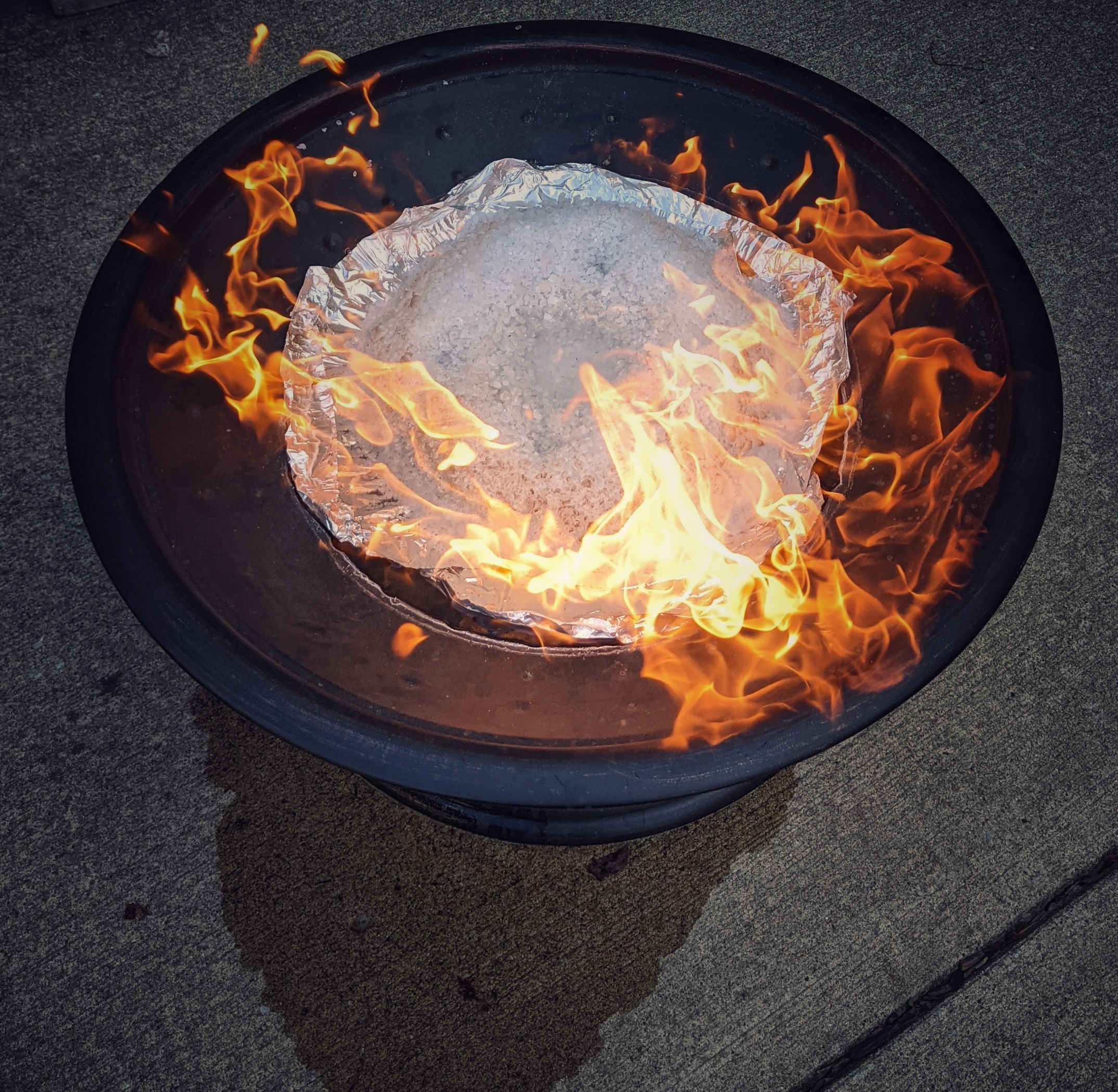
Last year as we were preparing for the Easter Vigil (the nighttime service that is the culmination of both Holy Week and, really, the entire liturgical year), Father T.J. let me know that I would be responsible for building and lighting the outdoor Paschal fire, the flames of which signify resurrection and which are used to light the Paschal candle for the first time. 

And I thought, great. I love the Paschal fire; it evokes something so deep and elemental about our faith and worship tradition; it is such a powerful liturgical moment. This was going to be amazing!

But there was just one problem. And if you recall my sermon from a couple weeks ago about my reticence towards going ice fishing, you might be able to put the pieces together: I am not the most outdoorsy person. As a Cub Scout I was more likely to get a badge for indoor activities like cooking or arts & crafts than I was for anything out in the woods. So building fires? Not exactly my strong suit.  Members of the Young Adults group have seen my rather suspect attempts at building a “camp fire” in the church garth by simply lighting a Duraflame log…so they’ve known this for some time. 

But anyway, back to the Paschal fire. Fr. T.J. said, don’t worry, there’s a really simple way to do this. Watch this Youtube video and you will see how to make the fire with just two things: rubbing alcohol and coarse salt. And it’s true! Those two ingredients, when ignited, create a beautiful, bright fire. My struggle to actually get the thing lit is a story for another time, but if you were at the Easter Vigil this past year, you saw the fire blazing out on the labyrinth, and you saw how it sparked the Paschal candle and how it sparked our Easter joy. Just some fuel and some salt for the flames to dance upon.

That’s the amazing thing about salt: sort of like the burning bush that Moses encounters, or the three young men who survive the fire in the Book of Daniel, salt can burn and burn and not be consumed. It is a catalytic agent, which, chemically speaking, means that it affects the rate at which the fuel is consumed. The salt is stable and strong, and so it allows the flame to burn long and hot and steady rather than just flaring up and disappearing in a moment. 

This is very useful for Paschal fires, but also for other things. You see, in 1st century Middle Eastern cultures, among other places, this same principle was employed in the earthen ovens used to make bread: salt would be placed on the bottom, topped by fuel (which in that time was usually dried animal dung) and then lit to produce an intense, consistent heat for baking. 

And it’s true that salt was also used for preserving food, but in a society that had very little access to meat, it was actually this use as a catlytic agent in the earthen oven that was the most prevalent in the daily lives of common people. Over time, if the salt became mixed with dirt or other materials that decreased its ability to help the fire burn, it would be discarded for a fresh supply. 

And so now, I invite you to listen again to that moment when Jesus says, You are the salt of the earth; but if salt has lost its taste, how can its saltiness be restored? It is no longer good for anything, but is thrown out and trampled under foot.

The first time I learned about the connection between salt and the earthen oven, it was like hearing that famous passage from the Gospel for the first time. Especially when you realize that the Greek word for “earth” that Matthew uses here is drawn from a Hebrew word that elsewhere in the Bible means not just the earth, the ground, the land but literally the earthen oven, the furnace.

And so some Biblical scholars who have made this connection argue that a more accurate rendering of the passage could be:

You are the salt of the earthen oven; but if salt has lost its saltiness, (that is, its ability to catalyze), how can it be restored? It is no longer good for anything, but is thrown out and trampled under foot.

In other words: in your place and time, here and now, you, the disciples of Jesus, are the catalysts of the flame of God’s Spirit. This is what you are. This is what God made you to be: salt to bear the heat, salt to sustain the fire of love, to allow it to burn in you and through you with the Divine promise that it will not consume you and it will not destroy you, for to bear this flame of love is your God-given purpose on this earth.

You are the salt of the earthen oven. And the world will be warmed and fed and illuminated by the holy fire you carry, by the brightness of God’s light that encircles you.

And I know that there are other symbolic layers to the image of salt, too, but if we take this interpretation to heart, then it suggests that being salt, being light, being disciples of Jesus, is not so much about preservation—which is, in essence, the slowing down of transformation—but about sustaining the transformative process: giving ourselves over to that ever-emerging fire, that blazing brightness we refer to as God’s Kingdom. 

We are salt when we let our selves and souls and bodies nourish the flame of love and help it to burn long and slow and steady down through the ages. We are salt when we turn our insitutions and our societies, like that earthen oven, into places where there is food and warmth and safety for everyone; where the lonely and the lost and the hungry gather in around the hearth; where our daily bread is found until that day when the true feast that God is preparing for us–the bread of heaven, the bread of life–is ready at last. 

And so if we strive to follow our Lord’s counsel, if we long to be the salt and light he tells us that we are, then we must ask ourselves: when and where do I feel on fire with purpose and joy? What thing have I been given to do, big or small, that stirs up a sense of warmth and light within me and around me? 

Or, if we’re not quite sure of that yet, then ask, what inspires me in the lives of others, those in my life or in the history of our faith, who have clearly been set ablaze with God’s love? Whatever it is—a creative pursuit, an act of service, a cause for justice and peace, a conversation with a neighbor, a small gift offered in love, a dedication to prayer—focus on these things, make note of them, and consider deepening your practice of them as we begin to approach our season of Lenten reflection and devotion.

Even now, in the deep chill of winter, long before the salt and fuel are mixed and the Paschal flame is lit anew, we can still light up the world. We can still be the source of brightness and the providers of nourishment. 

For if we are the salt of the oven, scattered gently down upon the earth by our Creator, baptized with fire and the Holy Spirit, then we have but one mission: to keep the flame burning for as long as we can; to nourish the world with our love; and to let our Alleluias and our Amens rise up like ember and smoke and the scent of baking bread: the spark of eternity, the scent of heaven, the taste of home. 

For more on the scholarship behind this sermon, visit: https://www.ajol.info/index.php/hts/article/view/70848/59805

The Ancient and the New

It’s been one month since I arrived in Mirfield; as such, one quarter of my time here is already done. I can already sense little shifts in the landscape. The dawn is brighter as I walk up the hill to morning prayer; dusk lingers a bit longer in the church as we chant the psalms at evensong. There are changes inside of me, too. A bit less disoriented, a bit more confident of how I fit into this place.

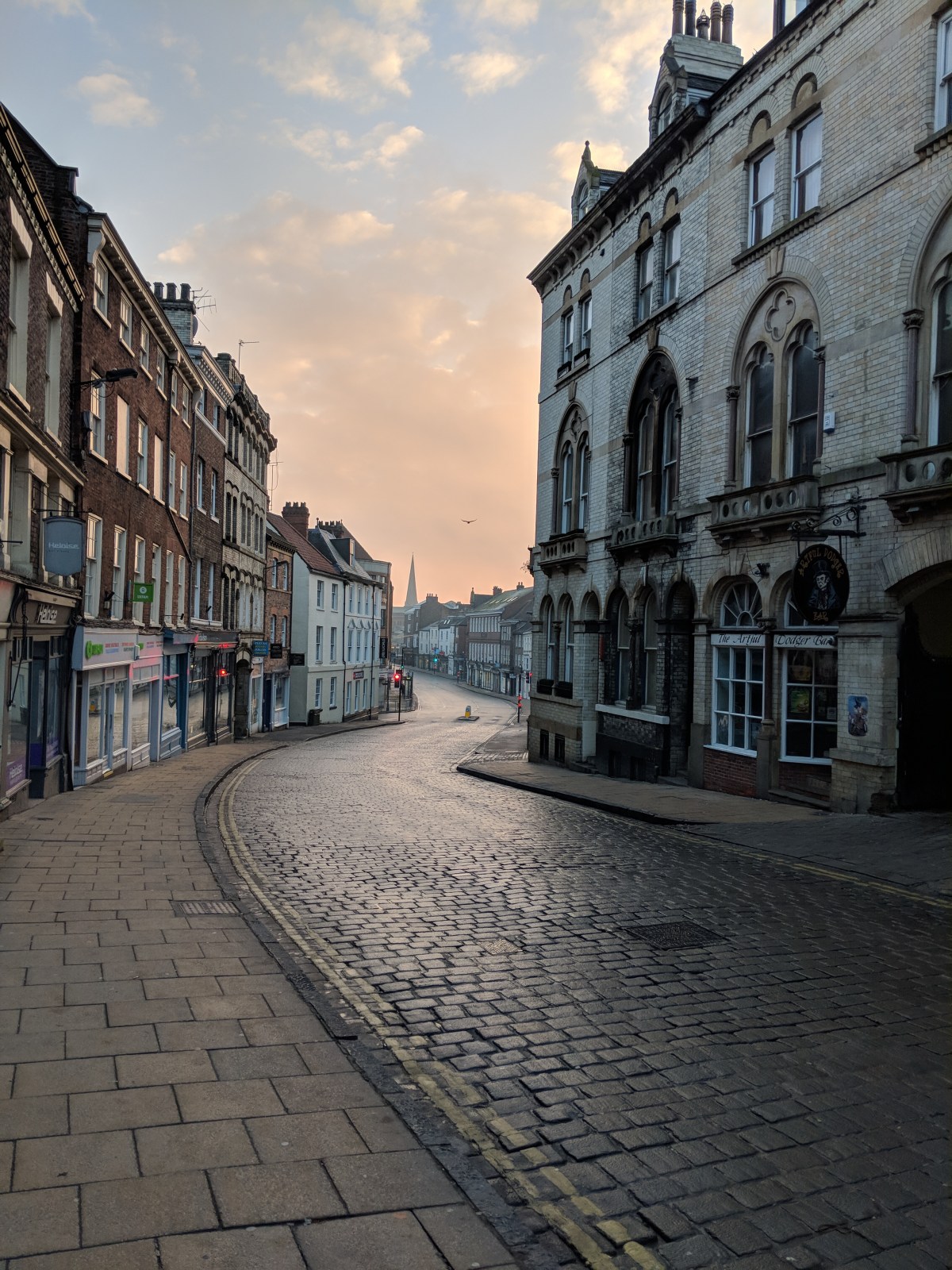
So much has gone on since my last post. There was the somber and beautiful Ash Wednesday liturgy, when the priest drew a cross on my forehead with cool, damp ashes that had been sprinkled with holy water. A day of silent contemplation at the College to usher in Lent, during which I alternated between stillness and dizzying anxiety. A weekend trip to the ancient city of York, where I wandered alone through the medieval streets looking for a glimpse of a ghost or two. At the massive and magnificent York Minster I was stunned into silence, not simply because of its visual grandeur, but in recognition of the centuries and centuries of prayers that have been offered up into its lofty heights.  I felt alone, and yet deeply connected to that never-ending litany.

This journey thus far, with its ample opportunities for reflection, have made it very clear to me how I am still learning to be a disciple of Christ on the most basic levels: to look kindly upon myself and my flaws, and those of others; to trust that God actually loves me, personally, and not just as an abstraction; to recognize that grace is imbued into everything, whether I see it or not, because God is far more than I can see, or feel, or guess at. These are simple, incomprehensible truths. I know how much I still have to grow, and yet I am also seeing more clearly how becoming a priest is less about growth and more about fully inhabiting myself as God made me. We are not asked to be perfect as priests, but we are asked to be deeply, authentically ourselves, and that is the hardest thing of all sometimes. That goes for non-priests, too, of course.

Lest you think my entire month has been pensive introspection, there have been tons of joyful moments, too. Case in point: on Sunday afternoon I went to lunch with a classmate; we drove out into the countryside and the hills were so green and vast I wanted to cry. Afterwards we drove up to the Victoria Tower, an old observation structure perched far above the town of Huddersfield, and the wind was blowing and the clouds were scudding across the sky and I thought, yes, to be alive is a very good thing. To be here, breathing and breathless and crying from the wind and the wonder is exactly as it must be.  Come, Lord. Come, spring. I am broken open, and I am ready.

Preparing for Lent

The season of Lent is almost upon us. The preparations at Mirfield have me learning about some very old customs that are quite new to me. Today, for example, is Collop Monday.  What’s a collop, you might ask? Apparently it’s a word that refers to bits of leftover meat, often bacon, which are traditionally eaten up on this day before the Lenten season of fasting begins on Ash Wednesday.  The grease from the meat (at least, if Wikipedia is to be trusted) is then used to fry up the pancakes that are traditionally eaten tomorrow, Shrove Tuesday. Mmmm, pancakes.

All the students at the College went up the hill to the monastery house this afternoon to eat Collop Monday lunch with the brethren. It was a feast, although sadly no bacon to be found. BUT there was brisket, roast chicken, stuffing, and tons of dessert. Gotta get those calories in before the menu is pared down for Lent!

Lent is taken quite seriously here, and many of my classmates have been pondering what sort of discipline they are going to adopt starting Wednesday. If you have been part of any liturgical church tradition, you are probably familiar with the question, “what are you giving up for Lent?”  The idea is that in the relinquishing of a particular habit, or in the adoption of a new spiritual discipline, we are creating space in our hearts to listen to God as we approach the commemoration of Christ’s death and resurrection in Holy Week. It’s 40 days of soul-searching, and I could sure use it.

At Mass this morning the homily talked about how in our soul-searching we tend to bargain with God, usually petitioning for favors or for the cessation of misfortune. I do this all the time, frankly, even though I don’t necessarily think God relates to us in that way. I’ve been doing a lot of imploring to the heavens lately as I adjust to life over here and battle some inner and outer demons. Maybe you can relate.

Truth be told, I get really annoyed by people who sneer at anyone who prays with a desperate heart. “Well, he only prays when he wants something!” Come now, we all want something–don’t kid yourself that you are holier just because you pray at other times, too. The fact that we are compelled to cry out to God in any circumstance is a sign of grace to me; it just so happens that our need and our fear is usually the hollow space in which God can enter us, if we let God do so. (See Luke 18:9-14)

The challenge, at least in my case, is to remain open–to allow God to dwell in the space that’s usually cluttered up with the distractions and novelties that pervade my life. And so Lent is a little bit like spring cleaning for the heart; it’s an intentional effort to clear out some room and prepare a seat for the Holy One to come and abide with me as we wait together for new life to emerge.

I’m pretty sure what my Lenten discipline is going to be, but I’m going to pray on it a bit more between now and Wednesday before committing. If you’ve already settled on something for yourself, I’d love to hear about it in the comments!

God bless you, friends. If you’re reading this, I am grateful for your companionship on this journey. I’ll write in a couple of days to describe the Ash Wednesday liturgy, which I’ve heard is beautiful.

xo

Tea with the Monks

Sundays are a whirlwind at Mirfield. Mattins (morning prayer) at 7:30 with fellow students and the monks of of the Community of the Resurrection, then a sung Mass til 9, and then I dash off to my field placement church(es) in town: St. Mary’s in the center of Mirfield at 9:45, followed by St. John’s in the nearby village of Upper Hopton at 11:15. Four worship services before noon!

After Sunday lunch back at the College there is a bit of a pause when students are welcome to go up for tea in the large home where the monks live. I didn’t go my first Sunday and decided I would venture up today to meet some of the brethren (as the monks are collectively called).

A classmate and I got into a long conversation with Fr. Eric, who has been a monk with the Community since 1961 when he arrived at Mirfield as an “unwilling” young novice–he said that as a young man he felt the call to monastic life but he was resistant to it at the same time. He admitted that he even kept his luggage packed for the first three weeks at the monastery, ready (hoping?) at any moment to be dismissed and to go back to his regular life. And yet nearly 60 years later he is still there, still working out his calling, still seeking God each day in worship and contemplation.

Given my own struggles (see previous post) I was deeply comforted by Fr. Eric’s frankness. Do we ever really know FOR SURE that the thing we are doing is the only thing we could have/should have done? Whether it’s a career, a relationship, or any other major life decision, we always step into it with an element of blind trust, because we can never know how it will turn out. I asked Fr. Eric if he ever reached a place in his life where he ceased to struggle with his calling and he chuckled. “A retreat visitor once asked me if I ever questioned becoming a monk,” he said with a smile. “Before giving it much thought I answered her, ‘every day!'” He laughed merrily.

There are no guarantees when you commit to a relationship, even when it’s with God. There will be doubt and struggle, and sometimes you will question why on earth you are doing any of this. And when you think about it, God has no guarantees when entering into a relationship with us, either: we are fickle and resistant far more than we might like to admit.

Despite this, God remains committed, and that divine fidelity hopefully inspires our own faithfulness–to God, to each other, and to the loving commitments that we make in this life. Not out of a sense of duty, and not because we are free of doubts, but because we trust that fidelity itself is a transformative practice, no matter the outcome.

Fr. Eric then told us another story about an elderly monk who is visiting the Community right now from the northern reaches of England. He is not a member of their order, but he has a longstanding relationship with them. This particular monk lives alone on a mountaintop; he’s been there for years, waiting and hoping that some others will join him to form a community. Nobody has ever come, though, and so he lives as a de facto hermit. I was both fascinated and shaken by this image of a man waiting for a vision to come true despite all evidence to the contrary. What kind of patience and commitment must that take? Did he ever second guess his decision? How does he know that he should stay up on the mountain?

After the tea ended, with all of these thoughts lingering in my mind, we walked back through the garden towards the College building; the sun had set and the air was damp and icy. My classmate pointed toward a cluster of forlorn bushes and said that before I leave in June, they will be covered in roses. It was hard to imagine it then in the February twilight, but I imagine he must be right; the roses will arrive in their time. A few months from now, on a balmy night, the air will smell sweet and who knows what I will have learned. I can’t quite picture it, but I have to trust.