On Anger, & What To Do With It: A Sermon

I preached this sermon on Sunday, April 6 at St. Anne Episcopal Church, West Chester, OH. The text cited is John 12:1-8, Jesus’ anointing for burial by Mary of Bethany.

There’s an aspect of life—of faith, even—that we don’t talk much about on Sundays. Maybe it’s because we’ve been raised to be polite. Maybe it’s because, for very good reason, we hold fast to the proclamation of a loving and gracious God. But nonetheless, there’s something that we all contend with in our lives that’s probably worth talking about, and that’s anger

Are you feeling angry these days?

If not, at some point you surely have felt it, whether about the state of the world; the decisions of others; or the frustrations that tend to show up each day. Maybe you’ve felt anger at yourself for the things you wish you’d done differently but can’t take back. I know I have felt all this and more, though as a person who tries to remain centered and peaceful, I may not like to admit it. 

But anger is hard to avoid when our hopes are dashed or our deep fears encountered or our wounds touched. And some days we might wonder, if anger is so bad for us, why, Lord, do people keep giving me so many good opportunities to practice it??

It’s tough, though, because sometimes a bit of righteous anger feels appropriate. I get angry, for example, when folks demonize vulnerable groups of people who aren’t hurting them, people who are just trying to live their lives as best they can.

And I get angry, too, when I see how working-class communities like the one my family came from in rural Michigan have been dismissed and left behind by 21st century economics and culture.

And this is sillier, but I was even a bit angry last week when Cincinnati got passed over for the Sundance Film Festival because, essentially, some folks out west still consider the entire middle of the country a big blank space. I’m from California, but I consider myself a proud midwesterner now, so that riled me up a bit!

I cite these because anger, it seems, cuts across ideologies, politics, cultures, and identities. It is an equal-opportunity companion in this life. And there are plenty of late nights when I reflect on my own personal failures and I’m just angry at my own foolish self.

The question is, what do we do about it? 

In a cultural moment that seems so saturated by anger and its consorts—fear, anxiety, uncertainty, cynicism—the question of what to do with our anger, individual and collective, is both an ethical and an existential one. Ethical, because somehow we have to figure out how to live meaningfully in this world despite its frustrations. Existential, because Jesus calls us to be something more than the sum of our many angers. 

Lent is almost over, and we are in the foothills of Holy Week. Soon, through the Passion of Christ, we will bear witness to the the cost of humanity’s capacity for self-defeating anger. So it’s a good time to figure out what to do about the rage within us and amongst us, lest we keep on murdering the promise of the kingdom that still stands in our midst. 

In today’s Gospel reading, I think we are given two insights–two pathways–in our response to anger, though I don’t think that this story is usually viewed that way. 

Consider first Mary of Bethany—she who previously sat at Jesus’ feet while her sister Martha cooked and cleaned. Mary is not usually viewed as an angry person, but for the first time this week I found myself wondering if here, in this moment in the narrative, she actually is. 

Because I remember how angry I was when my father was dying—not angry at him, but angry that it had to happen at all. Angry that I had to watch his vitality slowly ebb away. And I know, too, how somethings the things we love the most also wound us the deepest. And so I wondered, maybe, if Mary’s anointing, her shattering of the precious jar, her wasteful smearing of fragrant oils, was not, as I have often assumed, some sort of calm, smiling ritual. 

Maybe there were angry tears streaming down her face as she did so. Maybe she was furious with grief that Jesus–her teacher, her Lord, the one who raised her brother from the dead, the one who could potentially make this mess of a world beautiful again—maybe she was furious that he was giving himself over, that he was surrendering himself to death at the hands of those same old persecutors who kill everything good. Maybe Mary was anointing him with holy anger as much as holy love. Because I find those two are often strange companions in the tangle of this life, where good things break and sure things falter and we must both rage and bless at the same time.

However (and this is essential) anoint him she does, even through her angry tears, because despite how disappointed Mary must be that Jesus will die, and that life does not conform to our expectations, she realizes in the way that only Wisdom can reveal that we must anoint our fierce anger at the world with an even fiercer love, rather than try to manipulate or abandon or destroy what disappoints us. 

Because to give into that temptation is to choose the other path in the story today—that of Judas, the betrayer, who is likely also disappointed that Jesus is not the sort of savior he imagined. But for Judas, it seems, the world is just a series of disputes to be bargained and negotiated and won, rather than a network of relationships to honor.

It may be tempting to navigate the world that way, with our understandable anger at the way things are (even Judas surely raged against the empire) but it is not the way of Jesus. It is not the way that will lead to the flourishing or health or peace that Jesus offers. Only the pouring out of our hearts, only the giving away of our costly love will ever lead us to the kingdom of Christ. 

So what do we do, friends, with the angers of our own life and times? How do we acknowledge all that we carry within ourselves but then, like Mary of Bethany, surrender it to our Lord? 

First, we have to name it—really name it. Maybe part of the problem in all our conditioning to be polite is that we tend to remain strangers with our anger. Maybe it would help to begin by writing down for ourselves the things that anger us. Not on social media, please, but just for ourselves. An accounting of our frustrations, our sorrows, our disappointments, and our fears. And then, as this Lent winds down, give them over to Jesus in prayer. 

Maybe it would help, like Mary, to undo your hair, and bend low, and smear the bittersweet fragrance of your rage and blessing on his feet. If you are disappointed that nothing seems like an easy fix, tell him. If you had hope for so much more from this life and from your fellow humans, tell him. If you don’t understand why crucifixion must be the path, and why we can’t have nice things, and why so many people suffer for no good reason at all, tell him. 

But I pray we will tell him, too, that in our anger, we will refuse to be apathetic or craven or cynical. That we’ll tell him we’re willing to love with our shattered jar and our shattered hearts. I promise you, he will understand.

And then, together, we will continue to go about the work of building a community and a world in which, even as we acknowledge our anger, we become a people who are not ultimately formed by it. A people who will not sell our hope for thirty pieces of silver or justify our anger on the backs of the poor, but who will anoint the present moment with our furious compassion. Even with tears in our eyes. 

Because every week, as we come to the table to feast on the shattered pieces of Christ’s body, we glimpse the truth: anger is persistent, yes, but love is eternal. And he will transform it all: our anger, our grief, our disappointment, our fear. He will transform it. 

Just ask Mary. Because in a couple of weeks’ time, we will see her again, but it will be in a garden, in the cool morning light, with the perfume of burial washed away by the scent of living, resurrected things. And she will cry very different tears. And maybe so will we.

And for once in the history of broken jars and broken hearts and all the things we do not understand, our anger, at last, will be forgotten.

Shepherd/Lamb: A Sermon

I preached this sermon on Sunday, April 21, 2024 at St. Anne Episcopal Church, West Chester, Ohio. The lectionary text cited is John 10:11-18, Jesus speaking about the Good Shepherd.

I don’t remember the first time I saw an illustration of the Good Shepherd, but it’s one of those images that, even if you grow up with only a marginal relationship with Christianity, you just sort of know about. It’s been depicted in so many formats, in visual art, in music, more so than almost any other image of Jesus, other than perhaps the Nativity or the Cross. 

In the little Lutheran church in Michigan where my grandparents belonged and where I’d venture as a boy on summer mornings, there was a massive, colorful stained glass window above the choir with an image of the Good Shepherd, and if you close your eyes you can probably imagine it: the green trees and billowing clouds; the smiling shepherd and the snowy flock of lambs. 

As a young child, looking up at this image, bathed in the dappled sunlight that streamed through the window, I assumed that this is who God must be: a protector and guide; he of the watchful eye and gentle heart, the one who will not leave us, the one who is soft light and green grass and a warm, safe place to fall asleep when night falls.

But it’s difficult, because as time goes by, we are faced with reminders that life is not a stained glass window. Wolves still prowl the landscape, just out of the frame of those gauzy, glowing images of the Shepherd and his lambs, and sometimes they pounce. 

And when this happens, when the ones we love are snatched away, when we are scattered, and when we feel lost, suddenly the whole proposition of a shepherding God who hovers protectively behind us, ensuring our safety, preserving us from barren places, might feel like a cruel joke. 

If you have ever asked or been asked by someone, “where was God when ____ happened?” you know what I am talking about. In such moments, those stained glass images can lose their luster, and feel more like a fantasy than a promise kept. We would be lying to ourselves and to God if we did not admit that this is sometimes the case. And it’s ok to ask those questions, because God knows we have all had our share of dark nights and howling wolves at the door.

This week, St. Anne lost a beloved member of our own flock far too soon. This is not the first time our community has faced such a loss, but it is also true that when someone like our dear friend Spencer Pugh is taken away so suddenly, without any opportunity to say goodbye, it can feel disorienting, and all of our words about the God who protects and watches over us can feel a bit hollow. How could such a thing happen? Where was God when we needed him?

But all of us must grapple with these questions eventually, because these questions are what emerges when we get honest about faith, when stained glass windows can’t tell the whole story, when platitudes are no longer adequate to address the complex mixture of grief and joy that deep love and deep relationship require of us. 

We ask these hard questions when we grow up and realize that anodyne images of the Good Shepherd tending a flock of placid sheep do not tell the whole story of God’s presence and activity in our midst, nor do they fully capture the way of life that Jesus has offered us. 

Here’s what I mean. Think of that image of the Good Shepherd again. Call it to your mind. Ask yourself: where is God in that picture? 

Who is God in that picture? 

Who are you, in that picture? 

When we start out, as I did as a kid in that Lutheran church, this seems pretty obvious. God is the Shepherd, we are the sheep. And this is partly true. 

Because long before Jesus even came into the world, God was a shepherding God. When Jesus says, I am the Good Shepherd, as he does twice in this passage from John, notice that he is using the same name for God that was uttered to Moses, the unspeakable name usually translated as I AM WHO I AM. I AM the Good Shepherd. 

I AM, the ancient and eternal God, is the Good Shepherd, because God, from time immemorial, has always been the one hovering over creation, tending and watching and calling us by name, seeking to guide us through wilderness places and call us back even when we are stubborn or foolish or lost like sheep, stumbling under the weight of our waywardness and loneliness and our unanswerable questions.

But that’s not the whole story. That’s not all there is to this image. Because there’s something different about God in Jesus. Something surprising. 

What I have come to realize is that in the image of the Good Shepherd, Jesus is actually, ultimately, the lamb in the picture. He is the lamb who was slain. He is the lamb who lays down his life. The lamb who bears the wound of our waywardness and our loneliness and our questions. The lamb who gives himself over to the wolf. The lamb who takes away the sin of the world. The lamb who dies and yet lives again, so that all of the rest of us might do the same.

So where does that leave us in this picture?

I could not have understood such a thing as a child, when I simply needed a God who would always lead me beside still waters. But now, with every twist and turn in the stream, with every loss and hard question that comes along, I have come to see what I did not, what I could not back then:

That there is something far more serious and yet also more hopeful in this image of the Good Shepherd than platitudes about a God who will always keep us safe, when we know all too well that life and love are not always safe or certain.

Instead, we discover that in Christ, in our baptism, in our particular living participation in the aliveness of Jesus, God has done a new thing: he has traded places with us. He has made us the Shepherds, now.

And he, God, has entered into the small and the weak and the vulnerable parts of creation, he has become one with the lambs and the lost and he has now said to us, my children, my own precious heart, you will be saved, but not by means of a stained-glass window sort of faith. Not by easy answers and ever-gentle paths. 

You will be saved by the love of the least of these. You will be saved, day by day, by the care YOU give, by the protection YOU provide as a shepherd, as a guardian, as a companion and a friend. You will be saved by the number of small things you learn to call by name. You will be saved by taking your share, now, in the shepherding that God has always offered. 

You will be the one who says, now in Christ,  I AM the Good Shepherd. And I will stand up to the wolf at the door, and I will help tend to this fragile earth and its fragile creatures, and I will lay down my life for you, my sibling, my neighbor, my friend, because salvation is not a pursuit free from danger, but is the unfolding of a love stronger than death. And now we have been given a Shepherd’s heart, and the Lamb who is God is the one we carry with us on the road, and together, we pray, we will all get where we are going, and no one will be lost because we won’t abandon them.

People like Spencer lived their lives as shepherds like this. And even when they’re gone from our midst, they serve to remind us all of our shared calling, our responsibility to be part of the answers to those hard questions we ask, and to labor in the hope of that world first glimpsed in stained glass: the one with the green trees and the billowing clouds and the dappled sunlight, where the promise of life everlasting is not a cruel joke, where justice is realized, where love reigns, and where the wolf no longer prowls.

Are you ready for that work? Are you ready for that world?

As God once said, and as we are now invited to say back: I am.

I’m Here: A Sermon for Good friday

I preached this sermon on Good Friday, March 29th, 2024 at St. Anne Episcopal Church, West Chester, OH.

Here we are. 

Here we are, at the Cross. At the place that is an ending, even if we pray that it’s not the end. It’s the day in the story that no one wants to think much about and yet that must be faced, eventually. The day that is full of dread and sorrow and pain and yet compels us in ways that are hard to explain. We are pulled in close on this day, challenged to listen and to look, challenged to stay, even if we would rather run far away, rather be anywhere else than here, in proximity to the tears and the sweat and the blood, holding vigil with a broken man as he weeps and dies. With a broken God as he weeps and dies. 

We do not enjoy this observance, and yet we come, on Good Friday, because somehow we know that we must come. Not out of a sense of religious obligation or detached piety. No, we leave all of that posturing far behind us if we are actually paying attention to the story, if we are actually open to it. Out here on Golgotha, where things are brutally spare and honest, where only the wind and the rock and the bones take note of our presence, out where even temples and empires have neither sense nor safety to offer, it is something deeper than duty that draws us.

We come here because we know, in a way deeper than knowing, that this is what love requires of us. We know, somehow, that showing up, that being present, that being able to look into someone’s frightened, tired eyes–into Jesus’ frightened, tired eyes–and to simply say, “I’m here,” is the most important thing that we can do when there is nothing else left to do. 

We know this because we know death all too well. We have lived it. If you have ever received that call or text that comes late in the night and you have rushed to be with someone who is gravely ill or dying, you know what I mean. You know how, as their eyes grow dim and their energy fades and their breathing changes, and then they are sleeping, and then they are slipping, and you aren’t even sure if they can hear you anymore…you know that you cannot do much of anything except say, “I’m here. I’m here. I’m here. I love you. And I’m here.” 

We feel helpless, then. And we are. And yet this is exactly what we need to do at such times. No big gestures, no eloquent words are necessary. Just, “I’m here.”

And so it is fitting, now, as Jesus dies, that we stop what we’re doing, that we come here from wherever we are in our lives and in our hearts. Not to fix anything or figure anything out. But simply to say to him: I’m here.

I’m here, Lord, even if we weren’t always as close as I’d hoped. 

I’m here even if I never fully understood you, even if I never felt fully understood.

I’m here, even though there are a thousand questions you never answered, and a thousand more I never asked. 

I’m here, even though I have doubted you, and I have doubted myself, I have doubted whether the type of love you talked about is even possible in a world as broken as this one. 

I’m here, even though I cannot bear to see you like this. 

I’m here, because I cannot imagine never seeing you again. 

I’m here, and somehow, I pray that it is enough that I am here, to hold your hand, to look into your eyes, to show you that you are not forsaken. 

I love you, and I’m here.

The strangeness of it all, is that, on this day, we are here consoling God as God dies, whereas for all the rest of our days, God has been the one drawing close to console us. Since the moment we were born, and as we grew up, and as we grew older and began to learn the cost of growing old, God has always been waiting, listening, watching, staying near. God has been ready, when we cry out in pain or fear, ready to drop everything, to come, to say, “I’m here. I’m here. I love you. I’m here. I know you don’t understand. And I can’t always fix it for you, but I’m here.”

Yet now, in the mysterious circularity of love, like children who must one day cradle their parents, it is our turn. Our turn to comfort our Creator, our Lord, our God, as he cries out and enters the darkness, enters death—the one and only place where he, being eternal, being God, has never been before. Our turn to help him feel a bit less afraid, just this once. 

Our turn, now, to be the one who is strong, the one who must endure, who must bear witness, who must show up, as God has always done for us. Good Friday is our turn to offer back the gift of presence, saying, yes, God, I know. It hurts to live. And it’s scary to die. I know. But I’m here. I’m here. I’m here. 

In other words, today is the day, spiritually, that we grow up, that we become the ones that he always longed for us to be. The ones who choose, in coming here, to no longer hide from death nor from pain nor from ourselves, because love compels us, above all, to show up, to stay present, no matter what. And because today, on the Cross, God, who never needed anything, who didn’t know what need felt like, now needs us. 

For he has traveled from farther than forever, and the trip has taken its toll. He has been wearied and winnowed down to the bone. He has spent all he had, and he has nothing left to give over except his body, and he is willing to risk be misunderstood and despised and mocked, all for the chance to come and find you and say those words from his own lips that God has been trying to tell us for all time: I’m here, I’m here, I’m here. I love you. I’m here.

As it turns out, all he ever needed was to hear us say it back.

Breakwater: A Sermon

I preached this sermon on Sunday, March 17, 2024 at St. Anne Episcopal Church, West Chester, OH. The lectionary text cited is John 12:20-33.

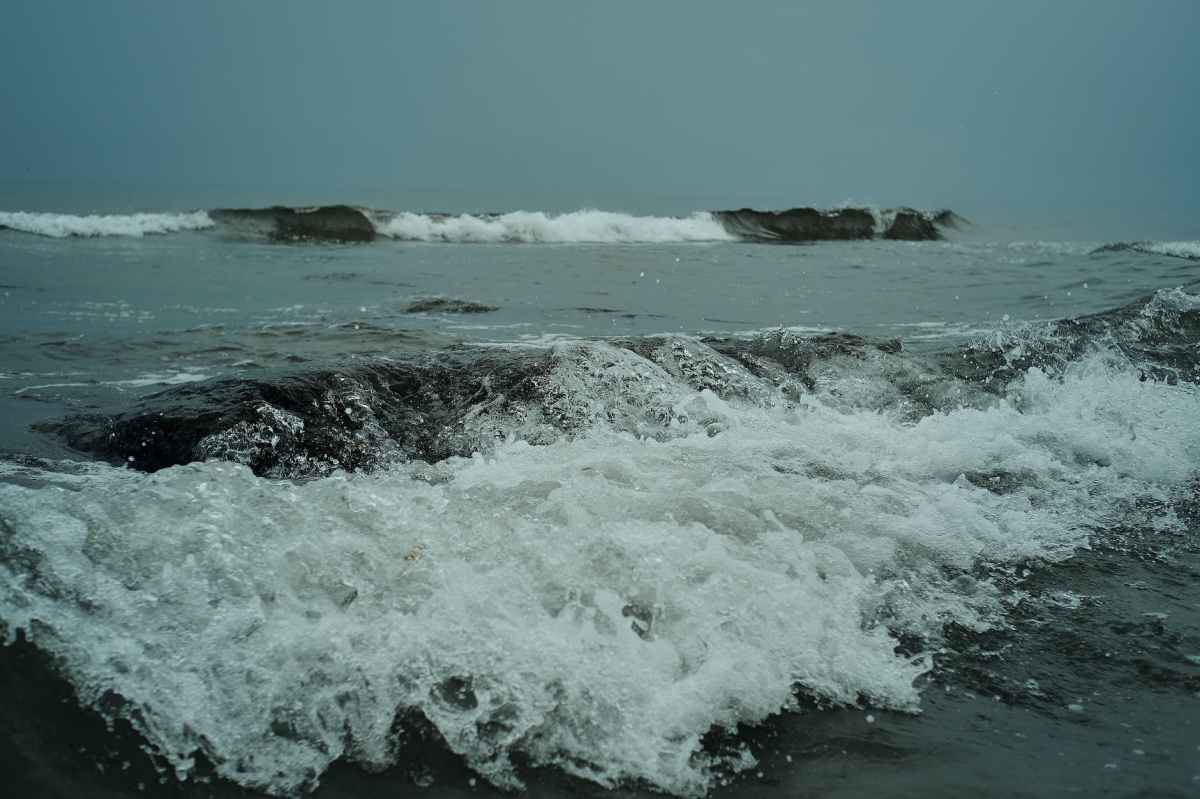
If you have spent any time traveling up around the Great Lakes, you might have observed the structures called breakwaters, which are a feature of many cities with harbors and bays along the lakeshore. Their construction varies, but essentially they are a thin wall or barrier that juts out into the lake in order to do exactly what the name implies—to break the waves that move in toward the shore, creating calm, navigable water on the inner side of the wall for ships and other small craft, while the swells and breakers roll and rage in the great expanse beyond. 

Growing up, every summer we would spend time in Marquette, Michigan, which sits right at the edge of Lake Superior, the largest and wildest of the Great Lakes. There is a breakwater that extends out from the shore there, and when I was young, my family and I would walk out onto it, taking in the views of the water and the city. 

The breakwater in Marquette has been there since the 1800s, reconstructed a few times due to storms, and the first half of it is a sturdy concrete structure, flat easy to walk on in good weather. You can stroll out in this narrow path, the calm harbor to your right, the endless waves to your left, and as a kid it was a thrill to be there on the breakwater, bathed in summer breezes, dancing and skipping out, out, out along the thin line between home and the world beyond, between familiarity and the eternity of blue water stretching toward an unseen shore.

But then there was a point on our walk where we would always stop. About halfway, the breakwater turns at an angle and keeps going farther out into the lake, but this second portion is only comprised of large boulders; the concrete wall ends and from there the going gets slick and treacherous as the waves collide with the bare stone. The only way forward is to scramble and leap and crawl along the rocks. 

My cousins and I always wanted to go onto the rocks all the way out to the end, the very end, where a light tower marked the edge of the breakwater. But the adults wisely said no, it wasn’t safe. So we would turn back. 

And what I could not have perceived then, but that I do now—more and more so with every passing year—is that life is much like that walk along breakwater. When we are younger, setting out into the wide expanse of the world is deliriously exciting, and, if we are blessed with a kind and caring childhood, we take for granted, perhaps, the solid structures beneath our feet. Stay on the straight and solid path, we are told, and all shall be well, and if you are careful, the waves will not break over you, and you will go as far as you need to go. 

But then, somewhere along the way, we get to the place in our lives where the solid footing ends, and we realize, with some surprise and trepidation, that we are no longer children, and that now we are expected to keep going. 

We discover that growing up and growing wise means that the journey does not, in fact, end at the bend in the path, but that life keeps going, going out where there are only rocks to traverse, where the water licks at our heels and sometimes threatens to sweep us away, out where we must indeed scramble and leap and crawl on our knees, and the walls we relied upon for safety suddenly seem much more permeable than they once did. 

One of the times I realized this was when my father had his first major heart attack in late spring, several months before he died. As it happens, I flew into Marquette, where he was in the ICU, and I remember seeing the lake as we drove through town in between hospital visits, and I remember seeing the breakwater, too, curling like a question mark out into the blue expanse, a reminder of simpler springs. 

And I remember feeling, in that moment, like my own solid path had ended, but that I was now required to keep moving forward out where there were only rocks ahead, with no one there to call me back.  I suspect most of us have had experiences like that.

And, in our passage from John’s Gospel today, this is also such a moment for Jesus, where the solid path he has been traveling since the day he was born comes to a precarious place , and when he, too, accepts that he must still keep going, out, out, onward, to where the footing is uncertain and where there is no guarantee of safety. 

“Now my soul is troubled,” he says. “And what should I say—‘Father, save me from this hour’? No, it is for this reason that I have come to this hour.”

Just as the other Gospel authors record his struggle in the Garden of Gethsemane, here John depicts Jesus at the edge of his own understanding, wrestling to reconcile the deep love he shares with his Father with the dawning sense that this love is no guarantee of preservation. Quite the opposite, in fact—this love for the Father is now clearly an invitation, a call, out onto the rocks where certainties end and faith alone must guide him. 

This love that has been growing in Jesus, that has been manifesting in his deeds and his teachings, this love that has bathed him in clear, calm living water, is now rolling in like a wave, rolling in from the unseen shore, and he knows, now, that to be all that he must be, to do all that he must do—for himself, for us—the wave must break over him, come what may, and the rock must be the place where he plants his feet and carries his cross and builds his church, the rocks where the walls of safety, the walls between heaven and earth, the walls between familiarity and eternity, seem much more permeable than they once did. 

It’s interesting, too, that this moment occurs alongside Andrew and Philip, who have been asked by some Greek believers to come and “see” Jesus, echoing Andrew and Philip’s own encounter with Jesus at the beginning of John’s text. Because inasmuch as this passage is Jesus reckoning with the nature of his own journey, it is also a moment for his disciples—including us—to reckon with ours. For “where I am, there will my servant be also.” If we are to follow Christ, then the rocks and the waves beckon us all. 

And our reaction to this realization might depend on where we stand. If we have become too comfortable in our faith, if we have become accustomed to solid ground beneath our feet, if we have not dared to venture out to the places where love requires us to risk something, then we, too, might feel our souls troubled by Jesus’ call. 

If so, then today we are being asked to take one small step outward onto the rocks—one small step towards admitting that we don’t have all the answers, ones step towards being vulnerable, towards embracing new ideas, new relationships, new ways of opening our hearts, new ways of standing with the poor and the forgotten and the storm-tossed—so that we might follow the path that Jesus has already traversed.

But if you are already out there on the rocks, somewhere between scrambling and leaping and crawling on your knees; if you already know all to well what it feels like to have left your certainties and safety behind, then perhaps Jesus’ call will be a consolation, because you will come to understand that even when the path crumbles under your feet, you are not lost. For this, too, is part of the path. 

And this is, in fact, the part of the path that we must travel if we ever want to grow up, if we ever want to grow, to reach that place where familiarity and eternity meet, where home and heaven lap up against one another: out, out at the outermost edge where Jesus abides, where he burns like a light at the end of the breakwater, at the end of every journey, drawing all people to himself, blessing every rocky path you have walked, every crashing wave that has washed over you, and every weary heart, including yours.

I have not been out on that breakwater in Marquette for many years, now, but I hope to go back someday. I still have a little bit of my father’s ashes, and if I can, I’d like to sprinkle a few into the lake there. But I am no longer a child, now, so I think that when I go, I’ll venture out a bit farther out onto the rocks to do so, to let his ashes mix with the water and the wind. It feels right, somehow, that this is how it must be, and where it must be, on that thinnest of lines between home and the world beyond. 

And though my feet might be a little unsteady, and my eyes might sting, I think my heart will still dance and skip like it once did.

It will not be entirely safe. Life never is. Love never is.

But it is still part of the path. And God will be there. 

Mountaintop: A Sermon

I preached this sermon on Sunday, September 24, 2023 at Saint Anne Episcopal Church, West Chester, OH. The lectionary text cited is Philippians 1:21-30.

Sometimes it feels like you have to possess superhuman capacities to face the enormity of the world’s challenges. In times of social strife or of personal distress, we might look at inspirational figures from the past, looking for some guidance about how to live bravely and well through times such as these.

But it can also feel, for me at least, like those inspiring saints of ages past must have possessed some otherworldly insight or giftedness to do what they did, to face what they faced. And I find myself wondering how on earth they found the strength, what secret wisdom must have guided them. 

On April 3, 1968, one day before he was assassinated, Martin Luther King, Jr. gave his final public address in Memphis, Tennessee in support of a sanitation workers’ strike. It’s referred to as his “Mountaintop” speech, and in case you’ve never heard it, or if it’s been a while, here is the final, unforgettable piece of it, where King said,

Well, I don’t know what will happen now. We’ve got some difficult days ahead. But it doesn’t matter with me now. Because I’ve been to the mountaintop. And I don’t mind. Like anybody, I would like to live a long life. Longevity has its place. But I’m not concerned about that now. I just want to do God’s will. And He’s allowed me to go up to the mountain. And I’ve looked over. And I’ve seen the promised land. I may not get there with you. But I want you to know tonight, that we, as a people, will get to the promised land. And I’m happy, tonight. I’m not worried about anything. I’m not fearing any man. Mine eyes have seen the glory of the coming of the Lord. 

What is striking for many people about King’s final message, of course, is the sense that he knew, on some level, what was about to happen, that he somehow foresaw the end of his own journey.

But it’s not King’s seeming anticipation of his own death that I find the most compelling thing about this speech. It’s that he seemed to be at peace with it. It’s the way he stood in that perilous moment speaking something that sounds a lot like joy, a lot like hope. And not a naive sort of hopefulness that assumes everything will turn out fine. No, it sounds like the deep sort of hope, deeper than fear, the hope that knows how, even if everything goes wrong, even if the worst possible thing happens, that even then, there is a well of goodness underlying everything that will never run dry. The kind of hope that says even though my life may end, and my eyes may close, the vision endures, for

Mine eyes have seen the glory of the coming Lord. And I’m happy.

But then I think about the small anxieties that sometimes clutter my own life, and I look around at the big anxieties of our age, and I hear that opening prayer we offered, the one that says not to be anxious about earthly things, and I think—I’d sure like to know what that feels like. I’d sure like to know how Dr. King got to where he was on that April night. And although, God willing, none of us will ever face the danger he faced, I wonder what it would take for the rest of us to experience that deep kind of hope, that peace, that tenacious belief in the well of goodness, even in the face of our own hardships.

Is such a thing only for the saints and the heroes? Or is there some way that we, too, might travel up to the Mountaintop? 

I think there is, and St. Paul helped me see it this week in his letter to the Philippians. 

It’s interesting, in this passage we heard today, Paul sounds a lot like Dr. King; he, too, seems to possess a peace and a hope even as he is suspended between the possibility of life or death. He says,

I do not know which I prefer. I am hard pressed between the two: my desire is to depart and be with Christ, for that is far better; but to remain in the flesh is more necessary for you.

Whatever else we might say about Paul, we know that he was a passionate person, deeply engaged in the life of the world. But death was on his mind, because he likely wrote this letter from prison in the final years of his life. He was put there by the Roman authorities, and while it was his ardent desire to be reunited with the various faith communities he had founded, there was surely a part of him that knew his chances of doing so were slim. 

Like Dr. King, he was a man hunted. But also like Dr. King, he was a man haunted by possibility, who had glimpsed something on the proverbial mountaintop. He had glimpsed something and he insisted that what he had seen, what drove his entire mission, was not for a select group of wise or superhuman people, but for everyone, everywhere. It was the key to his hope, his peace, and his courage.

What was it? 

Well, it was Jesus, of course, but more specifically, it was the revelation that in Jesus and through Jesus, God’s wants us to know that we are in this together. You and me and God and everyone else, we are in this together. We don’t have to face this alone. We are one people. We are one creation, redeemed by the one Living God. We are part of one story, and it is a good story, a story that begins in love and ends in love. 

And though we are diverse, and though we each face our own choices and challenges and fears in each generation, it is this essential unity that holds us, that sustains us, and that places upon us the responsibility of caring for one another, loving our neighbor as ourselves, because fundamentally they are.

And although they don’t state it explicitly, what you will notice beneath the words of Dr. King and beneath the words of St. Paul is that they are able to face those big, frightening things, those questions of life and death and loss and hope, simply because they knew, deep down, that whatever happened, God would not abandon them nor would God abandon the story that has begun. 

And when you know you aren’t alone, then you can face anything. That’s why we come here week after week. That’s why we keep challenging ourselves to build more fully the Beloved Community. That’s why we pray for each other and lean on each other through good times and bad, all the way to the end.

You, and me, and everyone we’ve ever loved, and everyone we’ve ever hated, and everyone we’ve ever lost, and everything that has ever been and the God who made it all—we’re in this together. And that’s it. That’s the Mountaintop. That’s the simple, world-changing, heart-transforming truth that sustains the saints but is also available to every single one of us, even in our anxieties. And even when we face death.

Catching a glimpse of the promised land is not a private revelation for the few—it’s everywhere. It’s as close as looking in your neighbors face and realizing: we belong to one another. It’s as close as looking down at the earth and realizing: we belong to one another. It’s as close as listening to God in the still moments and in the frightening moments and hearing God say to you: we belong to one another. In life, and in death, and beyond, we belong to one another. 

Let’s keep building up a community here at Saint Anne where that is what it means to be the church. Let’s keep discovering what it means to belong to one another, and then to go out into the world and discover that ultimately we belong to everything. Maybe, if we do, we too will say, even at the end of our days:

Mine eyes have seen the glory of the coming of the Lord. And I’m happy.

What He Saw: A Sermon for Good Friday

I preached this sermon on Good Friday, April 7, 2023, at Trinity Episcopal Church, Fort Wayne, IN. The lectionary text cited is the Passion Narrative according to John, in which Jesus, as he dies, says, “It is finished.

I was not there to witness it, but I was told that shortly before my great-grandma died, many years ago, she began speaking to her own mother, long since dead—speaking to her as though she was right there in the room with her. Not mumbling in her sleep, not in a delusional state, but clearly,  directly, as you might talk to anyone who has come to visit your bedside. She saw her mother’s face, and then, not too long afterwards, she died, and it was finished

I’ve heard many similar stories about other people since then, and while I don’t really know how to explain them, they seem to suggest that as our lives ebb, like a wave pulling away from the shore, a returning wave of something makes its presence known to us—something very real and very deep. Maybe we call it a memory…or maybe we call it divine presence…or maybe, like my great-grandma, we simply call out, mother. Whatever it is, whoever it is, there is a shared sense across many cultures and generations that in our final moments, we catch a glimpse of the people and the places we have known and loved. 

As they say, our life flashes before our eyes.

Just last year a medical paper was published documenting, for the very first time, how this is in fact true—how life does flash before your eyes in the end. Somewhat by chance, the brain waves of a dying man were captured by an advanced medical scanning device. The doctors noticed that in the moments both immediately before and after this person died, the portion of the brain that processes memory was activated. As his other brain waves ebbed, the gamma waves—the waves of memory and meaning—flowed. He was remembering—processing a vision, somehow—of someone or something familiar. Something lost that had come back to him in the end.

And I wonder what he saw, that unnamed man. Was it his mother’s face? Maybe the time he got lost as a child? Was it the way the sun sets over the water on a summer evening? The fragment of a half-forgotten song? The smell of baking bread or the taste of good wine? How his father used to smile at him? And I wonder, were they just memories, just impulses in the brain, or were they a response to something real, something, like my great-grandma’s mother, that was somehow truly present again in a way that no medical scanner could ever detect? Those are questions that science cannot answer, but that the heart ponders nonetheless. 

Because I like to think that, whatever it was that the dying man experienced, or whatever it was that my great-grandma saw as her life slipped away, that they were not just alone with their thoughts. I want to believe that their lives and their love came back to them at the very end, like a returning wave upon the shore, a presence, a promise that even though it is finished, it still all mattered. And that nothing was lost. Not really.

And if that is true, then I also can’t help but wonder what Jesus saw in his final moments on the Cross before he said, it is finished. He who felt so alone, he who was so abandoned, so undeserving of the ending he received. My God, My God, why have you forsaken me? 

But if it’s true that our life flashes before our eyes, that love returns to us in the end to companion us into the darkness, I wonder what he saw as his breath ebbed away.

We know, of course, he saw his mother’s face, still alive, but deadened by grief.

And maybe, as he closed his eyes, maybe he saw the time he got lost as a child, when they found him in the Temple, when everything was new and possible. Or perhaps he saw the way the sun sets on the Sea of Galilee. Or maybe he remembered the fragment of a half-forgotten song heard long ago: my soul magnifies the Lord, my spirit rejoices in God my savior. Maybe he remembered the smell of bread in the Upper Room.The taste of good wine at that wedding in Cana. Or how his Father smiled at him in secret, in his heart, and from beyond the cold and distant stars.

Maybe it was all of this, the sum of a life, the fragmented pieces of himself gathering back in, returning on a wave, bearing witness to the ending, bearing the memory and the presence of love, bearing the unbearable weight of loneliness until…it was finished.

And although that would be beautiful and meaningful all on its own, and although I believe that Jesus’ own life and love came back to him in the end, I don’t think that’s all there was. I don’t think that’s all he saw as he hung there, his breath crushed under the weight of the world’s brokenness. 

I think we would miss something essential about who he is and what this day is about if Good Friday were the story of just another, single life flashing before someone’s dying eyes.

For the life of Jesus is the life of God, and the mind of Jesus is the mind of God, and the memory of Jesus is the memory of God, deeper and broader than any one returning wave. He holds the whole ocean of time and experience within himself. His life, his mind, his memory encompass everything, everyone, everywhere. 

And so it was not just his own private memories, his own personal life that flashed before his eyes in the end, but ALL of life. All that ever was, all that ever will be. He saw all of it as he died on the Cross. He saw all of you. He saw every part of you. And through eyes blurred with tears and blood and love, he saw, as he always had, in the very beginning, that it was good. Not perfect, but very, very good. 

He saw the time you got lost as a child and your parents found you. 

He saw the time you got lost and nobody came looking. 

He saw the way the sun sets over the lake you sat beside on a summer’s evening.

He saw the way the sun rose on the first day of the world. 

He saw how your mother sang to you when you were afraid. 

He saw the times you were too afraid to sing out loud. The poems you never wrote. The letters you never sent.

He saw every meal on every table. He saw every hungry belly.

He saw the consequential fruit trembling on the tree in Eden; and he saw the unnoticed wildflowers and weeds that grow on the side of the road. He saw the bouquets at every graveside, the names inscribed in stone.

He saw every creature, its life and its death, its peace and its agony, he saw every crack in the earth, every polluted river, every verdant forest, every wave of the infinite sea. 

He saw every battlefield, every bomb and bullet, every needless slaughter, and he saw how our brother’s blood cries out from the ground, seeking justice.

He saw every broken heart, every tearstained face, every lash of the whip, every dream deferred, every march for peace, every backroom deal, every sacrifice and every betrayal, every sleepless night, every tick of the clock. 

He saw all the times we failed, all the times we tried, all the times we made something beautiful, all the times we broke something beautiful. 

He saw all the times we broke.

He saw the worst of what we have done, and the best.

He saw all of it. 

All of life—all of life flashed before his eyes.

And then he said:

It is finished. 

He said, it is finished, now, my beloved child, bone of my aching bone, and flesh of my wounded flesh. Finished because now I see it all, with my own living, dying eyes, everything done and left undone. Now I comprehend your finitude, your fear, how alone you feel in the vastness of creation. I see, with my own eyes, the returning wave of memory and grief, all that was lost, all that was forgotten, all that was loved; all of it is returning to me now, and it is your face I see, your face I call out to, your face I will not forget as I enter into the darkness and whatever lies beyond it. 

It is finished, and I do not know where I am going, but now I see the pain and the beauty and the promise of this entire world and I hold it in my broken heart, in my fading breath, and so wherever I go now, I will carry you all with me. Nothing is lost. Not really.

So let us rest, now. It is finished. For I see, in the end, what was always the only important thing to see: that I love you, all that you are, all that you are not, with the ferocity and the depth and the power and the mystery of the endless ocean, and if I can, I will return it all to you, I will bring it all back to you, I will make it whole again, somehow, someday. 

For all of life—mine, and yours, and ours—has flashed before my eyes, and thus I have drawn all things to myself. 

It is finished.

And then the wave breaks on the shore.

And he is gone. 

And, for today, there is nothing else that can be said. 

Names: A Sermon

I preached this sermon on Sunday, May 8 2022 at Trinity Episcopal Church, Fort Wayne. The lectionary text cited is Acts 9:36-43, in which Peter raises a woman from death.

How many names do you have?

The immediate answer to that question might seem obvious—many of us have a first, a middle, and a last, with maybe one or two more thrown in for good measure by our parents. But it’s not always that straightforward—some of us also have old nicknames, the recollection of which might make us squirm with delight or embarrassment; affectionate names given by friends and romantic partners; and names that we have claimed for ourselves later in life as we have better understood who we are and how we wish to be known to the world. There might be other names, too, that we’d rather not hear—the hurtful, insulting ones that were hurled at us at one point or another, the ones that still rattle around in our memory like heavy stones. 

There is great power in the names we carry; power to heal and to harm; to remember who we are and to be reborn. It should not be surprising, then, that much of Scripture is taken up with the giving and the changing and the remembering of names, including the ones we have applied, with the limitations of human language, to the unspeakable name of God. 

We might say that, in some way, the entire story of God’s people thoroughout the Bible is the search for a name—a name by which to know ourselves, a name by which to address the ineffability of divine truth, a name to call out into the silent infinitude of the stars—a name that is sufficient to say what life is, a name that can capture in full something that is ultimately beyond words.

I got to thinking about names because of today’s passage from Acts, where Peter restores to life a woman in the city of Joppa, a woman who bears two names, Tabitha and Dorcas. As the writer of Acts informs us, Dorcas is the Greek translation of the Aramaic name Tabitha, which means “gazelle.” Now, it would be easy to pass right over this detail as we read about her miraculous resurrection, but I think we would miss something important if we did so. 

Commentators note that Tabitha/Dorcas, in addition to being a woman of some financial means who was able to support the widows in her community, was also a woman that straddled two worlds. Joppa is a port city, and given her two names, it is likely that this disciple of Jesus was a Greek-speaking Jewish woman who occupied a liminal space between her Israelite identity and her ties to the Hellenized world of the Roman empire. Her two names suggest that she had learned to traverse the ambiguous territory between colonized and colonizer, between membership in an oppressed nation and the society of the imperial oppressor.

We do not know how she managed this interplay of names and identities, but we do know that in the midst of them, this woman who was both Tabitha and Dorcas dedicated her life to service in the name of Jesus. And perhaps, for her, the name of disciple–follower of the Way, sheep in the flock of the Good Shepherd–was the thread that bound her disparate roles in a fractured world. 

But then note what happens in the passage. Peter (himself another bearer of two names) comes to see the body of the woman, and in raising her back to life, he says, “Tabitha, get up.” Not Dorcas, but Tabitha. Her first name, the name that was with her from the beginning, the name spoken in her people’s original language: this is the name by which she is called back to herself, this is the name that inaugurates her resurrected existence. It is Tabitha, tzvia in ancient Hebrew, the same word that names the gazelle leaping on the mountainside in the Song of Solomon, that is the name of life for her. That is the name by which God, through Peter, breathes life back into her body. And while the Scriptures do not tell us anything about her life after this miracle, I can’t help but imagine that, for the rest of her days, she remembered the sacred power of being brought back to life by the sound of her original name. Tabitha, get up. 

What is the name by which God would call you? What is the name that encapsulates your deepest self, the name that is life to you? And, conversely, what names have been put upon you that no longer work, that no longer tell the whole story of who you are called to be?

I speak not only of given names and surnames, but also of the roles and identities by which we are known and named, which, while important, are too often over-simplified, objectified, and used to label and limit our complexity—old, young, healthy, sick, parent, child. Priest, layperson, spiritual wanderer. Gay, straight, trans*, Black, Brown. American. Foreigner. Pro-Life. Pro-choice. Democrat. Republican. Do these names actually tell you who you are, or who your neighbor is?

Or is there a deeper name, an original name, by which you must identify yourself and those whom you encounter if we will ever hope to actually know one another? Is there a name for ourselves that will bring the dying parts of this world back to life?

There is, in fact.

And it turns out that the woman known as Dorcas heard that it day as she awoke from the sleep of death. Because a funny thing about the name Tabitha—tzvia. That word, in its original language, doesn’t only mean gazelle, but also, simply this: beautiful. Her name was beauty. 

Beautiful one, get up. 

This is the name by which God knows each of us. This is the name that God has called us from the moment the world began. And this is the name by which God, in Christ, desires us to know one another—the name underneath our names, the name beyond every label and slur and stereotype. The name that will bring anyone back to life. 

Beautiful one, get up.

And this is the only name that can heal us, that can see us through the divisions and the suspicions that have plagued not only our recent history but the entirety of the human story. It is only when we know ourselves as beautiful, as beloved, and when we see that same thing in the face of our neighbors, in the face of our enemies, as Jesus taught us to, that we will begin to move back from the brink.

It is only when we see and name the inherent beauty and dignity of all creation and develop a reverence for what God has made and called good that we will move closer toward the kingdom wherein we were meant to dwell. It is only when we stop name-calling and start naming each other as beautiful, when we start noticing the beauty we see, even in the places and people where it’s not first apparent—it is only then that we will finally speak our own true names, and it is only then our mortal tongues will begin to utter something that approaches the one true name of God. 

The God who woke Tabitha from the dead.

The God who woke Jesus from the dead.

The God who will wake each of us, on the last day, saying, quite simply:

Beautiful one, get up. 

The Cup: A Sermon

I preached this sermon on Maundy Thursday, April 14, 2022 at Trinity Episcopal Church, Fort Wayne. The communion cup, which had been suspended in our parish during the COVID-19 pandemic, was restored at this service.

There isn’t a general confession in tonight’s liturgy, so allow me a bit of time for a very minor confession of my own. While I generally try to embrace material simplicity, there is one area in which I have grievously failed, and it is this: I have an embarrassingly large collection of cups and mugs in my kitchen at home. Far more than any one person should have. Perhaps you can relate to this. When I open up my cupboard, there they are, stacked on top of one another, balanced precariously, mismatched, the designs a bit faded in spots, but comforting—a jumble of memories. 

There is the juice glass I used to use every morning as kid visiting my grandma’s house. There is the coffee mug from a monastery I visited when discerning the priesthood. There is a cup that my mom and I picked up while driving Route 66. There is the 175th anniversary coffee mug from Trinity Fort Wayne. There is a wine glass I bought in Europe. There is yet ANOTHER coffee mug that I don’t especially love but that was given to me by someone whom I do love. You get the idea. 

In terms of problems to have, it’s a very silly one. But it reminds me that there is something very evocative about cups. For some strange reason we are drawn to them; they mean more to us, somehow, than just a receptacle to hold a beverage.They hold memories, too, they tell a story about where we come from, the things we have seen, and what our life has been about. When we bring them to our lips, we kiss the past and we hold a part of ourselves. The cups reveal, in some small way, who we are. 

Maybe that’s why it has been so disorienting, these past two pandemic-shaped years, to have no cup offered during the Eucharist. The Church decided, out of an abundance of caution, to suspend this aspect of Holy Communion, and while we’ve certainly been on solid theological ground receiving only the bread during this time, I admit I have still felt a bit lost at sea without that other component of the Eucharistic feast: the common cup shared among us, the sweetness on the lips, and those words that satisfy our deepest thirst: the blood of Christ, the cup of salvation.

It is fitting, deeply fitting, then, on this Maundy Thursday when we remember and celebrate Jesus’ institution of the Eucharist, that the common cup is returning to our communion offering. This evening when you come forward to be nourished by Christ’s body in the form of bread, the chalice of his blood will be offered to you as well, and if you feel comfortable doing so, you are invited to drink, and remember what this particular cup reveals about where we come from, the things we have seen, and what our life together is about. 

But this cup that we drink from is special, it is singular, because unlike the mugs and the glasses stacked on our shelves, each holding our own private histories, this Eucharistic vessel also reveals something essential about about God’s history, about who God is and what God has done. In truth, the Eucharistic cup is God’s cup first and foremost, not our own. It bears the story of God’s journey alongside and among humankind.

In the Hebrew Scriptures the prophets and the Psalmist speak often of the cup: the cup of consolation, the cup of wrath, the cup of trembling, the cup of astonishment—a cup that holds the strange mix of grace and fury that is God’s complex and unfolding relationship with the world. And tonight we come to realize that it is this same cup that Jesus must reckon with in Gethsemane—Father, if it be possible, let this cup pass from me. Ultimately he does what God has always done: he accepts the cup as the price of loving his wayward creation, drinking in the sweetness and the bitterness of his solidarity with the children of the earth.

And so I imagine that if we were to go to heaven and rummage through the cupboards, we’d open them up and find, in quiet repose, this one cup, ancient, gleaming, heavy with significance, hallowed by its use, held aloft at a thousand feasts, emptied out upon a thousand battlefields, stained with the blood and the salt-tears of our Creator. The same cup that, in the mystery of Eucharistic grace, is handed to us on this night, that we might take hold of its heavy glory. No longer God’s cup alone, but also ours.

“I received from the Lord what I also handed on to you,” Paul tells the church at Corinth, recounting the words of Jesus at the Last Supper—a meal, of course, at which he himself was not present, but which, we must conclude, he must have come to know as part of the all-encompassing, all-consuming revelation of Christ he experienced on the Damascus road. 

Paul understood, somehow, in the lifelong aftermath of his conversion, that this particular meal, this particular bread and cup, reveal the truth about God’s deepest self—and that as often as we eat this bread and drink this cup, we are taking part in God’s own feast—the banquet prepared from the foundation of the world. In so doing, God’s story, God’s sustaining life becomes ours as well. 

And so, tonight, like the disciples who gathered in the lamplight of the Upper Room, we glimpse salvation upon this table, and we drink from this cup—the cup of memory, the cup of sorrow, the cup of laughter, the cup that holds the fermentation of finitude and eternity, the cup that holds ALL THINGS in the costly covenant of love—we drink from this cup tonight for Jesus’ sake because he drank from it for our sake. He drank it to the dregs, knowing what it meant to do so, knowing that living also means one must die, knowing that it was worth dying for us in order to live for us. 

All of that significance, all of that history, all of that costliness, all of that promise, all held in a single sip. A sip he now asks us to take as well, so that at last, we might know him for who he is. 

I know all of this is true, I know it is real, but I cannot really comprehend it. And yet, like you, I will hold that cup in my hands, I will receive it with wonder and gratitude, trusting that even if I never really understand the mystery of death and life, even if I never understand the depth and breadth of God’s love, at least I will know what it tastes like. 

And that will be enough.

For as we will discover repeatedly throughout these holy days, words can only take us so far. Ultimately we must do a thing for it it be real. The feet must be washed. The bread must be broken. The cup must be poured out. 

These actions are both a question and their own sort of answer, because they are the pieces of God’s story that speak best for themselves, like a cupboard full of jumbled vessels, passed down, love-worn, inexplicably precious, infinitely capable of holding our own stories—the old stories, the ones we are living through today, and the story that God, with us, is only now beginning to tell.

Tonight is the night that story begins, again. 

Drink it in, beloved children of God. Drink it all in. 

No Regrets: A Sermon

I preached this sermon on Sunday, March 6, 2022, the First Sunday in Lent. The lectionary text cited is Luke 4:1-13, Jesus’ temptation in the wilderness.

We inhabit an unsettled moment. That statement is true on many different levels, but in this instance I am referring to something deeper and more elemental than the news headlines. I am thinking instead about the changing of the seasons that accompanies our entry into Lent in the northern hemisphere.  Amid the turbulent moods of early spring, when we are caught up in the vacillating space between ice and dewdrops, between dirt and blossom, between the cradle and the Cross, there is a keener sense perhaps, of the fertile mix of decay and growth that characterizes our lives on this earth. On Ash Wednesday, the cold mud of winter was imprinted on our brows, and eventually on Easter Day we will convulse with joy among the fields of lilies, but for now we are held in the tension of the time-being, suspended in the middle of frost and flower, mortality and miracle. 

Lent is the pungent season when life and death speak to one another. Too often we keep these two realities isolated in separate corners of our minds, so it is good for us to listen to their conversation over the next several weeks, to notice how life and death layer upon and fertilize the other, both in the Liturgy and in the world around us. Lent is when this life—the delicate, earthy existence we have been given—is brought into clarity and focus by accepting its brevity and, indeed, sometimes its cruelty and brokenness. But it is also a season for celebrating that life, for rediscovering the urgency of living deeply and well while we have the chance, before it is too late, and we go down to the dust once more. 

There was an article that became popular online several years ago, written by a hospice nurse. In it, she reflected on the conversations she’d had with the countless people she’d cared for in the final weeks and days of their lives, and she shared the top five regrets that people expressed as they prepared to die. They were as follows:

1. I wish I’d had the courage to live a life true to myself, not the life others expected of me.

2. I wish I hadn’t worked so hard.

3. I wish I’d had the courage to express my feelings.

4. I wish I had stayed in touch with my friends.

5. I wish that I had let myself be happier.

And while these five regrets might not be true for every person in every time and place, I think they are striking, because they point to the heart of the things that matter when everything else falls away, when there are no illusions left to hide behind, when the wind blows cold across the bare fields and we remember the trace of that muddy cross on our brow. We might say they are the insights of a Lenten spirit, from the passage between life and death, the unadorned space between the seasons of the soul. 

And they reveal that when we die, the thing we might grieve the most is simply that we never allowed ourselves to truly live. That we didn’t connect with others. That we didn’t connect with our deepest selves. And that, having been tempted by other distractions, we might face the great mystery of eternity without having deeply savored the great mystery of now.

God knows this is our struggle. God has always known this. And that is why, I suspect, we see the same struggle woven through God’s own life among us in Jesus. Consider today’s gospel passage from Luke, when Jesus is compelled by the Holy Spirit to enter the wilderness and submit to the temptations that humanity has always faced—the temptation to control our own destiny rather than trust in God’s providence, to adorn ourselves with the false security of power and prestige and material comfort; to laud safety and strength rather than vulnerability and humility. 

These were the same temptations that Israel faced in the wilderness and again when they reached the Promised Land. They are the same temptations that each of us must contend with in our own particular way. And if and when we succumb to them, the result is the same—disconnection, distrust, inauthenticity, the cultivation of a brittle and strident spirit, and then, at the end, a litany of sorrows that might sound something like:

I wish I’d had the courage to live a life true to myself. I wish I hadn’t worked so hard. I wish I’d expressed my feelings. I wish I had stayed in touch with my friends. I wish that I had let myself be happier.

But Lent is an opportunity to pull back from this trajectory in our own lives. And Jesus, in a Lenten moment of his own in this Gospel, shows us how to do so. He faces the temptations of the devil—those temptations to pattern his life in self-serving ways, to become something that he is not, and he chooses, instead, to be exactly who he is, exactly who his Father wills him to be. Which is to say, he chooses relationship, he chooses simplicity, he chooses depth, he chooses trust, he chooses love. And the words he speaks are a ray of light burning away the frost, a budding promise to us, even now, as we wait for the spring:

One does not live by bread alone.

Worship the Lord your God, and serve only him.

Do not put the Lord your God to the test.

Simple, ancient words, drawn from the Hebrew Scriptures. True words. Words that are almost like a death, in that they remind us of the fleeting nature of most of the things we fixate upon and obsess over, and instead call us back to what is eternal. These are the words that allowed Jesus to stay focused on who he was, and they can do the same for us whatever our journey looks like. They are the words that invite us to a life—and a death—that is the opposite of regret.

How do we get there? How do we live as Jesus chose to live? How do we die as Jesus chose to die?

1. Have the courage to be yourself. Abide deeply in the love that is inside of you, the love that God gave you to share with others.

2. Don’t work so hard, at least not for the things we usually give away our lives for. Work for God’s kingdom, and rest in knowing that you don’t have to do it all by yourself. You were created for wonder and praise more than you were for achievement. 

3. Express your feelings. Jesus certainly did. Don’t be afraid to be vulnerable, to be wrong, to show your weaknesses, because they are part of what will save you. We worship a God who was crucified before he was glorified. 

4. Stay in touch with your friends, and with all of the important people in your life. They are the most likely place where you will experience the love of God firsthand, and are thus the true treasures of this world. 

5. Let yourself be happy. Let yourself love this imperfect world, whether it’s deep winter or glorious spring or the messy middle with all of its unanswered questions. Let yourself be dazzled by the mystery of existence, by the mystery of God’s love, embrace it while you live, and then you will regret nothing, because you will experience everything. 

This is the life Jesus chose in the wilderness. This is the life he invites to choose. And this is the strange, holy, in-between season where we must make our choice. This is Lent. 

And so here we stand, with a trace of mud on our brow, leaning into the light; children of the broken earth, children of God. Tempted, yes. Stumbling, sometimes. Seeking, always. 

But loved, always loved, in death and in life, in winter, and in spring, and in the glorious mystery that is beneath and beyond all seasons.

And with a love that powerful, that eternal, that true, there is nothing to regret. 

Bones: A Sermon for All Hallows’ Eve

I preached this sermon on October 31, 2021 at Trinity Episcopal Church, Fort Wayne, IN. The lectionary text cited is Mark 12:28-34.

I confess that I am delighted how All Hallow’s Eve, Halloween, falls on a Sunday this year. A little later this morning we’ll gather together outside and celebrate this ancient festival with costumes and treats and a pumpkin hunt. 

I know Halloween itself has a rather fraught relationship with certain corners of Christian culture in our contemporary times, but we would do well to remember that All Hallow’s Eve, which simply marks the day before the Feast of All Saints (or All Hallows) is part of a Christian tradition that traces back to the earliest centuries of the church, when our forebears wanted feast days to honor the martyrs, the saints, and their own beloved dead. 

Furthermore, much of the imagery we associate with this holiday is itself quite old, much of it sprung from the religious art, the popular devotions and the folk practices of countless generations of Christians.

Take, for example, the skeleton. The grinning, dancing skeleton is a Halloween staple, and it is an image that comes to us directly from Medieval Europe, when that continent was overrun by the Bubonic Plague, a deadly pandemic that reduced the population by at least a third, and imposed inescapable daily reminders of the imminence of death and the fleeting nature of our mortal concerns. 

Murals and drawings started popping up around this time, in churches and elsewhere, featuring a motif that is now referred to as the Danse Macabre, which depicts a group of skeletons dancing wildly in rows or circles, either by themselves or with living people. And the slightly silly, slightly sinister skeletons of the Danse Macabre are still with us—think of the skeletons in kid’s cartoons, or those that feature heavily in Day of the Dead celebrations in Mexico and the United States. 

Clearly there is something about them that has stuck with us over the centuries, and, given the events of the past year or two, especially this pandemic that continues to swirl around us, I think that we might be well positioned to understand the magnetism of such artwork. I think, in this new era of plague, we grasp the strange blend of somberness and wry humor that characterizes any honest look at the truth, the truth we feel in our bones, that all things are passing away. 

The dancing skeletons of medieval Europe were a way for people to cope with the underlying fact that we all know but would usually rather forget—that all of us, rich or poor, popular or lonely, beautiful or plain, will one day be a pile of dust and bone ourselves. We are united, moreso than anything, by our mortality; we are a bunch of frail bodies knit together in the Danse Macabre, weaving in an out of the valley of shadows, and so we must do our best, while we walk this earth, to hold on to one another, to live fully, with joy and gratitude for what is given. We must seek hope and purpose even in the face of death.  We must go deep, down close to the bone, stripping away illusions, seeking life’s hard, gleaming essentiality.

And, in his own way, that is what Jesus is doing in today’s Gospel. He has just finished answering a series of antagonistic questions from scribes and Pharisees and Sadducees in Jerusalem. His own passion and crucifixion, his own trip to Golgotha, the place of the skull, is imminent. Death is close, and there is little time left for parables and puzzles and debates. There is only this teaching, the simple truth at the core of everything he is and does:

Love the Lord your God with all your heart, and with all your soul, and with all your mind, and with all your strength.’

‘You shall love your neighbor as yourself.’ 

There is no other commandment greater than these.

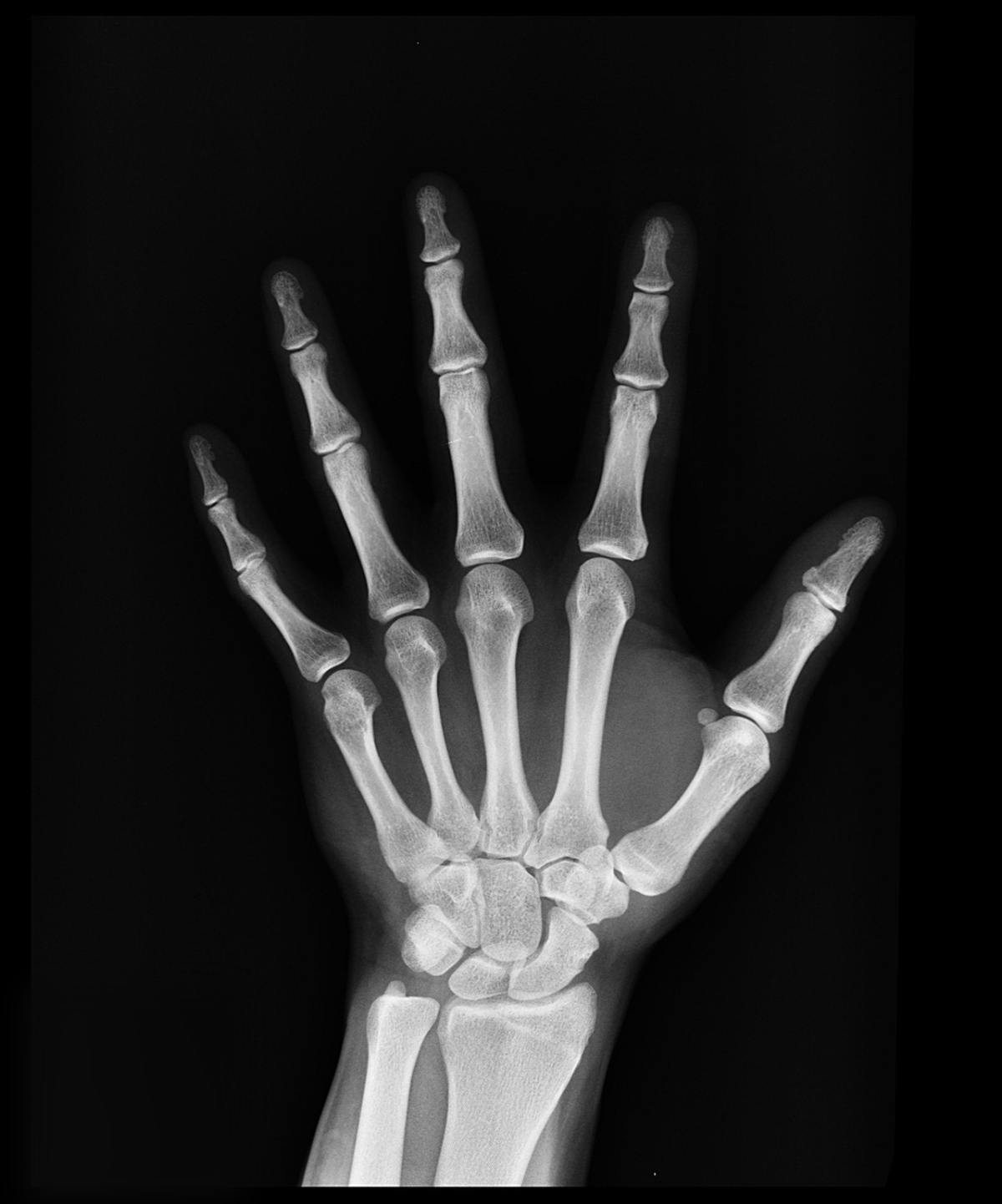
We usually refer to this as Jesus’ “Summary of the Law” and so it is. But today we might also imagine it as the skeletal structure that underlies the Law—the structure that holds together all of creation. 

All the ethical decisions, all the customs, all the traditions and codes of conduct—both those of Israel and those we continue to discern and live into as Christians—all of it is undergirded by these two commandments: Love God. Love your neighbor. That’s it. 

Without these two truths, these two practices, we have nothing solid upon which to stand. Without these two things, the whole body collapses. The Law of Love is the bone under the flesh, the essential and unavoidable truth that we sometimes forget when we are distracted by temporary appearances. 

And, to be honest, in the same way we resist looking at death, so too we resist facing and living into the implications of Jesus’ teaching about the supremacy of love. The history of the church—and the history of humanity in general—has been haunted by a fear of love, by a fear of giving ourselves over to its power, a fear of the connection and mutuality and humility that it requires of us.

We hear Jesus’ words, but it makes our bones shake, because to love that deeply and broadly is its own sort of death—the death of our narrow agenda, of our self-centeredness, of our instinct to judge, of our compulsion to win. 

Love, the type that Jesus is speaking of here, dispenses with all of that—it burns away the protective coverings and leaves just the ancient, unyielding truth of our existence: the moment when, just as when Adam saw his companion Eve, we look at one another, with wonder, and say: you are bone of my bone, flesh of my flesh. My life and your life belong to one another. Take my hand. Feel these bones cradling your own, tenderly. Hold on to me, for we are caught up in the same dance. 

But there’s one thing we cannot forget: this dance, the one that we learn from following Jesus, is not just the Danse Macabre. It does not end in death. It is not the dance of futile pleasures. It is the dance of enduring life. And in his resurrection, Jesus has shown us that loving God and loving one another is the part of us that cannot die—it is the part of us that will endure, that will live to dance again, even after everything else has been stripped away. 

So just as we might do well to reckon with our mortality on this All Hallow’s Eve, to look the skeleton in the face and accept that it is, essentially, us—so too we must look at love in the face and accept that it is, essentially, us—it is the supreme law of life. The beginning and the end of the story. We will never escape love’s demands, but neither will we ever be forsaken by its goodness. Nothing, not even the grave itself, will ever change that. Make no bones about it.