The Fire That Never Came: A Sermon

I preached this sermon on Sunday, January 12, 2025, the Feast of the Baptism of Our Lord, at St. Anne Episcopal Church, West Chester, OH. The lectionary text cited is Luke 3:15-17, 21-22.

I’ve shared with you in the past how, when you live in California, you become acquainted with the risk of wildfire. You make an uneasy peace with it. Much of the year it’s in the back of your mind and then, when the risk level is high, you look nervously towards the hills, wondering if and when something might spark. 

But because you never really know, most days you go about your business and go to work and do the dishes and pay the bills, carving out a sense of normalcy and telling yourself that, if it does happen, if the fire does come, somehow you will manage. Or maybe, in your less noble moments, you just figure it will happen to somebody else.

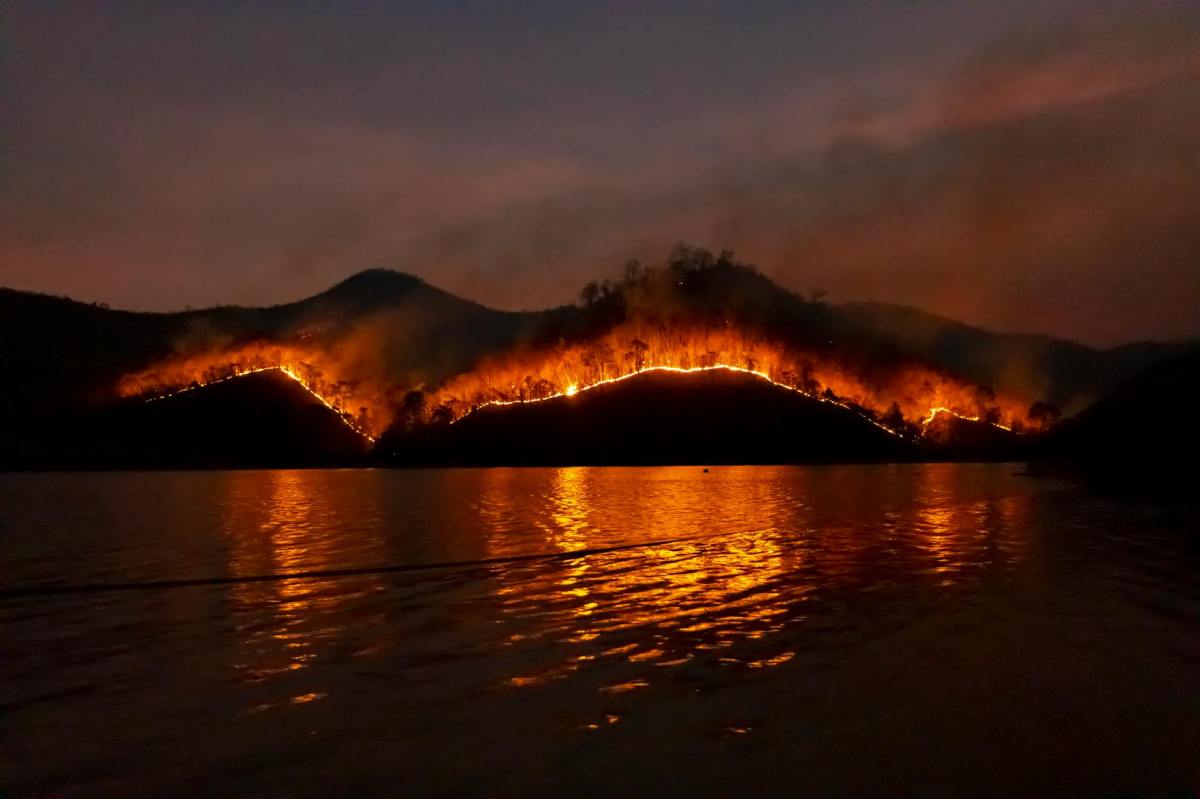
But the fires do come, in their own cruel time and manner, and it is hard to be prepared when they do. As we’ve seen this week in Los Angeles—as some of you know intimately well through the impact on friends and family members—the fires come without much warning, and they blaze and they creep up upon the homes and lives of people without much regard for their wealth or background or virtues or vulnerabilities. 

They come, these fires, and they do what fires do—they consume. We know already this week of Episcopal churches and whole communities consumed by this most recent set of wildfires. We also know that we are living in a time when human-impacted climate conditions will only continue to increase the likelihood and intensity of such events. The unquenchable fires have come. 

And maybe it’s just me, maybe when you grow up with this threat of flame and smoke, it has a formative effect..but I have to say that, as evocative as it is, I find little that’s romantic or alluring about most of the fire imagery in Scripture. I’m circumspect about declarations, like the one that John the Baptist makes in this morning’s text, about how God will come and burn and consume things for some divine purpose. There is nothing pretty or transcendent about that. Not when you have seen or known what fire can actually do, what it can take.

And yet that imagery is there for us to contend with. John, admonishing the crowds before Jesus’ appearance, warns of a Messiah who will come bearing unquenchable fire to burn up all that is wicked and unworthy. And I get it, he is angered by injustice and wants the people to look a bit nervously toward the hillsides, wondering when their reckoning will come. As prophets often do, he wants them to experience an uneasy peace with the world as they know it. He assumes that God will save the world through a display of vengeance and power, in billows of smoke and flame. 

He is not alone in that, even today. I found a number of news articles this week in which people described the Los Angeles wildfires as “biblical” and “apocalyptic” and as being like a scene from “the battle of Armageddon.” Still, still, even if we don’t want to, we imagine and speak of God working through destructive forces, raining down judgment upon us like ashes, threatening at any moment to take away all that we know, or, in our less noble moments, to come and take from somebody else. 

I wish we could loosen our grip on that fiery imagery somehow. Because I will tell you that so much of why I am Christian, why I was able to give my life over to the way of Jesus, is because of what actually happens in today’s Gospel after John’s dire predictions. 

And it is this: that Jesus, the Son of God, appears in Galilee, the Incarnate Deity appears at last, coming over the hills…but the fire never comes. Not in the way that anyone expected anyway (and Pentecost is a story for another day). 

No, on this day Jesus appears and it is not as a vengeful blaze cresting the ridge, but as a man ready to get down into the water like everyone else. A man ready to come alongside all of us in the uneasy peace we have negotiated with this life. A man who wants us hope for something more than mere escape and to believe in something more than just survival.

And truly, thank God for that. Because I will tell you, my friends, I am tired of fires, and of people who blithely traffic in the language of fire when talking about God and our common life. I am sick of “burn it down” and “let it burn” and of fire & brimstone theologies that devour human dignity in the name of purgation. I am sick of destruction—of bodies and landscapes and souls—and how they are cast as part of God’s saving mission. 

I don’t want to settle for an uneasy peace anymore. I want the peace that the world cannot give, the peace born of water and Spirit. And today we see where it comes from—from the God who stands in solidarity with us in the River Jordan, whose only fire is the one burning in his heart with love. 

Because John, for all his Spirit-inspired wisdom, got this part wrong, and it’s important that we don’t just read past his mistake. There’s a reason, in other versions of the story, that he is actually somewhat dismayed Jesus wants to be baptized with water. There is a reason, later from prison, John asks, are you the one we have been waiting for

Because John himself is also discovering, as we must, that the true Messiah, the Christ, is not an inferno coming to gobble up everything we’ve tried to build; God is the one strengthening us and helping us to carry those buckets of water– all that blessed baptismal water–to put out all the fires we ourselves have started on this earth. 

And yes, God will help us separate the wheat from the chaff within ourselves and in our world, but God will do so not through devastation but by the devastating power of his mercy and kindness.

And the thing is, we already know this. We already know, if we stop to reflect on it, where and how God shows up in the world. We know that God is not the one burning the hillsides of Los Angeles or blessing the gunfire in war zones. We know that God is instead with the firefighters and the first responders and the widows and the orphans and the volunteers and the communities of people who are sheltering each other and guiding each other into safety. 

We know that Christ asks us to do the same for each other no matter what landscape we live in or what disasters befall us. We know this, because it is what Jesus demonstrated and proved the value of in his life, death, and resurrection. And we can’t let anyone distort this truth.

No matter what we must navigate in our time and in times to come, no matter how many times the fire looms at the edge of the horizon, we are still, and will always be, the people who proclaim the good news of the one fire that never came—that so-called fiery, angry God who instead appeared in the water, like a falling dove, like a gentle Word, stooping down from the misty heavens to scoop up our fears in his hands and bless them and say,

Peace. I am here. You don’t have to be afraid anymore, you who have been uneasy for so long. Step down into the water with me, where the flames cannot reach.

Drench yourself in love, and let us begin again. 
Pig: A Sermon

I preached this sermon on Sunday, October 1, 2023 at Saint Anne Episcopal Church, West Chester, OH. The lectionary text cited is Matthew 21:23-32.

Later this afternoon we are going to do a blessing of the animals in honor of the upcoming feast of St. Francis and as an unofficial conclusion to the Church’s Season of Creation. So, in honor of all God’s beloved creatures, here’s a story for you:

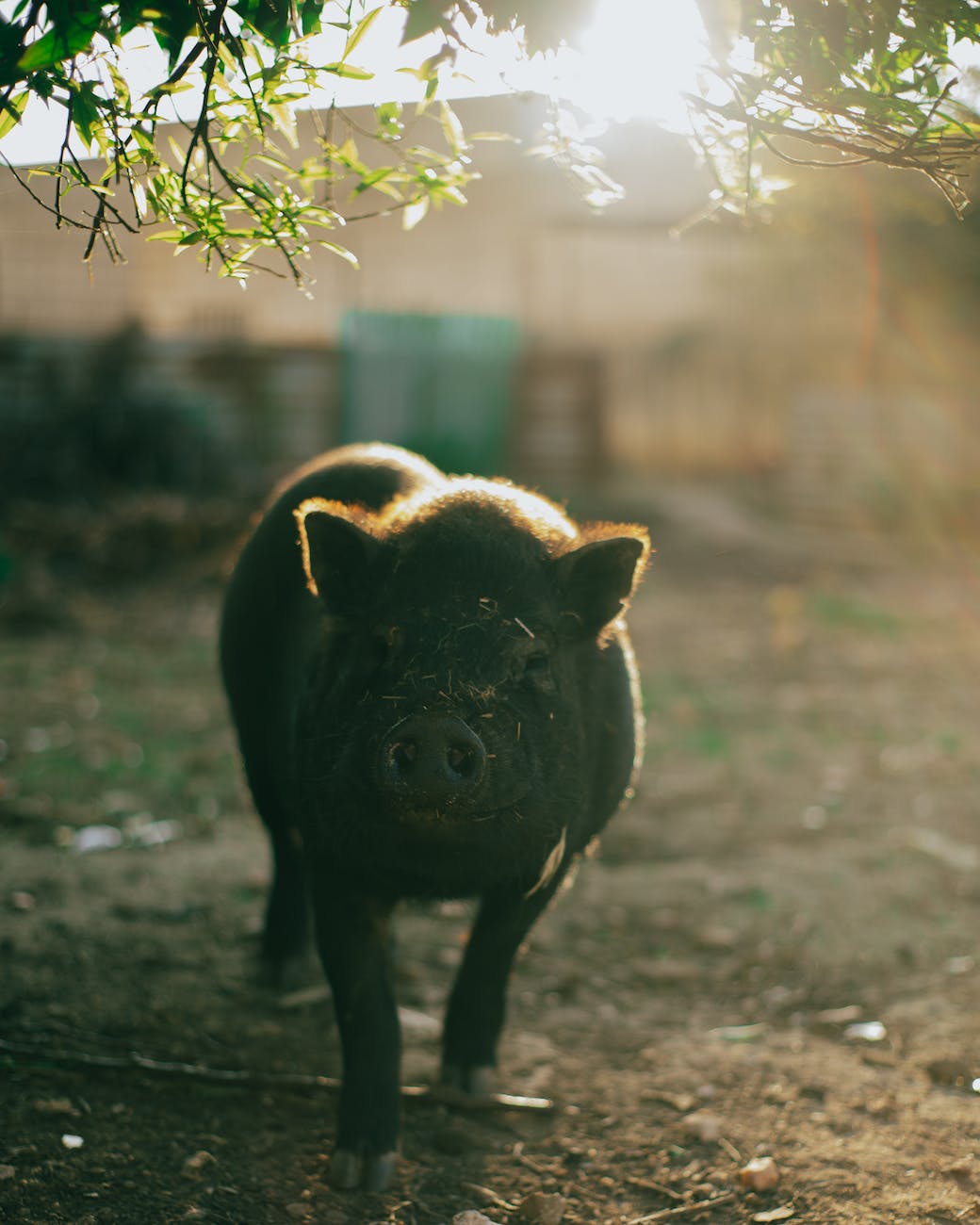
When I was in 3rd grade, my mom decided that we should get a potbellied pig as a pet. Now, most of you haven’t yet met my mom, but when you do, you will discover that she is a person full of surprising ideas and unexpected inspirations. Never a dull moment with her. 

And I don’t recall exactly how or why she decided we should get a potbellied pig, and in retrospect, I think it was probably something we should have thought through a bit more. First of all, we didn’t live out in the country, but in a house right downtown, and this pig would have to cohabitate with several Siamese cats who were, shall we say, selective about who or what they would tolerate. Second of all, we had never had a pig, and if you hadn’t already guessed, pigs are a little different than house cats. 

But nevertheless, the day arrived and we brought home a tiny little black pig and set up a bed for him in the mudroom. We named him Boris. Boris was truly the cutest thing you ever saw. He was also one of the naughtiest creatures that God ever made. Stubborn, unruly, and loud, Boris took over the house and horrified the cats and was completely and utterly pleased with himself.

Boris would not do anything you wanted him to do. We would put him on a little leash and try to take him for a walk. He refused to budge, and he would squeal as though you were trying to kill him. 

But if you left the back door open for a split second, he would run out as fast as he could into the nearby parking lot and begin gobbling up wads of dried gum. If you tried to stop him, he would squeal as though you were trying to kill him.

In the evenings, it was my job to feed him his dinner of bran cereal and mashed bananas. I had to try to do it as silently as humanly possible, though, because the moment he heard that cereal hit the bowl, he would squeal, as though you were trying to kill him, until dinner was served and he was finally placated. 

It became clear to us, after a very brief time, that that the idea of a pig was something far different from the reality of caring for THIS pig. It was not for the faint of heart. He would not be contained, nor tamed, nor would he adapt to the settled rhythms of our life. He was simply Boris. And that was that. 

But as maddening as he was, Boris was also delightful, because you always knew where you stood with him. He was unapologetically himself. There was no artifice, no secret agendas. Would that more of us were as authentic and transparent about our needs as he was. 

And so while we will offer that blessing of the animals later this afternoon the truth is that, quite often, animals bless us because they show us what it looks like to live with complete integrity of being. No masks, no posturing, just unaffected authenticity. What you see is what you get, wads of gum and squealing and all.

And there is something of Jesus reflected in that. Something of what it means to know who God really is.

When the chief priests and the elders challenge Jesus in today’s Gospel passage, asking him by whose authority he is doing what he does and teaching what he teaches, they are, of course, not asking out of genuine curiosity. They are not interested in who he truly is; they just want to trip him up and get him to say something that they can use against him. But Jesus knows what they are up to, and he beats them at their own game, entrapping them in their own questions with a bit of cleverness.

But the most important thing that we need to know about Jesus and take away from this exchange is not just that he is clever or quick—it is that he is authentic. The underlying truth, the thing his questioners miss, is the inconceivably good news that he is authentically who he says he is. Our whole faith hinges on this, in fact. Because at the end of the day, the true source of Jesus’ authority is his authenticity. His authenticity as the true Son of God, as the Incarnate Word, as the love of God revealed in the flesh. It is his authenticity that is so powerful: it is the fact that he is not here to play games, or to posture, or to only tell us what we want to hear. It is his authenticity that allows us to say, yes, Jesus, I trust you, yes, I will call you Lord, yes, I will follow you anywhere because I see, I know, I feel in my bones that you are the real deal.

And to give our lives over to the authenticity of God, to let it shape us into our own most authentic selves—well, there is no greater adventure that we can make in this life. Though I guarantee you, it’s not for the faint of heart.

Because while the authentic God is not exactly like a potbellied pig, there are some parallels. When we say yes to all of God, not just our idea of God, when we say yes to following Jesus, not just the idea of Jesus, we might get more than we bargained for, and it may not fit into the settled rhythms of our life. 

Indeed, we might assume somehow that, in our life of faith, we are going to adopt Jesus and take him home with us and set up a little comfy space for him in the back room, but the fact of the matter is that God is always going to demand freedom, and attention, and God is going to slip out the door and make you chase after, and God is going to keep making a lot of noise lest you forget that there are hungry bellies out there, and God will absolutely not be walked on a leash. 

But in all of the madness and all of the unpredictability of this life with God, the beauty, the gift is this: God will always be themself. You will always know where you stand with God. You will always know that you are loved. And we will come to discover that our own deep authenticity, messy as it might be, is where the power and promises of God will find us and save us and carry us onward. Even if there’s a little bit of squealing along the way. 

Eventually we had to give Boris away; a woman that we knew fell in love with him and took him to live out at her place in the country. The last story I heard about him, which I really hope is true, was that he escaped from her yard one day and that, after a while, a neighbor spotted him along the road, running back towards the house as fast as his little legs could carry him, with an orange in his mouth. 

I don’t know where he had been and I don’t know the end of the story, exactly, but as funny as it might sound, I think that’s one of the best images of authentic discipleship that I can conjure up: running forward in sheer delight, unapologetically yourself, brave and free, sustained by the taste of something sweet, heading towards home. 

So thanks for being authentically you, Boris. It was fun chasing after you for a little while. 

And more importantly, thanks for being authentically you, Jesus. We’ll keep chasing after you forever. 

Garden at the End of the World: A Reflection

I offered this reflection during a parish Lenten retreat at Trinity Episcopal Church, Fort Wayne, which explored the various gardens of Scripture, including Eden, Gethsemane, and, here, the garden of the New Creation in the Book of Revelation.

I want to tell you a story about a garden at the end of the world.

Last summer, I was on a trip to the United Kingdom, and after a very long set of flights from Fort Wayne to London, and a train from London to the northern city of Newcastle, and a car from Newcastle to the Northumbrian coast near the border of England and Scotland, I found myself standing on the seashore, looking out towards my final destination: an island just off the mainland, separated by a tidal causeway that is only passable at certain times of day when the seawater does not inundate it. It was the Holy Island of Lindisfarne, an ancient seat of Christian monasticism and a pilgrimage site for centuries. 

I was still wearing the same clothes I’d put on, many, many hours ago in Indiana, and it was a surreal experience to stand there, bleary eyed, carrying the dust and the baggage of all I’d left behind, and yet to be in the midst of something so luminously, shockingly new. 

We crossed the causeway as the sun sank into the North Sea and the skies were every pastel shade imaginable, like ice cream flavors melting together. Rasberry, peach, grape, blueberry, cream. And once we’d arrive to the other side, my companion and I made our way up a grassy embankment, to the top of a ridge overlooking the sea. We had arrived, and we were bathed in color and salt air, and I confess that it felt like the landscapes of heaven one dreams of as a child, before heaven seems a bit harder to imagine. 

As we stood among the waving grasses of Lindisfarne, we looked out towards the far side of the island, straining our eyes in the falling dusk. Isn’t it interesting how, whenever we get to the edge of something we still want to see what is even further out? Curiousity, or longing, keeps our eyes on the horizon. 

And as we looked, we noticed something that was hard to make out, a low structure of some kind, dark and earthen, out beyond any other buildings or roads. It wasn’t on our map. It was a mystery, and we decided to go out the next day to see what it was, sitting in solitude at the far end of an island at the far end of the earth. 

So we set out the next morning, making our way along a path that followed the sea, curving out around the old castle that sits like a sentinel atop a rocky hill on the otherwise gentle landscape of Lindisfarne. And that low, dark thing, whatever it was, was still hard to make out, until we curved around the eastern edge of the island and followed a narrow road that led us closer. 

It was not a building at all, in fact, but a set of low stone walls, made of rocks piled on top of one another, moss growing in the cracks between them, delicate sea grasses growing out of the top. And in the center of one wall was a gate. And when we opened the gate…we stepped into a garden.

A garden, sitting in silent, abundant repose, at the end of the earth. And in that garden, on this July afternoon, every color flower imaginable was blooming—red poppies and white daisies and flowers I did not recognize—fuschia and pink and gold and amethyst. And there were bees buzzing around, gathering their pollen, and the sea breeze stirred the plants gently and the air smelled like earth and salt and sweetness and greenness. Like viriditas. 

And we just stood there, in awe, marveling that such a beautiful thing could actually exist anywhere, but especially here, out at the end of the world. 

In the Revelation to John, we are given a vision of another garden, in another place and time, or perhaps it is more accurate to say that it is a vision of a garden that is in every place and beyond time. For it is the garden of the New Creation, the garden that is the fulfillment of God’s promise to redeem creation and to make it whole. To make it holy.

John writes: Then the angel showed me the river of the water of life, bright as crystal, flowing from the throne of God and of the Lamb through the middle of the street of the city. On either side of the river is the tree of life with its twelve kinds of fruit, producing its fruit each month; and the leaves of the tree are for the healing of the nations. 

This vision, the very last one given in the Book of Revelation, and thus the final one in Holy Scripture, is the consummation of God’s promises: that in the end, beyond death, beyond time itself, there will be a garden, there will be life, there will be food and healing and abundance in every season. There will be a garden at the end of the world, and there will be a place for everyone and everything.

It is worth noting that this new garden, this new and eternal revelation of Divine viriditas, is not just a reentry into Eden. We don’t simply end up where our forebears started, as if nothing had happened, as if the millennia of life and death and growth and decay we’ve survived all just folded back on itself into some sort of primordial, unknowing, unremembering dream. Because God cherishes the beauty of all the seasons we have endured. God knows the seeds we have planted, the dreams and the tears and the blood spilled into the soil. God sees all of it, God sees all of you, all of us, and God does not desire to erase but to redeem it, to heal it, to imbue it with an everlasting radiance. To imbue it with viriditas.

So no, we are never going back to Eden. But neither are we stuck forever in Gethsemane, where life and death struggle in their tortured dance. No, in the Garden of the New Creation, we enter into something far better than a new and improved version of the world we know. We enter into the very life of God. We enter into God’s own heart, God’s own home, God’s own viriditas, a place that is not simply a lost paradise reclaimed, but is the very love and life that underlies every notion of paradise. 

In the new heave and new earth, we enter into God, who is waiting for us at the end of the world. And according to Scripture, it seems that God looks very much like a garden. 

I confess that as we look around the world today, it is hard to hold onto this vision. Our planet is in crisis, and all of us—humanity and plants and animals, rocks, rivers, and seas—all of us are bound together in uncertainty and in pain. So some days it’s hard to imagine a place where there is ever-ripening fruit and balm for every ailment. A place where all creation exists in harmony with itself and its Creator. It is a lovely thought, beyond lovely, but it can feel like a fanciful wish rather than a grounded hope, because we have known so much of hardship for so long.

Loss and death and finitude are so intimately part of our lives; they are big and burdensome yet also familiar, and if I am honest with myself, I can’t imagine life without death, as much as I want to. Sometimes the idea of eternity, even in a beautiful garden, scares me a little. I can’t really understand its unending joy. It’s hard to imagine a world that is not Eden or Gethsemane, a world where the serpent won’t show up again with his temptations, it’s hard to imagine a world where the Cup that we receive will be full of life, with not even a trace of bitterness or loss.

But the Revelation, of course, doesn’t really explain how it all will work. We are given a dream, a promise to trust in. We are given a garden, and the rest is left to our sense of wonder. This vision of the New Creation is not a precise roadmap to eternity, but more of a song, or a poem, or an intuition. A reminder that as we wait, if we seek a foretaste of heaven, we might tend to the earth and help in flourish.

All we can do, here and now, is love the gardens in which we find ourselves, the gardens of the earth as it is: broken yet insistently hopeful; the gardens of our lives as they are: broken yet insistently hopeful. The gardens that remind us of what has been given, what has been lost, what has been promised. All I can do is walk through this earth and notice it, and care for it, and I can walk alongside my neighbor (my human neighbor and all the rest of creation too) and notice them and care for them, and I can trust that my Lord, the unseen gardener and caretaker of us all, is just on the other side of the dense greenery, smiling through the leaves, and that whatever he is planting for that future day, that final harvest, that eternal garden, it will be more beautiful, more whole, more full of connection and love than anything I’ve yet known or imagined. 

More so, even, than the gift I found hidden behind those stone walls on the Holy Island, where for one brief summer afternoon, heaven whispered among the poppies and the seagrass, and God was in the green and in the wind and said,

I want to tell you a story about a garden at the end of the world. 

Emptiness: A Sermon

“In the canyon, we perceive how negative space has its own power; we find that we are just as compelled by what is missing–what has been hollowed out–as we are by what remains.”

I preached this sermon for the 3rd Sunday of Advent, December 13, 2020, at Trinity Episcopal Church, Fort Wayne, IN. The lectionary texts cited are John 1:6-8, 19-28 and Isaiah 61:1-4, 8-11. It is a slightly edited version of the sermon I wrote for The Episcopal Church’s “Sermons that Work” collection for Advent & Christmas 2020.

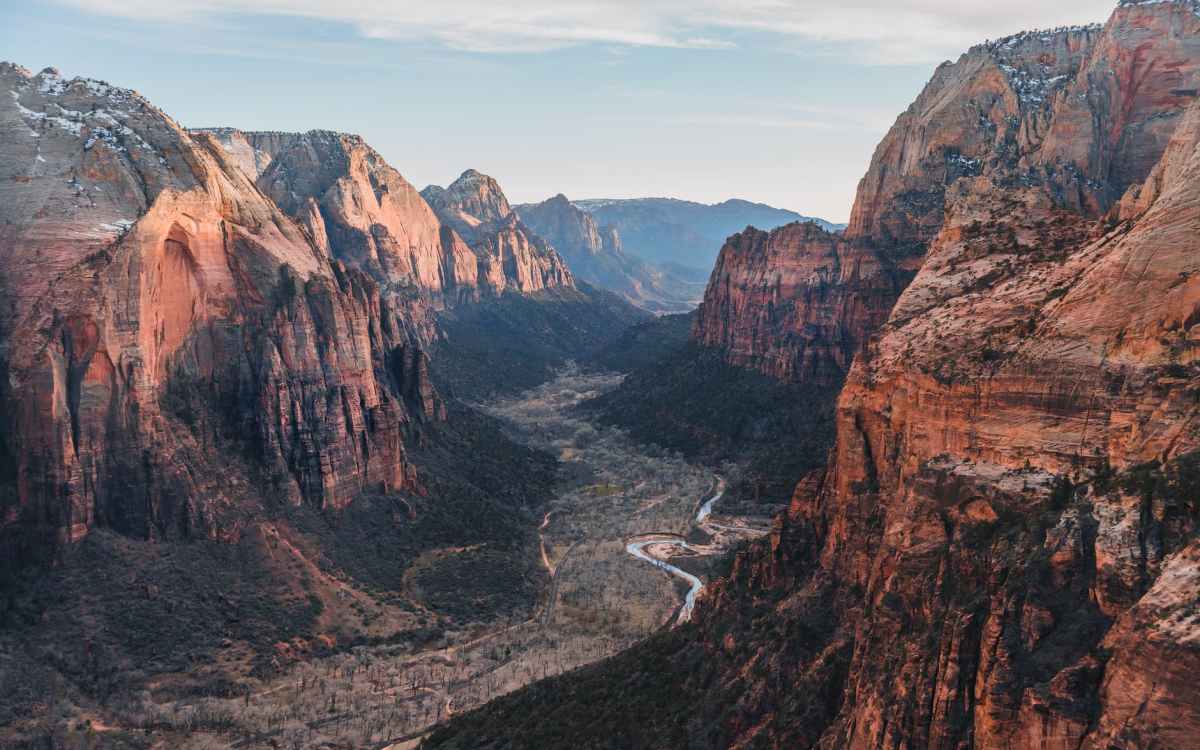
I spent much of my 20s living in the desert, and whenever I was feeling stressed out or in need of some quiet time, I would drive out past the city limits to an overlook that took in views of Nevada’s Red Rock Canyon and a seemingly endless expanse of earth and sky.

Some people find the desert off-putting: all of that muted, windswept rock and dirt and shrub, where you cannot hide from the sun or from yourself; but others, like John the Baptist, are drawn to such places for precisely this reason—because there is no distraction, because it is a place of unobscured perception, of stark clarity, where one can see farther outward and further inward, if they are willing to brave the emptiness.

Indeed, if you have ever stood at the rim of a desert canyon, you know what it is to comprehend the immense majesty of such emptiness. These clefts in the earth, carved by the incessant flow of water over millenia, are rocky vessels holding a world unto themselves. 

Peer over the edge and look down into the sky held between the canyon walls—a highway for the howling wind and winged creatures of the air. 

Look down upon the stubborn shrubs clinging to the ledges, where tiny crawling things seek precarious shelter at the edge of the abyss. 

And then look down, down, down to the bottom, to the river—the improbable, sinuous source of this vast openness, branching out like a vein, still eroding and shaping the earth in its insistent passage towards a distant sea. 

In the canyon, we perceive how negative space has its own power; we find that we are just as compelled by what is missing–what has been hollowed out–as we are by what remains. There is a potentiality, a spaciousness in the open chasm that, in gazing upon it, we also begin to sense within ourselves, in the caverns of our soul, a certain thick luminousness, a sense of seeing deep into the heart of things that are usually hidden under the surface.

And so perhaps it is in just such a place, deep in a canyon in the Judean wildnerness, that we might imagine John the Baptist, his voice crying out, echoing off of the wizened rockface, mingling with dust and birdsong, proclaiming the Coming of Christ: an approach that will, like a river of Living Water, soon carve its own path through the petrification of the human heart. 

John heralds the advent of God’s own bone and breath and blood; the anointed flesh of the Messiah, which, in its birthing and breaking and Belovedness, will reveal the truth of how our own lives are sustained by the Divine ecology of Love.

But before we get there, we are here, in Advent country, in the desert. And just as emptiness defines the canyon, so it is, in this season, that discovering our identity in God is predicated, first, upon clearing away all that is not for us, in order to discern exactly how God might fill that open space.

“Who are you?” John is asked by those eager to label him and his peculiar mission. But he responds only with negations.

“I am not the Messiah,” he says. 

Are you Elijah? “I am not.” 

The prophet? “No.”

Relinquishment of these identity markers, alluring as they might be, is John’s act of humility, of refusing to be carried away the expectations or agendas of others. He is so grounded in God that he has become an open channel of grace and truth, letting the breath of the Spirit blow through the cracks in his soul, like a reed, like a wind-song. 

And, if we wish to let God shape the melody of our own lives, so must we be.

How often we secretly wish that we were solid rock; the savior of ourselves; the long-expected sovereign of our own small dominions, with the power to do it all, to be it all. How often we take on the titles offered to us, not because they are accurate, but because they’re there, because it sounded good at the time, and because an identity, a name, even one that doesn’t quite fit, makes us feel more real to ourselves, at least for a while. 

But just as the canyon only becomes itself in the void, so, too, with us: so it is ok, it is necessary, even, to not be all things to all people. It is ok to let go of the names and roles that never quite fit. It is ok to let your life take on some empty space, to let the wind rush through you. Because, like John, it is only in each of our own negations that we get closer to the spare, essential truth of our identity—the one that God has prepared particularly for us.

John shows us how brave and beautiful it is to simply be what we are, and to trust that, for God, this is sufficient.

But how difficult this can be. In this anxious time, faced with the multiplying needs of our families, our communities, and our planet, we are frequently tempted to take on far more than what we can actually do or be. Even as many of us attempt to slow down and be more attentive to what matters, the world continues to surround us and shout, “Who are you? Who are you?”

But, if we are ever to cultivate the space in ourselves for God to rush in, then, like John, we must respond with:

I am not the Messiah.

I am not.

No.

We must be willing to disappoint the onlookers. We must be willing to embrace the emptiness of what we were never meant to be.

And then, perhaps, we will find what was ours to claim all along.

“I am,” John admits at last, “the voice of one crying out in the wilderness, ‘Make straight the way of the Lord.’”

Not a king. Not a savior. A voice. Just a voice–an invisible resonance piercing the air, unbounded, free. Nothing more and nothing less than this. And exactly what God needs from him.

For John, the purpose of his own voice is clear: the announcement of God’s Incarnate Promise. And so he baptizes in the river, that ancient agent of transformative power, inviting others to let themselves be scoured by it—to let their layers of defensiveness and artifice be stripped away, to hollow out a space in their hearts in preparation for “the one who is coming after,” the Christ, the one who makes all things new.

And here, in another time and in another wilderness—the one that we struggle to navigate each day—John’s invitation remains open to us. It is as urgent as ever, because we are still learning who we are and who we are not. Like the canyon, we are still being shaped; still being laid bare to the wind and the light, still becoming as deep and open and vast as God imagines we can become. And, like John, it is only in the cultivation of our own holy emptiness that we will, at last, be the vessels of God’s inbreaking purpose:

to bring good news to the oppressed,

to bind up the brokenhearted,

to proclaim liberty to the captives,

and release to the prisoners;

to proclaim the year of the Lord’s favor,

and the day of vengeance of our God; 

to comfort all who mourn. (Isaiah 61)