What Else?: A Sermon

I preached this sermon on Sunday, August 3, 2025 at St. Anne Episcopal Church, West Chester, OH. The congregation celebrated a baptism and the lectionary texts cited are Hosea 11:1-11 and Luke 12:13-21.

 I love a baptismal Sunday. I may be biased, but there’s nothing like a baptism to remind us what life truly is—they get us in touch with the fundamentals of what life is actually about. 

We start with water—that most fundamental of elements. And then there are families gathered, in all their joyful complexity—also fundamental. And there’s hope, and maybe a little bit of nervousness and distraction, all fundamentally normal things to feel. And there can be some tears, too, and that’s perfectly ok. Tears accompany us through all of life’s fundamental moments, after all. 

Because most of all, there’s love. The love of community. The love of the ones who share life with us. And the love of God in Christ, that fundamental love which holds all the rest of it together.

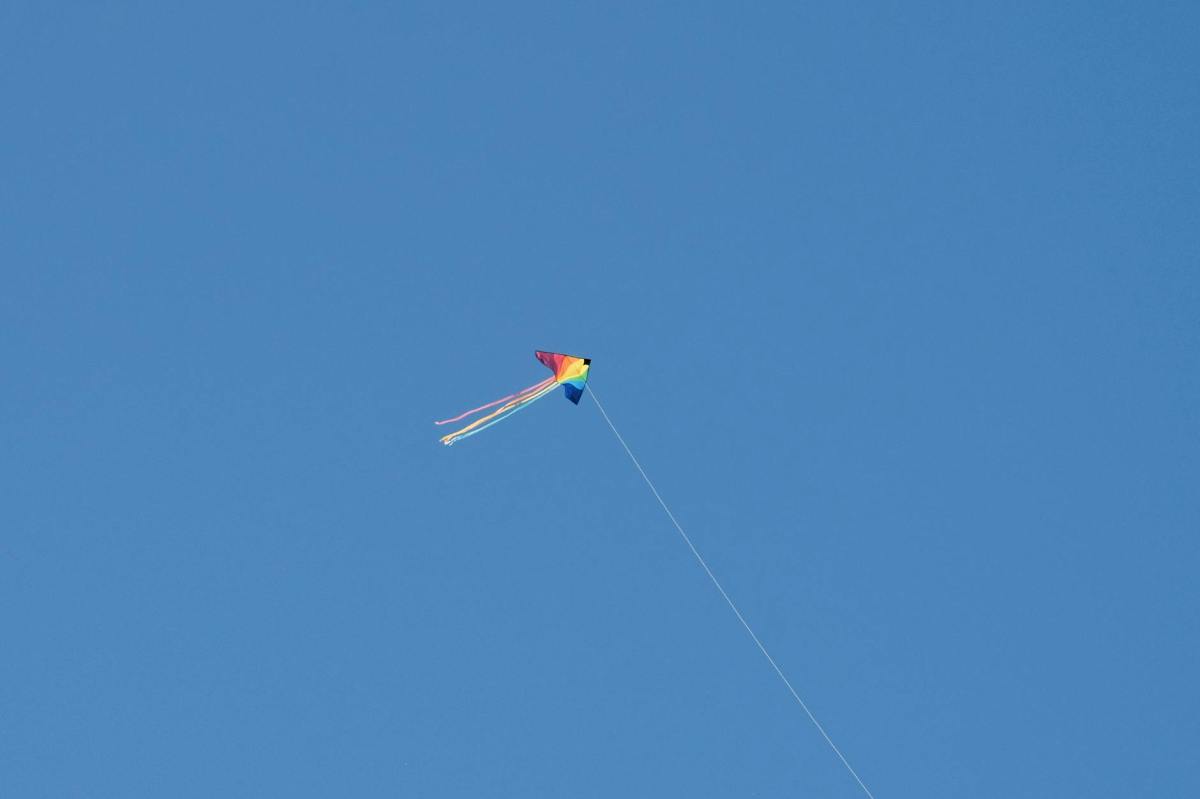
Now, you may be surprised to learn this, but no classes or studies are explicitly required in The Episcopal Church before a person gets baptized. Not because we don’t care about learning, but because it’s really quite difficult to put into words the fullness of what baptism is—how it renders within us a new creation; how it ends us; how it begins us again each day; and how it ties us inextricably to Jesus, he who is the kite on the wind of God, and all of us the slightly terrified tail of the kite pulled heavenward into storms and rainbows and other untold wonders. 

See, we fall into metaphors with baptism, always. It’s hard to put into words. So we just sort of dive into it and then spend our lives trying to figure it out.

And one of our best efforts at this, I think, is something we will recite in a few minutes. It’s called the Baptismal Covenant, which sounds a bit officious, but is really just our attempt to put words to what baptism has wrought upon us after the water is put away and the tears are dried and all we are left with is the strange sense that a threshold in our heart has been crossed. 

And what the Baptismal Covenant says, in so many words, is this: baptism is the point of entry into real life, the way God intended it to be. It describes those things that help us be truly alive, things like prayer and fellowship and learning, and also a particular posture toward the world: one of humility and service and justice-seeking. The Covenant suggests that, as Jesus showed us, these things are the way into an encounter with unending life, right here, right now. You might call it Big Life, capital B, capital L.

We get baptized so that we can put this Big Life on for size, sort of like when we were kids, slipping into our parents winter coats. The idea is that we might, with God’s help, grow up to wear it fully ourselves. 

See, always with the metaphors. 

But it’s good, it’s very good that we would try to put all of this into words on happy days like this, and maybe especially on harder days, when the world or our own lives seem to look nothing like the Big Life we dreamt of—when we find that, after all these years, we are still children crying in our parent’s winter coats, waiting to feel like a grown up. On those hard days, we need some words to call us back to ourselves and help us begin again. 

And if kites and winter coats are all just a bit too much of a stretch for you, never fear, I’ve got one more metaphor inspired by this week’s Scriptures, so stick with me. It’s this:

Baptism is a question. It’s a question planted in our hearts. A simple, two-word question we are invited to carry through the rest of our life. And the question is, “what else?” 

Here’s what I mean. 

In today’s Scripture readings, we first have this astounding passage from Hosea. 

Like any good prophet, Hosea is giving voice to God’s inner dialogue, God who is so upset with ancient Israel, so angry and disappointed at the way they’ve turned out—how selfish, how wayward, how lost as a people. God’s wants to know: when will you grow up? When will you understand what life is about? Do I have to keep punishing you to make you see? 

And then, God has a revelation of His own. He says to himself:

When Israel was a child, I loved him.

It was I who taught Ephraim to walk.

I took them up in my arms.

I was to them like those who lift infants to their cheeks. 

How can I give you up, O Ephraim?

How can I hand you over, O Israel?

In other words, God says, no, no, no more heartbreak. No more floods that destroy and wars that avenge. No more winter coats that never quite fit. My children, my people, my beloved, my own—what else? What else can we be to each other, you and your God? What else can I do to  help you grow? What else can heal the cracks of this broken earth and make it flow with streams of righteousness rather than rivers of blood? What else? What else?

For I am God and no mortal. I will not come in wrath. 

I am so tired of telling you to follow me, to love me or else. So instead I ask, with hope and tenderness: what else?

And for those of us who follow Jesus and perceive the truth of him and make him our own Lord, that “what else” is our baptism into his life. He who comes in something other than wrath. He who came to the River Jordan to be baptized himself, to show us what real life—God’s life—actually is. Tears and storms and rainbows and untold wonders.

Which is why this parable that Jesus shares with his disciples—it’s not just some moralistic rant about storing up material wealth. Most of the people originally hearing this had few material resources anyway. No, this is Jesus, God, staring deep into us, we terrified souls attached to his heaven-bound kite, unsure whether we are ready to be carried away by him on the wind of the Spirit. We who think we can make ourselves safe and sound so as to hide from real life, and it is God saying,

You fool! You blessed, silly, beautiful, scared, foolish children of mine, stumbling in your winter coats. This very night, this very moment, right now, with every breath, your life is being demanded of you. And I will help you live it! Trust in me! Trust in this! Let me bathe you in my love!

And I know that you are scared, and I know that the world is disappointing and cruel sometimes, and it might seem easier to look away, but to be baptized into this life is to ask what else is possible for us? What else might we do together, you and I? What else might we be to each other, God and neighbor, heaven and earth, forever and now, bound up together in this one glorious kingdom that wells up in our midst like water in a font? 

What else might be waiting for us if we shared in life together, you and I? What words might we speak to one another then? 

Baby Noelle, today we will splash a bit of water on you, and it will be cleansing and it will be tears and it will be aliveness and danger and it will be more than we can ever express. 

And we will cradle you close and gently tie you to the tail of that luminous kite, the One who will carry you across the landscape of your life, forever. And it will be grace, and it will be mystery, and it will be good and hard and more than we can ever understand. 

But we will stand with you, and for you, and we will speak that Covenant made for us and by us and in us since time immemorial, in the best way that we can, with the imperfect words of our hearts. We will grow up into it together.

And then all of us, Noelle, you and I, and everyone who has ever been baptized into life as it really is—we will dry our tears, and we will hold our loved ones, and we will go to the threshold and look out into the complicated world that waits there, and we will begin again each day with God’s simple question:

What else?

And the answer, whatever we make it, will be our life. 

Pinky Promise: A Sermon

I preached this sermon on Sunday, January 7, 2024, the Baptism of Our Lord, at St. Anne Episcopal Church, West Chester, OH. The lectionary text cited is Mark 1:4-11.

This may not be a very popular opinion, but I actually love new year’s resolutions. Every December, in that odd lull between Christmas and New Year’s Eve, I find myself pondering what I might want do more or less of in the coming year. And I know for some this is a tiresome custom, but it honestly never gets old for me. When we are able to spend the holidays together, my mom and I have a tradition of writing down our resolutions on a scrap of paper on December 31st, reading them aloud, signing our names at the bottom, and then doing that most sacred gesture of commitment, a pinky promise, and then we tuck the piece of paper away into a wallet or bag for future reference. 

Now, truth be told, I usually find the scrap of paper sometime around June and have a look and a good laugh at my own expense, because undoubtedly my record at that point is mixed at best. I think I’ve been resolving to take up jogging for the past 20 years, and so far I’ve managed a fast walk. But I like to think of this less as a disappointment and more as persistent optimism. And 2024 is a new year—I did jog for about a minute on the treadmill the other day. Anything is possible!

But the thing that helps me—the thing that I have to remind myself, sometimes, in order to stay optimistic—is that while the goals and resolutions we have might indeed be worthwhile, and even drastically improve our lives, they do not impact our fundamental worthiness or value. 

What I have come to realize is that my mom and I are able to relax and enjoy making our lists and our pinky promises together, even if we know we will likely stumble along the way, because we know that even if we have fallen short of every single resolution by next December, it will still be ok, because it is the dreaming together and the trying that matter. 

The pinky promise that we make, I think, is more about saying—we promise we’re in this together, for good or ill, come hell or high water, no matter what happens through the turning of the seasons. It’s the sort of promise that is stronger and more enduring than any failure, because it is rooted in love. 

I think we sometimes have a complicated relationship with resolutions because it can start to feel like they are a checklist that must be accomplished IN ORDER for us to be good enough, to become, somehow, worthy of love, rather than the other way around—knowing that we are already loved, and then figuring out what to do with that knowledge. Love comes first, always.

And what shocks me, sometimes, is that even after two millennia of Christian practice and storytelling and worship and prayer, there are so many people who refuse to recognize that this is also the whole message of the Gospel: that love comes first, always. 

People so easily forget that the entire story of our existence is rooted in an unshakeable love. That, as we heard this morning in Genesis, God ventured into the chaos of primordial darkness and created the world precisely so that he could love it all—and not just the easy stuff, but the light and the darkness together. All of it. Always.

People forget that God’s promise to love us—and everyone, and everything—is itself stronger and more enduring than any failure, and that there is nothing that we can do to alter or diminish this. Some folks like to say hate the sin, love the sinner, forgetting, first, that this statement is not actually in the Bible, and second, that our greatest commandment is to not hate anything, but to love foolishly, indiscriminately, without calculation or agenda or expectation or condition. And to let ourselves be loved in that same way. 

In a world that is so shaped by contracts and conditional promises and careful measurements and demarcations, maybe this unreserved, unabashed, unbounded sort of love is inconceivable. Maybe it is a scandal. And maybe it always has been. 

It would seem so if we consider the Baptism of Jesus, which is itself, when you ponder it, a rather scandalous act, at least for our good friend John the Baptist. We don’t get as many details in Mark’s version that we just heard a few minutes ago, but in other accounts John is actually quite dismayed that Jesus—the one he was waiting for his whole life, the one coming after who is so much more powerful, so much greater—that this Holy One submits himself to a ritual cleansing from sin and failure. Where was the fire and the winnowing fork and the judgment and the display of great strength? 

Whatever John was expecting, this, apparently, was not it. He had proclaimed a Messiah who would shake the foundations of the earth, and yet this promised One comes forward like a simple man, not so different in appearance from the countless others baptized in the River Jordan, with their unmet resolutions and their faltering hopes. Jesus comes forward like one eager to love, eager to be among us, eager to confound us with his humility. 

He comes from within us, content to step down and be submerged in the current of our human frailty, content to love us precisely as we are, not as he is. Jesus’ baptism is God saying to us, we’re in this together, for good or ill, come hell or high water.

And that, essentially, is what Jesus hears, too, when he emerges from the river: this is my Son, whom I love. With him I am well pleased. Since the day the world began, God has desired for us to know and claim our belovedness, and now he has come to show us in the flesh what it looks like.

This belovedness, we begin to see, is not conditional on Jesus’ failure or success. It is woven into the very core of his being. It is this belovedness that will propel  forward into everything that will follow—the temptations and the miracles and the everyday moments.  It is this belovedness that will sustain him even when things get hard, when things fall apart, when he falls apart. And it is this belovedness that he has come to declare as both the birthright and the purpose of all people—of all creation. 

Judgment and punishment are easy to understand. But this is the incomprehensible scandal of the Gospel that no one—maybe not even John—expected: that God is love, and that God loves you and everything and everyone, and that, try as you might, nothing will change this. And once we realize this essential truth—this epiphany–we must begin to live in a new way, with the mercy and tenderness of someone who no longer needs to prove themselves worthy, and who understands the inherent worthiness of everyone else. 

But still we struggle to understand or accept this, even 2,000 years on. Still we think that somehow we must earn our place in the cosmos. But we do not. We need not. We cannot. Because love came first. 

And even if we crawl over the finish line of a particular year, and even if we crawl over the finish line of our lives, God will still say, you are my child, the beloved, with you I am well pleased. And even if we have failed and made a mess of everything, somehow, even then, I think he will be there saying we’re in this together, for good or ill, come hell or high water. 

Because God is not out there somewhere waiting for us to measure up, waiting for us to figure it all out before he loves us fully and comes alongside us. He already does. And he already has.

He has stepped down into the water with us. He has taken note of everything we’ve tried and the things we were afraid to try. The ways we have succeeded and the ways we have fallen short. The resolutions kept and the ones we still keep writing with foolish optimism on a scrap of paper. And through it all, I think he simply delights in our willingness to dream together, to try—our willingness to keep showing up, year after year, to share in a hope that is stronger and more enduring than any failure. The kind that only comes when you know that you are truly, eternally beloved.

Because you are. And that’s a pinky promise. 

The Road Taken: A Sermon

I preached this sermon on the Feast of the Baptism of Our Lord, January 8, 2023 at Trinity Episcopal Church, Fort Wayne, IN. The lectionary text cited is Matthew 3:13-17.

I shall be telling this with a sigh

Somewhere ages and ages hence:

Two roads diverged in a wood, and I—

I took the one less traveled by,

And that has made all the difference.

Even if you are not a fan of poetry, I suspect you’ve probably heard this verse, from Robert Frost’s “The Road Not Taken.” It has been passed down by generations of readers, and that last line about the road less traveled is often used as a sort of poetic motto by those who are eager to pursue meaningful, purposeful, adventurous lives. 

Now, I don’t want to be a total downer this soon into a promising new year, but if you’ve ever been inspired by this verse’s invitation to take the road less traveled and chart a singular, unconventional course through life, I am about to ruin it for you. 

Because if you read the entire poem very closely and look into the backstory of its composition, it becomes clear that Frost was being ironic. His point, in fact, is not that there is one blessed byway for the adventurous and a boring one for the rest of us, but that both of the roads diverging in the wood are, in fact, comparable. The narrator of the poem, no matter how they choose to recall it later, is probably not fundamentally changed by the particular road chosen. Frost, with his typically wry sensibility, is subtly poking fun at our anguish and indecision over the choices we make and the illusion that there is one perfect course to take through life—he does this so subtly in fact that it’s easy to miss! But now you know. Sorry.

But Frost wanted to challenge us with this not because he was a nihilist, not to suggest that the paths we take in life are meaningless, but to suggest the opposite, something hopeful—that meaning is found on every path.  Frost, like many poets, saw that true significance is found in the actuality, the givenness of the world around us—that what is good and true is available everywhere, no matter which road we have chosen.

And I, for one, am actually relieved that this is what the poem is getting at, because there have been many times in my life when I grieved the roads not taken—the sense that I had missed some big opportunity or make some irreversible blunder into the weeds. As one moves farther and farther through life, down whatever path we’re on, it’s all too easy to be consumed by what-ifs: what if I had gone there instead? What if I had stayed there just a bit longer? What if I had said yes to that? What if I had said no to that?

It’s natural to wonder such things, but what-ifs can also stop us in our tracks, prevent us from embracing the reality of whatever is in front of us right now. And, as Frost might want to remind us, whatever is in front of us is itself sufficiently meaningful. The journey we are actually on is a good one, because it is real, it is what we have chosen. 

I’ve been thinking about all of this—of roads diverging and life’s purposes—because today we celebrate the Feast of the Baptism of Our Lord, and however else we might interpret or understand Jesus’ baptism, it was indeed a pivotal decision in his own journey through the world. Just a couple of weeks ago we honored his birth, and now we observe him as a grown man, setting out with the song of the road on his lips and the fire of heaven in his eyes. “Let it be so now,” he insists to John the Baptist as he prepares to enter the River Jordan. “It is proper for us in this way to fulfill all righteousness.” He is eager to begin, eager to go wherever the Spirit-wind of God is blowing. 

And I wonder, in this moment, sensing in himself the need to fulfill some deep and all-consuming purpose, did Jesus ever ask himself, “what if?” Did he ever consider taking another path? To stay in Nazareth, perhaps, and live a quiet life? Go to Jerusalem straight away and try to make it big there? Or did he worry, at the age of 30 or so (not considered all that young in his time and place) that maybe he had already missed his chance to do his Father’s work? Perhaps. 

But in this moment, in his baptism, no matter what else has come before, we see him make a commitment to the path that he is on. As he goes into those waters, he is saying, whatever this life is, whatever this journey is, whatever this road is, I choose it. I will love it. I will follow it to the end. No more what-ifs. Here I am, Lord. And here I am—the Lord. 

And then he emerges from the river, and heaven rejoices that he has said yes, that he has chosen. For this is what heaven always does—rejoice—when we choose to love what is in front of us. 

And this is what Jesus’ baptism—and our own baptism—invite us into: a life that always chooses love for whatever, whoever comes into our path. A life that isn’t haunted by the roads not taken, but a life that says, instead, this place where I stand is good. And even if it’s not what I imagined, this place where I stand is still full of possibility, it is a place where I might yet “fulfill all righteousness.” For this place is beloved of God, and therefore I will make this place, this life, this path my own beloved, too. I will no longer be distracted by roads never traveled, I will no longer be consumed by what-ifs and whys but I will instead throw my arms open, still bathed in those baptismal waters, still drenched in God’s love, and I will say, “what now? What next? What might I do here, on this road, in order to truly live?”

For what Frost implied, and what God knows, and what Jesus demonstrates is clear: there is no road you can take, no road you have taken before, that will ever remove you from the landscape of God’s Kingdom or the realm of God’s Spirit. Wherever you go–and even if you have stumbled along the way, as we all do–if you move through this world with love and compassion and a thirst for righteousness, you are not lost. For in the end it is not the road we travel that matters most, but the heart of the one who travels upon it.

So wherever you find yourself today, in this new year—whatever has come before, whatever might lie ahead—know that God, through your baptism, invites you into the fullness of life right here, right now; the fullness of life that Jesus embraced.

And when you do come to a fork in the road, make your choice, but remember that God will travel with you wherever you go. God’s mercy will surround your path like falling leaves, God’s peace will be the ground under your feet, and God’s Son—the song of the road on his lips, the fire of heaven in his eyes—will greet you at the end of your journey.

And on that day, “ages and ages hence,” when there is no more sighing, may we add our own words to that famous verse, saying, instead:

Two roads diverged in a wood

And I—

I saw my Lord would never leave my side

—and that has made all the difference.

Other Nations: A Sermon

I preached this sermon on the Feast of the Baptism of Our Lord, January 9, 2022 at Trinity Episcopal Church, Fort Wayne. The lectionary texts cited are Psalm 29 and Luke 3:15-17, 21-22.

Last summer I was browsing in a used bookstore, as I tend to do, and I came across a copy of The Outermost House, written in 1928 by the author and naturalist Henry Beston. It is considered a classic in the genre of nature writing, and although I’d never heard of it before, I was quickly drawn into the author’s vivid, poetic reflections that capture a year he spent alone in a small cottage on a lonely, windswept beach at the edge of Cape Cod in Massachusetts. 

His only companions are the fog-enshrouded beacon of a distant lighthouse, the layers of sound made by the undulation of the waves, and the wild wind of midwinter storms—and all of these he observes with a sense of reverent wonder. But more than anything, he notices and celebrates the wildlife along the shore, especially the birds who pause there in the midst of their migratory patterns, hunting for food, resting on the long journey north or south, attending to their own mysterious rhythms of existence. I am not an especially devoted birdwatcher, but even I was moved by his description of what he calls the “constellations” of shorebirds flying in perfect, intuitive unison above the sea:

He writes: “We need another and a wiser and perhaps a more mystical concept of animals…for the animal shall not be measured by man…they move finished and complete, gifted with extensions of the senses we have lost or never attained, living by voices we shall never hear. They are not brethren, they are not underlings; they are other nations, caught with ourselves in the net of life and time, fellow prisoners of the splendor and travail of the earth.”

They are other nations. I love that line. In the magnificent otherness of the birds, Beston realizes that we cannot always interpret everything in the world as simply an extension of ourselves. Some things are foreign to us, unknowable, inhabiting their own truth, inaccessible, and yet still beautiful, still worthy in their own right.

I find a sense of restfulness in that observation. The restfulness of not needing to understand something or someone fully in order to love them. The restfulness of letting them be what they are without trying to control them or shape them into our own likeness.

How much more peaceful my own life might have been, at several junctures, if I had done this. If I had let others—friends, family, partners—be who or what they were, rather than trying to fashion them into what I expected or demanded them to be. And how peaceful it might have been to let myself be what I was, rather than conform to what others expected or demanded of me. How good it is to fully inhabit the mystery of our deepest selves, and to honor that mystery in others.

I was reminded of all this—of birds and freedom and flight and identity—as I reflected this week on the image of the Holy Spirit, who comes like a dove, descending upon Jesus at his baptism. 

This aspect of the scene is a bit enigmatic, when you think about it, but I suspect that when we hear this passage, we tend to focus more on the figure of Jesus in the water, or even on the reassuring voice of the Father from heaven, so much so that we might overlook the descent of the dove, who is, lest we forget, also God. 

Our gaze might easily sweep right past her; we might not stop to wonder where she has come from, this dove, where she is going, or what it means that she chooses to anoint this moment with her arrival, with a brush of her wings, carried on the breeze blowing down from the open gates of heaven. What is her part in this revelatory moment? A specific answer is not given to us. The dove who is God remains just beyond our grasp, just beyond our comprehension.

And if we don’t know quite what to do with the dove in this story, I would also say, too, that we often don’t know what to do with the Holy Spirit at all. The Spirit is unpredictable, elusive, wholly other—wing and wind and flame. Jesus, we can see, we can listen to, we can follow. And the Father we can imagine, at least to some degree, because we know what it is to have or to be a parent. 

But the descending dove—she is not like us. Her experiences, her senses, her scope of vision are beyond ours. She is the person of God that cannot be domesticated or contained. She is free. She is another nation, sovereign and unassailed. She arrives and departs and shapes events on her own inscrutable terms.

And while that can be a bit unsettling, I also love that about the Holy Spirit. The Spirit teaches us not to be afraid of the things we don’t know, the things that we cannot know. She reminds us that sometimes we have to let go of controlling outcomes in our life—for we cannot harness the wind. She humbles us. 

So whether we are considering the baptism of our Lord, or our own baptism, or any other aspect of our faith, it is good to remember and celebrate this wild, strange, impregnable aspect of God’s activity in our midst. For as much as we long for intimacy with our Creator, and as much as we seek to know and be known by our Savior, I think we also desperately need to be surprised by God. 

We need a God, perhaps now more so than ever, who can do a new and unexpected thing in our lives. We need a God who is not bound by the limits of human imagination, who is not subject to the old, tired tyrannies, not governed by the mistakes of our past, a God who can, as the Psalmist says, split the flames of fire and shake the wilderness—in other words, a God who can dazzle us, wake us up, surpass the timid longings of the earth, and teach us how to fly. 

It is true that our salvation is found in a God who loves us enough to become as one of us, but our liberation requires a God who is not like us. A God who is another nation, who conquers us with grace.  Because only in the power of God’s strange and insistent newness can we dream of a newer world. Only under her wing can we be carried there.

Where is that wild Spirit of God calling you? Which expectations or disappointments must you lay down to let God’s freedom be your own? To what great mystery are you willing to entrust your heart as you navigate “the splendor and travail of the earth?”

For we must learn to trust in the things we do not fully understand. That is the essence of faith. And that is the essence of God’s love—a nation unto itself, but now descending, softly, on the wings of the dove, to anoint you with uncompromising authenticity. 

Stand on the shore, at the edge of comprehension, and marvel at her arrival, at all that she is, all that she brings, this bearer of God’s deep, inexpressible, freely given self. Let everything be possible again.

How much more peaceful it might be when we do.

In These Waters: A Sermon

I preached this sermon on January 10, 2021, the feast of the Baptism of Our Lord. The lectionary text cited is Mark 1:4-11, wherein Jesus is baptized in the river Jordan.

Shortly before his death, two of Jesus’ disciples, James and John, come to him and make a request: “Grant us to sit,” they say, “one at your right hand and one at your left, in your glory.” They sense, perhaps, that the time to enter Jerusalem is drawing near, that Jesus is about to take on the authorities, and they want to be in on the action, whatever it turns out to be. 

But Jesus doubts that they understand what is actually about to happen. “You do not know what you are asking,” he replies.

“Are you able to drink the cup that I drink, or be baptized with the baptism that I am baptized with?”

His question has been rattling around in my head the past few days as we drew closer to this feast day, and as I watch the news, full of the evidence of how rage and mistrust and fear continue to assert themselves in the affairs of humankind. Just like James and John, the world is still spoiling for a fight, still angling for a certain type of power, and still Jesus is asking: are you able to drink the bittersweet cup of humility, instead? Are you able enter into my baptism, instead–a baptism that mandates mercy rather than militancy?

I find it striking that Jesus points to his baptism so soon before his crucifixion—a reminder, for us, that the beauty revealed to him in the waters of the River Jordan—the voice from heaven, the descending dove, the love of the Father—is the very thing that propels him, ulitimately, toward a reckoning with the forces of sin and death. It suggests to us that one cannot behold the transcendent beauty of God and then simply accept the brutality of the world as it is. And once we’ve been called beloved, we begin to realize that everyone else is, too. 

The direct line from baptism to the cross also suggests that Jesus’ belovedness as God’s Son, rather than being a protection from suffering, in fact propels him straight into the heart of the world’s pain, to engage with it, to be affected by it in order that he might transform it, not by the power of the sword, but by the force of mercy. 

And so, as we think about our own baptism, we must contend with a mixture of exuberance and trepidation and trust, for it is no small thing to be claimed by the liberating, reconciling, transformative power of God, to be drawn up into its mysterious movement through the world, and to relinquish the still-prevailing assumption that might makes right.

Are we able to do this, as he does? Do we know what we are asking for? 

I pray that we do, and that we can continue to ask for it together, to rely upon one another to pursue it, because if I have learned anything in recent days it is that our faith continues to be misinterpreted, it continues to be co-opted by people with agendas that have nothing to do with the love of God embodied in Jesus. 

And it is up to us, imperfect as we ourselves might be, to bear witness to what God is actually doing in the world and how we ought to live into that. It Is up to us to proclaim, as those baptized into the undying love of God’s Son, that hate, and violence, and racism, and exploitation, and greed, and every other instrument of evil have no place in God’s dream for creation, no place in God’s emerging kingdom, no place in the lives of people who claim that Christ is Lord. 

This is not about partisan politics, nor even exclusively about American society, though our values ought to impact our presence in both. But this is fundamentally a human issue. We affirm that to be baptized as Christ is baptized, to live as Christ lived, is to be human in the way God intended for us to be: connected, trusting, persistent instruments of peace. This is what we open ourselves to when the water washes over us, and when we recall that we are bathed in it still: we put down our guard, put down our pain and our past mistakes, and let the Spirit do the Spirit’s work in us.

And that work is always evolving, always responding to the present moment. That is why it is incumbent upon each of us as individuals, and as a church community, to discern how to live out our baptism. We have to ask ourselves: How can we be agents of peace, of justice, of reconciliation, here and now, in 2021, in Fort Wayne, in the U.S.? What does this time in history require of you and me?

I said in a sermon a couple weeks ago that “relationship” was going to be a key word for us this year, and that is more true than ever. Because one thing that this moment requires of us is that we resist the temptation to be spectators and instead become participants in the world around us.

It is very easy for me, especially when I feel tired and overwhelmed, to sit back at look at the world’s problems, at the fear and the despair and the anger that seems so pervasive, and to just hope that someone else will figure out what to do about it. That someone else will surely be better equipped to handle it than I am.

There isn’t someone else. There is only you, and me. There is only us.

And if we are living in Christ and Christ is living in us, we need to care. We need to stop observing from the sidelines and show up. 

You see, the baptism that Jesus received from John—a ritual cleansing from sin—was something that he didn’t actually need. But he showed up and received it anyway because in order to embody love, he knew that he needed to stand in solidarity with those whom he loved,  he needed to meet us at the place of our need—and now we must do the same for each other.

God expects each of us, just as we are, with our talents and our quirks and our histories and our hesitaitons, to engage in the struggle. To be part of the solution, even just a small part. Becasue every little act of mercy, every small turn towards peacemaking, every bond strengthened in our frayed social fabric is part of the cure for what ails the world—it is another drop of your baptismal water, offered back into the font of creation. 

Later this morning, in our own font, we will baptize two more people, welcoming them into this community, and, more fundamentally into this holy, transformative, life-giving, life-demanding calling. And they, too, will embark on the same journey as the rest of us, the one that Christ inaugurated for us when he stepped into the river to give away everything, to receive everything. They are ready to accept for themselves what we have also been given: God’s love, flowing through us like water, like wind, like fire. 

And it’s ok, in the end, if we don’t fully understand it, if we don’t know exactly what we are asking for, as long as we are willing to discover and live into what we are given: the answer that emerges from this moment, from this font, which will continue to roll down like mighty waters, to take shape, to run its course through the rest of our lives. 

No matter how scary or uncertain the world seems to be, no matter how hopeless things might seem in the moment, we can do this. We can face it, we can sustain, because…we are His. He’s got us. 

And in these waters, we come to see that He always will. 

In the Water: A Sermon

I preached this sermon on January 12, 2020, the Baptism of Our Lord, at Trinity Episcopal Church, Fort Wayne, IN. The lectionary texts cited are Isaiah 42:1-9 and Matthew 3:13-17.

Jesus came from Galilee to John at the Jordan, to be baptized by him. John would have prevented him, saying, “I need to be baptized by you, and do you come to me?” But Jesus answered him, “Let it be so now; for it is proper for us in this way to fulfill all righteousness.” Then he consented. And when Jesus had been baptized, just as he came up from the water, suddenly the heavens were opened to him and he saw the Spirit of God descending like a dove and alighting on him. And a voice from heaven said, “This is my Son, the Beloved, with whom I am well pleased.” (Matthew 3:13-17)


So there is John, fueled by God and by his diet of locusts and wild honey, baptizing in the River Jordan, calling people into repentance, into preparation, for the coming Messiah. Prepare the way, Make straight the paths! Repent, for the kingdom of heaven is ever nearer to to you!

We might imagine a group of his followers gathered there on the banks at dawn, sharing a simple meal as they wipe the sleep from their eyes, praying fervently, glancing over at the river, moody and turgid, the water both beckoning and menacing to them, just like John himself. To climb down into to those chilly depths, to be submerged in them by this eccentric prophet: will it change them? Are they ready to repent, to receive a new vision? Can someone ever be ready for a thing that is beyond comprehension?

And yet the river is flowing, and a raspy voice is crying out in the wilderness, and the bruised reeds at the waters edge are trembling, whispering amongst themselves, and they know that today, yes, surely today, is the day their lives will change forever.  Today they will slip into the water and be cleansed of their sin. Today they will prepare the way of the Lord, whatever that might mean. 

But there is one man in their midst, a stranger from Galilee, who isn’t so tentative. He keeps to himself, mostly, but he seems to know what he is doing there. He looks at the water with a sense of determination and acceptance, like the face of one who suddenly understands what must be done, and it is clear that whatever has drawn him here, he will not be deterred.

The group approaches the riverbank, and one by one they wade out alone into its chilly embrace where John awaits them, hurling enticements and warnings. Words thundering across the water, and then a submersion, and a gasp of breath and sunlight, and the reeds in the water are whispering, still whispering—he is coming.

He is almost here. 

Prepare the way.

Prepare the way. 

The man from Galilee steps forward.

Did Jesus know what was about to happen as he approached the river? Did he fully understand what it meant to be plunged deep down into the water, that same water that he, the Eternal Word, breathed over at the beginning of time? Did he realize, as he crested the surface, that his life was now what it was always meant to be? That the time of preparation was over?

We have some idea that he did. “Let it be so now,” he tells the Baptizer. “For it is proper for us in this way to fulfill all righteousness.” 

In other words, this is God’s will, John: 

You and I, the one before, and the one after, and the one who encircles all things. Let us go down into the deep together, baptize me with your cleansing water and I will baptize you with the fire of God’s  descending Spirit, and you will see—we will see together—how the two are inextricable from each other. 

Washed and illuminated and transformed and yet fundamentally ourselves. This is what will fulfill the emergence of God’s righteous purpose.

For this is precisely what the Baptism of Our Lord signifies: emergence. Rising up from the water, we behold the emergence of Jesus, the humble man of Nazareth, into his public revelation as the Son of God; the one who arrives like the Servant heralded in Isaiah:

My chosen, in whom my soul delights

I have put my spirit upon him

He will bring forth justice to the nations. (42:1)

In his baptism, Jesus is revealed as an embodiment of this servant, the one who will be in total obedience to the will of his heavenly Father, and who, through his self-giving service, will inaugurate a kingdom characterized by peace, redemption, and healing. A new world is revealed that morning in the River Jordan—a world with the Triune God at its center, and with Christ as its servant king.

And so when the voice from above says, “this is my Son, whom I love” and when the Spirit descends like a dove upon him, it is not that Jesus becomes something he wasn’t already. It’s that now he is seen more fully for who he always was. He is God,  who has come to us in our frailty, to live as we live, and who calls us into a path of service, so that we might live as God lives.

 What a thing to have witnessed on that day beside the river. 

And what a thing we are witnessing today, in this place, as we baptize two people into the very same experience of God’s enveloping love and concern. 

Because we must remember: our baptism draws us into the reality that Jesus experienced at his own baptism. Just as he emerged from the water to hear himself named as the Beloved, the Servant, the One called to embody his Father’s will, so do we. 

Whether in the river or at the font, the water and the Spirit do their work on us—they name us as God’s children, they incorporate us into God’s household, and they propel us forward into lives that are patterned after Jesus’ own life. Lives of service, and justice, and peace, and self-giving.

For those who will be baptized today, as for each of us who have been marked by the sacrament of baptism, this is the moment when the wait is over. The way has been prepared. A new life in Christ begins now. And they are ready; as ready as anyone can be for something that is beyond comprehension.

So rejoice, this day, my friends, for the Savior has come to the river. He has waded down into the water with us; he is standing in solidarity with us as we cry out for healing, for cleansing, for consolation. He is treading gently amidst the bruised reeds and he is guiding them back upright. 

And when we plunge into the depths and feel what it’s like to die, he will be there; 

and when we emerge into the morning light and breathe in the fulness of life, he will be there; 

there, in the water, calling us Beloved,

calling us onward,

calling us home.

The Eternal Moment: A Sermon on Baptism

I preached this sermon on August 18th, 2019, at Trinity Episcopal Church, Fort Wayne, IN, where I now have the privilege of serving as Curate. We celebrated the baptism of two infants during the liturgy, and the Gospel text cited is Luke 12:49-56.

“I came to bring fire to the earth, and how I wish it were already kindled! I have a baptism with which to be baptized, and what stress I am under until it is completed! Do you think that I have come to bring peace to the earth? No, I tell you, but rather division! From now on five in one household will be divided, three against two and two against three.” (Luke 12:49-52)

I wonder if you have ever stood at the edge of a lake on a quiet evening, watching the sun bleed into the sky with a beauty so intense that you can barely speak?

I wonder if you have ever walked down a city street and perceived how the beating heart of each passer-by is deeply connected to yours, even if you will never see one other again?

I wonder if you have ever sat beside a person whom you love as they breathe deeply in their sleep, and you realize, with quiet amazement, what a gift it is to be able to love them, for however long or short a time you are given?

I wonder, in other words, if you have felt that strange sweet shock of being fully immersed in this collection of moments we call life.

And then, I wonder if, in those moments, you ever think of your baptism?

I don’t necessarily mean the day you were baptized—many of us who received this sacrament as young children have no memory of the actual occasion, save for a faded photograph, a christening gown, or a candle in a dusty box. 

But do you, in your moments of deepest joy or longing, remember that you are indeed baptized? That your life was permanently changed by that moment of contact with water and oil and the Holy Spirit?

Do you feel, in those depths, that your baptism is an ongoing reality which suffuses the unfolding narrative of the person whom you are still becoming? Do you understand that your baptism has drawn you into a story so grand–and yet so intimate–that the God who is both Parent and incarnate Son has become the author of your days and the abiding Spirit who dwells within your heart?

I hope that you might. And, if you are not yet baptized, I hope that you hear these words as an invitation to contemplate the rich possibilities of such a life.

Today we celebrate the initiation of two beautiful little ones into the Body of Christ, and in so doing, we are also given the opportunity to recall our own incorporation into that Body— the opportunity to consider what it means to belong to Christ and to one another. To reexamine how baptism shapes the contours of a life—your life—and how the holy water streaming from the font, even now, seeps into the cracks of a soul— your soul—to drench you with the fullness of God’s love.

Because it’s easy to forget—or perhaps to never fully comprehend— how that water, that immersive torrent of life-giving water, continues to infuse you with its mystery long after the day it was poured onto your head. It is your lifelong companion, that baptismal water: flowing through your veins and leaking out of the corners of your eyes and freezing in the vapors of your breath on a winter morning like incense rising up to God. 

As our Prayer Book states, you are “marked as Christ’s own forever” in baptism and thus its sacramental reality and its transformative power are always with you, always shaping the ways in which you are alive to this world, and pointing you towards the ultimate significance of the seemingly random, beautiful, sorrowful, mundane, holy events of your life.

The sunsets, and the city streets, and the bedside vigils: Christ is beside you in each of them, tending to you in each of them, because you are His, now, forever. And so each time you give yourself over to the hope and promise and heartbreak of life, you do so as one enveloped in His holy embrace, washed by His tears.

Jesus was deeply aware of this unfolding, enduring nature of baptism, and he tells us so in today’s gospel with words that hit forcefully, like a wave off the sea. He speaks of fire and division on this earth, frightening at first, but we might also perceive a note of distress and longing in his voice as he does so. Jesus is not angry and vengeful so much as he is frustrated—frustrated by his realization that the peace of God, the peace which passes all understanding, the peace which flows smoothly and swiftly like a river, is so often dashed upon the rocks of human frailty—the frailty of we who have a desperate need to take sides, to draw lines in the sand, to stand two against three and three against two. 

The splendor, the majesty of God’s peace is sometimes too much for us to bear, and so we crucify it amongst ourselves—even in our most intimate, cherished relationships. He knows that we do this, and he knows how that division will impact his own journey.

“I have a baptism with which to be baptized,” Jesus proclaims. “What stress I am under until it is completed.” His is a baptism which must pass through the inevitable heartbreak of being alive, and loving, and losing—even losing his life. For Jesus, the anointed one who emerges from the chilly waters of the Jordan, that original moment of water and Spirit is not a victory or a resolution, but the inauguration of something as yet unfinished—the water still doing its work upon him, his body still caught in its current, carrying him towards Jerusalem, and Calvary, and the tomb, and beyond, into the fullness of his Father’s glory.

And so it is for us who share in his Body. Baptism, Jesus tells us today, is not a magical solution to life’s woes; it is not a ritual action that makes everything serene and safe. We who are baptized know all too well that the waters of faith remain turbulent throughout our lives. To be marked by these waters in baptism was and is, for each of us, the first, irreversible step of a new journey—Christ’s journey, and now, by the work of the Holy Spirit, our own, too—which we wade through together as fellow travelers.

Such a journey is never easy. It is not without discord and confusion. It will likely require sacrifices, some of them large, to be sure, but mostly a thousand small daily gestures of love outpoured, as we give ourselves away to each other in the same way that Christ gives himself away to us, on the Cross and on this holy table. That self-giving is the consummation of his baptism, and we must follow where he leads us.

That mutual giving, dear friends, is why we are here, generation after generation, in the Church. That is why our life together in this parish is sacred. That is why we rejoice at these two children joining the family of the baptized today. Our lives, and now theirs, have been swept up into the water of God’s reign, and we return again and again to this community to teach one another how to swim in it, and to carry one another when we get tired.

It won’t be safe or predictable. We are promised very little that is certain or secure in this life. And those moments like the ones I described earlier, in which we keenly perceive the fullness of love, the fullness of life—they are rare and fleeting. 

But our baptism can never be taken from us. The abiding presence of Christ can never, ever be taken from us. And today, for these two children, and for us as well, this is the moment–the eternal, unfolding moment–when that is made abundantly clear. We will never be forsaken. We are Christ’s own forever. 

We will continue swimming within the current of God’s love. We will continue navigating the rapids of our brokenness until the baptism with which we are to be baptized is completed. Until we stumble, laughing and crying and dripping wet, onto the shores of peace, where He is waiting for us.

Come to the water, little ones. Come to the water, brothers and sisters. It is your moment now, your journey now, and ours, and Christ’s, together, always. Let us remember how to swim and let us show you how. The water is deep and mysterious, but there is life here.

Step in.