
The Feast of All Hungers: An Ash Wednesday Sermon

Offered on Ash Wednesday, March 5, 2025, at St. Anne Episcopal Church, West Chester, OH.

Ash Wednesday has an unusual quality to it. It’s a bit hard to describe. It’s not exactly mournful like Good Friday, but it’s not joyful, either. It’s quiet and sharp and dim and bright all at once. But to me, more than anything else, Ash Wednesday is a hungry day. 

I remember back in seminary, when I studied and lived for a bit of time at a theological college in England next to a community of monks, they took their Lenten observances quite seriously. On the morning of Ash Wednesday I went into the dining hall and discovered that we were being given the sparest of meals to last us for most of the day. Talk about wailing and gnashing of teeth; I felt the fear of God deep in my stomach that day!

So yes, sometimes Ash Wednesday is literally a hungry day if you participate in the tradition of fasting, but that’s not all I mean. It’s about other types of hunger, too.

You know how we celebrate a Feast of All Angels in September and a feast of All Saints in November? 

I have come to the conclusion that Ash Wednesday is the feast of all hungers. It is the day when we acknowledge that, simply by virtue of being alive, we are hungry people—hungry for many things. There is a rumble in our stomachs and a yearning in our souls, and we are driven by the pursuit of them across the long, lean years of life. 

In Psalm 51, a version of which we will recite in a little while, the Psalmist declares, “I have been wicked from my birth, a sinner from my mother’s womb.” And while that sounds a little dire, we might relate to the Psalmist, who is frustrated by the many gnawing hungers, bodily and spiritual, that never seem to go away—the hungers that assert themselves afresh each day. The Psalmist senses, as we do, the desperate sense that enough is an elusive concept, and that we will be starving for something for all our days. Call it wickedness, call it sin, but whatever it is that plagues us, its origin is that we are so very hungry. 

And so Ash Wednesday is when we name, without too much fanfare, that this is where we begin in Lent. This is the human condition. That we come into the world this way: from our first gasp and cry outside of the womb, we are hungry for air and for food, and also for love, for protection, for shelter, for community.

And as we grow, these basic hungers endure; they are our companions for as long as we live, joined in time by other, subtler pangs—a hunger for purpose, for meaning, for wholeness, for righteousness, for beauty. And every once in a while, by some grace or tribulation, we tap into the deepest hunger of all—the hunger for the One we call God. 

Despite its reputation as a very pious sort of observance, I would argue that Ash Wednesday is actually a visceral feast day, not an ethereal, spiritual one. You feel Ash Wednesday in the gut, sort of like I did sitting at that monastic breakfast table. And, as odd as it might sound, that means it is an ideal time to come to church even if you don’t know what you believe about God, because no matter what we believe, what we all know is this: that we are hungry. That we are very hungry.

And we also know that we are tired—tired of seeing the world go hungry, whether for bread or justice or love or simple human kindness. We are tired, ourselves, of going to bed with an emptiness in our stomachs and in our souls. We long for that which satisfies, wherever or whatever (or Whoever) it is.

And today all of these hungers and longings collide, both the temporal and the transcendent. We stand at the raw edge of springtime, the earth hungry for sunlight and our mouths watering for a fulfillment we can’t quite name. A fulfillment that, our readings and our worship suggest, might be found in the places we don’t tend to look. 

And if Lent is the journey toward an answer to that fulfillment–an answer that will come, in time, with the scent of lilies and the song of resurrection–then today, Ash Wednesday, is simply when we dare to make the admission that yes, despite our desire to seem satiated and wise and successful and strong….we are really just hungry. So truly, honestly hungry that we are willing, even, to follow this Lenten road all the way to the Last Supper and the Passion and the Cross, because something that groans deep within us suggests that we will be fed, here, in a way that nothing and no one else can offer. 

In that spirit of hunger, then ,the mark that we are about to receive on our foreheads—the mark of dust and ashes—takes on a slightly different meaning. 

If you heard Jesus’ words about not being ostentatious in our piety and if you are wondering how that squares with wearing a cross on your forehead the rest of the day, I would simply offer this: the ashes on your brow are not a sign of membership in a club. They are not a status symbol. They are not proof of our collective and elevated holiness. Those are the self-important, self-deluding impulses Jesus advises against. 

Instead, consider this: that the mark that you are about to receive simply indicates: I am hungry. I am hungry for God. I am hungry for a glimpse of my truest, most beloved self. And like all who have come before me, like all the children of the dust that ever lived and died, I came into this world hungry, and I walk through my days hungry, and I admit it openly here and now on this feast of all hungers. Because I trust, somehow, that if I can name my hunger, then God will fill the depth of it with himself. 

And that on the other side of this hungry season, this hungry life, there will be something waiting for us. There will be an answer. There will be a feast. And there will be One who welcomes us, and who bids us rest, and who says, again, and at last, and always,

Blessed are you who are hungry, for you shall be satisfied. 

God Loves Dust: An Ash Wednesday Sermon

I preached this sermon on Ash Wednesday, 2024, at St. Anne Episcopal Church, West Chester, OH.

God loves dust. 

God has always loved the dust: the particles of stars; the tiny fragments of creation borne aloft on a dark wind from heaven. He has loved the dust since the moment he brought it into being, each mote like the note of a song still being written, carried on the light of a thousand suns. 

And when the dust had at last gathered and settled upon our small corner of creation, then–like one who makes a wish on a delicate head of dandelion seeds, closes their eyes, and blows–God blew upon the dust of earth to make it dance; to mix within every speck of it his own particular hopes and dreams; to animate it with love and life; to name it and trace his own image in it. 

God made a companion out of the dust and called it you and me and us, and that same wish-making, dream-shaping breath first blown, that same impulse to love what has been made and called good…is what still holds us together. It is what drives our bodies of dust onward through time and space, guiding our feet across the dusty trails of the earth, looking up to the shimmering, dusty stars and feeling, somehow, like they are looking back us–all of us children of the dust, bearers of an ancient light, long lost siblings from the same source. 

And so, if all is dust, and all is loved, then Ash Wednesday is less about bemoaning our mortality and more about marveling at the fact that we were made in the first place, that everything was made in the first place. Made of tiny pieces of one divine dream, knit together in an infinite number of shapes and places and faces, changing in form, this holy dust, but never in its belovedness.

For God loves dust, and God’s love does not change or die, even when we do.

And we come here today to inspect this dust and this love up close, to remember the times we have made a mess of it, and to be reminded that God has not given up on us regardless.

It is often said that our Gospel passage on this day, where Jesus cautions against showy acts of piety, is an awkward one for this occasion when we come to receive a smudge on our brow and go out & about wearing it for all to see.

But it is worth noting that Jesus is not opposed to public piety in and of itself—he was himself a man of deep and serious prayer, one who grew up formed by the piety of his own time and place and who embodied openly his own awareness of divine truth.

And the reading from Isaiah, too, while raging against empty, self-serving piety, still speaks of a very public devotion, a communal spirituality of care and justice–the type that is formed and sustained by knowing how sacred, how precious, is everything and everyone that God has made…from dust.

The reminder, here, then, is that piety is worthless and empty if and when we use it to try and prove—to ourselves or to others—that God loves us. And it is dangerous when we use it to try and prove that God loves only us, and not “them.”

Piety should not, cannot, need not prove any such thing, because love is already a given for all things. It is freely offered; it is the mandate that underlies creation; it is the rationale for everyone and everything that was ever made. God’s love is as inevitable, as pervasive as the dust that gathers on still surfaces; the dust that clings to our skin; that dances on beams of light; the dust that swirls in the wind. It is a love that is seeking, always seeking, like dust, to rest upon us, to be where we are, to remind us who and what we are—that we are dust, and that God loves dust. And so should we. 

So to pray in secret and to fast in secret, as Jesus instructs us to do, is about resting quietly in that love, resting in the knowledge that you do not have to prove your worthiness. You do not have to win the affections of God as if he were a fickle Valentine waiting to be romanced by your words and your grand gestures. You are worthy of love already. And so is everyone else.

God loves our life even when we have little to show for it in the end. God loves the times we tried and failed and tried again. God loves you even with a streak of dirt across your brow and tears on your cheek. God loves you even when you have no good words left to offer, when you have stumbled and fallen and are covered in dust, and maybe, just maybe, God loves you most of all in those moments when you are fully yourself, without pretense, without affectation or pride. 

And maybe that’s the point of our practices of simplicity and prayer and relinquishment in this season. Maybe when we are down close to the earth, when we are down close to the simplest form of ourselves, we might begin to feel that original love for the dust of which we are made, the force that orchestrated the stars, the breath that still stirs the primordial soil in our flesh—maybe we will feel that love reverberating up through us, and out through us, out to wherever the Spirit is leading. 

And maybe, as we will discover in this season of Lent, that is also why Jesus came to live among the dust and move upon the dust and cry tears over the dust and trace his finger in the dust and stumble and fall and bleed into the dust and to die as dust and to live again in a body made of dust–and eternity. Because God loves dust, and he could not rest until he became that which he had loved.

In a moment you will receive a mark on your forehead, and you will hear those ancient words—remember that you are dust—and perhaps, as we often do, you will feel the challenges that this reality poses: the brevity of our composition and the inevitability of its being carried away on the wind. And that’s ok. It’s human to wonder, to weep, to carry with us the anticipation of all that comes to an end.

But remember this: wherever it goes, the dust that you are, the dust that we all are—whenever and however it finds its repose: every particle of it is still imbued with the undying love by which it was formed. 

And so this smudge on your brow is not a mark of shame or lament, it is a promise—a promise that even when we return to the dust, we will not be forgotten nor forsaken, and that one day God will use it to reconstitute a new creation. One in which all of us, at long last, will feel that belovedness coursing through every particle of our being; and at long last we will see that same belovedness in the face of our neighbor and in the face and shape of everything; and at long last there will nothing left to prove, nothing left to fear, and our piety will simply be looking at the stars and the soil and seeing that they are indeed our siblings, that they always were, and that the whole cosmos is but one beautiful dance of dust. Carried on the breath of the Spirit. Swirling in the eternal light. 

And when we see this, and live this, then the wish that was made when God closed his eyes and blew his breath at the dawn of time…that wish will have, at last, come true:

To know that you are dust. And to dust all things shall return. 

And God loves dust. 

The Dust Matters: A Sermon

 I preached this sermon today, Ash Wednesday 2019, at Christ Church, Alameda, CA. The lectionary texts are Isaiah 58:1-12, 2 Corinthians 5:20-6:10 and Matthew 6:1-6,16-21.

It’s been almost seven years since my father died, quite unexpectedly, and one of the clearest things that I remember about flying home for his funeral was the shock of seeing the little black box that held his ashes, and looking in at them, and realizing that, physically speaking, this was all that was left of a man who had been so full of life and humor and compassion. And how surreal it was that the man who cradled me in his arms when I was a baby, I was now cradling in my arms as a box of dust. It defies my comprehension, even to this day.

And I was, then (and often still am), tempted to say—as I think we often do when someone dies—no, he’s not in there. This box of ashes is not actually him. This little box can’t contain the man whom I loved and admired, a person who lived so deeply, so fully, and so well. I am tempted to say these ashes are nothing but a shell, that they have nothing to do with that person. And yet…I took those ashes home with me, and for the longest time I would take them out and look at them, and I couldn’t let them go.

Why is that?

I ponder the same thing when I walk by columbariums like the one here in Christ Church, which holds a lifetime’s worth of love and memories in each quiet chamber, with a name engraved on the front. We stand before these rows of names and ashes, and we ask, “where are you? are you here in these chambers? Are you in my heart? Are you in a place beyond this place, somewhere I can’t even begin to imagine?”

The dust of our loved ones gives no answer to these questions. They rest, silently, like those ancient ruins mentioned in Isaiah, the foundations of many generations, placed lovingly in columbariums and cemeteries, scattered across land and sea. But while the dust does not answer us, it does bears witness, both to our own impermanent bodies and to our enduring bewilderment about what becomes of us, when we are no longer *this*. The Psalmist says, “God remembers that we are but dust,” and on days like today we try to remember that too, even as it remains inconceivable that all of our vitality and memory and longing could be so shockingly reducible, so small and earthbound.

But as inconceivable as it might be, we can’t seem to escape the dust. As much as we might like to, we can’t shake it off. We are drawn back to it, over and over again, because we know, intuitively, that whatever happens after death, this dust that was once our flesh somehow still matters. It is not easily forgotten or discarded.

I bring up this meditation on flesh and dust so that we might deeply consider the meaning of these ashes we are about to receive, and the fullness of what they symbolize. Too often in our tradition they are treated only as a sign of death or penitence, and we wash them off later in the day and move on until next year. If we leave it at that, I think we miss something beautiful. And this is especially important because our scripture readings warn us against practices of empty, unexamined piety.

Isaiah, for example, tells the people that true humility and repentance is found in loving each other, not just putting on sackcloth and ashes. And in the Gospel of Matthew, Jesus says that fasting and praying should be about an intimate connection with God, not a big gesture to show off to our neighbors. These texts starkly reject showy displays of piety…on the very day that we receive big dark smudged crosses on our foreheads and wear them out into the world.

So we must reckon with the significance of what we are doing here today, Ash Wednesday, to articulate why these ashes–and those ashes in the columbarium–matter, and what all this talk of ash and dust conveys, not just about the tradition of the church, but about our lives.

Our faith, as we often say, is Incarnational. That word, incarnate, literally means “into the flesh”. We affirm that God came into the flesh, human flesh, and lived among us as Jesus of Nazareth, himself a mortal man of dust, and somehow in our union with Jesus, God seeps into our dusty flesh, too. Through Jesus, the love of God has not just redeemed a “spirit” or “soul” within us, but has permeated our very bodies; we are like that watered garden of which Isaiah speaks, drenched in God, nourished by the spring whose waters never fail.

And this incarnational movement of God into our unremarkable flesh reveals something crucial about the language and symbol of Ash Wednesday: that this dust of which we are made—it MATTERS to God. The dusty remains of our loved ones, which seem so far removed from who they once were—they MATTER to God, too. Our bodies, mortal as they are, all matter to God, because they are caught up in the divine story of God, the divine story that is revealed and enacted  in our bodies, in relationship with one another.

We might be made of dust, but it is beloved, holy dust.

This dust makes up the fingers that we use to caress the face of our beloved;

This dust makes up the eyes that behold our children and grandchildren for the very first time;

This dust makes up the ears that we use to listen deeply to one another.

These small perishable parts of us MATTER to God, they are part of God’s indwelling in the substance of creation, and they tell a story of the goodness of being alive, of being human, of being part of one another.

From this perspective, the ashes we wear today are certainly not an empty act of piety, and they are far more, even, than a mark of penitence. They are a reminder–an affirmation–of what it means to be that which we are: a body that is at once dying and yet imbued with eternity, at once broken and yet redeemed by love. A body, as Paul says, which appears as having nothing, and yet possesses everything.

When I receive the mark on my forehead today, I will remember my father, whose ashes I finally let go and scattered into the ocean about a year ago, so that the dusty remnants of his kind eyes and his quiet smile might be carried on the waves, to dwell with God in the uttermost parts of the sea. With this smudge of ash, I am anointing myself with the dust of his memory, and with the conviction that his mortal life, his mortal body—and mine, and yours, and all the people who have come before us—will always matter to God. We are beloved, we are not forgotten, even when we become the silent dust, even as we wait, in hope, through the quiet season to come.

The Ancient and the New

It’s been one month since I arrived in Mirfield; as such, one quarter of my time here is already done. I can already sense little shifts in the landscape. The dawn is brighter as I walk up the hill to morning prayer; dusk lingers a bit longer in the church as we chant the psalms at evensong. There are changes inside of me, too. A bit less disoriented, a bit more confident of how I fit into this place.

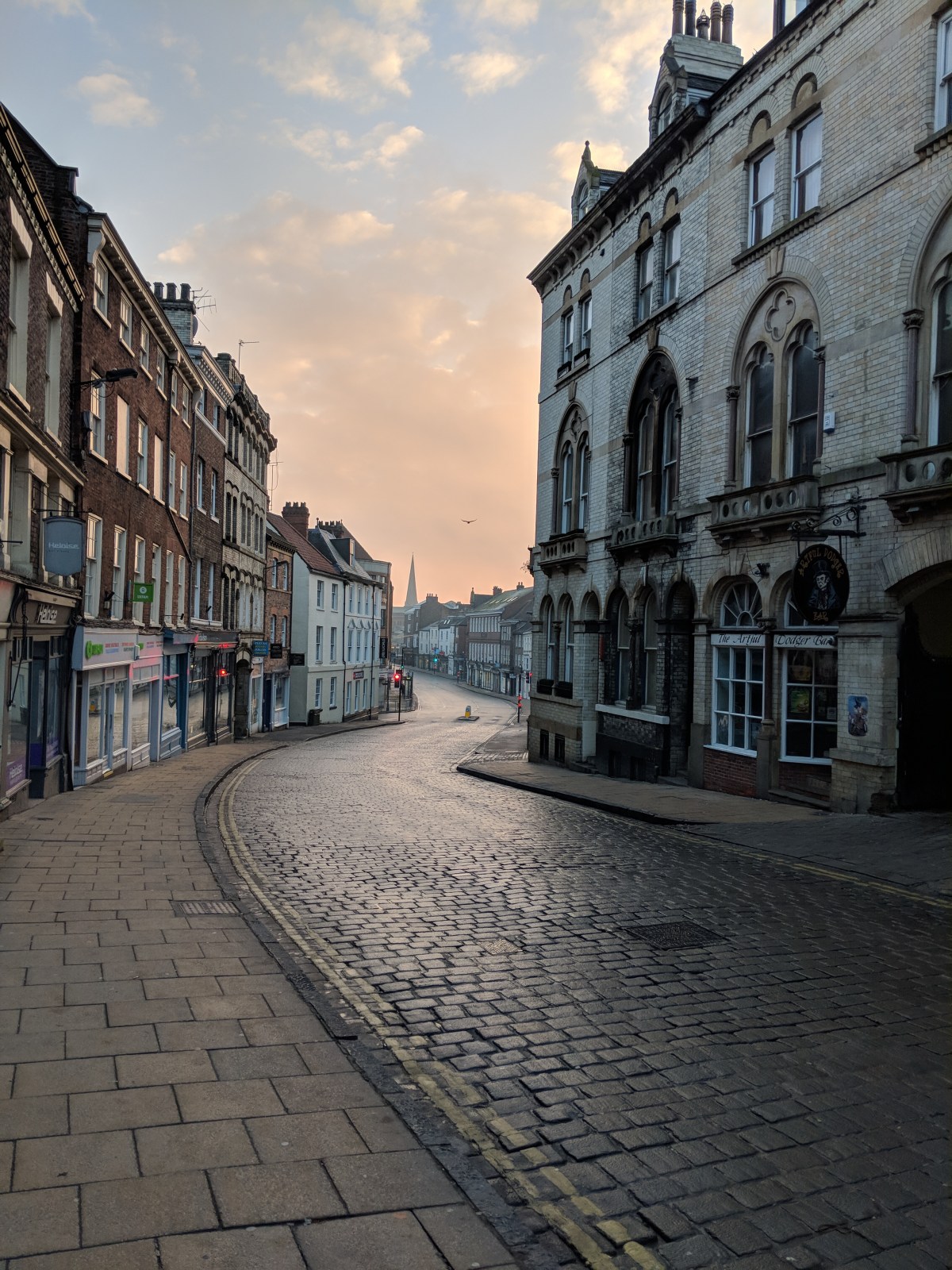
So much has gone on since my last post. There was the somber and beautiful Ash Wednesday liturgy, when the priest drew a cross on my forehead with cool, damp ashes that had been sprinkled with holy water. A day of silent contemplation at the College to usher in Lent, during which I alternated between stillness and dizzying anxiety. A weekend trip to the ancient city of York, where I wandered alone through the medieval streets looking for a glimpse of a ghost or two. At the massive and magnificent York Minster I was stunned into silence, not simply because of its visual grandeur, but in recognition of the centuries and centuries of prayers that have been offered up into its lofty heights.  I felt alone, and yet deeply connected to that never-ending litany.

This journey thus far, with its ample opportunities for reflection, have made it very clear to me how I am still learning to be a disciple of Christ on the most basic levels: to look kindly upon myself and my flaws, and those of others; to trust that God actually loves me, personally, and not just as an abstraction; to recognize that grace is imbued into everything, whether I see it or not, because God is far more than I can see, or feel, or guess at. These are simple, incomprehensible truths. I know how much I still have to grow, and yet I am also seeing more clearly how becoming a priest is less about growth and more about fully inhabiting myself as God made me. We are not asked to be perfect as priests, but we are asked to be deeply, authentically ourselves, and that is the hardest thing of all sometimes. That goes for non-priests, too, of course.

Lest you think my entire month has been pensive introspection, there have been tons of joyful moments, too. Case in point: on Sunday afternoon I went to lunch with a classmate; we drove out into the countryside and the hills were so green and vast I wanted to cry. Afterwards we drove up to the Victoria Tower, an old observation structure perched far above the town of Huddersfield, and the wind was blowing and the clouds were scudding across the sky and I thought, yes, to be alive is a very good thing. To be here, breathing and breathless and crying from the wind and the wonder is exactly as it must be.  Come, Lord. Come, spring. I am broken open, and I am ready.

Preparing for Lent

The season of Lent is almost upon us. The preparations at Mirfield have me learning about some very old customs that are quite new to me. Today, for example, is Collop Monday.  What’s a collop, you might ask? Apparently it’s a word that refers to bits of leftover meat, often bacon, which are traditionally eaten up on this day before the Lenten season of fasting begins on Ash Wednesday.  The grease from the meat (at least, if Wikipedia is to be trusted) is then used to fry up the pancakes that are traditionally eaten tomorrow, Shrove Tuesday. Mmmm, pancakes.

All the students at the College went up the hill to the monastery house this afternoon to eat Collop Monday lunch with the brethren. It was a feast, although sadly no bacon to be found. BUT there was brisket, roast chicken, stuffing, and tons of dessert. Gotta get those calories in before the menu is pared down for Lent!

Lent is taken quite seriously here, and many of my classmates have been pondering what sort of discipline they are going to adopt starting Wednesday. If you have been part of any liturgical church tradition, you are probably familiar with the question, “what are you giving up for Lent?”  The idea is that in the relinquishing of a particular habit, or in the adoption of a new spiritual discipline, we are creating space in our hearts to listen to God as we approach the commemoration of Christ’s death and resurrection in Holy Week. It’s 40 days of soul-searching, and I could sure use it.

At Mass this morning the homily talked about how in our soul-searching we tend to bargain with God, usually petitioning for favors or for the cessation of misfortune. I do this all the time, frankly, even though I don’t necessarily think God relates to us in that way. I’ve been doing a lot of imploring to the heavens lately as I adjust to life over here and battle some inner and outer demons. Maybe you can relate.

Truth be told, I get really annoyed by people who sneer at anyone who prays with a desperate heart. “Well, he only prays when he wants something!” Come now, we all want something–don’t kid yourself that you are holier just because you pray at other times, too. The fact that we are compelled to cry out to God in any circumstance is a sign of grace to me; it just so happens that our need and our fear is usually the hollow space in which God can enter us, if we let God do so. (See Luke 18:9-14)

The challenge, at least in my case, is to remain open–to allow God to dwell in the space that’s usually cluttered up with the distractions and novelties that pervade my life. And so Lent is a little bit like spring cleaning for the heart; it’s an intentional effort to clear out some room and prepare a seat for the Holy One to come and abide with me as we wait together for new life to emerge.

I’m pretty sure what my Lenten discipline is going to be, but I’m going to pray on it a bit more between now and Wednesday before committing. If you’ve already settled on something for yourself, I’d love to hear about it in the comments!

God bless you, friends. If you’re reading this, I am grateful for your companionship on this journey. I’ll write in a couple of days to describe the Ash Wednesday liturgy, which I’ve heard is beautiful.

xo