
Pig: A Sermon

I preached this sermon on Sunday, October 1, 2023 at Saint Anne Episcopal Church, West Chester, OH. The lectionary text cited is Matthew 21:23-32.

Later this afternoon we are going to do a blessing of the animals in honor of the upcoming feast of St. Francis and as an unofficial conclusion to the Church’s Season of Creation. So, in honor of all God’s beloved creatures, here’s a story for you:

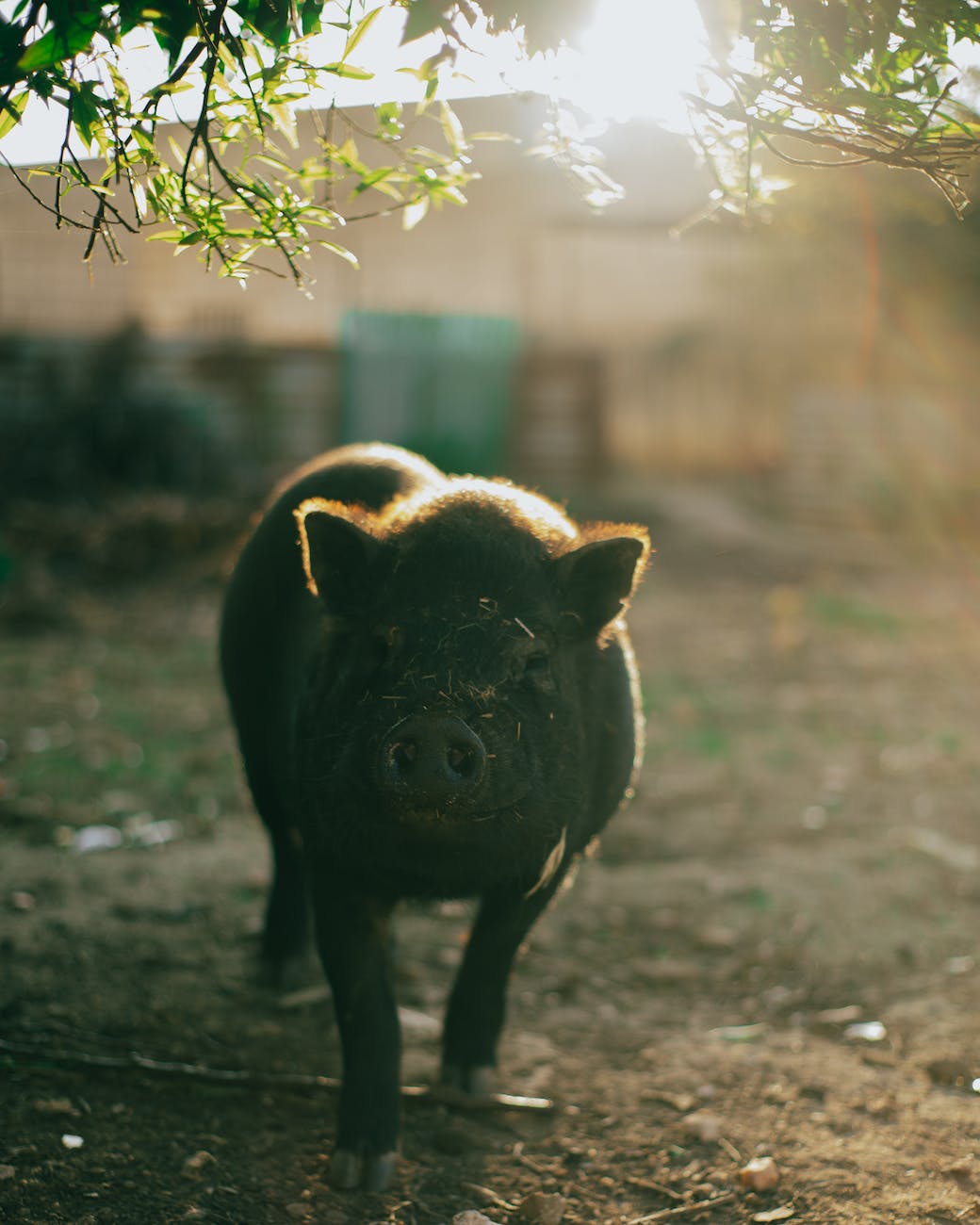
When I was in 3rd grade, my mom decided that we should get a potbellied pig as a pet. Now, most of you haven’t yet met my mom, but when you do, you will discover that she is a person full of surprising ideas and unexpected inspirations. Never a dull moment with her. 

And I don’t recall exactly how or why she decided we should get a potbellied pig, and in retrospect, I think it was probably something we should have thought through a bit more. First of all, we didn’t live out in the country, but in a house right downtown, and this pig would have to cohabitate with several Siamese cats who were, shall we say, selective about who or what they would tolerate. Second of all, we had never had a pig, and if you hadn’t already guessed, pigs are a little different than house cats. 

But nevertheless, the day arrived and we brought home a tiny little black pig and set up a bed for him in the mudroom. We named him Boris. Boris was truly the cutest thing you ever saw. He was also one of the naughtiest creatures that God ever made. Stubborn, unruly, and loud, Boris took over the house and horrified the cats and was completely and utterly pleased with himself.

Boris would not do anything you wanted him to do. We would put him on a little leash and try to take him for a walk. He refused to budge, and he would squeal as though you were trying to kill him. 

But if you left the back door open for a split second, he would run out as fast as he could into the nearby parking lot and begin gobbling up wads of dried gum. If you tried to stop him, he would squeal as though you were trying to kill him.

In the evenings, it was my job to feed him his dinner of bran cereal and mashed bananas. I had to try to do it as silently as humanly possible, though, because the moment he heard that cereal hit the bowl, he would squeal, as though you were trying to kill him, until dinner was served and he was finally placated. 

It became clear to us, after a very brief time, that that the idea of a pig was something far different from the reality of caring for THIS pig. It was not for the faint of heart. He would not be contained, nor tamed, nor would he adapt to the settled rhythms of our life. He was simply Boris. And that was that. 

But as maddening as he was, Boris was also delightful, because you always knew where you stood with him. He was unapologetically himself. There was no artifice, no secret agendas. Would that more of us were as authentic and transparent about our needs as he was. 

And so while we will offer that blessing of the animals later this afternoon the truth is that, quite often, animals bless us because they show us what it looks like to live with complete integrity of being. No masks, no posturing, just unaffected authenticity. What you see is what you get, wads of gum and squealing and all.

And there is something of Jesus reflected in that. Something of what it means to know who God really is.

When the chief priests and the elders challenge Jesus in today’s Gospel passage, asking him by whose authority he is doing what he does and teaching what he teaches, they are, of course, not asking out of genuine curiosity. They are not interested in who he truly is; they just want to trip him up and get him to say something that they can use against him. But Jesus knows what they are up to, and he beats them at their own game, entrapping them in their own questions with a bit of cleverness.

But the most important thing that we need to know about Jesus and take away from this exchange is not just that he is clever or quick—it is that he is authentic. The underlying truth, the thing his questioners miss, is the inconceivably good news that he is authentically who he says he is. Our whole faith hinges on this, in fact. Because at the end of the day, the true source of Jesus’ authority is his authenticity. His authenticity as the true Son of God, as the Incarnate Word, as the love of God revealed in the flesh. It is his authenticity that is so powerful: it is the fact that he is not here to play games, or to posture, or to only tell us what we want to hear. It is his authenticity that allows us to say, yes, Jesus, I trust you, yes, I will call you Lord, yes, I will follow you anywhere because I see, I know, I feel in my bones that you are the real deal.

And to give our lives over to the authenticity of God, to let it shape us into our own most authentic selves—well, there is no greater adventure that we can make in this life. Though I guarantee you, it’s not for the faint of heart.

Because while the authentic God is not exactly like a potbellied pig, there are some parallels. When we say yes to all of God, not just our idea of God, when we say yes to following Jesus, not just the idea of Jesus, we might get more than we bargained for, and it may not fit into the settled rhythms of our life. 

Indeed, we might assume somehow that, in our life of faith, we are going to adopt Jesus and take him home with us and set up a little comfy space for him in the back room, but the fact of the matter is that God is always going to demand freedom, and attention, and God is going to slip out the door and make you chase after, and God is going to keep making a lot of noise lest you forget that there are hungry bellies out there, and God will absolutely not be walked on a leash. 

But in all of the madness and all of the unpredictability of this life with God, the beauty, the gift is this: God will always be themself. You will always know where you stand with God. You will always know that you are loved. And we will come to discover that our own deep authenticity, messy as it might be, is where the power and promises of God will find us and save us and carry us onward. Even if there’s a little bit of squealing along the way. 

Eventually we had to give Boris away; a woman that we knew fell in love with him and took him to live out at her place in the country. The last story I heard about him, which I really hope is true, was that he escaped from her yard one day and that, after a while, a neighbor spotted him along the road, running back towards the house as fast as his little legs could carry him, with an orange in his mouth. 

I don’t know where he had been and I don’t know the end of the story, exactly, but as funny as it might sound, I think that’s one of the best images of authentic discipleship that I can conjure up: running forward in sheer delight, unapologetically yourself, brave and free, sustained by the taste of something sweet, heading towards home. 

So thanks for being authentically you, Boris. It was fun chasing after you for a little while. 

And more importantly, thanks for being authentically you, Jesus. We’ll keep chasing after you forever. 
O Great Mystery: A Sermon for Christmas Eve

I preached this sermon on Christmas Eve, December 24, 2022, at Trinity Episcopal Church, Fort Wayne. The lectionary text cited is Luke 2:1-20.

A couple of years ago, after both of my grandparents were gone and their house was in the process of being emptied and sold, I received a package in the mail. My cousin had sent me a few of my grandmother’s Christmas decorations, including an ornament or two and one of those plug-in yule logs from the 1950’s with electric candles on top of it. It meant a lot to receive these things and to be able to put them up alongside my own childhood decorations. 

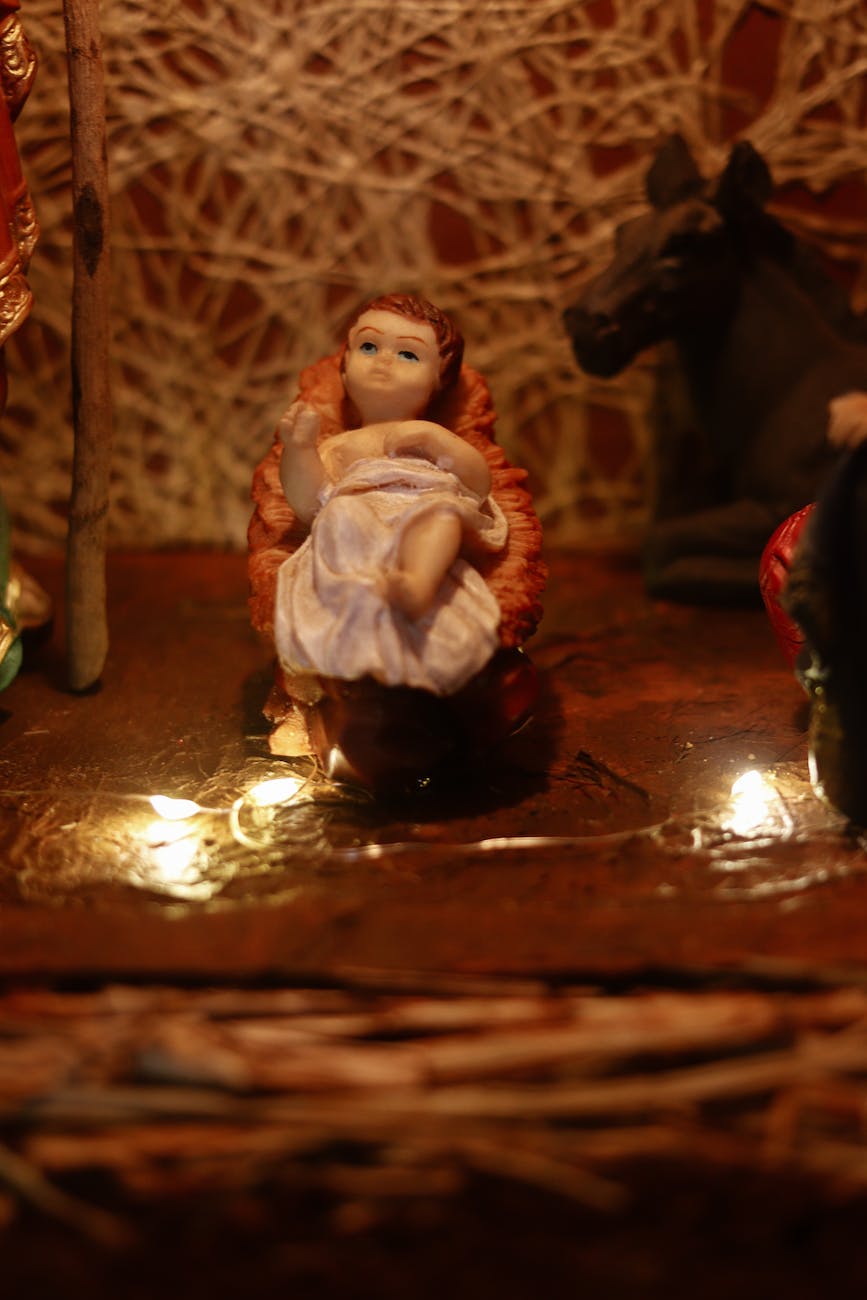
And among my grandma’s decorations was a small, slightly timeworn Nativity set. The figures have a few chips and cracks, a fragment missing here or there, and it’s just the bare essentials: Mary and Joseph and the baby Jesus in the manger, and a donkey and an ox. That’s it. No shepherds or angels or wise men. Just the Holy Family and a couple of animals attending them. At first I thought maybe some pieces were missing, that the scene felt incomplete, but now I have come to love the simplicity of the scene—how these few figures capture a quiet moment before the arrival of the angels with their songs and the clamoring shepherds with their questions. The donkey and the ox, it seems, are able to simply take the miracle in stride.

It’s interesting, as much as we love animals, that we don’t usually say much about the ones present on that wondrous night in Bethlehem, although they show up in nearly every depiction of the Nativity. If you read the text from Luke closely, you might be surprised to notice that no animals are explicitly mentioned. The Christ child is laid in a manger, a sort of feeding trough for livestock, but the creatures themselves are only implied by the setting.

In fact, it’s in the first chapter of Isaiah, and not in the Gospels, that we discover the donkey and the ox who eventually wandered their way into our collective imagination and into my grandmother’s Nativity set. They are found when the prophet says: 

The ox knows its master, the donkey its owner’s manger, but Israel does not know, my people do not understand.

The implication of Isaiah is that it’s the animals, embedded as they are within creation, who are able to recognize their true source of life and sustenance in ways that we humans, in our delusions of self-sufficiency, are not able to do. God longs that his people might be as trusting and dependent and open to his protection and providence as the donkey and the ox are to their caregivers. But are we? As we arrive at our Lord’s manger on Christmas, as we behold, in the flesh, the Redeemer of the Earth, do we finally understand who he is, what he offers, what he asks?

The question persists, and the donkey and the ox bear witness. In the early centuries of the church, the combination of Isaiah’s imagery and the nativity account were blended into a verse composed by an unknown author and chanted for centuries in Latin at the midnight prayer office on Christmas Day: O Magnum Mysterium. O Great Mystery. In English, it reads: 

O great mystery and wonderful sacrament, that animals should see the newborn Lord, lying in a manger! O blessed virgin, whose womb was worthy to bear the Lord Jesus Christ. Alleluia!

A simple verse, but it contains much to ponder. For it says that the Magnum Mysterium, the Great Mystery, is not just the birth of Jesus, but the witnesses to that birth—that it was the animals, before anyone else, who beheld the Lord in his manger. It was the animals, not the shepherds, not the wise men, who first saw their Creator enter his creation and then gathered in to greet him. Only the animals, wordless, attentive, uncalculating. They knew their master’s voice, they recognized their owner’s manger, and so they huddled close, sharing their solid warmth with him and his mother in the chill of that silent, holy night.

What can this scene teach us, we who still struggle to understand?

It is often said that our Savior being born into such a setting is a sign of God’s humility; that it is a great self-emptying of divine power to be born as a helpless infant, surrounded by animals, lying in a feeding trough. And God’s humility is indeed part of the Great Mystery of Christmas, but I think we miss something important if we just leave it at that. 

Because anyone who has worked with animals, or who has simply cared for and loved them, knows that they possess their own sort of wisdom, their own inherent dignity and grace. Not just the donkey and the ox, but all of God’s creatures play their own role in the vast network of interdependent life on this earth, each carrying in their very bones a knowledge of what they are, and what they must do to live, to flourish, to endure. Animals are different from us, but they are not lesser than us. 

And so perhaps for Christ to be born into their company is not so much about divine self-abasement as it is a sign of human reconnection with the fundamentals that shape and sustain all of life, including our own: birth, and death, and nourishment, and warmth, and companionship, and trust. All of us need these things. All of us can give these things. 

Perhaps the Great Mystery that we glimpse this night, alongside the animals at the manger, is not God’s weakness, but God’s true, elemental strength. For what is stronger than showing up in deep solidarity with creation? What is mightier than taking part in the persistent, generative power shared by all living things? 

What if the wonderful sacrament is not to be understood so much as Christ descending into a poor and helpless form, but as the Creator arising into his creation, emerging from the hidden depths of the cosmos, from the womb of his mother, from the cradle of eternity, to claim all the earth as his own beloved home, to name all living things as his kin—as sacred partners in the unfolding birth of the Kingdom? 

For it should not be lost on us that the very things Jesus will later name as our essential Christian vocation—feeding the hungry and thirsty; sheltering the weak; being present to the most vulnerable,—these things are not lofty theological propositions. They are creaturely things: old, and instinctive, and earthy. They are the basic stuff of life. And they are, O Magnum Mysterium, the very things that the animals offered Jesus that first night in Bethlehem.

For the ox knows its master, and the donkey its owner’s manger.

But the question remains: do we know? Do we understand yet? Or are we so overwhelmed by the seeming complexity of God, or the complexity of our world, that we have forgotten the ultimate simplicity of what is needed, what is given, what is required of us in this life: to tread lightly and compassionately upon this earth in union with all of creation? 

Might we, on this most blessed of nights, rediscover our truest selves? We who are made in the image of the God who now bears our image, too. We who are called only to love; called only to sustain one another, to sustain the earth, as he sustains us. O Great Mystery, that life— messy, tearstained, bleeding, breathing, fragile, undaunted, beautiful life—is itself the most wondrous sacrament of all.

In it, may we finally come to see that Christ is not born this night to save us from our humanity, nor to deliver us from the world he has made, but to inhabit these things fully, to love them fully, that we might gather alongside all creatures, to behold the majesty of God in the flesh, and to join our voices with the song of the angels and the bray of the donkey and the bellow of the ox, a chorus of unceasing praise. Tonight, may the whole world at last know its master, know its Lord’s manger, and thereby know itself for what it is—beloved, sustained, redeemed.

The Nativity scene is here, in our midst. Our Savior awaits. What the animals did first and best, let us do so now, too, with the joy that is fullness of life. 

Come, let us adore him.