

I preached this sermon on Easter Day, April 5, 2026 at St. Anne Episcopal Church, West Chester, OH.
There are certain people who get up long before the rest us. They get up early, so early that it’s still dark outside, and not just because they want to, but because they need to. Because someone, somewhere needs them to.
These people get up when the moon and the stars and the alarm clock are still the only lights, when the sun is still slumbering below the horizon. And these people stretch their backs and their tired limbs and climb out of bed and clamber down the hallway, maybe for a cup of coffee or a shower to get themselves going. And once they are ready, they pause and blow a kiss to their sleeping loved ones and they venture out to wherever they must go, to do whatever they must do.
I think these people who get up earlier than the rest of us are often motivated by something simple and necessary—some act of care or responsibility. They are the ones preparing the day for others as it begins. They are the pre-dawn saints who kindle the fire or salt the icy roads or chop the onions or sweep the floors or warm up the engines. They are the people whose quiet labors are the foundation upon which the rest of us stand.
And that is a beautiful thing, though I am sorry to say that I am not one of these people, because if the stars are still visible, I’m sleeping, thank you very much. I am decidedly less centered and priest-like in the earliest hours of the day.
Nonetheless, there is something precious, something good and holy, about the ones who get up before the rest of us in order to make sure that we will all be ok. That we will have what we need. If you are one of those people, God bless you. I’ll catch you sometime after 9AM.
I suppose am thinking about such people because we meet two of them in the Easter story today, two pre-dawn saints trudging through the dew of a garden, their eyes wet with tears. It is Mary Magdalene and the other Mary, as Matthew tells it, though there might have been other women, too, depending on the Gospel you read.
And I can’t help but imagining them a little bit before this story begins, rising up while it was still dark, their bodies tense and shivering with grief, gathering up their supplies and venturing out under the glow of the moon. Nobody asked them to do so, but they just knew—they knew someone needed to get up and go, someone needed to care for the body of their beloved teacher, someone needed to bear witness, and so they would have to be the ones.
Meanwhile the other disciples were likely splayed out in an uneasy, dreamless sleep, their hopes dashed, the future uncertain. As before, in the garden of Gethsemane, perhaps sorrow has made their eyes heavy. But the women…the women get up.
And on this particular morning what they see, what they discover, is something better than any dream. And it is also something surprising, perhaps, especially for those who are used to getting up earlier than everyone else.
Because what the women find is that Jesus…blessed Jesus; battered and beaten Jesus; lost to the world Jesus; asleep forever Jesus…Jesus has gotten up before anyone. He is risen, risen indeed, and he was up and out, only God knows when, but it must’ve been so very early, even before these faithful women.
I don’t know if I’d ever really thought through this part of the story until recently—how early in the morning Jesus must’ve risen from the dead. So early that even these determined companions, coming in the pre-dawn darkness, did not arrive in time to see him rise.
“I know that you are looking for Jesus who was crucified,” the angel says. “He is not here; for he has been raised, as he said. Come, see the place where he lay!”
Yes, come see the place! Come see the linens left behind, come see where he stretched his back and his tired limbs and knew it was time to get up and do what he must do for us. Come see the open doorway to the tomb where he paused, where he blew a kiss to you in the darkness, and then ventured out to do what he must do.
Come see, but know this: he’s already up. He’s already gone to work, gone to Galilee, gone to be the beginning of a new heaven and a new earth, because that is what the world so desperately needed him to be.
And maybe for the first time in their lives, these women, the ones who got up before everyone else to care for others, knew what it felt like to have someone get up to care for them.
Friends, Easter is about a miracle—the miracle of one empty tomb, one abandoned resting place. It is the miracle that renews and re-enchants everything that ever was and is and will be.
We tend to call this miracle resurrection. We call it the destruction of death. We call it the victory of love over fear, or of truth over lies. We call it many things because, 2000 years later, we are still trying to wrap our minds around it. I think the women at the tomb could relate to our bewilderment.
But if it’s all a bit hard to understand, if it feels strange and remote from the everyday life you know, then maybe just think of it this way: Jesus is the One who has risen before the rest of us He’s up early, kindling the fire of this new day. He up early, brewing up a cup of new life to place into your hands. He’s up early, sweeping clear the pathway to a new world.
Because if love looks like the ones who get up long before the rest of us, then of course Jesus would be up first. For he has loved us most of all.
And I guess I am thinking about resurrection in this way, on this morning, friends, because the world can feel like a frantic and scary place sometimes: a place where nobody is there to catch us, where nobody has our back. Like those women, we trudge through the day with tears in our eyes, telling ourselves we’ve gotta get it all done, gotta go it alone, gotta save ourselves, save each other, save the world, be the best at everything all the time. It can feel exhausting and so very, very lonely when we sit at the edge of the bed in the glow of that alarm clock.
But on this day, this resurrection day, God wants to show you something else. God wants to show you that you are not, in fact alone. You are not, in fact, responsible for everything all by yourself.
You are held. You are held. You are held by all the love you can see, and all the love you cannot see. And if you are tempted to despair in the pre-dawn darkness, let this Easter morning be your reminder: God has not left you. God is not dead. God is not even asleep. Come, see the place where he lay. He is already up, he is already out there, already waiting for you, waiting to show you that the world is far more full of love than it is of anything else, no matter what others might try to tell you.
And if you are still uncertain, if you need proof of that this is so….just think again of the ones who get up long before the rest of us.
Because somewhere among the salted roads and the chopped onions, the swept floors and the warmed engines…between the women at the tomb with tears in their eyes and the God who rose early to wipe them away…some where amidst all of that…even if it’s still dark outside, I think we might just catch a glimpse of heaven.

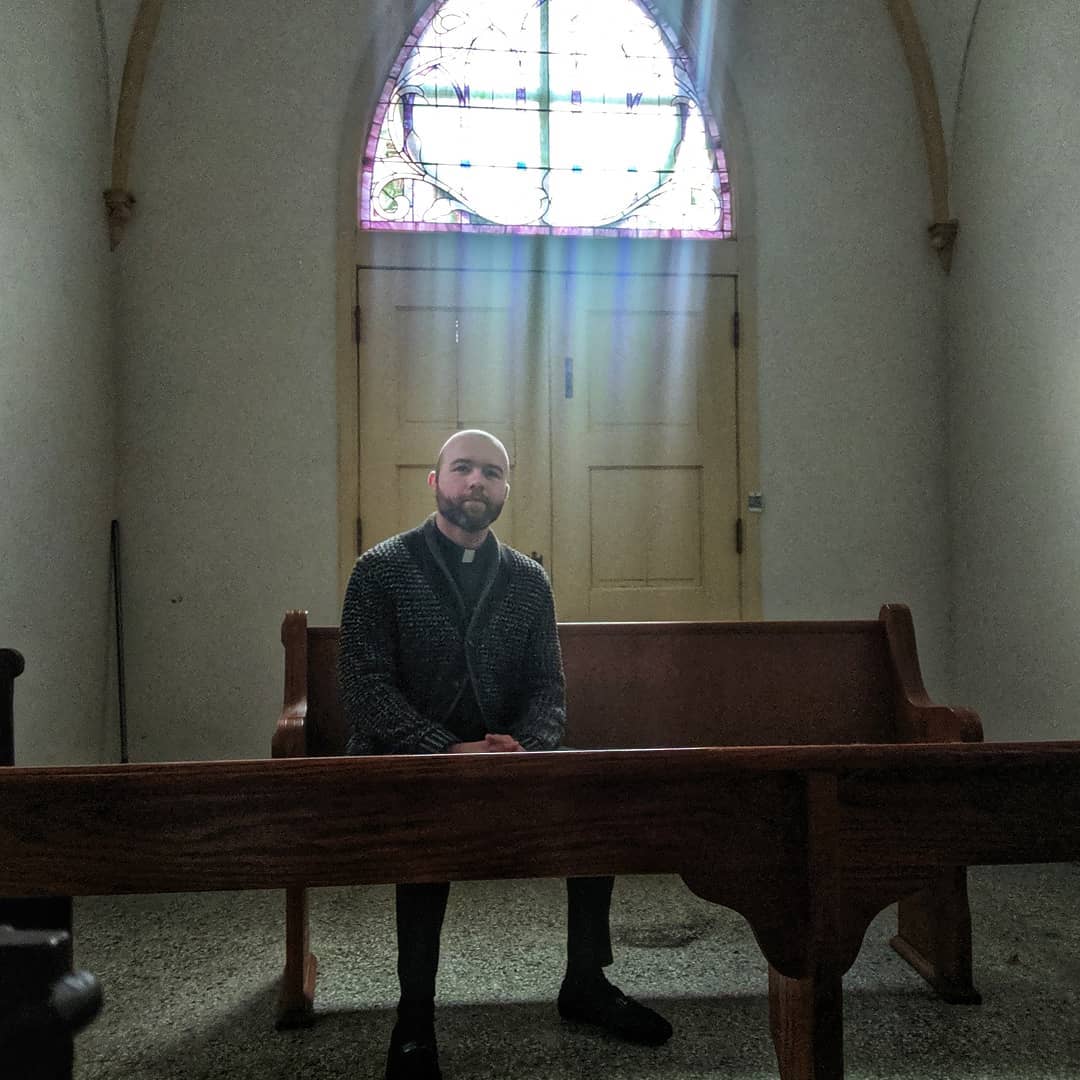
 By Another Road