
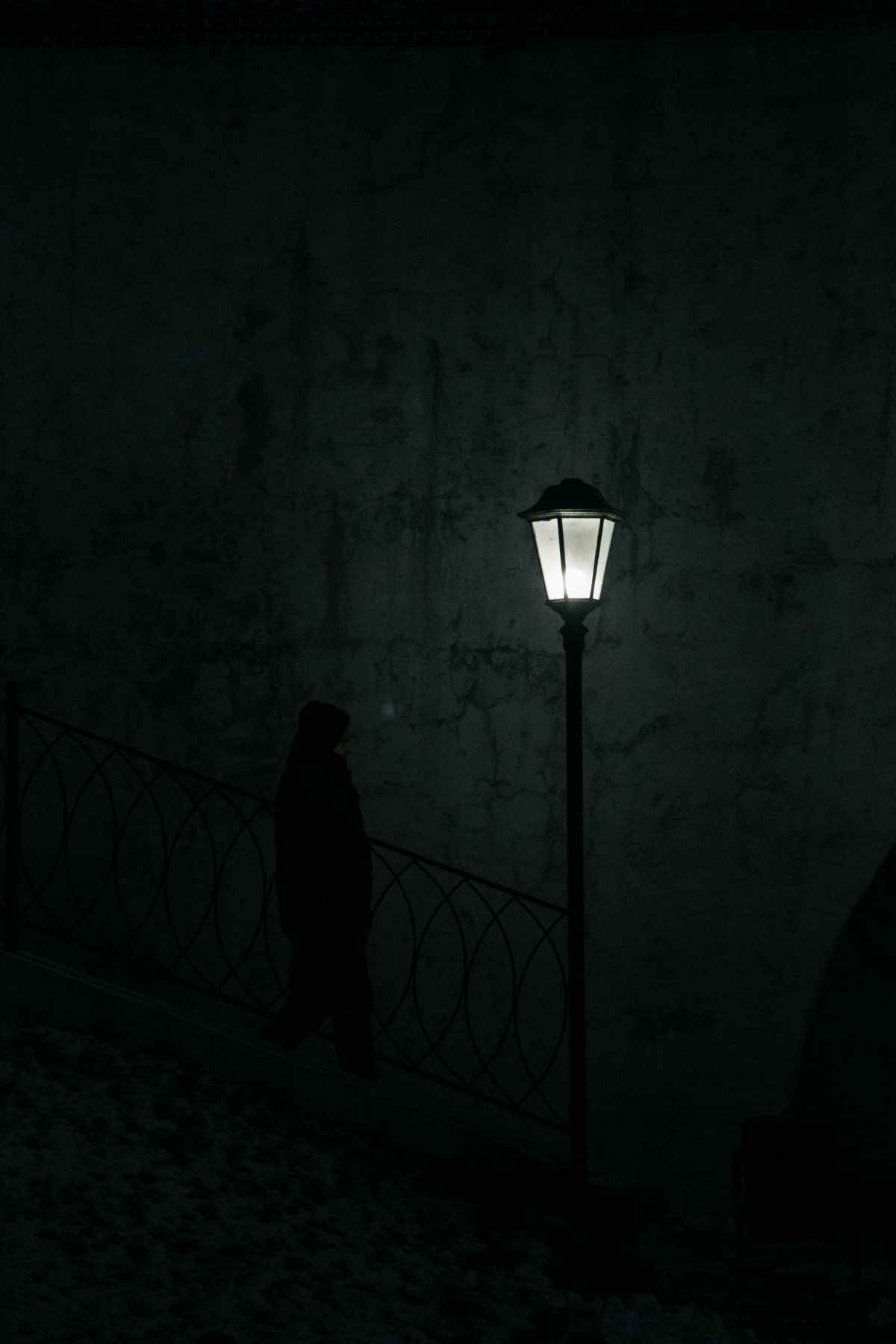
I preached this sermon on Sunday, December 3, 2023, Advent I, at St. Anne Episcopal Church, West Chester, OH. The lectionary texts cited are Isaiah 64:1-9 and Mark 13:24-37.
When I was in elementary school, I auditioned to be in a community theater production of A Christmas Carol. I was so nervous during the audition that I totally flubbed my rendition of Silver Bells, but apparently they needed lots of children in the production, so somehow I was cast as some nameless older brother of the real star, Tiny Tim. I had no solos, which was fine, and I think my only real speaking part was to exclaim something about the Christmas goose. A Tony-award winning role it was not.
But I loved every minute of it. And since then, I’ve always had a soft spot for A Christmas Carol, which, when you step back and think about it, is really a strange and gloomy bit of entertainment during the holiday season. There are ghosts and nightmares and strange visions in the dark, and the story is, at its core, an exploration of mortality and regret and redemption as Ebenezer Scrooge enters the twilight of his life. A far cry from the doggedly bright and cheerful tone of most things we watch and read and hear this time of year.
But you might be surprised to learn that Charles Dickens, the author of A Christmas Carol, was not trying to be countercultural by injecting some dark themes into the festive season. In fact, at the time he published the story, in 1843, the winter holidays were actually the preeminent time of year for ghost stories and tales of the macabre. People expected to be frightened a bit at Christmastime. We might associate those things now with Halloween, but in pre-Victorian England, it was wintertime, when the nights were cold and families gathered in close for warmth, that chilling stories were shared and the mysteries of the dark corners of life were explored.
A Christmas Carol is one of the only remnants we have of this tradition, along with that one line in the Andy Williams song, “It’s the Most Wonderful Time of the Year,” when he references people telling ‘scary ghost stories and tales of the glories of Christmases long, long ago.’ Otherwise, the culture around us seems to favor a cozier, less threatening tone as the winter settles in.
Except for one place. There is still somewhere you can go if you want to be a bit frightened during the holiday season. Right here, when you step into a liturgical church and listen to the readings during Advent.
Someone unfamiliar with the church seasons, stumbling into the midst of our Advent observances, might be forgiven for being shocked by the dim and haunting atmosphere of our readings and prayers this time of year. For this, the first Sunday of Advent, we have a yearning, wistful lament from the prophet Isaiah and an unsettling apocalyptic vision from Jesus and a Collect about casting away the works of darkness. One might expect the ghosts of Christmas past and future to show up at any moment, rattling their chains.
But for those of us who stick around to hear the stories, those who don’t run away, who try to make space for the odd collision of gloom and light that is Advent, I think we discover a strange respite in this season, perhaps the same sort that was provided by Christmas ghost stories in earlier times.
And the respite I am taking about is not the typical, self-soothing, therapeutic language that gets bandied about in some conversations about Advent being a slow and quiet time, an invitation to rest and relax and take part in self-care. Those are very good and healthy things, especially in a manic consumerist culture, but they are not the themes of Advent. Advent is not about a classical music and a bubble bath in between shopping trips.
Advent is about the stories that we tell in the dark—the stories that send a chill down our spine because they ask us to look into the shadows, the unknowability, the loss and the dissatisfaction and the brevity of things. That’s why you won’t find many light and happy Scripture passages this month; we must pass through the valley of shadows first, so that we can begin to understand the true radiance of what is promised in the first and second comings of Christ.
In the same way that we tell ghost stories around the fire in order to feel more alive, and in the same way that Scrooge, in A Christmas Carol, has to face his demons before his spirit can soar with the angels, so too does Advent invite us—require us, really—to acknowledge the pain of life so that we might better understand what Jesus is actually coming for in the first place. That is why our readings are not warm and bright and cheerful— because they attempt to be honest about, as Shakespeare put it, “the winter of our discontent” so that we might also be honest about what true contentment looks like when it arrives.
And what does contentment look like? We begin to collect some images for ourselves this week. Contentment looks like intimacy with our Creator, his hands like a potter molding the clay of our bodies into something beautiful and useful and strong. And contentment looks like intimacy with creation, that we might be as attentive and awake as a fig tree, our souls unfurled to receive the Son of God in due season.
In Isaiah and in the Gospel, and in all the stories we will tell in the dark over the next few weeks, we are asked to abide in the creative tension of living as a people who are both aware of life’s shortcomings and yet are haunted by the Kingdom of Heaven—knowing that both are real, the deep lamentation and the emerging promise, knowing that God will indeed reshape us, knowing that we do not hope in vain, and yet not knowing when the consummation of that hope will arrive in its fullness to descend upon our war-torn cities and upon our war-torn hearts.
And so, in Advent, we wait for the peace that the world proves time and again that it cannot give. And we tell the truth: the waiting is hard.
But may we also discover that in the waiting, even waiting in the dark where ghosts linger, there is still joy and loveliness and courage to be found when we gather in close to one another and do what we have been asked to do: to keep telling the stories of God’s goodness. To keep telling the good news. And to do this, all of this, in remembrance of the One who has promised that the end of the story will be a beautiful one.
And on that day, when past and present and future all come together, when the long delayed advent of God gives way to arrival, when we are awakened from something deeper than sleep, then, well, what a happy morning that will be. Happier, even than when Scrooge woke up to find himself alive, truly alive, on Christmas Day. I think it will be worth the wait.
Speaking of Scrooge, I suppose I have accepted the fact that I will probably not feature in any other productions of A Christmas Carol. But that’s ok. I am perfectly content. And you know why? Because I may not have had any good lines on stage back then, but now, every Sunday, I basically get to say the most important line of all, the one Tiny Tim says at the end of the story, the one that really sums everything up, the one that underlies everything we do. I get to say, God bless us, every one.
God bless us, every one. Everyone. It’s the best ending to a story anyone could hope for. Especially because it happens to be true. God will.
 By Another Road