
Do-Over: A Sermon

I preached this sermon on Sunday, August 20, 2023 at St. Anne Episcopal Church, West Chester, OH. The lectionary text cited is Matthew 15:21-28, Jesus’ interaction with a Canaanite woman.

Have you ever looked back at some moment in your life and wished you could have a do-over?  I know that it’s popular to say things like “no regrets” and “everything happens for a reason,” but if I’m perfectly honest, there are plenty of things I would change if I could. Some of them are a bit trivial, like my questionable fashion choices in high school (though some of these, as I approach 40, already seem to be coming back around).

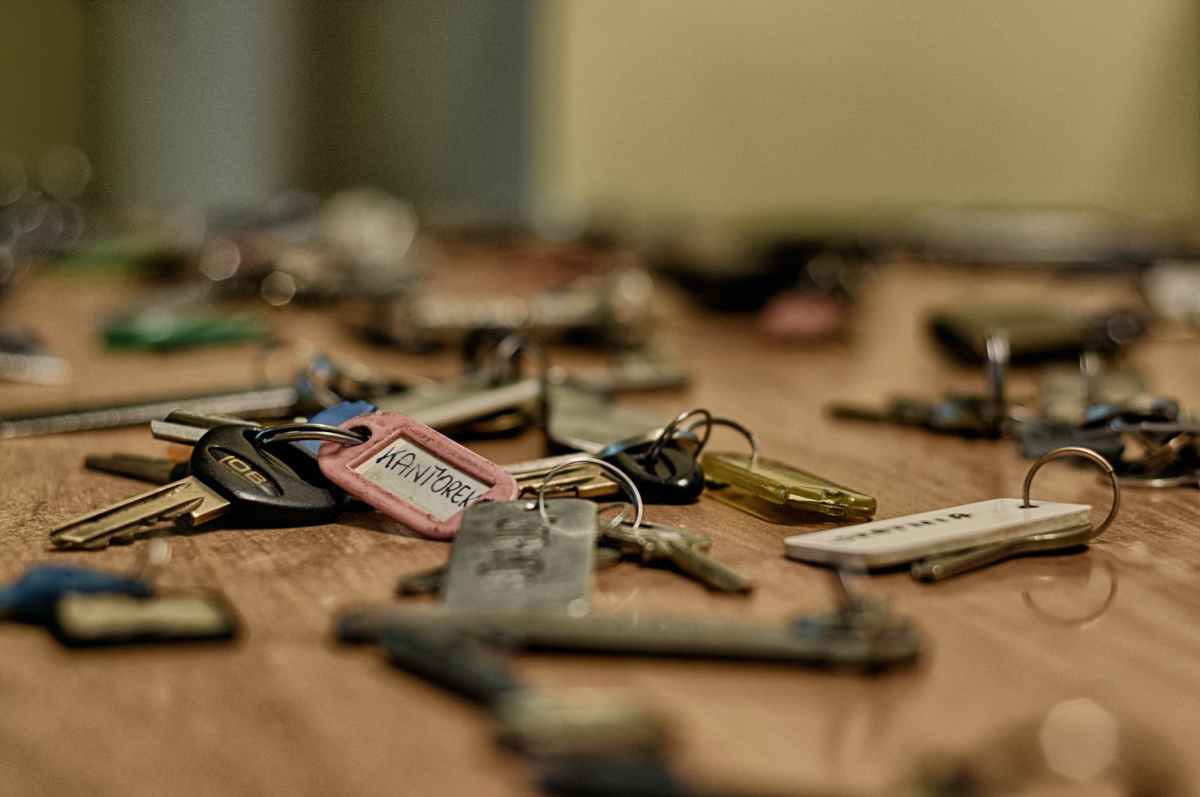
But some of the regrettable things are a bit harder and heavier: the things in my life done and left undone, the things said and left unsaid. They jangle around in my memory like a set of keys—keys for doorways that can no longer be opened—tarnished and jagged and yet hard to throw away. 

Truth be told, though, I am mostly ok with that. While I don’t think it’s helpful to myself or anyone else to wallow in regret, I do think there is value in remembering what has not gone well, what has been broken within us and broken by us, because it informs how we can make different choices in the present and on into the future. 

This is true not just for individuals, but for communities and nations, too, all of whom must reckon with the more painful aspects of their histories if they ever hope to unlock the shackles that bind their greatest ideals, to liberate their deepest and most beautiful dreams. 

We don’t get a do-over, exactly, but we get an infinite number of opportunities, as long as we live, to do better, to discern and to grow in wisdom, informed by our past but never imprisoned by it.

And this not just a sort of humanistic self-improvement philosophy, but the fundamental arc of Scripture, a story of promise and regret and repentance and redemption, a story which is itself filled with the messy choices of people and of nations wrestling with a Divine presence and power only partially understood, and yet who are drawn, always, always, into a new revelation of the breadth and the depth of God’s infinite power and unfailing ability to redeem our complicated histories.

I’ve been pondering all of this about do overs and doing better because, I think, it will help us wrestle with our challenging Gospel text this morning. Not solve it, but wrestle with it. 

Let’s just name the hard thing up front: Jesus is, to say the least, not kind to the Canaanite woman; he associates her and her people with dogs, and seems uninterested, at first, in healing her daughter. And we could, as many have, spend a lot of time wondering whether he was having his own regrettable moment or whether he was, in some opaque Divine way, testing the woman’s faith. Given who Jesus is, neither of these two choices is particularly easy or comfortable. 

But it is also good for us to step back and consider that for the disciples, and even for the original hearers of Matthew’s gospel, the truly remarkable thing in the narrative is not Jesus’ commitment to the children of Israel, nor his verbal sparring with the woman, but the fact that, ultimately, she is a Canaanite who receives God’s blessing. 

For if Israel’s troubled collective memory is a set of old keys, their relationship with the Canaanites is a particularly heavy and sharp one—the Canaanites are the people who originally inhabited the Promised Land, they were the ones displaced and slaughtered by Joshua’s armies, they were among the ones subjugated by the Kingdom of Israel and even now, in Jesus’ time, under Roman rule, the Canaanites are still a people whose name evokes that strange mixture of pride and fear when we encounter those whom we have othered past the point of recognition.

And all of this, all of this spilled blood and rage and this faded ghost of empire is heaped upon the Canaanite woman—this woman who has surely knelt at her child’s bedside, eyes brimming with tears, praying for her to make it; this woman who shouts in the street; who cries out for help; who boldly kneels before Jesus and seeks her daughters survival. She is a woman of unquestionable courage, but as a Canaanite she is also a symbol of all that Israel has wrought, and all that they have lost. No wonder they want to silence here and send her away. We often try to ignore those who remind us of our own wounds.

But there’s something we have to understand about Jesus, something which both explains and underscores the significance of what happens next, the fact that he doesn’t send her away. 

From the very beginning, when he was born as the Son of David in Bethlehem, Jesus has carried both the burden and the promise of Israel within his flesh—their chosenness and their chastening. We might even say that throughout his life, Jesus has embodied and recapitulated the original story of Israel.

And thus, Jesus, like Israel, is exiled into Egypt and then brought back; and like Israel he is sent into the desert to be tested and formed; and like Israel he bears out the weighty tradition of the prophets in his teaching and his miracles. And in all of these instances, he gathers up the glory and the pain and the belovedness of his people to bring it into an ever deepening level of Divine intimacy, knitting Israel’s story of liberation into the very fabric of creation, that it might become everyone’s story, in every time, in every nation.

Which makes his encounter, today, with the Canaanite woman, all the more significant, because we cannot forget that Israel’s history, its journey, is political and territorial, not just theological. And so now Jesus stands here, as Israel once did when they crossed with their armies to the other side of the Jordan, he stands here once again holding the life of a Canaanite in his hands, bearing the ancient grudges and the ancient fears of his people on his shoulders, and….he lays them down. 

He lets this mother’s love, and her faith, and her fierce determination change the story. O Woman, he says, great is your faith, and while the past cannot be erased, somewhere a new has opened, and suddenly the Kingdom of Heaven is bigger than Israel alone, bigger than any one nation. And while the children of the ones who spilled each other’s blood cannot get a do-over, they can do better. They can tell a new story, a story in which the daughter of a Canaanite is as beloved and valued as anyone else, and in which the only conquering power is mercy, and where the only Promised Land is the one big enough for everyone. 

Can we tell that story, too? Can we show the world what it looks like to do better, even if we can’t get a do-over on the most painful parts of our own history? Can we lay down our own ancient enmities and fears and misplaced nostalgia so that the best of who we have been might inform who we yet might become? These are deeply personal questions as well as collective ones for our church and for our world. 

But the good news of the gospel is that the answer is always YES. Yes, there is something on the other side of regret. Yes, there is something on the other side of failure and fear. Yes, there is a place where we won’t need all those old keys jangling in our pockets after all, because in that place all the doors will be flung wide open, and no one will be shut out, and everything that has been lost will be found and made whole.

Call that place what you will: call it the Kingdom, call it the new Creation, or call it Canaan; by any name and by God’s grace we’re heading to that land of promise together, and when we arrive, I suspect it will feel like this: waking up to a mother’s face, brimming with joyful tears, saying, my child, all is well. I am here. You made it.

Love > Chaos: A Sermon

I preached this sermon on August 13, 2023 at St. Anne Episcopal Church in West Chester, OH, on the occasion of my first service as Rector. The lectionary text cited is Matthew 14:22-33, when Jesus walks to the disciples across a stormy sea.

Anyone who has ever moved, whether across the country or the globe, or even just across town, knows that it can be an experience of utter chaos. And although I was determined, back when my call to St. Anne was finalized, that for once I would have an incredibly organized and orderly moving process, and that I would have all my boxes packed weeks in advance, life had other ideas. A confluence of events, both planned and unplanned, conspired to find me, just several days before the moving truck arrived, drowning in piles of books and papers and boxes and yet more books, questioning why on earth I ever felt it necessary to acquire three separate copies of Shakespeare’s complete works and a cardigan sweater collection large enough to rival Mr. Rogers (you’ll see those in the fall). 

One evening, as I sifted through the clutter and felt a rising anxiety that it all might rise up and swallow me whole, like Jonah in the belly of the fish, I opened a box of old papers and came across a collection of cards and letters, mostly from college days, some even older than that, and I started reading them. There were birthday cards from my late father; letters my mom sent me when she was living in Africa; postcards from old friends I haven’t seen in years. And as I sat there, reading through them, reminded of all the places I been and the people who have loved and cared for me so well along the way, I looked around at the disorder of my apartment and my life and I had a feeling of clarity, of reassurance, that yes, even here, even in the midst of change, in the midst of upheaval, love would sustain me, just as it always has. 

Those moments of chaos, both large and small, are no stranger to any of us, I’m sure. No matter who we are or where we come from, there are turbulent seasons of life, when the safe and familiar fall away and we are left out in the open, unsure of how to navigate, or even just how to keep our head above water. And it is perhaps quite natural for us, in such moments, to assume that the resolution to chaos is its opposite: order. safety. calm. Once I get everything in my life in order, then it’ll all be ok. Once I get all my books and cardigans stacked and sorted, it will all be ok. Somewhere, over the rainbow, just on the other side of the chaotic present, there will be a moment where life makes perfect sense and nothing is complicated.

There’s just one little problem—that perfect order which we seek never quite comes to pass. Someone gets sick, or an unexpected bill comes along, or the person we expected to stick around says goodbye, or we simply have too much to do and not enough time. And the waters rise, and we feel, once again, like the forces of chaos are stronger than our best laid plans. 

Surely the disciples felt a bit like this when they were out in that boat, battered by the storm on the sea. In the passage just before this, Jesus has just miraculously fed over five thousand people, so they’re all feeling pretty good about themselves, and then he says, take that boat and go over to the other side, and that seems straightforward enough for a group that includes some fishermen. But then the storm comes, and Jesus is nowhere to be found, and they are tired, and afraid, and the forces of chaos, both literal and proverbial, the dark and restless deep, the cresting wave, the rising anxiety, seems ready to overtake them, and any pretense of control, of order, of safety, is carried away on the howling wind.

And then, suddenly, in the midst of the chaos, there is Jesus, walking towards them on the water, saying do not be afraid, saying, take heart, saying, do not be afraid, saying come

And I think it is crucial–if we are to understand what this gospel might be telling us about navigating the chaotic storms of our own time and of our own lives–it is absolutely crucial to note that Jesus does not make this invitation to step out of the boat after he has calmed the wind, but before. He speaks from out of the whirlwind, as God did to Job. He is, in effect, saying to Peter (and thereby to us) come out and walk with me on the troubled waters; come and stand out here, where there is more beauty than there is safety; out here where there is more meaning than there is order; and know that I have come to you, across the sea, across the waters of eternity, not always to make things simple, but to make them true.

For it is here, in that space where nothing is familiar and yet where everything is possible, where a hand reaches out to guide us into the unknown, it is here that Jesus reveals good news for anyone frustrated by the inescapable complexities of life: that the true opposite of chaos is not order. The true opposite of chaos is not safety, nor simplicity. It is love. The opposite of chaos is love. 

For when things fall apart, as they sometimes do, and when things get messy, as they often will, whether in our personal lives or in our families or communities or in the world around us, when the piles of problems and to-dos loom up and threaten to swallow us whole, it is love that will reveal itself, even in the midst of the chaos, like an old letter in a moving box, like a hand clasping yours in the darkness, like the Son of God holding us close within the roar of the sea. It is only love that is more powerful than chaos, not because love eliminates chaos, but because chaos, no matter how hard it tries, cannot eliminate love. Chaos can wreck our best laid plans, but it cannot drown out love.

And you know this already, each of you and all of you together, surely. Because the divine spirit of love is alive and strong at St. Anne, and I have already heard from so many of you how that love has sustained you through occasional seasons of change and challenge in your lives, just as it has through many seasons of joy. 

And I know in my heart that we are embarking, this day, on a new season of joy together, but I am also comforted by the reminder that even when we must face and solve challenges together, even when things get a little complicated or confusing or messy, as they sometimes do, it is that love—love of God and neighbor and of one another—that will carry us through any storm.

And it is that kind of love—the wild and free kind that is undaunted by chaos; that doesn’t hesitate to get its feet wet; that doesn’t mind troubling the waters for the sake of justice or navigating the unknown for the sake of spiritual depth—it is that Jesus-type of love that this world needs so desperately right now. And that’s the kind of love we’re going to continue cultivating here and sharing with everyone who comes through these doors and those beyond this place who need to hear about what happens here. Believe me, they need to hear about it.

Because how marvelous it is that the God of the universe, the Lord of all creation, the One who breathed over the swirling waters at the morning of the world, is coming to find us, still, on this very morning, undeterred by any storm, unstoppable, unimaginably determined to love us, saying, sighing, singing, roaring that invitation into the wind:

Take heart. 

Do not be afraid. 

Come.

Stories: A Goodbye Sermon

I preached this sermon on Sunday, July 16, 2023, my final service as Associate Rector at Trinity Episcopal Church, Fort Wayne, IN. The lectionary text cited is Matthew 13:1-9, 18-23, Jesus’ parable of the sower.

I still remember quite clearly the first time I saw Trinity. It was late evening in early April of 2019, just over four years ago. I had flown into Fort Wayne from California that day for my interview weekend, and Fr. T.J. picked me up at the airport and dropped me off at my hotel after a welcome cocktail. But I was still wide awake, restless, a bit nervous, my body on west coast time. 

So I took a walk down Main Street in the dark, past the stately Courthouse, past the workers closing up shop at the Coney Island, past Henry’s, then left on Fulton Street, and suddenly there it was in front of me, lit up, its gold-hued stone walls illuminated by flood lights, a beacon in the still spring night. And I stood there on the corner, looking up at the steeple, and I felt a strange, thrilling sense of knowing, like when you fall in love, and I thought, maybe, just maybe, the long and winding road of my life has led me all the way here. 

And so it did. And the courthouse and the Coney Island and Henry’s and especially these old stone walls have come to hold all sorts of memories and meanings that I could not have imagined back then on that April night, back before I was a priest, before COVID, before I came to know and treasure your names and your faces and your stories, before we navigated the ups and the downs of these four years alongside one another, praising God and praying for each other and engaging, week by week, the graceful rhythm of the liturgy. I could not have imagined all the blessings and the lessons of these years, and how they would leave such an indelible mark on my heart. 

But here we are. And although four years go by so quickly, I know that the story that began on that April night and which ends, for me, on this July morning, will be one of the most cherished and enduring stories of my life. 

But one of the interesting and oddly comforting things that I have learned during my ministry at Trinity, and something that I think is true for all of us who spend time in this place, is that within these walls, our beginnings and our endings are all layered on top of one another, interlocking like those golden stones—time is a bit slippery, and what is seemingly lost to us lives on. 

Just as it is in the liturgy itself, where Alpha and Omega come together, where righteousness and peace kiss, I find that the past and the present commingle in these hallways. Priests and parishioners long gone, long dead, even, are still part of the living memory of this place. One can sit here in the nave on a quiet afternoon, the sunlight bathing the walls in color, and sense the presence of those who came before, the ones who are themselves carried, now, on the light, a thousand fragments of faith, hope, and love, still abiding here. 

And so when things change, when stories end, when people leave, or move away, or even die, these endings are gently incorporated into that which does not end. They are held in trust, like a precious volume added to the shelf, an entry into our one shared story. It is a story that began long before any one of us, and that will continue long after all of us. Each of us comes and contributes what we can while we can, and then we hand it off to God and to the future. 

And as hard as it is to leave, I find peace in the knowledge that my offering is just one of many; for there is something good and necessary and holy to feel, in this life, like you have been part of something far larger than yourself alone. Trinity is a place where each of us can be part of something large, something magnificent, something eternal, even, if we give ourselves over to it. 

And that is so, of course, not simply because of some magic within these stone walls, but because this is the house of God; it is the place where our individual stories collide not only with one another’s and those of our forebears but with the one timeless story of God’s passionate and undying love for us and for all of creation. 

And in a world and a culture that so often tells us that it is up to us alone to determine what is real and true, to wrest some scrap of meaning from the happenstance of our lives, to navigate our way between the lonely waystations of existence and find solace only in ourselves, in this place we learn that this is not so. We learn that we were not made to be alone and that we will not be alone, in the end. We learn that God has knit himself into our stories and has knit us into his own, all-encompassing story. 

I think this is part of the reason that Jesus, the incarnate God, loves to teach his followers in stories and parables. Not just to be obscure or confusing, but to remind us that the whole of salvation is the imaginative exercise of a Creator who longs to re-enchant the world. 

God longs for us to feel a sense of wonder, like the child we used to be, and so he tells us stories of sowers and seeds and soil and sunshine so that we might begin to realize that the Kingdom of God is as close to us as the ground upon which we stand, that this Kingdom grows, somehow, when we recognize that we are a part of everything and that everything is a part of us.

In parables like the one we heard this morning, the parable of the sower, Jesus is not telling us about various types of earth so that we can determine which soil sample fits our own individual story and circumstance—whether we by ourselves are rocky or thorny or rich and fertile.  Instead, he is asking us whether we can dream of and bring into existence a world where all might flourish of fertile ground; where all might be fed by the harvest of a righteousness deep and vibrant as the Indiana cornfields; where all might know the abundance that is possible when we love and care and tend to one another, as we have here. That’s the story God wants us to be a part of. That’s the story I have found here with you.

For God knows that too many of us, myself included, have felt what it is to be trampled down like the dust; to be caught among the thorns and stones. God knows how we have walked endlessly through the night, down unfamiliar streets, down long and winding roads, seeking our place in this world, and that sometimes we need a new promise, a new vision to illuminate the darkness, to dazzle us with its golden possibilities, to give us that strange, thrilling sense of knowing, like when you fall in love. Because God wants you to fall in love again–or for the first time–with him, with who he has made you to be, with this world and all who are in it, with the unique story that has brought you safe thus far, and with the new, shared story that is still being written. 

How good it is, my beloved friends, that our paths have converged in this place. How good it is that the story of God’s love, the one that brought us together, will never truly end. And if you ever find yourself feeling lost, or alone, or unsure about your place in this world, may I commend to you the simple reassurance of these old stone walls, softly glowing in the darkness, and the Spirit that abides herein, which will never forget you, nor me, nor any moment of what we have found and cherished in this place, even long after we are gone. 

So thank you. Thank you for letting me be part of your stories. Thank you, God, for letting me be part of Trinity’s story. And so, until we meet again, in that place and time where all our stories become one, world without end: my gratitude and my love.

Hospitality: A Sermon

I preached this sermon on Sunday, July 2, 2023 at Trinity Episcopal Church, Fort Wayne, IN. The lectionary texts cited are Genesis 22:1-14 and Matthew 10-40-42.

About a year and a half ago, a woman came to Trinity seeking some assistance. As most of you know, we are regularly visited by folks in our community who, for one reason or another, have come upon hard times and who need a little help. When they show up we try, as best we can, to assist them with the essentials—food, laundry, a bit of money to help with an emergency expense. Many of you contribute to these initiatives. 

This woman was in a similar situation; she’d started a job at a fast food restaurant and wouldn’t get paid for a week or two, and needed some funds to cover her bills. But it wasn’t her request for help that stood out to me, or even her story, which had more than its share of heartbreak and hardship. What stood out was a question that she asked me—a question that nobody else who has come to the doors has ever asked me, before or since. After giving her what I could, she looked past me as if gazing down the hallway into the building, and then she said, “the people who go to this church—what do they think of people like me?  Would I be welcome here?”

Would I be welcome here? She was asking, in other words, would people like me, people who embody an uncomfortable truth, people whose lives do not fit a neat and tidy narrative—would a person like that be welcome here? I’m not exaggerating when I say that it felt, in that moment, as if Christ himself was asking the question of me and of us: the people who go to this church—what do they think of me? 

Now, of course I told her what a warm and welcoming community we have here at Trinity, and that she could worship with us any time, and I meant that. But the question has stayed with me ever since, perhaps because of its raw vulnerability, or perhaps because, in asking it, she was really getting to the heart of what we are supposed to be about in this house of God: true, sometimes uncomfortable hospitality.

Because it’s all too easy to say that we should love God and love our neighbor until we realize that God and that neighbor might deeply challenge us, and that loving them is going to ask something precious of us—something we were not prepared to relinquish. Our resources sometimes, yes, but also our comfort, our complacency, and our preconceived notions about the world.

We in the Episcopal church take seriously the notion, stated in today’s Gospel, that whoever welcomes the stranger welcomes the Lord himself. And we strive, as best we can, to create space for all who hunger, for all who seek, to say, “yes, you are welcome here, whoever you are, whoever you have been, whoever you are becoming. You are welcome.” And that is a gift that this community offers willingly. 

But hospitality is a risky sort of gift, because it doesn’t always go according to plan. We might set out to welcome a guest with the best of intentions, with our house well in order, with the banquet arranged just so, only to discover that when those guests arrive, they demand more than we bargained for—not more of our material goods, but more of ourselves. A true, and deep, and holy hospitality is not just about opening our doors, but about opening our hearts, and our lives, to the possibility of truly seeing and thus being changed by the one who comes knocking.

When the woman at the doors asked me that question, “would I be welcome here” I have to be honest that a part of myself wondered—would she? Would she be fully, truly welcomed? Not just acknowledged with a polite smile, but embraced, in all of her complexity and pain? Are any of us? It’s a question, at least for me, without a neat and tidy answer, because, in truth, I think we can all be a bit afraid of the unfamiliar. We can all shy away from people whose lives seem so very unlike our own, especially those whose naked grief and brokenness demands an accounting of our own hidden wounds. 

And yet, if I am to be hospitable, truly hospitable, then I know that I must go beyond politeness and venture into the far scarier and more uncertain landscape of true communion, where our wounds and our dreams and our stories brush up against one another, all so different on the surface, yet all so similar. It is not for the faint of heart, this type of hospitality, but it is the also the very thing for which our hearts were made.

And though you might not immediately see it, this invitation into risky hospitality is the unspoken theme of today’s dark and luminous reading from Genesis, one of the strangest and most compelling passages in all of scripture, in which Abraham must prepare an altar for his son, Isaac, to be offered, like a lamb, as a sacrifice to the inscrutable mystery of God. 

It is a horrifying story. It is an inconceivable demand. And that’s good; the fact that we recoil from the story reveals our own innate tendency toward compassion. 

But if we can take a step back from the emotional intensity of the narrative and consider how it fits into the broader story of Abraham’s experience of God, I think it also says something very important about this question of true, costly hospitality; of welcoming the stranger—the challenging stranger—into our midst.

Let me explain. Abraham’s story is based, in many ways, on the idea of being hospitable. You will remember (we just heard it in church a couple weeks ago) that Abraham and Sarah, who were childless in their old age, were granted as a divine blessing their son, Isaac, after offering hospitality to God, who appeared to them as three travelers seeking respite. They prepared a meal for the Lord and then they were promised a son. And if this were the whole story, if they lived happily ever after, it would be quite neat and tidy—they acted hospitably, virtuously, and they reaped the rewards of doing so. 

But nothing in life is that simple, and nothing in Scripture is either. So we have this unsettling chapter today—one that hits hard for anyone who has lost someone or something very dear to them—with God coming to Abraham again and asking for something far more costly than a meal and a bit of shelter. Here, God demands Abraham’s willingness to offer up his very identity, his love, his hope. Here, on this cold and lonely mountaintop, far from his home, being hospitable to God, preparing a table for him is, for Abraham, the opposite of neat and tidy. It is earth shattering. It is heart-rending. And as he builds the altar of wood, as the wind whistles over the rocks, one can almost hear a question carried down from heaven—Abraham, what do you think of me now? Am I still welcome here? Will you hold fast to the promise, even now, even when it will seemingly cost you everything?

Now, of course, God does not actually demand Isaac’s life in the end; he desires mercy, not sacrifice, even if he has a terrifying way of showing it here. But in this story, which is less of a handbook for father-son relationships and really more like a parable, we are reminded in shocking terms that opening our homes and our hearts to God in our midst—to offer hospitality in that deep and true way, is not always a cozy get together. Sometimes it is a door thrown open to the truth, to the storm, bearing with it liberating wind and life-giving water and dreadful lightning all at once. 

Sometimes being hospitable is finding the courage to stand in the threshold and to see there, in the whirlwind, the totality of life—the blessing and the curse, the beauty and the burden and the risk and the redemptive promise, and to somehow say, “yes.” 

Yes, I open myself to whoever and whatever comes. Yes, I will risk caring for another, even though I know I must lose them someday. I will embrace what I do not understand. I will love past the point of calculation, I will be welcoming past the point of self-serving virtue, I will greet you, whoever you are, woman knocking at the door, God knocking at the door, and I will hear your story and I’ll tell you mine and if you ask me what the people in this church think; if you would be welcome here, I will say, 

I hope so, because if you are not, then none of us is. For the love of God is costly, so very costly, but it is also fierce and free. It is all-encompassing, and there are no outsiders inside this place. 

So come. Come to this table and behold the gift given abundantly—yes, a Son sacrificed upon a lonely altar, in the end, by not given by us to a angry God but given by God to a hungry humanity—given to you. Given for you. The once and eternal hospitality of God, terrifying, magnificent, transformative, and complete. 

Yes, we are all welcome here. 

And it will save us. And it will change us.

So brace yourself.

Sleep: A Sermon

I preached this sermon on Sunday, June 11, 2023 at Trinity Episcopal Church, Fort Wayne, IN. The lectionary texts cited are Genesis 12:1-9, Romans 4:13-25, and Matthew 9:9-13, 18-26.

The other night, I couldn’t sleep.

Maybe you’ve had one of those nights, too, where you go to bed and turn off the lights and as you lie there, suddenly all of the questions and the challenges you are facing loom up in the shadows and take on newer, larger dimensions. Maybe you start to think up problems you didn’t even know you had. And you toss and turn and flip and flop and look at the clock and tell yourself “I have to get to sleep,” but then that just makes you more anxious and so now you can’t sleep because you are stressed that you can’t sleep.

I am grateful that this is not a nightly occurrence for me; it happens just once in a while. And I know that for some folks, sleep is persistently hard to come by for a whole host of reasons. But as I was lying there the other night, trying to calm my mind, listening to the fan blowing, I was reminded of other June nights: the ones from my childhood, when I would fall into bed, tired from the day’s activities, and the fan would be blowing in the window…but back then I would just drift off, unfazed by any existential angst or unfinished to-do lists. 

And it occurred to me that, by and large, many of us probably slept a lot better when we were children. Back when our loved ones were just down the hall and we didn’t feel so alone. When it was easier to release the cares of the day, easier to trust that tomorrow would be just fine, and that maybe, when we wake up, it would be even better than we dreamed it to be. 

But somehow, along the way, things change, and by the time we are grown, a great number of questions and worries and memories hold vigil at our bedside, and it becomes hard to fall asleep in their company. What was once an easy rest, a trusting openness to tomorrow, is now a tense, restless waiting, our minds spinning in the darkness as we try to solve all of the problems of the world before the morning comes. And so while I was lying there in bed, I thought, how precious it would be to sleep like a child once again.

As I was recovering from my sleeplessness this week and reflecting on this Sunday’s readings, something else occurred to me that hadn’t before: that sleep is actually a powerful metaphor for faith. Because the sleep for which we long, that wistfully-remembered sleep of the June nights our childhoods—deep, peaceful, trusting—is quite similar in nature to what St. Paul is talking about when he refers to this thing called “faith” in the letter to the Romans. 

When Paul speaks of faith, he is not just talking about an intellectual assent to a set of doctrines, nor is he speaking of a blithe certainty about how and why the world is the way that it is. He is talking about that intimate sort of bond you feel when you know that you are safe, that you are loved, that you are not alone in the dark, and that tomorrow will be ok.

And to this end, Paul uses as an exemplar of such faith the figure of Abraham–someone who had the benefit of neither doctrines nor certainties, but who did (a few passages later in Genesis) fall into a deep sleep and had a dream of what would be–that he would be the “father of many nations.”

Abraham could not have imagined on his own how God was going to do the things God promised to do, but he gave himself over to the promise anyway. And this giving over of the self to something large and mysterious; this surrender to the dream that God unfurls for us in the darkness—this is what we mean when we talk about faith

As best we can tell, Abraham did not lie awake making checklists, trying to figure out exactly what he had to do in order to make this happen on his own; instead, he said, God is with me, and I suppose that will be enough to face whatever tomorrow brings. And so it was.

The faith of Abraham was an abiding trust that the God who called him by name would hold him and carry him and nurture him, like a parent cradling a sleeping child. And so we laud him as the progenitor of our faith not because of his perfect understanding, but because he was the first among us, the first in this long unfolding story, who simply rested in the arms of God. He was the first to trust that tomorrow would be just fine, and that maybe, when he woke up, it would be even better than he dreamed it to be.

A question that remains, though, is how? How do I arrive at such a tranquil faith, such a restful surrender? How do I trust in God so deeply, so fully, that I can drift off in his loving arms, despite the real dangers of this life, despite the despair and the unanswered questions that keep me awake at night? How can any of us, once we are no longer children, once we feel so alone?

Of course the answer, as always, has something to do with Jesus. And our Gospel passage points toward it. 

There’s a lot going on in this Gospel reading, actually. It’s kind of like those dreams you have where one scene suddenly transitions into another, layer upon layer. But after the calling of the reviled tax collector Matthew and the healing of the woman with the hemmhorage (both people, by the way, who have surely suffered their own share of sleepless nights) the story culminates with…what? 

Jesus visiting a child, lying in her bed. A young girl who, he says, is not dead, but sleeping.

Now of course we can interpret this passage several ways, and most of us might assume that he was speaking metaphorically–that the girl was indeed dead and that Jesus brought her back to life, like Lazarus. Or that she was sick or comatose, and he revived her. 

But there is another possibility, too, one that is a bit more evocative and mysterious, one that we might dismiss as easily as the observers in the story itself: the possibility that Jesus meant what he said. 

What if Jesus was right, and the young girl was indeed asleep, in another state of consciousness, resting in the tantalizing, hidden promises of God? She wouldn’t be the first person in the Bible to have done so. As it is said:

your sons and your daughters shall prophesy,

and your young men shall see visions,

and your old men shall dream dreams.

What if she was a mystic deep in a vision, deep in the hidden, luminous darkness of God? What if she was asleep like Jesus was asleep in that boat on the stormy sea; asleep like Joseph when the angels spoke to him; asleep like Abraham dreaming of his children; asleep like one who is held in the arms of the Almighty; asleep in order to remind the clamoring, sleepless world—including us— of what true faith looks like— 

Not like a restless, anxious night, not like a to-do list, but like….rest. Perhaps faith, in the end, is nothing more than rest. Resting in God. 

If so, then this young girl is, for us, another Abraham. Another reminder that faith, more than anything, looks like curling up in the arms of a loving parent and falling asleep. 

And thankfully, we have a God who desires but one thing: to hold us and rock us through the night.

Come to me, all you who are heavy laden, and I will give you rest.

Will we still have some sleepless nights? Probably. Anyone who loves this world and the people in it is bound to worry a bit. But I hope that when I am lying there in the dark, lamenting my inability to figure life out once and for all, to know what’s coming, to know exactly what to do, that I’ll remember dreaming Abraham and the sleeping girl, and I hope I’ll remember how faith feels less like having all the answers and more like slipping into cool sheets on a warm June night and drifting off, knowing that tomorrow will be just fine. That maybe it will be even better than I dreamed it to be. And that no matter what happens, God will still be there, waiting to take my hand when I wake up. 

For he has come through the clamor and the noise, through the vast night of eternity to be at our bedside, to cradle us like a sleeping child, to promise, “you are not alone. I am here.”

And in that promise, I rest.

Hello/Goodbye: A Sermon

I preached this sermon on Sunday, May 21, 2023 at Trinity Episcopal Church, Fort Wayne, IN. The lectionary texts cited are Acts 1:6-14 (an account of the Ascension of Jesus) and John 17:1-11.

I find it a fascinating feature of certain languages that the same word can be used for both hello and goodbye. In Italian, whether coming or going, people often simply say “ciao.” In Hawaiian, it is “aloha.” In the Czech Republic, where I did a study abroad year in college, they say “ahoj,” which honestly always made me feel a little bit like a pirate. When a word like this contains within itself more than one meaning, it is called polysemy

We have many polysemous words in English, too, of course, but we typically use different words to greet one another and then to take our leave. Although even for us, we might choose to say “good day” or “good evening” on both arrival and departure. 

In all of the instances when one word serves as both hello and a goodbye, our languages reveal something deeper than their simple function. When both meanings are held in the same word, there is an acknowledgment of the fluidity of time and space and our place within them; when hello and goodbye are the same, then every coming together acknowledges an inevitable parting of ways, and yet every parting of ways holds within it the hope of inevitable reunion. 

I like this very much, not only because it is linguistically nuanced, but because it feels true, it feels like a little reminder that whether, in this moment, we are moving closer or farther from one another, we are still connected. 

And if that is true, then it suggests that the narratives we so often tell of encounters and departures—of definitive hellos and devastating goodbyes—are all, in reality, held within a larger, more gentle and generous story wherein all the roads we travel are interconnected, where all of our hellos and goodbyes lead back to one another in the end. Which is, itself, a polysemous, complex realization. 

Because if hello and goodbye are never truly final, it’s a consolation when we feel the sting of loneliness and yet it’s also a caution when we would rather escape our histories or shrug off our responsibilities to right relationship, because the intertwining of all our hellos and goodbyes signifies that we are inextricably tied to one another and to the whole of the earth. It suggests that, as the poet Tennyson says, we are a part of all that we have met, and, thus, it is part of us. Hello, you are part of me. Goodbye, I am part of you. No matter where we go, we will never not be part of each other. And knowing this, we must decide how best to live.

I am thinking about hellos and goodbyes and polysemy this week because we have just celebrated the Feast of the Ascension this past Thursday and you can tell that its story is echoing into our lectionary readings this morning, and to tell the truth, this story has always felt like kind of a bummer to me in the midst of our Easter joy. 

Because viewed from one angle, the Ascension is a goodbye narrative. The risen Jesus, only recently reunited with his beloved friends and family, is carried up in a cloud, into the great Mystery where it is beyond our capacity to see him, and his disciples are left staring at the sky, yearning for one last glimpse of him. 

And from this perspective, especially for all of us who have grieved the loss of a beloved face, who have felt the hollowness of being the one left behind, the Ascension might feel a bit like a flat note in the jubilant melody of the season. 

We might say, You loved us enough to come back from death, Lord, so why must you go, now, to a place where we cannot see you? Why must we continue to let go of you? Why is it still the case, even after the Resurrection, that everyone and everything we love still says goodbye to us in the end? Why must we wait here alone, waiting for the unresolved promise of your peaceable kingdom?

And yes, Lord, I know you have promised us the Spirit as our Comforter and guide, but if I am brutally honest, Lord, there are days I would trade that unseen Spirit for just one glimpse of your face, for one moment of your actual hands holding mine, reassuring me that I am not alone on this journey, some proof that your leaving was not forever, that there will come a day when we can say hello and it will not also mean goodbye. I would give anything to know that there will be, one day, an end to endings. 

But depart he does, and wait we must. And so for now, like the disciples on the mountain, we must stand in this polysemous moment of the goodbye that searches for a hello, containing within itself both joy and grief, reunion and relinquishment, and we must continue to wonder why and how and when we will understand the necessity of loss. 

But then this week, as I was reflecting on all of this, something occurred to me: that the Ascension, like so many other stories in Scripture, is itself polysemous—it, too, means multiple things at once. And while it is indeed a farewell narrative from the perspective of us and the disciples on the mountain, I realized that from the vantage point of God the Father, from the vantage point of the Spirit aloft on the high wind, from vantage point of the innermost heart of the Trinity, the Ascension is a hello, a celebration, a homecoming. It is Jesus, the Son, in the fullness of his risen, reclaimed, redeemed human flesh, crossing back over the threshold of heaven saying to the Father, here I am, I have returned to you, and much have I seen, and long have I loved you, and how good it is to be in your embrace again. 

And if we truly love him, how could we not want our Lord to finally be at home? How could we not feel some joy that even though we must say goodbye, it is because he needed to see his Father’s face once more? I can’t begrudge him that. I know I want to see my father’s face again someday, too.

And there’s also this: in the Ascension, when Jesus says goodbye to us and hello to eternity, he is, in truth, doing something entirely new, something that only he could do, fully human, fully divine, his polysemous body drawn up and out beyond the limits of the flesh, blurring the boundaries between heaven and earth, reigning as the Lord of both. 

He is not simply saying both hello and goodbye at the same time; he is breaking down the barriers between hello and goodbye; the barriers that separate us from God and one another. He is effecting his prayer that we might all be one, never parted. He is transfiguring all our beginnings and our endings, all of our greetings and our grief, all of our hope and our fear, into something bigger, something timeless, something that we cannot even imagine because we have not yet known a story that didn’t have an ending. 

By journeying to a realm where human flesh could never have otherwise gone, he is making a place for us, a place where we will be greeted and welcomed, and somehow, where we will never have to say goodbye.

And when he returns, bringing back the glory of heaven for our eyes to behold at last, it will be a new word that he speaks, neither hello nor goodbye, but some word no mind has yet conceived, that no lip has dared to speak, a word that contains all things within itself, a polysemous Word that resolves every question, dries every tear, mends every broken heart, a word that will make the earth tremble with its beauty and its power, a word that will hold more than we could ever say but that will say it all. A word that will initiate our own Ascension.

What will that word be? I do not know. But in essence, I think it will say, here I am, I have returned to you, and much have I seen, and long have I loved you, and how good it is to be in your embrace again. 

And now, no more hellos, no more goodbyes. Only this. Only us. All of us together. Always. 

Tunnel: A Sermon

I preached this sermon on Sunday, April 16, 2023 at Trinity Episcopal Church, Fort Wayne. The lectionary text cited is John 20:19-31, when the risen Jesus appears to the disciples, including Thomas.

Many of you know that I was born in Northern California, and for the most part we lived just north of San Francisco. Now, a curious quirk in that part of the world: when you grow up in any proximity to the Bay Area, you don’t refer to San Francisco by name, you just call it the city, and everyone else knows implicitly what you mean. Within a several hour radius, you can simply say “we’re going to the city,” and they will assume that you don’t mean Oakland or Berkeley, or San Jose, or Sacramento.

For northern Californians, for better or worse, there is only one city that is the city, and it’s the one you leave your heart in, as the old song goes—the one that glows like a beacon at the end of the world; the one that is draped in fog and flowers; the one that is complex, and layered, and broken, and is yet still beautiful; the one that looms large in the imagination of everyone who has been there and many who have not—it is only this one that needs no other name but is simply the city

And if you have never been to San Francisco before, let me tell you the absolute best way to see the city for the first time. You have to come by car, from the north, down through the towns and the vertiginous hillsides of Marin County, your view obscured by the terrain: steep, cypress-clad hills and winding roads. 

And as you go along, any notion of what lies ahead is completely hidden from sight, until suddenly you come upon an arched tunnel in the rock, long known as the Rainbow Tunnel. Drive through the dim passage, ever so briefly, and as you emerge on the other side, suddenly, all at once, everything is there before you: the blue of the bay; the shadowy mountains rising up from the sea, reaching toward heaven; the Golden Gate; and beyond it, the city—the luminous city, indeed glowing like a beacon at the end of the world. You’re never quite prepared for it. Every time as a kid that we drove through the tunnel, the shocking beauty of that view took my breath away. 

Now there are all sorts of unexpected views revealed to us as we journey through the world—both the literal ones waiting just over the next hillside, and the more figurative ones, too—those new insights and understandings that come upon us at certain points in our life and change us in profound ways. 

Sometimes we can go looking for such revelations, but just as often they come to us when we do not expect them, when we are deep in a tunnel of one sort or another, rushing ahead, our vision narrowed, and then suddenly, the world opens up and the the landscape is entirely new to us. It can be wonderful, and it can be terrifying; sometimes it can be both.

The season of Easter is just such a moment, when a new and astounding vision unfolds before us. Easter is when everything that seemed impossible, everything that seemed dead and gone, sealed away behind our certainties and our sorrow, is suddenly standing before us, more vivid and alive than we ever imagined, inviting us to reconsider how the world actually works.

Easter is when our tunnel vision falls away and suddenly we see things previously undreamt of: that death is not definitive, that love is more enduring than we ever dared to hope, and that God’s purpose is not simply to make our burdens bearable but to bear our burdens himself; not simply to preserve our lives but to give us his own life. It’s enough to take your breath away.

And it is understandable that, emerging from the long tunnel of our painful histories, we might not know what to do with such a vision. It is only natural that we would feel unprepared for its implications, its possibilities, its endless horizons. As Fr. T.J. said in  last week’s homily, resurrection is messy, because we are messy, and resurrection has come to find us here and now, just as we are: fearful, unsure, full of questions.

But don’t worry, we’re in good company, because you know who else was fearful and unsure, and full of questions? All of the first disciples! All of them—not just Thomas—needed some help in processing what it meant to see the risen Jesus standing in their midst. All of them had their breath taken away by the shock of it. 

And it was only in Jesus ministering to them—giving them his own Spirit-infused breath, showing them his wounds, offering them peace and blessing, commissioning them to go forth in his name—that they were able to begin to comprehend the landscape that awaited them on the other side of the dark, narrow tunnel of grief and fear in which they had found themselves. 

And Thomas, our dear friend Thomas, should actually be called “Believing Thomas,” not “Doubting Thomas,” for it is he who truly emerges first onto the other side of understanding; it is he who comprehends the fullness of the vision before him; it is he who realizes the significance of the risen body of Jesus that, though wounded, persists in life and love; it is Thomas who names what he sees, and who thereby gives voice to the Church’s dawning understanding of what the Resurrection is meant to show all of us: My Lord and my God

My Lord and my God, it is you! It is you, wounded like me! Wounded for me! It is you, complex, and layered and broken and yet still beautiful, and loving me, loving all of us, loving this whole earth for being the same! It is you, glowing like a beacon at the end of the world! It was always you. It will always be you, forgiving, peace-bearing, redeeming, blessing, waiting to reveal yourself, through the dark tunnel, just around the bend, a vision to take my breath away. Now I see. 

And it is this movement from not seeing to seeing that is, in truth, the heart of the message of this Gospel passage, rather than any dichotomy of doubt versus belief. Because the good news of the Resurrection is not about whether we can conquer doubt through the power of our faith; it is about the God who conquers death through the power of his love. It is about the God who comes to show us what that love looks like in this world and in the world to come. It is about the gift, the incomprehensible gift, of seeing something beautiful, hopeful, and true, even when we least expected it. Especially when we least expected it.

You might wonder, though, with all this talk of seeing, what to make of Jesus’ final statement here:

Blessed are the ones who have not seen and yet have come to believe,

It is tempting to read this as a sort of challenge, either to Thomas or to ourselves—as if we might be deemed more faithful, more favored, somehow, by God if we believe in the Resurrection without hard evidence. But I think this misses the point. 

Because this statement, like those in the Sermon on the Mount, is structured as a beatitude (blessed are the poor in spirit, blessed are those who mourn, and so on…) And beatitudes are not challenges, but are God’s promises of comfort and sustenance to those who are struggling in the world as it is. The ones who have forgotten to hope for any glorious new visions.

Thus, blessed are the ones who have not seen is not a gold star for the especially committed believers, the ones who are blithely certain of their faith…

No, it is a word of comfort for the rest of us. It is a word of blessing to those who have not yet seen the fulfillment of God’s Kingdom and yet long for it. It is a word of promise to those who look at the world around them and see only death and injustice and callousness but refuse to give up on the practice of love and the search for truth. It is a word of encouragement to those who are deep in the tunnel, who are deep in the tomb, who are in the dark, but are searching for the light, who are persisting on the path, who are pursuing the vision, who are trusting that somewhere, someday, the City, the heavenly City, the City of God, the City of a Redeemed and Resurrection Creation, the City long promised and long sought, will be just around the bend, glowing like a beacon at the end of the world, and all of us, complex and layered and broken and beautiful will get there, and the gates will be open and the risen, wounded Christ will greet us and say Peace be with you and we will cry out in one voice:

My Lord and My God!

…and it’ll be enough to take your breath away.

What He Saw: A Sermon for Good Friday

I preached this sermon on Good Friday, April 7, 2023, at Trinity Episcopal Church, Fort Wayne, IN. The lectionary text cited is the Passion Narrative according to John, in which Jesus, as he dies, says, “It is finished.

I was not there to witness it, but I was told that shortly before my great-grandma died, many years ago, she began speaking to her own mother, long since dead—speaking to her as though she was right there in the room with her. Not mumbling in her sleep, not in a delusional state, but clearly,  directly, as you might talk to anyone who has come to visit your bedside. She saw her mother’s face, and then, not too long afterwards, she died, and it was finished

I’ve heard many similar stories about other people since then, and while I don’t really know how to explain them, they seem to suggest that as our lives ebb, like a wave pulling away from the shore, a returning wave of something makes its presence known to us—something very real and very deep. Maybe we call it a memory…or maybe we call it divine presence…or maybe, like my great-grandma, we simply call out, mother. Whatever it is, whoever it is, there is a shared sense across many cultures and generations that in our final moments, we catch a glimpse of the people and the places we have known and loved. 

As they say, our life flashes before our eyes.

Just last year a medical paper was published documenting, for the very first time, how this is in fact true—how life does flash before your eyes in the end. Somewhat by chance, the brain waves of a dying man were captured by an advanced medical scanning device. The doctors noticed that in the moments both immediately before and after this person died, the portion of the brain that processes memory was activated. As his other brain waves ebbed, the gamma waves—the waves of memory and meaning—flowed. He was remembering—processing a vision, somehow—of someone or something familiar. Something lost that had come back to him in the end.

And I wonder what he saw, that unnamed man. Was it his mother’s face? Maybe the time he got lost as a child? Was it the way the sun sets over the water on a summer evening? The fragment of a half-forgotten song? The smell of baking bread or the taste of good wine? How his father used to smile at him? And I wonder, were they just memories, just impulses in the brain, or were they a response to something real, something, like my great-grandma’s mother, that was somehow truly present again in a way that no medical scanner could ever detect? Those are questions that science cannot answer, but that the heart ponders nonetheless. 

Because I like to think that, whatever it was that the dying man experienced, or whatever it was that my great-grandma saw as her life slipped away, that they were not just alone with their thoughts. I want to believe that their lives and their love came back to them at the very end, like a returning wave upon the shore, a presence, a promise that even though it is finished, it still all mattered. And that nothing was lost. Not really.

And if that is true, then I also can’t help but wonder what Jesus saw in his final moments on the Cross before he said, it is finished. He who felt so alone, he who was so abandoned, so undeserving of the ending he received. My God, My God, why have you forsaken me? 

But if it’s true that our life flashes before our eyes, that love returns to us in the end to companion us into the darkness, I wonder what he saw as his breath ebbed away.

We know, of course, he saw his mother’s face, still alive, but deadened by grief.

And maybe, as he closed his eyes, maybe he saw the time he got lost as a child, when they found him in the Temple, when everything was new and possible. Or perhaps he saw the way the sun sets on the Sea of Galilee. Or maybe he remembered the fragment of a half-forgotten song heard long ago: my soul magnifies the Lord, my spirit rejoices in God my savior. Maybe he remembered the smell of bread in the Upper Room.The taste of good wine at that wedding in Cana. Or how his Father smiled at him in secret, in his heart, and from beyond the cold and distant stars.

Maybe it was all of this, the sum of a life, the fragmented pieces of himself gathering back in, returning on a wave, bearing witness to the ending, bearing the memory and the presence of love, bearing the unbearable weight of loneliness until…it was finished.

And although that would be beautiful and meaningful all on its own, and although I believe that Jesus’ own life and love came back to him in the end, I don’t think that’s all there was. I don’t think that’s all he saw as he hung there, his breath crushed under the weight of the world’s brokenness. 

I think we would miss something essential about who he is and what this day is about if Good Friday were the story of just another, single life flashing before someone’s dying eyes.

For the life of Jesus is the life of God, and the mind of Jesus is the mind of God, and the memory of Jesus is the memory of God, deeper and broader than any one returning wave. He holds the whole ocean of time and experience within himself. His life, his mind, his memory encompass everything, everyone, everywhere. 

And so it was not just his own private memories, his own personal life that flashed before his eyes in the end, but ALL of life. All that ever was, all that ever will be. He saw all of it as he died on the Cross. He saw all of you. He saw every part of you. And through eyes blurred with tears and blood and love, he saw, as he always had, in the very beginning, that it was good. Not perfect, but very, very good. 

He saw the time you got lost as a child and your parents found you. 

He saw the time you got lost and nobody came looking. 

He saw the way the sun sets over the lake you sat beside on a summer’s evening.

He saw the way the sun rose on the first day of the world. 

He saw how your mother sang to you when you were afraid. 

He saw the times you were too afraid to sing out loud. The poems you never wrote. The letters you never sent.

He saw every meal on every table. He saw every hungry belly.

He saw the consequential fruit trembling on the tree in Eden; and he saw the unnoticed wildflowers and weeds that grow on the side of the road. He saw the bouquets at every graveside, the names inscribed in stone.

He saw every creature, its life and its death, its peace and its agony, he saw every crack in the earth, every polluted river, every verdant forest, every wave of the infinite sea. 

He saw every battlefield, every bomb and bullet, every needless slaughter, and he saw how our brother’s blood cries out from the ground, seeking justice.

He saw every broken heart, every tearstained face, every lash of the whip, every dream deferred, every march for peace, every backroom deal, every sacrifice and every betrayal, every sleepless night, every tick of the clock. 

He saw all the times we failed, all the times we tried, all the times we made something beautiful, all the times we broke something beautiful. 

He saw all the times we broke.

He saw the worst of what we have done, and the best.

He saw all of it. 

All of life—all of life flashed before his eyes.

And then he said:

It is finished. 

He said, it is finished, now, my beloved child, bone of my aching bone, and flesh of my wounded flesh. Finished because now I see it all, with my own living, dying eyes, everything done and left undone. Now I comprehend your finitude, your fear, how alone you feel in the vastness of creation. I see, with my own eyes, the returning wave of memory and grief, all that was lost, all that was forgotten, all that was loved; all of it is returning to me now, and it is your face I see, your face I call out to, your face I will not forget as I enter into the darkness and whatever lies beyond it. 

It is finished, and I do not know where I am going, but now I see the pain and the beauty and the promise of this entire world and I hold it in my broken heart, in my fading breath, and so wherever I go now, I will carry you all with me. Nothing is lost. Not really.

So let us rest, now. It is finished. For I see, in the end, what was always the only important thing to see: that I love you, all that you are, all that you are not, with the ferocity and the depth and the power and the mystery of the endless ocean, and if I can, I will return it all to you, I will bring it all back to you, I will make it whole again, somehow, someday. 

For all of life—mine, and yours, and ours—has flashed before my eyes, and thus I have drawn all things to myself. 

It is finished.

And then the wave breaks on the shore.

And he is gone. 

And, for today, there is nothing else that can be said. 

The Best Meal I Ever Had: A Sermon

I preached this sermon on Sunday, March 19, 2023 at Trinity Episcopal Church, Fort Wayne, IN. The lectionary text cited is John 9:1-41, in which Jesus opens the eyes of a man blind from birth.

So, I want to tell you about the best meal I ever had.

It was in Assisi, Italy, back when I was in college and my mom and I were doing some travels through Europe. We had gone to Assisi to visit the holy sites associated with St. Francis, but we were, of course, also very happy to enjoy some good Italian food and wine. 

The meal in question was at a simple little restaurant, nothing fussy or expensive. It incuded a bottle of red wine, a plate of ravioli in a light cream sauce flavored with poppyseeds and citrus, and a thick steak so tender that I would put it up against the best you could find at Ruth’s Chris down the street or anywhere else, really. 

We sat at a table near the window, the golden evening light pouring in across the table, and both the servers and the other diners seemed genuinely happy to be there–at peace, in no rush to be anyplace else. Now, maybe I was delirious from the beauty and the sanctity of Assisi, or maybe I was just really hungry, but the food was so lovingly prepared and the setting so homey and warm that as I ate, tears of joy welled up in my eyes. Outside of cherished family gatherings, it was definitely one of the best meals I ever ate. 

I wonder if you can recall a meal or a particular dish that evokes warm memories for you. Maybe it was on a vacation, too, or maybe it is something much closer to home—a family recipe or food from your favorite local spot. 

Now, I am going to do something quite shocking and unconventional in the midst of a sermon. I’m going to ask you to turn to someone next to you or near you (don’t be shy) and very briefly tell them about that food. Doesn’t have to be anything fancy or exotic. Just something you have loved. Take just a moment and tell your neighbor about it.

Feeling hungry yet? Good! 

Food can and should be one of the elemental pleasures of life, and our memories of it are often vivid, tied to beloved people and places. I always find it interesting how easily we can call to mind a favorite dish or restaurant and talk about it to connect with other peope. I think that’s because we speak about food from our lived experience of it, our deeply felt sense of nourishment and identity and belonging. 

And even if we are not expert chefs, even if we don’t know how to cook at all, we can still probably speak with some energy and insight about our experience of food, of being fed, of what that one magical dish tasted like back when we were a kid, or when we cooked it for our family, or, yes, when the evening light spilled across the dining table in Assisi—in all the little moments and morsels when we encountered a little taste of heaven. We may not know the recipe or the reason why, but we can simply say with confidence, this much I know: I was hungry, and I tasted something beautiful.

In his own way, this is the testimony of the man in today’s Gospel story, the man who once was blind but who now can see, the man who has had a little taste of heaven. He is healed by Jesus through a rather earthy recipe: dirt and saliva kneaded together into a paste and then dipped into the sacred water of Siloam. Not a meal, per se, but rather the satisfaction of a deeper sort of hunger, one the man might have given up on: the hunger to belong, the hunger to be something other than “other.” And so this is what Jesus gives him, and to those around him who witness the healing: a sign, a reminder that in God’s Kingdom, there will be no outsiders, there will be no people forgotten at the roadside, there will be no one who hungers from lack of bread or compassion. 

And this man, his eyes having been opened, although he knows not the recipe nor the reason why, speaks with captivating simplicity about what he has experienced. “He put mud on my eyes. Then I washed, and now I see…I was blind, now I see.” I was hungry, and I now I have tasted something beautiful. 

And everyone around him, the neighbors and the Pharisees, they kind of lose it over this miracle served up in their midst . First they refuse to believe this is the same man who was blind. Then, after its clear that he is, they refuse to believe that Jesus is up to any good, and they certainly refuse to believe that this is a sign from God. They want to know how, and why, and to what end all of this has taken place. They want the ingredient list, they want the recipe, they want to speak to the chef, they want to send it back, this exquisite, strange gift, this feast of possibility. 

But the man can’t speak to any of that. He is not a priest or a scribe, he is not a person of any influence. He doesn’t know yet exactly who Jesus is or where he comes from or why he did what he did. And so he just keeps saying what he knows, what he has experienced: I was blind, now I see. I was forgotten, now I am remembered. I was invisible now I am seen. I was lost now I am found. I was nothing now I am part of everything. I was hungry, and now I have tasted something beautiful. That is my testimony. It is entirely up to you whether you partake of it or not. But it has nourished me. It has saved me.

And I wonder, dear friends—I wonder whether we can speak about our faith like the man whose eyes were opened by Jesus. I wonder whether we can speak with simplicity and confidence about the experience of Jesus in our lives. I wonder whether we can describe how we have been encouraged, how we have been sustained, how we have been healed, how we have been fed by our encounters with the Son of God. 

I wonder, really, since we can speak so easily and joyfully about the best meal we ever had, why we can’t always, just as easily, just as joyfully, speak about the One who is the Living Bread, the One who has prepared for us an eternal banquet? I wonder why I hesitate to do this sometimes. 

I have a couple of theories about this, at least for us Episcopal types. 

First, I think somewhere we got the idea that talking about Jesus means that we need to fully understand everything there is to know about Jesus. (As if we ever could!) Maybe we’re afraid we don’t fully understand every line in the Nicene Creed or that we can’t coherently explain the relationship between the persons of the Trinity (pro tip: nobody can!). Maybe we don’t feel up to the task of defending the history of the church to the skeptical or the confused. Maybe we are even a little skeptical or confused ourselves some days. 

But here’s the thing: we do not need to know everything about who Jesus is in order to speak about who Jesus is to us. We do not need to have a degree in theology or church history to describe how we have been changed by an encounter with a loving, welcoming, merciful, dynamic, ever-present God. 

As the man says, Here is an astonishing thing! You do not know where he comes from, and yet he opened my eyes. If we, too, can name the impact that following Jesus has had on our lives, then maybe that’s exactly enough.

The second reason I think we hesitate, sometimes, is that talking a lot about a personal encounter with Jesus sounds like something other types of Christians do—including those whose values and understandings of the gospel differ significantly from our own. We are afraid, perhaps, of coming across as preachy or exclusionary.

But again, here’s the thing: if we take seriously that we are part of God’s life in Christ, then we have to be able to talk simply, humbly about who we are, who we love, what we have experienced of God, without it automatically becoming an exercise in recruitment or conversion. I don’t  think I need to tell you that the world desperately needs Christians who can do this.

So my challenge to you, to myself, to all of us in these final weeks of Lent, is this: think of how you described that favorite meal. Think of how it felt to share about it with your neighbor, not trying to convince them that it needed to be their favorite meal too, or even that they have to learn to cook it themselves. Think about how it was simply you sharing the joy of what you have experienced, what you have tasted, what you have known and loved. 

And then, I want you think about how you would evoke that same feeling when you talk about what Jesus has done in your life. Commit, if you will, to 15 or 20 minutes this week of writing down or thinking about how you would describe the impact upon your life of following Jesus, of being loved by him, of whatever your relationship is with him right now. 

Give yourself the gift of putting that into words, and then, perhaps, God will show you when and how to share it with someone else who needs to hear it. Someone who is hungry for something deeper than food. Someone who is lost, or who cannot see their own belovedness. Maybe you will tell them what you have experienced. Maybe it will save them from despair. Maybe it will save you, too.

Maybe you will simply say, I was blind, but now I see

Maybe you will say, I was hungry, and I tasted something beautiful

Born Again: A Sermon

I preached this sermon on Sunday, March 5, 2023, at Trinity Episcopal Church, Fort Wayne, IN. The lectionary text cited is John 3:1-17, wherein Nicodemus visits Jesus at night.

When I was born, my parents were living in a log cabin on the California coast. I went back to see it many years later, and it was nothing fancy, but it was nestled among tall trees, eucalyptus and cypress and and Monterey pine; and the breeze off the ocean would stir the leaves beyond my nursery window, like a lullaby. 

Now, I was an infant so I don’t actually remember that, but I would like to remember. I would like to be able to remember how the first sounds I heard in this world were my parent’s soft voices and the wind in those trees, both speaking gently, assuring me that the world was a good and green and generous place, and that being born, being part of all this, meant being held, being found, being loved from the very first breath.

Of course, I don’t know for sure, but I want to imagine it like that. I believe that it was like that. 

The memory of being born and being nurtured (assuming we were fortunate enough to be nurtured) is something, it seems, our minds can’t hold onto. Some researchers call this “infantile amnesia,” and they suggest that we don’t remember our earliest days because we are still becoming, our sense of self is not fully developed at birth; there isn’t quite yet a “me” to do the remembering. 

And spiritually, I think this makes sense. When we are born, we emerge from the deep darkness of the womb in which we were first formed and nourished and known—we come by night, as it were, our infant body a bearer of the hidden, unspoken, unbounded mystery from which all life springs forth, a fragment of the fabric of creation that only gradually learns how to recognize its own unique shape. 

And so as we grow, we learn how to exist, and thus how to remember. But there is always that inaccessible part of us, the hidden origin point, the life before remembering, when we were indeed born, and held, and (God-willing), loved from the very first breath, and even before. It’s there, but we can’t quite recall how it felt. 

I sometimes wonder if our long search for the fullness of love in our life is rooted in that hidden memory, lost to time, retained only as a shadow, an impulse in our yearning hearts: yearning to know what it actually feels like for the world to be a good and green and generous place. Yearning to be born again, if only to reclaim the experience of being that seen and safe.

And Jesus answered him, “Very truly, I tell you, no one can see the kingdom of God without being born from above.” Nicodemus said to him, “How can anyone be born after having grown old? Can one enter a second time into the mother’s womb and be born?” 

So often Nicodemus, in this story, is regarded as someone who doesn’t get it. A Pharisee coming by night, still learning how to remember good things, drawn toward the life he perceives in Jesus, but missing the full truth of his teachings whether because of fear or suspicion or simple confusion.

But I don’t hear suspicion in Nicodemus’ question. And I don’t hear confusion. I hear longing. I hear a bit of sadness, maybe a flicker of hope. 

What if his question is in earnest: How can anyone be born after having grown old? Tell me.How can I get back to that place and time when the wind sang in the trees and a face smiled at me simply for being here, for breathing? How can I get back to when love was free and true, when it was unconditioned by the bitten fruit, by snakes in the garden, by mistakes and ulterior motives? How can I get back to that, the time I long for, but can’t quite remember? I want it to be possible, but how?

How can anyone be born after having grown old?

Because Nicodemus, like most of us, is a man who has lived through many seasons. He knows his own pain and the pain of his people and the long pain of the earth. He sees the passing of time looking back at him in the mirror, he sees how the years escape and don’t come back, how death looms, how it waits to greet everything that lives. While birth, with all is hopefulness, is a stranger to us, a face long forgotten, unfamiliar, inaccessible behind the veil of memory and time. 

Or is it?

Do not be astonished that I said to you, ‘You must be born from above,’ Jesus tells Nicodemus. ‘The wind blows where it chooses, and you hear the sound of it, but you do not know where it comes from or where it goes.’

It is lost on us in the English translation of the text, but Jesus is speaking in layers, here, not in riddles. And so I would argue that he is not trying to confuse Nicodemus or chastise him, but rather he is trying to reveal something deep and multi-faceted about his purpose. Because the Greek word for ‘wind’ used here, pneuma, is also the word for ‘Spirit’, and this word is connected to the Hebrew word ‘ruach’, which also means ‘breath.’ Wind. Spirit. Breath. The animating forces of God and the breaths we take and the breeze off the ocean: they are all connected, all bound together in Christ. 

And so Jesus is saying, do not be astonished that I am talking about being born again, about finding a way back to the unreachable memory of where you began, for I have come so that your breath, your life, will be caught up in the eternal Spirit of God, in the windstorm of heaven, which is not bound by time or space.

And you do not know where your breath, your life, comes from or where it goes. So who’s to say that you can’t go back, that you can’t experience the unconditional love by which and into which you were born? Who’s to say the trees can’t sing a lullaby to you once more? Who’s to say you can’t be held and found and loved by your mother, by your Father, breath by breath? Who’s to say that you can’t remember, for the first time, what it is to be born, what it is to know that you are part of the fabric of creation?

Jesus says, you can. Jesus says, this is why I was born. Jesus says, you may have grown old, but you need not perish. Jesus says, follow me, abide in me, and you will know a love so real and pure that it will indeed feel like being born again.

For the Son of God has come to make all things new, including you. He has come as midwife, as cradle, as sustenance, as song, to birth you into a new creation. He has come to remind us what we could never quite remember: that we are born, and born, and born again each day into the loving arms of a Divine parent who sees past our mistakes, who has no ulterior motives, who is good and green and generous and who will never let us go. 

And when we fall, he will help us be born again. And when we grow old, he will help us born again. And when we die and return back to the deep, dark mystery from whence we came, he will help us be born again, this time everlastingly, to stand among the rustling trees alongside an ocean of undying light, the Spirit and the wind and our breath moving as one.

For God so loved the world. For God so loves you. 

Of course, I don’t know for sure, but I want to imagine it like that. 

I believe that it will be like that.