
I preached this sermon on Sunday, September 1, 2024, the first Sunday in the ecumenical Season of Creation, at St. Anne Episcopal Church, West Chester, OH. The lectionary texts cited are Song of Solomon 2:8-13; James 1:17-27; and Mark 7:1-8, 14-15, 21-23.
When I moved back to the midwest several years ago and started serving in parishes in this part of the world, I got to experience all over again the distinct pleasures of the turning of the seasons.
Living out in California, where summer and fall are pretty much the same, you have to rely on manmade, manufactured reminders—back to school sales and ads for pumpkin spice lattes. But here, in the midwest, we get real, tangible, earthy signs of the changing year as we make our way through it.
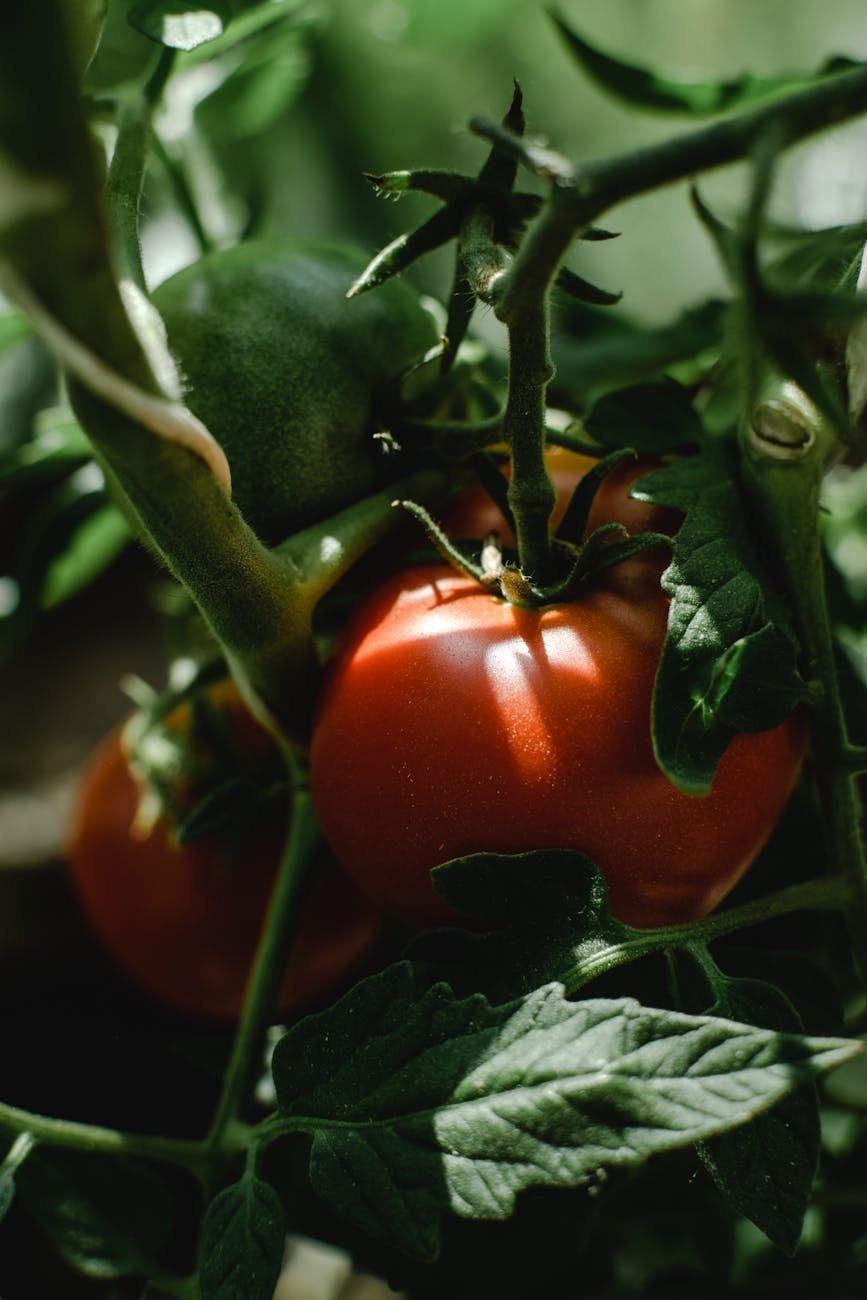
For example, right now is not just Labor Day weekend or the precipice of football season, as wonderful as those things are. It is also…tomato season. Oh dear God, is it ever tomato season. Ask me how I know this.
You see, every year right about this time, a curious thing happens in the life of a midwestern priest. Tomatoes start appearing in odd places. They show up on your desk when you come back from lunch….and they appear randomly on Bible study tables and at breakfast meetings. They manifest, almost miraculously, in little bags pushed into your hands by unseen gift-givers as you make your way through a Sunday crowd.
Indeed, had Jesus wanted to perform a feeding miracle in our own time, he would have done well to pick August in the midwest, and the crowds would have feasted on bread and tomatoes, and there would have been far more than twelve baskets left over!
I am grateful for the generosity of the gardeners among us, truly, especially since I don’t have much of a green thumb. For those who enjoy them, as I do, there are few things that approach pure, balanced perfection more than a late summer tomato, barely able to contain within its fragile skin the deep, bittersweet, vegetal tang of green stem and sunlight. Tomatoes are, if you will forgive my tendency towards poetics, almost saintly in their abundant, delirious, self-giving, delicious brightness.
Oh yes, you can look for reminders of God even in a tomato.
And I was thinking about tomatoes this week not just because Matt and I have a stack of them on our counter and because we’ve been eating salads and BLTs and tomato sandwiches for dinner, but because these tomatoes revealed something to me about our Scripture passages this week.
Yes, really.
What all of our passages this morning are all talking about, to some extent, is what I would describe as an ancient struggle experienced by humanity in its search for meaning and healing and hope: the perceived struggle between our inner life and our outer life.
Think about it. Almost without realizing, we constantly talk in our faith lives about the tension between inner reality, inner spirituality, inner knowing, and what happens on the so-called outside: our actions in the world or those of others. This dichotomy is always with us. And usually we understand this interplay between inner and outer as one of conflict.
Maybe our inner thoughts and feelings strive to be kind and loving, but then our outward actions betray us. This is what James is warning against in his letter, when he encourages the church to be doers of the word and not just hearers of it—to put their money where their mouth is and match their actions with their interior commitments.
But then at other times, we might actually be doing good things, helpful and righteous things in public view, yet there is war and bitterness in our hearts. We are consumed with pettiness or jealousy or some other self-defeating emotion. This is what Jesus is warning against in the Gospel as he reproaches the scribes and Pharisees for committing grand public acts of virtue while their inner life and their theological imagination are shriveled and small and hard. To Jesus, the Pharisees are like the most beautiful tomato you have ever seen, only to bite into it and realize it is made of wax.
But God wants neither of these outcomes for us—God doesn’t want us to be houses divided against ourselves, or to live divided lives. God wants our insides and our outsides to match.
That’s the invitation that Jesus is making to his disciples. It’s really quite simple. And really quite hard!
If we want to know what this looks like in practice, of course, we can look at Jesus who was, in a way no one else ever could be, someone who cultivated within himself and lived visibly with an undivided love for God, self, and neighbor.
When he tells the Pharisees that what comes out of a person is what defiles them, he is not saying that the interior life matters more; he is upending their assumptions about how the world works so that they might finally perceive that their judgment is not just harmful, it is irrelevant, because everyone and everything is part of a whole.
One of the most distinctive and important aspects of Jesus is that in him, the ancient dichotomy of struggle between the inner and outer life does not exist. There is simply—life. Life flowing through, life taking shape, life abundant, rising up as urgently as a summer garden. Nothing to hide, everything to offer.
And I don’t know about you, but my God, as I look around our world, full of real crises and manufactured divisions and illusory promises…my God how I long for something with integrity, for something true, for something that is what it says it is, someone who is what they appear to be. And how I long to be the version of myself that is also all of these things, even when things get tough.
Like the voice crying out in the Song of Solomon, looking for her lover through the latticework, we are all desperately seeking something true, something whole, something that won’t betray us or turn on us or trick us, and it can often seem rather impossible to find…
…until you meet Jesus and realize that he is–my Lord and my God–the real deal. That he is the ripe summer fruit that is just as delicious as it looks. He is the fruit that bears no curse. The simple, abundant gift of life rising up from the earth and coming down from heaven. Stem and sunlight.
And if we, as the church, as the followers of this simple, bittersweet, abundant God, if we hope to show the world who he is, then by God we’d better get out there and act like it, whether in the pews or in the laundromat or in the office or in the public square. And we’d better get in here, too, into our hearts, and nourish ourselves with the prayer and silence and study that seed and nourish our work.
Because the Gospel, ultimately, is about leaving behind the notion of inner and outer lives. We don’t get to choose between them. The world needs us to do love and to be love at the same time. The world needs us to be disciples who are as uncontrived, as self evident, as whole as Jesus. And yes….as uncontrived and self evident and whole as those tomatoes that keep appearing everywhere I look.
So I guess that’s what the tomatoes showed me this week—those saintly summer tomatoes. They aren’t the most impressive or exotic thing. But, they are, blessedly, exactly what they appear to be. They are a promise kept, for once in this world. And they offer themselves, without reservation, without calculation, and with completeness, for the sustenance of all.
And just when you think there’s nothing left….they keep showing up, in unexpected places, to remind you what sunlight tastes like. Sort of like Jesus. And, at our best, like us, too.
So yes, if anyone asks you this week, you can say, well…he preached about tomatoes.
But if I have learned anything thus far, it is that you can look for reminders of God everywhere, even in a tomato.
And imagine—if God can be revealed in a tomato, then, maybe, just maybe, he can be revealed in us, too.
 By Another Road