Jesus & Johnny Appleseed: A Sermon

I preached this sermon on the First Sunday in Lent, February 18, 2024, at St. Anne Episcopal Church, West Chester, OH. The lectionary text cited is Mark 1:9-15.

I love quirky historical sites and stories and figures. So you won’t be too surprised to learn that back in 2019, when I was getting ready to move to Fort Wayne, Indiana to serve at my former parish, I was deeply excited to learn that the city is the final resting place of John Chapman, better known to the world as Johnny Appleseed. 

Many of you know probably know who Johnny Appleseed is, but just in case you don’t recall, he was a real person in American history who has taken on a somewhat legendary status. He roamed the countryside in the early 1800s, starting in his native New England and moving westward, introducing and cultivating apple orchards in regions where apples were previously unknown, including much of the Midwest.

And after a lifetime spent wandering about with his bag of seeds, in 1845, while visiting Fort Wayne, he died unexpectedly. So you can visit his gravesite there, and there is also a Johnny Appleseed Park & campground and a Johnny Appleseed Festival and the local baseball team is the Tincaps, in honor of the tin pot that Johnny supposedly wore as a hat.

And I recently discovered that there are a number of towns in Ohio, too, associated with Johnny: the Johnny Appleseed Museum is up in Urbana, and the last surviving tree planted by him still grows on a farm in northern Ohio. So there are a couple more road trips my partner, Matt, doesn’t know he’s signed up for yet! 

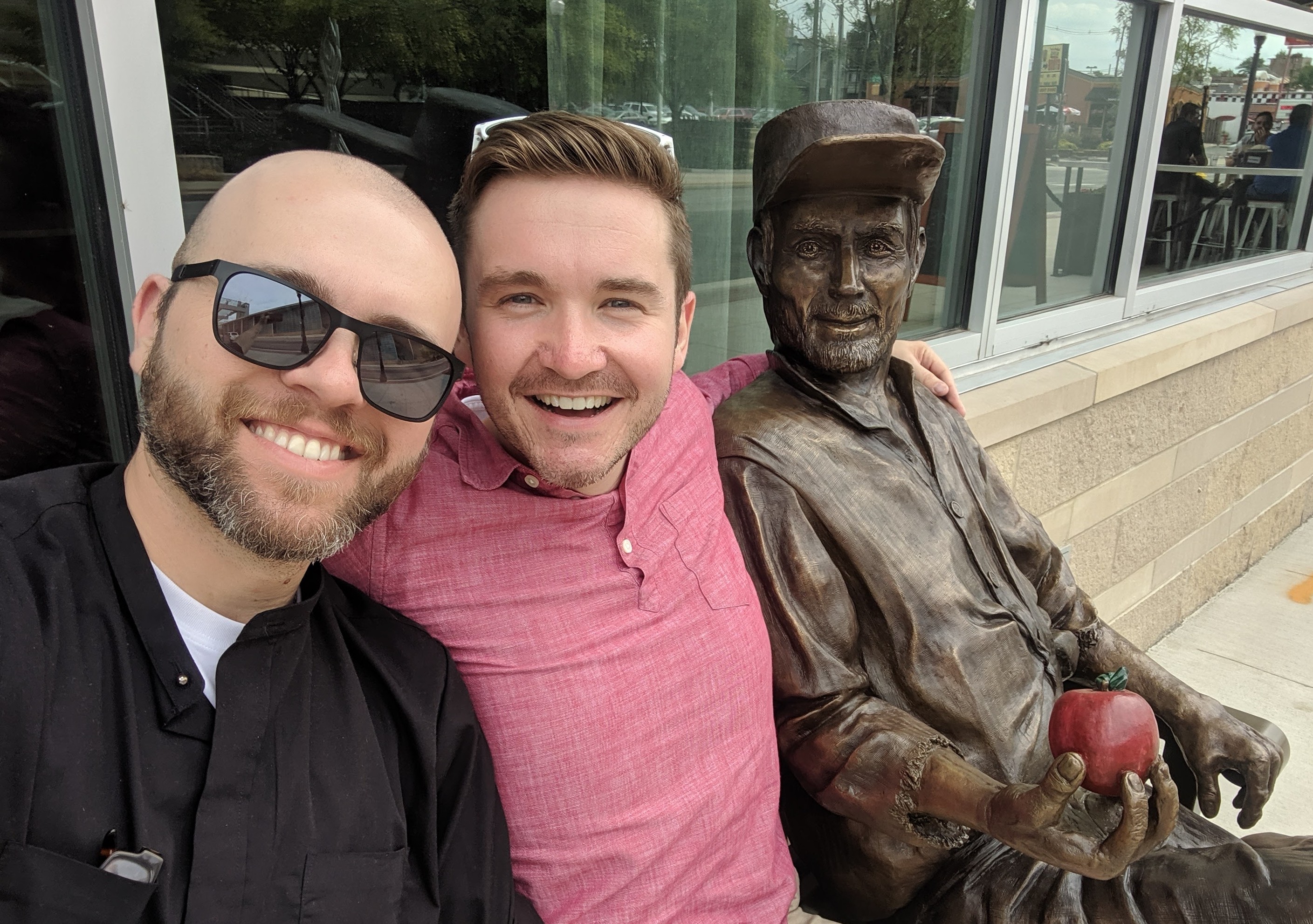
But hopefully he’ll be fine with it, because the very first picture that Matt and I ever took together, the first documentation of our relationship, right after we met, is a selfie of us sitting on a bench with a statue of Johnny Appleseed. So he has a very special place in our personal history, too!

And if you’re wondering why on earth I am going on about Johnny Appleseed on the First Sunday in Lent, well, one of the reasons I find him such fascinating figure–one worthy of our consideration here today–is that John Chapman, while unusual, was not just an eccentric driven purely by some strange obsession with apples. 

No, it so happens that he was a missionary, too, and by most accounts a kind and gentle one. He was a member of the Swedenborgian Church, a small Christian denomination that still exists, and as he traveled, planting and raising up small nurseries of apple seedlings, Johnny also distributed information about his Church, which was, especially for his time, a remarkably progressive and inclusive expression of Christianity. 

And these two things—his love of the land, his desire to carpet it with fruitful plantings; and his love of humanity, his desire to offer people a fruitful and life-giving message: these were all bound up together in his years of roaming the hills and valleys we now call home, and the sweet fragrance of his mission lingers even today.

But you know, long, long before John Chapman ever set out with his pamphlets and his seed bag, there was another man who set out on a similar sort of mission, out beyond his familiar homeland, out into the world, out into the wilderness, for purposes deemed strange by some at the time and yet which have left their own lingering sweetness. 

Of course, I am talking about Jesus of Nazareth, whom we encounter in today’s Gospel, driven by the Spirit, driven by the mysterious designs of God, out from the river’s edge an into an unknown, untamed place. He did not wear a tin cap, but we can be assured that people still didn’t know what to make of this man on a mission, propelled by his unconventional, radical form of love, his vision of a harvest that nobody else could quite imagine.

But we might wonder—if Jesus was the Son of God, if he was already God in the flesh, why did he first go on this journey into temptation we hear about today? What was the point of these 40 days in the wild? 

We could interpret it a number of ways, but it has not been lost on some observers that, especially in Mark’s version of Jesus’ trip into the wilderness, where he is tempted by Satan and is in the company of both wild beasts and ministering angels, that Jesus is, in some sense, not going somewhere new but going back somewhere that God knows very well. He is returning back to the Garden of Eden, where humanity first met the beasts and the angels and Satan, the one who tempts us away from our God-given place in creation. 

Let’s do a little imagining together. In this unnamed wilderness we hear about today, a tangle of wild plants and harsh sunlight, we might imagine Jesus stepping back through the rusted, broken gate of that original garden, now long abandoned. We might imagine the cherubim guarding the lost portals of Eden, lowering their flaming swords in deference to the Son of God passing through. 

We might imagine him walking amongst the derelict seed beds and the withered trees, meeting the wild beasts who no longer remember the names once given them by Adam. 

And perhaps we might imagine, too, Jesus encountering that ripe fruit of the tree of knowledge on an old gnarled branch—the fruit once bitten by the children of God, when they did not know the price of their hunger. 

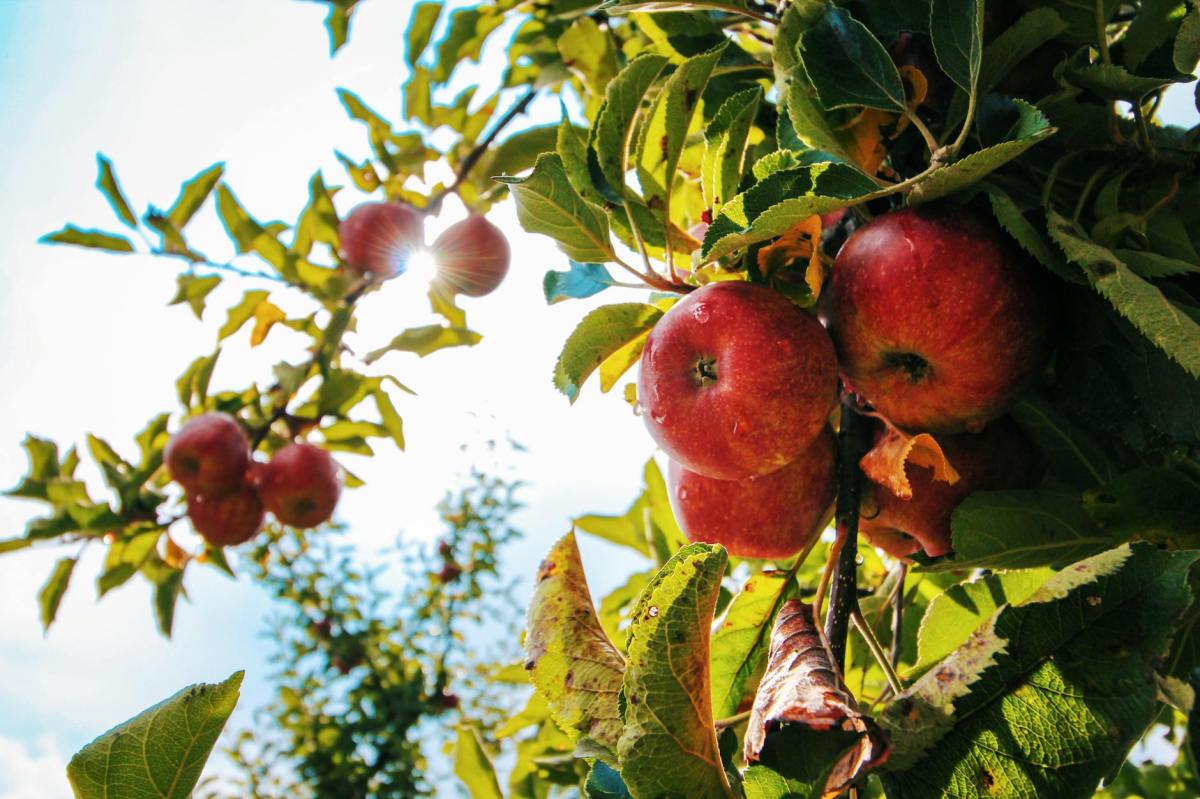
And if this is so, if Jesus is, somehow, in the wilderness, also standing in the ruins of Eden and holding the fruit, bright and beguiling as a ripe apple, considering what to do with temptation, 

perhaps this is the purpose of his journey: to discover what Adam and Eve did not—that the fruit of the sacred tree, the fruit of the mind of God, wasn’t meant to be consumed for ourselves—it was meant to be shared. It was meant to be broken open and given away. It was meant to be spread throughout the world. Its seeds were meant to be planted far and wide. 

And so:

Jesus came to Galilee, proclaiming (we might say sowing) the good news of God… “The time is fulfilled, and the kingdom of God has come near; repent, and believe in the good news.”

Jesus is what John Chapman would become and what we are invited to be as well: planters of the seeds of God’s Kingdom. Our journey through Lent, our journey through life, isn’t meant to be one where we stay indoors and gorge ourselves on private spiritual insights, as if heaven were an apple pie baked for us to eat all by ourselves. 

No, we, too, are participants in the planting of a future harvest. Following in Jesus’ footsteps, we are the propagators of the seeds of Eden, the seeds of a paradise that is no longer lost to us. We, too, are a people called to carpet the land with the fruitful plantings of love and truth and mercy and knowledge and care—day by day, step by step, seed by seed. 

Now, I don’t imagine that most of us will take this Lent as an opportunity to put a tin cap on our heads and head out to roam the world as missionaries and seed-planters—though maybe the world would look a whole lot different if more of us did so in our own community. 

But what Jesus and Johnny Appleseed can teach us today is that small, faithful choices have transformative impacts. So maybe this Lent you will volunteer at our burgeoning neighborhood Laundry Ministry. Or maybe you will attend a Thursday Eucharist or a Bible study. 

Maybe you will write to your representatives and tell them to advocate for the poor, the hungry, the war-torn, the forgotten. Maybe you will call someone who is lonely or invite someone to church with you. Maybe you will simply tell someone that you love them, that you forgive them, that you see how hard they are trying, how far they have come. Maybe you will tell yourself these things. 

Maybe you will prune the overgrown bushes of paradise.

Maybe you will teach the wild beasts their long-forgotten names.

Maybe you will remember your own long-forgotten name: beloved Child, disciple, seed-bearer of the Kingdom of God.

And maybe, come Easter, we will already see the green shoots of something new growing up from the earth, from our hearts and our souls. If so, it will have been a good and holy Lent. 

You know, there is one more memorial to Johnny Appleseed, just down the road in Spring Grove Cemetery in Cincinnati. There is a statue of him, holding an apple sprig up to the sky, as if seeking a blessing upon it from heaven. And carved into the stone, there is a fitting summary of all that he was. It says:

SAINTLY IN HIS DAILY LIFE. HE LOVED LIFE IN ALL ITS FORMS AND HAD A JOYOUS WILL TO HELP THE EARTH YIELD ITS FRUITS.

The same could be said about the seed-planter from Nazareth. 

And someday, we pray, it might be said of us, too.
God Loves Dust: An Ash Wednesday Sermon

I preached this sermon on Ash Wednesday, 2024, at St. Anne Episcopal Church, West Chester, OH.

God loves dust. 

God has always loved the dust: the particles of stars; the tiny fragments of creation borne aloft on a dark wind from heaven. He has loved the dust since the moment he brought it into being, each mote like the note of a song still being written, carried on the light of a thousand suns. 

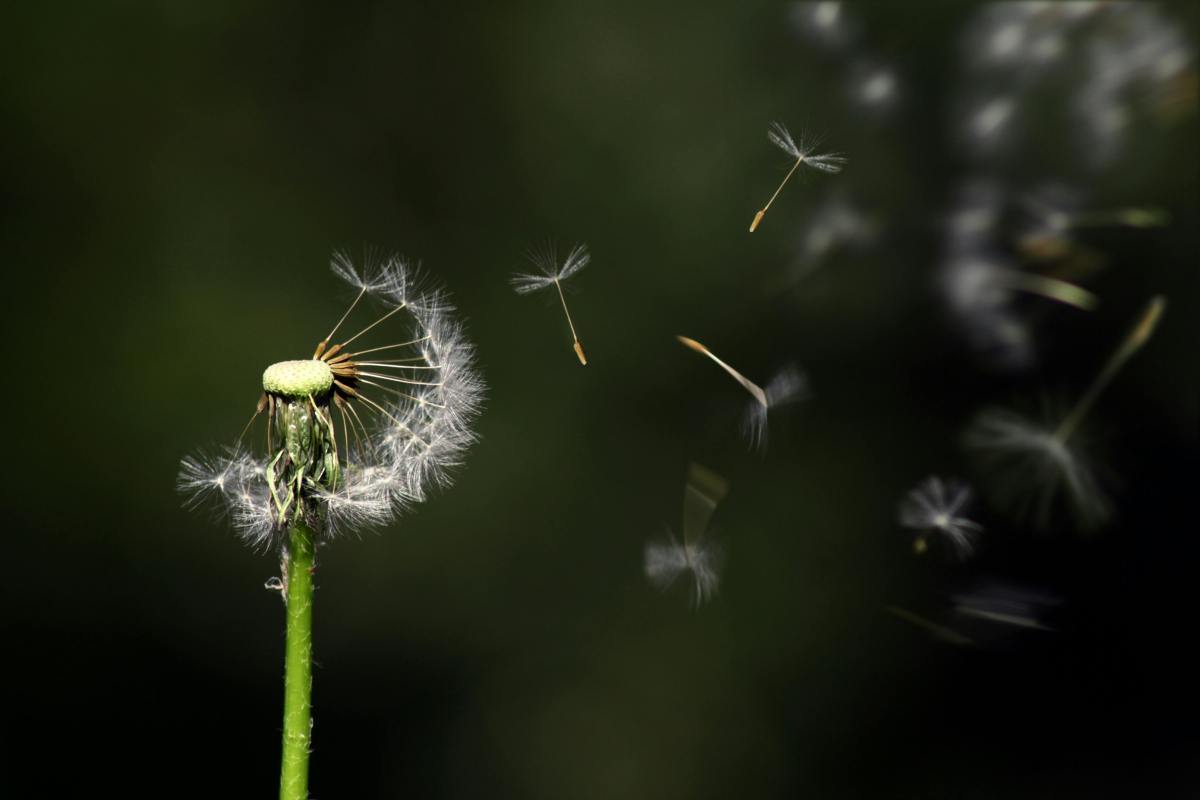
And when the dust had at last gathered and settled upon our small corner of creation, then–like one who makes a wish on a delicate head of dandelion seeds, closes their eyes, and blows–God blew upon the dust of earth to make it dance; to mix within every speck of it his own particular hopes and dreams; to animate it with love and life; to name it and trace his own image in it. 

God made a companion out of the dust and called it you and me and us, and that same wish-making, dream-shaping breath first blown, that same impulse to love what has been made and called good…is what still holds us together. It is what drives our bodies of dust onward through time and space, guiding our feet across the dusty trails of the earth, looking up to the shimmering, dusty stars and feeling, somehow, like they are looking back us–all of us children of the dust, bearers of an ancient light, long lost siblings from the same source. 

And so, if all is dust, and all is loved, then Ash Wednesday is less about bemoaning our mortality and more about marveling at the fact that we were made in the first place, that everything was made in the first place. Made of tiny pieces of one divine dream, knit together in an infinite number of shapes and places and faces, changing in form, this holy dust, but never in its belovedness.

For God loves dust, and God’s love does not change or die, even when we do.

And we come here today to inspect this dust and this love up close, to remember the times we have made a mess of it, and to be reminded that God has not given up on us regardless.

It is often said that our Gospel passage on this day, where Jesus cautions against showy acts of piety, is an awkward one for this occasion when we come to receive a smudge on our brow and go out & about wearing it for all to see.

But it is worth noting that Jesus is not opposed to public piety in and of itself—he was himself a man of deep and serious prayer, one who grew up formed by the piety of his own time and place and who embodied openly his own awareness of divine truth.

And the reading from Isaiah, too, while raging against empty, self-serving piety, still speaks of a very public devotion, a communal spirituality of care and justice–the type that is formed and sustained by knowing how sacred, how precious, is everything and everyone that God has made…from dust.

The reminder, here, then, is that piety is worthless and empty if and when we use it to try and prove—to ourselves or to others—that God loves us. And it is dangerous when we use it to try and prove that God loves only us, and not “them.”

Piety should not, cannot, need not prove any such thing, because love is already a given for all things. It is freely offered; it is the mandate that underlies creation; it is the rationale for everyone and everything that was ever made. God’s love is as inevitable, as pervasive as the dust that gathers on still surfaces; the dust that clings to our skin; that dances on beams of light; the dust that swirls in the wind. It is a love that is seeking, always seeking, like dust, to rest upon us, to be where we are, to remind us who and what we are—that we are dust, and that God loves dust. And so should we. 

So to pray in secret and to fast in secret, as Jesus instructs us to do, is about resting quietly in that love, resting in the knowledge that you do not have to prove your worthiness. You do not have to win the affections of God as if he were a fickle Valentine waiting to be romanced by your words and your grand gestures. You are worthy of love already. And so is everyone else.

God loves our life even when we have little to show for it in the end. God loves the times we tried and failed and tried again. God loves you even with a streak of dirt across your brow and tears on your cheek. God loves you even when you have no good words left to offer, when you have stumbled and fallen and are covered in dust, and maybe, just maybe, God loves you most of all in those moments when you are fully yourself, without pretense, without affectation or pride. 

And maybe that’s the point of our practices of simplicity and prayer and relinquishment in this season. Maybe when we are down close to the earth, when we are down close to the simplest form of ourselves, we might begin to feel that original love for the dust of which we are made, the force that orchestrated the stars, the breath that still stirs the primordial soil in our flesh—maybe we will feel that love reverberating up through us, and out through us, out to wherever the Spirit is leading. 

And maybe, as we will discover in this season of Lent, that is also why Jesus came to live among the dust and move upon the dust and cry tears over the dust and trace his finger in the dust and stumble and fall and bleed into the dust and to die as dust and to live again in a body made of dust–and eternity. Because God loves dust, and he could not rest until he became that which he had loved.

In a moment you will receive a mark on your forehead, and you will hear those ancient words—remember that you are dust—and perhaps, as we often do, you will feel the challenges that this reality poses: the brevity of our composition and the inevitability of its being carried away on the wind. And that’s ok. It’s human to wonder, to weep, to carry with us the anticipation of all that comes to an end.

But remember this: wherever it goes, the dust that you are, the dust that we all are—whenever and however it finds its repose: every particle of it is still imbued with the undying love by which it was formed. 

And so this smudge on your brow is not a mark of shame or lament, it is a promise—a promise that even when we return to the dust, we will not be forgotten nor forsaken, and that one day God will use it to reconstitute a new creation. One in which all of us, at long last, will feel that belovedness coursing through every particle of our being; and at long last we will see that same belovedness in the face of our neighbor and in the face and shape of everything; and at long last there will nothing left to prove, nothing left to fear, and our piety will simply be looking at the stars and the soil and seeing that they are indeed our siblings, that they always were, and that the whole cosmos is but one beautiful dance of dust. Carried on the breath of the Spirit. Swirling in the eternal light. 

And when we see this, and live this, then the wish that was made when God closed his eyes and blew his breath at the dawn of time…that wish will have, at last, come true:

To know that you are dust. And to dust all things shall return. 

And God loves dust. 

Screen Door: A Sermon

I preached this sermon on Sunday, February 11, 2024 at St. Anne Episcopal Church, West Chester, OH. The lectionary text cited is Mark 9:2-9, an account of Jesus’ transfiguration.

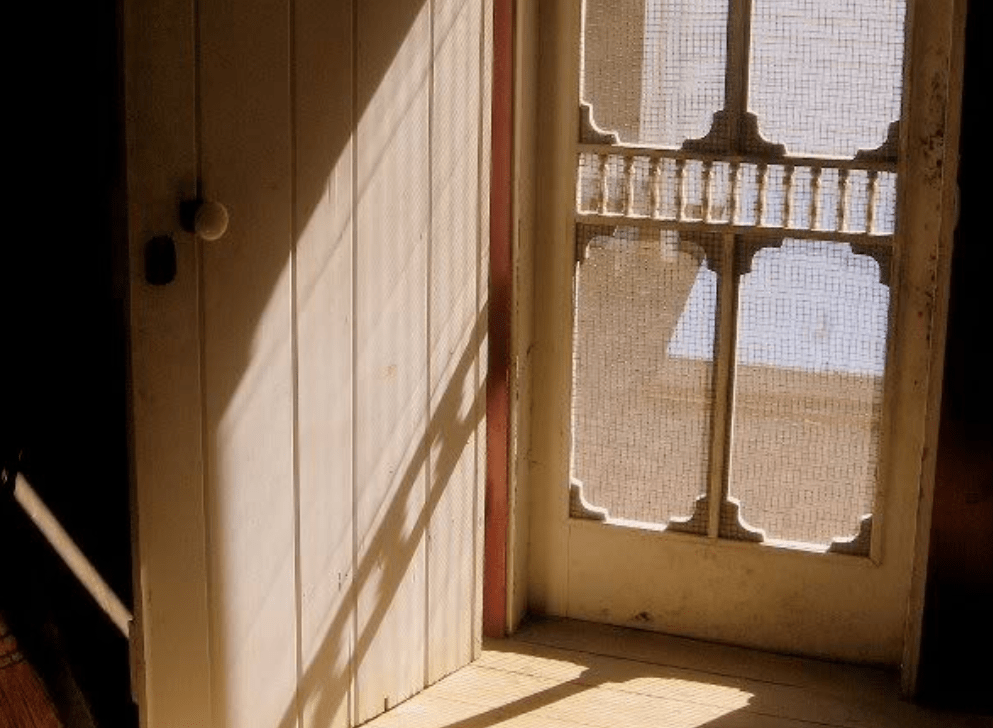
It has been many years, but I can still remember the sound of the screen door opening and slamming shut in the back porch of my grandparent’s house. The door was old and worn and yet amazingly resilient given the infinite number of times that people had passed through it on their way in and out. You see, in that house, nobody ever came in the front door, through the living room—it was always, always through the old screen door out back, and then a few steps through the porch, and on into the kitchen, the room where, as with most Midwestern families, all the truly important stuff took place. 

Maybe you remember a home or a place or a time like this—a season in your own life when the doors were always open. And so it was for us—that loud screen door was never locked, it was always at work, announcing the in-breaking  of the world that lay out beyond the warm cloister of the dim and fragrant kitchen. 

If we happened to glimpse anyone approaching the door from far off, they would emerge first as a glimmer of color and moving light out beyond the wire mesh of the screen and then—creak, rattle, slam!—there they would be, standing in our midst, in the flesh, stomping their boots, commenting on the weather. Friends and family members often showed up like this unannounced, a stream of visitors seeking to share a meal or a moment’s company, bearing news and stories. 

And I am sure someone, at some point, must have knocked, but I don’t remember it. I don’t recall the sound of knocking at all—only the familiar opening and closing of that screen door and how normal it was that people would come right in—how natural it felt for there to be a permeable boundary between what is already known and what comes to make itself known. 

There is an odd sort of paradox in a screen door, when you think about it. It is a barrier, but it’s one that is flimsy by design. It may have the shape of something absolute but it is rather ambiguous in its purpose, used to shield what is within it, but also to receive what is beyond it—the cooling breezes and the beams of light and the birdsong that travel through the screen to mingle with the inside smells of dinner and dish soap. 

It is not much of a safety measure, the screen door, but rather a way for two unique worlds to coexist alongside one another and to reveal themselves to one another. The screen door teaches us that the practice of passing back and forth between privacy and welcome; between domesticity and wildness; between the familiar and the unknown; is a good and necessary thing to do. 

And it seems to me that we have arrived at our own sort of screen door moment today, on the Sunday in the year when we see the Transfiguration, when the familiar and the unknowable commingle on the top of a mountain, when the human and the divine aspects of Jesus reveal themselves in a collision of time and light and cloud, of terror and belovedness. 

We, alongside Peter and James and John, are drawn into the strange paradox of looking at two realities at once—God’s and humanity’s—and realizing that, in Jesus, the boundaries between them are shockingly permeable. 

Today we conclude the seasons of Incarnation and Epiphany, where we have seen how the Son of God has been born and made his way into the world, approaching us, a glimmer of color and light beyond the mesh of our familiar understanding, and yet now—creak, rattle, slam!—here he stands, in his fullness, the eternal God come to pass through our door, to share a meal or a moment’s company, bearing good news and stories. 

And this, I think, is one of the most important things to understand about the Transfiguration—it’s not simply that Jesus revealed himself in a particularly magnificent way in this one moment to a handful of disciples, but that in all of our life with God, in worship and discipleship and service, transfiguration is always ready to reveal itself—the boundaries between our lives and the life of God are as permeable as a screen door through which the breeze of heaven blows.

I have seen and heard and felt him in so many different places. In moments of prayer and song. Beside a deathbed. Last week at the laundromat with the Outreach team. In conversations shared with many of you. Gathered around this table, week by week. And certainly, gathered around a kitchen table.

As we prepare for a long and thoughtful journey through Lent, to the Cross and beyond it, we are reminded today, right before we set out, that there is no aspect of human experience—even the most difficult and despairing ones—where Jesus is not able to come and be with us, to enter through the back door to sit a while, to remind us that he is separated from us by only the thinnest, most pliable boundary, if we are willing to look and listen and receive him.

Which begs the question—if the Kingdom of God is approaching us from the other side of the screen, then what must we do on our side to be ready, to greet this new world when it reveals itself? What does a screen door faith look like for us who desire a glimpse of the transfigured world beyond?

And in that, I think my grandparents were on to something simple, but essential: their door was always open. Part of what we practice here, week after week, in liturgy and in hospitality and in service and in formation, is a permeable, open-door way of life, a blurring of the demarcations between personal and communal, finite and eternal.

First, we engage in the pattern of the Eucharist so that we will go out into the world beyond our red doors and replicate that same pattern elsewhere, giving away our own selves for the sake of love, just as Jesus has done for us.

We practice welcoming visitors and strangers into the doors here at St. Anne because being open to new faces, new stories is how we cultivate openness to the presence of God whenever and however God comes into our lives—which is quite often in the form of visitors and strangers. 

We serve our neighbors, approaching the threshold of their experiences and getting to know them so that we begin to see how little separates us from anyone else; how their well-being is bound up in our own; and how the differences we perceive, while real, are not a barrier to meaningful relationship. 

And we pray and learn and study and challenge our assumptions and expand our perspectives, so that we can be attuned to the infinite number of ways that God passes into our world and abides with us, because Jesus, in that transfigured collision of flesh and light, of time and eternity, has broken down the division between heaven and earth, or at the very least he has made it like a door that will never be locked, a door to eternity that is flimsy by design, a door that is, in fact, like a screen door, where the commingling of two realities finally meet—God’s heart and our heart, God’s life and our life, the beams of light and the birdsong, the dish soap and the dinner, and all of it is God’s and all of it is ours and all of it is sacred.

And so as we approach Lent, and whatever you decide to do or not do in that season, most of all I want you to consider this: how you will stay present to the thin and permeable boundary between you and God? How will you stay open to the life that lies on the other side of the screen? Will you glimpse heaven at the laundromat, in the food pantry? Will you look for the glimmer of color and light that dance behind the words of Scripture? Will you bring good news to your neighbor, share your story with them, proclaim a word of peace to a hurting world? Will you set the table? Will you unlock the door?

Because what we do know is that God will indeed come to see us. We may not know when or how, but in every moment, on every mountain and in every valley, God is always there, ready to be with you , ready to enter in, so eager that he might not even knock, so wondrous that even if you hear his approach—creak, rattle, slam!—you may never be the same once you look up and see him: glorious, stomping his boots and commenting on the weather, seeking to share a meal, a moment; seeking, ultimately, to stay forever in you, in your heart, where, at last, he is transfigured into your flesh, your life.

And then, everything will be both familiar and new; safe and free; and you will be in heaven and you will be at home, all at once. 

On Facebook: A Sermon

I preached this sermon on Sunday, February 4, 2024 at St. Anne Episcopal Church, West Chester, OH. The lectionary texts cited are Isaiah 40:21-31 and Mark 1:29-39.

Today, February 4, 2024, is a somewhat significant anniversary. Do you know what it is?

It’s the 20th anniversary of Facebook. 

On February 4, 2004, Facebook, or “The Facebook” as it was originally known, was launched by a team of students at Harvard as a sort of high-tech student directory and then began its long, seemingly unstoppable march towards changing the way we interact with one another and the world around us. Two months after launching, in 2004, it had 70,000 active monthly users. Now it has over 3 billion, or 37% of the world’s population. As with many types of anniversary dates, reflecting on who we were then, before Facebook, and who we are now might bring up some mixed feelings. 

I was a senior in college when Facebook started, and I still remember hearing about it from some friends and signing up for the website in my dorm room in early 2005, uploading a grainy picture of myself and hunting for my real-life friends on there, when there were no links to news articles, no “like” buttons, no videos or vindictive comment sections. 

It was, back then, a novel and gently thrilling thing to be able to connect (or reconnect) with so many people at once, almost as if everyone you had ever known had moved back into your neighborhood, their lives and their stories no longer obscured by time and distance. Maybe you, too, if you ever signed up for Facebook, felt that same sense of promise, of an infinite horizon somehow drawn close enough to touch. 

But 20 years on, even if we continue to be active users of Facebook or other social media platforms, I think it’s safe to say that we have come to experience the shadow side of such a vast network of connections. And I am not just referring to the casual vitriol that seems to infect so much online discourse or the amount of time we spend staring at screens, though those are major challenges of their own. 

But even more fundamental than these, I think, and something that we might overlook, is that the vastness of information and awareness that is available via digital social networks is more than any one person is equipped to process and integrate. It might be wonderful to reconnect with lost friends, but it is also true that we only have so much bandwidth to invest in deeply meaningful, mutual relationships. 

And it is indeed valuable to have access to information about other people’s experiences, especially those whose lives are very different from our own, but the unceasing avalanche of content of all kinds, means that we also run the risk of becoming numb from overexposure, or that we end up spend a great deal of energy arguing and posturing around areas of social concern without actually engaging them in our off-screen realities.

But it makes sense that this would happen. It is not simply a failure of the will, but the reality of our limited capacity as mortal beings who, despite our deep hunger for knowledge and our inherent sense of empathy, cannot know everything, cannot respond to everything in the world with the depth and nuance it requires.

And running up against our limitations in the face of the seemingly infinite need and infinite possibility of the world–transmitted to us online–can lead us to rage, or despair, or cynicism, or some strange mixture of the three. Thinking of this through a scriptural lens, every day we bite the bitter fruit of the tree of knowledge of good and evil, and the truth is as it always has been: it was not meant for us; we cannot digest it. 

And here we are, 20 years on. 

But lest we get too down on ourselves and the ills of a digital age, we must acknowledge that this wrestling with our capacity for knowledge and compassion is as ancient as existence itself. It is a tension that is woven into all of Scripture, including our readings this morning. 

The prophet Isaiah, in a passage of both comfort and gentle reproach for Israel, asks the people whether they have forgotten the incomparable scale of God–not only that God is acting on their behalf, to care for and deliver them, but that God alone has the capacity to do so. They, by themselves, cannot conceive of or effect their own salvation. Only God can do that. God alone is able to hear and understand the many cries of the people, to bear the pain and the longing of all creation and discern a path toward healing and reconciliation. God alone can do that, because God alone has a heart large enough to break open and hold all things, and to beat and to burn with determination for the rescue and restoration of all things. 

Have you not known? Have you not heard? Has it not been told you from the beginning? It is he who sits above the circle of the earth…his understanding is unsearchable…he does not grow faint or weary. 

In other words, only God can digest the fruit of the tree of knowledge. Only he can bear the fullness of knowing and loving all of us and each of us. And God does not give in to rage or despair or cynicism in the face of our infinite need. Our hope is found in the One who can do what we ourselves cannot: to be the agent of infinite compassion, of unyielding justice, of uncompromising charity. This is who God is for us. 

And yet this truth about God sets up a deep and striking irony in the Gospel passage from Mark, where Jesus, picking up from last week, continues his ministry of healing and exorcism and in so doing, draws out the desperation and the hope and the curiosity of everyone in his vicinity, such that “the whole city was gathered around the door.” The whole city was gathered around the door. Much like reading the news online, when it can feel like the whole world is at our door, it was surely more than any one person could keep up with or even comprehend. Even Jesus.

Because unlike the infinitely expansive capacities of God spoken of in Isaiah, Jesus is–like us–just one man. Despite his eternal power, he is as finite as we are, and he can only take in so much need, so much information. And this is perhaps why, whether out of exhaustion or frustration, or both, he decides to evade the clamoring crowds, trying to stay focused on his mission to proclaim the Kingdom. 

It is as though God, in the flesh, had his own epiphany: the needs of the world are too numerous for any of us to comprehend, much less to solve on our own. We children of the dust cannot bear the fullness of what it means to be alive, to suffer, to dream. And we need something more than help. We need some measure of God’s mind, God’s heart, God’s body to mingle with our own if we ever hope to digest the bitter fruit of the tree and know what to do with it. 

And that, of course, is what Jesus ultimately gives us—not just help, but transformation into his likeness. This is my body, given for you. My peace I give to you.

So I think of Jesus, sometimes, when I struggle on Facebook and elsewhere with the enormity of the world’s grief and anxiety and the endless profusion of the world’s ideas. I think about how he, too, struggled to take it all in, and had to figure out what to do. I think about how his decision, in that moment, was not to try and understand everything or solve everything, nor to reject everything, but to love everything.

I think about how he showed up as one of us and how he blessed our finitude; how he demonstrated that true wisdom is less about an infinite capacity for knowledge or strength and more about getting in touch with the deep well of compassion that forms and sustains the cosmos. 

And I think about how we are invited—when we are overwhelmed by waves of information and endlessly expanding networks of connectivity—to neither ignore them nor to be subsumed by them, but, like Jesus, to find the still, small center of love that abides at the core of our immensely complex world and to hold fast to it no matter what. To observe and bless the ground beneath our feet; to pray; to heal whom we can heal; to love whom we can love; to proclaim what we have been sent to proclaim–the Kingdom of incarnate love; to trust that this will be sufficient. 

And to realize that, as we do so, even in our limited capacity, we are taking part in the infinite; that we are part of the broken, beating, burning heart of the One who will gather us all in and hold us; the One does not grow faint or weary, the One who will someday carry us up on eagle’s wings into the vast interconnectedness of heaven and creation, of time and eternity. Into something far better than a social network–into the very fabric of life itself, where we will be truly known and understood, where our infinite stories and endless longings will finally make sense, and where the fruit of the tree of knowledge, at long last, will be for us, and we will eat of it, and it will be sweet.