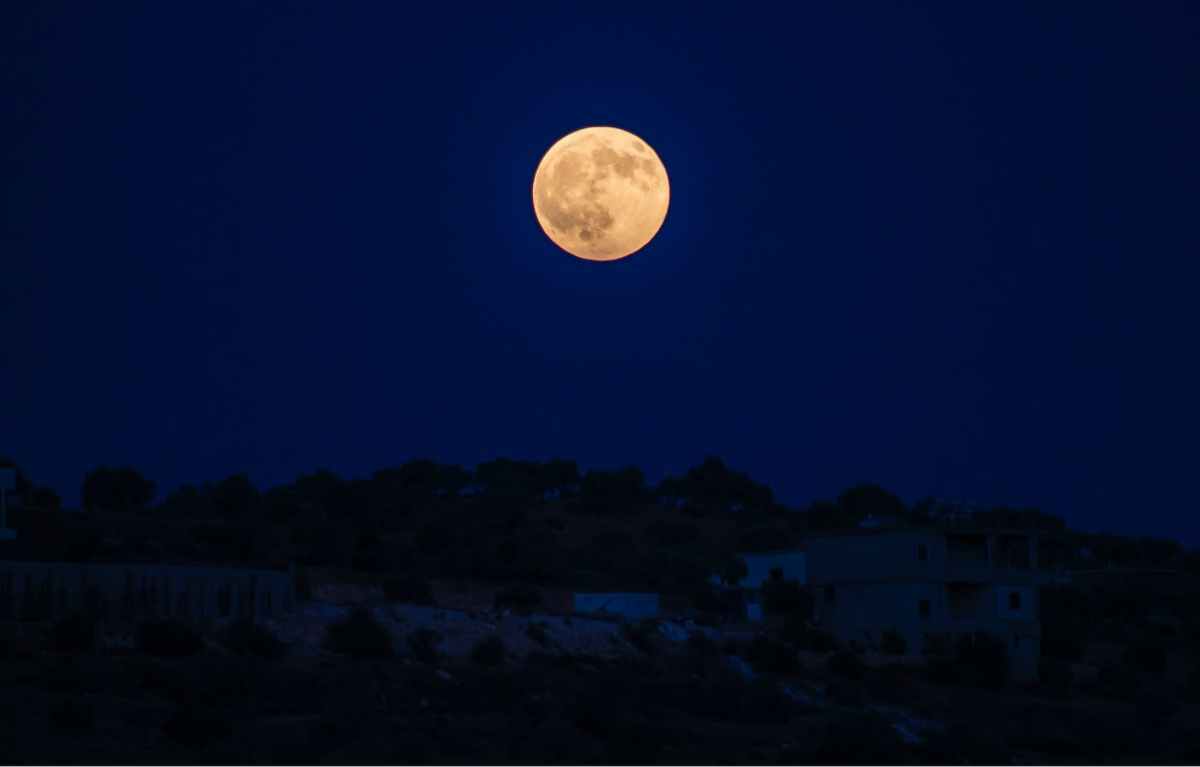
Mountaintop: A Sermon

I preached this sermon on Sunday, September 24, 2023 at Saint Anne Episcopal Church, West Chester, OH. The lectionary text cited is Philippians 1:21-30.

Sometimes it feels like you have to possess superhuman capacities to face the enormity of the world’s challenges. In times of social strife or of personal distress, we might look at inspirational figures from the past, looking for some guidance about how to live bravely and well through times such as these.

But it can also feel, for me at least, like those inspiring saints of ages past must have possessed some otherworldly insight or giftedness to do what they did, to face what they faced. And I find myself wondering how on earth they found the strength, what secret wisdom must have guided them. 

On April 3, 1968, one day before he was assassinated, Martin Luther King, Jr. gave his final public address in Memphis, Tennessee in support of a sanitation workers’ strike. It’s referred to as his “Mountaintop” speech, and in case you’ve never heard it, or if it’s been a while, here is the final, unforgettable piece of it, where King said,

Well, I don’t know what will happen now. We’ve got some difficult days ahead. But it doesn’t matter with me now. Because I’ve been to the mountaintop. And I don’t mind. Like anybody, I would like to live a long life. Longevity has its place. But I’m not concerned about that now. I just want to do God’s will. And He’s allowed me to go up to the mountain. And I’ve looked over. And I’ve seen the promised land. I may not get there with you. But I want you to know tonight, that we, as a people, will get to the promised land. And I’m happy, tonight. I’m not worried about anything. I’m not fearing any man. Mine eyes have seen the glory of the coming of the Lord. 

What is striking for many people about King’s final message, of course, is the sense that he knew, on some level, what was about to happen, that he somehow foresaw the end of his own journey.

But it’s not King’s seeming anticipation of his own death that I find the most compelling thing about this speech. It’s that he seemed to be at peace with it. It’s the way he stood in that perilous moment speaking something that sounds a lot like joy, a lot like hope. And not a naive sort of hopefulness that assumes everything will turn out fine. No, it sounds like the deep sort of hope, deeper than fear, the hope that knows how, even if everything goes wrong, even if the worst possible thing happens, that even then, there is a well of goodness underlying everything that will never run dry. The kind of hope that says even though my life may end, and my eyes may close, the vision endures, for

Mine eyes have seen the glory of the coming Lord. And I’m happy.

But then I think about the small anxieties that sometimes clutter my own life, and I look around at the big anxieties of our age, and I hear that opening prayer we offered, the one that says not to be anxious about earthly things, and I think—I’d sure like to know what that feels like. I’d sure like to know how Dr. King got to where he was on that April night. And although, God willing, none of us will ever face the danger he faced, I wonder what it would take for the rest of us to experience that deep kind of hope, that peace, that tenacious belief in the well of goodness, even in the face of our own hardships.

Is such a thing only for the saints and the heroes? Or is there some way that we, too, might travel up to the Mountaintop? 

I think there is, and St. Paul helped me see it this week in his letter to the Philippians. 

It’s interesting, in this passage we heard today, Paul sounds a lot like Dr. King; he, too, seems to possess a peace and a hope even as he is suspended between the possibility of life or death. He says,

I do not know which I prefer. I am hard pressed between the two: my desire is to depart and be with Christ, for that is far better; but to remain in the flesh is more necessary for you.

Whatever else we might say about Paul, we know that he was a passionate person, deeply engaged in the life of the world. But death was on his mind, because he likely wrote this letter from prison in the final years of his life. He was put there by the Roman authorities, and while it was his ardent desire to be reunited with the various faith communities he had founded, there was surely a part of him that knew his chances of doing so were slim. 

Like Dr. King, he was a man hunted. But also like Dr. King, he was a man haunted by possibility, who had glimpsed something on the proverbial mountaintop. He had glimpsed something and he insisted that what he had seen, what drove his entire mission, was not for a select group of wise or superhuman people, but for everyone, everywhere. It was the key to his hope, his peace, and his courage.

What was it? 

Well, it was Jesus, of course, but more specifically, it was the revelation that in Jesus and through Jesus, God’s wants us to know that we are in this together. You and me and God and everyone else, we are in this together. We don’t have to face this alone. We are one people. We are one creation, redeemed by the one Living God. We are part of one story, and it is a good story, a story that begins in love and ends in love. 

And though we are diverse, and though we each face our own choices and challenges and fears in each generation, it is this essential unity that holds us, that sustains us, and that places upon us the responsibility of caring for one another, loving our neighbor as ourselves, because fundamentally they are.

And although they don’t state it explicitly, what you will notice beneath the words of Dr. King and beneath the words of St. Paul is that they are able to face those big, frightening things, those questions of life and death and loss and hope, simply because they knew, deep down, that whatever happened, God would not abandon them nor would God abandon the story that has begun. 

And when you know you aren’t alone, then you can face anything. That’s why we come here week after week. That’s why we keep challenging ourselves to build more fully the Beloved Community. That’s why we pray for each other and lean on each other through good times and bad, all the way to the end.

You, and me, and everyone we’ve ever loved, and everyone we’ve ever hated, and everyone we’ve ever lost, and everything that has ever been and the God who made it all—we’re in this together. And that’s it. That’s the Mountaintop. That’s the simple, world-changing, heart-transforming truth that sustains the saints but is also available to every single one of us, even in our anxieties. And even when we face death.

Catching a glimpse of the promised land is not a private revelation for the few—it’s everywhere. It’s as close as looking in your neighbors face and realizing: we belong to one another. It’s as close as looking down at the earth and realizing: we belong to one another. It’s as close as listening to God in the still moments and in the frightening moments and hearing God say to you: we belong to one another. In life, and in death, and beyond, we belong to one another. 

Let’s keep building up a community here at Saint Anne where that is what it means to be the church. Let’s keep discovering what it means to belong to one another, and then to go out into the world and discover that ultimately we belong to everything. Maybe, if we do, we too will say, even at the end of our days:

Mine eyes have seen the glory of the coming of the Lord. And I’m happy.

Free: A Sermon

I preached this sermon on September 17, 2023 at Saint Anne Episcopal Church, West Chester, Ohio. The lectionary text cited is Matthew 18:21-35.

As I have shared with many of you, when I was a kid, I would spend the summers in Michigan with my dad and my grandparents. There were a number of things about those vacations that I looked forward to all year long, and a lot of them had to do with food. First there was my grandma’s cooking and baking, which filled the house with mouth-watering fragrances throughout the day. Her fresh strawberry pie was the stuff dreams are made of. But another thing was the little general store that was just down the block, an old-fashioned kind of place that sold a few groceries and sundries, but in which the main attraction, at least for an eight year old, was the selection of ice cream and penny candies and trading cards.

My cousin, Mike, and I were particularly interested in that selection of trading card packets, and it was our singular mission each year to get our hands on enough money to buy them. Now, of course, we could have just asked our family for spare change, but at some point we decided to get a bit entrepreneurial. 

So, for several summers we would take over the enclosed, rarely used front porch of my grandparents’ house and we turned it into a couple of “shops” of  our own, cobbled together with odds and ends from some spare room of the house, and offering what was, in retrospect, a rather underwhelming selection of goods and services. One iteration was a restaurant that served plastic play food and real glasses of water, 10 cents a piece. Another, perhaps my most efficient business model, was simply setting up a desk in the porch and declaring that the house was now a hotel, and that our family members now had the privilege of paying 25 cents a night to sleep in their own beds. 

But our parents and our grandparents were dutiful customers, and so we collected up our coins day by day and ran down to the general store, and spent them all on cards and candy, quite pleased with ourselves. 

This is a very happy memory, of course, but I was thinking about it this week because it occurred to me that for all those summers, while my cousin and I were focused on the nickels and dimes and quarters that would buy us all of those treats we daydreamed about, we were less aware of the most wondrous thing of all: that when we got tired of playing and scheming and striving for coins, we could just go down the hall to our grandma’s kitchen, and there would be more food and more love than we knew what to do with. And in the end, that was the truly priceless treasure. I don’t have much use for those trading cards anymore, I don’t even know what happened to them, but I would give just about anything for another bite of my grandma’s strawberry pie at that kitchen table, surrounded by loved ones who are now long gone. 

We spend so much of our lives, I think, in a similar posture—so focused on the measurement and acquisition of the things we want (or think we want) while failing to sit up and recognize the immense—but less quantifiable—blessings in our lives: the relationships that shape us and sustain us and guide us forward, the simple gifts of time and care freely given by the ones who love us. And if we’re not careful, we might spend our whole existence scrounging for penny candies while the true feast sits, beckoning yet unappreciated, just down the hall. 

For me, at least, this image has helped me think about the parable that Jesus offers us in today’s Gospel, which is also, at its heart, about a person who doesn’t really understand what he is being given. 

A king forgives the debt of a slave, or a servant, as some translations put it, but then this servant refuses to do the same for someone in debt to him, and is thrust back into the fear and scarcity with which he started. 

We are told that this is a parable about forgiveness, and that somehow it should model for us what the Kingdom of Heaven is like. The tricky part is that this King, who many of us interpret to represent God, ultimately rescinds the forgiveness originally offered. So is this a “be good or else” type of story, such that we should be forgiving others out of fear of eternal punishment?

I don’t think so. I don’t think God’s mercy has conditions like that, and I don’t think forgiveness under duress is a healthy or life-giving way of understanding human relationships. No, I think this parable is suggesting that the heart of forgiveness—and the heart of really every virtue we try to embody—is rooted in a proper understanding and appreciation of what is truly important in life. And it is not the things that can be counted. 

We are not hearing this parable in Jesus’ own time and place, so we might miss the key point that the amount of debt forgiven by the king, 10,000 talents, is not just a big amount, it is an absurd amount—it is more money than any empire had, more money than someone could conceive of. And so the king in this parable is not just telling the servant he can walk away from his debts. He is essentially saying to the servant, walk away from the entire notion of indebtedness. I am uninterested in measuring it anymore. You are free now. Everything is free now. Live as if this is true.

This is good news, but it is also strange news, for we are all too accustomed to counting the cost of everything, both literally and figuratively. And so the real mistake that the servant makes is that he does not comprehend the gift that has been given. The servant doesn’t understand that he is living in a kingdom where there is no longer any need for calculation, where there is no grasping and groveling, where there is no currency at all. Just the current of goodwill that encompasses all things, all people. 

He doesn’t see it,  or he refuses to see it, and so he keeps on counting the cost, he keeps on demanding payment from others, because that is what he knows how to do, and his inability to understand that another way is possible, his refusal to trust that another way has been given to him, sends him right back to the dead end where he started, back to the world that is easier to believe in, where Kings torture and no payment is ever enough. And to the extent that we have treated love and forgiveness and grace as commodities to be bought and sold and bartered, the same will be true for us. We will have missed the point. We will have squandered the true gift. That other realm, where everything is possible, will be lost to us. 

So no, Jesus is not just saying be kind and forgiving or else. Jesus is saying, if you would enter into the Kingdom of God, if you would understand mercy, if you would know what it truly feels like to love and be loved, to forgive and be forgiven, then look up from your games, beloved children, stop playing shopkeeper.  You have to realize that the important stuff is all free. You don’t have to spend your life scrounging for coins to purchase paradise. 10,000 talents are worthless in my sight; your heart is the true treasure.

Because this Kingdom is not, in fact, a hotel with a 25 cent nightly rate; it’s just the house we get to call home, if we choose it, and the light is always on in the front porch, and there’s a feast at the end of the hallway, luscious as strawberry pie, a slice for everyone, free of charge.

That’s what forgiveness is, when you get down to it: love without a price tag. And when we realize it is all free, then we will be free, too. Forever.

The Law: A Sermon

I preached this sermon on Sunday, September 10, 2023 at Saint Anne Episcopal Church, West Chester, OH. The lectionary text cited is Romans 13:8-14.

One night when I was in my early 20s, I was out with a couple of people at a pub. One of them was the man whom I was dating at the time, and at some point in the evening we must have held hands or in some other way indicated that we were together. I got up to use the restroom, and as I was washing my hands, I suddenly heard a group of people who had assembled outside the bathroom door; it was clear that they were talking about me and that they were unhappy with my presence in their midst. As I opened the door, a group of about 8 people, men and women, surrounded me and started yelling at me. They called me names and said a number of things that were very hard to hear, but the thing I heard that has stuck with me in the years since is when one of the women yelled, “you’re breaking God’s law! You’re breaking God’s law!”

I was able to make my way through them somehow and I made a beeline for the front door. The people I was with followed me out and we quickly put some distance between ourselves and that place. Thankfully no one followed us.

Later that night after walking around and calming our nerves a bit, we paused by the river. The city we were in was near the coast, the air was warm and still, and as we rested and watched the moon reflecting upon the water, suddenly out of nowhere we saw a dolphin leaping out of the water, glistening in the dim light. 

It was so perfect, so surreal, that it felt like a dream, and we fell silent with awe. And what struck me was how strange it was that a vision of such perfect beauty and an experience of such shame and fear could all exist in the span of one evening. And I knew, in a way that I couldn’t quite explain, that whatever God’s law was, whatever it meant to follow that law, it had more to do with this moment of silent wonder and unexpected beauty than it did with whatever those people had been screaming at me about inside. 

I share that story with you not out of a sense of self-pity nor to vilify anyone. We all have our harms and our hurts to account for, and so I’ve tried my best to let that experience in the pub be an instructive one. And what it has taught me, what I fiercely believe because of it and because of other stories I’ve heard from people who are different in one way or another, is that we must continue to wrestle with the meaning and the purpose of the law recorded in Scripture as it has been received in Christian tradition. We must continue to ask ourselves what the Judeo-Christian law is meant to look like and sound like and the fruits that it is meant to bear in our own lives and in our world. 

Because although it might be tempting sometimes, when confronted with the violence or prejudice perpetuated in its name, we cannot ignore the law or dismiss it as irrelevant to modern life. Because we are followers of Jesus, and earlier in Matthew’s gospel he says quite clearly: “Do not think that I have come to abolish the law or the prophets; I have come not to abolish but to fulfill.” 

Such a conundrum: how do we honor what the Law represents—God’s eternal, unchanging desires for how we are to live—while also recognizing that the original writers of the Law were speaking to the needs and concerns of a highly particular culture and geography and context?

How do we arrive at a place where the Law by which we pattern our lives is both substantive and kind, both a defense against harm and yet also a gateway to liberation? How do we conceive of the Law in a way that guards against our most dehumanizing tendencies and yet is as beautiful and elemental and free as that dolphin cresting the shimmering water? Can such a Law be found and followed? 

Yes.

Owe no one anything, Paul says this morning, owe no one anything except to love one another; for the one who loves another has fulfilled the law. The commandments, “You shall not commit adultery; You shall not murder; You shall not steal; You shall not covet”; and any other commandment, are summed up in this word, “Love your neighbor as yourself.” Love does no wrong to a neighbor; therefore, love is the fulfilling of the law.

Love is the fulfilling of the Law. If you take nothing else away from this sermon, I hope you will take that. Love is the fulfilling of the Law. 

Or another way of saying it: the only true measure of the Law is love. The only true measure of whether we are obeying God’s Law is how well, how deeply, how broadly we are embodying love. 

And so if you have, in your life, ever been told that you are unworthy, or if you have ever felt lost or forgotten, or if you have ever struggled to figure out how to be good enough, how to to be strong enough, how to simply be enough in a world that too often fixates on how we fall short, I want you to remember: love is the fulfilling of the Law.

And if you have witnessed the endless debates about what makes a person truly Christian, what makes a church truly Christian, what it means to follow God’s Law, then I want you to remember, love is the fulfilling of the Law. 

And, yes, we can study the history and the context of Scripture to understand how and why the Law took the form it did in that time and place where it was first recorded. But we can also honor the truth that love takes on new contours, new understandings to meet the realities and the revelations of our present moment. And this is not weak or permissive-on the contrary, to love unreservedly is the bravest thing we can do. 

Because if love is the true fulfillment of the law, well, love is scary. Love is risky and strange and it doesn’t always go the way you planned, it doesn’t always look the way you expected. And love demands things of you, it demands you to bend and grow and weep and dance. It requires you to sit beneath the moon and hold pain and beauty alongside one another and still say yes, yes, I will still believe in love, even when the world is ugly and cruel. I will still believe in Love Incarnate, even though he was crucified. And I will still believe that love endures, that it persists beneath the surface of life, cresting unexpectedly to dazzle us, to save us, to remind us of what is true. 

How will love show up for us this year at Saint Anne? How will we discover it amidst the pain and promise of our own lives? How will be give ourselves over to its invitation as we begin a new season of ministry and worship and community? I urge you to listen to how God is stirring your heart into action. 

Whether it is offering a word of support to someone who is struggling with grief, or a word of hope to a society struggling with injustice; whether it is tending the lawn or tending to the shattered fragments of someone’s spirit; whether it is learning to sing or helping others find their own voice; studying Scripture or simply sitting in awe beneath the moon—no matter what you do, if it is offered in love, then it is one more indication of the coming Kingdom, and it is one more revelation of the unchanging truth that will guide us and sustain us in any age:

Love is the fulfilling of the law. And love is the one thing that can never truly be broken.

Two Fires: A Sermon

I preached this sermon on Sunday, September 3, 2023 at Saint Anne Episcopal Church, West Chester, OH. The lectionary texts cited are Exodus 3:1-15 and Matthew 16:21-28.

Throughout the wider church, this month begins what is called the Season of Creation. It’s a time when we consider our interrelatedness with all created things and how our connection to the natural elements might shape the elements of our faith. So today, in that spirit, I want to tell you two stories about fire. 

The first will probably sound familiar: when I was a kid, I spent summers up in the north woods of Michigan, and one of my favorite memories is of the campfires that my dad and my grandpa would build out by the lake. There were s’mores, of course, and ghost stories, and as the evening wore on, a companionable silence settled in as the wood snapped and the flames danced in the darkness. And what I love about that memory of fire is not that it was something unique to me or my family, but that it felt like something that people have been doing forever. I suspect most of us have, at some point, experienced a similar quiet pleasure around a fire pit, where, as the night enfolds us, busyness gives way to simply being, and the amber glow creates a sense of closeness and belonging for all those who are bathed in its light. 

The second story is less comforting. When I was in seminary in northern California, having returned to the state after many years away, one of the things that was hard to ignore was the pervasive and intense threat of wildfire, far more so than when I grew up there as a child. Due to the corrosive effects of climate change, the fires across our continent are bigger and more widespread than ever before, and each year one must live under their shadow, both literally and figuratively. 

There was one fall where the smoke from nearby fires poured into Berkeley and the sky was gray like fog and the sun was red and we had to wear N95 masks to go outside long before COVID made them necessary for other reasons. And I remember how my friends and I discussed whether we should pack a bag with essentials ready to grab should the wildfire jump to the nearby hillsides. We wondered where we would escape to if they did. I thought of that again, recently, when smoke enveloped the midwest from Canadian wildfires and while watching videos of people flee the town of Lahaina as Maui burned. 

This is the duality of fire: it warms and sustains, but it also consumes and destroys. We need it, and we fear it. We rejoice in its beauty, but we ignore its power at our peril. 

And so perhaps it is no surprise that fire often appears in key moments of Scripture where God is revealed to humanity, for that same duality characterizes our relationship with the Holy. God is the source of our life and yet also of our trembling. God is the light of belonging and is also the burning heat that lays bare our pretenses of safety. And, as Scripture attests, the challenge of life with God is to learn how to hold both of these understandings at the same time. 

When Moses sees the burning bush, he is not immediately afraid, but attracted. This fire in the wilderness that burns but does not consume is not exactly a campfire, but it is a sign of God’s desire to gather in the people of Israel and tell them a new story. Moses and the burning bush form an image of humanity drawing together in communion with its Creator; and Moses’ experience suggests that when we gather in close to listen to God, we too will hear a promise of deliverance; we too, in the companionable silence, might hear the name of the One who abides with us. 

This story reminds us that part of our calling is to form communities where everyone and anyone can come hear the story of how God will liberate and heal all of creation. And even if we, like Moses, feel unworthy or unprepared to take part in that story, we are part of it, because the place we are standing is already holy ground. 

But gentle warmth is only half the story. Because this morning we also hear Jesus telling his disciples—in fiery, unsparing language—about the true nature of discipleship: the necessity of death and relinquishment and the searing pain of the cross that he will soon experience. We do not need to indulge in theologies that glorify suffering nor should we promote the idea that people’s pain is itself holy. But we do have to acknowledge that God’s activity in the world is not always cozy; it’s not limited to upholding that which comforts us. 

Through the Cross of Christ, God is like a wildfire, laying waste to the structures and the systems and the sins that confine and subjugate and placate; God’s intention is to incinerate them with justice; God means to engulf them in peace, so that something new might spring up. And this type of divine fire is dangerous—dangerous to the powerful, dangerous to the complacent, dangerous to anything within us our around us that stands in the way of the Kingdom’s coming. Get behind me, Satan, Jesus says to Peter, not because he hates Peter but because he rejects Peter’s assumptions of comfortable messiahship, of self-satisfied discipleship, and he intends to burn away those parts of ourselves that resist God’s mission in the world. As John the Baptist once said, “the one who is coming after me …will baptize you with the Holy Spirit and fire.” Now we begin to see what he meant.

So, two stories about fire, and two stories about God’s presence in the world. Two stories that are part of our own story, which must be held in tension and told and lived into, again and again, in every generation. 

How are we, at Saint Anne, gathering others in toward the burning bush? How are we creating a community with space enough for everyone to share their story, to delight in fellowship, to sing and study and pray and learn together? And how are we making sure others know that this fire burns as a sign for all people? Because it’s important to remember that Moses’s encounter with God in the desert was not a private revelation. It was the initiation of a public mission, one that radiated outward with light and heat and hope. There is a story about the world that does not end in division or oppression or fear. Are we telling that story beyond these walls? Are we inviting people to gather ‘round, to come and rest in its light? This is the call of the burning bush. 

At the same time, how are we, at Saint Anne, taking up the Cross as the sign of God’s categorical rejection of all that would harm and oppress and stifle the flourishing of life on this planet? Because it’s not enough for us to gather around the campfire while the world burns. Jesus could have stayed in Galilee telling stories with his friends if that’s all that was needed to save creation. 

But he didn’t. He took on the Cross—the ultimate symbol of degradation and cruelty—in order to consume it with the power of his love. And we who would follow him, we, too, have to look for the crosses of our own time—the failings, the fault lines, the dehumanizing tendencies of our hearts and our culture—and we have to take them up and take them on, speaking the word of love that is like fire, so that the crucifying forces of this world will be revealed for what they are: a lie. A delusion. A pile of ashes.  This is the call of the Cross. 

The good news that I have already witnessed at Saint Anne is that we are engaged in both of these things—the gathering in around the fire, and the setting the world aflame with love. But as we prepare for another program year, as we prepare for a new season of ministry together, I encourage you to consider how you are taking part in these two stories yourself, whether through education, through prayer, through advocacy and justice-seeking, through service, through pastoral care, or through the many ways that we build up and enrich life in this community. I hope you will make that commitment, knowing that you will never be walking alone as you do so. 

Because here’s the thing: God is already doing what God will do in the world: beckoning and illuminating, dismantling and renewing. Our choice, our vocation, our glorious gift and responsibility is whether we will join in, whether we will rest in the light, and whether we will become like holy fire ourselves, fierce, fluid, and free. 

In the end, it’s not two stories about fire, but one. Just one story, reconciled in the burning heart of Christ, one story that holds all of life, that holds all of creation, and it is God’s story and, if we so choose, of we so dare, it is also ours.